
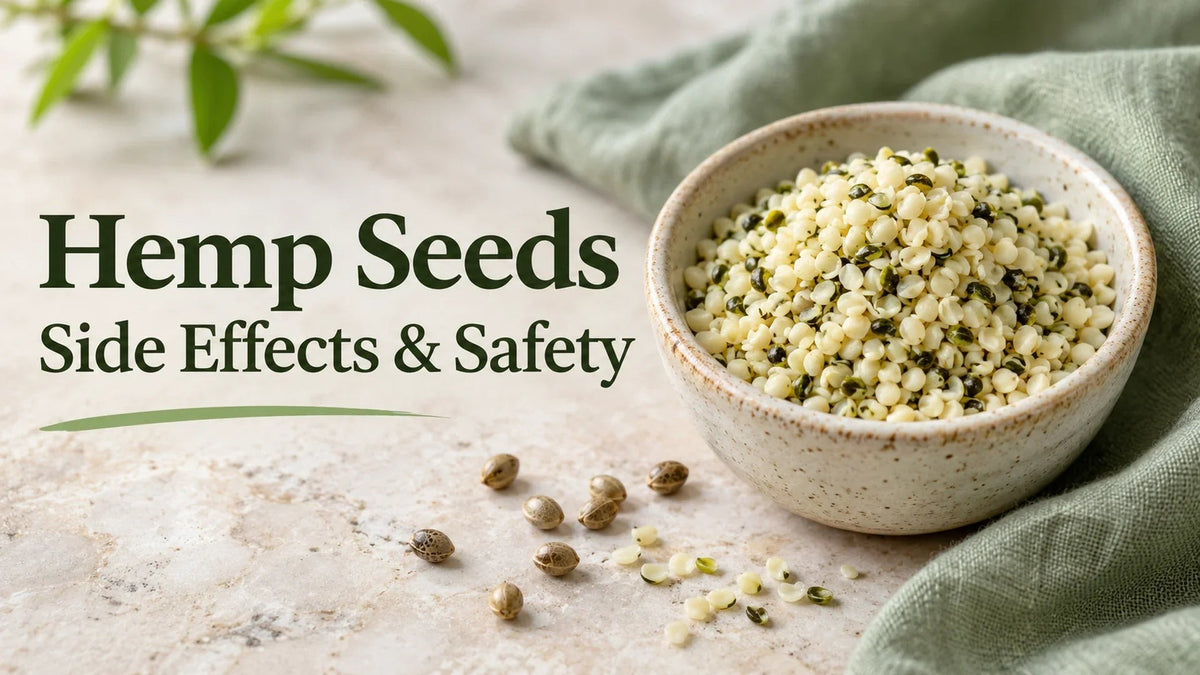
Hemp Seeds Side Effects: Allergy and Safety Questions
Hemp seeds are generally safe as food, but they can cause allergic reactions and may contain traces of THC. Learn about possible digestive symptoms, drug testing, and who should take extra care.
Hemp seeds are generally safe for most people when eaten as food. However, they can cause an allergic reaction, and some people may experience digestive discomfort. Hemp seeds may also pick up traces of THC during harvesting and processing, which can matter for people who undergo drug testing.
The most serious known concern is a hemp seed allergy. Severe reactions, including anaphylaxis, have been reported, although researchers do not know how common hemp seed allergy is. Evidence
Emergency warning: Trouble breathing, throat or tongue swelling, severe dizziness, fainting, or collapse after eating a food may be signs of anaphylaxis. Use a prescribed epinephrine auto-injector immediately if available, and call local emergency services. Do not wait for symptoms to get worse. NHS
What Are the Side Effects of Hemp Seeds?
Most people can eat hemp seeds without problems. The main safety concerns are:
| Concern | What to know |
|---|---|
| Allergic reaction | Hemp seeds can cause allergy symptoms, including a potentially life-threatening reaction called anaphylaxis. |
| Digestive discomfort | Some people may notice gas, bloating or stomach discomfort. Research on how often hemp seeds cause these symptoms is limited. |
| THC exposure | Hemp seeds can pick up traces of THC from other parts of the plant during harvesting and processing. |
| Drug testing | A positive test after consuming some hemp products is possible. Risk depends on the product, amount consumed and test. |
| Medicine concerns | There is limited direct evidence of significant interactions from ordinary food servings. Concentrated products are different from seeds eaten as food. |
Not every symptom after a meal is caused by hemp seeds. Other ingredients, portion size and existing health conditions may also play a role.
Are Hemp Seeds Safe to Eat?
Food-grade hemp seeds are generally safe for most people as part of a balanced diet. They are not safe for someone who is allergic to them.
Hemp seeds come from the Cannabis sativa plant. They are sold as whole seeds or as hemp hearts, which are seeds with the outer shell removed.
The US Food and Drug Administration (FDA) reviewed safety notices for hulled hemp seeds, hemp seed protein powder and hemp seed oil for specific uses in food. The FDA had no questions about the safety conclusions for those intended uses. This does not mean every hemp product is identical or that hemp seeds are safe for someone with an allergy. FDA
Can You Be Allergic to Hemp Seeds?
Yes. Hemp seeds can cause an allergic reaction, including anaphylaxis. Published medical reports confirm that serious reactions can occur, but they do not establish how common hemp seed allergy is. Case report
A food allergy happens when the immune system reacts to a food. Symptoms may be mild or severe. A mild reaction in the past does not guarantee that a future reaction will also be mild.
What Are the Symptoms of a Hemp Seed Allergy?
Possible symptoms include:
- Itching or tingling in the mouth
- Hives or an itchy skin rash
- Swelling of the lips, face, tongue or throat
- Stomach pain, vomiting or diarrhea
- Coughing, wheezing or trouble breathing
- Dizziness, weakness or fainting
Symptoms can affect the skin, digestive system, breathing or circulation. A person does not need to have every symptom to be having a serious reaction.
These symptoms do not always mean hemp seeds caused an allergy. A meal may contain several ingredients, and some symptoms have other causes. Still, a reaction after eating hemp seeds should not be ignored.
Can Hemp Seeds Cause Anaphylaxis?
Yes. Anaphylaxis after eating hemp seeds has been reported. It is a severe allergic reaction that can become life-threatening quickly. Case report
Warning signs can include trouble breathing, a tight or swollen throat, difficulty speaking or swallowing, severe dizziness, fainting, or collapse.
If you suspect anaphylaxis:
- Use a prescribed epinephrine auto-injector immediately, if available.
- Call local emergency services and say you suspect anaphylaxis.
- Lie down. If breathing is difficult, raise your shoulders or sit up slowly. If pregnant, lie on your left side.
- If symptoms have not improved after five minutes and a second auto-injector is available, use it.
- Follow the emergency operator’s instructions and get medical care, even if symptoms improve.
Antihistamines do not replace epinephrine for anaphylaxis. Symptoms can return after they improve, so emergency medical care is still needed. NHS
What Should You Do if You Think You Are Allergic?
Stop eating the food. If you have signs of a severe reaction, get emergency help immediately.
For a reaction that is not an emergency, avoid hemp seeds and foods containing them until you have spoken with a healthcare professional. They may refer you to an allergist.
It may help to record:
- What you ate and how much
- When you ate it
- Your symptoms and when they started
- Any treatment you needed
- The product name and ingredient list
Do not eat hemp seeds again at home to test whether they caused the reaction.
How Is a Hemp Seed Allergy Diagnosed?
An allergist will usually ask about your symptoms, what you ate and how quickly the reaction began. They may recommend allergy testing when appropriate.
A test result is only one part of the assessment. A positive allergy test does not always mean a person will react when they eat a food. Your medical history and the details of the reaction also matter.
Can You Eat Hemp Seeds if You Have a Nut, Seed or Cannabis Allergy?
An allergy to a nut, another seed or cannabis does not automatically mean you are allergic to hemp seeds.
However, some plant foods contain similar proteins. This can lead to cross-reactivity, where the immune system responds to related proteins from different sources. Researchers have investigated possible cross-reactivity between hemp seed and hazelnut, but more research is needed to understand what this means for people with hazelnut allergy. Study
If you have reacted to hemp or cannabis, or have a history of severe food allergies and are concerned about trying hemp seeds, ask an allergist for individual advice.
Can Hemp Seeds Cause Bloating, Gas or Diarrhea?
Some people may notice digestive discomfort after eating hemp seeds, but there is limited research on how often hemp seeds themselves cause these symptoms.
Gas, bloating, stomach cramps and loose stools can have several causes. A large meal, other ingredients, a sudden change in fibre intake or an existing digestive condition may also play a role.
For example, if you add hemp seeds to a smoothie, the milk, fruit, sweeteners or other ingredients could also affect how you feel.
If you notice a pattern, record what you ate and your symptoms. Speak with a healthcare professional if symptoms are severe, keep happening or do not improve.
Can Eating Too Many Hemp Seeds Cause Diarrhea?
A large serving may be uncomfortable for some people. However, there is not enough evidence to say exactly how much hemp seed would cause diarrhea or to describe hemp seeds as a proven laxative.
If you have no reason to suspect an allergy and are trying hemp seeds for the first time, you may prefer to start with a small food serving and see how you feel.
Do Hemp Hearts Cause the Same Digestive Problems as Whole Hemp Seeds?
Hemp hearts are hemp seeds with the outer shell removed. Whole hemp seeds keep their shell and generally contain more fibre.
People respond differently to fibre. Increasing fibre too quickly may cause gas or bloating, especially for some people with irritable bowel syndrome, or IBS. Check the product label because fibre amounts differ between products. NIDDK
Removing the shell does not make hemp hearts safe for someone who is allergic to hemp seeds.
Is It Digestive Discomfort or a Hemp Seed Allergy?
| Feature | Possible digestive discomfort | Possible food allergy |
|---|---|---|
| Symptoms | Bloating, gas, stomach discomfort or changes in stool | Itching, hives, swelling, vomiting, breathing problems or other symptoms |
| Body areas affected | Often mainly the digestive system | May affect the skin, digestion, breathing or circulation |
| What to do | Seek medical advice if symptoms are severe or continue | Stop eating the food and seek medical advice; get emergency help for severe symptoms |
Symptoms can overlap. Vomiting and diarrhea can also occur during an allergic reaction, and an allergy does not always cause a skin rash. This table cannot diagnose the cause.
Do Hemp Seeds Contain THC or CBD?
Hemp seeds do not naturally contain THC or CBD, but they can pick up traces from other parts of the plant during harvesting and processing. The amount can vary between products. FDA
THC is the compound mainly responsible for the intoxicating effects associated with cannabis. CBD is a different compound found in the cannabis plant.
Food-grade hemp seeds are different from products made to contain THC or CBD.
Can Hemp Seeds Make You High?
Ordinary hemp seed foods are not intended to cause a high. The hemp seed ingredients evaluated by the FDA contain only trace amounts of THC and CBD.
However, amounts can vary between products. Do not assume every food labelled “hemp” is completely THC-free or that every hemp product contains only seeds. Check the ingredient list. FDA
Can Hemp Seeds Cause a Positive Drug Test?
A positive drug test after consuming some hemp products is possible. The result can depend on how much THC the product contains, how much is consumed and the test used.
One study examined people who consumed specific hemp seed products sold in Korea for up to 12 weeks. Under the study’s testing conditions, the results did not meet its criteria for a positive cannabinoid test. An older report described a positive workplace test after consumption of a particular hemp seed oil product. These findings cannot predict the result for every product or every test. Study Report
If you face workplace, sports, legal or other drug testing where a result could have serious consequences, check the relevant policy and consider avoiding hemp foods. There is no universal waiting period that guarantees a negative result.
Are Hemp Seeds, Hemp Seed Oil and CBD Oil the Same?
No. They are different products, even though they come from the same plant species.
| Product | What it is | Main safety point |
|---|---|---|
| Hemp seeds or hemp hearts | Whole or hulled edible hemp seeds | Can cause allergy and may contain traces of THC from processing |
| Hemp seed oil | Oil pressed from hemp seeds | A different food product; THC contamination can vary |
| CBD oil | A product made to contain cannabidiol | Has different safety and medicine-interaction concerns |
Do not assume that a warning about CBD oil applies in the same way to a normal food serving of hemp seeds.
Who Should Avoid Hemp Seeds or Take Extra Care?
People With a Known or Suspected Hemp Seed Allergy
If you have a diagnosed hemp seed allergy, avoid hemp seeds and foods containing them. If you suspect an allergy, avoid them until you have received medical advice.
Check ingredient lists on foods such as seed mixes, snack bars, cereals, protein powders and plant-based drinks. Hemp may appear as hemp seeds, hemp hearts or hemp seed protein.
An allergist can help you understand which products to avoid and how to manage accidental exposure.
People Taking Blood Thinners or Other Medicines
There is limited direct evidence that ordinary food servings of hemp seeds cause a significant interaction with medicines.
Some online warnings about hemp and medicines discuss CBD products, hemp seed oil or concentrated supplements. Their effects should not automatically be applied to hemp seeds eaten as food.
If you take warfarin, another blood thinner or medicine for a condition that needs careful monitoring, ask your doctor or pharmacist before making a major dietary change or starting a concentrated hemp product.
Do not stop or change prescribed medicine without medical advice.
People With Digestive Conditions
People with IBS or other digestive conditions may respond differently to dietary changes. Some may notice symptoms after a large serving of seeds or a sudden increase in fibre.
If you have frequent digestive symptoms, follow a special diet or have been advised to limit fibre, ask your doctor or dietitian how hemp seeds may fit into your meals.
Are Hemp Seeds Safe During Pregnancy and Breastfeeding?
Food-grade hemp seed ingredients are different from CBD, THC and marijuana products. Direct research on eating hemp seeds during pregnancy and breastfeeding is limited, so it is reasonable to discuss a particular product with your healthcare professional.
The FDA says the hemp seed-derived food ingredients it evaluated can contain trace amounts of THC and CBD picked up from the plant. It states that the amounts associated with those evaluated ingredients are low enough not to raise concerns for any group, including pregnant or breastfeeding people. This assessment should not be treated as a guarantee about every hemp product. FDA
The FDA advises against using CBD, THC and marijuana during pregnancy and breastfeeding. Check the ingredient list and do not assume that every product labelled “hemp” contains only seeds.
Are Hemp Seeds Safe for Babies and Children?
Hemp seeds are a food, but a child’s age, ability to chew and swallow, and allergy history matter.
For babies and young children, ask a healthcare professional how to prepare and serve foods in a form suited to the child’s development. Supervise children while they eat. Food texture and preparation can affect choking risk. CDC
If a child has had a possible allergic reaction to hemp, do not offer it again at home to test the reaction. Speak with the child’s doctor.
How Much Hemp Seed Is Safe to Eat?
There is no established universal maximum daily amount of hemp seeds for everyone. A suitable serving depends on the product, the rest of your diet and your individual tolerance.
The serving size on a package can be a useful starting point, but it is not a medical safety limit.
If you have no reason to suspect an allergy and are trying hemp seeds for the first time, you may prefer to start with a small food serving.
Starting with a small amount does not prevent an allergic reaction. If you suspect a hemp allergy, do not try to build tolerance by eating the seeds. Avoid them until you have received medical advice.
How to Choose and Store Hemp Seeds Safely
These steps can help you select a suitable product and keep it fresh:
- Choose food-grade seeds. Look for a product intended for eating.
- Check the ingredient list. Seed blends and powders may contain other ingredients you need to avoid.
- Read allergy information. Check the label for ingredients and any relevant cross-contact statements.
- Follow storage instructions. Keep the package sealed and follow any directions for refrigeration.
- Check freshness. Discard seeds that smell rancid or show signs of spoilage.
- Consider drug-testing requirements. THC levels and testing methods can vary.
When Should You See a Doctor After Eating Hemp Seeds?
Get emergency help immediately if you suspect a severe allergic reaction, especially if there is trouble breathing, throat or tongue swelling, severe dizziness, fainting or collapse. Use a prescribed epinephrine auto-injector if available.
Contact a healthcare professional if you:
- Develop itching, hives or swelling after eating hemp seeds
- Have symptoms that return whenever you eat them
- Have severe or ongoing digestive symptoms
- Are unsure whether hemp or another ingredient caused a reaction
- Have concerns about a hemp product and your medicines
Keeping the packaging and a record of your symptoms can help with the assessment.
Frequently Asked Questions
Can Hemp Seeds Cause a Skin Rash?
A rash or hives after eating hemp seeds can be a sign of an allergic reaction. However, a rash can have many causes. Stop eating the food and ask a healthcare professional for advice.
Get emergency help if a rash occurs with symptoms such as trouble breathing, throat swelling, severe dizziness or fainting.
Can Hemp Seeds Cause an Itchy Mouth?
Yes. An itchy or tingling mouth after eating hemp seeds can be a sign of an allergic reaction. Stop eating them and seek medical advice. Do not eat them again at home to check whether the symptom returns.
Are Hemp Hearts Safer Than Whole Hemp Seeds?
Hemp hearts have their outer shell removed, so their texture and fibre content differ from whole hemp seeds. Some people may find one form easier to tolerate.
However, both can cause a reaction in someone with a hemp seed allergy.
Can You Eat Hemp Seeds Every Day?
Most people who tolerate hemp seeds can include them regularly as part of a balanced diet. Choose an amount that suits your needs and digestive tolerance.
If you have a hemp seed allergy, avoid them and follow your allergist’s advice.
Do Hemp Seeds Contain CBD?
Hemp seeds do not naturally contain CBD, but they can pick up traces from other parts of the plant during harvesting and processing. Hemp seeds are different from products made specifically to contain CBD.
The Bottom Line
Hemp seeds are generally safe for most people when eaten as food. The most serious known concern is an allergic reaction, which can sometimes be severe. Some people may notice digestive discomfort, although research on hemp-specific digestive side effects is limited.
Hemp foods can also contain traces of THC, which may matter for people subject to drug testing. If you think you have reacted to hemp seeds, stop eating them and seek medical advice. For signs of anaphylaxis, use prescribed epinephrine if available and get emergency help immediately.
We rely on peer-reviewed studies and reputable medical journals.