


Best Foods for Healthy Weight Gain in Children
Explore nourishing foods for healthy weight gain in children, with simple meals, snacks, age-specific safety tips, and guidance on growth concerns.
The best foods for healthy weight gain in children provide energy along with nutrients for growth. Good choices include eggs, plain yogurt and cheese, beans and lentils, chicken or fish, avocado, smooth nut or seed butter, oats, rice, potatoes and roti. Add them to familiar meals and planned snacks. A child’s growth should be assessed over time, not by appearance alone. If you are worried about your child’s weight or growth, ask a pediatric clinician for advice. [1][2]
Which foods can help a child gain weight healthily?
The best foods for healthy weight gain combine energy with protein, fats, vitamins or minerals. Offer a mix of food groups instead of relying on one “weight-gain food.” The child’s age, appetite, allergies, culture and health needs all matter.
| Food group | Examples | Easy ways to serve |
|---|---|---|
| Starchy foods | Rice, roti, oats, potatoes, pasta and bread | Serve with egg, lentils, beans, chicken, fish, yogurt or cheese. |
| Protein foods | Eggs, chicken, fish, meat, daal, beans, chickpeas, hummus, tofu and paneer | Add cooked egg, chicken, beans or lentils to rice, roti, potatoes or pasta. |
| Dairy foods | Plain yogurt, cheese and milk when suitable for the child’s age | Add yogurt to oats or fruit; grate cheese over potatoes, eggs or pasta. |
| Energy-rich additions | Avocado, smooth nut or seed butter, tahini and a little cooking oil | Mix into porridge, lentils, rice or mashed potato, or spread nut butter thinly on bread. |
| Fruit | Banana and other soft, age-appropriate fruit | Pair with yogurt or oats for a more filling snack. |
These foods can help add energy to meals without making portions much larger. For a child who has been assessed as needing extra nutrition, a pediatric clinician or dietitian can advise which foods and portions are suitable. [1][3]
Why do these foods support growth?
Children need enough energy to move, learn and grow. Starchy foods such as rice, roti, oats and potatoes provide energy. Protein foods such as eggs, fish, chicken, lentils and beans provide building blocks the body uses to grow and repair tissue. Fats add energy in a small amount of food and are part of a balanced diet.
This is why a meal such as daal with rice and yogurt can be more useful than a sweet drink on its own. It provides energy along with protein and other nutrients. No single food can make every child gain weight quickly. If a child’s growth is slowing, the cause may need to be checked as well as their food intake. [1]
How can I add more energy to meals?
Small changes can make familiar foods more nourishing without asking a child to eat a much larger portion.
- Add grated cheese to eggs, potatoes, pasta or roti.
- Stir a little cooking oil into rice, lentils or mashed vegetables, if suitable.
- Serve plain yogurt with fruit, oats or a meal.
- Mix smooth nut or seed butter into porridge or spread it thinly on bread, if the child can safely eat it and has no related allergy.
- Pair a starchy food with a protein food, such as egg with roti or chickpeas with rice.
- Offer regular meals and planned snacks. Avoid letting a child graze all day.
- Keep drinks from filling the child up just before meals. Offer them between meals or with food.
- Keep mealtimes calm. Do not force a child to finish everything on the plate.
A child may need repeated chances to accept a new food. Offer it alongside familiar foods, and let the child decide how much to eat. [1][3]
Easy meal and snack ideas
These are general ideas for children who already eat solid foods. Use textures and portions that match the child’s age and eating skills.
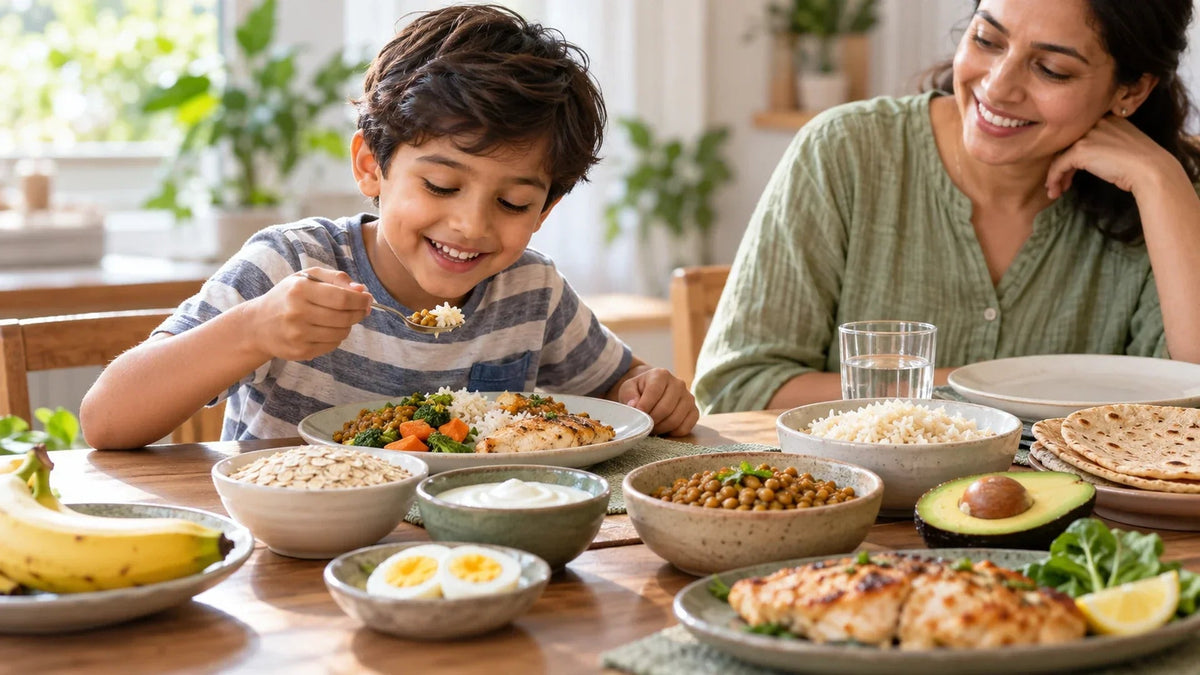
- Breakfast: Egg with roti, or porridge with age-appropriate milk or yogurt and mashed banana.
- Lunch: Daal with rice or roti, with plain yogurt on the side.
- Snack: Yogurt with banana and oats, hummus with soft bread, or cheese with bread.
- Dinner: Add egg, chicken, fish or beans to potatoes, rice or pasta. Add a little oil or cheese if suitable.
- Smoothie for an older child: Blend plain yogurt or age-appropriate milk with banana and oats. Offer it as a snack between meals, not just before a meal. A smoothie is not a replacement for breast milk or infant formula.
These options use familiar foods, including roti, rice, daal, chana, dahi, eggs and potatoes. Adapt them for allergies, family food choices and the child’s needs.
Foods not to rely on for weight gain
Sweets, crisps, fried snacks, fast food and sugary drinks can add calories, but they do not provide the range of nutrients children need. They can also take the place of more nourishing foods. Offer them less often and choose foods that provide energy along with useful nutrients.
Do not give a child adult protein powder, bodybuilding products or a weight-gain supplement as a do-it-yourself solution. Some children with faltering growth may benefit from a pediatric nutrition supplement, but a clinician should decide whether one is needed and how it should be used. [1]
Age and food safety
Babies under 6 months
Do not add solid foods or cereal to try to increase a young baby’s weight. WHO recommends exclusive breastfeeding for the first 6 months where possible; infant formula is used when breast milk is not available or is not being used. If you are concerned about a baby’s feeding or weight gain, contact a pediatric clinician. [4]
Babies from around 6 to 11 months
Solid foods are usually introduced at around 6 months, when a baby is developmentally ready. Breast milk or infant formula remains the baby’s main milk drink during the first year. Cow’s milk can be used in cooking or mixed into food from around 6 months, but it should not be the main drink before 12 months. A baby with slow weight gain needs age-specific advice rather than a general weight-gain plan. [4][5]
Children 12 months and older
Offer a variety of foods with textures the child can manage safely. Cow’s milk can be offered as a drink from 12 months if suitable for the child. A child with a milk allergy, another food allergy or a medical condition may need different choices; ask a pediatric clinician or dietitian for safe alternatives. [5]
Prevent choking
When to speak with a pediatric clinician
Ask for advice if your child:
- Is losing weight quickly or without a clear reason
- Is not gaining as expected or has moved down on their growth chart
- Has ongoing feeding or eating difficulties
- Has persistent vomiting, diarrhea, pain or another symptom affecting eating
- Is not improving despite changes you have tried
A clinician can review the child’s weight and height or length over time, eating pattern, health history and other symptoms. Growth charts are useful tools, but a single measurement or chart point is not a diagnosis. The right chart depends on the child’s age and the clinician’s guidance. [1][2]
Common questions
Which food helps a child gain weight fastest?
There is no single food that safely makes every child gain weight quickly. If a clinician says a child needs extra support, a balanced mix of starchy foods, protein foods, dairy when age-appropriate, and energy-rich additions may help.
What are healthy high-calorie snacks for children?
Try plain yogurt with banana and oats, hummus with soft bread, or cheese with bread. Choose a texture and portion the child can manage safely.
Do bananas help children gain weight?
Bananas provide energy, but they are not a complete solution by themselves. Pair banana with yogurt or oats for a more filling snack. Use an age-appropriate texture for babies and young children.
Does milk help children gain weight?
Milk and dairy foods can provide energy and nutrients when they suit the child’s age and health needs. Cow’s milk should not be the main drink before 12 months. For babies, breast milk or infant formula remains the main milk drink during the first year. [5]
Are weight-gain shakes or protein powders safe for children?
A homemade smoothie can be a snack for an older child if its ingredients are suitable. Do not give a child adult protein powder or a commercial weight-gain product unless a pediatric clinician or dietitian recommends it. A professional can decide whether a pediatric supplement is needed. [1]
How can I tell if my child is underweight?
You cannot tell from appearance alone. A pediatric clinician can review the child’s measurements and growth pattern over time using an age-appropriate growth chart. Ask for advice if you are concerned, even if your child seems well. [1][2]
Need individualized nutrition guidance?
MNT’s maternal and family nutrition consultation options can be reviewed for your child’s needs, professional scope and availability.
Request a consultationKey takeaway: Offer a variety of nourishing foods in regular meals and snacks, use safe textures for the child’s age, and ask a pediatric clinician to assess growth concerns before trying to make a child gain weight.
We rely on peer-reviewed studies and reputable medical journals.