



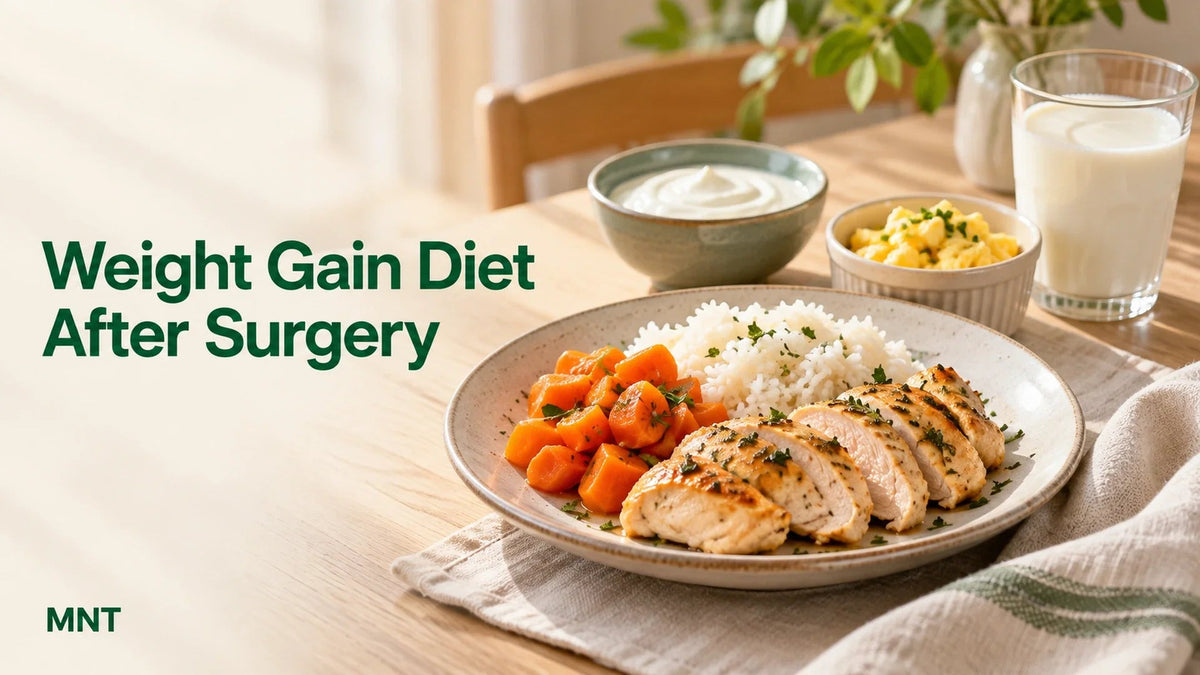
Weight Gain Diet After Surgery: What to Eat for Recovery
Learn what to eat after surgery to regain lost weight and support recovery. Explore nourishing foods, a sample meal plan and practical tips for a small appetite.
If you have lost weight after surgery, choose small, frequent meals that combine protein with an energy source. Eggs, yogurt, milk, chicken, fish, tofu, and lentils can help supply protein. Rice, potatoes, oats, bread, and suitable fats add energy. Enrich foods you already tolerate, and try nourishing drinks between meals if allowed. Follow your surgeon’s food, texture, and fluid instructions first. [2,8,9]
The first goal may be to stop further weight loss, then regain weight and strength if needed. Not everyone needs a weight-gain diet after an operation.
This guide is for adults recovering from non-bariatric surgery who are eating poorly or have lost weight without trying.
If you have eaten little or nothing for more than five days, contact your care team before suddenly increasing food or starting several weight-gain drinks. You may need a supervised nutrition plan. [3]
Do you need to gain weight after surgery?
You may need to regain weight if you have lost it without trying, but weight gain is not the goal for everyone. Your team should consider your usual weight, recent intake, strength, health conditions, and the operation you had.
A helpful recovery plan may aim to:
- Stop ongoing weight loss.
- Help you eat enough for healing.
- Restore lost weight when appropriate.
- Rebuild strength through nutrition and approved movement.
People at a higher body weight can also lose muscle or become poorly nourished. They may need better nutrition while keeping weight steady. A crash diet during early recovery can make it harder to meet healing needs. [1,5]
Why can surgery cause weight and muscle loss?
Weight loss can happen when you eat less while your body is working to heal. Pain, nausea, constipation, fatigue, and changes in taste can reduce intake. Some operations also affect swallowing, stomach capacity, digestion, or absorption. [5]
Surgical stress changes how the body uses energy and protein. Spending more time in bed can also reduce muscle strength. The effect varies with the size of the operation, complications, age, and activity level.
The 2025 ESPEN surgical nutrition guideline supports restarting oral feeding as soon as it is appropriate and treating nutrition risk early. Your surgical team decides when and how eating should restart. [2]
What foods help you regain weight?
Build meals around a protein food, a starchy food, and a suitable energy addition. Use foods that fit your current diet stage; expensive products are not essential.
| Meal component | Familiar options | Ways to make it easier to eat |
|---|---|---|
| Protein | Eggs, chicken, fish, yogurt, milk, paneer, tofu, dal, beans, or chickpeas | Scramble eggs, shred tender chicken, or cook lentils until soft, if allowed |
| Starchy food | Rice, potatoes, oats, daliya, bread, or roti | Choose the texture your team permits; soften food with a suitable sauce |
| Extra energy | Olive or canola oil, smooth nut butter, cheese, or full-fat yogurt | Mix a small amount into the food rather than making the portion much larger |
| Fruit and vegetables | Banana, soft fruit, or suitable cooked vegetables | Peel, mash, or cook when needed for your prescribed diet |
For example, pair rice with dal and yogurt, or potato with egg and a little oil. Watery soup or plain tea alone is unlikely to provide the same nourishment as a meal containing protein and energy. [4,14]
Include nutrients that support healing
Protein and energy matter, but food variety matters too. Vitamin C supports collagen formation, iron helps carry oxygen in the blood, and zinc supports tissue repair. Include suitable fruit, vegetables, protein foods, and fortified foods. Food sources and supplements should fit your care plan. [1]
Dairy-free and vegetarian options
Use tofu, soy foods, lentils, beans, and smooth nut or seed butter where allowed. Compare plant-drink labels: calories, protein, and added vitamins vary. A dairy-free cheese or yogurt is not automatically a high-protein substitute. If you follow a vegan diet, discuss vitamin B12 and other nutrient needs with your dietitian. [6]
How much protein and how many calories do you need?
There is no single target that fits every person after surgery. Your needs depend on the operation, wound healing, recent weight loss, body size, medical conditions, and how much you can eat.
Protein: a useful discussion range
Wound-care guidance commonly uses 1.2–1.5 grams of protein per kilogram of body weight per day. This gives context for a discussion with your team; it is not a prescription for every surgical patient. Some people need a different amount. [7]
| Body weight used in the calculation | Protein at 1.2–1.5 g/kg/day |
|---|---|
| 50 kg | 60–75 g |
| 60 kg | 72–90 g |
| 70 kg | 84–105 g |
Spread protein foods across meals and snacks. If swelling, obesity, kidney disease, or major illness affects your needs, let your dietitian choose the weight and target used in the calculation.
Calories: meet recovery needs before adding a surplus
The NHS general weight-gain advice suggests around 300–500 extra calories a day for adults who need to gain weight. After surgery, use that idea only if your care team agrees it suits you. It is not an instruction to add 500 calories to every calculator result. [8]
If you are currently eating very little, adding a snack may first help close a shortfall. It does not necessarily create a surplus. Start with an agreed plan and review your intake and progress.
How can you eat more with a small appetite?
Try smaller portions more often and make each portion more nourishing. Five or six small eating occasions may feel easier than three large meals. You can try eating every two to three hours while awake, without forcing a meal that causes pain or sickness. [9]
Other practical steps include:
- Eat the protein part first if you tend to leave food.
- Have a suitable snack between meals.
- Keep easy foods nearby and accept help with cooking.
- If large drinks reduce your appetite, have most drinks between meals. Keep drinking enough overall and follow any fluid limit. [9]
Add nourishment without a much bigger portion
This is called food fortification. Choose additions that fit your diet and allergies.
| Food you already tolerate | Possible addition |
|---|---|
| Porridge or daliya | Make it with milk; add yogurt or smooth nut butter |
| Mashed potato | Add milk, cheese, or a little oil |
| Rice or soft khichdi | Add egg, tender chicken, tofu, or extra dal, plus a little oil |
| Soup | Add an allowed protein ingredient such as blended lentils, milk powder, or finely shredded chicken |
| Yogurt | Mix with banana or smooth nut butter, if allowed |
Additions such as oil supply energy but little or no protein. Pair them with a protein food. Nuts, seeds, legumes, and fibrous foods may need changing or avoiding during some surgical diets. [6,10,14]
A nourishing drink to try if allowed
Blend milk or a suitable soy drink with banana and smooth peanut butter. Start with a portion you can manage. Ingredients and amounts should match any restrictions on fluids, texture, sugar, fat, or fibre.
Another option is fortified milk: mix four tablespoons of dried milk powder into one UK pint, about 568 mL, of milk. Use it in drinks or suitable foods. Check the product label for nutrition values, prepare it safely, and keep it refrigerated. This dairy recipe is unsuitable for milk allergy. [1]
A one-day recovery meal plan
This example is for an adult cleared to eat the listed soft or regular foods. It is a meal-building guide, not a fixed calorie prescription or a menu for a liquid or puréed diet.
| Eating occasion | Example | Adjustment to discuss if needed |
|---|---|---|
| Breakfast | Small bowl of milk-based porridge or daliya with a well-cooked egg | Use a suitable soy drink; change the texture as prescribed |
| Mid-morning | Yogurt with mashed banana | Choose a dairy-free alternative with suitable protein |
| Lunch | Tender chicken with rice and soft cooked carrots | Swap chicken for tofu or dal if allowed |
| Afternoon | Small milk or soy smoothie with smooth nut butter | Use a prescribed nutrition drink if recommended instead |
| Dinner | Soft khichdi with egg, fish, paneer, or tofu and a little oil | Choose a lower-fibre base if your plan requires it |
| Evening snack | Custard, milk, yogurt, or another allowed protein snack | Skip or change the timing if your team has advised against late eating |
Choose portions that match your appetite and agreed targets. The swaps have different nutrition values, so they are not exact exchanges. A dietitian can calculate a plan around your needs.
What if nausea or other symptoms make eating difficult?
Treat the cause as well as adjusting food. Persistent symptoms may need medical care.
| Problem | What may help |
|---|---|
| Nausea or cooking smells | Try smaller amounts and cooler foods with less smell, if safe for you. Ask about treatment if nausea continues. |
| Feeling full quickly | Reduce the portion size and try another small meal later. Ask for review if fullness prevents adequate intake. |
| Taste changes | Try different allowed flavours or temperatures and keep your mouth clean. |
| Fatigue | Use simple meals, prepared portions, and help from family or friends. |
| Constipation | Tell your team, especially if pain medicines are involved. Check before adding fibre, seed drinks, or laxatives after bowel surgery. |
| Coughing, choking, or difficulty swallowing | Contact your team for assessment rather than trying to push through with food or shakes. |
Ongoing vomiting, diarrhoea, or poor intake should not be managed only by adding more calories. [3,5,10]
Do you need nutrition drinks or supplements?
Nutrition drinks can help when ordinary food is not enough, but they are not necessary for everyone. Your team may recommend an oral nutritional supplement to provide energy, protein, and other nutrients in a manageable amount. Some people need other forms of nutrition support. [2,3]
A protein powder mainly adds protein. It may supply too little energy or too few other nutrients to replace a meal. Product labels differ, and “high protein” does not mean “nutritionally complete.”
Ask your dietitian which product, amount, and timing suits your operation. Do not replace prescribed feeds or start amino-acid, herbal, or high-dose vitamin regimens without advice.
Choose pasteurized milk and yogurt and avoid raw eggs in homemade shakes. [11]
How does advice change with your operation or health?
The operation and your discharge instructions decide which foods are suitable. There is no standard liquid-to-solid schedule for all surgery.
| Situation | How the plan may change |
|---|---|
| Stomach or oesophageal surgery | Smaller portions and specific texture or drink-timing advice may be needed. Report sweating, dizziness, cramping, or diarrhoea after meals, which can occur with dumping syndrome. [12] |
| Bowel surgery | Food tolerance, fibre advice, and fluid needs vary. Add foods back as instructed rather than assuming a high-fibre diet is safe immediately. [10] |
| Orthopaedic surgery | Meeting nutrition needs and following approved rehabilitation both matter. Protein alone does not replace movement or physiotherapy. [2,4] |
| Head, neck, or mouth surgery | Follow prescribed food texture and swallowing instructions. A smooth drink is not automatically safe for every swallowing problem. [3] |
| Bariatric surgery | Follow your bariatric team's plan. Do not use a general weight-gain menu to change your portions, stages, or supplements. |
Other health conditions can change the plan too:
- Kidney disease: protein, fluid, potassium, and phosphorus needs may require adjustment. People receiving dialysis may need more protein, so a blanket low-protein rule is also unsuitable. [13]
- Diabetes: you can improve calorie intake while managing blood glucose. Use an agreed balance of carbohydrates, protein, and suitable fats; ask about medication changes if intake changes. [14]
- Heart disease or a fluid restriction: check added salt and fluid amounts. Discuss suitable fats rather than relying heavily on butter, cream, or ghee. [4,13]
How do you track recovery and know when to get help?
Watch your food intake, weight trend, symptoms, and strength together. A scale reading alone cannot show how well you are healing.
If weighing is appropriate, use the same scale at a similar time, in similar clothing. Your team may suggest weekly checks; follow any more frequent schedule prescribed for a medical condition. Keep a short record of meals, drinks, and symptoms to bring to appointments.
There is no universal weekly weight-gain target after surgery. Progress depends on the operation and your condition. Restoring muscle also takes nutrition, time, and approved rehabilitation.
Fluid changes can affect weight
Fluid changes can move the scale quickly and do not show muscle growth. A sudden increase in weight with swelling needs medical advice. New breathlessness or chest pain needs emergency assessment. Do not change fluid medicines yourself. [15]
Contact your surgical team promptly if:
- You keep losing weight or cannot eat enough.
- You have repeated vomiting, cannot keep fluids down, or develop persistent diarrhoea.
- You have trouble swallowing or cough and choke when eating.
- You develop fever or worsening redness, warmth, pain, or discharge around your wound.
- Your abdomen becomes increasingly swollen or painful. [3,10]
If you have eaten little or nothing for more than five days, seek advice before a large increase in intake. Restarting nutrition can sometimes cause dangerous changes in blood minerals and fluid balance, called refeeding syndrome. Your team can assess risk and arrange monitoring. Do not use a home calorie or vitamin protocol to treat it. [3]
Seek emergency care for chest pain, new trouble breathing, collapse, or severe and worsening abdominal pain. Follow your hospital's discharge warning signs. [10]
Frequently asked questions
What is the best food to gain weight after surgery?
There is no single best food. Combine allowed protein foods with energy sources: egg with potato, chicken with rice, or dal with rice and yogurt. Choose the texture and portion your team permits. [4,14]
Is milk good after surgery?
Milk can provide protein and energy if it suits your diet. Lactose-free milk may help some people with lactose intolerance; milk allergy requires a different alternative. Check labels and your care plan rather than assuming all milk or plant drinks are equivalent. [6,13]
Can I gain weight without protein powder?
Yes. Eggs, dairy foods, chicken, fish, tofu, and pulses may meet your needs. Nutrition drinks or powders are options when your team identifies a gap, not a requirement for every patient. [2,7]
Are fruits and seeds enough to rebuild weight?
They can be part of meals, but recovery needs a range of foods that provide enough protein and energy. Whole seeds, nuts, and some fruit textures may be unsuitable during a prescribed low-fibre or texture-modified diet. [6,10]
How long does it take to regain weight after surgery?
There is no fixed timetable. Your appetite, operation, complications, and recent weight loss all matter. Ask for review if weight keeps falling rather than waiting for a set number of weeks. [2,4]
When should I stop adding extra calories?
Review the plan when intake, weight, and recovery improve. Your dietitian can help reduce extras as appropriate while maintaining a balanced diet. Continuing a high-calorie plan indefinitely may lead to more weight gain than you need. [4]
Can I follow this diet after gastric sleeve or bypass surgery?
Do not use it to change your bariatric plan. Unplanned or excessive weight loss, vomiting, or poor intake after bariatric surgery needs assessment by your bariatric team. [2]
Can I regain weight if I cannot exercise yet?
Adequate nutrition can help support healing and limit muscle loss while activity is restricted. Rebuilding strength also needs rehabilitation when permitted. Follow your surgeon or physiotherapist's limits rather than starting exercise to speed up weight gain. [2,4]
We rely on peer-reviewed studies and reputable medical journals.