


How to Gain Weight With Lactose Intolerance: Foods, Shakes & Diet Plan
You can gain weight with lactose intolerance without relying on regular milk. Learn which high-calorie foods, lactose-free options, shakes, and meal strategies can help you gain weight comfortably.
Yes, you can gain weight with lactose intolerance. Lactose intolerance does not stop your body from gaining weight. You need to consistently eat more energy than your body uses while choosing foods that do not trigger uncomfortable digestive symptoms.
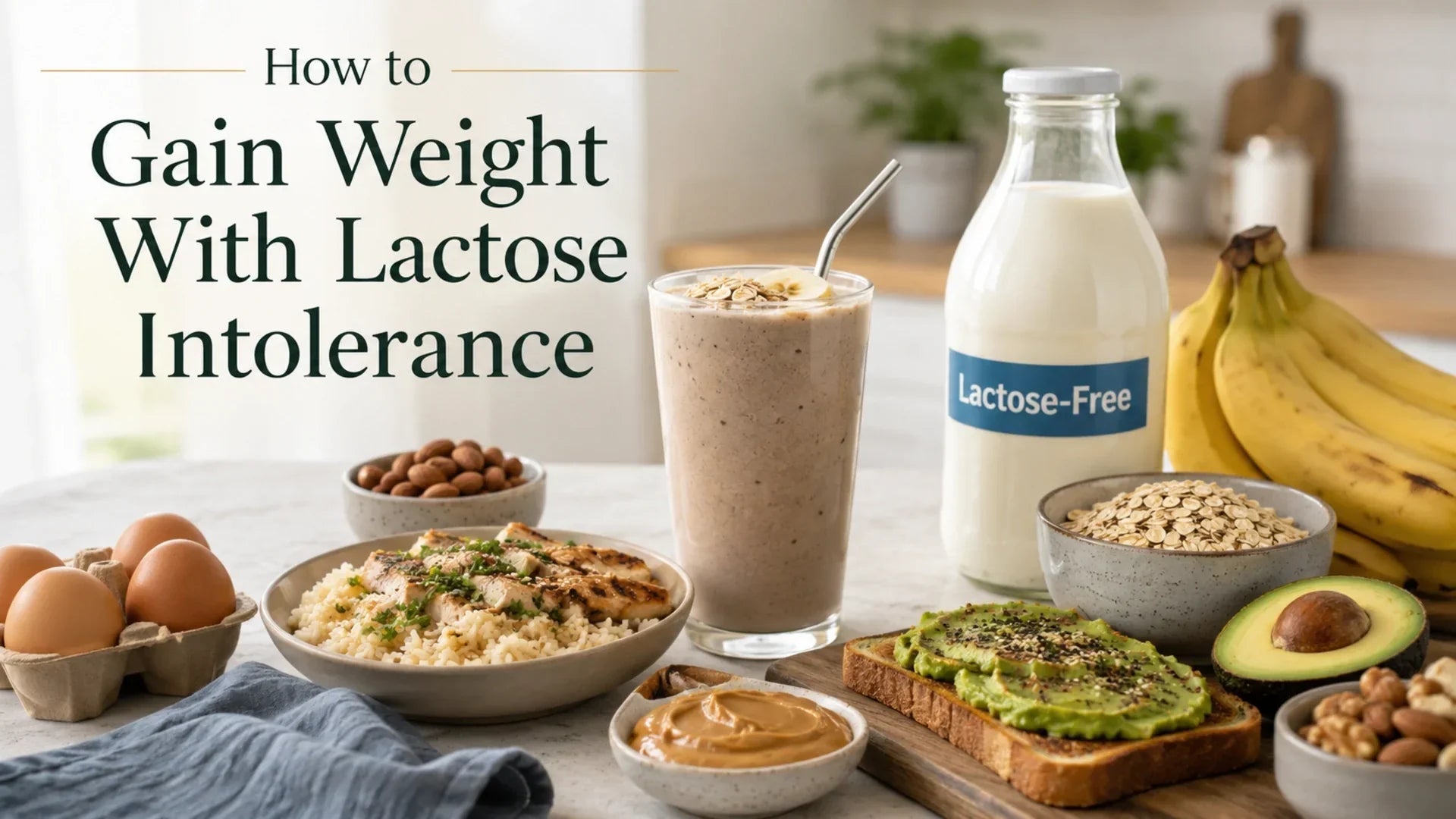
For many adults, adding around 300–500 extra calories per day can be a practical starting point for gradual weight gain. Instead of depending on regular milk, you can get these calories from rice, oats, potatoes, eggs, meat, fish, beans, tofu, nuts, peanut butter, seeds, avocado, olive oil, lactose-free milk, tolerated dairy, and high-calorie lactose-free shakes. (nhs.uk)
You may not need to remove all dairy either. Many people with lactose intolerance can tolerate some lactose, especially in smaller amounts, with meals, or in foods such as yogurt and hard cheese. Lactose-free dairy is another useful option. (niddk.nih.gov)
Quick Answer: How to Gain Weight With Lactose Intolerance
| Goal | What to Do |
|---|---|
| Increase calories | Start with roughly 300–500 extra calories per day if you are an adult |
| Avoid getting too full | Use smaller meals and snacks instead of forcing huge portions |
| Add calories easily | Use nuts, nut butter, olive oil, avocado, oats, rice and dried fruit |
| Replace regular milk | Try lactose-free milk or a suitable fortified dairy-free alternative |
| Get enough protein | Include eggs, meat, fish, beans, lentils, tofu or another protein source in main meals |
| Use liquid calories | Have a lactose-free high-calorie shake between meals if needed |
| Manage lactose | Find your personal tolerance instead of automatically removing every dairy food |
| Track progress | Monitor your weight trend and increase portions if your weight stays unchanged |
| Get medical help when needed | Seek professional advice for unexplained weight loss or persistent digestive symptoms |
This guide is mainly for adults. Children, teenagers, people who are pregnant or breastfeeding, people with eating disorders, and those with health conditions that affect body weight should use an individualized plan.
Can You Gain Weight If You Are Lactose Intolerant?
Yes. Lactose intolerance does not prevent weight gain.
Weight gain happens when your average energy intake is greater than the energy your body uses. Lactose intolerance changes which foods may be comfortable for you to eat, but it does not remove your body's ability to store energy.
Lactose intolerance happens when the small intestine does not digest lactose well because lactase activity is too low for the amount of lactose consumed. Symptoms can include bloating, gas, diarrhea, nausea and abdominal pain. (niddk.nih.gov)
The bigger problem for weight gain often begins after someone develops symptoms.
A person may stop drinking milk, eating yogurt, adding cheese to meals, drinking milkshakes, or using dairy-based snacks. If those calories are removed without being replaced, total calorie intake can fall.
The solution is therefore not simply:
“Eat more.”
A better strategy is:
Replace the calories and nutrients from foods you cannot tolerate with foods you can tolerate.
That principle is the foundation of a good lactose-intolerant weight gain diet.
Why Can Lactose Intolerance Make It Hard to Gain Weight?
Lactose intolerance can make gaining weight harder indirectly, mainly by reducing food intake.
Digestive symptoms may make you feel bloated or uncomfortable after eating. That can reduce appetite and make the next meal harder to finish. Avoiding dairy may also remove convenient sources of calories, protein and calcium from your diet. (niddk.nih.gov)
Some people also become more restrictive than necessary. They stop all dairy and then begin avoiding other foods because they are unsure what is causing their symptoms.
A better plan controls symptoms without making the diet unnecessarily restrictive.
Do You Need to Stop Eating All Dairy?
No. Many people with lactose intolerance do not need to completely avoid dairy.
Tolerance differs from one person to another. NIDDK notes that research suggests many people with lactose intolerance can tolerate about 12 grams of lactose, roughly the amount in one cup of milk, with no symptoms or only mild symptoms. This is not a target that everyone needs to reach; some people tolerate less and others tolerate more. (niddk.nih.gov)
Dairy may also be easier to tolerate when the amount is smaller, when it is eaten with another meal, or when you choose products that naturally contain less lactose. Yogurt and hard cheeses such as cheddar or Swiss are specifically suggested by NIDDK as options some people may tolerate better. (niddk.nih.gov)
The goal is not to prove that you can tolerate dairy. The goal is to understand your personal threshold so you do not remove useful foods unnecessarily.
A simple way to find your tolerance
Pay attention to the food, serving size, timing and symptoms.
You may discover, for example, that a full glass of regular milk causes bloating but a small amount with a meal does not. You may tolerate hard cheese but not ice cream. You may tolerate yogurt better than milk. Or you may feel best using lactose-free products.
A simple food-and-symptom record can help you identify the pattern.
Lactose-Free Does Not Mean Dairy-Free
This distinction is important.
Lactose-free dairy is still dairy. The lactose has been removed or broken down, but milk proteins remain.
NIDDK states that lactose-free and lactose-reduced milk products can be used to lower lactose intake and are nutritionally comparable to regular milk products. (niddk.nih.gov)
Dairy-free products do not contain dairy ingredients. Examples include soy, oat, almond and some coconut drinks.
This matters because someone with lactose intolerance may be able to drink lactose-free cow's milk, while someone with a cow's-milk protein allergy may still react to it.
Lactose Intolerance vs Milk Allergy
Lactose intolerance and milk allergy are not the same condition.
Lactose intolerance is a digestive problem involving lactose, the sugar in milk. Cow's-milk allergy involves an immune reaction to milk proteins and can cause more serious reactions. Lactose-free dairy therefore does not make a milk product safe for someone with a diagnosed milk-protein allergy. (nhs.uk)
If you are unsure whether your symptoms are caused by lactose intolerance or an allergy, seek medical advice rather than testing large amounts of milk on your own.
How Many Extra Calories Do You Need to Gain Weight?
For many adults, adding around 300–500 calories per day is a reasonable place to start.
The NHS recommends this range as one approach to gradual weight gain. Your actual needs depend on your body size, activity, current intake, health and goals. (nhs.uk)
You do not need to make every meal huge.
For someone who struggles with appetite, it is often easier to add calories to food already being eaten.
The key is consistency.
One very large meal occasionally will not compensate for a low intake on most other days.
What if your weight is not increasing?
Monitor your weight trend rather than one day's number.
If you have followed the same intake consistently and your average weight is not increasing, slightly increase portions or add another calorie-dense snack.
You can think of the process as:
Best Foods for Weight Gain With Lactose Intolerance
The best foods are not simply the foods with the most calories. A strong weight-gain diet should provide enough energy, protein, carbohydrates, fats, vitamins and minerals.
| Food | Why It Helps | Easy Way to Use It |
|---|---|---|
| Rice | Easy source of carbohydrates and calories | Serve with chicken, fish, beans or tofu |
| Oats | Easy to combine with higher-calorie foods | Add lactose-free milk, banana and nut butter |
| Potatoes | Useful carbohydrate source | Pair with eggs, fish, meat or oil |
| Pasta | Makes larger-calorie meals easy to build | Add meat sauce, olive oil or tolerated cheese |
| Bread or roti | Convenient carbohydrate source | Add eggs, nut butter, hummus or avocado |
| Bananas | Easy carbohydrate source | Add to oats, snacks or shakes |
| Dates and dried fruit | Concentrated energy in a small portion | Combine with nuts or add to shakes |
| Peanut or nut butter | High calorie density | Add to toast, oats, fruit or smoothies |
| Nuts and seeds | Provide calories in a small volume | Use as snacks or toppings |
| Olive oil | Adds calories with little extra food volume | Add to rice, pasta or vegetables |
| Avocado | Energy-dense food rich in unsaturated fat | Add to toast, eggs or sandwiches |
| Eggs | Convenient protein source | Use at breakfast or in snacks |
| Chicken, meat and fish | Provide protein | Include at lunch or dinner |
| Beans and lentils | Provide plant protein and carbohydrates | Use with rice, curries or soups |
| Tofu and soy foods | Dairy-free protein choices | Use in stir-fries, wraps or rice bowls |
| Lactose-free milk | Convenient calories and protein | Use in oats, drinks or smoothies |
| Lactose-free yogurt | Useful snack base | Add oats, fruit, seeds or nut butter |
| Hard cheese, if tolerated | Can add calories and protein | Add to eggs, potatoes or pasta |
The NHS advises gaining weight through nutritious foods rather than depending mainly on sweets, cakes and sugary drinks. (nhs.uk)
What Is the Best Milk for Weight Gain With Lactose Intolerance?
If you tolerate milk proteins, lactose-free cow's milk is often one of the simplest choices.
It lets you keep many of the calories, protein and minerals supplied by milk while reducing the lactose load. NIDDK states that lactose-free and lactose-reduced dairy products are nutritionally comparable to regular dairy products. (niddk.nih.gov)
Plant-based drinks can also work, especially when dairy must be avoided completely. However, their nutrition can differ considerably between products.
| Milk Option | Weight-Gain Use | What to Check |
|---|---|---|
| Lactose-free dairy milk | Strong all-round option if milk protein is tolerated | Calories, fat level, vitamin D |
| Fortified soy milk | Useful dairy-free option with protein | Protein, calories, calcium, vitamin D |
| Pea-based milk | Can provide useful protein depending on product | Protein, calories and fortification |
| Oat milk | Useful in oats, cereal and smoothies | Calories and protein |
| Almond milk | Can fit the diet but may be low in calories | Calories, protein and fortification |
| Coconut-based drinks | Can add flavor and energy depending on product | Protein, calories and added sugar |
For weight gain, do not choose a replacement simply because it says “dairy-free.”
Compare the serving size, calories, protein, calcium and vitamin D on the nutrition label.
A very low-calorie plant drink may be perfectly healthy, but it may not replace the energy you previously received from milk.
How to Make Meals Higher in Calories Without Making Them Much Bigger
If you become full quickly, forcing twice as much food may make eating even harder.
A better strategy is to increase calorie density.
Use this simple meal formula:
Carbohydrate + Protein + Calorie Booster + Fruit or Vegetable
Examples include:
This approach increases calories without requiring a huge increase in food volume.
Best Snacks for Lactose-Free Weight Gain
A snack works best when it combines more than one nutrient source.
Instead of only eating a banana, combine it with peanut butter.
Instead of only eating toast, add eggs or avocado.
Useful combinations include banana with peanut butter, dates with nuts, toast with nut butter, hummus with bread, eggs with avocado toast, trail mix, oats made with lactose-free milk, or lactose-free yogurt with fruit and nuts.
For someone with a small appetite, two or three compact snacks can be much easier than trying to turn every main meal into a very large meal.
Lactose-Free Weight Gain Shakes
A high-calorie lactose-free shake can make weight gain easier when solid food feels too filling.
The NHS recommends calorie-containing drinks between meals as one strategy for healthy weight gain and advises against filling up on drinks before meals when this reduces appetite. (nhs.uk)
Simple Lactose-Free Weight Gain Shake
Use four parts:
Liquid: lactose-free milk or fortified soy milk
Carbohydrate: banana, oats or dates
Protein: lactose-free yogurt, soy yogurt or a suitable protein powder
Calorie booster: peanut butter, almond butter, tahini, seeds or avocado
A practical combination is:
Lactose-free milk + banana + oats + peanut butter
You can increase the portion of oats, nut butter, milk or dates when more calories are needed.
Because brands and serving sizes differ, the exact calorie content should be calculated from the ingredients you actually use.
Completely Dairy-Free Shake
For someone avoiding dairy entirely, a simple combination is:
Fortified soy milk + banana + oats + peanut butter + dates
A plant protein powder can be added when extra protein is needed.
The shake is useful because it provides energy in a form that may be easier to consume than another full plate of food.
Can You Use Protein Powder If You Are Lactose Intolerant?
Yes, but check the label carefully.
Protein powder is not required for weight gain, but it can be convenient.
Some protein powders, meal-replacement products, protein bars and similar products may contain lactose or milk ingredients. NIDDK specifically identifies these types of processed products as possible hidden sources of lactose. (niddk.nih.gov)
If lactose causes symptoms, look for a product clearly labeled lactose-free or consider a dairy-free protein such as soy, pea or another plant-based blend.
Whey is made from milk, so a whey product should not automatically be assumed to be lactose-free.
And remember: low lactose is not the same as milk-allergy safe.
Protein powder should supplement a good diet, not replace it.
Eggs, chicken, fish, meat, beans, lentils, tofu, nuts and tolerated dairy can all contribute protein without using a supplement.
Protein Powder vs Mass Gainer
A protein powder mainly helps increase protein intake.
A mass gainer is usually designed to provide much more total energy through a combination of protein, carbohydrate and sometimes fat.
You do not need a commercial mass gainer to gain weight.
A homemade shake built from lactose-free milk or soy milk, oats, banana, nut butter and an appropriate protein source can provide the same basic nutritional function while giving you more control over ingredients and serving size.
If you buy a mass gainer, check for milk ingredients and lactose before using it. (niddk.nih.gov)
Can Lactase Tablets Help With Weight Gain?
Lactase tablets do not cause weight gain directly.
They provide the enzyme lactase and may help some people digest lactose-containing foods more comfortably.
NIDDK notes that lactase tablets can be taken before eating or drinking milk products, and lactase drops may also be added to milk. (niddk.nih.gov)
For someone trying to gain weight, the indirect benefit is that better symptom control may make a wider range of foods easier to include.
However, lactase products are optional. You can gain weight without them by using lactose-free or dairy-free foods.
Children and people who are pregnant or breastfeeding should discuss lactase products with a healthcare professional before using them. (niddk.nih.gov)
Don't Forget Calcium and Vitamin D
If you remove regular dairy, replace the nutrients as well as the calories.
People who avoid dairy because of lactose intolerance have a higher risk of inadequate calcium intake. Lactose-free dairy can provide the same amount of calcium as regular dairy. Fortified plant drinks, tofu, some leafy vegetables, beans, nuts and fish with edible soft bones can also contribute calcium. (ods.od.nih.gov)
Vitamin D is also important because it helps the body absorb and use calcium. Some milk, plant drinks and other foods are fortified with vitamin D. (niddk.nih.gov)
Do not assume that you need a calcium or vitamin D supplement simply because you are lactose intolerant.
A clinician or dietitian can assess whether your usual diet provides enough and whether supplementation is appropriate.
Hidden Sources of Lactose
If even small amounts of lactose trigger symptoms, check labels on processed foods.
Milk ingredients may appear in breads, baked foods, cereals, instant potatoes, soups, dressings and other prepared products. Lactose may also be present in some meal-replacement drinks, protein powders and bars. (niddk.nih.gov)
This does not mean everyone with lactose intolerance must avoid every food that may contain a small amount.
Your personal tolerance still matters.
The purpose of label reading is to help explain unexpected symptoms, not to make your diet unnecessarily restrictive.
One-Day Lactose-Free Weight Gain Meal Plan
This example shows how the main principles can work together. It is not a personalized prescription, and portion sizes should be adjusted to your calorie needs, appetite, body size and activity.
| Meal | Example |
|---|---|
| Breakfast | Oats made with lactose-free milk, banana and peanut butter, plus eggs |
| Morning snack | Dates with nuts |
| Lunch | Rice with chicken, fish, beans or tofu, vegetables and olive oil |
| Afternoon snack | Lactose-free weight gain shake |
| Dinner | Pasta or potatoes with meat, fish, beans or tofu, vegetables and avocado or olive oil |
| Evening snack | Lactose-free yogurt with oats and nuts, or peanut butter toast |
The exact foods matter less than the pattern:
Eat consistently + include protein + use calorie-dense foods + replace foods that trigger symptoms rather than simply deleting them.
What If Lactose Intolerance Makes You Too Bloated to Eat?
Control the symptoms first, then make the food you tolerate more calorie-dense.
Eating very large meals while already bloated may make weight gain harder.
Try smaller meals spaced through the day. Add calories using foods that take up little stomach space, such as nut butter, nuts, olive oil, avocado and calorie-containing shakes.
Use liquid calories between meals if drinking with meals makes you feel too full. (nhs.uk)
Most importantly, identify which food and serving size actually causes symptoms.
If regular milk triggers symptoms, replacing it with lactose-free milk is usually more useful for weight gain than simply removing the milk and drinking water instead.
Should You Strength Train While Trying to Gain Weight?
Strength training can be useful if your goal includes gaining muscle, not just body weight.
The NHS recommends strength training as one strategy that can help build muscle during healthy weight gain. (nhs.uk)
You still need enough food.
Training harder while keeping calorie intake too low can make weight gain more difficult because your energy needs rise.
A practical approach is to combine regular resistance exercise with adequate calories, protein, carbohydrates, sleep and recovery.
If you have a medical condition or have been inactive for a long time, discuss exercise with a healthcare professional when appropriate.
Still Not Gaining Weight With Lactose Intolerance?
If your weight stays unchanged, work through the problem systematically.
| Possible Problem | What to Check |
|---|---|
| Calories are still too low | Add another snack or make current meals more calorie-dense |
| Eating is inconsistent | Look at your intake across the full week, not one large eating day |
| Symptoms make you skip food | Replace trigger foods with tolerated alternatives |
| Your milk replacement is very low calorie | Compare calories and protein on the label |
| You become full too quickly | Use smaller meals, snacks and liquid calories between meals |
| You focus only on protein | Remember that total energy intake still needs to be high enough |
| You removed too many foods | Reassess whether every restriction is necessary |
| Your activity increased | Your calorie needs may have risen |
| Weight is falling despite eating more | Seek medical assessment |
If you are unsure how much you actually eat, recording food for several days can reveal whether your intake is as high and consistent as it feels.
Could It Be Something Other Than Lactose Intolerance?
Yes. Persistent bloating, diarrhea or abdominal discomfort should not automatically be blamed on lactose.
NIDDK notes that conditions such as irritable bowel syndrome, celiac disease, inflammatory bowel disease and small-intestinal bacterial overgrowth can cause symptoms similar to lactose intolerance. Doctors may use history, examination and testing, including a hydrogen breath test when appropriate, to clarify the diagnosis. (niddk.nih.gov)
Lactose intolerance can also sometimes occur secondary to another problem affecting the small intestine. A scientific review in Gut notes that lactose malabsorption can result from primary lactase deficiency or from conditions affecting small-intestinal mucosal health. (pubmed.ncbi.nlm.nih.gov)
This is why continuing to remove more and more foods without identifying the underlying problem can be counterproductive.
When Should You See a Doctor or Dietitian?
Seek professional advice if you are losing weight without trying, have experienced sudden weight loss, cannot gain weight despite consistently eating more, have ongoing diarrhea or abdominal pain, continue having symptoms despite reducing lactose, or have become highly restrictive with food.
The NHS specifically advises medical assessment for sudden or unexplained weight loss because an underlying health condition may be responsible. (nhs.uk)
A doctor can help confirm whether lactose intolerance is really the cause of your symptoms. A dietitian can then help you build a higher-calorie diet without unnecessary restriction.
Need a Personalized Weight Gain Plan?
If lactose intolerance, poor appetite, digestive discomfort, or difficulty gaining weight is making eating difficult, MNT can help you build a personalized weight gain plan around your food tolerance, routine, calorie needs, and goals.
Book a Weight Gain ConsultationFrequently Asked Questions
Can lactose intolerance stop you from gaining weight?
No. Lactose intolerance does not remove your body's ability to gain weight. It can make weight gain harder if symptoms reduce your appetite or if you remove calorie-rich foods without replacing them. (niddk.nih.gov)
Can lactose intolerance cause weight loss?
It may contribute indirectly if digestive symptoms cause you to eat less or heavily restrict your diet. However, unexplained or ongoing weight loss should not automatically be blamed on lactose intolerance and deserves medical assessment. (nhs.uk)
Can I gain weight without drinking milk?
Yes. Weight gain can come from foods such as rice, oats, bread, potatoes, pasta, eggs, meat, fish, tofu, beans, lentils, nuts, nut butter, avocado and oils. Milk is convenient, not essential.
Is lactose-free milk good for weight gain?
Yes, it can be. If you tolerate milk proteins, lactose-free dairy milk can provide calories, protein and calcium while reducing lactose intake. NIDDK considers lactose-free and lactose-reduced dairy nutritionally comparable to regular dairy products. (niddk.nih.gov)
What is the best milk for lactose intolerance and weight gain?
Lactose-free cow's milk is a practical first option if you tolerate milk proteins. Fortified soy, pea, oat and other plant drinks can also work. Compare calories, protein, calcium and vitamin D because products differ.
Can lactose-intolerant people eat cheese?
Many can tolerate some cheese. Hard cheeses such as cheddar and Swiss are lower in lactose than many other milk products and are among the options NIDDK suggests trying. (niddk.nih.gov)
Can lactose-intolerant people eat yogurt?
Some can. NIDDK specifically notes yogurt as one of the dairy foods that may be easier for some people with lactose intolerance to tolerate. Lactose-free yogurt is another option. (niddk.nih.gov)
Can I drink protein shakes if I am lactose intolerant?
Yes. Use lactose-free milk or a tolerated plant drink and check any protein powder for lactose or milk ingredients. Some protein powders and meal-replacement products may contain lactose. (niddk.nih.gov)
What protein powder is best for lactose intolerance?
There is no single best product. A clearly labeled lactose-free protein powder or dairy-free option such as soy or pea protein can be easier to manage. Choose based on your tolerance, protein needs, ingredients and calorie goals.
Can I take a mass gainer if I am lactose intolerant?
Possibly, but read the label. Some mass gainers contain whey, milk ingredients or lactose. A homemade shake gives you more control over what goes into it.
Is peanut butter good for weight gain?
Yes, it can be useful. Peanut butter is calorie-dense and easy to add to toast, oats, bananas or shakes. It works best as one part of a varied diet.
What can I eat before bed to gain weight without dairy?
A small snack such as peanut butter toast, nuts with dried fruit, oats made with soy milk, soy yogurt with granola, or a dairy-free shake can work. Choose something that feels comfortable and does not disturb your sleep.
Can lactase tablets help me gain weight?
Not directly. They may help you digest lactose-containing foods more comfortably, which can make it easier to include certain foods in your diet. (niddk.nih.gov)
Do I need calcium supplements if I cannot drink milk?
Not automatically. Calcium can come from lactose-free dairy, fortified plant foods, tofu, some vegetables, beans, nuts and fish with edible bones. People who avoid dairy are at greater risk of inadequate calcium intake, so discuss supplementation with a professional if you are unsure. (ods.od.nih.gov)
Is lactose intolerance the same as milk allergy?
No. Lactose intolerance is a digestive problem involving milk sugar. Milk allergy is an immune reaction to milk proteins. Lactose-free dairy may therefore still be unsafe for someone with a milk allergy. (nhs.uk)
Should I completely stop eating dairy if I am lactose intolerant?
Not necessarily. Many people tolerate some lactose. Smaller servings, dairy with meals, yogurt, hard cheese, lactose-free dairy or lactase products may all be options depending on your personal tolerance. (niddk.nih.gov)
Bottom Line
The best way to gain weight with lactose intolerance is to create a small, consistent calorie surplus while keeping lactose below the level that causes symptoms.
You do not need regular milk to gain weight, and you do not automatically need to remove every dairy food.
Build your diet around calorie-dense foods such as rice, oats, potatoes, pasta, nuts, nut butter, olive oil and avocado. Include regular protein sources such as eggs, meat, fish, beans, lentils or tofu. Use lactose-free dairy or suitable fortified alternatives, and add a high-calorie lactose-free shake when solid food alone is difficult.
Most importantly, replace rather than simply restrict.
If regular milk causes symptoms, replace it with something that still provides useful calories and nutrients. If large meals make you uncomfortable, use smaller meals with calorie-dense additions. If your weight is not increasing, review your intake and adjust it gradually.
And if you are losing weight without trying, cannot gain weight despite consistently eating more, or continue having digestive symptoms even after reducing lactose, speak with a doctor or registered dietitian rather than removing more foods from your diet. (nhs.uk)
We rely on peer-reviewed studies and reputable medical journals.