



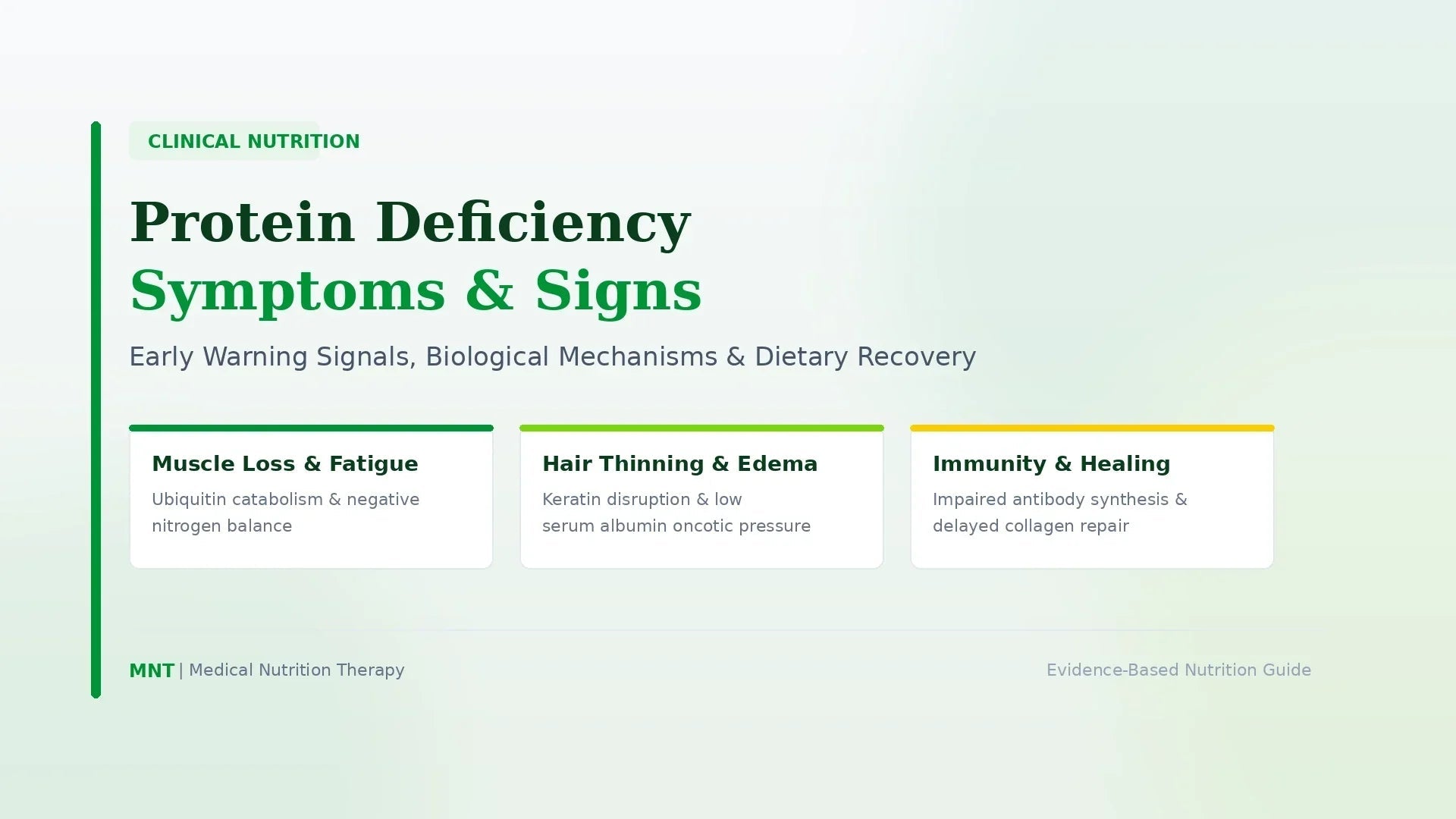
Protein Deficiency Symptoms: Signs, Causes, Diagnosis, and Treatment
Learn the key symptoms of protein deficiency—from muscle loss and chronic fatigue to hair thinning and swelling—along with clinical causes, diagnostic tests, and evidence-based dietary fixes.
Protein deficiency (hypoproteinemia) occurs when dietary protein intake fails to meet physiological demands, or when the body cannot properly absorb and utilize amino acids.
Primary symptoms include:
- Muscle loss, weakness, and persistent fatigue (via muscle catabolism)
- Hair thinning (telogen effluvium), brittle nails, and dry skin
- Edema (fluid swelling) in the feet, legs, or abdomen due to low serum albumin
- Increased appetite and constant food cravings
- Frequent infections and slow wound healing (due to impaired antibody and collagen synthesis)
- Fatty liver (hepatic steatosis) in progressive or severe cases
While true clinical malnutrition (Kwashiorkor or Marasmus) is rare in industrialized nations, marginal protein deficiency frequently affects older adults, individuals with restrictive diets, and people with gastrointestinal malabsorption or liver disease.
Protein Deficiency Manifestations Across Body Systems
| Body System | Clinical Manifestations | Pathophysiological Mechanism |
|---|---|---|
| Musculoskeletal | Muscle wasting (sarcopenia), reduced grip strength, chronic weakness | Skeletal muscle protein is catabolized to replenish the plasma free amino acid pool for vital organ maintenance. |
| Dermatological | Hair shedding (telogen effluvium), brittle nails, dry/flaking skin | The body downregulates keratin, elastin, and collagen synthesis, prioritizing amino acids for essential metabolic functions. |
| Vascular & Fluid Balance | Peripheral edema (swollen feet, ankles, and abdomen) | Depleted serum albumin reduces plasma colloid oncotic pressure, allowing fluid extravasation into interstitial spaces. |
| Immune System | Frequent infections, prolonged recovery, slow wound closure | Insufficient amino acids impair immunoglobulin (antibody) production, cell-mediated immunity, and fibroblast proliferation. |
| Gastrointestinal & Hepatic | Hepatic steatosis (fatty liver), impaired nutrient absorption | Reduced apolipoprotein synthesis inhibits the transport of triglycerides out of the liver, causing intrahepatic fat accumulation. |
| Metabolic & Appetite | Persistent hunger, cravings, postprandial dissatisfaction | Inadequate protein blunts satiety hormones (peptide YY, GLP-1, cholecystokinin) while elevating ghrelin levels. |
| Neurological & Mood | Mental fatigue, brain fog, mood fluctuations | Deficits in precursor amino acids (e.g., tryptophan, tyrosine) impair serotonin, dopamine, and norepinephrine synthesis. |
What Is Protein Deficiency?
Proteins are fundamental polymers composed of 20 amino acids—nine of which are essential amino acids (EAAs) that must be obtained directly through diet because the human body cannot synthesize them de novo.
Protein undergoes continuous turnover (breakdown and synthesis). When daily dietary intake does not match nitrogen losses (from skin desquamation, hair shedding, gastrointestinal cell turnover, and urinary nitrogen excretion), the body enters a state of negative nitrogen balance. Over time, this forces systemic tissue catabolism, compromising structural integrity, enzymatic reactions, hormone production, and immune defenses.
(Positive = Growth/Repair | Negative = Deficiency/Wasting)
How Much Protein Does Your Body Need?
Protein requirements vary based on chronological age, body mass, metabolic rate, physical activity level, and clinical health status.
1. Baseline Recommended Dietary Allowance (RDA)
- 0.8 g of protein per kilogram of body weight per day (0.36 g/lb) for sedentary, healthy adults.
- Example: A sedentary adult weighing 70 kg (154 lbs) requires a baseline minimum of 56 grams of protein daily.
2. Population-Specific Elevated Requirements
- Older Adults (65+ years): 1.0 to 1.2 g/kg/day to counteract age-related anabolic resistance, preserve skeletal muscle mass, and prevent sarcopenia.
- Athletes and Active Individuals: 1.2 to 2.0 g/kg/day to support exercise-induced muscle protein synthesis (MPS) and tissue repair.
- Clinical Recovery (Trauma, Surgery, Wounds): 1.2 to 1.5+ g/kg/day to facilitate tissue regeneration and maintain positive nitrogen balance.
In-Depth Analysis: Signs and Symptoms of Protein Deficiency
- Persistent hunger / cravings
- Unexplained fatigue & lethargy
- Mild loss of muscle definition
- Telogen effluvium (hair loss)
- Slow wound healing
- Recurrent minor infections
- Peripheral edema (hypoalbuminemia)
- Severe sarcopenia & emaciation
- Hepatic steatosis (fatty liver)
1. Muscle Wasting and Sarcopenia
Skeletal muscle represents the body’s largest reservoir of amino acids. When dietary intake is insufficient to maintain essential organ function, the ubiquitin-proteasome pathway accelerates the breakdown of myofibrillar proteins (actin and myosin).
- Early clinical signs: Subtle loss of muscle tone, decreased grip strength, early physical exhaustion during routine tasks, and prolonged post-exercise soreness.
- Long-term impact: Accelerated sarcopenia, diminished functional mobility, and increased fall risk in older populations.
2. Dermatological Changes: Hair Thinning, Skin Fragility, and Brittle Nails
The integumentary system relies heavily on rapid cellular turnover supported by structural proteins: collagen, elastin, and keratin.
- Hair: Insufficient protein shifts growing hair follicles prematurely into the resting phase, resulting in diffuse shedding known as telogen effluvium. Hair becomes dry, brittle, and loses natural pigmentation.
- Nails: Deficiencies manifest as longitudinal ridging, spoon-shaped depressions (koilonychia-like brittleness), and easy tearing.
- Skin: Reduced collagen turnover causes epidermal thinning, dryness, flaking, and loss of skin elasticity.
3. Swelling and Edema (Hypoalbuminemia)
Human serum albumin, synthesized by hepatocytes, makes up roughly 50–60% of total blood plasma proteins. Albumin is primarily responsible for generating plasma colloid oncotic pressure, which pulls fluid back into the capillary beds from surrounding interstitial tissues.
- When severe protein insufficiency or liver dysfunction drops serum albumin levels significantly, oncotic pressure falls.
- Fluid leaks out of the intravascular space into the interstitial compartment, resulting in pitting edema in the feet, ankles, lower legs, and peritoneal cavity (ascites).
4. Compromised Immunity and Impaired Wound Healing
Proteins are critical for synthesizing immunoglobulins (antibodies), cytokines, acute-phase proteins, and cellular components of the innate and adaptive immune systems (such as T-lymphocytes and macrophages).
- Inadequate protein intake blunts antibody responses, increasing susceptibility to respiratory, gastrointestinal, and systemic infections.
- Wound repair demands rapid collagen synthesis, angiogenesis, and fibroblast proliferation. Protein-deficient individuals exhibit significantly delayed wound closure and heightened postoperative complication rates.
5. Dysregulated Appetite and Food Cravings
Protein exhibits the highest thermic effect of food (TEF) and the strongest satiety signaling among all macronutrients.
- Protein ingestion stimulates the release of satiety hormones including cholecystokinin (CCK), glucagon-like peptide-1 (GLP-1), and peptide YY (PYY), while suppressing the orexigenic (hunger) hormone ghrelin.
- Low-protein, high-refined-carbohydrate meals cause rapid blood glucose fluctuations and insufficient satiety signaling, driving constant hunger and carbohydrate cravings.
6. Chronic Fatigue and Lethargy
Fatigue associated with low protein intake operates through multiple mechanisms:
- Loss of functional muscle mass increases the metabolic effort needed for physical movement.
- Impaired synthesis of hemoglobin and transferrin can lead to secondary nutritional anemias, reducing tissue oxygenation.
- Reduced synthesis of peptide hormones and metabolic enzymes diminishes cellular ATP production.
7. Fatty Liver Disease (Hepatic Steatosis)
In moderate-to-severe protein deficiency, hepatocytes lose the capacity to synthesize apolipoproteins (particularly apolipoprotein B-100). Apolipoproteins are essential components of Very Low-Density Lipoproteins (VLDL), which package and transport triglycerides out of the liver into peripheral circulation. Without adequate apolipoproteins, lipids accumulate within liver cells, leading to non-alcoholic hepatic steatosis and potential inflammation.
8. Severe Malnutrition Syndromes
In severe, life-threatening scenarios, protein malnutrition manifests as two distinct clinical conditions:
- Kwashiorkor: Severe, selective dietary protein deficiency despite adequate or borderline caloric intake. Characterized by marked bilateral pitting edema ("pot belly"), hepatic steatosis, desquamating dermatosis, and depigmented hair.
- Marasmus: Generalized severe starvation involving extreme deficiencies of both protein and total caloric energy. Characterized by severe somatic muscle wasting, complete loss of subcutaneous adipose tissue, and a gaunt, aged facial appearance without gross edema.
Causes and Clinical Risk Factors
Protein deficiency is rarely isolated to food insecurity in modern clinical settings. It generally stems from three primary etiologies:
- Low total caloric intake
- Severely restricted diets
- Low-protein vegan diets
- Celiac disease (villous atrophy)
- Inflammatory Bowel Disease (IBD)
- Exocrine pancreatic insufficiency
- Liver cirrhosis (impaired synthesis)
- Nephrotic syndrome (proteinuria)
- Hypercatabolic trauma / burns
- Dietary Inadequacy: Very low-calorie diets, unmonitored elimination diets, severe anorexia, or unbalanced plant-based diets lacking complementary amino acid profiles.
- Gastrointestinal Malabsorption: Structural damage to the intestinal mucosa—such as villous atrophy in untreated celiac disease, transmural inflammation in Crohn's disease, short bowel syndrome, or parasitic infections (e.g., Giardiasis)—prevents amino acid uptake.
- Impaired Hepatic Synthesis: End-stage liver diseases (cirrhosis, chronic hepatitis) compromise the liver's ability to synthesize albumin and transport proteins.
- Elevated Protein Excretion / Losses: Nephrotic syndrome and chronic kidney disease can cause massive urinary protein loss (proteinuria); extensive thermal burns and severe open wounds cause substantial exudative protein loss.
- Hypercatabolic / Hypermetabolic States: Critical illness, sepsis, polytrauma, major surgical interventions, and advanced malignancies significantly increase baseline protein breakdown.
Clinical Diagnosis and Laboratory Evaluation
A definitive diagnosis of protein deficiency requires clinical assessment paired with objective laboratory testing:
- Serum Total Protein: Normal reference range is 6.0 to 8.3 g/dL. Reflects the combined concentration of albumin and globulins.
- Serum Albumin: Normal reference range is 3.5 to 5.0 g/dL. Reflects longer-term nutritional status due to its relatively long half-life of approximately 20 days.
- Serum Prealbumin (Transthyretin): Normal reference range is 15 to 36 mg/dL. With a rapid half-life of 2 to 3 days, prealbumin is a more sensitive marker for acute changes in nutritional status.
- Complete Blood Count (CBC): Screen for concurrent anemias related to impaired globin synthesis or coexisting micronutrient deficiencies (iron, vitamin B12, folate).
- Urinalysis (Spot Urine Protein-to-Creatinine Ratio): Essential to rule out renal protein loss when hypoproteinemia is detected.
Dietary Strategies and Protein Sources
Correcting mild-to-moderate dietary protein deficiency involves increasing total daily protein intake and optimizing protein distribution across meals.
High-Quality Protein Comparison
| Food Source | Serving Size | Average Protein Content | Complete Amino Acid Profile? |
|---|---|---|---|
| Chicken Breast (Cooked) | 100 g (3.5 oz) | 31 g | Yes |
| Salmon / Tuna (Cooked) | 100 g (3.5 oz) | 25–26 g | Yes |
| Lean Beef / Turkey | 100 g (3.5 oz) | 26–28 g | Yes |
| Eggs (Whole) | 2 large eggs | 12–13 g | Yes |
| Greek Yogurt (Plain, Non-fat) | 170 g (6 oz) | 15–17 g | Yes |
| Cottage Cheese | 1 cup (225 g) | 28 g | Yes |
| Tofu (Firm) | 100 g (3.5 oz) | 10–12 g | Yes |
| Tempeh | 100 g (3.5 oz) | 19–20 g | Yes |
| Edamame (Cooked) | 1 cup (155 g) | 17 g | Yes |
| Lentils (Cooked) | 1 cup (198 g) | 18 g | No (Combine with grains) |
| Chickpeas / Black Beans | 1 cup (164 g) | 15 g | No (Combine with grains) |
Optimization Strategies
- Target the Leucine Threshold: Consume 2.5 to 3.0 grams of leucine (an essential branched-chain amino acid) per meal to stimulate the mTOR pathway and maximize muscle protein synthesis.
- Distribute Intake Evenly: Distribute protein evenly across 3–4 meals (25–40 g per meal) rather than consuming the majority of daily protein in a single evening meal.
- Combine Complementary Plant Proteins: If following a vegetarian or vegan diet, combine diverse plant protein sources (e.g., legumes + whole grains, such as lentils with rice or hummus with whole-wheat pita) across the day to supply all nine essential amino acids.
When to Contact a Doctor
Consult a licensed healthcare professional if you experience:
- Persistent, unexplained fatigue or physical weakness despite adequate sleep.
- Noticeable, progressive loss of muscle volume or grip strength.
- Visible swelling (edema) in your feet, ankles, legs, or abdomen.
- Sudden, diffuse hair thinning or non-healing skin abrasions.
- Chronic gastrointestinal symptoms (persistent diarrhea, steatorrhea, abdominal pain) accompanied by unintentional weight loss.
If you are struggling with chronic fatigue, unintentional muscle loss, or dietary restrictions, our clinical dietitians and nutritionists provide personalized medical nutrition therapy tailored to your biochemical profile and metabolic goals.
Book an Online Clinical ConsultationBottom Line
Protein deficiency can affect multiple body systems, including muscles, skin, immunity, metabolism, and overall recovery. Recognizing early signs and addressing inadequate protein intake or underlying medical causes can help protect long-term health.
Frequently Asked Questions (FAQ)
What is typically the earliest sign of protein deficiency?
The earliest signs are often subtle metabolic and physical changes: increased appetite, persistent cravings, mild muscle fatigue, reduced exercise tolerance, and slower recovery from routine physical exertion.
Can protein deficiency cause hair loss?
Yes. When protein intake is inadequate, the body conserves its amino acid pool for essential organs by downregulating hair follicle activity. This triggers telogen effluvium, a condition where hair prematurely enters the resting/shedding phase, causing diffuse thinning.
Can you develop protein deficiency while eating enough calories?
Yes. This occurs when a diet consists primarily of refined carbohydrates, sugars, and fats with minimal protein density. Caloric sufficiency does not guarantee amino acid adequacy. In severe forms, this manifests clinically as Kwashiorkor.
How long does it take to recover from protein deficiency?
Recovery depends on the underlying cause and severity. With appropriate dietary corrections, energy levels and appetite regulation often improve within 1 to 2 weeks. Structural recovery—such as rebuilding lost muscle tissue, restoring normal serum albumin levels, and normalizing hair and nail growth—typically requires 2 to 3 months of consistent, adequate protein intake.
What blood tests identify low protein levels?
Physicians typically order a Comprehensive Metabolic Panel (CMP) to assess Total Protein and Serum Albumin. For a more immediate assessment of recent nutritional changes, a Serum Prealbumin (Transthyretin) test may be ordered.
We rely on peer-reviewed studies and reputable medical journals.