

Gestational Diabetes Diet Plan: A Science-Based Guide on What to Eat & Avoid
A gestational diabetes diet focuses on balanced meals with controlled carbohydrates, emphasizing non-starchy vegetables, lean protein, whole grains, and healthy fats. It is recommended to eat at regular intervals (3 meals + 2–3 snacks). Pairing carbohydrates with protein or fat, avoiding sugary drinks and refined carbs, and staying physically active helps maintain stable blood sugar and supports a healthy pregnancy.
What Is Gestational Diabetes?
Gestational Diabetes Mellitus (GDM) is a form of high blood sugar that develops during pregnancy, usually in the second or third trimester. It occurs when placental hormones increase insulin resistance, and the body cannot produce enough insulin to keep blood glucose within a healthy range.
Importantly, gestational diabetes is not caused by eating sugar alone and is not a personal failure. It is a common physiological response to pregnancy hormones.
How Common Is It?
Globally, approximately 1 in 6 pregnancies is affected by high blood glucose during pregnancy, with gestational diabetes being the most common form.
Why Diet Matters
Proper nutrition is the first-line and most effective treatment for gestational diabetes in most women.
Risks of Poorly Controlled GDM
If blood sugar remains uncontrolled, risks increase for both mother and baby:
For the Mother
- Preeclampsia (dangerously high blood pressure)
- Cesarean delivery
- Higher lifetime risk of type 2 diabetes
For the Baby
- Macrosomia (excessive birth weight)
- Birth injuries (e.g., shoulder dystocia)
- Neonatal hypoglycemia after birth
- Higher long-term risk of obesity and type 2 diabetes
The good news: dietary management dramatically reduces these risks.
Core Principles of the Diet
The goal is not to eliminate carbohydrates, but to manage their type, amount, and timing. Carbohydrates are essential for fetal brain development.
Recommended Minimum Intake
- At least 175 g carbohydrates/day for a singleton pregnancy.
- Quality and distribution matter more than total elimination.
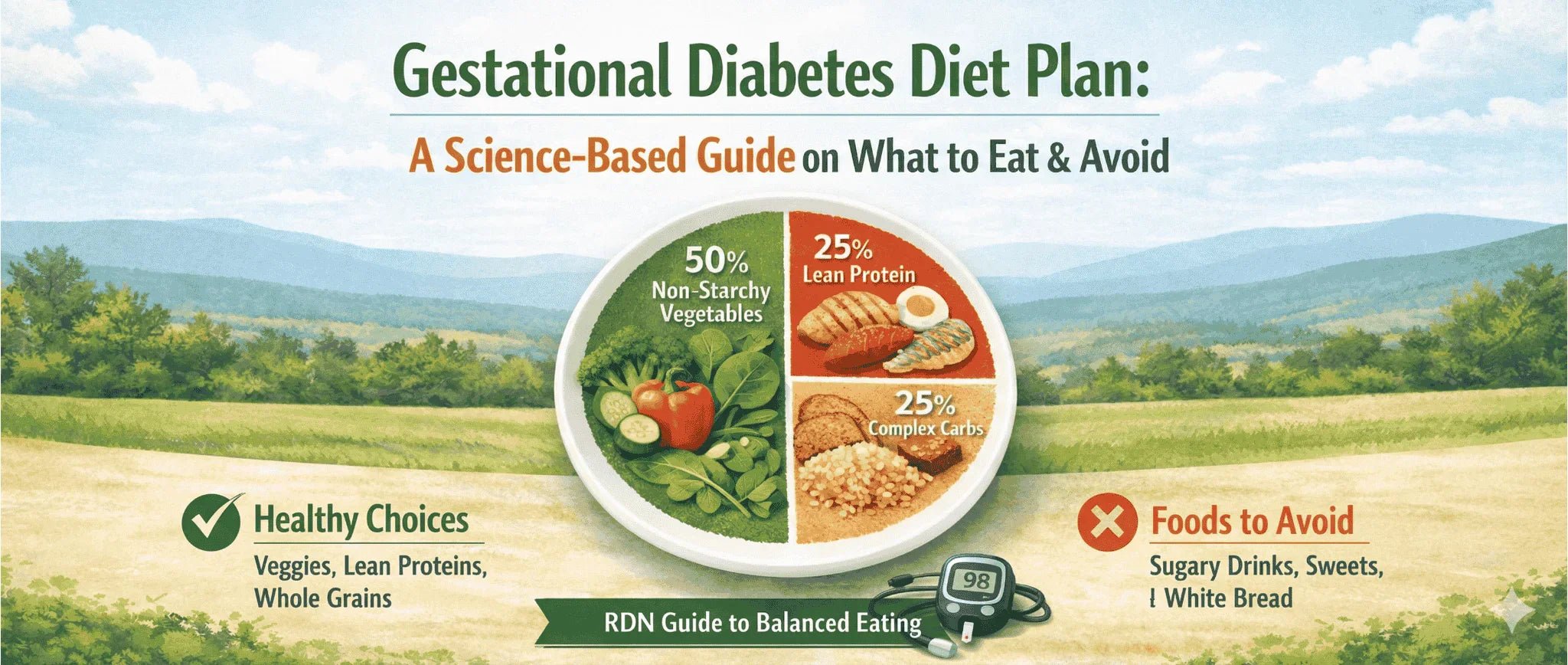
The Plate Method (Clinically Recommended)
The easiest, evidence-based way to balance meals. This method stabilizes post-meal blood sugar without constant carb counting.
Spinach, broccoli, cauliflower, peppers
Chicken, fish, eggs, tofu, lentils
Brown rice, quinoa, whole-grain bread
Meal Timing: “Graze Like a Toddler”
Large meals cause large glucose spikes. Smaller, frequent meals work best.
Ideal pattern
- 3 moderate meals
- 2–3 snacks
- Eat every 2–3 hours
- Do not skip meals
Many women are more insulin-resistant in the morning, so breakfast often needs fewer carbs than lunch or dinner.
Carbohydrate Management
The #1 Rule: Never Eat a “Naked” Carbohydrate
Always pair carbohydrates with protein or healthy fat. Protein and fat slow digestion, preventing rapid blood sugar spikes.
Best Foods for Gestational Diabetes
Complex Carbs (Low-GI)
- Whole grains: oats, quinoa, brown rice
- Legumes: lentils, chickpeas, black beans
- Starchy vegetables: sweet potato, corn
Lean Proteins
- Chicken breast, turkey
- Fish (especially salmon)
- Eggs, Tofu, Tempeh
Healthy Fats
- Olive oil, avocado
- Nuts (almonds, walnuts)
- Seeds (chia, flax)
Foods to Limit
- Sugary beverages & juices
- Refined white bread/rice
- Processed sugary snacks
Daily Habits & Lifestyle
Carb Distribution
- Breakfast: 15–30 g carbs
- Lunch/Dinner: 30–45 g carbs
- Snacks: ~15 g carbs each
Hydration & Activity
- Aim for 8–10 cups of water daily.
- Walk for 10-15 mins after meals to lower blood sugar.
- Try swimming or prenatal yoga.
Cultural Adaptability
The gestational diabetes diet is flexible and can fit any cultural food pattern:
- South Asian (Desi) Diets: Opt for brown basmati rice or smaller portions of white rice paired with high-fiber daal and vegetables. Use whole wheat flour (chakki) for roti/chapati instead of refined white flour (maida).
- Vegetarian/Vegan: Rely on beans, lentils, tofu, nuts, and dairy/eggs for protein.
- Mediterranean: Focus on olive oil, fish, and plenty of leafy greens.
- Halal/Kosher: Fully compatible with proper planning.
A registered dietitian can personalize your plan.
Frequently Asked Questions
Can I eat rice with gestational diabetes?
Yes, you can eat rice, but portion size is key. Choose brown rice, Basmati rice, or wild rice as they have a lower glycemic index than sticky white rice. Limit your portion to about 1/2 cup cooked and always eat it with protein (like chicken or lentils) and vegetables to slow down sugar absorption.
How many carbohydrates should I eat per day?
Most guidelines recommend a minimum of 175 grams of carbohydrates per day for a singleton pregnancy to support fetal brain development. These should be spread out over 3 meals and 2-3 snacks. Your specific targets may vary based on your blood sugar readings and doctor's advice.
Is fruit safe to eat?
Yes, fruit provides essential vitamins and fiber. However, fruit contains natural sugar. It is best to choose lower-sugar fruits like berries, apples, or pears, and eat small portions. Avoid fruit juices and always pair your fruit with a fat or protein (like nuts or cheese).
Will gestational diabetes go away after birth?
For most women, blood sugar levels return to normal shortly after delivery. However, having GDM increases your risk of developing Type 2 diabetes later in life. Maintaining a healthy diet and active lifestyle after pregnancy is important for long-term health.
Can I fast (e.g., Intermittent Fasting or Ramadan) with GDM?
Fasting for long periods is generally not recommended with gestational diabetes because it can cause blood sugar to drop too low (hypoglycemia) or spike too high when you break the fast. It also produces ketones which may not be ideal for the baby. Always consult your obstetrician before fasting.
Is the Keto diet safe during pregnancy?
Strict Keto diets are typically not recommended during pregnancy because they eliminate too many carbohydrates, which are necessary for the baby's growth. The goal is to choose complex carbohydrates, not to cut them out entirely.
Key Takeaways
- A gestational diabetes diet balances carbohydrates, protein, and fats.
- Eat 3 meals + 2–3 snacks, spaced evenly.
- Choose whole, low-GI carbohydrates.
- Never eat carbohydrates alone; always pair with protein/fat.
- Avoid sugary drinks and refined foods.
- Stay hydrated and physically active.
We rely on peer-reviewed studies and reputable medical journals.