


Best Time to Take Moringa Powder: Morning, Night, Before or After Meals?
The best time to take moringa powder is usually in the morning with breakfast or with lunch. Taking it with food is easier on the stomach, supports consistency, and is more practical for most wellness...
Quick Answer: What Is the Best Time to Take Moringa Powder?
The best time to take moringa powder is in the morning with breakfast or with lunch.
For most people, taking moringa powder with food is better than taking it on an empty stomach because it may reduce nausea, bloating, gas, cramps, acidity, or loose stool.
The simplest routine is:
Take moringa powder once daily with breakfast or lunch. Start with ¼ to ½ teaspoon. If tolerated, increase gradually according to your product label or your healthcare provider’s advice.
If you are using moringa powder for blood sugar support, the most logical timing is with or shortly before a meal. However, people with diabetes, prediabetes, low blood sugar episodes, or blood-sugar-lowering medication should ask a healthcare provider before using moringa regularly.
Moringa powder can be part of a healthy diet, but it is not a cure, not a fat burner, not a diabetes treatment, and not a replacement for medical care.
Best Time to Take Moringa Powder by Goal
Here is the simplest way to choose the best time to take moringa powder based on your goal, digestion, and daily routine.

| Goal or Situation | Best Time to Take Moringa Powder | Why |
|---|---|---|
| General wellness | Morning with breakfast | Easy to remember and gentle for most people |
| Daily nutrition | Morning or lunch | Fits naturally into meals, smoothies, oats, and yogurt |
| Energy routine | Morning or early afternoon | Better for daytime nutrition habits |
| Sensitive stomach | With or after food | May reduce nausea, gas, cramps, acidity, or loose stool |
| Digestion support | With or after meals | Easier on the gut than empty-stomach use |
| Blood sugar support | With or shortly before a meal | More relevant to meal-related blood sugar rise |
| Weight management | With breakfast or lunch | Supports routine, satiety habits, and balanced eating |
| Skin and hair nutrition | Any consistent mealtime | Consistency and overall diet matter more than timing |
| Iron support | With vitamin C-rich food | Vitamin C can support plant-based iron absorption |
| Workout routine | With breakfast, lunch, or post-workout smoothie | Best used as nutrition support, not as a stimulant |
| Night use | With dinner only if tolerated | Avoid if it causes bloating, reflux, or sleep discomfort |
If you want to follow this routine with a leaf-only product, you can view MNT 100% Organic Moringa Leaf Powder in Pakistan. Use it with breakfast or lunch, start with a small amount, and follow the product label.
What Is Moringa Powder?
Moringa powder is made from dried leaves of the Moringa oleifera tree. It is also known as the drumstick tree, horseradish tree, or miracle tree.
The leaves are dried and ground into a green powder that can be mixed into water, smoothies, yogurt, oats, soups, lentils, curries, protein shakes, or warm drinks.
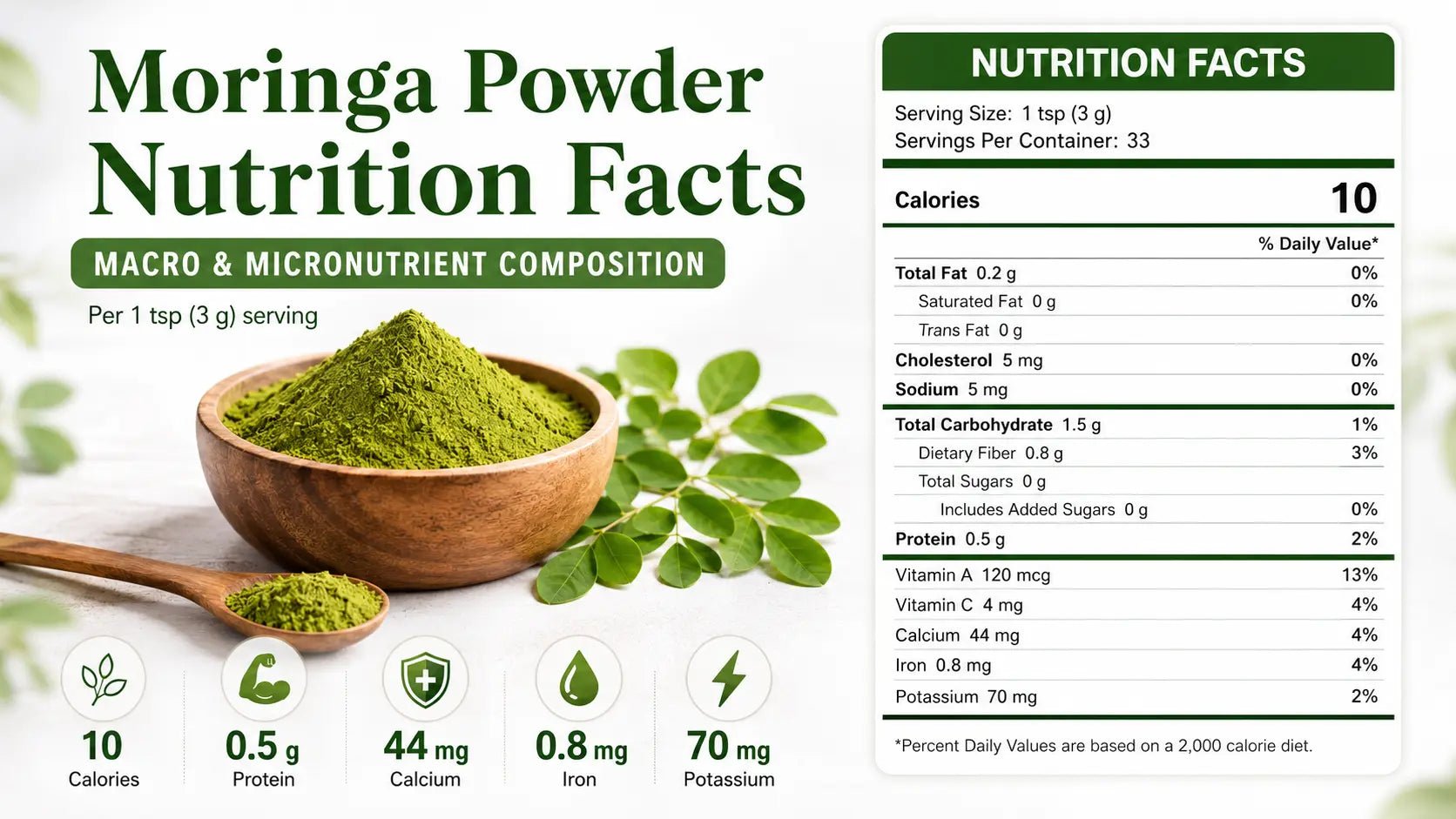
Moringa leaves naturally contain nutrients and plant compounds such as:
- Plant protein
- Fiber
- Calcium
- Potassium
- Iron
- Magnesium
- Beta-carotene
- Polyphenols
- Flavonoids
- Phenolic acids
- Isothiocyanates
Because of this nutrient profile, moringa powder is often used as a food-based supplement for general wellness, antioxidant intake, blood-sugar-conscious diets, digestion-friendly routines, skin and hair nutrition, and daily micronutrient support. You can also read our detailed guide on moringa powder benefits to understand what research really shows.
However, moringa powder should be used realistically. It can support your diet, but it cannot fix poor eating habits, replace medication, or deliver instant results.
Does the Timing of Moringa Powder Really Matter?
Timing matters, but it is not the most important factor.
For moringa powder, the most important factors are:
- Consistency: taking it regularly matters more than taking it at an exact hour.
- Tolerance: taking it with food is better if it upsets your stomach.
- Dose: starting small is safer than taking a large amount immediately.
- Product quality: low-quality powders may carry contamination risks.
- Medical safety: timing matters more if you take diabetes, blood pressure, thyroid, or blood-thinning medication.
There is no strong evidence showing that moringa powder must be taken at one exact time of day. For most healthy adults, the best time is the time they can take it consistently without side effects.
That is why morning with breakfast is the best default answer.
Timing becomes more important if you:
- Have a sensitive stomach
- Feel nausea from green powders
- Are using moringa around meals for blood sugar support
- Take diabetes, blood pressure, thyroid, or blood-thinning medication
- Are pregnant or breastfeeding
- Want to avoid nighttime bloating
- Are using moringa as part of a structured weight management routine
Morning vs Night: Which Is Better for Moringa Powder?
Morning: Best for Most People
Morning is the best time to take moringa powder for most people because it fits naturally into breakfast and daily routines.
Morning use is best if you want moringa for:
- General wellness
- Daily nutrition
- Energy support
- Weight management routine
- Blood-sugar-conscious meals
- Smoothies, oats, yogurt, or breakfast bowls
- A consistent supplement routine
- Avoiding late-night digestive discomfort
Moringa does not work like caffeine. It is not a stimulant in the same way coffee is. However, many people prefer it earlier in the day because it fits better into a daytime nutrition routine.
Best morning method:
Mix ¼ to ½ teaspoon into a smoothie, yogurt, oats, milk, plant-based milk, or water after breakfast.
Lunch: Best Alternative If You Skip Breakfast
Lunch is the second-best time to take moringa powder.
Lunch may be better if:
- You do not eat breakfast
- You feel nauseous taking supplements early in the morning
- You prefer taking supplements with meals
- You want to add moringa to soups, lentils, rice, or sauces
- You want to avoid taking it on an empty stomach
For people with sensitive stomachs, lunch can be easier than taking moringa early in the morning.
Best lunch method:
Stir moringa powder into soup, lentils, yogurt, a smoothie, or a balanced lunch bowl.
Night: Fine for Some, Not Ideal for Beginners
You can take moringa powder at night if you tolerate it well, but it is not the best starting option.
Night use may cause discomfort in some people, including:
- Bloating
- Gas
- Nausea
- Loose stool
- Stomach heaviness
- Acid reflux
- Cramps
- Bitter aftertaste
If these symptoms happen close to bedtime, your sleep may feel less comfortable.
If you take moringa at night, take it with dinner, not right before bed.
Avoid night use if moringa causes digestive symptoms, makes you feel uncomfortable, or affects your sleep.
Final verdict: Morning is better for most people. Night is acceptable only if you tolerate it well.
Should You Take Moringa Powder Before or After Meals?
For most people, moringa powder is best taken with meals or after meals, especially in the beginning.
Taking Moringa With Food
This is the best option for beginners.
Taking moringa with food may:
- Reduce stomach discomfort
- Make the bitter taste easier to handle
- Help you stay consistent
- Fit naturally into breakfast or lunch
- Reduce the chance of nausea
Good options include:
- Smoothie
- Yogurt
- Oatmeal
- Milk or plant-based milk
- Soup
- Lentils
- Rice dishes
- Protein shake
- Breakfast bowl
If you are new to moringa powder, start by taking it with breakfast or lunch.
Taking Moringa After Food
Taking moringa after food is best if you have a sensitive stomach.
Choose this method if moringa causes:
- Nausea
- Bloating
- Gas
- Loose stool
- Cramps
- Bitter aftertaste
- Stomach heaviness
- Acidity
Best method for sensitive stomach:
Take a small amount after breakfast or lunch.
Taking Moringa Before Meals
Some people take moringa before meals because they believe it may support appetite control, digestion, or blood sugar response. This may be reasonable for some people, but it is not necessary for everyone.
Taking moringa before meals may not be ideal if you have:
- Acid reflux
- Nausea
- Sensitive digestion
- Low blood sugar episodes
- Diabetes medication use
- A history of stomach cramps from supplements
If you want to try moringa before meals, start with a small amount and take it before your main meal. Do not combine it with diabetes medication unless your healthcare provider approves.
Can You Take Moringa Powder on an Empty Stomach?
Some people can take moringa powder on an empty stomach, but it is not the best option for beginners.
Taking moringa on an empty stomach may increase the chance of:
- Nausea
- Cramps
- Bloating
- Loose stool
- Acid reflux
- Bitter aftertaste
If you are new to moringa, start with food first. Once you know your body tolerates it, you can test a small amount on an empty stomach if you prefer.
Best beginner rule:
Do not start with a full serving on an empty stomach.
Best Time to Take Moringa Powder for General Health
For general wellness, take moringa powder in the morning with breakfast.
This timing is simple, practical, and easy to follow. It also helps you add nutrients to your first meal of the day.
You can mix moringa powder into:
- Water
- Smoothie
- Yogurt
- Oats
- Milk
- Fresh juice
- Breakfast bowl
This timing is best for people who want moringa for daily nutrition, antioxidant intake, and general wellness.
Best Time to Take Moringa Powder for Energy
For energy support, take moringa powder in the morning or early afternoon.
Moringa is a nutrient-rich green powder. It does not give a caffeine-like energy spike, but it can support your nutrition routine if your diet is low in micronutrients.
Good timing options include:
- With breakfast
- In a morning smoothie
- With lunch
- In an early afternoon protein shake
- Mixed into yogurt or oats
Do not rely on moringa alone for low energy. Fatigue may also be linked to poor sleep, dehydration, anemia, low iron, low vitamin D, low vitamin B12, thyroid issues, stress, or low calorie intake.
If fatigue is persistent, speak with a healthcare professional.
Best Time to Take Moringa Powder for Blood Sugar Support
If you are using moringa powder for blood sugar support, the most logical timing is with or shortly before a meal.
This is because blood sugar usually rises after meals, especially after meals containing carbohydrates. If moringa has any meal-related effect, taking it around food is more relevant than taking it randomly at night.
Best timing options for blood-sugar-conscious people include:
- With breakfast
- With lunch
- Shortly before a main meal, if tolerated
- Mixed into a balanced meal
- Not as a replacement for medication
However, this is where safety matters most.
Moringa may affect blood sugar in some people. If you have diabetes, prediabetes, low blood sugar episodes, or take blood-sugar-lowering medication, speak with your doctor or dietitian before using moringa regularly.
Moringa powder should not replace:
- Diabetes medication
- Blood sugar monitoring
- Medical nutrition therapy
- A clinician-approved treatment plan
Best cautious approach:
If approved by your healthcare provider, take moringa with breakfast or lunch rather than at bedtime.
Best Time to Take Moringa Powder for Digestion
For digestion, take moringa powder with food or after meals.
Moringa contains fiber and plant compounds, but taking too much too quickly can cause digestive symptoms in some people.
For a digestion-friendly routine:
- Start with a small amount
- Take it with food
- Drink enough water
- Avoid taking it right before bed
- Avoid taking a large serving on an empty stomach
- Stop if it causes persistent stomach discomfort
Good digestion-friendly options include:
- Moringa mixed into yogurt
- Moringa added to soup
- Moringa blended into a fruit smoothie
- Moringa stirred into oats
- Moringa taken after breakfast
If you have IBS, inflammatory bowel disease, chronic diarrhea, ulcers, reflux, or unexplained digestive symptoms, ask a healthcare provider before using moringa regularly.
Best Time to Take Moringa Powder for Weight Management
For weight management, take moringa powder with breakfast or lunch.
Some people also take it before a meal, but this is not necessary for everyone and may not be suitable for people with sensitive stomachs.
Moringa powder does not directly burn belly fat. It is not a weight-loss cure. It may support a weight management routine by adding fiber, micronutrients, and structure to your meals, but fat loss still depends mainly on:
- Calorie balance
- Protein intake
- Fiber intake
- Physical activity
- Sleep
- Hydration
- Stress management
- Consistency
A good weight-management routine is:
Moringa powder + protein + fiber + low-sugar meal
Examples include:
- Moringa + Greek yogurt + berries
- Moringa + protein smoothie
- Moringa + oats + chia seeds
- Moringa + lentil soup
- Moringa + yogurt + fruit + nuts
Avoid mixing moringa with sugary juices, sweet shakes, or high-calorie drinks if your goal is weight management.
Moringa can support the routine, but it should not be the entire routine.
Best Time to Take Moringa Powder for Skin and Hair
For skin and hair nutrition, timing is less important than consistency and overall diet.
You can take moringa powder in the morning, with lunch, or with any meal you tolerate well.
Moringa contains nutrients and antioxidant compounds, but it should not be promoted as a guaranteed treatment for hair loss, acne, pigmentation, eczema, or skin disease.
For skin and hair support, focus on:
- Enough protein
- A nutrient-dense diet
- Hydration
- Sleep
- Iron status
- Vitamin D status
- Thyroid health
- Stress management
- Medical evaluation for persistent symptoms
Hair fall may also be linked with:
- Low iron or ferritin
- Low vitamin D
- Low protein intake
- Thyroid imbalance
- PCOS
- Stress
- Postpartum changes
- Crash dieting
- Scalp conditions
Moringa may support nutrition, but it should not replace proper diagnosis or treatment.
Best Time to Take Moringa Powder for Iron Support
If you are using moringa powder for plant-based iron intake, take it with a vitamin C-rich food or drink.
Vitamin C can help improve the absorption of non-heme iron, the type of iron found in plant foods.
Good vitamin C pairings include:
- Lemon water
- Orange
- Guava
- Kiwi
- Strawberries
- Amla
- Bell pepper
- Citrus fruit
- Tomato
- Broccoli
Best timing options include:
- Morning with breakfast and lemon water
- Lunch with salad and lemon
- Smoothie with citrus fruit
- Moringa mixed with fruit rich in vitamin C
Avoid taking moringa at the same time as strong tea or coffee if your main goal is iron support, because compounds in tea and coffee may reduce non-heme iron absorption.
Important: Moringa powder is not a complete treatment for anemia. If you have low hemoglobin, low ferritin, heavy periods, pregnancy-related anemia, dizziness, shortness of breath, weakness, or ongoing fatigue, get medical advice and proper lab testing.
Best Time to Take Moringa Powder Before or After Workout
If you want to use moringa around workouts, take it with a meal or smoothie earlier in the day.
Moringa is not a pre-workout stimulant. It does not work like caffeine, creatine, electrolytes, or carbohydrate fuel.
It is better viewed as a nutrient-dense food powder that can be added to your daily meals.
Good options include:
- Breakfast smoothie before a morning workout
- Lunch after a workout
- Protein smoothie after exercise
- Yogurt bowl with fruit and moringa
- Oats with moringa and protein
Avoid trying moringa for the first time right before exercise. If it causes stomach discomfort, it may interfere with your workout.
If your goal is muscle gain or recovery, focus first on total protein, calories, hydration, sleep, and training quality.
Best Time to Take Moringa Powder for Breastfeeding Mothers
Breastfeeding mothers should use moringa powder only after discussing it with a qualified healthcare professional, especially in the early postpartum period.
Moringa leaves have traditionally been used as a galactagogue, meaning they are used in some cultures to support milk production. Some studies have explored this use, but quality, dose, product safety, and individual health status matter.
If approved by a healthcare provider, it is usually better to take moringa:
- With breakfast
- With lunch
- With a complete meal
- In a small starting amount
- From a tested, reliable product
Avoid high doses without supervision. Breastfeeding mothers should be especially careful with supplement quality because contaminants or unsafe products may affect both parent and baby.
Best Time to Take Moringa Powder During Pregnancy
Pregnant people should not take moringa powder or moringa supplements without medical advice.
Safety may depend on:
- The plant part used
- The dose
- Product quality
- Whether it is leaf powder, extract, seed, root, or bark
- Pregnancy stage
- Medical history
- Medication use
- Risk of contamination
Moringa leaf as a food ingredient is different from concentrated supplements or non-leaf plant parts. Roots, bark, and concentrated extracts are more concerning and should not be used casually.
If you are pregnant, ask your doctor, midwife, or dietitian before using moringa powder.
How Much Moringa Powder Should You Take Daily?
There is no universal dose of moringa powder that is perfect for everyone.
The right amount depends on:
- Product quality
- Serving size on the label
- Your health status
- Your diet
- Your tolerance
- Medication use
- Whether you are using powder, capsules, extract, or tea
A practical adult routine is:
| Experience Level | Suggested Amount | Best Timing |
| Beginner | ¼ to ½ teaspoon daily | With breakfast |
| Regular use | Around 1 teaspoon daily | With breakfast or lunch |
| Higher intake | Only if tolerated and appropriate | Discuss with a healthcare professional |
Always check the serving size on your product label. Moringa powders vary in strength, texture, density, quality, and suggested serving size.
Do not start with a large amount. Taking too much too soon may increase the risk of nausea, diarrhea, cramps, bloating, gas, or stomach discomfort.
Dose rule:
Start low, take it with food, and increase only if tolerated.
How to Take Moringa Powder Properly
Moringa powder has an earthy, grassy, slightly bitter taste. The easiest way to take it is to mix it into foods or drinks that balance the flavor.
| Method | Best For | Best Timing |
| Smoothie | Taste and breakfast routine | Morning or lunch |
| Yogurt | Sensitive stomach | Breakfast, lunch, or snack |
| Oatmeal | Morning use | Breakfast |
| Milk or plant milk | Easier flavor | Breakfast or lunch |
| Water | Simple routine | After food if sensitive |
| Soup or lentils | Savory meals | Lunch or dinner |
| Warm tea | Light drink after meals | Morning or afternoon |
| Protein shake | Active lifestyle | Breakfast or post-workout |
For your daily moringa routine
Need pure moringa leaf powder?
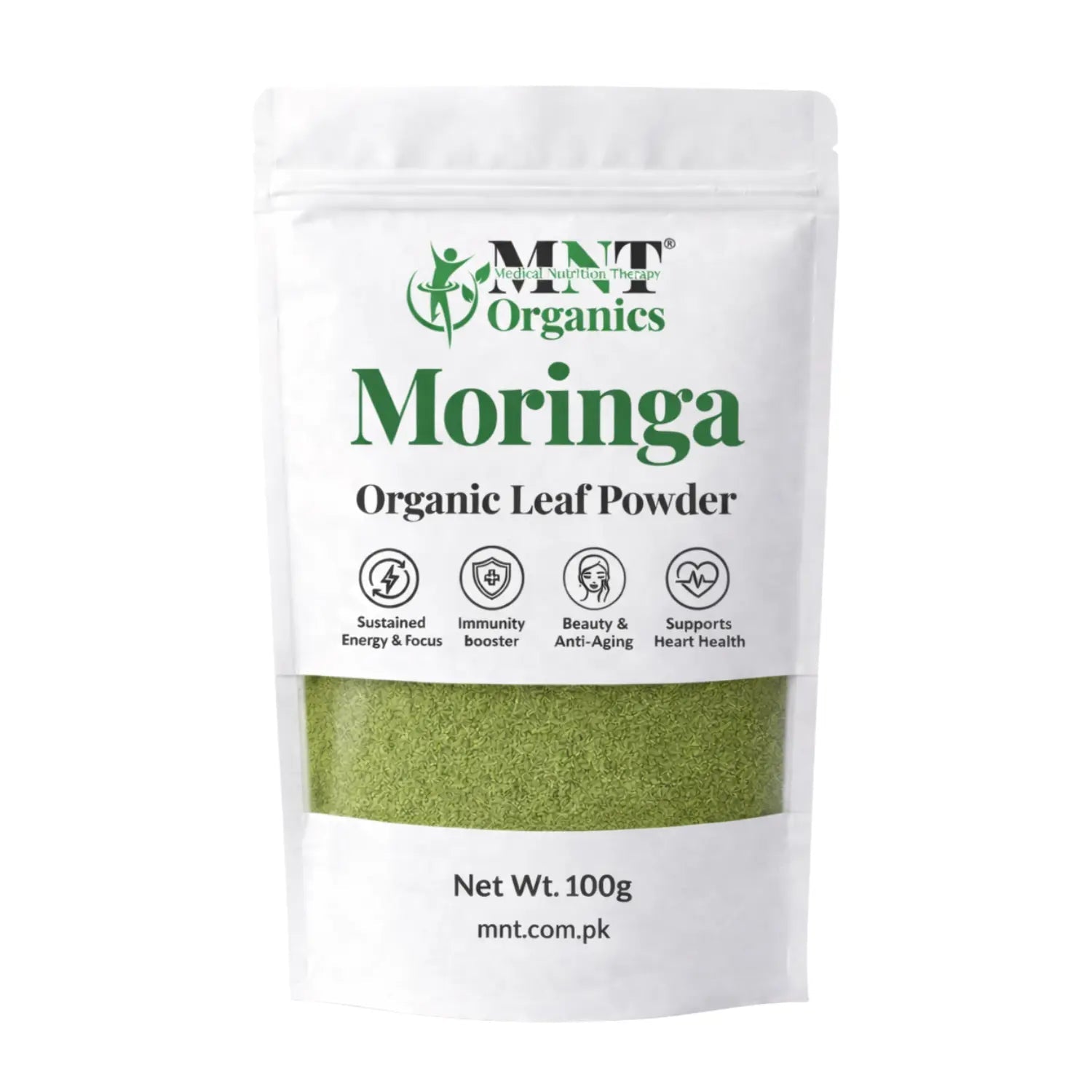
MNT Organic Moringa Leaf Powder can be added to smoothies, yogurt, oats, warm water, or balanced meals. For most people, the easiest routine is to take it with breakfast or lunch.
- Made for daily nutrition support
- Easy to mix with meals and drinks
- Best used with food, especially for beginners
Start with a small amount and follow the product label. Moringa powder is not a medicine and should not replace medical care, especially during pregnancy, breastfeeding, diabetes, blood pressure issues, or medication use.
Simple Beginner Moringa Smoothie
Ingredients:
- 1 banana
- 1 cup milk or plant-based milk
- ½ teaspoon moringa powder
- 1 tablespoon yogurt or peanut butter
- Ice, if desired
Blend until smooth. Take with breakfast or as a mid-day snack.
For practical recipes, mixing methods, dosage tips, and beginner-friendly serving ideas, see our complete guide on how to use moringa powder .
Can You Mix Moringa Powder With Hot Water?
Yes, you can mix moringa powder with warm water, but avoid boiling it aggressively for a long time unless your product label says it is suitable for high heat.
Moringa can be used in tea-style drinks, soups, and warm recipes, but many people prefer adding it after cooking to preserve flavor and reduce bitterness.
A simple method:
- Heat water until warm, not boiling.
- Add ½ to 1 teaspoon moringa powder.
- Stir well.
- Add lemon, ginger, or a small amount of honey if desired.
- Drink with or after food if you have a sensitive stomach.
What Not to Mix With Moringa Powder
Avoid mixing moringa powder with:
- Too much sugar
- Very sweet juices
- Artificial weight-loss drinks
- Unknown herbal mixtures
- Alcohol
- Excessive caffeine
- Medication without medical guidance
- Unverified supplement stacks
If you are taking thyroid medication, diabetes medication, blood pressure medication, blood thinners, or pregnancy-related medication, ask a healthcare professional before using moringa regularly.
How to Improve Moringa Absorption and Benefits
1. Take It Consistently
Consistency matters more than perfect timing. Taking moringa once or twice a month is unlikely to make a meaningful difference in your diet.
Choose a time you can follow daily, such as breakfast or lunch.
2. Pair It With Vitamin C for Iron Support
If your goal is plant-based iron support, combine moringa with a vitamin C-rich food such as lemon, orange, guava, kiwi, strawberries, bell pepper, or amla.
This may help improve non-heme iron absorption from plant foods.
3. Take It With Balanced Meals
Moringa works best when the rest of your diet is balanced.
Pair it with:
- Protein
- Fiber
- Healthy fats
- Fruits
- Vegetables
- Whole grains
- Legumes
- Adequate water
Moringa powder cannot compensate for an overall poor diet.
4. Do Not Use It as a Meal Replacement
Moringa powder is not a complete meal. It does not provide enough calories, protein, fat, or all essential nutrients to replace balanced meals.
Do not use it as a meal replacement unless guided by a qualified healthcare professional.
5. Choose a High-Quality Product
Product quality matters because moringa powder is often consumed raw in smoothies, water, capsules, or drinks.
Choose moringa powder that is:
- Third-party tested when possible
- Tested for heavy metals
- Tested for microbes
- Properly dried
- Free from moisture
- Clearly labeled
- Packaged hygienically
- From a trusted supplier
- Free from artificial color
- Free from unnecessary additives
- Sold with batch or lot number
- Sold with expiration date
- Made from moringa leaf powder if that is what you intend to use
Avoid moringa powder that:
- Smells rotten
- Looks moldy
- Has clumps from moisture
- Contains insects or debris
- Has no proper label
- Makes exaggerated disease-cure claims
- Comes from an unknown or suspicious seller
Because some moringa-containing products have been involved in contamination recalls, consumers should buy from reliable sources and check recall information when needed.
What Does Science Say About Moringa?
Moringa oleifera leaves are used as food in some regions and as powder, capsules, extracts, or supplements in others.
Moringa leaves contain nutrients and bioactive compounds, including vitamins, minerals, amino acids, polyphenols, flavonoids, phenolic acids, and antioxidant compounds.
However, there is an important difference between saying moringa is nutrient-rich and saying it treats diseases.
Moringa powder may be a useful food-based addition to a healthy diet, but evidence for specific medical outcomes is still developing. Many studies are small, short-term, animal-based, or use different forms and doses of moringa. This makes it difficult to give one universal timing or dosage rule.
The most accurate way to describe moringa powder is:
Moringa powder can add plant nutrients and antioxidant compounds to the diet, but it should be used as part of a balanced eating pattern rather than treated as a cure-all.
Moringa and Blood Sugar: What the Evidence Means
Moringa is often discussed for blood sugar because some research suggests it may influence glucose metabolism.
However, human evidence is still limited and mixed. Some studies suggest moringa may help reduce post-meal blood sugar or improve certain metabolic markers. Other trials and reviews have found no significant improvement in fasting glucose or HbA1c over short study periods.
This means moringa should not be promoted as a diabetes treatment.
A more accurate statement is:
Moringa powder may have potential as a dietary adjunct, but it is not a substitute for diabetes medication, glucose monitoring, medical nutrition therapy, or professional care.
People with diabetes should be especially careful because supplements that influence blood sugar may interact with medication.
Moringa and Antioxidants
Moringa leaves contain antioxidant compounds, including polyphenols and flavonoids. These compounds are one reason moringa is often marketed as a “superfood.”
Antioxidants help the body manage oxidative stress, but antioxidant content in a food does not automatically mean it prevents or treats disease.
The overall diet matters more than any single powder.
A realistic way to describe moringa is:
Moringa powder can support antioxidant intake as part of a balanced diet, but it should not be used as a disease treatment.
Is Moringa Powder Safe to Take Every Day?
Moringa leaf powder may be safe for many adults when used in moderate, food-like amounts. However, “natural” does not always mean risk-free.
Safety depends on:
- Dose
- Product quality
- Source of the powder
- Whether it is leaf powder or another plant part
- Medical conditions
- Medication use
- Pregnancy or breastfeeding status
- Contamination risk
- Existing liver, kidney, or digestive conditions
For daily use, choose moringa leaf powder from a reputable brand with testing when possible. Avoid products with exaggerated claims such as “cures diabetes,” “burns belly fat,” “treats cancer,” or “replaces medication.”
If you experience side effects, reduce the amount or stop using it.
Possible Side Effects of Moringa Powder
Moringa powder may cause side effects in some people, especially when taken in large amounts or on an empty stomach.
Possible side effects include:
- Nausea
- Loose stool
- Diarrhea
- Gas
- Bloating
- Stomach cramps
- Bitter aftertaste
- Headache in sensitive individuals
- Allergic reaction in rare cases
- Low blood sugar risk in people using diabetes medication
- Low blood pressure risk in people using blood pressure medication
Stop using moringa and seek medical advice if you experience:
- Severe diarrhea
- Vomiting
- Rash
- Swelling
- Breathing difficulty
- Dizziness
- Fainting
- Signs of low blood sugar
- Signs of food poisoning
- Any severe or unusual reaction
Who Should Avoid or Be Careful With Moringa Powder?
Some people should avoid moringa powder or use it only with medical guidance.
Speak with a healthcare professional before regular use if you are:
- Pregnant
- Breastfeeding
- Taking diabetes medication
- Taking blood pressure medication
- Taking thyroid medication
- Taking blood thinners
- Managing kidney disease
- Managing liver disease
- Living with a serious chronic illness
- Scheduled for surgery
- Giving it to a child
- Using multiple supplements
- Buying moringa from an unverified source
Pregnant People
Pregnant people should not use moringa powder or supplements without medical advice. Safety depends on the plant part, dose, product quality, and pregnancy condition.
Breastfeeding Mothers
Breastfeeding mothers should consult a doctor, midwife, or dietitian before using moringa, especially if taking it to support milk supply.
People With Diabetes
Moringa may affect blood sugar in some people. If you take diabetes medication, monitor blood sugar and consult your healthcare provider.
People Taking Blood Pressure Medicine
Moringa may affect blood pressure in some individuals. Be cautious if you already take antihypertensive medication.
People Taking Thyroid Medicine
If you take thyroid medication, do not add moringa without guidance. Many supplements and foods can interfere with thyroid medication timing, so ask your clinician about spacing.
People With Kidney or Liver Disease
If you have kidney disease, liver disease, or a serious chronic illness, ask your healthcare provider before using moringa regularly.
People Scheduled for Surgery
Stop non-essential herbal supplements before surgery according to your doctor’s advice.
Product Safety: Why Moringa Quality Matters
Moringa powder is often consumed raw, which makes product safety important.
Low-quality moringa powder may contain:
- Microbes
- Salmonella or other pathogens
- Heavy metals
- Moisture
- Mold
- Undeclared ingredients
- Incorrect plant parts
- Unwanted additives
- Contaminants from poor handling or storage
Before buying moringa powder, look for:
- Third-party testing
- Heavy metal testing
- Microbial testing
- Clear ingredient label
- Leaf powder only, if that is what you intend to use
- Batch or lot number
- Expiration date
- Country of origin
- No exaggerated disease claims
- Recall information from the seller or manufacturer
Avoid products that claim to cure diabetes, cancer, infertility, high blood pressure, or other diseases. These claims are red flags.
Also avoid using a product if it:
- Smells rotten
- Looks moldy
- Has unusual clumping
- Has damaged packaging
- Contains insects or debris
- Has no label or batch number
- Has been recalled
Common Mistakes When Taking Moringa Powder
Taking Too Much Too Soon
Starting with a large amount can cause nausea, cramps, bloating, or diarrhea. Begin with a small serving and increase only if needed.
Taking It on an Empty Stomach Immediately
Some people tolerate this, but beginners should take moringa with food first.
Taking It Late at Night
Night use may be fine for some people, but it can cause digestive discomfort in others.
Expecting Fast Results
Moringa is not a quick fix. If it helps, benefits are more likely to come from consistent use as part of a better diet.
Using It Instead of Medication
Do not replace prescribed medication with moringa powder.
Ignoring Product Quality
Low-quality powders may create safety risks. Choose tested products from reputable sellers.
Believing Every “Superfood” Claim
Moringa is nutrient-rich, but it is not a cure-all.
How Long Does Moringa Powder Take to Work?
Moringa powder does not work overnight. Results vary based on your diet, health status, dose, product quality, and consistency.
Within 1 Week
You may notice:
- A better supplement routine
- Mild digestion changes
- More fiber intake
- More micronutrient intake
Within 4 to 8 Weeks
You may notice:
- Better consistency in nutrition habits
- Possible improvement in energy if your previous diet was poor
- Better structure around meals
- Possible support for blood-sugar-conscious routines when combined with proper meals and medical guidance
Long Term
Long-term benefits depend on your complete lifestyle, not moringa alone.
Moringa works best alongside:
- Balanced meals
- Enough protein
- Fiber-rich foods
- Regular activity
- Sleep
- Hydration
- Proper medical care when needed
Best Daily Routine for Moringa Powder
Beginner Routine
Take ¼ to ½ teaspoon with breakfast for 3 to 5 days.
This allows you to test taste, digestion, and tolerance.
Standard Routine
Take around 1 teaspoon with breakfast or lunch.
This is a simple routine for people who tolerate moringa well.
Sensitive Stomach Routine
Take moringa powder after food, not before food.
Use a smaller amount and avoid taking it before bed.
Blood Sugar-Conscious Routine
Take moringa only with healthcare guidance if you have diabetes, prediabetes, low blood sugar episodes, or use blood sugar medication.
If approved by your clinician, taking it with a meal may make more sense than taking it randomly at night.
Weight Management Routine
Take moringa with a protein-rich breakfast or lunch.
Avoid adding extra sugar, sweetened juice, or high-calorie ingredients.
Busy Lifestyle Routine
Add moringa powder to the same meal every day.
The best supplement routine is the one you can follow consistently without side effects.
Final Answer: When Should You Take Moringa Powder?
The best time to take moringa powder is in the morning with breakfast.
If breakfast does not work for you, take it with lunch. If you have a sensitive stomach, take it after food. If you use it for blood sugar support, take it with or shortly before a meal only if your healthcare provider says it is appropriate.
Moringa powder can be taken at night, but it is not the best choice for beginners because it may cause bloating, nausea, reflux, or stomach discomfort before bed.
Best routine for most adults:
Start with ¼ to ½ teaspoon once daily with breakfast. If tolerated, increase gradually according to your product label or your healthcare provider’s advice.
Moringa powder can support a healthy diet, but it is not a cure, not a fat burner, not a diabetes treatment, and not a replacement for medical care.
To apply this routine practically, you can use MNT Organic Moringa Powder with breakfast or lunch as part of a balanced diet.
FAQs About the Best Time to Take Moringa Powder
What is the best time to take moringa powder?
The best time to take moringa powder is in the morning with breakfast or with lunch. Taking it with food is usually easier on the stomach and easier to follow consistently.
Is moringa better in the morning or at night?
Morning is better for most people. Night is acceptable only if it does not cause bloating, nausea, reflux, loose stool, or sleep discomfort.
Should I take moringa before or after meals?
Most people should take moringa with or after meals. This is especially better for beginners and people with sensitive stomachs.
Can I take moringa powder on an empty stomach?
Some people can take moringa powder on an empty stomach, but beginners should avoid it. Empty-stomach use may cause nausea, cramps, bloating, acidity, or loose stool.
Can I take moringa powder every day?
Many adults may tolerate moderateu dailse, but daily use is not right for everyone. Be careful if you are pregnant, breastfeeding, taking medication, or managing a medical condition.
How much moringa powder should I take daily?
Start with ¼ to ½ teaspoon daily. Many adults use around 1 teaspoon daily, depending on tolerance and product instructions.
Can moringa powder help with weight loss?
Moringa does not directly burn fat. It may support weight management when used with a balanced diet, protein, fiber, physical activity, sleep, and calorie control.
Can moringa powder lower blood sugar?
Some research suggests moringa may affect blood sugar, but it should not be used as diabetes treatment. People with diabetes or blood-sugar medication should ask a healthcare provider before using it.
Can I take moringa powder before bed?
You can take moringa before bed if you tolerate it, but morning or lunch is usually better. Avoid bedtime use if it causes stomach discomfort, bloating, reflux, or sleep disruption.
Can I mix moringa powder with milk?
Yes. Moringa powder can be mixed with milk, plant-based milk, smoothies, yogurt, or oats.
Can I take moringa powder with lemon water?
Yes. Lemon water provides vitamin C, which may support plant-based iron absorption.
Can I take moringa powder with coffee?
You can, but it may not taste good. If your main goal is iron support, avoid taking moringa with strong coffee or tea because they may reduce non-heme iron absorption.
Is moringa powder good before a workout?
Moringa is not a pre-workout stimulant. It is better used in a meal or smoothie earlier in the day. Avoid trying it for the first time right before exercise.
Can breastfeeding mothers take moringa powder?
Breastfeeding mothers should ask a healthcare professional before using moringa powder, especially if using it to support milk supply.
Can pregnant people take moringa powder?
Pregnant people should not use moringa powder or supplements without medical advice. Safety depends on the plant part, product quality, dose, and pregnancy condition.
Who should not take moringa powder without medical advice?
Pregnant people, breastfeeding mothers, people taking diabetes medication, blood pressure medication, thyroid medication, blood thinners, or people with chronic kidney or liver disease should ask a healthcare professional first.
We rely on peer-reviewed studies and reputable medical journals.