


How to Store Moringa Powder and Check for Spoilage
Learn how to store moringa powder after opening, recognise signs of spoilage, and protect it from moisture. This guide also covers shelf life, refrigeration, freezing, and expired powder.
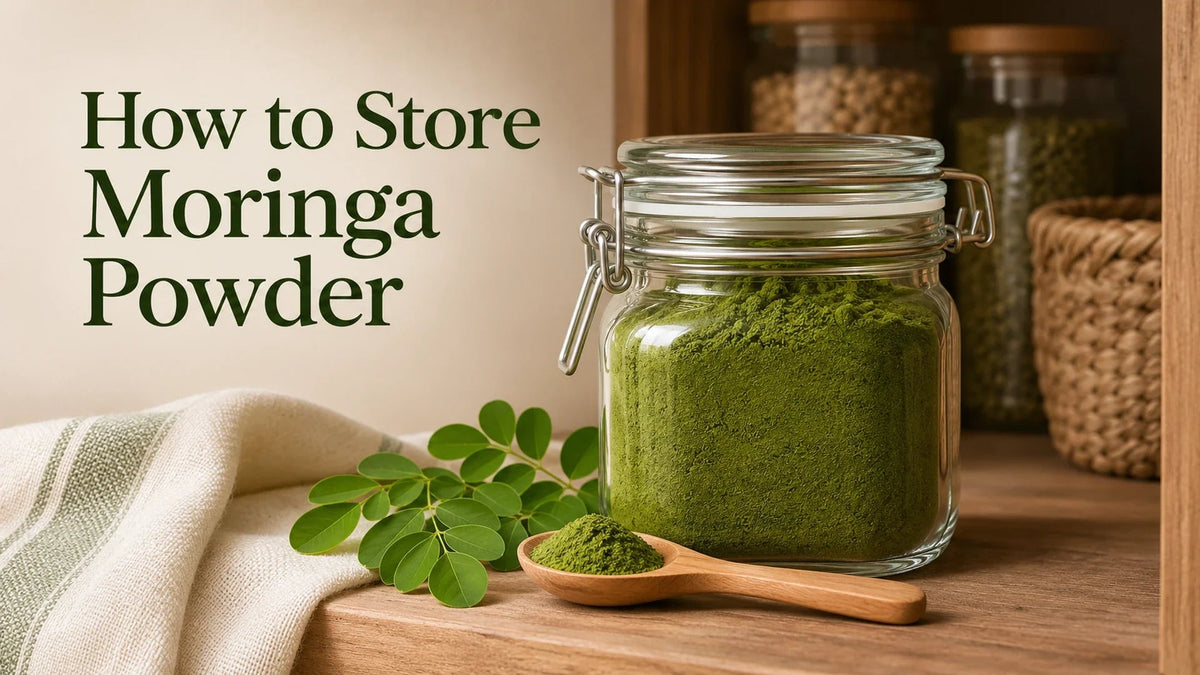
Store moringa powder in a tightly sealed pouch or clean, dry container in a cool, dry, dark place. Keep it away from sunlight, cooking heat, steam, and moisture. Use a clean, dry spoon, and follow the storage instructions on the package.
Discard moringa powder if it becomes damp, develops mould, contains insects, or has a musty or unusual smell. Do not taste it to check whether it is safe.
There is no single shelf life for every moringa powder. Check the manufacturer’s date and any instructions for use after opening. A normal appearance or smell does not guarantee safety: harmful bacteria may be present without obvious signs. [FDA] [FDA investigation]
Moringa Powder Storage at a Glance
| Question | Short answer |
|---|---|
| Where should I store moringa powder? | In a cool, dry, dark cupboard away from the stove, sink, and sunlight. |
| What container should I use? | A tightly sealed, moisture-resistant pouch or a clean, dry container with a tight-fitting lid. |
| Does moringa powder need refrigeration? | Usually not if the label allows pantry storage and you have a cool, dry place. |
| How long does it last? | It depends on the product and storage conditions. Follow the label and any after-opening instructions. |
| How can I tell if it has gone bad? | Look for mould, insects, dampness, or clear moisture damage. A musty or unusual smell is also a reason to discard it. |
| Can I tell if it is safe just by looking? | No. Harmful bacteria may be present without visible signs. |
How to Store Moringa Powder After Opening
The best way to store moringa powder after opening is to protect it from moisture, heat, light, and air.
1. Choose a Cool, Dry, Dark Place
A closed cupboard or pantry is usually a suitable place if it stays cool and dry.
Keep the powder away from:
- The stove or oven
- The kitchen sink
- Kettles and other sources of steam
- Sunny windowsills
- Damp cupboards
In Pakistan’s hot or humid weather, choose the coolest dry place available inside your home. If your kitchen gets very hot during cooking, another clean, dry cupboard may be a better option.
The University of California, Davis recommends packaging dried moringa in clean, dry material that protects it from water, air, and light. [UC Davis]
2. Seal the Pouch or Use a Dry Container
You can keep moringa powder in its original pouch if the pouch closes securely and protects it from moisture. Press the seal closed after each use.
You can also transfer it to a clean, completely dry, food-safe container with a tight-fitting lid. Make sure both the jar and lid are dry before adding the powder.
An opaque container helps block light. If you use a clear glass jar, keep it in a closed cupboard rather than on a sunny shelf.
3. Use a Clean, Dry Spoon
A wet spoon can introduce moisture into the powder that remains in the container.
For everyday use:
- Take out the amount you need with a clean, dry spoon.
- Close the pouch or jar immediately.
- Add the powder to your food or drink away from the open container.
Avoid holding the open pouch over a steaming cup or pan.
4. Keep the Label and Opening Date
If you transfer the powder to another container, keep the original package or write down:
- The product and brand name
- The best-before or expiry date
- The batch or lot number
- The date you opened it
- Any storage and after-opening instructions
The batch number can help you check whether your product is included in a recall.
How Long Does Moringa Powder Last?
There is no fixed shelf life that applies to all moringa powders. It depends on how the leaves were dried, how the powder was packaged, and how the product has been stored.
Start with the manufacturer’s label. Check both the printed date and any separate instruction for how soon to use the powder after opening.
| Type or condition | Storage guidance |
|---|---|
| Unopened powder | Follow the manufacturer’s storage instructions and printed date. |
| Opened powder | Reseal it after each use and follow any after-opening instructions. |
| Homemade powder | Shelf life is less predictable because drying, handling, and remaining moisture can vary. |
| Damp, mouldy, or contaminated powder | Discard it, even if it is still within the printed date. |
How Long Does Moringa Powder Last After Opening?
There is no reliable number of months that applies to every opened pouch.
Keep it sealed, use a dry spoon, and follow the package instructions. If the label does not state how long to use it after opening, contact the manufacturer for product-specific guidance.
One technical guide gives six months as a general storage-life guideline, partly because nutrients decline over time. This is a general quality guideline—not a tested after-opening period or a safety guarantee for every product. [ECHO Community]
Does Homemade Moringa Powder Last as Long as Store-Bought Powder?
Homemade moringa powder does not have a manufacturer-tested shelf life. Its condition depends on how the leaves were handled, how thoroughly they were dried, and how the powder was stored.
Keep properly dried homemade powder in a clean, dry, tightly sealed container in a cool, dark place. Do not assume it will last as long as a commercially packaged product.
Discard it if it becomes damp, develops mould, contains insects, or has an unusual smell.
How to Tell If Moringa Powder Has Gone Bad
Discard moringa powder if it has visible mould, insects, dampness, clear moisture damage, or a musty or unusual smell. Do not taste it to decide whether it is safe.
| What you notice | What it may mean | What to do |
|---|---|---|
| Visible mould | The powder has spoiled. | Discard all the powder. Do not remove only the visible mould. |
| Damp powder or water in the container | Moisture has entered the package. | Discard the powder. Do not try to dry it and use it again. |
| Insects, larvae, or webbing | Pests have contaminated the powder. | Discard it and clean the storage area. |
| A musty, rotten, or unusual smell | The powder may have spoiled. | Discard it. Do not deliberately sniff visibly mouldy powder. |
| Small, dry clumps | Powder may have settled, although moisture can also cause clumping. | Check its condition and storage history. Discard it if it is damp or you suspect contamination. |
| A duller green or brownish colour | Colour can change as the powder ages or is exposed to heat and light. | Consider the date and storage history. Colour alone cannot confirm safety. |
| Normal appearance and smell | There may be no obvious spoilage. | This does not prove harmful bacteria are absent. |
What Should Moringa Powder Look and Smell Like?
Moringa leaf powder is generally green and has a plant-like smell. The exact colour and aroma can vary between products because of differences in the leaves and how they were processed.
A bright green colour may look fresh, but it does not prove that the powder is safe. Similarly, a gradual change to a duller shade does not automatically mean it has spoiled.
Consider the whole picture: the product’s date, storage history, package condition, and any signs of dampness, mould, or insects.
Is Clumpy Moringa Powder Always Bad?
No. Small, dry clumps can form when powder settles or is pressed together in its package. But clumping can also happen when moisture enters.
If the powder feels damp, you know water entered the container, or you suspect contamination, discard it. Do not spread it out to dry and then use it.
What Should You Do If Moringa Powder Gets Wet?
Discard moringa powder that has become damp or shows clear moisture damage. Do not try to save it by removing only the wet portion or drying it again at home.
Wash the container and let it dry completely before using it for another food.
What Should You Do If Moringa Powder Has Mould?
If you see mould:
- Stop using the powder.
- Discard the entire contents. Do not scoop out only the mouldy part.
- Place the powder in a closed bag or covered bin.
- Clean the container and the area where it was stored.
- Check nearby foods for signs of mould or pests.
Do not sniff visibly mouldy food.
Does Moringa Powder Need to Be Refrigerated?
Moringa powder usually does not need refrigeration if the package allows room-temperature storage and you have a cool, dry cupboard. If the manufacturer recommends refrigeration, follow the label.
The main concern when refrigerating a dry powder is moisture. Condensation can form when a cold container is brought into warmer air.
If you refrigerate moringa powder:
- Keep it in a tightly sealed, moisture-resistant container.
- Follow the manufacturer’s instructions.
- Let the closed container reach room temperature before opening it, especially in humid weather.
Keeping the container closed while it warms can help reduce the chance of condensation reaching the powder. Similar care is recommended for dried herbs. [UC Agriculture and Natural Resources]
Can You Freeze Moringa Powder?
You may be able to freeze moringa powder in tightly sealed, moisture-resistant, freezer-safe packaging, although freezing is not usually necessary for everyday storage. Check the manufacturer’s instructions first.
If you choose to freeze a large amount, divide it into small portions. This lets you take out one portion at a time instead of repeatedly opening the full container.
Let the sealed container reach room temperature before opening it to help reduce condensation. Freezing does not make contaminated powder safe, and there is no single freezer storage time that applies to every moringa product.
Can You Use Moringa Powder After Its Expiry Date?
Check the wording on your package and follow the manufacturer’s guidance. A best-before date generally relates to expected quality; it does not mean a product automatically becomes unsafe on that exact day. However, the date also cannot prove that the powder is safe.
Powder can become unsuitable before its printed date if water enters the pouch, pests get inside, or contamination occurs. Likewise, powder that looks normal after its date is not automatically proven safe.
If the package was damaged, the powder became damp, or its storage history is uncertain, replace it. Contact the manufacturer if you need help interpreting the date or after-opening instructions.
What If You Don’t Know How Long It Has Been Open?
There is no reliable way to establish the remaining shelf life of an opened pouch at home if you do not know how long it has been open or how it was stored.
If the powder’s history is uncertain—especially if it may have been exposed to heat or moisture—the safest choice is to discard it. Do not taste it as a test.
What If the Moringa Powder Has Been Recalled?
Do not use a recalled product, even if it is within date and looks normal.
Check the brand, product name, and batch or lot number against the recall notice. Follow the notice’s instructions to discard or return the product.
For example, the U.S. Food and Drug Administration investigated a 2025 Salmonella outbreak linked to a specific lot of moringa leaf powder. The investigation concerned the products and batches named in the notice; it does not mean every moringa product was affected. [FDA investigation]
Why Storage Conditions Matter
Moisture Can Encourage Mould
Moringa powder is a dried food. Keeping it dry helps prevent conditions that allow mould to grow.
Moisture can enter when you leave a pouch open, use a wet spoon, store powder near steam, or transfer it to a damp jar. A tight seal and dry spoon help reduce these risks.
Heat and Light Can Affect Colour and Quality
Moringa powder contains natural plant compounds, including the green pigment chlorophyll. Heat and light can affect its colour and other quality measures over time.
In a 12-month study, researchers stored moringa leaf powder at different temperatures and under different light conditions. The powder showed changes in colour and measured compounds during storage. The findings support protecting powder from heat and light, but they do not establish an exact shelf life for every product or home environment. [Moringa storage study]
Colour and Smell Cannot Confirm Safety
A less vibrant colour can be a quality clue, but it cannot show whether harmful bacteria are present. A normal appearance and smell cannot rule them out either.
That is why it is important to follow storage instructions, keep the batch number, and check relevant recall notices—not just rely on a visual or smell check.
Common Moringa Powder Storage Mistakes
Avoid these mistakes to help keep your powder in good condition:
- Leaving the pouch open. Reseal it after each use.
- Using a wet spoon. Moisture can enter the remaining powder.
- Storing it near the stove or sink. Heat, steam, and splashes can affect it.
- Filling a damp jar. Dry both the jar and lid completely first.
- Leaving a clear jar in sunlight. Keep it inside a dark cupboard.
- Discarding the package details. Keep the date and batch number.
- Relying only on colour or smell. Harmful bacteria may not cause obvious changes.
- Trying to save damp or mouldy powder. Discard the entire contents.
- Ignoring a recall because the powder looks normal. Follow the notice for the affected product and batch.
Frequently Asked Questions
Can I Store Moringa Powder in a Glass Jar?
Yes. Use a clean, completely dry glass jar with a tight-fitting lid. If the jar is clear, keep it in a dark cupboard away from heat and moisture.
Can I Keep Moringa Powder in Its Original Pouch?
Yes. If the pouch closes securely and protects the powder from moisture, you can keep it in the original packaging. Reseal it tightly after every use and follow the label.
Why Has My Moringa Powder Turned Brown or Yellow?
Moringa powder can lose some of its green colour as it ages or is exposed to heat and light. A colour change alone cannot tell you whether it is safe.
Check the date and consider how it was stored. Discard it if it is damp, mouldy, has an unusual smell, or shows other signs of contamination.
Can Moringa Powder Go Bad Before Its Expiry Date?
Yes. It can become unsuitable before its printed date if the package is damaged or the powder is exposed to moisture, pests, or contamination.
Can I Use Moringa Powder That Smells Normal?
A normal smell does not guarantee safety. Check the product’s date, packaging, storage history, and any relevant recall notices as well. Do not taste the powder to test it.
How Should I Store Moringa Powder in Hot Weather?
Choose the coolest dry cupboard available, away from sunlight and cooking heat. Keep the powder in a tightly sealed, moisture-resistant pouch or container, and follow the manufacturer’s instructions.
When buying a new pack, consider a size you expect to use within the product’s recommended timeframe.
We rely on peer-reviewed studies and reputable medical journals.