

Moringa Powder vs. Fresh Leaves: Nutrition, Uses, and Which Is Better?
Should you use fresh moringa leaves or shade-dried moringa powder? Compare their real single-serving nutrition (1 teaspoon vs. 1 cup), how drying affects Vitamin C and minerals, exact kitchen conversion ratios, and the best ways...
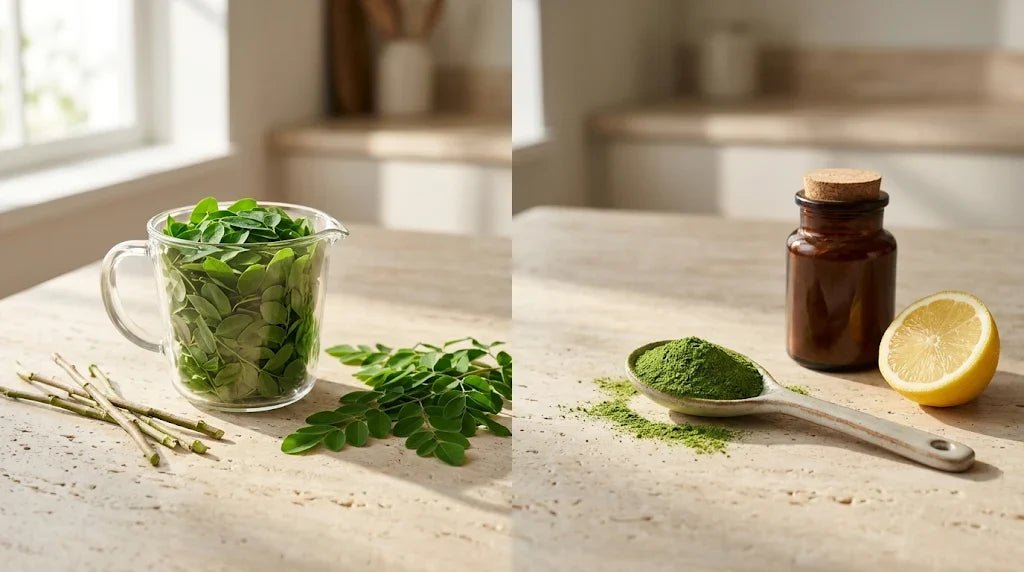
Direct Answer: Neither moringa powder nor fresh moringa leaves is universally better; each form wins for different nutritional needs. Moringa leaf powder is better for getting a concentrated daily boost of iron, calcium, potassium, protein, fiber, and Vitamin E because shade-drying removes nearly 80% of the water weight, packing 4 to 5 times more minerals into every gram. Fresh moringa leaves (Moringa oleifera, also called drumstick tree, sohanjna, or sahjan leaves) are better for getting heat-sensitive Vitamin C and a mild, spinach-like flavor, holding up to 7 to 10 times more Vitamin C than dried powder before cooking. In the kitchen, 1 level teaspoon (5 grams) of moringa powder equals 1 packed cup (20 to 25 grams) of fresh moringa leaves.
Quick Choice Guide:
- Pick Moringa Powder if: You want an easy, year-round daily scoop of concentrated plant iron, calcium, and antioxidants to mix into warm lemon water, smoothies, yogurt, or flatbread dough without worrying about fresh leaves spoiling.
- Pick Fresh Moringa Leaves if: You have access to fresh drumstick tree leaves, enjoy cooking leafy greens in lentil dal, soups, curries, or omelets, and want the highest amount of natural Vitamin C.
Moringa Powder vs. Fresh Leaves: Quick Comparison
Both forms come from the exact same plant (Moringa oleifera), but removing moisture during drying shifts their water weight, vitamin levels, flavor profile, prep time, and shelf life.
| Feature | Fresh Moringa Leaves | Dried Moringa Leaf Powder |
|---|---|---|
| Water Content | 75% to 79% water | 5% to 8% water |
| Top Nutrient Strengths | Vitamin C, Folate (Vitamin B9) | Calcium, Iron, Potassium, Protein, Fiber, Vitamin E |
| Typical Daily Serving | 1 packed cup raw (20g to 25g) | 1 to 2 level teaspoons (5g to 10g) |
| Taste and Texture | Mild, tender green with a slight peppery bite | Earthy, grassy, slightly bitter fine powder |
| Prep Time | 10 to 15 minutes (washing and stripping stems) | 5 seconds (ready to scoop) |
| Shelf Life | 2 to 5 days in the refrigerator | 12 to 24 months in an airtight, dark container |
| Best Kitchen Uses | Lightly steamed, lentil dal, soups, curries, omelets | Smoothies, lemon water, yogurt (raita), buttermilk, dough |
Nutritional Comparison: 100g vs. Real Daily Servings
Why 100g Nutrition Charts Are Misleading (The Water Factor)
Most online nutrition charts compare 100 grams of fresh moringa leaves directly against 100 grams of dried moringa powder—or against 100 grams of milk and spinach. While those laboratory numbers are accurate, they do not reflect how people actually eat moringa.
Fresh moringa leaves are roughly four-fifths water (75% to 79% moisture). When fresh leaves are dried in the shade and milled into powder, almost all that water evaporates, leaving only 5% to 8% moisture behind. Because it takes 4.5 to 5 kilograms of fresh leaves to produce 1 kilogram of dried moringa powder, every stable mineral and macronutrient is compressed into a quarter of its original weight.
Furthermore, eating 50 to 100 grams of cooked fresh leaves as a vegetable side dish is normal. Eating 100 grams of dry moringa powder (nearly 14 tablespoons) in a single day is unrealistic and causes severe stomach upset.
Nutrient Breakdown: 1 Teaspoon Powder (5g) vs. 1 Cup Fresh Leaves (20g)
Comparing 100 grams of each form alongside an equivalent single serving—1 level teaspoon of moringa powder (5g) versus 1 packed cup of fresh moringa leaves (20g)—shows what your body actually receives in a normal meal:
| Nutrient | Fresh Leaves (100g) | Moringa Powder (100g) | 1 Cup Fresh Leaves (20g) | 1 Tsp Moringa Powder (5g) |
|---|---|---|---|---|
| Calories | 64 kcal | 305–324 kcal | 13 kcal | 15–16 kcal |
| Plant Protein | 6.4g–9.4g | 25.0g–29.4g | 1.3g–1.9g | 1.3g–1.5g |
| Dietary Fiber | 2.0g | 11.8g–19.2g | 0.4g | 0.6g–1.0g |
| Calcium | 185mg–314mg | 1,800mg–2,100mg | 37mg–63mg | 90mg–105mg |
| Iron | 4.0mg–4.5mg | 25.0mg–28.2mg | 0.8mg–0.9mg | 1.2mg–1.4mg |
| Potassium | 259mg–337mg | 1,324mg–1,500mg | 52mg–67mg | 66mg–75mg |
| Vitamin C | 51.7mg–220mg | 15.2mg–35.0mg | 10.3mg–44.0mg | 0.8mg–1.8mg |
| Beta-Carotene (Vit A) | 6,780–17,500 mcg | 16,300–36,000 mcg | 1,356–3,500 mcg | 815–1,800 mcg |
| Vitamin E | 9.0mg–15.0mg | 110mg–113mg | 1.8mg–3.0mg | 5.5mg–5.7mg |
Note: Nutritional values are compiled from USDA FoodData Central, the Indian Food Composition Tables (IFCT 2017), and peer-reviewed food composition analyses. Natural variations occur based on soil quality, leaf maturity, harvest season, and drying temperature.
Complete Plant Protein and Limiting Amino Acids
Both fresh moringa leaves and moringa leaf powder contain all nine essential amino acids, making moringa a complete plant protein. Dried moringa powder is roughly 25% to 30% protein by weight.
Even so, moringa powder works best as a micronutrient booster rather than a primary protein supplement. One to two teaspoons (5 to 10 grams) of powder add 1.3 to 3 grams of protein to your meal. In addition, moringa leaves are naturally lower in the sulfur-containing amino acids methionine and cysteine compared to the World Health Organization (WHO) reference standard. Pairing fresh moringa leaves or powder with sulfur-rich legumes—such as lentils (dal), chickpeas, or beans—creates a balanced, complete amino acid profile.
The Science: How Drying and Cooking Change Moringa Nutrients
Drying moringa leaves does not destroy minerals, protein, or fiber, which concentrate by weight as water evaporates. However, heat, oxygen, and ultraviolet (UV) light break down water-soluble vitamins and delicate plant enzymes depending on how the leaves are dried or cooked.
1. Heat-Sensitive Vitamins (Why Fresh Leaves Win on Vitamin C)
Vitamin C (ascorbic acid) and folate (Vitamin B9) are delicate, water-soluble vitamins that oxidize rapidly when exposed to air, heat, and light. Even when moringa leaves are carefully dried indoors in the shade, exposure to ambient oxygen causes 75% to 85% of the original Vitamin C to break down. This makes raw or lightly steamed fresh leaves the clear winner for Vitamin C.
However, kitchen preparation changes this gap: prolonged boiling also destroys Vitamin C in fresh leaves. Many households boil fresh moringa leaves in curries or soups for 15 to 20 minutes. High cooking heat destroys 40% to 60% of the Vitamin C, and much of the remaining vitamin leaches into the cooking water. To keep the Vitamin C in fresh leaves, eat young leaves raw in salads or wilt them into hot dishes during the final 2 to 3 minutes of cooking.
2. Minerals, Fiber, and Vitamin E (Why Moringa Powder Wins on Density)
Minerals like calcium, iron, potassium, magnesium, and zinc do not evaporate or burn away during dehydration. Moringa's gut-friendly dietary fiber and fat-soluble Vitamin E (alpha-tocopherol) also stay highly stable when dried out of direct sunlight.
Because the water weight is gone, a single 5-gram teaspoon of shade-dried moringa powder delivers nearly double the calcium (90–105 mg vs. 37–63 mg), 50% more iron (1.2–1.4 mg vs. 0.8–0.9 mg), and nearly double the Vitamin E of a full cup of raw fresh leaves.
3. Active Plant Compounds (Isothiocyanates and the Myrosinase Enzyme)
One of the primary reasons people use moringa for blood sugar support and inflammation control is a protective plant compound called glucomoringin (a glucosinolate).
By itself, glucomoringin sits inactive inside the intact leaf. When the leaf cells are ruptured—either by chewing fresh leaves or by mechanical grinding when making powder—a natural enzyme called myrosinase mixes with glucomoringin and converts it into moringin (an active isothiocyanate) that your body can use:
- In fresh leaves: Chewing raw leaves or chopping them before cooking activates myrosinase immediately. However, dropping whole, unchopped fresh leaves straight into boiling water deactivates the myrosinase enzyme before it can produce active moringin.
- In moringa powder: When leaves are shade-dried below 40°C to 45°C (104°F to 113°F), the myrosinase enzyme survives in a dormant state inside the dry powder. As soon as you stir that powder into cool or lukewarm water, the enzyme wakes up and synthesizes active anti-inflammatory compounds.
4. Why Drying Methods Matter: Shade-Dried vs. Sun-Dried Powder
The nutritional quality of moringa powder depends heavily on how the fresh leaves were dehydrated:
- Shade-Dried or Controlled Low-Heat Dried (Below 40°C–45°C): Preserves 70% to 85% of beta-carotene (Vitamin A), protects live myrosinase enzymes, retains organic acids and polyphenols, and keeps the powder a vibrant emerald green.
- Hot Oven-Dried (Above 60°C): Deactivates beneficial enzymes, reduces antioxidant polyphenols, and turns the powder a dull olive green.
- Open Sun-Dried: Harsh UV sunlight breaks down chlorophyll and destroys up to 90% of beta-carotene and Vitamin C, leaving behind a brownish-yellow powder with weak nutritional value and higher risk of dust contamination.
Bioavailability: How Much Iron and Calcium Does Your Body Absorb?
The mineral numbers on a nutrition chart only tell half the story. What matters most is bioavailability—how much of moringa's calcium, iron, and fat-soluble vitamins your digestive tract can actually absorb and utilize.
Calcium and Iron Absorption (Oxalates and Phytates)
Like all dark leafy greens, moringa contains natural plant compounds called oxalates and phytates (phytic acid) that can bind to minerals in the gut:
- Calcium and low oxalates: Spinach is loaded with oxalates (about 592 to 600 mg per 100g), which bind to calcium and block intestinal absorption. Fresh moringa leaves contain roughly one-fifth the oxalates of spinach (about 120 mg per 100g), and much of that is insoluble oxalate. As a result, your body absorbs calcium from both moringa leaves and moringa powder far better than from spinach, though dairy calcium remains more bioavailable overall.
- Iron and phytates: Moringa contains non-heme iron (plant iron) alongside phytates (~128 mg per 100g in fresh leaves) and polyphenols. Phytates act like tiny magnets that hold onto non-heme iron in your digestive tract, keeping typical plant-iron absorption between 5% and 12%.
Two simple kitchen habits significantly boost mineral absorption from both forms:
- The Lemon Trick for Moringa Powder (Vitamin C Pairing): Because moringa powder loses most of its natural Vitamin C during drying, your gut absorbs less of its concentrated iron if taken plain in water. Always pair moringa powder with a Vitamin C source—such as a squeeze of fresh lemon or lime juice, orange slices, or berries. Ascorbic acid blocks the binding effect of phytates in the stomach and can increase non-heme iron uptake by 2 to 3 times. Avoid drinking black tea or coffee with your moringa meal, as tea tannins strongly block iron absorption.
- Light Cooking for Fresh Leaves: Gently steaming or simmering fresh moringa leaves for 2 to 3 minutes softens tough plant tissues, reduces surface antinutrients, and makes beta-carotene easier to absorb when cooked with a little oil or ghee.
Cell Wall Breakdown (Finely Milled Powder vs. Chewed Leaves)
Inside a fresh moringa leaf, carotenoids (Vitamin A), Vitamin E, and amino acids are locked inside tough plant cell walls made of cellulose. When you chew fresh leaves, your teeth only crush a portion of those microscopic cells.
When dried moringa leaves are milled into a fine mesh powder, mechanical grinding shatters millions of cellulose cell walls. This increases the surface area exposed to your digestive enzymes, giving your gut easier access to fat-soluble beta-carotene and Vitamin E—especially when you mix moringa powder into foods containing a little healthy fat, such as yogurt, milk, nuts, or olive oil.
Taste, Texture, and Culinary Uses: How to Use Each Form
How to Eat Fresh Moringa Leaves (Without Losing Nutrients)
Fresh moringa leaves are tender and taste like a mild blend of spinach, fenugreek leaves (methi), and radish greens with a slight peppery finish.
- Strip the stems first: The thin stalks and twigs of the moringa branch are fibrous and stay chewy even after cooking. Hold the branch and run your fingers down the stems to strip off the small round leaflets, then discard the woody stalks.
- Chop and rest for 5 minutes: Rough-chopping fresh leaves 5 minutes before cooking allows the leaf's natural myrosinase enzymes to generate heat-stable antioxidants before the leaves hit a hot pan.
- Add during the last 2 to 3 minutes of cooking: Never boil fresh moringa leaves for 20 minutes. Stir washed leaves into simmering lentil soup (dal), chicken broth, vegetable curries, or sambar right at the end of cooking. As soon as the leaves wilt like baby spinach, turn off the stove.
- Sauté into stir-fries, eggs, and flatbreads: Sauté fresh leaves briefly with garlic, onions, mustard seeds, and grated coconut (poriyal or sabzi), fold them into morning omelets, or knead chopped leaves into whole-wheat paratha or roti dough.
- Toss young leaves into raw salads: Use only small, tender baby leaves raw in salads to preserve 100% of their Vitamin C; mature leaves are tougher and digest better when lightly wilted.
How to Use Moringa Powder for Maximum Benefits
Because moringa powder is 4 to 5 times more concentrated than fresh leaves, it has a bold, earthy, grassy flavor with a mild horseradish-like bite—similar to unsweetened matcha green tea. Do not boil or bake moringa powder at high temperatures, or you will degrade its delicate enzymes and antioxidants.
- Morning Lemon-Moringa Water: Whisk 1 level teaspoon (5g) of moringa powder into a glass of lukewarm or room-temperature water. Squeeze in half a fresh lemon and add a drop of raw honey. The citrus masks the grassy bite while unlocking moringa's plant iron.
- Fruit Smoothies and Lassi: Blend ½ to 1 teaspoon into banana, mango, pineapple, or berry smoothies. Sweet, vitamin-C-rich fruits balance the earthy flavor and aid iron absorption.
- Yogurt (Raita), Buttermilk (Chaas), and Dips: Stir ½ to 1 teaspoon of powder into plain yogurt with roasted cumin and black salt, whisk it into spiced buttermilk, or blend it into hummus, pesto, or guacamole. The natural fats in yogurt, avocado, and olive oil boost Vitamin A and Vitamin E absorption.
- Stir into Hot Food After Plating: Instead of adding moringa powder to a boiling pot on the stove, let your cooked lentil dal, soup, rice, or oatmeal cool slightly in your serving bowl, then stir the powder right in.
Fresh Moringa Leaves to Powder Conversion Ratio
When a recipe calls for fresh moringa leaves and you only have powder (or vice versa), use this 1:4 weight conversion rule to adjust for the water lost during dehydration:
- 1 level teaspoon (5g) of moringa powder = 1 packed cup (20g to 25g) of fresh moringa leaves (or 2 teaspoons of crushed dried moringa leaves).
- 1 level tablespoon (15g) of moringa powder = 3 packed cups (60g to 75g) of fresh moringa leaves.
Shelf Life, Storage, and Cost: Practical Differences
- How fast do fresh leaves spoil? Fresh moringa leaves are nearly 80% water and spoil quickly after harvest. Even when wrapped in a dry paper towel inside the refrigerator, they turn yellow and wilt within 2 to 5 days. Damp leaves trapped in plastic bags can grow mold within 48 hours.
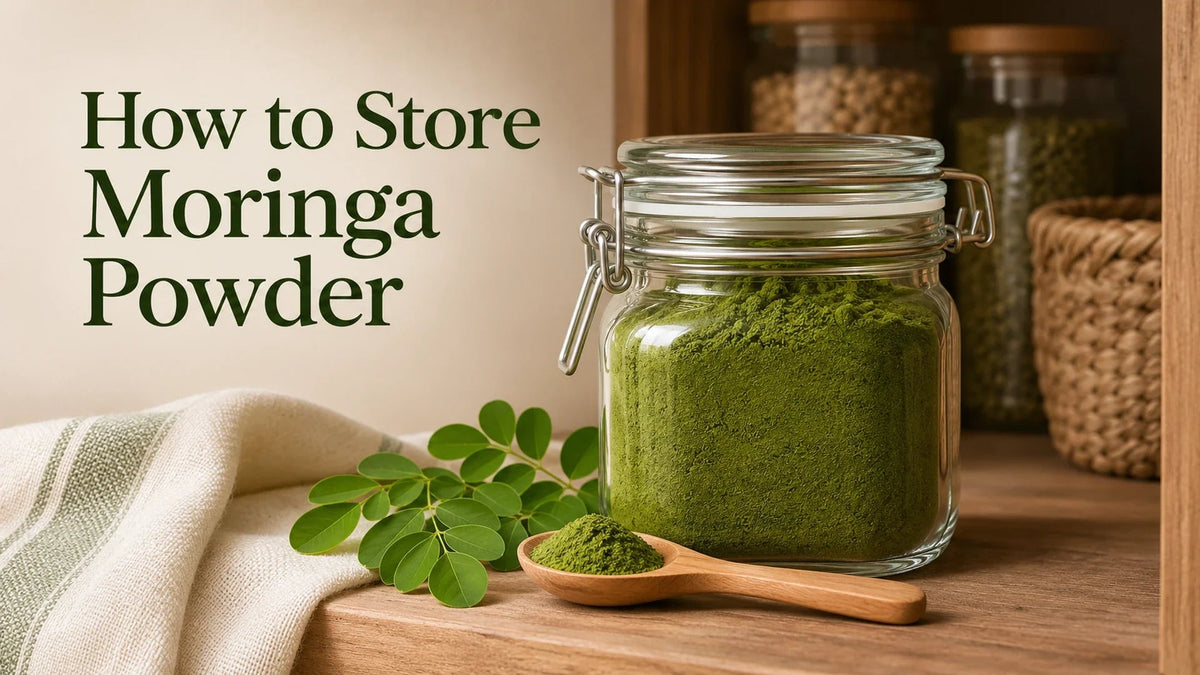
- How long does moringa powder last? Pure, shade-dried moringa powder dried below 7% moisture stays fresh for 12 to 24 months. Store it in an airtight, opaque glass jar or resealable dark pouch inside a cool cabinet away from sunlight, humidity, and stove steam.
- Which offers better year-round value? If you have a moringa tree growing at home, fresh leaves are free during warm growing months. However, moringa trees drop their leaves in cold winter weather, and fresh bunches are rarely stocked in standard supermarkets. When you factor in the 10 to 15 minutes spent stripping woody stems and the high rate of refrigerator spoilage, shade-dried moringa powder provides a lower cost per serving and zero food waste year-round.
Which Form Should You Choose for Your Health Goals?
Use this goal-based guide to pick the best form—or combine both across your week:
- For Low Iron, Anemia Support, and Daily Energy → Choose Moringa Powder (with Lemon): Eating 2 to 3 cups of fresh moringa leaves every single day is difficult for most schedules. One teaspoon of shade-dried moringa powder stirred into lemon water delivers a consistent, concentrated dose of non-heme iron and trace minerals in 30 seconds.
- For Immune Support and High Vitamin C → Choose Fresh Moringa Leaves: Eating raw baby leaves in a salad or lightly wilting 1 cup of fresh leaves into soup for 2 minutes provides up to 7 to 10 times more natural Vitamin C than dried powder.
- For Bone Strength and Low-Oxalate Calcium → Choose Moringa Powder: A single 5-gram teaspoon packs 90 to 105 mg of plant calcium—nearly double the calcium of a cup of fresh leaves—with minimal oxalates.
- For Blood Sugar and Inflammation Support → Both Work Equally Well (Prepared Properly): Both forms deliver active moringin (isothiocyanates), provided you chop and lightly wilt fresh leaves rather than boiling them, or choose vibrant green moringa powder dried below 45°C.
- For Sensitive Stomachs → Choose Lightly Cooked Fresh Leaves: Concentrated raw moringa powder packs dense fiber and active plant compounds that can cause mild stomach cramping or loose stools if you take a large scoop on an empty stomach. Lightly steamed fresh leaves act as a gentle everyday green vegetable.
Safety, Daily Dosage, and Who Should Be Careful
Both fresh moringa leaves and pure moringa leaf powder have an excellent safety record when eaten in normal food amounts. If you are new to moringa powder, start small to let your digestive tract adjust to its concentrated fiber:
- Starting Dose: Begin with ½ to 1 level teaspoon (2.5 to 5 grams) per day mixed with food or a smoothie for the first week.
- Standard Daily Maintenance Dose: Gradually build up to 1 to 2 level teaspoons (5 to 10 grams) per day. Taking large scoops all at once can trigger mild nausea, abdominal cramping, or a laxative effect.
Moringa is a nutrient-dense functional food, not a replacement for prescribed medical care. Consult your healthcare provider before taking concentrated moringa powder daily if you belong to these groups:
- Pregnant or Breastfeeding Women: Eating lightly cooked fresh moringa leaves as a traditional vegetable is common in many regions, and leaf preparations are sometimes used to support maternal nutrition. However, pregnant women should always check with their doctor before taking concentrated supplement powders, and must strictly avoid moringa root, bark, stem, or flower extracts, which contain active alkaloids (such as spirochin) that can stimulate uterine contractions.
- People Taking Thyroid Medications (Levothyroxine): Concentrated moringa leaf powder may decrease the intestinal absorption of levothyroxine or influence thyroid hormone conversion (T4 to T3). Separate moringa powder and thyroid medication by at least 4 hours and consult your endocrinologist.
- People Taking Diabetes or Blood Pressure Medications: Because moringa leaves naturally help lower blood sugar and blood pressure, combining daily concentrated moringa powder with prescription hypoglycemic drugs or antihypertensives can cause blood sugar or blood pressure to drop too low.
- People Taking Medications Processed by the Liver: Moringa leaf extracts may interact with liver enzymes (cytochrome P450 pathways), potentially altering how fast your body clears certain prescription drugs.
Frequently Asked Questions (FAQs)
Is moringa powder stronger than fresh moringa leaves?
Yes, gram for gram, moringa powder is 4 to 5 times more concentrated in stable nutrients than fresh leaves. Because drying removes nearly 80% of the water weight, a small 5-gram teaspoon of powder packs as much protein and fiber—and up to double the calcium and 50% more iron—as a full 20-gram cup of fresh leaves. Fresh leaves only beat powder in heat-sensitive Vitamin C.
How many fresh moringa leaves equal 1 teaspoon of moringa powder?
One packed cup (about 20 to 25 grams) of fresh moringa leaflets stripped from their woody stems equals 1 level teaspoon (5 grams) of dried moringa leaf powder.
Is it better to boil fresh moringa leaves or take raw moringa powder?
Taking raw, shade-dried moringa powder in lukewarm lemon water or smoothies preserves live myrosinase enzymes and antioxidants that prolonged boiling destroys. If you cook fresh moringa leaves, avoid boiling them for 15 to 20 minutes; stir them into hot dal, soup, or curry during the final 2 to 3 minutes of cooking so they keep their vitamins.
Can I make moringa tea with both fresh leaves and powder?
Yes, but the two drinks behave differently. Steeping fresh moringa leaves (or whole dried leaves) in hot water makes a clear, mild herbal infusion where you strain out the leaves—giving you water-soluble antioxidants but leaving most of the protein, fiber, and calcium behind in the strained leaves. Moringa powder does not dissolve or get strained out; you drink the fine leaf particles suspended in warm water (like matcha tea), giving you 100% of the leaf's fiber, amino acids, and minerals.
Can I eat fresh moringa leaves raw every day?
Yes, young, tender baby moringa leaves are safe and nutritious to eat raw in salads, wraps, or green smoothies, which preserves 100% of their natural Vitamin C and active enzymes. Older, larger leaves are more fibrous and slightly bitter, so they are easier to chew and digest when steamed or sautéed for 2 to 3 minutes.
How can you tell if moringa powder is pure and high quality?
High-quality, shade-dried moringa leaf powder has a vibrant emerald-green color, a fine silky texture, and a fresh, grassy aroma. If a powder looks dull brown, greyish, or yellowish, tastes overly woody or gritty, or smells stale, it was likely dried in harsh direct sunlight, overheated in an industrial oven, or diluted with ground moringa stems. Always choose 100% pure, shade-dried leaf powder tested for heavy metals (lead, arsenic, cadmium, and mercury).
The Bottom Line
When comparing moringa powder vs. fresh leaves, you do not need to view one as "good" and the other as "bad". Think of fresh moringa leaves as a nourishing whole-food green vegetable that delivers abundant Vitamin C and a mild, peppery flavor when lightly wilted into family meals. Think of shade-dried moringa leaf powder as your daily micronutrient insurance—packing an entire cup of leafy calcium, iron, potassium, Vitamin E, and complete plant amino acids into a single, long-lasting teaspoon. For the best results, choose a vibrant emerald-green, shade-dried leaf powder and pair it with a squeeze of fresh lemon or fruit so your body absorbs every bit of its natural mineral density.
We rely on peer-reviewed studies and reputable medical journals.