


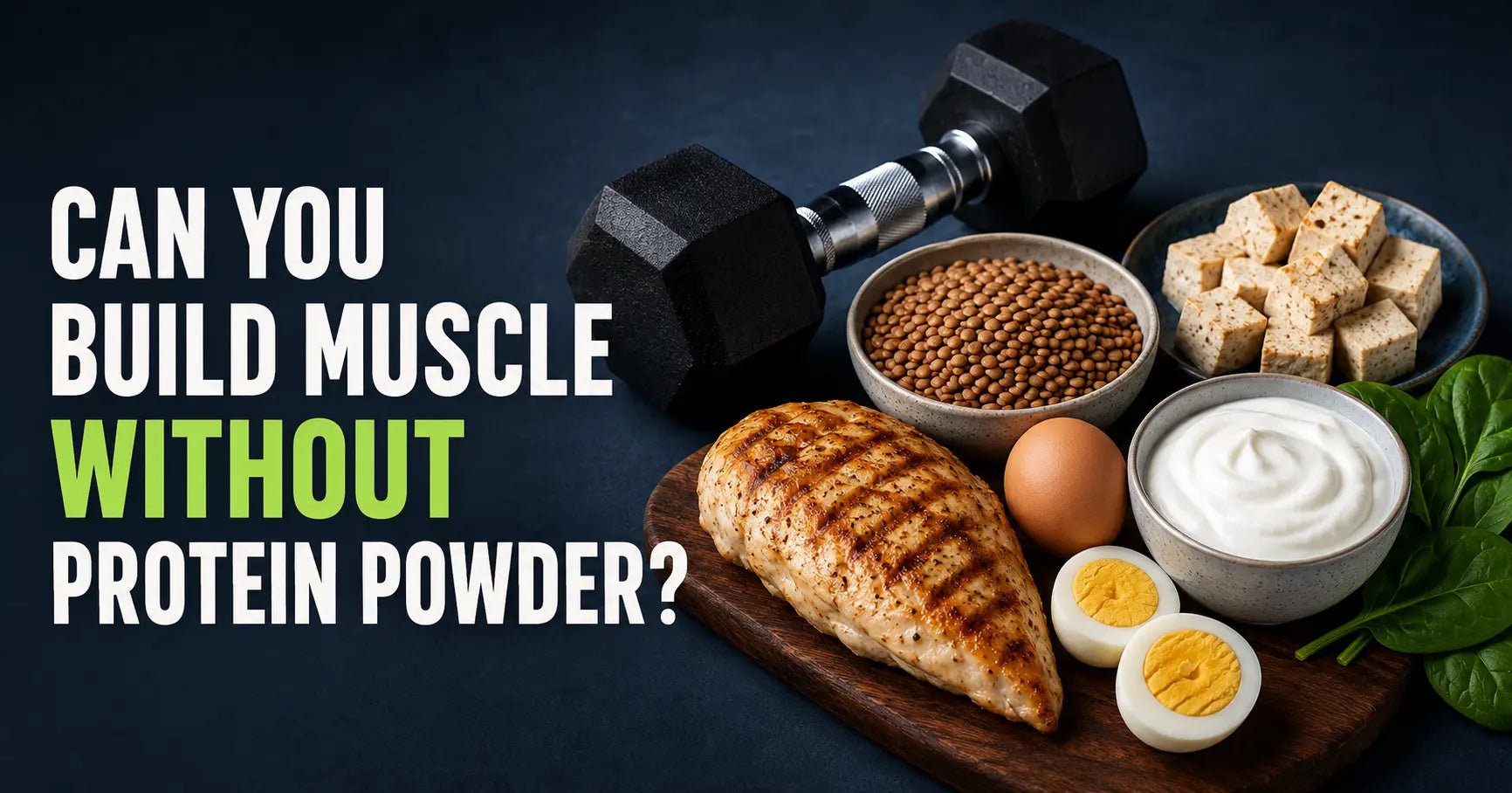
Can You Build Muscle Without Protein Powder?
Yes, you can build muscle without protein powder. This evidence-based guide explains how much protein you need, the best whole-food sources, how to distribute protein across meals, and when a protein supplement may still be...
Yes. You can build muscle without protein powder. Muscle growth depends on progressive resistance training, sufficient energy, enough high-quality dietary protein, and recovery—not on whether your protein comes from a scoop or a meal. [14] [15]
For many healthy adults who lift weights, about 1.6 grams of protein per kilogram of body weight per day is a useful starting target within a broader evidence-based range of 1.4–2.0 g/kg/day. You can reach that amount entirely through ordinary food. [1] [3]
Protein powder can make the target easier to reach, but it does not contain a unique muscle-building ingredient that whole foods cannot provide. [1] [2]
The answer at a glance
| Question | Direct answer |
|---|---|
| Do you need protein powder to build muscle? | No. |
| Do you need dietary protein? | Yes. |
| What is a practical daily target? | About 1.6 g/kg/day for many healthy adults who lift weights. |
| Can whole foods provide enough protein? | Yes, when meals are planned deliberately. |
| Does a shake build more muscle than food? | Not automatically. Total protein, protein quality, training, and energy intake matter more than the format. |
| Do you need a shake immediately after training? | No. Total daily intake matters more than a narrow “anabolic window.” |
| When is protein powder useful? | When time, appetite, travel, cost, or limited food access makes your target difficult to reach. |
Important: This article provides general guidance for healthy adults. Children, teenagers, pregnant or breastfeeding people, and anyone with kidney disease, liver disease, a medically prescribed diet, or another relevant health condition should obtain individualized advice before applying sports-nutrition protein targets.
Why protein powder is optional—but protein is essential
Protein is a nutrient. Protein powder is one way of consuming that nutrient.
Eggs, dairy foods, poultry, fish, meat, soy foods, lentils, beans, and other protein-containing foods all provide amino acids after digestion. Whey, casein, soy, pea, rice, and other protein powders also provide amino acids.
Your body uses amino acids for many functions, including the repair and remodeling of muscle tissue. Resistance training creates the main signal for muscle growth. Dietary protein supplies the building material needed to respond to that signal.
Think of the process in this order:
-
Resistance training provides the stimulus.
-
Dietary protein supplies amino acids.
-
Sufficient energy supports the building process.
-
Sleep and recovery allow adaptation to accumulate.
-
Consistency turns repeated adaptations into measurable results.
Protein powder can make step two more convenient. It cannot replace the other four.
Three situations explain the difference:
-
No powder, but enough food-based protein: You can build muscle.
-
Powder added to a diet that was too low in protein: Results may improve because the supplement corrects the shortfall.
-
High protein intake without effective resistance training: Extra protein alone will not produce substantial muscle growth.
Does protein powder build more muscle than food?
Not automatically.
Many protein-supplement studies compare people who receive additional protein with people who receive a placebo or consume less total protein. When the supplemented group gains slightly more muscle, the result shows that additional protein can help. It does not necessarily prove that powdered protein is superior to an equivalent amount obtained from food.
A large systematic review and meta-analysis found that protein supplementation produced modest additional improvements in muscle size and strength during prolonged resistance training. However, the benefit became smaller as total daily protein intake increased. A later meta-analysis similarly found that increasing daily protein produced small additional gains in lean body mass and lower-body strength. The practical lesson is that correcting inadequate intake matters more than whether the protein arrives as a shake or a meal. [1] [2]
That does not mean every protein source is nutritionally identical. Sources can differ in:
-
Essential-amino-acid content
-
Leucine content
-
Digestibility
-
Digestion speed
-
Serving size
-
Calories and other nutrients
-
Fullness
-
Ease of preparation
Whey is rapidly digested and rich in essential amino acids. That makes it efficient, but not indispensable. A sufficiently large, well-constructed meal can also provide the amino acids needed to support muscle recovery and growth.
Whole food versus protein powder
| Factor | Whole-food protein | Protein powder |
| Can support muscle growth | Yes | Yes |
| Provides essential amino acids | Depends on the food | Depends on the product |
| Convenient | Varies | Usually very convenient |
| Easy to carry | Not always | Usually |
| Predictable protein serving | Requires measuring or checking labels | Usually easy to calculate |
| Provides broader nutrition | Often | Product-dependent |
| Provides fiber | Some plant foods do | Usually little or none |
| Produces fullness | Usually greater | Usually lower |
| Necessary for muscle gain | No single food is necessary | No |
| Best role | Foundation of the diet | Filling a practical protein gap |
The most accurate conclusion is:
Protein powder can make adequate protein intake easier, but it does not make adequate food-based protein less effective.
How much protein do you need to build muscle without powder?
For most healthy adults performing regular resistance training, 1.4–2.0 g of protein per kilogram of body weight per day is a defensible general range. The International Society of Sports Nutrition considers this sufficient for most exercising people. [3]
If you prefer one practical number, start at approximately 1.6 g/kg/day.
The adult protein Recommended Dietary Allowance of 0.8 g/kg/day is intended to meet the needs of nearly all generally healthy adults. It is not a sports-specific target designed to maximize adaptations to resistance training. [4]
Is 1.6 g/kg a magic number?
No.
The widely cited 1.62 g/kg/day figure came from an estimated average breakpoint in the Morton meta-analysis. It was not a biological switch at which muscle growth suddenly starts or stops. Some people can progress below it, while others may find the upper part of the broader range more practical because of their training demands, calorie intake, age, or food choices. [1]
Treat 1.6 g/kg as a strong starting point:
-
If you currently consume much less, increase gradually.
-
If you consistently reach about 1.6 g/kg and are progressing, there is no automatic reason to add more.
-
If you are dieting, highly trained, or eating mostly less protein-dense foods, a higher target within an appropriate range may be useful.
More protein is not always better. Once your needs are comfortably met, additional protein generally produces diminishing returns and may displace carbohydrates, fats, fiber, fruit, vegetables, and other foods that support training and health.
Calculate your daily protein target
If you know your weight in kilograms:
Body weight in kg × 1.6 = approximate daily protein target in grams
If you know your weight in pounds:
Body weight in lb × 0.73 = approximate daily protein target in grams
For a person weighing 70 kg:
70 × 1.6 = 112 g of protein per day
Protein targets by body weight
| Body weight | Evidence-based range at 1.4–2.0 g/kg | Practical target at 1.6 g/kg |
| 50 kg / 110 lb | 70–100 g | 80 g |
| 60 kg / 132 lb | 84–120 g | 96 g |
| 70 kg / 154 lb | 98–140 g | 112 g |
| 80 kg / 176 lb | 112–160 g | 128 g |
| 90 kg / 198 lb | 126–180 g | 144 g |
| 100 kg / 220 lb | 140–200 g | 160 g |
These numbers are planning estimates, not guarantees or prescriptions.
Using current body weight is reasonable for many people. However, a straight body-weight calculation can overestimate needs in someone carrying a substantial amount of excess body fat. In that situation, a qualified dietitian may use goal weight, adjusted weight, or fat-free mass.
How much protein should you eat at each meal?
You do not have to divide protein perfectly, but spreading it across three to five eating occasions is a practical way to reach your daily target.
One evidence-based planning approach is approximately 20–40 g of high-quality protein, or about 0.25–0.40 g/kg per meal, every three to four hours when practical. [5]
For a 70 kg adult:
70 × 0.4 = 28 g per meal
Four meals containing approximately 25–30 g each would provide roughly 100–120 g across the day.
This is a flexible strategy, not a strict biological rule.
Is more than 30 grams of protein wasted?
No.
Your body can digest and absorb more than 30 g of protein in one meal. The confusion comes from studies measuring the immediate muscle-protein-synthesis response to a specific dose over a limited period.
Muscle protein synthesis is not the only use for dietary amino acids. Amino acids also support enzymes, hormones, immune proteins, connective tissue, and other organs. Larger meals may also digest over a longer period.
The practical lesson is not that every gram above a fixed limit disappears. It is that distributing protein gives you repeated opportunities to supply amino acids and often makes a high daily target easier to eat. A review addressing this question proposed approximately 0.4 g/kg per meal across at least four meals as a useful planning method. [6]
Do you need a protein shake immediately after your workout?
No. You do not need to drink a shake within 30 minutes of training.
Total daily protein intake matters more than hitting a very narrow post-workout window. A meta-analysis of protein timing found that total protein intake was a more important explanation for long-term hypertrophy than precise supplement timing. [7]
A practical rule is to eat a protein-containing meal within a few hours before or after training.
Eating sooner becomes more useful when:
-
You trained after a prolonged fast.
-
Your previous protein-containing meal was many hours earlier.
-
You will not be able to eat again for several hours.
-
You are likely to miss your daily protein target.
If you ate a balanced protein-rich meal before training and will eat another normal meal afterward, an immediate shake is unlikely to add a meaningful advantage.
Timing is a refinement. Adequacy is the foundation.
High-protein foods that can replace a scoop
The values below are approximate. Protein content varies by brand, cut, cooking method, and water content. Check product labels or a reliable food-composition database such as USDA FoodData Central when precision matters. [8]
| Food | Practical serving | Approximate protein |
| Chicken breast, cooked | 3 oz / 85 g | 26–27 g |
| Tuna in water, drained | 3 oz / 85 g | 21–23 g |
| Salmon, cooked | 3 oz / 85 g | 20–22 g |
| Lean beef, cooked | 3 oz / 85 g | 21–25 g |
| Whole eggs | 3 large | 18–19 g |
| Plain Greek-style yogurt | 200 g | 18–22 g |
| Low-fat cottage cheese | 1 cup | 24–28 g |
| Milk | 1 cup / 240 ml | About 8 g |
| Firm tofu | 150 g | About 18–25 g |
| Tempeh | 100 g | About 18–20 g |
| Edamame, cooked | 1 cup | About 17–19 g |
| Lentils, cooked | 1 cup | About 17–18 g |
| Black beans, cooked | 1 cup | About 14–15 g |
| Chickpeas, cooked | 1 cup | About 14–15 g |
The NIH Office of Dietary Supplements likewise notes that athletes can obtain higher protein intakes from food and gives examples such as approximately 27 g in a 3-ounce chicken breast, 6 g in an egg, 8 g in a cup of milk, and 7 g in half a cup of black beans. [9]
Foods people often overestimate
Nuts, peanut butter, oats, bread, rice, and vegetables all contribute protein. However, common servings may not provide enough to serve as the main protein source in a muscle-building meal.
For example, peanut butter provides protein but also contains a relatively large amount of fat and calories. That may be useful when gaining weight, but obtaining 25–30 g of protein mainly from peanut butter requires far more calories than obtaining the same amount from chicken, low-fat dairy, tofu, or some other protein-dense foods.
Classify foods accurately:
-
Primary protein sources: Poultry, fish, lean meat, eggs, Greek yogurt, cottage cheese, tofu, tempeh, seitan, lentils, beans, and other protein-dense foods.
-
Supporting protein sources: Bread, rice, oats, pasta, nuts, seeds, and vegetables.
Protein from supporting foods still counts. It simply should not be the only protein in every meal.
How to build a food-only muscle-gain plan
Treat your target as a meal-planning problem rather than vaguely trying to “eat more protein.”
Step 1: Calculate your target
For a 70 kg person:
70 × 1.6 = approximately 112 g per day
Step 2: Divide it across your normal eating pattern
A practical four-meal structure could be:
-
Breakfast: 25–30 g
-
Lunch: 30–35 g
-
Snack: 15–25 g
-
Dinner: 30–35 g
The total matters more than making every meal identical.
Step 3: Put a protein anchor in each meal
A protein anchor is the food responsible for supplying a meaningful portion of the meal’s protein.
Examples include:
-
Eggs, Greek yogurt, cottage cheese, or tofu at breakfast
-
Chicken, fish, lean meat, tofu, tempeh, or lentils at lunch
-
Greek yogurt, cottage cheese, edamame, eggs, or a soy food as a snack
-
Fish, meat, poultry, tofu, tempeh, seitan, beans, or lentils at dinner
Choose the protein source first, then add carbohydrate, produce, and dietary fat according to your calorie needs and preferences.
Step 4: Count what you actually eat
For packaged food, use the nutrition label. For basic foods, use a consistent database. Pay attention to whether a listed amount refers to raw, cooked, or drained weight.
Cooking changes water content, so 100 g raw and 100 g cooked are not interchangeable.
Example: A 112-gram food-only protein day
This example shows how a 70 kg adult could approach a practical target without protein powder. It is a protein framework, not a personalized meal plan.
| Meal | Foods | Approximate protein |
| Breakfast | 3 eggs, 2 slices whole-grain toast, 1 cup milk | About 34 g |
| Lunch | 100 g cooked chicken breast with rice and vegetables | About 35 g |
| Snack | 200 g plain Greek-style yogurt | About 20 g |
| Dinner | 1 cup cooked lentils with 1 cup cooked rice and vegetables | About 23 g |
| Daily total | About 112 g |
No single food has to supply the entire day’s requirement.
Calories still need to be adjusted separately. Someone trying to gain weight might add larger carbohydrate portions, olive oil, nuts, or another snack. Someone trying to lose fat might choose leaner protein sources and smaller portions of energy-dense foods while keeping protein adequate.
Can vegetarians and vegans build muscle without protein powder?
Yes. Vegetarian and vegan diets can support muscle gain without protein powder, but they usually require more deliberate planning because plant foods differ in protein density, digestibility, and amino-acid profile.
Useful plant-based protein anchors include:
-
Tofu
-
Tempeh
-
Edamame
-
Soy milk
-
High-protein soy yogurt
-
Seitan, for people who tolerate gluten
-
Textured vegetable protein or soy chunks
-
Lentils
-
Beans
-
Chickpeas
-
Peas
You do not need to combine specific plant proteins in precisely the same meal. Eating varied sources across the day helps provide complementary amino acids. Soy foods are especially practical because they have a strong essential-amino-acid profile and can be used in several meals.
The scientific evidence needs careful interpretation.
A 12-week trial found comparable resistance-training adaptations between high-protein vegan and omnivorous diets when protein was matched at 1.6 g/kg/day. However, supplements were used to help match intake, so the study supports the adequacy of plant protein when total intake is sufficient; it was not specifically a powder-free trial. [10]
Other controlled research has reported comparable muscle-protein-synthesis responses or training adaptations between well-planned vegan and omnivorous diets under the conditions studied. One 2025 study was a short, nine-day controlled feeding trial measuring myofibrillar protein synthesis rather than long-term muscle growth. These findings should not be interpreted as proof that every unplanned vegan diet automatically provides enough protein. [11] [12]
A 2025 meta-analysis found a small average muscle-mass advantage for animal protein over some non-soy plant proteins, but no significant difference in strength or physical performance. Soy and milk protein did not differ significantly for muscle mass in the pooled analysis. [13]
The practical approach is to:
-
Verify total daily protein instead of assuming it is adequate.
-
Use protein-dense plant foods at each main meal.
-
Eat a varied diet.
-
Consider the middle or upper part of an appropriate protein range when necessary.
-
Check product labels because soy milks, plant yogurts, tofu, and meat alternatives vary widely.
Vegetarian, vegan, and dairy-free substitutions
Match substitutions by protein content rather than equal food weight.
| Food being replaced | Possible alternative |
| Chicken, fish, or meat | Tofu, tempeh, seitan, textured vegetable protein, soy chunks, or a substantial legume-based meal |
| Eggs | Tofu scramble, tempeh, or another protein-matched meal |
| Cow’s milk | Fortified soy milk providing roughly 7–9 g protein per serving |
| Greek yogurt | High-protein soy yogurt; check the label |
| Cottage cheese or paneer | Tofu, tempeh, or another protein-matched soy food |
Almond, coconut, rice, and oat drinks are not usually direct protein replacements for dairy milk because many contain only a small amount of protein.
Vegans should also plan for nutrients such as vitamin B12, iron, iodine, calcium, vitamin D, and omega-3 fats. These considerations affect overall diet quality, but they do not make protein powder compulsory.
Protein alone is not enough to build muscle
If your protein intake is adequate but muscle gain has stalled, powder is probably not the missing ingredient.
Progressive resistance training
Your program must create a reason for your body to adapt. Over time, that usually means improving one or more of the following:
-
Load lifted
-
Repetitions completed
-
Number of productive sets
-
Exercise control
-
Range of motion
-
Performance with the same workload
A 2026 American College of Sports Medicine position stand synthesized 137 systematic reviews involving more than 30,000 participants. It concluded that progressive resistance training improves muscle size and function and that higher weekly volume can enhance hypertrophy. [14]
You do not need a complicated program. You need one that trains the relevant muscles, provides sufficient effort and volume, can be progressed, and can be followed consistently.
Sufficient total energy
Building tissue requires energy. A calorie surplus is not an absolute requirement in every situation. Beginners, people returning after a layoff, and some people with higher body-fat levels may gain muscle while maintaining weight or losing fat.
However, a prolonged energy deficit generally makes maximizing muscle gain more difficult. A meta-analysis found that energy deficiency impaired gains in lean mass during resistance training, even when strength could still improve. [15]
If your body weight is falling unintentionally and gym performance is stagnant, adding protein powder may not solve the real problem. You may need more total food.
Carbohydrates and dietary fat
Protein receives most of the attention, but carbohydrates help fuel demanding resistance training. Dietary fats support health and make it easier to reach sufficient calories.
A muscle-building diet should not become protein plus vegetables with too little energy to train effectively.
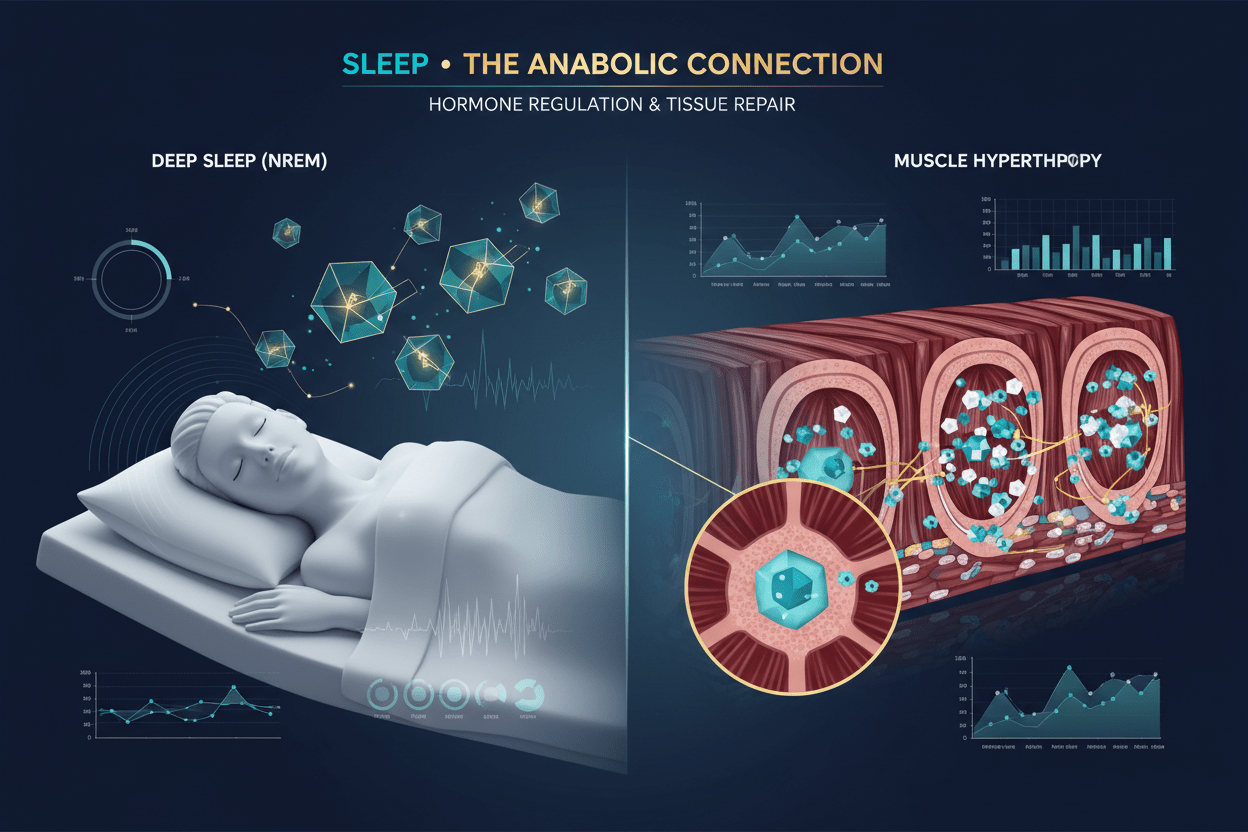
Sleep and recovery
Muscle growth is the accumulated result of training and recovering repeatedly. Short sleep, high fatigue, excessive training, illness, and persistent stress can reduce workout quality and consistency even when protein intake is excellent.
Learn more about how sleep affects muscle growth and recovery.
Will you gain muscle more slowly without protein powder?
Not if the important variables are matched:
-
Total daily protein
-
Protein quality
-
Energy intake
-
Resistance-training stimulus
-
Recovery
-
Consistency
Avoiding powder may indirectly slow progress if it causes you to miss your protein target repeatedly. In that situation, the problem is the shortfall—not the absence of powder itself.
| Situation | Is avoiding powder likely to matter? |
| You consistently meet your target through food | Probably not |
| You miss your target by 20–30 g most days | It could limit progress |
| You have a low appetite and struggle with food volume | Powder may be practically useful |
| You travel frequently and miss meals | A portable protein source may help |
| You expect a shake to compensate for ineffective training | It will not |
| You dislike powder but meet your target comfortably | There is no reason to force it |
When protein powder may still be useful
Optional does not mean useless.
Protein powder may help when:
-
You regularly miss your protein target.
-
Large meals make you uncomfortable.
-
You have little time to prepare food.
-
You need a portable option.
-
You travel frequently.
-
You have a low appetite.
-
A shake is more affordable than available food alternatives.
-
Dietary restrictions make food selection difficult.
You probably do not need it when:
-
You already meet your target through food.
-
Your meals contain enough high-quality protein.
-
You prefer whole foods.
-
You dislike shakes.
-
You expect powder to fix poor training or inadequate calories.
Use this decision rule:
If you meet your protein target comfortably through food, powder is optional. If you regularly fall short, powder may be a useful tool.
If you choose a powder, check:
-
Protein per serving
-
Ingredient list
-
Allergens
-
Added sugars and calories
-
Independent quality-testing information
-
Whether the product fits your health requirements
In the United States, the FDA does not approve dietary supplements for safety and effectiveness before they are sold in the same way that it approves drugs. Supplement companies have the initial responsibility for product safety and lawful labeling. [16]
Why you may not be gaining muscle
Before buying a supplement, check the entire process.
1. Your protein estimate is inaccurate
You may be counting the weight of the whole food rather than the protein it contains. A 100 g serving of chicken is not 100 g of protein.
Track several representative days using labels or a reliable database.
2. You confuse raw and cooked weights
Cooking changes water content. Choose one weighing method and apply it consistently.
3. You rely on low-density protein sources
Small amounts from oats, rice, nuts, and vegetables may not add up to your target. Place a clear protein anchor in each main meal.
4. You are not eating enough total energy
If weight is falling, hunger is persistent, and training performance is deteriorating, inadequate calories may be the main problem.
5. Your training is not progressing
Repeating the same comfortable workout indefinitely gives the body little reason to add muscle. Record exercises, loads, repetitions, and sets.
6. Your training is inconsistent
A sensible program performed reliably is more effective than a perfect program performed sporadically.
7. Recovery is poor
Short sleep, excessive fatigue, illness, and too much training can reduce performance and adherence.
8. Your timeline is unrealistic
Strength can improve early because of skill and neural adaptation, but visible hypertrophy usually requires months of appropriate training and nutrition.
Track several indicators:
-
Strength trends
-
Body-weight trends
-
Circumference measurements
-
Progress photographs taken under similar conditions
-
How clothing fits
If you already consume enough protein, adding a scoop will not repair ineffective training, inadequate calories, or poor recovery.
Is a higher-protein diet safe?
A 2018 systematic review found no difference in changes in kidney function between higher- and lower- or normal-protein diets in healthy adults over the periods studied. This finding does not prove lifelong safety at every possible intake, and it should not be applied automatically to people with kidney disease. [17]
Obtain individualized guidance before substantially increasing protein if you have:
-
Chronic kidney disease
-
Reduced kidney function or abnormal kidney tests
-
Liver disease
-
A medically prescribed protein restriction
-
Pregnancy or breastfeeding
-
A significant digestive or metabolic condition
-
A history of disordered eating
-
Another medical condition affecting nutritional requirements
People with chronic kidney disease can have very different needs depending on kidney function and treatment. Some may need moderate protein, while too little can cause malnutrition. People receiving dialysis may require more because dialysis can remove protein from the blood. The appropriate amount should be set with a clinician or renal dietitian. [18]
Frequently asked questions
Can you build muscle without protein at all?
No. Dietary protein supplies essential amino acids used to build and maintain muscle tissue. You can avoid protein powder, but you still need adequate protein from food.
Can you build muscle without whey protein?
Yes. Whey is convenient, rapidly digested, and rich in essential amino acids, but eggs, dairy foods, poultry, fish, meat, soy foods, and well-planned combinations of plant foods can also support muscle growth.
Can you build muscle without any supplements?
Yes. No dietary supplement is compulsory for muscle growth. Progressive resistance training, sufficient calories, dietary protein, and recovery can all be achieved without supplements.
Can women build muscle without protein powder?
Yes. Women do not need protein powder to build muscle. The same fundamentals apply: progressive resistance training, sufficient dietary protein and energy, and adequate recovery. The appropriate protein target depends on body weight, training, goals, diet, and health—not on whether the person uses powder.
Can you bulk without protein powder?
Yes. A muscle-gain or “bulking” diet can obtain both its protein and calories from food. Powder may make a high intake easier, but it is not required if ordinary meals consistently provide enough protein and total energy.
Can you build muscle with food alone?
Yes. Food can provide all the essential amino acids and energy required to support resistance-training adaptations. The important issue is whether your actual portions consistently meet your needs.
What can you eat instead of protein powder?
Use a protein-dense food that fits the meal: chicken, fish, lean meat, eggs, Greek yogurt, cottage cheese, tofu, tempeh, edamame, lentils, beans, or another suitable source. Match the replacement by grams of protein rather than assuming equal food weights provide equal protein.
Does protein from rice, bread, and vegetables count?
Yes. All dietary protein contributes to your daily total. However, common portions of these foods usually provide less protein than a primary protein source, so relying on them alone can make a muscle-building target difficult to reach.
Is 100 grams of protein enough to build muscle?
It depends on your body weight and circumstances. For a 60 kg adult, 100 g equals approximately 1.67 g/kg and may be sufficient. For a 100 kg adult, it equals 1.0 g/kg and may fall below a commonly used muscle-building range.
Evaluate protein relative to body weight rather than using one universal number.
Do beginners need protein powder?
No. Beginners need consistent resistance training, adequate food, enough protein, and recovery. Powder is useful only if it helps them meet an appropriate target more conveniently.
What happens if you lift weights but do not drink a protein shake?
Nothing inherently negative happens because you skipped a shake. If your diet provides enough protein and energy, a normal meal can support recovery. Progress may suffer only if skipping the shake also means repeatedly missing your nutritional needs.
Can you gain muscle without a calorie surplus?
Sometimes. Beginners, detrained individuals, and some people with higher body-fat levels may gain muscle at maintenance or during a modest deficit. Lean, experienced lifters generally have a better chance of maximizing muscle gain when energy availability is sufficient. If fat loss is also your goal, learn how to lose fat while preserving muscle.
What happens if you miss your protein target for one day?
Very little in isolation. Muscle growth reflects consistent training and nutrition over weeks and months. Return to your normal eating pattern rather than trying to compensate with an extreme intake.
Are protein shakes bad for your kidneys?
Protein shakes are not automatically harmful to healthy kidneys, but that does not make every product or intake appropriate for everyone. Anyone with kidney disease, abnormal kidney tests, or instructions to restrict protein should consult a clinician or renal dietitian.
Is food better than protein powder?
Neither is universally better. Whole foods usually provide broader nutrition and greater fullness. Powder offers convenience and a concentrated, predictable protein serving. The better option is the one that helps you meet your needs while maintaining a balanced, sustainable diet.
How long does it take to build muscle without protein powder?
Powder does not determine the timeline. Training experience, genetics, program quality, calorie intake, sleep, and consistency all matter. Strength may start improving within weeks, while clearly visible muscle growth commonly requires months of sustained training and nutrition.
The bottom line
You need protein to build muscle, but you do not need protein powder.
For many healthy adults who perform resistance training, approximately 1.6 g/kg/day is a useful starting target within a broader range of 1.4–2.0 g/kg/day. Whole foods can supply that amount when each main meal contains a meaningful protein source.
Use protein powder when it solves a practical problem. Do not use it because you believe your muscles require powdered protein specifically.
Progressive resistance training, sufficient food, adequate recovery, and long-term consistency are what turn dietary protein into measurable results.
We rely on peer-reviewed studies and reputable medical journals.