

Best Diet Plan for Skinny Guys to Gain Muscle
Skinny and struggling to gain muscle? Use this simple diet plan to set your calories and protein, eat enough without dirty bulking, and adjust from your weekly weight trend.
If you are skinny and want to gain muscle, do not copy a random 3,000-calorie diet. The best diet plan is one you can measure, repeat, and adjust: eat a small calorie surplus, get enough protein, train with resistance, and change your intake only when your weekly results say you need to.
For example, a 60 kg person can start near 96 g of protein daily. A 70 kg person can start near 112 g.
This guide is for healthy adults who are naturally lean and want to gain muscle gradually. It is not a medical treatment for unexplained weight loss or a replacement for individual advice from a registered dietitian or doctor.
The Skinny Guy Muscle-Gain Plan at a Glance
| What to do | Starting target |
|---|---|
| Find maintenance intake | Track food and morning weight for 7 days |
| Add calories | Start with about +300 calories a day |
| Set protein | At least 1.6 g per kg of body weight daily |
| Build meals | Protein + carbs + calorie booster + fruit or vegetables |
| Train | Resistance train consistently and try to get stronger |
| Track progress | Use a 7-day average, not one weigh-in |
| Adjust | After 2 consistent weeks, change by 150–200 calories a day |
The aim is not a fast “dirty bulk.” A practical rate is roughly 0.25–0.5% of body weight per week. For a 60 kg person, that is about 0.15–0.30 kg a week. A modest surplus is easier to control than an extreme bulk, which can add more body fat than you want.1
Do Skinny Guys Need a Special Diet to Gain Muscle?
No. You do not need an “ectomorph diet,” a magic mass gainer, or six giant meals every day.
You need three things working together:
- Enough calories to gain weight slowly.
- Enough protein to support muscle growth and recovery.
- Resistance training that gives your muscles a reason to grow.
Many people who think they “eat a lot” eat a lot only on some days. Their weekly intake is still too low to gain. The answer is not to live on junk food. It is to make enough food easy to repeat.
Step 1: Find Your Starting Calories
Your calorie needs depend on your body weight, height, daily steps, job, training, appetite, and genetics. That is why a fixed 3,000-calorie diet can be too little for one person and too much for another.
Use a 7-Day Maintenance Check
For one week:
- Eat normally and write down food and drinks.
- Weigh yourself each morning after using the bathroom and before breakfast.
- Add the seven weigh-ins and divide by seven.
- If the average stays about the same, your usual intake is close to maintenance.
Then add about 300 calories a day. Public-health guidance for gradual weight gain commonly uses a 300–500 calorie starting increase, but your own weight trend matters more than a calculator.2
Do Not Start With a Huge Bulk
Adding 1,000 calories a day may make the scale rise quickly, but it does not guarantee fast muscle gain. Start smaller. It lets you see what your body does and keeps the plan easier to follow.
If you are highly active, have a very small appetite, or have not gained after two consistent weeks, add another 150–200 calories a day.
Step 2: Set Your Protein Target
Start with 1.6 g of protein per kg of body weight per day. A practical range for people who lift weights is 1.6–2.2 g/kg/day, but you do not need to chase the highest number if you are already eating enough protein and calories.34
| Body weight | Start with this much protein per day |
|---|---|
| 50 kg | 80 g |
| 60 kg | 96 g |
| 70 kg | 112 g |
| 80 kg | 128 g |
| 90 kg | 144 g |
A large review found that the added muscle-building benefit of protein supplementation during resistance training tended to level off at about 1.6 g/kg/day for many people.3
Spread Protein Across Your Day
You do not need to eat every two hours. Three main meals and one or two snacks work well for most people. Include a protein source each time you eat.
Good choices include:
- Eggs, chicken, fish, lean meat, or beef
- Milk, yogurt, Greek yogurt, cottage cheese, or paneer
- Lentils, beans, chickpeas, and peas
- Tofu, tempeh, edamame, and soy milk
- Whey or plant protein powder when it makes the plan easier
Protein powder is optional. It is convenient food, not a shortcut that replaces meals or training.
Step 3: Build Meals That Are Easy to Repeat
Use this simple formula for most meals:
Protein + carbohydrate + calorie booster + fruit or vegetable
| Meal part | Simple food choices |
|---|---|
| Protein | Eggs, chicken, fish, beef, yogurt, milk, lentils, beans, tofu |
| Carbohydrates | Rice, roti, chapati, oats, potatoes, bread, pasta, cereal, fruit |
| Calorie boosters | Peanut butter, nuts, seeds, olive oil, avocado, cheese, dairy |
| Fruit and vegetables | Bananas, oranges, berries, spinach, carrots, mixed vegetables |
Carbohydrates help fuel hard training. Fats help when you get full quickly because they add calories without making a meal much bigger. Use mostly normal, nutrient-rich foods. You do not need to rely on cakes, sugary drinks, or fried food to gain weight.
A Simple 1-Day Diet Plan for Skinny Guys to Gain Muscle
This is a sample day for someone whose target is roughly 2,650–2,750 calories and about 125–135 g of protein. Nutrition values vary by brand, recipe, and cooking oil, so check labels and adjust portions for your own calorie target.
| Meal | Example meal | Approx. calories | Approx. protein |
|---|---|---|---|
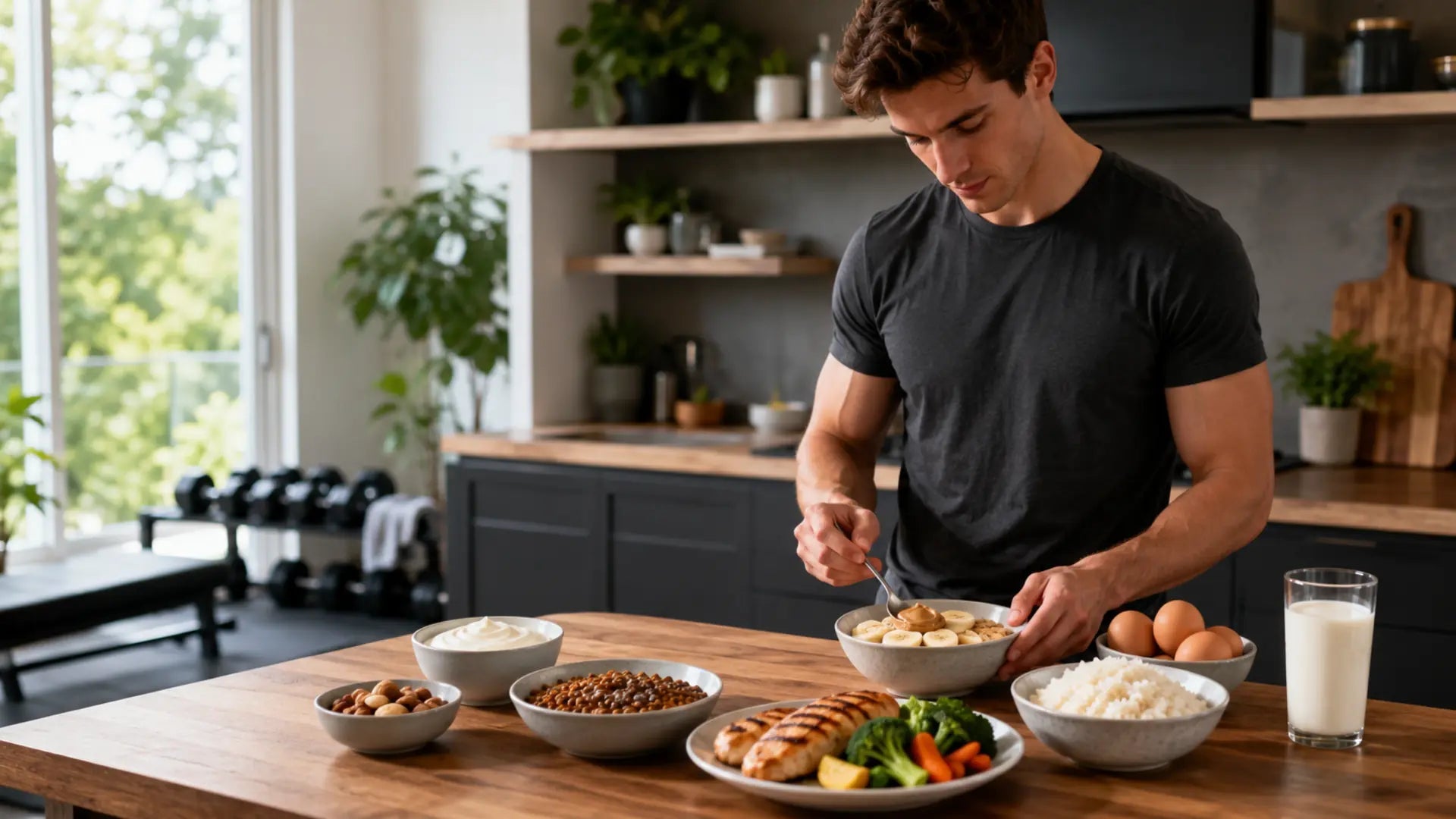
| Breakfast | 80 g oats cooked in 300 ml whole milk, 2 eggs, 1 banana, and 2 tablespoons peanut butter | 930 | 45 g |
| Snack | 200 g plain full-fat yogurt or curd, 30 g mixed nuts, and 1 apple | 400 | 14 g |
| Lunch | 100 g cooked chicken, 2 cups cooked rice, mixed vegetables, and 1 tablespoon olive oil | 740 | 43 g |
| Dinner | ¾ cup cooked lentils, 2 chapatis, 150 g yogurt, salad, and 2 teaspoons olive oil | 615 | 28 g |
| Daily estimate | Adjust portions to your own target | ~2,685 | ~130 g |
Easy Swaps
- Use potatoes, pasta, bread, or roti instead of rice.
- Use fish, eggs, tofu, beans, paneer, or extra lentils instead of chicken.
- Use milk, yogurt, banana, oats, and peanut butter for a smoothie if solid food is hard to finish.
The plan is a template, not a rule. Keep the structure and use foods you can afford, enjoy, and eat consistently.
How to Add Calories Without Forcing Huge Meals
If you get full quickly, add a small calorie module instead of doubling your plate.
| Add this | Approx. extra calories |
|---|---|
| 1 cup cooked rice | 200 |
| 2 tablespoons peanut butter | 190 |
| 30 g mixed nuts | 180 |
| 1 glass of whole milk | 150 |
| 1 tablespoon olive oil | 120 |
| Milk, banana, oats, and peanut butter smoothie | 400–600 |
Useful habits:
- Eat three main meals and one or two snacks.
- Put smoothies between meals, not right before them.
- Add olive oil, nuts, seeds, cheese, or peanut butter to meals you already enjoy.
- Keep fast foods on hand: milk, bananas, yogurt, nuts, bread, oats, cooked rice, and boiled eggs.
How to Know if Your Diet Plan Is Working
Use your seven-day average weight, not one random weigh-in. Water, salt, sleep, and digestion can change the scale from one day to the next.
Also track:
- Waist measurement once a week
- Gym performance and strength
- Progress photos once a month
- Sleep, appetite, energy, and digestion
The Two-Week Adjustment Rule
| After 2 consistent weeks | What to do |
|---|---|
| Weight is flat and strength is flat | Add 150–200 calories a day |
| Weight rises slowly and strength improves | Keep the plan the same |
| Weight and waist rise too fast | Remove 150–200 calories a day |
| Meals feel too large | Use smaller meals and calorie-dense foods |
Do not change the plan after one missed meal, one hard workout, or one strange weigh-in. Follow it consistently, then adjust one thing at a time.
Strength Training and Sleep Matter Too
Food supports muscle gain. Resistance training tells your body where to use the extra energy.
Train all major muscle groups regularly and aim to improve over time by adding a rep, a little weight, or better control. Current American College of Sports Medicine guidance stresses regular resistance training and training major muscle groups at least twice a week rather than chasing a complicated “perfect” program.5
Sleep and recovery matter too. A diet plan cannot fully make up for inconsistent training, poor sleep, or never giving sore muscles time to recover.
Do Skinny Guys Need Supplements?
No. Calories, protein, training, and sleep come first.
- Whey protein: Useful only if it helps you reach your protein target. Food works too.
- Creatine monohydrate: Can support repeated high-intensity exercise and strength training. For healthy adults, 3–5 g a day is a common maintenance amount. It can raise scale weight because it increases water stored in muscle.6
- Mass gainers: Usually expensive calories. A homemade smoothie can do the same job for less.
Avoid products that promise instant size, hormone boosts, or extreme gains. If you have kidney disease, take medication, or have a medical condition, ask a qualified clinician before using supplements.
Common Mistakes That Stop Skinny Guys From Gaining Muscle
“I Eat a Lot, but I Am Still Skinny”
Track a normal week before guessing. You may be eating a lot on some days but not enough across the week.
“I Only Eat Protein”
Protein matters, but total calories matter too. Once you hit your protein target, use rice, oats, potatoes, bread, fruit, dairy, nuts, and fats to make the surplus easier.
“I Need to Eat Every Two Hours”
No. Meal timing is less important than total calories, protein, training, and consistency. Three meals plus one or two snacks is enough for many people.
“I Need a Dirty Bulk”
No. Mostly nutrient-rich foods will help you feel and train better. Include foods you enjoy, but do not make junk food your main strategy.
“My Fast Metabolism Means Nothing Will Work”
You may move more than you realize, train hard, or get full quickly. The solution is still the same: track, add calories slowly, and review the trend after two weeks.
Frequently Asked Questions
Is 3,000 calories enough for a skinny guy?
It may be enough for one person and too much or too little for another. Start from your own maintenance intake, add about 300 calories, and adjust from your weekly average weight.
What is the best breakfast for a skinny guy trying to gain muscle?
Oats with milk, banana, peanut butter, and eggs is a simple high-calorie, high-protein breakfast. A savoury option is eggs with roti or toast, yogurt, and fruit.
Can a skinny guy gain muscle without protein powder?
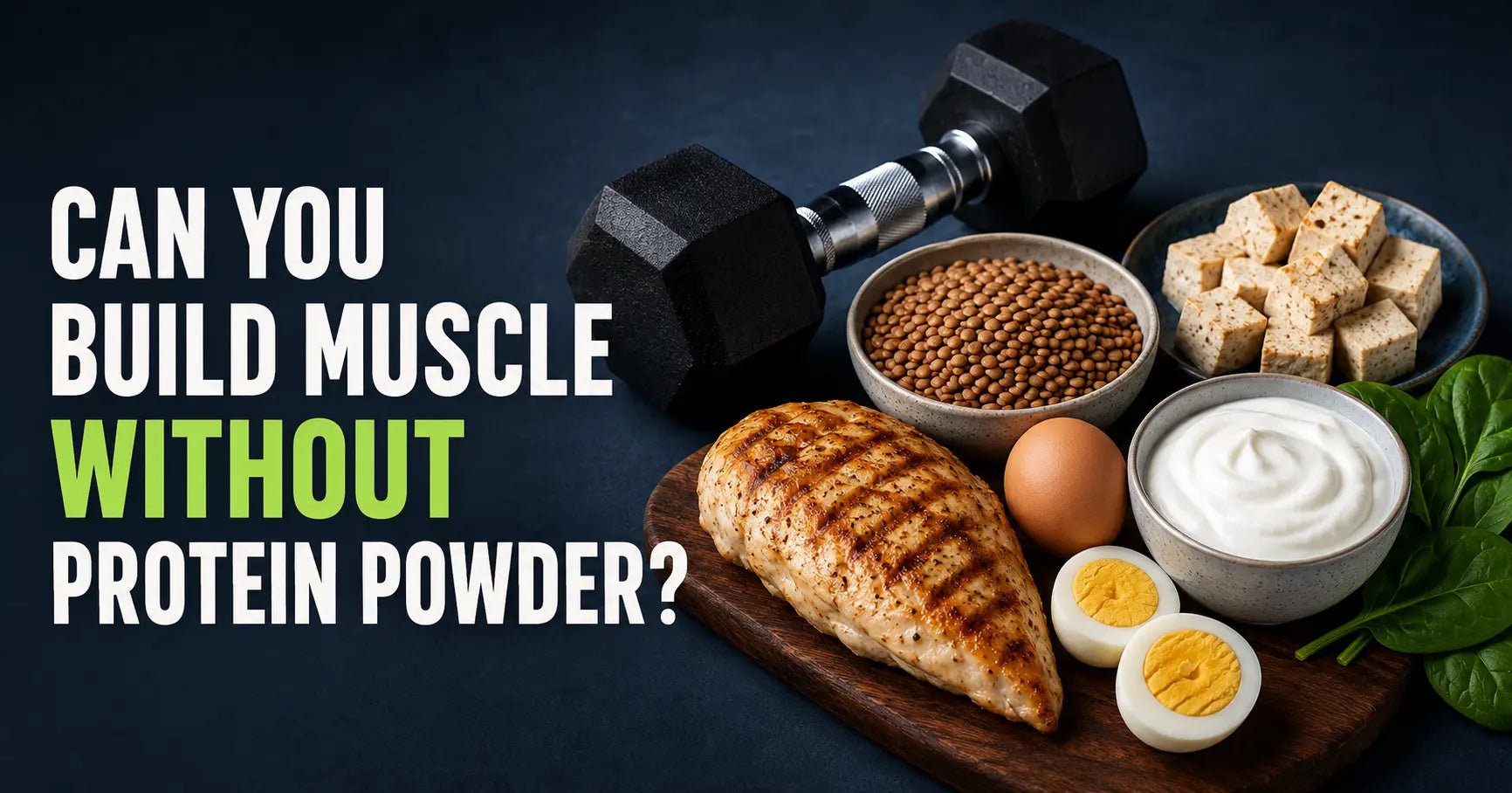
Yes. Eggs, dairy, meat, fish, lentils, beans, tofu, soy foods, and other protein-rich foods can meet your target. Protein powder only adds convenience.
Can I gain muscle if I do not eat meat?
Yes. Build meals around soy foods, lentils, beans, chickpeas, peas, dairy if you eat it, grains, nuts, and seeds. Plan your protein and calories rather than relying on one food.
Should skinny guys do cardio?
Yes, if you enjoy it or need it for health or sport. Just remember that hard cardio uses energy. If you add more cardio, you may need more food to stay in a calorie surplus.
How long does it take to build muscle?
Visible change usually takes months, not days. Focus first on eating consistently, getting stronger, and gaining weight slowly. That is more useful than chasing a fast transformation.
When to Speak With a Doctor or Dietitian
Get individual advice before trying to gain weight if you are under 18, have unexplained weight loss, poor appetite, ongoing stomach problems, an eating-disorder history, diabetes, kidney disease, or another condition that affects food intake.
See a doctor if you keep losing weight without trying. Unintentional weight loss can have many causes and should not be treated as a simple need to “eat more.”7
Personalised nutrition support
Need a plan built around you?
For help with weight gain, appetite, meals, and a routine that fits your life, book an online consultation with an MNT dietitian.
Book a weight-gain consultationThe Bottom Line
The best diet plan for skinny guys to gain muscle is simple and adjustable:
- Eat about 300 calories above maintenance to start.
- Get at least 1.6 g of protein per kg of body weight daily.
- Build repeatable meals from protein, carbs, calorie boosters, and produce.
- Lift weights consistently and get stronger over time.
- Track your seven-day average and adjust only after two consistent weeks.
Do this for months, not days. That is how a skinny guy diet plan becomes a muscle-gain plan that lasts.
We rely on peer-reviewed studies and reputable medical journals.