



Why Am I Not Gaining Weight Even Though I Eat a Lot?
If you are not gaining weight even though you eat a lot, you may not be in a true calorie surplus, you may be burning more energy than expected, or a medical issue may be...
Direct Answer
You may not be gaining weight even though you eat a lot because your body is still not getting more calories than it burns consistently.
Eating a large meal, eating more than your friends, or feeling full does not always mean you are in a calorie surplus. Weight gain happens when your total calorie intake stays higher than your total calorie burn over many days and weeks.
The most common reasons are:
| Reason | What It Means |
|---|---|
| You are not in a true calorie surplus | You feel like you eat a lot, but your total daily or weekly calories are still not enough |
| You eat more on some days and less on others | One heavy meal or weekend overeating may only balance the low-calorie days |
| Your food is filling but low in calories | Salads, fruits, soups, tea, lean meals, and watery foods can fill the stomach without giving enough energy |
| You burn more than you realize | Walking, standing, gym, sports, active work, fidgeting, or stress can increase calorie needs |
| You skip meals without noticing | Missing breakfast, delaying lunch, or eating late can reduce your total intake |
| You feel full quickly | Low appetite, stress, digestive issues, or high-fiber meals can limit calorie intake |
| You are doing too much cardio | High activity can erase the extra calories you are trying to add |
| You are not strength training | Without resistance training, healthy muscle gain becomes harder |
| You may have a medical issue | Thyroid problems, diabetes, gut disorders, malabsorption, chronic infection, medication, or stress may affect weight |
The best first step is simple: track your food intake and body weight for 14 days, add 300 to 500 calories daily, choose calorie-dense foods, include protein in every meal, start strength training, and seek medical advice if you have red flags such as unexplained weight loss, diarrhea, excessive thirst, fast heartbeat, tremors, fever, night sweats, or blood in stool.
Need a personalized weight gain diet plan? Book consultation with us.
Quick Summary
If you are eating a lot but not gaining weight, the problem usually falls into one of four categories:
| Category | Main Issue | What to Check |
| Intake problem | You are not eating enough calories consistently | Meal skipping, portion size, food tracking, low-calorie foods |
| Activity problem | You are burning more calories than expected | Steps, gym, sports, active work, fidgeting, cardio |
| Absorption problem | Your body may not be absorbing nutrients properly | Chronic diarrhea, greasy stools, bloating, abdominal pain, nutrient deficiencies |
| Metabolism or medical problem | Your body may be using energy abnormally | Thyroid symptoms, diabetes symptoms, infection, chronic disease, medication effects |
Not everyone who struggles to gain weight has a disease. In many cases, the issue is meal structure, calorie density, and consistency. But if your weight is dropping without trying, or you feel unwell, do not assume it is just a fast metabolism.
Eating a Lot Is Not the Same as Eating Enough Calories
Many people say, “I eat a lot but I still do not gain weight.” In many cases, they are telling the truth. They may eat large meals, enjoy food, or eat more than the people around them.
But weight gain is not based on how full you feel. It is based on energy balance.
Your body gains weight when your calorie intake is consistently higher than your calorie expenditure. This is called a calorie surplus.
For example:
| Daily Calories Burned | Daily Calories Eaten | Result |
| 2,400 calories | 2,100 calories | Weight may decrease |
| 2,400 calories | 2,400 calories | Weight may stay stable |
| 2,400 calories | 2,800 calories | Weight may increase |
You may feel like you eat a lot, but if your body burns 2,700 calories and you eat 2,400 calories, you are still not eating enough to gain weight.
The better question is not:
“Do I eat a lot?”
The better question is:
“Am I eating more calories than my body burns every day for several weeks?”
If the answer is no, your weight may stay the same.
Why Your Weight Is Not Increasing Even After Eating More

1. You Eat More on Some Days but Less on Other Days
Weight gain does not depend on one heavy meal. It depends on your average calorie intake across the week.
A common pattern looks like this:
| Day | Eating Pattern | Result |
| Monday | Skipped breakfast, light lunch, normal dinner | Low calories |
| Tuesday | Tea and biscuits, small lunch, big dinner | Still not enough |
| Wednesday | Large lunch and dinner | Better intake |
| Thursday | Busy day, skipped meals | Low calories again |
| Friday | Good meals | Better |
| Weekend | Heavy eating | May only balance the low days |
This pattern makes you feel like you eat a lot, but your weekly intake may still be too low for weight gain.
2. Your Food Is High in Volume but Low in Calories
Some foods fill your stomach quickly but do not provide many calories.
Examples include:
- Salads without enough dressing, oil, nuts, cheese, or grains
- Vegetable soups
- Fruits as the main snack
- Plain tea or green tea
- Very lean meals
- Steamed vegetables
- Low-fat yogurt
- Egg whites instead of whole eggs
- Watery foods
- High-fiber meals without enough fats or starches
These foods can be healthy, but if most of your diet is based on high-volume, low-calorie foods, you may feel full before reaching your calorie target.
For weight gain, you need nutritious but calorie-dense foods such as:
- Nuts
- Seeds
- Peanut butter
- Olive oil
- Avocado
- Whole milk
- Full-fat yogurt
- Cheese
- Eggs
- Rice
- Roti
- Paratha
- Potatoes
- Oats
- Dates
- Banana
- Mango
- Smoothies
- Lassi
- Chicken
- Fish
- Beef
- Daal
- Chickpeas
- Beans
You do not need to eat junk food to gain weight. You need to make your normal meals more calorie-rich.
3. You Skip Meals Without Realizing It
A person trying to gain weight should not depend only on hunger. Some people naturally have a low appetite, become busy, or forget to eat.
If you skip breakfast, delay lunch, or eat dinner late, it becomes difficult to meet your calorie needs.
A better weight-gain structure is:
- Breakfast
- Mid-morning snack
- Lunch
- Evening snack
- Dinner
- Optional bedtime snack
This does not mean every meal must be huge. Small and frequent meals are often easier for people who cannot eat large portions.
4. Your Portions Look Big but Are Not Calorie-Dense
A large plate does not always mean high calories.
A large bowl of salad may look like a lot of food but may contain fewer calories than a small handful of nuts with a glass of milk.
Similarly, plain tea, fruit, soup, and vegetables can make you feel full, but they may not provide enough energy for weight gain.
To increase calories without increasing food volume too much, add:
- 1 to 2 tablespoons olive oil to meals
- Peanut butter to toast or smoothies
- Nuts and seeds to yogurt
- Full-fat milk instead of low-fat milk
- Cheese or eggs with breakfast
- Dates with milk
- Extra rice, roti, or potatoes with meals
- Granola with yogurt
- Avocado with meals
- Tahini or hummus with bread
Small additions can make a big difference when done daily.
Is Fast Metabolism the Reason You Cannot Gain Weight?
Some people do have higher energy needs than others. This can happen because of genetics, body size, muscle mass, age, hormones, activity level, or daily movement.
But “fast metabolism” is often not the only reason.
Many people who believe they have a fast metabolism also:
- Move more throughout the day
- Walk a lot
- Stand for long hours
- Fidget frequently
- Do cardio or sports
- Have a naturally low appetite
- Eat inconsistently
- Feel full quickly
- Skip meals when busy
- Burn extra calories through stress or restlessness
So the issue may not be metabolism alone. It may be that your calorie needs are higher than you think.
If you believe your metabolism is high, the solution is still practical:
- Track your intake for 7 to 14 days.
- Add 300 to 500 calories daily.
- Check your weekly average weight after 2 weeks.
- If weight is still stable, add another 200 to 300 calories daily.
- Combine this with strength training.
A fast metabolism can make weight gain harder, but it does not make weight gain impossible.
The Science: TDEE, NEAT, and Why Some People Burn More
Your total daily energy expenditure is the total number of calories your body burns in a day.
It includes:
| Component | What It Means |
| Basal Metabolic Rate | Calories your body uses at rest to keep organs working |
| Exercise Activity | Calories burned during gym, sports, running, cycling, or workouts |
| Non-Exercise Activity | Calories burned through walking, standing, fidgeting, posture changes, chores, and daily movement |
| Thermic Effect of Food | Calories used to digest and process food |
One hidden reason some people struggle to gain weight is NEAT, which means non-exercise activity thermogenesis.
NEAT includes small movements you may not count as exercise:
- Pacing while talking
- Moving your legs while sitting
- Standing instead of sitting
- Walking around the house
- Taking stairs
- Doing chores
- Traveling
- Working physically
- Fidgeting
- Restless movement during stress
These small movements can add up. A person who moves all day may burn far more calories than someone who sits most of the day, even if both people eat similar meals.
This is why two people can eat the same amount of food and get different results. Their bodies may not burn the same amount of energy.
You May Be Gaining Weight but Measuring It Incorrectly
Sometimes the problem is not that you are failing to gain weight. The problem is that you are measuring progress in a way that hides small changes.
Daily body weight can change because of:
- Water intake
- Salt intake
- Carbohydrate intake
- Glycogen storage
- Bowel movements
- Food volume
- Menstrual cycle changes
- Exercise soreness
- Sleep
- Stress
- Hydration
You may weigh more one day and less the next, even when fat or muscle has not changed.
A better method is:
- Weigh yourself in the morning after using the washroom.
- Use the same scale.
- Weigh 2 to 4 times per week.
- Record the numbers.
- Compare weekly averages, not one random day.
Also track:
- Waist measurement
- Clothing fit
- Gym strength
- Progress photos
- Appetite
- Meal consistency
- Digestive symptoms
If your weekly average is slowly increasing, you are gaining weight even if daily scale numbers look confusing.
How Fast Should You Gain Weight?
Healthy weight gain should be gradual.
A realistic target for many people is:
- 0.25 to 0.5 kg per week for slow, controlled gain
- Slightly faster gain may be possible for very underweight people under professional guidance
Gaining weight too fast often leads to more fat gain, bloating, poor digestion, and discomfort.
Do not judge your plan after two or three days. Track for at least two to four weeks before making major changes.
Medical Reasons You May Not Be Gaining Weight
Most cases of poor weight gain are related to calorie intake, activity, appetite, meal structure, or training. But sometimes, an underlying medical issue can make weight gain difficult.
You should not self-diagnose, but you should know when to seek help.
1. Hyperthyroidism or Overactive Thyroid
Hyperthyroidism means the thyroid gland produces too much thyroid hormone. Thyroid hormones affect metabolism, heart rate, body temperature, digestion, and energy use.
When thyroid activity is too high, the body may burn energy faster than normal. This can cause weight loss or difficulty gaining weight, even when appetite is normal or increased.
Possible signs include:
- Weight loss despite eating more
- Fast or irregular heartbeat
- Shaky hands
- Heat intolerance
- Sweating
- Anxiety or irritability
- Trouble sleeping
- Fatigue
- Muscle weakness
- Frequent bowel movements
- Swelling in the neck
If these symptoms are present, thyroid testing may be needed.
2. Diabetes
Uncontrolled diabetes can cause weight loss or difficulty gaining weight because the body may not use glucose properly for energy.
Possible signs include:
- Excessive thirst
- Frequent urination
- Increased hunger
- Unexplained weight loss
- Fatigue
- Blurred vision
- Slow wound healing
- Frequent infections
If you are eating a lot but losing weight, feeling constantly thirsty, or urinating more than usual, speak with a doctor and get blood sugar checked.
3. Digestive Problems and Malabsorption
If your digestive system is not absorbing nutrients properly, you may struggle to gain weight even if you eat enough food.
Possible causes may include:
- Celiac disease
- Inflammatory bowel disease
- Chronic diarrhea
- Food intolerance
- Long-term gut inflammation
- Pancreatic or liver-related digestive issues
- Chronic infection
Warning signs include:
- Frequent diarrhea
- Oily, floating, bulky, or foul-smelling stools
- Bloating
- Abdominal pain
- Nausea
- Vomiting
- Blood in stool
- Low energy
- Unexplained weight loss
- Anemia or nutrient deficiencies
If these symptoms are present, professional evaluation is important.
4. Celiac Disease
Celiac disease is an immune reaction to gluten that can damage the small intestine. When the small intestine is damaged, the body may not absorb nutrients properly.
Possible symptoms include:
- Bloating
- Chronic diarrhea
- Constipation
- Gas
- Loose, greasy, bulky, or bad-smelling stools
- Nausea or vomiting
- Abdominal pain
- Fatigue
- Weight loss
- Anemia
If you suspect celiac disease, do not start a gluten-free diet before testing unless your doctor advises it. Removing gluten before testing can affect results.
5. Inflammatory Bowel Disease
Inflammatory bowel disease includes Crohn’s disease and ulcerative colitis. These conditions can cause inflammation in the digestive tract, reduce appetite, increase calorie needs, cause diarrhea, and interfere with nutrient absorption.
Possible symptoms include:
- Chronic diarrhea
- Abdominal pain
- Blood in stool
- Fatigue
- Fever
- Weight loss
- Poor appetite
- Joint pain or body aches
These symptoms should be evaluated by a healthcare professional.
6. Chronic Infection or Inflammation
Long-term infection or inflammatory disease can increase energy needs and reduce appetite. Some conditions may cause fever, night sweats, fatigue, swollen lymph nodes, or weight loss.
Seek medical care if weight loss is paired with:
- Persistent fever
- Night sweats
- Ongoing cough
- Swollen lymph nodes
- Severe fatigue
- Unexplained pain
- Weakness
- Loss of appetite
7. Stress, Anxiety, or Depression
Stress affects weight in different ways. Some people eat more during stress, while others lose appetite or feel full quickly.
Stress may also affect:
- Sleep
- Digestion
- Hunger signals
- Meal timing
- Motivation to cook
- Training recovery
- Hormonal balance
- Daily movement and restlessness
If stress or anxiety is affecting your eating pattern, weight gain becomes harder.
8. Medications
Some medicines can reduce appetite, cause nausea, affect digestion, or change body weight.
These may include some medications used for:
- Attention-related conditions
- Mood disorders
- Diabetes
- Thyroid disease
- Long-term inflammatory conditions
- Other chronic illnesses
Never stop medication on your own. If you think a medicine is affecting your appetite or weight, speak with your doctor.
9. Eating Disorders or Disordered Eating Patterns
Sometimes, a person may want to gain weight but still feel anxious about eating more, feeling full, changing body shape, or increasing fat.
Warning signs include:
- Fear of gaining fat
- Avoiding many foods
- Feeling guilty after eating
- Skipping meals after eating more
- Exercising to “earn” food
- Obsessive calorie tracking
- Binge-restrict cycles
- Feeling out of control around food
- Eating secretly or feeling shame around food
Professional support is important if eating feels stressful, controlled, fearful, or emotionally difficult.
How to Tell Whether the Problem Is Intake, Activity, Absorption, or Metabolism
This simple framework can help you decide what to check next.
It Is More Likely an Intake Problem If:
- You skip meals
- You rarely eat breakfast
- You get full quickly
- You eat mostly low-fat or low-calorie foods
- You do not track portions
- You eat more some days but less on others
- Your weight is stable, not falling
- You have no major digestive or medical symptoms
It Is More Likely an Activity Problem If:
- You walk a lot
- You train often
- You play sports
- You have an active job
- You do endurance exercise
- You recently increased steps or cardio
- You feel like you are always moving
- You are hungry but still not gaining
It Is More Likely a Digestion or Absorption Problem If:
- You have chronic diarrhea
- Your stools are greasy, pale, bulky, floating, or foul-smelling
- You have ongoing bloating or abdominal pain
- You feel tired despite eating
- You have anemia or nutrient deficiencies
- You lose weight even with consistent intake
It Is More Likely a Metabolism or Endocrine Problem If:
- You lose weight despite increased appetite
- You feel hot, shaky, sweaty, or restless
- Your heart beats fast or irregularly
- You have excessive thirst or frequent urination
- You feel unusually fatigued or weak
- Your weight changed suddenly without a clear reason
This framework does not diagnose you. It only helps you decide whether you need better meal planning, calorie tracking, activity adjustment, or medical evaluation.
Red Flags: When You Should See a Doctor
You should seek medical advice if you have any of the following:
- Unintentional weight loss
- BMI below 18.5
- Weight not increasing despite a structured high-calorie plan
- Frequent diarrhea or vomiting
- Oily, floating, bulky, or foul-smelling stools
- Blood in stool
- Excessive thirst or frequent urination
- Fast heartbeat, sweating, tremors, or heat intolerance
- Loss of appetite for several weeks
- Feeling full after very small meals
- Severe fatigue or weakness
- Missed periods in females
- Persistent fever
- Night sweats
- Swollen lymph nodes
- Chronic cough
- Sudden change in weight
- History of thyroid disease, diabetes, gut disease, cancer, or eating disorder
These signs do not always mean something serious, but they should not be ignored.
What to Track for 14 Days Before Changing Everything
Before assuming you have a fast metabolism or a medical condition, track your routine for 14 days.
Track:
- Morning body weight
- Meals and snacks
- Portion sizes
- Drinks
- Cooking oils, sauces, and extras
- Steps or daily activity
- Workouts
- Sleep
- Stress
- Appetite
- Bowel habits
- Digestive symptoms
- Medication or supplement use
You do not need to track forever. The goal is to find the gap between what you think is happening and what is actually happening.
After 14 days, ask:
- Did my weekly average weight increase?
- Did I eat consistently every day?
- Did I miss meals?
- Did I rely on low-calorie foods?
- Did I burn more calories through activity than I realized?
- Did I have symptoms that suggest a medical issue?
If your weight did not increase and there are no red flags, the next step is usually to increase calories.
How Many Extra Calories Do You Need to Gain Weight?
A good starting point is to add 300 to 500 extra calories per day.
If you are very active, underweight, or have a high metabolism, you may need more.
Easy ways to add 300 to 500 calories include:
- 1 banana milkshake
- A handful of nuts with dates
- 1 extra roti
- 1 extra serving of rice
- 1 tablespoon olive oil added to lunch and dinner
- 1 peanut butter sandwich
- 1 glass full-fat milk before bed
- Yogurt with granola and honey
- Smoothie with milk, banana, oats, and peanut butter
After 2 weeks, check your weight trend.
If weight increases slowly, continue.
If weight does not change, add another 200 to 300 calories per day.
If weight is decreasing or you have symptoms such as diarrhea, excessive thirst, fast heartbeat, tremors, fever, or fatigue, seek medical advice.
Best Foods for Healthy Weight Gain
The best weight-gain foods are calorie-dense, nutritious, affordable, and easy to repeat.
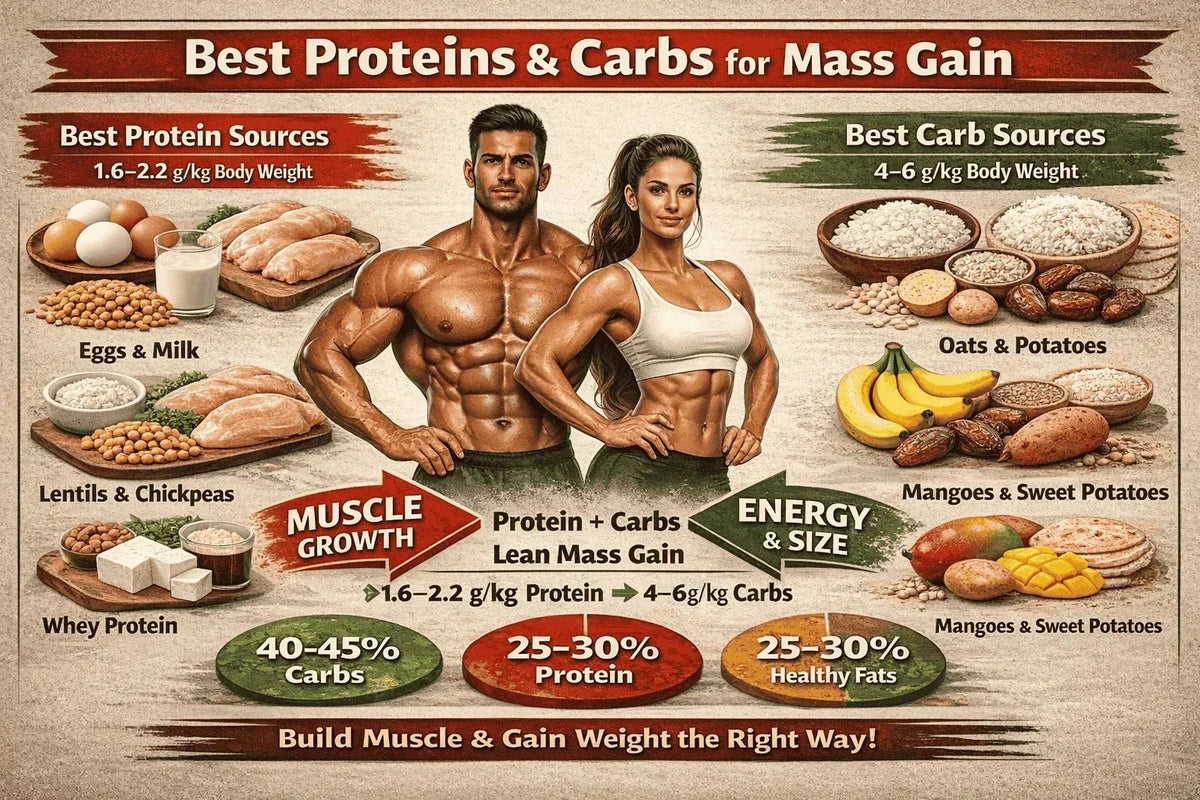
Carbohydrate Sources
Carbohydrates help provide energy and make it easier to stay in a calorie surplus.
Good options include:
- Rice
- Roti
- Paratha
- Oats
- Potatoes
- Sweet potatoes
- Pasta
- Whole wheat bread
- Dates
- Bananas
- Mangoes
- Lentils
- Beans
- Chickpeas
- Granola
Protein Sources
Protein helps support muscle gain, especially when combined with strength training.
Good options include:
- Eggs
- Chicken
- Fish
- Beef
- Milk
- Yogurt
- Cheese
- Lentils
- Beans
- Chickpeas
- Soy foods
- Nuts and seeds
- Protein powder if needed
Protein is important, but protein alone will not increase your weight if total calories are still low.
Healthy Fat Sources
Fats are useful for weight gain because they provide more calories in smaller portions.
Good options include:
- Olive oil
- Peanut butter
- Almonds
- Walnuts
- Cashews
- Pistachios
- Chia seeds
- Flaxseeds
- Sesame seeds
- Avocado
- Full-fat dairy
- Tahini
- Hummus
Calorie-Rich Drinks
Drinks can help if you feel full quickly.
Good options include:
- Banana milkshake
- Mango milkshake
- Smoothie with milk, banana, oats, and peanut butter
- Lassi
- Dates blended with milk
- Yogurt smoothie
- Full-fat milk
Avoid replacing meals with drinks. Use them as an addition to your meals.
Pakistan-Friendly Weight Gain Meal Ideas
These meal ideas can fit common Pakistani food preferences.
Breakfast Ideas
- Paratha with egg and full-fat milk
- Oats cooked in milk with banana, nuts, and honey
- Peanut butter toast with banana
- Omelet with roti and lassi
- Yogurt with dates, nuts, and honey
- Chana with roti and milk
- Halwa puri occasionally, balanced with protein
Snack Ideas
- Banana milkshake
- Dates with milk
- Peanut butter sandwich
- Nuts and raisins
- Yogurt with seeds
- Boiled eggs and toast
- Smoothie with oats and milk
- Lassi with nuts
- Chana chaat with olive oil or yogurt
Lunch Ideas
- Rice with chicken curry and yogurt
- Roti with beef or chicken and vegetables
- Daal chawal with ghee or olive oil
- Potato curry with roti and egg
- Chickpeas with rice and salad
- Chicken pulao with raita
- Keema with roti and yogurt
Dinner Ideas
- Chicken rice bowl
- Roti with fish and vegetables
- Daal with rice and yogurt
- Pasta with chicken and cheese
- Paratha roll with egg or chicken
- Beef curry with rice
- Omelet with paratha and milk
Bedtime Snack Ideas
- Warm milk with dates
- Yogurt with nuts
- Peanut butter toast
- Banana smoothie
- Milk with oats
- Full-fat milk with honey
- Cottage cheese or paneer with fruit
Sample One-Day Weight Gain Meal Plan
This is only a sample structure. Your actual plan should depend on your age, weight, height, appetite, activity level, digestion, medical history, and goal.
Breakfast
- 2 eggs with paratha
- 1 glass full-fat milk
- 1 banana
Mid-Morning Snack
-
Dates with nuts
or - Peanut butter toast
Lunch
- Rice or 2 rotis
- Chicken, beef, fish, or daal
- Vegetables cooked with oil
- Yogurt
Evening Snack
-
Banana milkshake with oats and peanut butter
or - Lassi with a handful of nuts
Dinner
- Roti or rice
- Protein source such as chicken, egg, fish, daal, or chickpeas
- Potatoes or vegetables
- Olive oil or ghee added in controlled quantity
Bedtime Snack
-
Full-fat milk
or - Yogurt with nuts and honey
Protein Helps, But Calories Decide Weight Gain
Protein is important for muscle gain, but protein alone will not make you gain weight if total calories are still low.
For example, if you eat chicken breast, eggs, and protein shakes but your total daily calories are not enough, your weight may not increase.
To gain healthy weight, you need:
- Enough calories
- Enough protein
- Strength training
- Good sleep
- Consistency
- Recovery
A practical approach is to include a protein source in every major meal.
Examples:
- Eggs at breakfast
- Chicken or daal at lunch
- Milk or yogurt as a snack
- Fish, chicken, beef, or legumes at dinner
For active people doing resistance training, protein needs are usually higher than for sedentary people. The exact amount should be personalized based on body weight, training level, medical condition, and goal.
Strength Training: Gain Muscle, Not Just Belly Fat
If you only increase calories without strength training, more of the gained weight may come as fat.
Strength training helps direct some of those extra calories toward muscle building.
Good beginner exercises include:
- Squats
- Lunges
- Push-ups
- Rows
- Shoulder press
- Deadlifts
- Bench press
- Resistance band exercises
- Machine-based gym exercises
You do not need a complicated workout. You need consistency and progressive overload.
Progressive overload means gradually increasing:
- Weight
- Repetitions
- Sets
- Training difficulty
- Control and form
For best results, train 3 to 5 days per week and allow recovery.
Too Much Cardio Can Slow Weight Gain
Cardio is good for heart health, stamina, and fitness. But too much cardio can make weight gain harder because it increases calorie expenditure.
If you are trying to gain weight, avoid excessive cardio unless it is needed for your sport or health condition.
Instead, focus more on:
- Strength training
- Controlled walking
- Recovery
- Eating enough calories to match your activity level
You do not need to stop movement completely. You need to balance movement with enough food.
Common Mistakes That Stop Weight Gain
Mistake 1: Eating Randomly Without a Plan
If your meals are not planned, you may miss calories without realizing it.
Fix: Follow a meal schedule and keep backup snacks.
Mistake 2: Depending Only on Junk Food
Junk food can increase calories, but it may also increase bloating, poor digestion, low energy, acne, and unhealthy fat gain.
Fix: Use nutrient-dense foods most of the time.
Mistake 3: Drinking Too Much Water Before Meals
Water is important, but drinking too much before meals can reduce appetite.
Fix: Drink water between meals instead of filling your stomach right before eating.
Mistake 4: Not Eating Enough Protein
Calories help weight gain, but protein supports muscle gain.
Fix: Add protein to each main meal.
Mistake 5: Doing Too Much Cardio
Too much cardio can burn the extra calories you are trying to add.
Fix: Focus more on strength training and adjust food according to activity.
Mistake 6: Expecting Results Too Quickly
Weight gain takes time. Some people quit after one week because they do not see a big change.
Fix: Track weekly averages for at least 2 to 4 weeks.
Mistake 7: Ignoring Digestive Symptoms
If you have chronic diarrhea, bloating, pain, or poor appetite, simply eating more may not solve the problem.
Fix: Consult a doctor or dietitian.
Mistake 8: Using Protein Shakes Incorrectly
Protein shakes do not automatically cause weight gain. If a shake replaces a meal instead of adding calories, it may not help.
Fix: Use shakes as an addition, not a replacement, unless prescribed.
14-Day Action Plan If You Are Not Gaining Weight
Follow this plan for the next 14 days.
Day 1 to Day 3: Track Your Actual Intake
Write down everything you eat and drink.
Include:
- Meals
- Snacks
- Drinks
- Oils
- Sauces
- Milk
- Tea
- Biscuits
- Fruit
- Nuts
- Supplements
This helps you see whether you are actually eating enough.
Day 4 to Day 7: Add 300 to 500 Calories Daily
Choose one or two additions:
- 1 banana milkshake
- 1 handful nuts plus dates
- 1 extra roti
- 1 extra serving of rice
- 1 tablespoon olive oil added to meals
- 1 peanut butter sandwich
- 1 glass full-fat milk before bed
Day 8 to Day 10: Start Strength Training
Train at least 3 days per week.
Focus on:
- Legs
- Chest
- Back
- Shoulders
- Arms
- Core
Use proper form. If you are new, start light.
Day 11 to Day 14: Check Your Weight Trend
Do not panic over daily changes. Compare your average weight.
If weight is increasing, continue.
If weight is not increasing, add another 200 to 300 calories per day.
If weight is decreasing or you have symptoms like diarrhea, excessive thirst, fast heartbeat, tremors, or severe fatigue, seek medical advice.
What If You Still Cannot Gain Weight After 2 to 4 Weeks?
If you have been consistent for at least 2 to 4 weeks and your weekly average weight has not increased, it usually means your calorie surplus is not large enough.
Try this:
- Add another 200 to 300 calories per day
- Reduce missed meals
- Add one daily smoothie
- Increase rice, pasta, oats, roti, or potatoes
- Add fats such as olive oil, nuts, peanut butter, or avocado
- Check whether activity increased
- Review whether weekdays and weekends are consistent
- Track cooking oils, sauces, drinks, and snacks accurately
If you are truly eating a consistent surplus and still losing weight, or if you have symptoms, see a healthcare professional.
Tests a Doctor May Consider
A doctor will decide which tests are appropriate based on your symptoms, medical history, age, medications, family history, and physical examination.
Possible tests may include:
- Complete blood count
- Thyroid function tests
- Blood glucose or HbA1c
- Celiac disease screening
- Inflammatory markers
- Liver function tests
- Kidney function tests
- Stool tests if diarrhea or malabsorption symptoms exist
- Nutrient deficiency tests
- Additional imaging or specialist referral if needed
Do not self-diagnose based on weight alone. The goal is to safely identify or rule out underlying causes.
Special Cases
Teenagers Who Eat a Lot but Stay Skinny
Teenagers may have high energy needs because of growth, puberty, sports, school activity, and rapid changes in body composition.
A teen who is active may need more food than expected.
However, teenagers should not follow extreme bulking diets without guidance. If a teenager is losing weight, not growing as expected, skipping periods, having digestive symptoms, or showing signs of disordered eating, a healthcare professional should be involved.
Athletes and Hard Gainers
Athletes often underestimate how much they burn. Training, practice, walking, school, work, and recovery all increase energy needs.
Hard gainers usually need:
- More total calories
- More frequent meals
- Calorie-dense snacks
- Liquid calories
- Progressive resistance training
- Enough sleep
- Reduced unnecessary cardio if weight gain is the goal
The solution is rarely one magic supplement. It is usually a consistent surplus plus training progression.
People With IBS or Digestive Sensitivity
If you have bloating, IBS symptoms, reflux, or early fullness, eating more can feel difficult. In this case, forcing huge meals may backfire.
Helpful approaches may include:
- Smaller, more frequent meals
- Lower-volume calorie-dense foods
- Smoothies
- Reducing trigger foods
- Eating slowly
- Working with a dietitian if symptoms are persistent
If symptoms include chronic diarrhea, blood in stool, weight loss, fever, anemia, or night sweats, seek medical evaluation.
Women With Irregular Periods and Difficulty Gaining Weight
Low energy availability can affect menstrual cycles. If you are very active, underweight, losing weight, or not eating enough for your activity level, irregular or missing periods can be a warning sign.
This deserves medical attention, especially if paired with fatigue, stress fractures, low appetite, or excessive exercise.
People Recovering From Illness or Surgery
Recovery can increase calorie and protein needs. Appetite may also be lower than usual.
In this case, smaller frequent meals, protein-rich foods, and nutrition shakes may help.
Medical guidance is especially important if recovery is slow, weight continues to drop, or eating is limited by nausea, pain, swallowing difficulty, or digestive symptoms.
Myths About Not Gaining Weight
Myth 1: “I Have a Fast Metabolism, So Nothing Will Work”
A fast metabolism can make weight gain harder, but it does not make weight gain impossible. Most people need a larger and more consistent calorie surplus than they realize.
Myth 2: “I Eat Until I’m Full, So I Must Be Eating Enough”
Fullness does not guarantee a calorie surplus. You can feel full from high-volume, low-calorie foods.
Myth 3: “Dirty Bulking Is the Only Way to Gain Weight”
You do not need to rely on fast food, sweets, and ultra-processed foods. They can add calories, but a better long-term approach is to increase calorie-dense whole and minimally processed foods.
Myth 4: “Protein Shakes Make You Gain Weight Automatically”
Protein shakes only help if they increase your total calories. A protein shake that replaces a meal may not help you gain weight.
Myth 5: “Pooping After Eating Means I Have a Fast Metabolism”
Needing to use the washroom after eating is often related to the gastrocolic reflex, where eating stimulates movement in the colon. It does not mean you instantly digested the food or burned the calories.
Myth 6: “If the Scale Did Not Move This Week, the Plan Failed”
One week is often too short. Look at 2 to 4 weeks of consistent data before making big changes.
When to Consider Professional Help
If you are not gaining weight despite eating more, the issue may not be only food quantity. It may be your complete diet structure, calorie intake, protein intake, appetite, digestion, thyroid function, blood sugar, sleep, stress, medication, or workout routine.
A dietitian can help identify the real reason your weight is stuck and create a realistic plan based on your body, routine, food preferences, digestion, medical history, and weight-gain goal.
Need a Personalized Weight-Gain Diet Plan?
Book a consultation with an MNT dietitian and get a structured weight-gain plan based on your body weight, appetite, food preferences, medical condition, routine, and goal.
A personalized plan can help you understand:
- How many calories you need
- How much protein you should take
- Which foods fit your routine
- How to gain weight without relying on junk food
- How to improve appetite
- How to combine diet with strength training
- When medical testing may be needed
Book your personalized weight-gain consultation with an MNT dietitian today and start gaining weight in a structured, healthy, and realistic way.
Conclusion
If you are not gaining weight even though you eat a lot, the most likely reason is that your total calorie intake is still not consistently higher than what your body burns.
You may also be eating irregularly, choosing low-calorie foods, skipping meals, burning more calories through activity, doing too much cardio, or not following a structured plan.
However, if your intake is truly high and your weight is still not increasing, medical reasons such as thyroid problems, diabetes, digestive disorders, chronic stress, medication effects, chronic infection, or malabsorption should be considered.
The best approach is simple:
Track your intake, add 300 to 500 calories daily, eat calorie-dense nutritious foods, include protein in every meal, start strength training, monitor your weekly weight trend, and seek professional help if warning signs are present.
Healthy weight gain is possible, but it requires structure, consistency, and the right plan for your body.
Frequently Asked Questions
Why am I not gaining weight even though I eat a lot?
You may not be gaining weight because your total daily or weekly calories are still not higher than what your body burns. You may also be overestimating your intake, skipping meals, burning more through activity, doing too much cardio, or facing medical issues such as thyroid problems, diabetes, digestive disorders, stress, or poor appetite.
Can fast metabolism stop weight gain?
A higher metabolism can make weight gain harder, but it does not make weight gain impossible. If your calorie intake consistently becomes higher than your calorie expenditure, you can gain weight. You may need larger portions, more frequent meals, calorie-dense foods, and strength training.
Why am I skinny even though I eat a lot?
You may be skinny even though you eat a lot because your total weekly calories may still be too low for your body’s needs. You may also have a high activity level, low appetite, poor meal timing, or a medical issue affecting metabolism or absorption.
Why am I losing weight while eating more?
Losing weight while eating more can happen if your energy needs increased, your food intake is still not enough, or a medical condition is affecting your metabolism or nutrient absorption. If weight loss is unintentional, speak with a healthcare professional.
How many calories should I eat to gain weight?
Many people can start by adding 300 to 500 extra calories per day. If your weight does not increase after 2 to 3 weeks, add another 200 to 300 calories daily. Your exact needs depend on your age, sex, height, weight, activity level, metabolism, and health status.
What foods help with healthy weight gain?
Good foods for weight gain include rice, roti, potatoes, oats, eggs, chicken, fish, milk, yogurt, cheese, nuts, seeds, peanut butter, dates, bananas, smoothies, olive oil, lentils, beans, and chickpeas. The goal is to choose calorie-dense foods that also provide nutrients.
Why do I feel full quickly when trying to gain weight?
Early fullness may happen due to low appetite, stress, drinking too much water before meals, high-fiber meals, digestive issues, or eating too much volume at once. Smaller frequent meals and calorie-rich drinks can help. If early fullness is persistent or severe, seek medical advice.
Can thyroid problems stop weight gain?
Yes. An overactive thyroid can increase metabolism and may cause weight loss or difficulty gaining weight. Other signs may include fast heartbeat, sweating, tremors, heat intolerance, anxiety, frequent bowel movements, and poor sleep.
Can diabetes cause weight loss even if I eat a lot?
Yes. Uncontrolled diabetes can cause weight loss, increased hunger, excessive thirst, frequent urination, fatigue, and blurred vision. If these symptoms are present, blood sugar testing is important.
Can digestive problems make it hard to gain weight?
Yes. Digestive problems that affect absorption can make weight gain difficult. Warning signs include chronic diarrhea, greasy or foul-smelling stools, abdominal pain, bloating, vomiting, blood in stool, anemia, and unexplained weight loss.
Should I stop cardio if I want to gain weight?
Not necessarily. Cardio can be healthy. But if you do a lot of cardio and cannot gain weight, you may need to eat more or reduce cardio volume temporarily. Strength training should be the main focus if your goal is muscle gain.
Is strength training necessary for weight gain?
Strength training is strongly recommended because it helps support muscle gain. Without resistance training, extra calories are more likely to be stored as fat. A good weight-gain plan should include both nutrition and training.
Should I take weight-gain supplements?
Weight-gain supplements are not always necessary. First focus on food, meal structure, calories, protein, and strength training. Supplements may help if you cannot meet your needs through food, but they should be selected carefully and ideally under professional guidance.
Are homemade weight-gain shakes safe?
Homemade shakes can be helpful if they fit your needs and digestion. A simple option is milk, banana, oats, peanut butter, yogurt, and honey. If you have diabetes, kidney disease, digestive disease, or another medical condition, ask a healthcare professional before using high-calorie shakes regularly.
How long does it take to gain weight?
Healthy weight gain usually takes weeks to months. A realistic goal is gradual progress, such as 0.25 to 0.5 kg per week. Some people may gain slower or faster depending on calorie intake, training, appetite, and health status.
When should I see a dietitian for weight gain?
You should see a dietitian if you are underweight, unable to gain weight despite eating more, confused about calories, struggling with appetite, facing digestive issues, or trying to gain weight in a healthy and structured way.
We rely on peer-reviewed studies and reputable medical journals.