



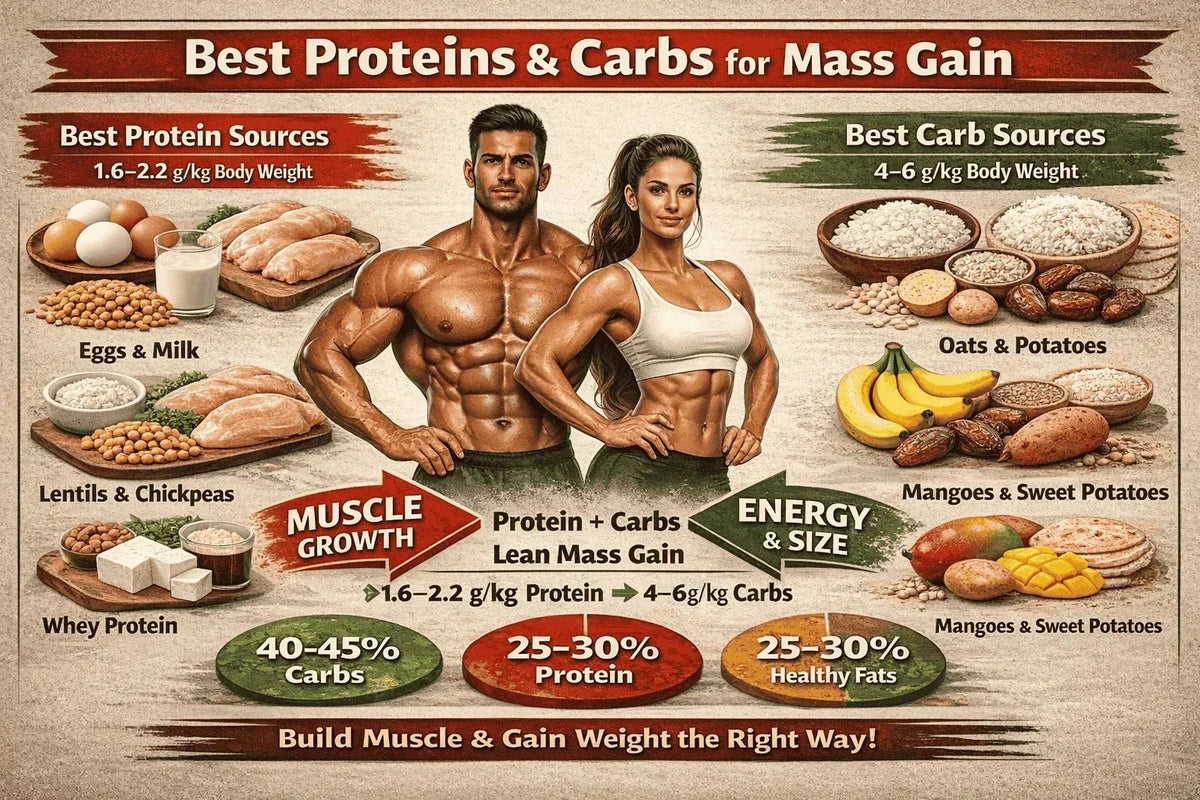
Best Proteins and Carbs for Mass Gain (Muscle & Healthy Weight Guide)
The best proteins and carbs for mass gain include eggs, milk, chicken, daal, rice, roti, oats, potatoes, bananas, and dates. When consumed in the right ratios, they support lean muscle growth, strength, and healthy weight...
For effective mass gain, combine high-quality protein (1.6–2.2 g/kg body weight) with calorie-dense complex carbohydrates (4–6 g/kg body weight).
The best options in South Asia include eggs, milk, chicken, lentils (daal), chickpeas, paneer, rice, roti, oats, potatoes, bananas, and dates.
Protein supports muscle repair and growth, while carbohydrates provide the energy and insulin response needed to build size without excessive fat gain.
Best Protein Sources for Mass Gain
-
Eggs, milk, yogurt, paneer
-
Chicken, fish, lean beef
-
Lentils (daal), chickpeas (chana), kidney beans (rajma)
-
Soybeans, tofu
-
Whey protein (optional)
Best Carb Sources for Mass Gain
-
Rice (white & brown), roti (atta)
-
Oats, potatoes, sweet potatoes
-
Bananas, dates, mangoes
-
Lentils and legumes (dual carb + protein)
-
Honey, jaggery (small amounts)
Ideal Ratio for Mass Gain Meals
-
40–45% carbohydrates
-
25–30% protein
-
25–30% healthy fats
This approach supports lean muscle gain, better workouts, faster recovery, and sustainable weight increase.
Why Protein and Carbs Matter for Mass Gain
Mass gain is not just about eating more—it is about eating strategically.
-
Protein builds and repairs muscle tissue.
-
Carbohydrates fuel workouts, improve strength, and prevent protein from being used as energy.
-
Without enough carbs, protein intake is wasted.
-
Without enough protein, extra calories turn into fat instead of muscle.
For South Asian diets (which are often carb-heavy but protein-deficient), correct balance is the key factor.
Best Protein Sources for Mass Gain (South Asian Friendly)
1. Eggs (Complete Protein)
-
Protein: ~6 g per egg
-
Best timing: Breakfast, post-workout
-
Affordable, easily available, high biological value
Tip: Use whole eggs for calories + whites for extra protein.
2. Milk, Yogurt, and Paneer
-
Rich in casein and whey protein
-
Supports overnight muscle recovery
-
Paneer is calorie-dense and ideal for hard gainers
Best use: Bedtime or lunch meals
3. Chicken and Fish
-
Lean, high-quality protein
-
Easy to digest compared to red meat
-
Fish adds omega-3 fats (supports muscle recovery)
Best cooking: Grilled, boiled, lightly cooked (avoid deep frying)
4. Lentils, Daal, Chickpeas (Plant-Based)
-
Protein + carbs together
-
Very common in Pakistan, India, Bangladesh
-
Budget-friendly mass gain option
Important: Combine with rice or roti for complete amino acids.
5. Soybeans and Tofu
-
High protein plant source
-
Suitable for vegetarians
-
Supports muscle gain when intake is sufficient
6. Whey Protein (Optional, Not Mandatory)
-
Fast-digesting protein
-
Helpful if food intake is low
-
Not superior to food, just convenient
Best Carbohydrates for Mass Gain (Clean & Effective)
1. Rice (White & Brown)
-
Easily digestible energy source
-
White rice is ideal post-workout
-
Brown rice for overall calorie intake
2. Roti / Whole Wheat Atta
-
Staple food in South Asia
-
Provides steady energy
-
Combine with protein for balanced meals
3. Oats
-
High-fiber complex carb
-
Good for breakfast or smoothies
-
Helps increase calories without junk food
4. Potatoes & Sweet Potatoes
-
High-calorie whole food
-
Rich in potassium and carbs
-
Excellent pre-workout meal
5. Fruits for Mass Gain
-
Bananas: Fast carbs, potassium
-
Dates: Very calorie-dense
-
Mangoes: High calories + vitamins
Best time: Pre-workout, post-workout, snacks
6. Natural Sugars (Limited Use)
-
Honey, jaggery, dates
-
Useful for quick calories
-
Avoid excessive intake to prevent fat gain
Best Protein + Carb Combinations for Muscle Gain
| Protein Source | Carb Source | Ideal Meal Time |
|---|---|---|
| Eggs | Roti | Breakfast |
| Chicken | Rice | Lunch |
| Daal | Rice | Lunch/Dinner |
| Paneer | Roti | Dinner |
| Whey | Banana | Post-Workout |
| Milk | Dates | Night |
How Much Protein and Carbs Do You Need?
Protein Intake
-
Beginners: 1.6–1.8 g/kg
-
Intermediate/Advanced: 2.0–2.2 g/kg
Carb Intake
-
Lean mass gain: 4–5 g/kg
-
Hard gainers: 5–6 g/kg
Example (70 kg male):
-
Protein: 120–150 g/day
-
Carbs: 280–350 g/day
Common Mistakes in Mass Gain Diets (South Asia)
-
Eating only rice/roti without protein
-
Skipping breakfast
-
Depending only on supplements
-
Fear of carbs
-
Dirty bulking with junk food
Practical Mass Gain Tips
-
Eat every 3–4 hours
-
Add calories gradually (300–500 kcal surplus)
-
Strength train 3–5 times/week
-
Sleep 7–9 hours
-
Track body weight weekly
Final Takeaway
The best proteins and carbs for mass gain are not expensive or foreign foods.
A diet based on eggs, milk, chicken, daal, rice, roti, oats, potatoes, bananas, and dates—when eaten in the right quantities—can deliver lean, sustainable muscle gain.
FAQs – Best Proteins and Carbs for Mass Gain
What are the best protein foods for mass gain?
The best protein foods for mass gain are eggs, milk, paneer, chicken, fish, lentils (daal), chickpeas, soybeans, and whey protein.
These foods provide essential amino acids needed for muscle repair and growth. In South Asian diets, combining animal or plant protein with carbohydrates improves muscle-building efficiency.
Which carbohydrates are best for muscle and weight gain?
The best carbohydrates for mass gain are rice, roti (whole wheat atta), oats, potatoes, sweet potatoes, bananas, dates, and mangoes.
These carbohydrates supply sustained energy, support intense workouts, and help maintain the calorie surplus required for muscle growth.
How much protein do I need daily for mass gain?
For mass gain, protein intake should be 1.6–2.2 grams per kilogram of body weight per day.
Beginners should aim for the lower range, while advanced lifters may benefit from higher intake to maximize muscle protein synthesis.
How many carbohydrates are required for mass gain?
Carbohydrate intake for mass gain should be 4–6 grams per kilogram of body weight per day.
Adequate carbohydrate intake supports training performance, improves recovery, and prevents protein from being used as energy instead of muscle building.
Can I gain muscle with vegetarian protein sources?
Yes, muscle gain is possible with vegetarian protein sources such as lentils, chickpeas, kidney beans, soybeans, tofu, milk, and paneer.
Combining plant proteins with carbohydrates like rice or roti ensures a complete amino acid profile for effective muscle growth.
Is whey protein necessary for mass gain?
Whey protein is not necessary for mass gain if daily protein needs are met through whole foods.
It is mainly a convenient option when food intake is insufficient, particularly after workouts.
What is the best protein and carb combination for muscle gain?
The best protein and carb combinations for muscle gain include chicken with rice, eggs with roti, daal with rice, whey with banana, and paneer with whole wheat roti.
These combinations improve insulin response and support muscle protein synthesis.
Is rice good for mass gain?
Yes, rice is one of the best carbohydrate sources for mass gain because it is calorie-dense and easy to digest.
White rice works well post-workout, while brown rice is suitable for overall daily calorie intake.
Are carbs more important than protein for mass gain?
Both carbohydrates and protein are essential for mass gain, but carbohydrates are critical for fueling workouts and maximizing protein utilization.
Without enough carbohydrates, protein is used for energy rather than muscle building.
Can I gain mass without eating meat?
Yes, mass gain is achievable without eating meat by using dairy products, legumes, soy foods, nuts, seeds, and whole grains.
Maintaining a calorie surplus and meeting protein requirements are more important than meat consumption alone.
What is the best time to eat protein and carbs for mass gain?
Protein and carbohydrates are most effective when consumed after workouts and evenly distributed across meals every 3–4 hours.
Post-workout intake supports muscle recovery, while regular meals help maintain continuous muscle protein synthesis.
Are bananas and dates good for bulking?
Yes, bananas and dates are excellent foods for bulking because they are high in carbohydrates and calories.
They are especially useful before workouts, after workouts, or as quick calorie-dense snacks.
Can skinny or hard gainers build muscle with diet alone?
Yes, skinny or hard gainers can build muscle with a consistent calorie surplus, adequate protein intake, and progressive strength training.
Liquid calories, frequent meals, and calorie-dense carbohydrates help overcome low appetite.
What foods should be avoided during mass gain?
Highly processed junk foods, sugary drinks, excessive fried foods, and alcohol should be limited during mass gain.
These foods promote fat gain without supporting muscle development or recovery.
How long does it take to see results from a mass gain diet?
Visible muscle and weight gain usually appear within 4–8 weeks when diet, training, and sleep are consistent.
Healthy mass gain is gradual and typically averages 0.25–0.5 kg per week.
Is fat gain unavoidable during bulking?
Some fat gain is normal during mass gain, but it can be minimized by using clean carbohydrate sources, adequate protein, and a controlled calorie surplus.
Avoid extreme overeating and focus on nutrient-dense foods.
Can women follow the same protein and carb intake for mass gain?
Yes, women can follow the same mass gain principles, with protein and carbohydrate intake adjusted for body weight and activity level.
Adequate protein supports lean muscle gain without causing excessive bulk.
Are supplements better than food for mass gain?
Whole foods are superior to supplements for mass gain because they provide better nutrient diversity and digestion.
Supplements should support a balanced diet, not replace real food.
What is the ideal calorie surplus for mass gain?
An ideal calorie surplus for mass gain is 300–500 calories per day above maintenance.
This range supports lean muscle gain while minimizing unnecessary fat accumulation.
Is a mass gain diet different for South Asian diets?
Yes, mass gain diets in South Asia rely more on staple foods such as rice, roti, daal, milk, eggs, and legumes rather than processed foods.
With proper portion control and adequate protein intake, these traditional foods are highly effective for muscle growth.
We rely on peer-reviewed studies and reputable medical journals.