


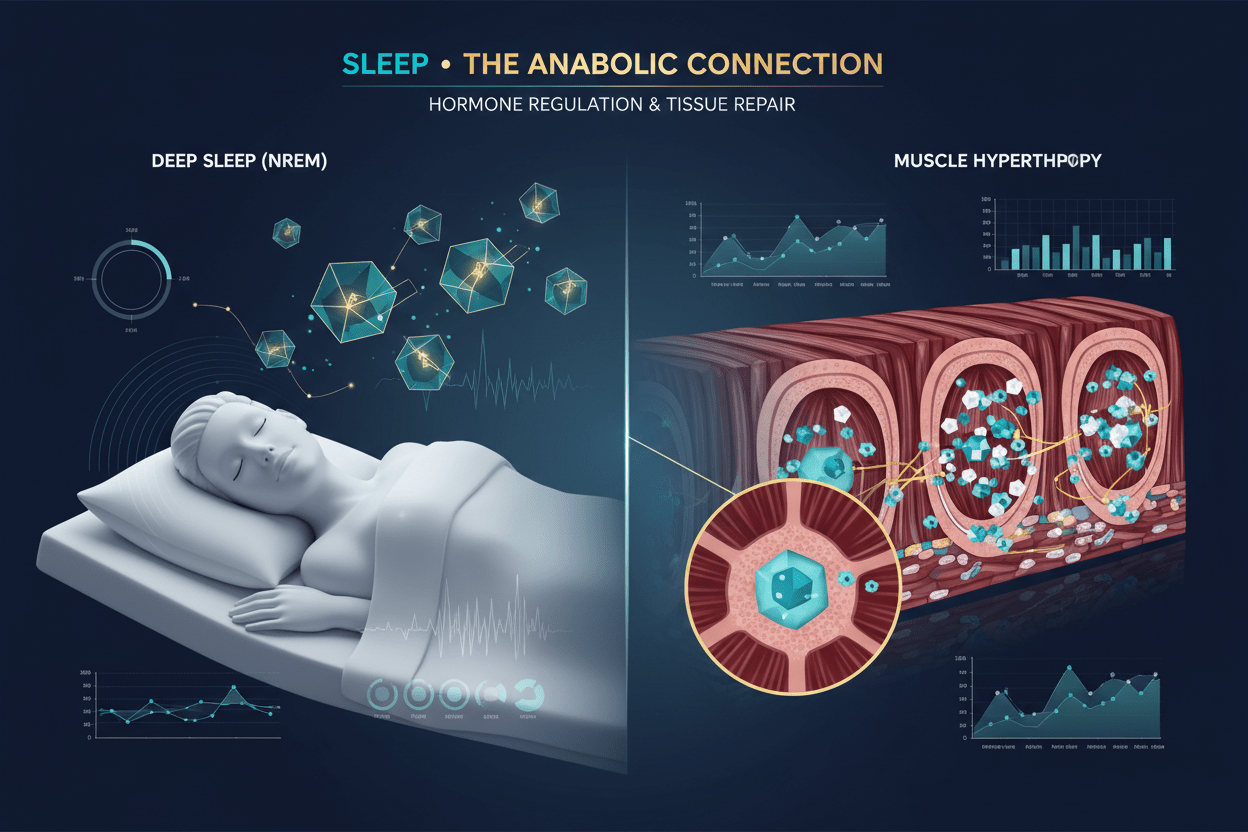
The Role of Sleep in Muscle Growth (Science & Mechanisms)
Sleep is the primary biological driver of muscle hypertrophy, serving as the phase where the body shifts from catabolic breakdown to anabolic repair. During deep NREM sleep (Stage 3), the pituitary gland releases pulses of Human Growth Hormone (HGH), which stimulates amino acid uptake and protein synthesis. Simultaneously, sleep suppresses cortisol, a stress hormone that degrades muscle tissue, ensuring the net positive protein balance required for growth.
Key Mechanisms of Sleep in Hypertrophy:
-
HGH Release: ~70% of daily Growth Hormone is secreted during slow-wave sleep.
-
Protein Synthesis: Increases rates of repairing micro-tears in muscle fibers.
-
Glycogen Resynthesis: Restores intramuscular energy stores for future performance.
-
Cortisol Suppression: Lowers catabolic hormones to prevent muscle wasting.
How does lack of sleep affect muscle growth?
Sleep deprivation creates a catabolic (muscle-wasting) environment. Restricting sleep to 5 hours or less per night has been shown to decrease testosterone levels by 10-15% in young men and increase cortisol production. This hormonal imbalance inhibits the body's ability to repair muscle tissue, increases insulin resistance (promoting fat gain over muscle gain), and significantly reduces the production of Insulin-like Growth Factor 1 (IGF-1), a critical mediator of hypertrophy.
Which stage of sleep is best for muscle recovery?
Stage 3 NREM (Deep Sleep) is the most critical phase for physical recovery. Often called "Slow Wave Sleep" (SWS), this is when brain activity drops, blood supply to muscles increases, and the majority of Growth Hormone is released. While REM sleep restores the nervous system, Stage 3 NREM is responsible for structural tissue repair and cell regeneration.
How many hours of sleep do you need to build muscle?
Current sports medicine evidence suggests that 7 to 9 hours of quality sleep is the optimal range for hypertrophy. Athletes undergoing intense resistance training may require closer to 9 hours to offset the increased systemic stress and demand for tissue repair. Sleeping less than 6 hours creates a "sleep debt" that nutritional interventions (like high protein intake) cannot fully counteract.
Does sleeping after a workout help muscle growth?
Yes. A post-workout nap (20–90 minutes) can accelerate recovery by lowering sympathetic nervous system drive (stress) and initiating early physiological repair. A 90-minute nap is particularly effective as it allows for a full sleep cycle, potentially triggering a pulse of Growth Hormone and aiding in the clearance of metabolic waste products like lactate.
Clinical Insight: While nutrition provides the building blocks for muscle (amino acids), sleep provides the labor force (hormones) to build the wall. If you are training hard but seeing slow results, your sleep hygiene is likely the limiting factor.
Need to optimize your recovery window? Book an MNT Clinical Nutrition Consultation to align your diet with your circadian rhythm.
We rely on peer-reviewed studies and reputable medical journals.