



Essential Skills for Nutritionists in Pakistan: A 2026 Career & Clinical Competency Guide
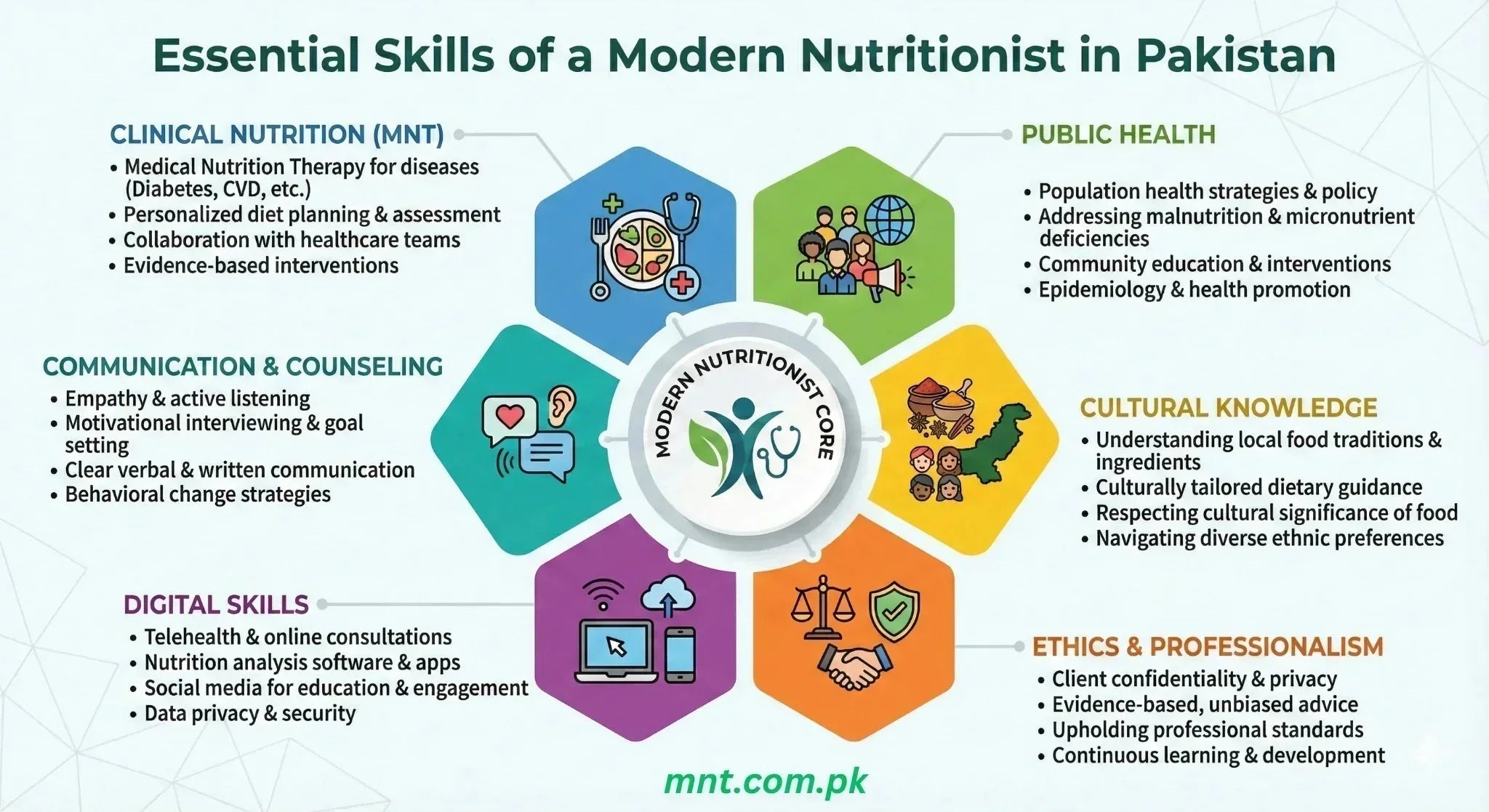
Nutritionists/Dietitians in Pakistan need a combination of clinical nutrition expertise, communication skills, cultural competence, digital tools, public health knowledge, research literacy, and ethical practice.
The most important skills include:
-
Medical Nutrition Therapy (MNT)
-
Disease-specific meal planning using local foods
-
Lab report and biomarker interpretation
-
Communication and motivational interviewing
-
Cultural competence and desi diet adaptation
-
Digital and tele-nutrition skills
-
Public health and maternal nutrition knowledge
-
Food safety and nutrition label reading
-
Research literacy and misinformation control
-
Ethics, professionalism, and empathy
The sections below explain each skill in detail with Pakistan-specific examples.
Introduction: Why Nutritionist Skills Matter More Than Ever in Pakistan
The role of a nutritionist in Pakistan has evolved far beyond preparing diet charts. The country faces a dual burden of malnutrition and non-communicable diseases (NCDs), including diabetes, hypertension, obesity, cardiovascular disease, and widespread micronutrient deficiencies.
In 2026, effective nutrition practice requires more than basic dietary advice. Nutritionists must function as clinical professionals, behavior-change counselors, digital consultants, and public-health contributors. This guide outlines the essential skills required to build a competent, ethical, and future-ready nutrition career in Pakistan.
1. Medical Nutrition Therapy (MNT) & Disease-Specific Care
Medical Nutrition Therapy (MNT) is the foundation of professional nutrition practice in Pakistan.
Nutritionists must be competent in managing common conditions such as:
-
Type 2 diabetes
-
Cardiovascular disease (CVD)
-
Chronic kidney disease
-
Iron-deficiency anemia
-
Obesity and metabolic syndrome
Core competencies include:
-
Developing individualized nutrition care plans
-
Using locally available foods (roti, daal, sabzi, rice, salan)
-
Adjusting recommendations to budget, culture, and lifestyle
Clinical documentation skills are essential, including:
-
Writing PES statements (Problem, Etiology, Signs/Symptoms)
-
Maintaining SOAP notes for patient follow-up
Without MNT competency, nutrition advice remains generic and ineffective.
2. Lab Report & Biomarker Interpretation
Modern nutrition practice is data-driven. Nutritionists must be able to interpret laboratory reports to personalize care.
Key biomarkers include:
-
HbA1c and fasting blood glucose
-
Lipid profile (total cholesterol, LDL, HDL, triglycerides)
-
Ferritin, vitamin D, vitamin B12
-
Anthropometric indicators (BMI, waist circumference)
Understanding these values enables nutritionists to move beyond assumptions and deliver evidence-based interventions tailored to each client.
3. Cultural Competence & Desi Diet Adaptation
Cultural competence is one of the most critical skills for nutritionists in Pakistan.
Many Western diet plans fail because they:
-
Ignore local food habits
-
Disregard religious practices such as Ramadan fasting
-
Overlook economic limitations
Effective nutritionists:
-
Modify portion sizes instead of banning foods
-
Teach healthier cooking methods
-
Adapt traditional meals without compromising nutritional adequacy
Respecting cultural context improves patient trust, adherence, and long-term outcomes.
4. Communication & Motivational Interviewing Skills
Nutrition knowledge alone does not change behavior. Communication skills determine whether clients follow recommendations.
Motivational Interviewing (MI) helps nutritionists:
-
Identify personal and environmental barriers
-
Address emotional and stress-related eating
-
Encourage sustainable, self-motivated change
Rather than issuing commands, skilled nutritionists guide clients toward realistic and achievable goals, improving adherence and satisfaction.
5. Digital Skills & Tele-Nutrition
Digital fluency is now a core professional requirement.
In Pakistan, many consultations occur via online platforms. Essential digital skills include:
-
Conducting consultations through WhatsApp or Zoom
-
Using Electronic Medical Records (EMRs)
-
Applying diet analysis software (e.g., Cronometer, Nutritics, MNT Toolkit, etc.)
-
Ensuring patient data privacy and confidentiality
Tele-nutrition allows nutritionists to expand access while maintaining professional standards.
6. Public Health & Maternal Nutrition Knowledge
Nutritionists must understand Pakistan’s major public health challenges, including:
-
Stunting and undernutrition
-
Maternal anemia
-
Micronutrient deficiencies
Key areas of competence:
-
The first 1,000 days (pregnancy to early childhood)
-
Breastfeeding and complementary feeding
-
National food fortification programs (wheat flour, edible oil)
This knowledge is essential for work in hospitals, NGOs, and community health programs.
7. Food Safety & Nutrition Label Reading
Nutritionists play a key role in protecting public health.
Essential skills include:
-
Reading and explaining food labels
-
Identifying misleading health claims
-
Teaching food hygiene and safety principles
-
Creating awareness about food adulteration
These competencies are particularly important in urban areas and during high-risk seasons such as summer.
8. Research Literacy & Misinformation Control
Nutrition misinformation spreads rapidly through social media.
Nutritionists must be able to:
-
Evaluate scientific research critically
-
Distinguish evidence-based guidance from myths
-
Refer to reputable organizations (WHO, FAO, NIH, PFNO, PNDS, MNT, Unicef, NI etc)
Research literacy strengthens professional credibility and public trust.
9. Ethical Practice, Career Skills & Professional Boundaries
Ethics are fundamental to sustainable nutrition practice.
Nutritionists must:
-
Understand their scope of practice
-
Avoid medical diagnosis or drug prescription
-
Communicate transparently with clients
-
Market services ethically without false claims
Professional integrity protects both clients and the nutritionist’s long-term career.
10. Empathy, Professionalism & Soft Skills
Empathy is often underestimated but essential.
Nutritionists frequently work with individuals facing:
-
Chronic illness
-
Body image concerns
-
Financial and social stress
Clear communication, emotional intelligence, and respect help build long-term therapeutic relationships and improve outcomes.

Conclusion
The modern nutritionist in Pakistan is no longer a simple diet planner. They are a clinical professional, educator, counselor, digital practitioner, and public health advocate. Mastering these essential skills enables nutritionists to deliver effective care, combat misinformation, and build ethical, future-proof careers in Pakistan.
FAQs
What are the most important skills for a nutritionist?
The most important skills include nutrition science knowledge, MNT, communication, lab interpretation, cultural competence, digital tools, and ethical practice.
Is Medical Nutrition Therapy important for nutritionists in Pakistan?
Yes. With rising rates of diabetes and cardiovascular disease, MNT is one of the most in-demand skills.
Do nutritionists need digital skills?
Yes. Tele-nutrition, online consultations, and digital documentation are essential in modern practice.
What is the difference between a dietitian and a nutritionist in Pakistan?
Dietitians usually have formal clinical training and can provide MNT, while nutritionists may focus on general health, fitness, or public health depending on qualifications.
Which nutrition specializations are in demand in Pakistan?
Diabetes management, weight management, PCOS, maternal nutrition, and sports nutrition are currently in high demand.