


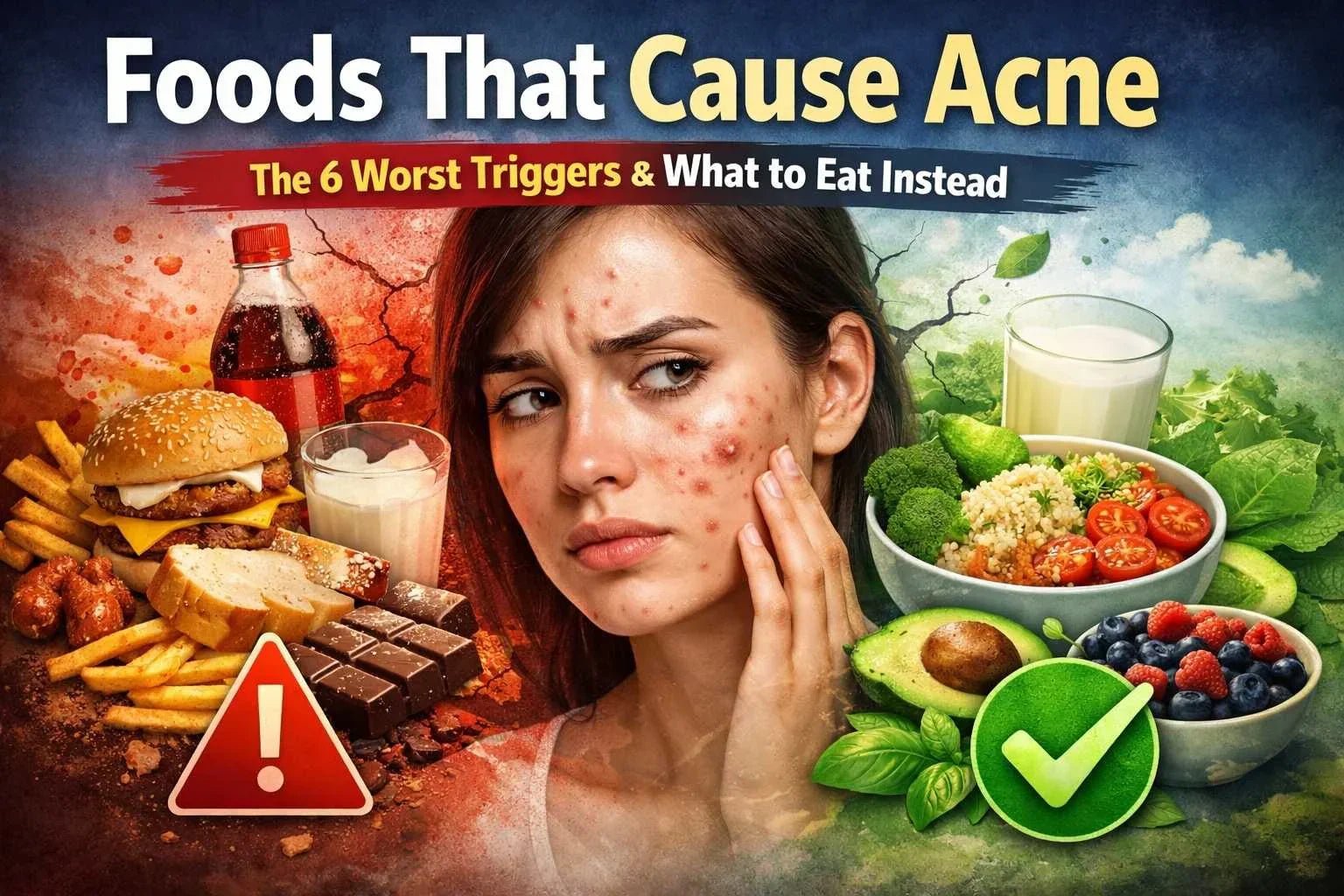
Foods That Cause Acne: The 6 Worst Triggers & What to Eat Instead (Science-Based)
Acne is not caused by food alone, but research shows that certain foods can increase breakouts, oil production, and inflammation in people who are acne-prone. Diet influences hormones, blood sugar, and inflammatory pathways — all of which play a role in how often and how severely acne appears.
| Food Category | Acne Risk Level | Why It Triggers Breakouts | Better Alternative |
|
Refined Carbs (White bread, white rice, pasta) |
🔴 Very High | Rapidly spikes blood sugar and insulin; triggers liver to release IGF-1, causing oil overload. | Quinoa, Sweet Potatoes, Brown Rice, Sourdough |
|
Sugary Foods & Drinks (Soda, energy drinks, candy) |
🔴 Very High | Causes massive systemic inflammation and glycation (damage to skin fibers). | Sparkling Water, Green Tea, Berries, Dark Chocolate |
| Skim / Low-Fat Milk | 🔴 High | Contains bio-available hormones; lack of fat spikes insulin faster than whole milk. | Almond Milk, Oat Milk, Coconut Milk |
| Whey Protein | 🟠 Moderate–High | Dramatically boosts insulin and IGF-1 levels, overstimulating oil glands. | Pea Protein, Hemp Protein, Pumpkin Seed Protein |
|
Fast Food (Fried items, highly processed) |
🟠 Moderate | High in inflammatory Omega-6 fats and refined carbs that disrupt blood sugar balance. | Homemade burgers, Baked fries, Air-fried options |
| Milk Chocolate | 🟠 Moderate | A "double hit" of sugar and dairy; linked to increased inflammation in acne-prone skin. | Dark Chocolate (70% cocoa or higher) |
Note on Individual Variation: Not everyone reacts to these foods the same way. While reducing them often improves breakouts, factors like genetics and gut microbiome also play a role. The most common triggers are usually dairy and high-sugar foods.
💡 Personalized Guidance: Acne triggers vary from person to person. Our team offers personalized nutrition consultations to help identify your unique triggers and design a diet plan that supports clearer skin. Book a Consultation with our consultant.
How Diet Influences Acne (The Biology Made Simple)
Acne forms when pores become clogged with oil (sebum) and dead skin cells, allowing bacteria (Cutibacterium acnes) to grow and trigger inflammation. Certain foods can worsen this process through four main pathways:
1. Insulin Spikes
High-glycemic foods cause rapid rises in blood sugar. This leads to increased insulin, which:
-
Stimulates androgen hormones
-
Increases sebum production
-
Speeds up skin cell growth that clogs pores
2. Increased IGF-1 (Insulin-Like Growth Factor 1)
Diets high in refined carbs and dairy can raise IGF-1 levels. IGF-1:
-
Enlarges oil glands
-
Promotes clogged pores
-
Increases acne severity
3. Hormonal Stimulation
Milk and whey protein contain bioactive compounds that may influence androgen activity, which drives oil production.
4. Inflammation
Highly processed foods can promote systemic inflammation, making pimples redder, larger, and more painful.
Key Takeaway: Foods that rapidly raise blood sugar or influence growth hormones are the most likely to worsen acne.
The Top Dietary Acne Triggers (Detailed Breakdown)
1. Refined Carbohydrates (Strongest Evidence)
Examples:
-
White bread and bagels
-
Pastries, cakes, cookies
-
Sugary cereals
-
White rice (large portions)
-
Crackers and chips made with refined flour
Why they matter:
These foods have a high glycemic load, which increases insulin and IGF-1 — both linked to excess oil production and clogged pores.
2. Sugary Foods and Drinks
Examples:
-
Soda and soft drinks
-
Energy drinks
-
Sweetened coffee beverages
-
Candy, desserts, sweet snacks
Why they matter:
Liquid and refined sugars cause some of the fastest insulin spikes and increase inflammatory activity in the body.
3. Dairy Products (Especially Skim Milk)
Milk is one of the most studied dietary factors in acne.
Most associated with breakouts:
-
Skim milk
-
Low-fat milk
-
Milk in protein shakes
Possible reasons:
-
Naturally occurring hormones in milk
-
Increased IGF-1 levels
-
Insulin stimulation
Cheese and yogurt show weaker and less consistent links, and tolerance varies by individual.
4. Whey Protein Supplements
Common in fitness and muscle-building diets.
Who is most affected:
-
Teenagers
-
Athletes
-
Bodybuilders
Why it can trigger acne:
Whey protein sharply increases insulin and IGF-1, overstimulating oil glands. Many dermatologists report skin improvement when whey is discontinued.
5. Fast Food and Highly Processed Diets
Typical characteristics:
-
Refined carbohydrates
-
Added sugars
-
Fried foods
-
High omega-6 vegetable oils
These patterns promote inflammation and unstable blood sugar, both linked to more severe acne.
6. Chocolate: The Nuance
Chocolate itself isn’t automatically a trigger.
-
Milk chocolate may worsen acne due to sugar and dairy
-
Dark chocolate (70%+ cocoa) is less strongly linked
Some small studies suggest cocoa may influence inflammation in acne-prone individuals, but sugar and dairy appear to play a bigger role.
Foods Commonly Blamed (But Weak Evidence)
| Food | Evidence Level | Notes |
|---|---|---|
| Spicy food | Weak | May cause facial flushing, not acne |
| Greasy/oily food | Myth | Eating fat doesn’t make skin oily |
| Nuts | Weak | Usually safe unless personal sensitivity |
| Eggs | Neutral | No strong link for most people |
Best Foods to Support Clearer Skin
An acne-supportive diet focuses on stable blood sugar and lower inflammation.
Low-Glycemic Carbohydrates
Oats, quinoa, lentils, beans, sweet potatoes, most vegetables
Omega-3 Rich Foods
Salmon, sardines, walnuts, chia seeds
→ Help reduce inflammation
Zinc-Rich Foods
Pumpkin seeds, chickpeas, lentils, cashews
→ Support immune balance and skin healing
Antioxidant-Rich Produce
Berries, leafy greens, carrots, bell peppers
→ Help protect skin from oxidative stress
Probiotic Foods
Yogurt with live cultures, kefir, sauerkraut
→ Support gut health, which may influence inflammation
Why Food Triggers Acne in Some People but Not Others
Diet is a contributing factor, not the sole cause.
Sensitivity depends on:
-
Genetics
-
Hormone levels (including PCOS)
-
Insulin resistance
-
Age (teen acne is more hormonally driven)
-
Gut microbiome differences
How to Test if Food Is Affecting Your Skin
- Track food and breakouts for 2–4 weeks
- Reduce high-glycemic foods
- Try a 3–4 week milk elimination
- Stop whey protein if you use it
- Reintroduce foods one at a time
Skin improvements usually appear after 4–8 weeks due to the skin’s natural turnover cycle.
Frequently Asked Questions
Does sugar cause acne?
High sugar intake can increase insulin and inflammation, which may worsen acne.
Does milk cause acne?
Milk, especially skim milk, is associated with acne in multiple studies, likely due to hormonal and IGF-1 effects.
Does chocolate cause acne?
Milk chocolate may worsen acne due to sugar and dairy. Dark chocolate has a weaker link.
Do greasy foods cause pimples?
Eating oily foods does not directly make skin oily.
Does whey protein cause acne?
Yes, whey protein is a common trigger due to its effect on insulin and growth hormones.
Can drinking water cure acne?
Water supports overall health but does not directly cure acne.
When to See a Doctor
If acne is:
-
Severe or painful
-
Causing scars
-
Not improving with skincare and diet
Consult a dermatologist. Hormonal conditions such as PCOS may require medical treatment alongside lifestyle changes.
Final Takeaway
The foods most likely to worsen acne are refined carbohydrates, added sugars, skim milk, and whey protein. These foods influence insulin, IGF-1, oil production, and inflammation — the key biological drivers of acne.
Shifting toward a low-glycemic, whole-food, anti-inflammatory diet may help reduce breakouts over time, especially in people who are already acne-prone.
We rely on peer-reviewed studies and reputable medical journals.