



How to Eat Flax Seeds: Daily Amount and Preparation
Learn how much flaxseed to eat each day, how to prepare it, and simple ways to add it to meals. This guide also covers soaking, storage, and important safety tips.
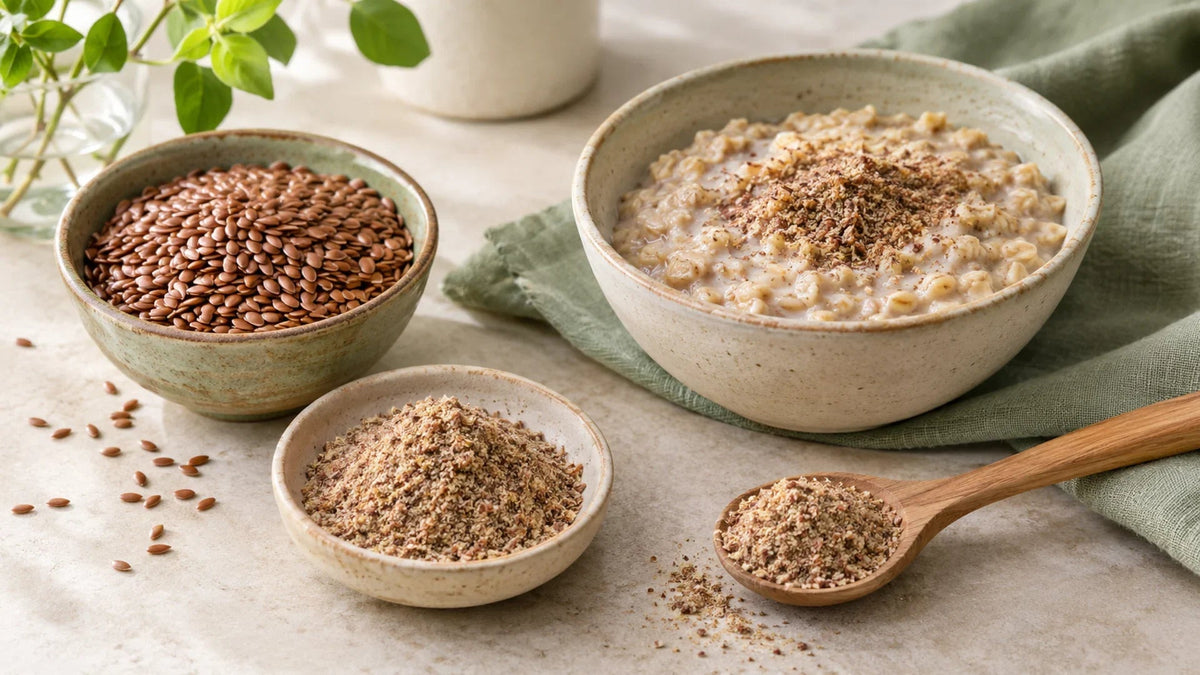
The easiest way to eat flax seeds is to grind them and add them to food. If you are new to flaxseed, start with about 1 teaspoon of ground seeds a day. Increase slowly if you tolerate it well. For many adults, 1–2 tablespoons a day is a practical amount, but there is no required daily serving.
Try cooking ground flaxseed into porridge, mixing it into roti dough, or adding it to baked foods. Drink enough fluids as you increase your fiber intake.
Flax seeds are also called linseeds or alsi. You can buy them whole or ground. Ground flaxseed is usually easier to digest and gives your body better access to nutrients inside the seed.
For a cautious approach, cook or bake flaxseed before eating it. Advice on raw flaxseed differs between health authorities, so check the product label and follow its preparation instructions.
How Much Flaxseed Should You Eat Per Day?
For many adults, 1–2 tablespoons of ground flaxseed per day is a practical amount to include in a balanced diet. You do not need to eat that much to have a healthy diet, and there is no official daily requirement for flaxseed.
If you have not eaten flaxseed before, start with 1 teaspoon a day. After a few days, increase gradually if you feel comfortable. Adding too much fiber too quickly can cause gas, bloating, or loose stools.
Mayo Clinic Health System describes 1–2 tablespoons a day as a healthy amount while noting that there is no specific recommended portion.
How much does a tablespoon of ground flaxseed weigh?
| Amount of ground flaxseed | Approximate weight |
|---|---|
| 1 teaspoon | 2–2.5 grams |
| 1 tablespoon | 7 grams |
| 2 tablespoons | 14 grams |
These are estimates. The weight can change depending on the grind and how the spoon is filled. Measure the seeds after grinding for a more consistent portion.
Health Canada lists one tablespoon of ground flaxseed as approximately 7.1 grams. A tablespoon of whole seeds may weigh a different amount.
Can you eat flax seeds every day?
Many adults can eat a moderate amount of flaxseed every day as part of a balanced diet. Start small, increase slowly, and pay attention to how your body feels.
If you are pregnant or breastfeeding, take medicines, or have a digestive condition, ask a health professional whether flaxseed is suitable for you.
Can you eat too much flaxseed?
Yes. Eating a large amount, especially when you are not used to fiber, may cause bloating, gas, or diarrhea.
There are also other reasons to avoid large amounts. Flaxseed contains natural compounds that can release cyanide when the seeds are crushed or ground. It can also contain cadmium, a metal that may build up in the body over time.
Germany’s Federal Institute for Risk Assessment, known as BfR, recommends that adults consume no more than 20 grams of flaxseed per day, partly to limit cadmium intake. This is the institute’s recommendation, not a worldwide daily requirement.
For everyday use, a modest serving is usually easier to tolerate and add to meals. More is not necessarily better.
What Is the Best Way to Eat Flax Seeds?
Ground flaxseed is a good choice if you want better access to the nutrients inside the seeds. You can buy ground flaxseed or grind whole seeds at home.
Use flaxseed sold for people to eat, and follow any preparation instructions on the package. Cooking or baking it is a cautious choice because heat reduces the risk from compounds that can release cyanide.
Ground vs. whole flaxseed
| Form | How to use it | What to know |
|---|---|---|
| Ground flaxseed | Cook into porridge, roti dough, soups, or baked foods. | Easier to digest; also sold as milled flaxseed or flaxseed meal. |
| Whole flaxseed | Use in suitable cooked or baked foods for texture. | Some seeds may pass through the digestive system undigested. |
| Flaxseed oil | Use according to the product directions. | Provides fat, including plant omega-3, but does not provide the fiber found in the seeds. |
Whole flax seeds have an outer coating that can be difficult to break down. Grinding breaks the seeds into smaller pieces, making their nutrients easier for the body to access. Whole seeds are edible, but you may not get all the nutrients inside them. Mayo Clinic
How to Prepare Flax Seeds at Home
You can buy flaxseed already ground or grind whole seeds yourself.
1. Choose food-grade flaxseed
Buy flaxseed intended for eating. Check the package for:
- The best-before or expiry date.
- Whether the seeds are whole, ground, or ready to eat.
- Any cooking or baking instructions.
- Storage instructions.
Both brown and golden flax seeds can be used in everyday meals. Choose the type you enjoy and can find easily.
2. Grind a small amount
A clean coffee grinder or spice grinder works well for small portions.
- Add a small amount of whole flaxseed to the grinder.
- Grind until it forms a coarse or fine meal.
- Measure the amount you need.
- Store any extra ground flaxseed in a sealed container.
A blender or food processor may also work, although a very small amount can be harder to grind evenly.
3. Cook or bake it into food
For a simple start, stir ground flaxseed into porridge while it cooks. You can also mix it into roti dough, soup, muffins, or bread.
Follow the package directions. If the label says the product is for cooking or baking only, do not add it uncooked to yogurt, smoothies, or other ready-to-eat foods.
4. Drink enough fluids
Flaxseed contains fiber, so drink enough water or other fluids as part of your normal routine. Increase your serving slowly so your digestive system has time to adjust.
If a health professional has asked you to limit fluids, follow their advice.
Can You Eat Raw Flax Seeds?
Health authorities give different advice about raw flaxseed. Cooking or baking is the more cautious choice.
Flaxseed contains natural compounds that can release cyanide when the seeds are chewed, crushed, or ground. The risk depends on factors including the amount eaten and how the seeds are prepared.
- The U.S. National Center for Complementary and Integrative Health, or NCCIH, advises against eating raw or unripe flaxseeds.
- Germany’s BfR says that up to 15–20 grams of ground raw flaxseed per day is not expected to cause harm in adults from a toxicological perspective. It also says that cooking or baking reduces the cyanide-related risk.
BfR recommends greater caution for young children and advises against giving them raw, ground flaxseed.
Always follow the product label. Soaking, blending, or stirring flaxseed into cold food does not cook it.
Do You Need to Soak Flax Seeds?
No. Soaking flax seeds is optional. You can grind them and cook them into food without soaking them first.
When flax seeds sit in water, they form a gel-like mixture. Some people enjoy this texture in drinks, porridge, or baking.
Soaking and grinding do different jobs:
- Grinding breaks up the seed and helps make nutrients inside more accessible.
- Soaking softens the seeds and changes the texture.
- Cooking or baking reduces the risk from compounds that can release cyanide.
Soaking does not replace grinding if your goal is to break up the seed. It also does not replace cooking when the product label says cooking or baking is required.
Easy Ways to Eat Flax Seeds Every Day
Ground flaxseed has a mild, slightly nutty taste. It works in both sweet and savory foods.
If you are just starting, use about a teaspoon and increase the amount gradually. Count the total flaxseed you eat across all meals and snacks.
1. Cook it into porridge or oatmeal
Stir a teaspoon of ground flaxseed into oats or another porridge while it cooks.
Add a little more milk or water if the porridge becomes too thick. Once you know how much you tolerate, you can gradually increase the amount.
2. Mix it into roti or chapati dough
Add ground flaxseed to the flour before making your dough. Add water, knead, and cook the roti as usual.
Start with a small amount because flaxseed can change the texture of the dough.
Portion tip: Count the flaxseed in the whole batch. For example, if you add 2 tablespoons to dough that makes four rotis, each roti contains about half a tablespoon, assuming the flaxseed is evenly mixed.
3. Add it to dal, soup, or cooked vegetables
Stir ground flaxseed into dal or soup while it cooks. You can also mix it into a cooked vegetable dish.
Start with a little. Ground flaxseed can thicken a dish, so add extra water if needed.
4. Mix prepared flaxseed into yogurt or dahi
Flaxseed can add a nutty flavor to plain yogurt. Try it with fruit for a simple snack.
If your flaxseed needs cooking, prepare it according to the package directions and let it cool before adding it to the yogurt. Stirring raw flaxseed into cold yogurt does not cook it.
5. Add prepared flaxseed to a smoothie
Blend a small amount of prepared ground flaxseed with fruit and milk or yogurt. Add more liquid if the smoothie becomes too thick.
Check the package first. Blending mixes the ingredients, but it does not cook flaxseed.
6. Bake it into bread or muffins
Mix ground flaxseed into bread dough, muffins, or other baked foods. Start with a recipe that includes flaxseed so the amount of flour and liquid stays balanced.
Remember to divide the total flaxseed by the number of portions the recipe makes.
7. Make a flax egg for baking
A flax egg is a mixture used to help bind ingredients in some egg-free recipes.
You will need:
- 1 tablespoon of ground flaxseed
- 3 tablespoons of water
Mix them and leave for several minutes until thick. Then add the mixture to a suitable recipe that will be cooked or baked, such as muffins or pancakes.
A flax egg can work well as a binder, but it does not replace the texture or function of an egg in every recipe. Cambridge University Hospitals lists this flaxseed-and-water mixture as an egg substitute.
MNT product
MNT Flax Seeds are sold as whole seeds. You can grind a small amount for cooked porridge, roti dough, or baking. Follow the preparation and storage directions on the pack.
View MNT Flax SeedsHow to Make Flaxseed Water
Flaxseed water is a drink made by mixing flaxseed with water. As it sits, the mixture can become thicker and gel-like.
If you want to try it, check the product label first. For a product that is prepared and labeled ready to eat:
- Place 1 teaspoon of ground flaxseed in a glass.
- Add about 150 mL of water and stir.
- Drink the mixture while it is still easy to swallow.
You can adjust the water to suit the texture you prefer. If the mixture becomes too thick, add more water and stir again.
Do not use soaking in place of cooking. If your flaxseed is labeled for cooking or baking only, prepare it as directed instead of adding it uncooked to water.
Some recipes strain out the seeds, while others use the seeds and water together. Strained flaxseed water does not contain the same amount of seed material as eating the seeds themselves.
You do not need to drink flaxseed water to include flaxseed in your diet. Adding an appropriate serving to food is another option.
Is flaxseed water better than ground flaxseed in food?
Neither method is necessary for everyone. Ground flaxseed in food is a practical way to eat the seeds. Flaxseed water is another preparation, but straining the mixture changes what you consume.
Choose a method you enjoy, follow the product instructions, and keep track of your total serving.
What Is the Best Time to Eat Flax Seeds?
There is no established best time to eat flax seeds. You can include them with breakfast, lunch, or dinner.
Choose a time that fits your routine. For example, add flaxseed to porridge in the morning, roti at lunch, or soup in the evening.
Should you eat flax seeds in the morning or at night?
Either is fine. There is no need to eat flaxseed at a particular time to include it in a healthy diet.
If a large serving makes you uncomfortable, try a smaller amount or divide your serving between meals.
Can you eat flax seeds on an empty stomach?
Some people may tolerate flaxseed on an empty stomach, but there is no need to eat it that way.
If you are new to flaxseed or tend to feel bloated, you may prefer to start with a small amount mixed into a meal.
Can you split your daily serving?
Yes. You can use some flaxseed in one meal and the rest in another.
For example, you might cook a teaspoon into porridge and use another small amount in roti dough. Remember to count the total you eat during the day.
Do You Need to Take Flaxseed With Water?
Flaxseed is high in fiber, so it is helpful to have enough fluid when you eat it and throughout the day.
For people using linseeds for constipation, one NHS hospital guide suggests around 150 mL of fluid per tablespoon. Your needs can vary with your diet, health, and the food or drink containing the flaxseed.
You can mix flaxseed into moist foods such as porridge or have a drink alongside your meal. If you have been advised to restrict fluids, ask your health professional what is right for you.
Who Should Be Careful With Flax Seeds?
Flaxseed is a food, but the right amount and form can differ from person to person. Flaxseed oil and concentrated supplements are also different from a small serving of seeds in a meal.
People who are pregnant or breastfeeding
Ask your doctor or dietitian before using flaxseed regularly during pregnancy or breastfeeding, especially in larger amounts or as an oil or supplement.
NCCIH says some studies suggest flaxseed may be unsafe during pregnancy, although the evidence is inconclusive. It also says little is known about its safety during breastfeeding.
People who take medicines
Talk to your doctor or pharmacist before adding flaxseed regularly if you take medicines, especially medicines that affect blood clotting, blood pressure, or blood sugar.
Flaxseed may also affect how some medicines taken by mouth are absorbed. Ask your pharmacist how to space flaxseed and your medicine. Do not stop taking prescribed medicine on your own.
People with swallowing or digestive problems
Ask a health professional before eating flaxseed if you have:
- Trouble swallowing.
- A bowel blockage or a history of bowel blockage.
- Narrowing of the bowel.
- A condition that requires a restricted-fiber diet.
If flaxseed causes persistent pain, severe bloating, or other concerning symptoms, stop using it and seek medical advice.
Children
An adult serving is not automatically suitable for a child. Ask a pediatric health professional about the right amount and form.
BfR advises against giving raw, ground flaxseed to young children because they may be more sensitive to its cyanide-related effects.
People with a flaxseed allergy
Flaxseed can cause an allergic reaction in some people. Stop eating it and speak with a health professional if you think it causes a reaction.
Seek urgent medical help if someone has trouble breathing, throat swelling, or other signs of a severe allergic reaction.
How to Store Flax Seeds
Whole flax seeds
Keep whole flax seeds in a tightly closed container in a cool, dry place. Follow the storage instructions and best-before date on the package.
You can grind a small amount when needed instead of grinding the entire package at once.
Ground flaxseed
Store ground flaxseed in an airtight container. Refrigeration or freezing can help maintain freshness. Follow the package instructions, especially for an opened product.
Mayo Clinic Health System recommends storing flaxseed meal in an airtight, opaque container in the refrigerator.
How can you tell if flaxseed has gone bad?
Discard flaxseed if it smells or tastes unpleasantly rancid. Do not use it if it looks moldy, has become damp, or you are unsure about its condition.
Common Mistakes to Avoid
- Starting with too much. Begin with about 1 teaspoon and increase slowly.
- Ignoring the label. Some products are intended for cooking or baking only.
- Assuming soaking cooks the seeds. Soaking changes texture; it does not replace cooking.
- Forgetting fluids. Drink enough as you increase fiber, unless your health professional has advised otherwise.
- Adding a full serving to several foods. Count the total amount you eat in a day.
- Expecting flaxseed to replace treatment. It can be part of a balanced diet, but it does not replace prescribed care.
Frequently Asked Questions
Is 1 tablespoon of flaxseed a day enough?
Yes. One tablespoon of ground flaxseed is a practical portion for many adults. There is no required amount, so you do not need to increase it if a smaller serving suits you.
Can I eat flax seeds without grinding them?
Yes. Whole flax seeds can be used in suitable cooked or baked foods. However, some whole seeds may pass through your digestive system undigested. Ground flaxseed is generally preferred when you want better access to the nutrients inside.
Is flaxseed powder the same as ground flaxseed?
Flaxseed powder usually means flaxseed that has been ground into a fine meal. You may also see the terms milled flaxseed and flaxseed meal.
Check the ingredients and preparation instructions, as products can differ.
Do flax seeds need to be soaked overnight?
No. Overnight soaking is optional. It creates a gel-like texture, but it is not needed before cooking or baking flaxseed.
Can I mix flaxseed with yogurt?
Yes. If the product needs cooking, prepare it as directed and let it cool before mixing it into yogurt or dahi.
Can I add flaxseed to hot food?
Yes. Ground flaxseed can be cooked into porridge, dal, soup, and other hot foods. It may thicken the dish, so add a little extra liquid if needed.
What does flaxseed taste like?
Flaxseed has a mild, slightly nutty flavor. Ground flaxseed usually blends easily into porridge, dough, soups, and baked foods.
The Takeaway
To eat flax seeds, start with about 1 teaspoon of ground flaxseed a day and increase slowly if you tolerate it well. For many adults, 1–2 tablespoons daily is a practical amount, though there is no required serving.
Cook or bake it into foods such as porridge, roti, dal, or muffins. Follow the product’s preparation instructions, drink enough fluids, and ask a health professional for personal advice if you are pregnant, take medicines, or have a digestive condition.
We rely on peer-reviewed studies and reputable medical journals.