
How to Eat Pumpkin Seeds: Daily Amount and Uses
Learn how much pumpkin seed to eat, how to prepare raw and roasted seeds, and whether you can eat the shells. Find easy ways to add them to meals, plus practical safety and storage tips.
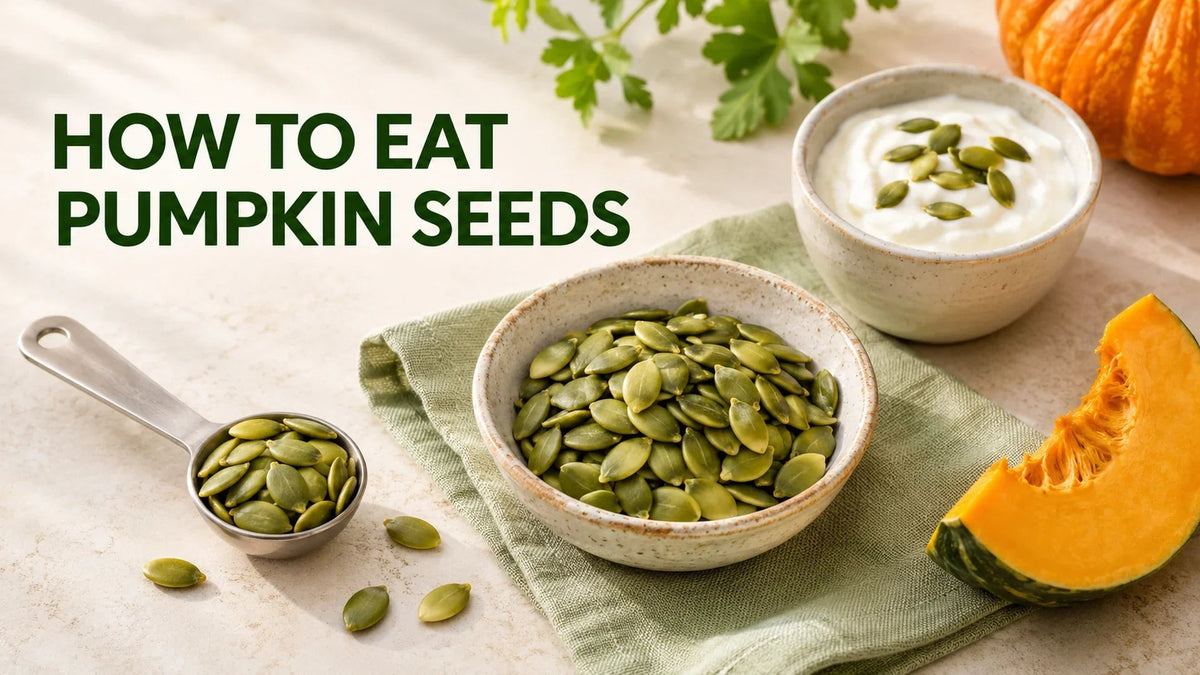
You can eat pumpkin seeds raw or roasted, on their own, or mixed into foods like yogurt, oats, salads, and smoothies. For many adults, about 28 grams (1 ounce) of shelled pumpkin seeds is a practical serving. A smaller amount, such as 1–2 tablespoons, also works well as a topping.
You do not need to eat a fixed amount every day. Choose a portion that fits your meals and feels comfortable. Ready-to-eat pumpkin seed kernels do not need to be soaked or ground before eating.
In Pakistan, pumpkin seeds are often called kaddu ke beej or کدو کے بیج. The green seeds sold without a hard white shell are commonly called pumpkin seed kernels or pepitas.
How Many Pumpkin Seeds Should You Eat Per Day?
About 28 grams, or 1 ounce, of shelled pumpkin seeds is a practical serving for many adults. This is roughly a small handful, although weighing the seeds is more accurate.
This amount is a portion guide, not a required daily dose or a strict upper limit. The American Heart Association suggests a small handful—about 1 ounce—of unsalted nuts or seeds as a snack. You can eat less if you are using pumpkin seeds as a topping or mixing them with other nuts and seeds. [1]
For example, you could add:
- 1 tablespoon to yogurt at breakfast.
- 2 tablespoons to a salad or bowl of oats.
- A small handful to a snack bowl.
You do not need to add a full handful to every meal. The best portion depends on your appetite, overall diet, and how your body responds.
Pumpkin Seeds in Grams, Tablespoons, and Cups
The estimates below are for dried pumpkin seed kernels without shells, measured with standard level US measuring spoons and cups.
| Amount | Approximate weight | Example |
|---|---|---|
| 1 level tablespoon | 8 grams | A topping for yogurt or oats |
| 2 level tablespoons | 16 grams | Split between two meals |
| 1 ounce, weighed | 28 grams | A small snack portion |
| ¼ cup, or 4 tablespoons | 32 grams | A portion to share or divide |
These estimates are calculated from a USDA food record for dried pumpkin and squash seed kernels. The weight can vary with seed size, moisture, roasting, and how tightly you fill the spoon or cup. Use a kitchen scale or your product label when accuracy matters. [2]
Note: These measurements do not apply to pumpkin seeds weighed with their shells. Ground pumpkin seeds may also measure differently by volume, so weigh them before or after grinding.
Can You Eat Pumpkin Seeds Every Day?
Yes. Many healthy adults can eat pumpkin seeds daily as part of a varied diet.
Choose an amount that fits with your other foods. If you also eat nuts, other seeds, or seed butter, consider the combined amount rather than adding a full serving of each.
If you are new to pumpkin seeds, start with a tablespoon and see how you feel. You can adjust the portion to suit your appetite and digestion.
Is 50 Grams of Pumpkin Seeds Too Much?
Fifty grams is larger than a common 28-gram serving, but it is not automatically unsafe for every adult.
For the USDA’s dried kernel record, 50 grams provides about 280 calories. A larger portion may also cause digestive discomfort for some people, especially if it is a sudden change from their usual diet. [2]
Consider your other meals, appetite, and comfort. If you have a medical condition or follow a prescribed diet, ask your healthcare professional what portion is right for you.
Which Pumpkin Seeds Can You Eat?
You can eat pumpkin seed kernels without shells or whole pumpkin seeds with edible shells. They differ in texture and how people usually prepare them.
| Type | What it is | Common use |
|---|---|---|
| Shelled kernels or pepitas | Green seeds without a hard white shell | Snacks, toppings, smoothies, and dips |
| Whole pumpkin seeds | Seeds with their outer shell | Often roasted and eaten as a crunchy snack |
| Raw kernels | Kernels that have not been roasted | Eaten as sold if ready to eat, or added to meals |
| Roasted seeds | Seeds heated for a toasted flavour | Snacks, salads, soups, and other toppings |
Some pumpkin varieties naturally produce seeds without a hard hull. In other cases, the outer shell is removed to leave the green kernel.
Can You Eat Pumpkin Seed Shells?
Yes. Pumpkin seed shells are edible, but they can be tough and chewy.
Whole seeds from a fresh pumpkin are commonly roasted with the shell on. Chew them well. If the shell is too hard or uncomfortable, remove it and eat the kernel inside.
Shells add fibre, but a large amount may cause bloating or other digestive discomfort, particularly if you are not used to eating much fibre. Shelled kernels are a convenient choice if you prefer a softer texture. [5]
Are Raw or Roasted Pumpkin Seeds Better?
Both raw and roasted pumpkin seeds can fit into a healthy diet. The choice mainly comes down to taste, texture, and the ingredients added.
- Raw kernels have a mild flavour and work well in smoothies, yogurt, and sauces.
- Roasted seeds have a stronger, nuttier flavour and more crunch.
- Salted or flavoured seeds may contain more sodium, sugar, or added oil. Check the label if these matter to you.
There is no need to choose raw seeds solely because you believe roasting makes them unhealthy. Pick a form you enjoy and follow the product’s preparation instructions.
How to Prepare Pumpkin Seeds for Eating
The preparation depends on whether you have packaged kernels or fresh seeds scooped from a pumpkin.
1. How to Eat Raw Pumpkin Seed Kernels
If the kernels are sold as ready to eat, you can use them straight from the packet.
Measure the amount you want, then:
- Eat them as a snack.
- Sprinkle them over yogurt, oats, or salad.
- Blend them into a smoothie.
- Add them to a dip or chutney.
You do not need to peel, soak, or grind ready-to-eat kernels before eating them. Follow any instructions on the package.
2. How to Toast Shelled Pumpkin Seeds in a Pan
Pan-toasting gives kernels a warm, nutty flavour and takes only a few minutes.
- Put a dry frying pan over medium-low heat.
- Add the kernels in a thin layer.
- Stir them often so they toast evenly.
- Remove them when they smell nutty and begin to pop or turn lightly golden.
- Transfer them to a plate and let them cool.
Watch the seeds closely because they can burn quickly. Add a little cumin, paprika, or another spice after toasting if you like. [4]
3. How to Roast Fresh Pumpkin Seeds
Seeds taken from a fresh pumpkin need cleaning before roasting. Choose a sound pumpkin intended for food, and wash its outside before cutting it.
You will need:
- Fresh pumpkin seeds
- A little cooking oil
- Spices of your choice, such as cumin or paprika
- A small amount of salt, if desired
Steps:
- Heat the oven to 175°C (350°F).
- Remove the seeds from the pumpkin and separate them from the stringy pulp.
- Rinse and pat dry with a clean towel.
- Season lightly. Toss with a little oil and your chosen spices.
- Spread in one layer on a baking tray.
- Roast for about 10–20 minutes, stirring often, until lightly browned. Start checking at 10 minutes. Larger or wetter seeds may need longer.
- Let them cool before eating. Chew the shells well, or remove them if they are too tough.
Utah State University Extension recommends roasting cleaned seeds at this temperature and checking them as they cook. Oven times can vary, so use the colour and texture as guides. [3]
For storage, make sure the seeds have cooled and are thoroughly dry before sealing them. Follow a tested drying method if you plan to dry seeds for longer storage.
Do Pumpkin Seeds Need to Be Soaked Before Eating?
No. Ready-to-eat pumpkin seed kernels do not need to be soaked.
Some people soak seeds to soften them or for a recipe. However, an overnight soak is not necessary to make ready-to-eat pumpkin seeds suitable to eat.
If you soak them, use clean water, keep them in the fridge during soaking, and use them promptly. Do not leave soaked seeds at room temperature for long periods or return damp seeds to dry pantry storage. [6]
Water can also help loosen the pulp from fresh pumpkin seeds. This is a cleaning step; it does not require an overnight soak.
Do You Need to Grind Pumpkin Seeds?
No. Most adults can eat shelled kernels whole if they can chew them comfortably.
Grinding is useful when you want a smoother texture. You can stir finely ground kernels into yogurt or porridge, or blend them into a dip. Weigh the seeds before grinding if you want to know the portion size.
7 Easy Ways to Eat Pumpkin Seeds
You do not need a special recipe to add pumpkin seeds to your meals. Start with one tablespoon of shelled kernels and adjust to your taste.
1. Add Them to Yogurt or Dahi
Sprinkle pumpkin seeds over plain yogurt with chopped fruit and a little cinnamon.
For a savoury option, add cucumber and roasted cumin to dahi, then sprinkle toasted kernels on top. Add them just before eating to keep them crunchy.
2. Sprinkle Them Over Oats or Porridge
Add a tablespoon of raw or toasted kernels to warm oats. You can also mix them into overnight oats kept in the fridge.
Raw kernels have a mild taste. Toasted kernels add more crunch and a nuttier flavour.
3. Use Them as a Salad Topping
Sprinkle kernels over a salad made with cucumber, tomato, leafy greens, or chickpeas. Add them after the dressing so they stay crisp.
They can replace some croutons or another crunchy topping.
4. Add Them to Soup, Dal, or Vegetables
Scatter a teaspoon or tablespoon over soup, dal, cooked vegetables, or a rice bowl just before serving.
Toasted kernels work especially well here because their flavour stands out against warm, savoury foods.
5. Blend Them Into a Smoothie
Add a tablespoon of shelled kernels to a smoothie with fruit, milk or yogurt, and enough liquid for your blender.
Blend until the texture is smooth enough for you. If your blender leaves pieces, grind the kernels first. Start with a small amount, as too many can make a drink thick or gritty.
6. Make a Simple Pumpkin Seed Chutney
Blend:
- 2 tablespoons of shelled pumpkin seeds
- A handful of fresh coriander
- A squeeze of lemon juice
- A little water
- Cumin or chilli to taste
Add water gradually until the chutney reaches the texture you like. Serve with vegetables, dal, or a sandwich. Keep any leftovers covered in the fridge.
7. Pack a Measured Snack
Place your chosen portion in a small container and eat it plain, or mix it with a few nuts and dried fruit.
If you are making trail mix, consider the size of the whole mix. Nuts, seeds, and dried fruit can add up quickly when each is added by the handful.
For a ready-to-use option, MNT’s pumpkin seed kernels are sold raw, unsalted, and without the hard outer shell.
A Simple Daily Example
You could add 1 tablespoon to dahi at breakfast and 1 tablespoon to a salad at lunch.
Using the dried-kernel estimates above, that is approximately 16 grams in total. There is no need to eat more simply to reach a particular number.
MNT product
MNT Pumpkin Seed Kernels
Raw, unsalted kernels without the hard outer shell, ready to add to meals and snacks.
View MNT Pumpkin SeedsWhen Is the Best Time to Eat Pumpkin Seeds?
The best time is whenever they fit your meals and feel comfortable. You can eat pumpkin seeds in the morning, afternoon, or evening.
Try them with breakfast if you enjoy yogurt or oats, or have a measured portion as a snack. You can also divide your portion between meals.
Can You Eat Pumpkin Seeds on an Empty Stomach?
Yes, if you tolerate them well. There is no requirement to eat pumpkin seeds on an empty stomach.
If seeds make your stomach feel uncomfortable when eaten alone, try a smaller amount with a meal.
Can You Eat Pumpkin Seeds Before Bed?
Yes. A small portion can be part of an evening snack if you enjoy it.
Pumpkin seeds contain magnesium, but eating them before bed is not a proven treatment for insomnia, and there is no established need to eat them at a particular hour. Research on magnesium supplements for sleep disorders is also limited. [8]
If you regularly have trouble sleeping, speak with a healthcare professional rather than relying on pumpkin seeds as a treatment.
Pumpkin Seeds Nutrition: What Does a Serving Provide?
Pumpkin seed kernels provide plant protein, unsaturated fats, magnesium, zinc, and other nutrients.
The following figures are approximate for 28 grams of dried pumpkin and squash seed kernels, based on a USDA reference. Your product may differ.
| Nutrient | Approximate amount per 28 g |
|---|---|
| Calories | 157 |
| Protein | 8.5 g |
| Total fat | 13.7 g |
| Fibre | 1.7 g |
| Magnesium | 166 mg |
| Zinc | 2.2 mg |
The values refer to the edible kernel, not the weight of seeds with shells. Roasting, variety, moisture, and added ingredients can change nutrition values. Check your product label for its specific information. [2]
Pumpkin seeds can contribute useful nutrients to a balanced diet, but they are not a complete meal or a substitute for medical treatment.
For a closer look at the evidence, read our guide to pumpkin seed benefits and nutrition.
How to Eat Pumpkin Seeds Safely
Start With a Small Amount if You Get Bloating
Eating a large amount of pumpkin seeds at once may cause bloating or digestive discomfort. This can be more likely with shell-on seeds or if you suddenly increase your fibre intake.
Try a smaller portion, chew well, and increase gradually if comfortable. Seek medical advice if symptoms are severe or continue.
Avoid Pumpkin Seeds if You Are Allergic
Do not eat pumpkin seeds if you have a known allergy to them. Check ingredient labels on seed mixes and flavoured products.
Stop eating if you think you are having a reaction. Trouble breathing, throat swelling, or feeling faint requires urgent medical help. Use prescribed adrenaline according to your allergy action plan. [10]
Use a Safe Texture for Young Children
Whole or chopped seeds can be a choking hazard for babies and young children. Thick spoonfuls of seed butter can also be difficult to swallow.
A texture suited to the child’s feeding stage is important. For example, finely ground seeds can be mixed into a moist food. Keep children seated and supervise them while they eat. Ask their healthcare professional if you are unsure which texture is suitable. [9]
Follow Your Individual Diet Advice
If you have trouble swallowing, follow a prescribed diet, or have kidney disease with limits on certain minerals, ask your healthcare professional or dietitian how pumpkin seeds fit into your meals.
People with kidney disease have different dietary needs; restrictions depend on their condition and treatment. [11]
Can You Eat Pumpkin Seeds During Pregnancy?
Pumpkin seeds can often be included in a balanced pregnancy diet as an ordinary food. Choose a form you can chew comfortably, follow food-handling instructions, and avoid them if you have a known allergy.
If you have a condition affecting your pregnancy diet, ask your healthcare professional for individual advice.
How to Store Pumpkin Seeds
Keep dry pumpkin seeds sealed, away from heat and moisture. Follow the storage instructions and date on the package.
| Type | Storage approach |
|---|---|
| Packaged raw or roasted kernels | Reseal tightly and follow the label |
| Homemade roasted seeds | Cool completely and make sure they are dry before sealing |
| Ground kernels | Make small batches and keep sealed in the fridge |
| Soaked seeds or wet chutney | Keep refrigerated and use promptly |
Refrigeration or freezing can help preserve the quality of dry seeds during longer storage. In a hot kitchen, a sealed container in the fridge may be more suitable than a cupboard near the stove. [6]
Discard seeds if they show signs of mould or have an unusual rancid or musty smell. Do not try to make spoiled seeds safe by roasting them.
Frequently Asked Questions
Should You Wash Packaged Pumpkin Seeds?
If the package says the kernels are ready to eat, follow its instructions; an extra wash is generally unnecessary.
Seeds taken from a fresh pumpkin should be rinsed to remove the pulp. If you wet dry kernels for a recipe, do not put them back into dry storage while damp.
Can You Eat Pumpkin Seeds With Milk or Yogurt?
Yes. You can sprinkle shelled kernels over yogurt, add them to porridge made with milk, or blend them into a smoothie.
Can You Mix Pumpkin Seeds With Other Seeds?
Yes. Pumpkin seeds can be mixed with other edible seeds in meals or snacks. Consider the combined portion, and follow the preparation advice for each type of seed.
Can You Eat Pumpkin Seeds for Weight Loss?
Pumpkin seeds can fit into a weight-loss eating plan. They provide protein and fat and can be used as a measured topping or snack.
They do not burn fat by themselves. Since they are calorie-dense, the portion and your overall eating pattern matter.
Can People With Diabetes Eat Pumpkin Seeds?
Many people with diabetes can include plain pumpkin seeds as part of a balanced meal. Check the ingredients on sweetened or flavoured products.
Pumpkin seeds do not replace diabetes medicines or blood glucose monitoring. A dietitian can help you choose a portion that fits your individual plan.
Does Pumpkin Seed Powder Count as the Same Portion?
Yes, if it is simply whole pumpkin seed kernels that have been ground. For accuracy, weigh the kernels before grinding or weigh the finished powder.
A protein powder made from partly defatted seeds is a different product, so use its nutrition label.
What Is the Simplest Way to Eat Pumpkin Seeds?
Choose ready-to-eat shelled kernels and sprinkle a tablespoon over food you already eat, such as yogurt, oats, salad, or dal. You can also enjoy a measured portion on its own.
We rely on peer-reviewed studies and reputable medical journals.