

How to Eat Sesame Seeds: Daily Amount and Uses
Learn how to eat sesame seeds, how much to use, and whether they need soaking or roasting. Discover simple ways to add til and tahini to everyday meals
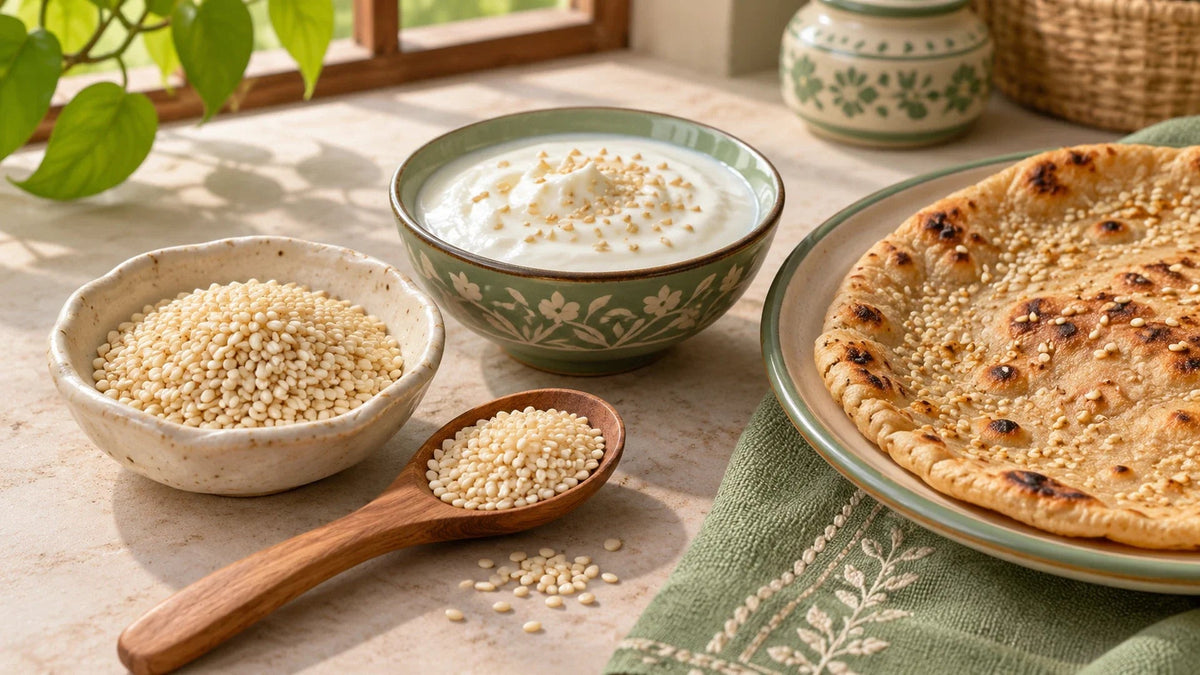
You can eat sesame seeds, also called til (تل), whole or ground. Add them to yogurt, roti, salads, vegetables, or porridge. You can also lightly toast them or use them as tahini, a paste made from ground sesame seeds.
One tablespoon a day is a practical portion for many adults without a sesame allergy. It is not a required amount or a medical limit. You do not need to eat sesame every day, and you do not need to soak or grind the seeds before eating them.
Raw sesame seeds can be eaten when they are sold ready to eat. Follow any preparation instructions on the package.
Sesame allergy: If you are allergic to sesame, avoid the seeds and foods made with them, including tahini. Sesame can cause a serious allergic reaction.
How Much Sesame Seed Should You Eat Per Day?
For many adults, 1 tablespoon of sesame seeds is a reasonable amount to add to a meal or snack. You can eat more or less depending on your appetite, overall diet, and how well you tolerate them.
There is no single amount that everyone must eat. Sesame seeds are food, not a medicine with a set daily dose.
If you do not usually eat seeds, try 1 teaspoon at first. You can increase the amount gradually if it feels comfortable.
One tablespoon of whole, dried sesame seeds weighs approximately 9 grams and contains about 52 calories. :chatgpt-content-reference{index="0"}
| Amount | Approximate weight | Approximate calories |
|---|---|---|
| 1 teaspoon | 3 g | 17 |
| 1 tablespoon | 9 g | 52 |
| 2 tablespoons | 18 g | 103 |
These are estimates for whole, dried sesame seeds based on USDA nutrient data. The weight in your spoon and the nutrition of your product may differ.
A tablespoon of tahini or ground sesame may weigh a different amount from a tablespoon of whole seeds.
Can you eat sesame seeds every day?
Yes. If you tolerate sesame and do not have an allergy, you can include a food-sized portion in your meals every day.
You can also eat sesame a few times a week. What matters most is the variety and balance of your overall diet.
Can you eat too many sesame seeds?
A large amount of sesame seeds can add more calories than you expect. Some people may also feel bloated or uncomfortable if they suddenly eat much more fibre than usual.
There is no established maximum amount that applies to everyone. Start with a portion that fits your meals, and adjust it based on your needs and tolerance.
How to Eat Sesame Seeds: 8 Easy Everyday Ideas
Sesame seeds have a mild, nutty flavour that works well in both sweet and savoury foods. You can add them to many familiar Pakistani meals.
1. Add sesame seeds to yogurt or dahi
Stir 1 teaspoon to 1 tablespoon of ready-to-eat, lightly toasted, or ground sesame seeds into plain yogurt.
Keep it savoury with cucumber and a little roasted cumin. For a sweeter bowl, add chopped fruit.
2. Sprinkle them on roti or paratha
Mix a small amount of sesame into roti or paratha dough before cooking. You can also sprinkle the seeds on top and gently press them in so they stick.
Sesame works well on naan and homemade bread, too.
3. Add them to salads
Sprinkle ready-to-eat or lightly toasted sesame over a salad of cucumber, tomato, carrots, or leafy greens. Add the seeds just before serving to keep their crunch.
4. Mix them into oats or porridge
Add ready-to-eat ground or toasted sesame seeds to a bowl of oats, porridge, or daliya. They pair well with milk, yogurt, banana, and other fruit.
5. Sprinkle them over cooked vegetables
Add ready-to-eat or toasted sesame seeds to cooked vegetables or sabzi before serving. Try them with carrots, beans, cabbage, or stir-fried vegetables.
6. Make sesame chutney
Grind ready-to-eat or lightly toasted sesame seeds with ingredients such as garlic, lemon juice, chilli, or herbs. Add a little water to make a chutney or dipping sauce.
Adjust the ingredients to suit your taste.
7. Use tahini in a dressing
Tahini is a paste made from ground sesame seeds. Mix it with lemon juice and water to make a simple dressing for vegetables, salad, or a grain bowl.
8. Enjoy sesame in traditional sweets
Sesame is used in til ladoo, chikki, and rewri. These can be enjoyed as part of a balanced diet.
Sweets may also contain sugar, jaggery, or other ingredients, so their calories and portion sizes differ from plain sesame seeds.
A simple way to include one tablespoon
You do not have to eat a full tablespoon at once. For example:
- Breakfast: Add 1 teaspoon to yogurt.
- Lunch or dinner: Sprinkle 2 teaspoons over a salad or cooked vegetables.
Together, these add up to approximately 1 tablespoon.
MNT product
MNT White Sesame Seeds
Explore white sesame seeds for cooking, baking, and other everyday uses. Check the product details and follow the preparation instructions on the pack.
View MNT White Sesame SeedsCan You Eat Sesame Seeds Raw?
Yes. You can eat raw sesame seeds if they are sold for eating without further cooking. Check the packaging and follow any preparation instructions.
Raw sesame has a mild taste. You can add ready-to-eat seeds to yogurt, salads, or smoothies, or use them in a recipe that will be cooked.
If you buy loose or unlabelled seeds and are unsure whether they are ready to eat, ask the seller or manufacturer about their intended use and preparation.
Like other foods, sesame products can sometimes become contaminated with bacteria. Sesame seeds and products such as tahini have been linked to Salmonella contamination. Buy from a reliable source and follow storage and preparation directions. :chatgpt-content-reference{index="1"}
Food safety: If the package says “cook before eating,” follow its cooking instructions. A quick home toast is mainly for flavour; do not assume it makes a product safe if further cooking is required.
Soaking does not replace cooking when a product requires it. Learn more from Food Standards Australia New Zealand’s sesame food-safety assessment.
How to Roast Sesame Seeds at Home
Lightly roasting sesame seeds brings out their nutty flavour. You do not need oil to toast them in a pan.
How to toast sesame seeds in a pan
- Place the seeds in a dry pan in a thin layer.
- Warm them over low to medium heat.
- Stir often so they heat evenly.
- Watch closely for a nutty smell and a light golden colour.
- Transfer the seeds to a plate and let them cool.
Sesame seeds are small and can burn quickly. Black sesame does not show a golden colour as clearly, so pay close attention to the smell and cooking time.
Once cool, add the seeds to your food or store them in a clean, airtight container.
Are raw or roasted sesame seeds better?
Both can be included in a balanced diet. The main difference for most people is flavour: raw sesame is mild, while lightly roasted sesame has a stronger, nuttier taste.
Choose the form you enjoy and follow the product’s instructions. Roasting does not make sesame safe for someone with a sesame allergy.
Should You Soak Sesame Seeds Before Eating?
No, you do not need to soak sesame seeds before eating them. Soaking is optional and may be useful when a recipe calls for softer seeds or a blended mixture.
Some people soak sesame before making a paste or drink. If you do, use clean water and follow the recipe’s food-safety instructions. Do not leave wet seeds at room temperature for long periods.
Sesame contains natural compounds, including phytates and oxalates, that can affect how minerals are absorbed. Processing methods may change their levels, but the effect depends on the method and the seeds. Do not assume that soaking removes all these compounds or guarantees better absorption.
Should you drink sesame seed water?
You do not need to drink sesame seed water to include sesame in your diet. Adding the seeds themselves to a meal is a simple option.
If you make a drink with blended sesame, the final nutrition will depend on how much seed you use and whether you strain it.
Should You Eat Sesame Seeds Whole or Ground?
You can eat sesame seeds whole or ground. Choose the form that works best for your meal.
- Whole sesame seeds add crunch to salads, bread, and vegetables.
- Ground sesame seeds mix easily into yogurt, chutney, and porridge.
- Tahini is a smooth paste made from ground sesame seeds.
Grinding breaks the seeds into smaller pieces. However, you do not have to grind them to include them in your diet, and it is difficult to say exactly how much grinding changes nutrient absorption for every person.
Whole seeds can be chewed with your food. If you prefer a smooth texture, try ground sesame or tahini.
Why do sesame seeds sometimes appear in stool?
Small seeds can sometimes pass through the digestive system without being fully broken down, especially if they are swallowed whole.
Seeing a few seeds does not automatically mean that you absorbed no nutrients. If you prefer, chew your food well or try ground sesame.
How to Eat Sesame Seeds as Tahini
Tahini is a paste made from ground sesame seeds. It can be made from raw or toasted seeds and may be smooth or slightly textured.
You can use tahini in:
- Hummus and other dips
- Salad dressings
- Sauces for vegetables
- Sandwiches and wraps
- A small drizzle over porridge
Check the ingredient label, as some products may contain added oil, salt, or other ingredients.
Simple tahini dressing
To make a quick dressing:
- Put 1 tablespoon of tahini in a small bowl.
- Add a squeeze of lemon juice.
- Stir in water a little at a time until the dressing is as thin as you like.
- Add a little garlic or salt if desired.
- Serve over salad or cooked vegetables.
Is one tablespoon of tahini the same as one tablespoon of sesame seeds?
Not exactly. Tahini and whole sesame are different forms, so a tablespoon of each may have a different weight and nutritional value. Added ingredients can also change the nutrition.
Check the product label if you need a more precise estimate.
If you have a sesame allergy, avoid tahini. It is made from sesame seeds.
White vs Black Sesame Seeds: Which Should You Choose?
Both white and black sesame seeds can be used in everyday meals. Choose the type you enjoy and that suits your recipe.
| Feature | White sesame seeds | Black sesame seeds |
|---|---|---|
| Common Urdu name | Safed til (سفید تل) | Kalay til (کالے تل) |
| Flavour | Often mild and nutty | Often more earthy or stronger |
| Uses | Bread, toppings, tahini, and sweets | Toppings, pastes, and sweets |
| Outer layer | Available hulled or unhulled | Often sold with the hull; check the product |
Neither colour is automatically the best choice for everyone. The seed variety, whether the hull is present, and how the product is processed can all affect its taste and nutrition.
You can learn more about local names in our guide to sesame seeds in Urdu.
What is the difference between hulled and unhulled sesame?
The hull is the outer layer of the seed.
- Unhulled sesame keeps its outer layer and may have a slightly stronger taste.
- Hulled sesame has the outer layer removed and is often milder and smoother.
Whole, unhulled sesame can contain much more calcium than hulled sesame. However, the calcium listed in a food does not tell you exactly how much your body absorbs. Compounds such as oxalates can affect availability, and this varies by food and preparation.
What Nutrition Do You Get From Sesame Seeds?
Sesame seeds provide fat, a small amount of plant protein and fibre, along with minerals.
The following estimates are for 1 tablespoon, or about 9 grams, of whole, dried sesame seeds:
| Nutrient | Approximate amount |
|---|---|
| Calories | 52 kcal |
| Protein | 1.6 g |
| Fat | 4.5 g |
| Fibre | 1.1 g |
| Calcium | 88 mg |
These amounts are estimates. Hulled sesame, roasted products, and tahini can have different values. The calcium figure is the amount present in the food, not necessarily the amount absorbed by your body.
Can sesame seeds provide all the calcium you need?
No. Sesame can contribute to your calcium intake, but one tablespoon is not enough to meet most adults’ daily needs.
Include a variety of calcium-rich foods in your diet. Depending on your food choices, these may include milk, yogurt, calcium-set tofu, and other suitable foods.
Sesame seeds should not be used in place of treatment recommended for a calcium deficiency.
What Is the Best Time to Eat Sesame Seeds?
There is no proven best time for everyone. You can eat sesame seeds at breakfast, lunch, dinner, or as part of a snack.
You do not need to eat sesame seeds on an empty stomach. The best time is when they fit easily into a meal you enjoy.
You can also eat sesame seeds at night. There is no general rule that says they must be eaten in the morning or avoided in the evening.
Who Should Be Careful With Sesame Seeds?
Sesame is suitable for many people, but it is not right for everyone.
People with a sesame allergy
If you have a sesame allergy, avoid sesame seeds and foods containing sesame. These can include tahini, some breads, sauces, sweets, and sesame-containing dishes.
Check ingredient labels and ask about ingredients when eating food prepared by someone else. Roasting or grinding sesame does not make it safe for a person with a sesame allergy.
Get emergency medical help immediately if someone develops symptoms of a severe allergic reaction, such as trouble breathing, throat tightness, or faintness. Use prescribed epinephrine if available and seek emergency care. :chatgpt-content-reference{index="2"}
For more information, see the U.S. Food and Drug Administration’s food allergy guidance.
Babies and young children
Whole seeds and thick spoonfuls of seed butter can be choking hazards for babies and young children.
When introducing sesame to a baby who is ready for solid foods, use an age-appropriate texture. For example, a small amount of smooth tahini can be thinned and mixed into a suitable food. Watch the child while they eat.
Introduce foods that can cause allergies one at a time so you can watch for a reaction. If your baby has eczema, an existing food allergy, or other concerns about allergies or feeding, speak with a healthcare professional before introducing sesame. :chatgpt-content-reference{index="3"}
See the CDC’s choking guidance and the NHS guide to food allergies in babies and young children.
People who experience digestive discomfort
If you feel bloated or uncomfortable after eating sesame, try a smaller portion. A gradual increase may be easier to tolerate than suddenly adding a large amount.
Speak with a healthcare professional if symptoms continue or are severe.
People advised to limit oxalate
Sesame contains oxalates. If you have had calcium oxalate kidney stones and have been advised to limit oxalate, ask your doctor or dietitian how sesame can fit into your individual eating plan.
Not everyone with a history of kidney stones needs the same diet advice.
How to Store Sesame Seeds and Tahini
Sesame seeds contain natural oils, which can develop a rancid smell or taste over time. Proper storage helps keep them fresh.
For dry sesame seeds:
- Keep them in a clean, airtight container.
- Store them in a cool, dry place away from sunlight and heat.
- Use a clean, dry spoon when taking out a portion.
- Consider refrigeration for longer storage, especially in hot weather.
- Discard them if they develop an unpleasant, rancid smell or taste.
Ground sesame and tahini may need extra care. Follow the storage instructions on the package, including any directions to refrigerate after opening.
Frequently Asked Questions
Can I eat sesame seeds with milk or yogurt?
Yes. You can add ready-to-eat whole, ground, or lightly toasted sesame seeds to milk, yogurt, porridge, or smoothies. If you are new to sesame, start with a small amount.
Can sesame seeds help with weight loss?
Sesame seeds can be part of a weight-management diet, but they do not cause weight loss on their own. They contain calories, so use a portion that fits your overall eating pattern.
Can I eat sesame seeds during pregnancy?
Sesame seeds and tahini can generally be included in a balanced pregnancy diet if you tolerate them and do not have a sesame allergy. Follow food-safety instructions and ask your healthcare professional if you have individual dietary concerns.
Can I eat black and white sesame seeds together?
Yes. You can mix black and white sesame seeds in the same meal. The choice is mainly a matter of taste, texture, and the recipe you are making.
Key Takeaways
- You can add sesame seeds to yogurt, roti, salads, vegetables, chutney, and many other foods.
- One tablespoon is a practical portion for many adults, but there is no official sesame-specific daily dose.
- Sesame seeds can be eaten raw when sold ready to eat, or they can be lightly toasted, ground, or made into tahini.
- Soaking is optional. There is no need to soak sesame before every use.
- People with a sesame allergy should avoid sesame and foods containing it.
- Sesame can contribute nutrients to your diet, but it works best as part of a varied eating pattern.
We rely on peer-reviewed studies and reputable medical journals.