

Sesame Seeds in Urdu: Til (تل) Meaning, Benefits & Uses
Sesame seeds are called Til (تل) or Til ke Beej in Urdu. Discover their white and black varieties, nutrition, benefits, uses, serving guidance, and safety.
Quick answer
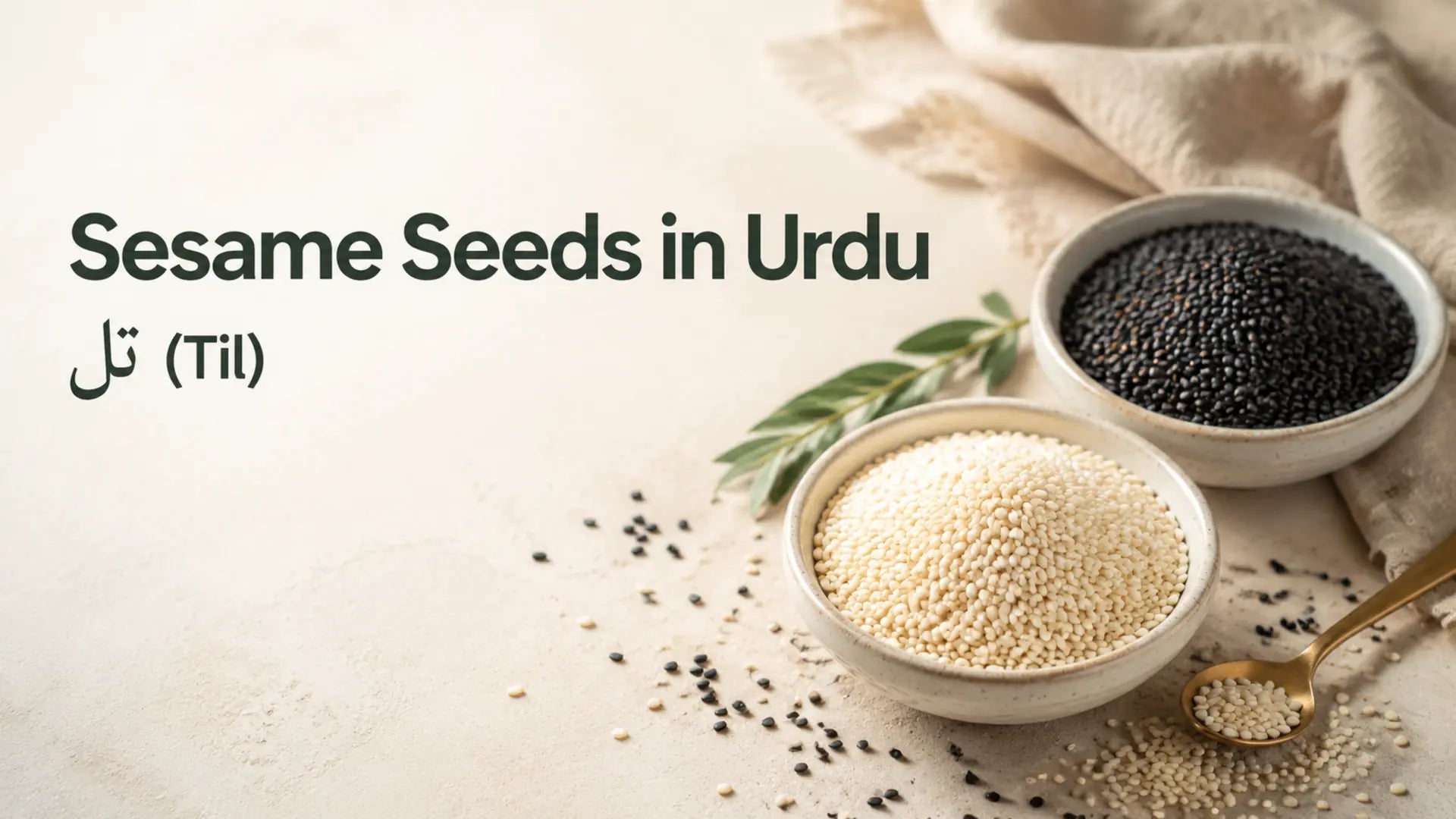
Sesame seeds in Urdu are called تل (Til). People also say تل کے بیج (Til ke beej), which literally means “sesame seeds.” White sesame seeds are called سفید تل (Safed Til), while black sesame seeds are called کالے تل (Kalay Til) or سیاہ تل (Siyah Til).
In a food, recipe, or grocery context, til means sesame. The same Urdu word can also mean a small mole or dark spot on the skin, so its meaning depends on the sentence.
اردو میں: Sesame seeds کو اردو میں تل یا تل کے بیج کہتے ہیں۔ سفید sesame seeds کو سفید تل اور black sesame seeds کو کالے تل یا سیاہ تل کہا جاتا ہے۔
Sesame seeds meaning in Urdu
The common Urdu meaning of sesame seeds is تل. In Roman Urdu, it is written as Til and sounds like the English word “till.”
You may also see کنجد (Kunjad) or تخمِ کنجد (Tukhm-e-Kunjad) in dictionaries, Unani writing, and older books. In daily Pakistani Urdu, however, most people simply say til. Rekhta lists both تل and تخم کنجد for sesame.[1]
| English term | Urdu name | Roman Urdu |
|---|---|---|
| Sesame / sesame seeds | تل | Til |
| Sesame seeds | تل کے بیج | Til ke beej |
| White sesame seeds | سفید تل | Safed Til |
| Black sesame seeds | کالے تل / سیاہ تل | Kalay Til / Siyah Til |
| Sesame oil | تل کا تیل | Til ka tel |
| Sesame plant | تل کا پودا | Til ka poda |
| Formal or traditional name | کنجد / تخمِ کنجد | Kunjad / Tukhm-e-Kunjad |
What is til in English?
In a food context, til in English means sesame or sesame seeds.
- تل = sesame or sesame seeds
- تل کے بیج = sesame seeds
- تل کا تیل = sesame oil
However, til can also mean a mole or dark spot on the skin. For example, “til on the face” refers to a mole, while “til on naan” refers to sesame seeds. Rekhta records both meanings.[2]
White and black sesame seeds in Urdu
Sesame seeds are sold in several colours, including white, cream, brown, golden, red, and black. White and black are the two types most commonly discussed in Pakistani recipes.
| Type | Urdu name | Flavour | Common uses |
|---|---|---|---|
| White sesame seeds | سفید تل | Mild and nutty | Naan, buns, biscuits, tahini, chutney, sweets |
| Black sesame seeds | کالے تل / سیاہ تل | Stronger and earthier | Toppings, chutneys, sweets, and traditional dishes |
Both are forms of sesame. Neither is automatically “best” for every person. The right choice depends on the recipe, taste, whether the seed is hulled, and the rest of your diet.
Hulled versus unhulled sesame seeds
Seed colour and hulling are not the same thing.
- Unhulled sesame seeds still have their outer layer.
- Hulled sesame seeds have had that outer layer removed.
White sesame is often sold hulled, while black sesame is often sold unhulled, but this is not a fixed rule. An unhulled seed usually contains more calcium because much of the calcium is in the outer layer. The amount your body absorbs can still vary because whole sesame also contains natural compounds such as phytates and oxalates.[3]
Is kala til the same as kalonji?
No. Kala til and kalonji are different seeds.
| Feature | Kala til | Kalonji |
|---|---|---|
| English name | Black sesame | Nigella seed / black seed |
| Common Urdu name | کالا تل | کلونجی |
| Plant | Sesamum indicum | Nigella sativa |
| Taste | Nutty and earthy | Sharp, peppery, and slightly bitter |
This difference matters when buying seeds or following a recipe. Kalonji cannot always replace black sesame.
What are sesame seeds?
Sesame seeds come from the sesame plant, whose accepted scientific name is Sesamum indicum.[4] The plant produces pods that contain many small, flat, oil-rich seeds.
The seeds may be eaten whole, roasted, crushed, ground into tahini, or pressed to make sesame oil. In Pakistan and South Asia, til is especially common in winter foods such as til laddoo, rewari, gajak, and chikki. It is also used on naan, buns, biscuits, salads, rice, yogurt, and chutneys.
Sesame seed nutrition
Sesame seeds provide unsaturated fats, plant protein, fibre, and minerals. Because they contain a high amount of fat, they are also calorie-dense.
Nutrition in one tablespoon of whole, dried sesame seeds
| Nutrient | Approximate amount |
|---|---|
| Weight | 9 g |
| Calories | 52 kcal |
| Protein | 1.6 g |
| Total fat | 4.5 g |
| Fibre | 1.1 g |
| Calcium | 88 mg |
| Iron | 1.3 mg |
| Magnesium | 32 mg |
| Zinc | 0.7 mg |
These figures are based on USDA data for whole, dried sesame seeds.[5] Values can change with the variety, growing conditions, hulling, roasting, and serving size. In particular, hulled sesame may contain much less calcium than the whole, unhulled form.
This table describes the nutrients in the food. It does not mean that every nutrient will be fully absorbed or that sesame can replace a balanced diet.
Evidence-based benefits of sesame seeds
Sesame seeds can be a useful part of a balanced diet, but they are not a cure for diabetes, high cholesterol, weak bones, thyroid disease, infertility, hair loss, or cancer. The most reliable benefits come from the nutrients sesame adds to the overall diet.
1. Sesame adds fibre to the diet
One tablespoon of whole sesame provides about 1.1 grams of fibre. Fibre supports normal digestion and can help make stool easier to pass when it is eaten as part of a fibre-rich diet with enough fluid.[6]
One spoon of sesame alone is not a complete treatment for constipation. Adults generally need much more total fibre from foods such as vegetables, fruit, beans, lentils, and whole grains.
2. It provides minerals used by the bones and body
Whole sesame contains calcium, magnesium, phosphorus, zinc, iron, and copper. Calcium is needed to build and maintain bones, while magnesium also takes part in bone formation and many other body functions.[7][8]
Sesame can contribute to mineral intake, but it should not be presented as a treatment for osteoporosis or mineral deficiency. People with a diagnosed deficiency should follow advice from their doctor or dietitian.
3. It contains unsaturated fats and sesame lignans
Most of the fat in sesame is unsaturated. Sesame also contains natural plant compounds called lignans, including sesamin and sesamolin. These compounds have antioxidant activity and are being studied for possible effects on metabolic and cardiovascular health.[3]
Laboratory findings do not automatically prove that eating a normal serving of whole sesame will prevent disease. The practical message is that sesame can be used as one source of unsaturated fat in a varied diet.
4. What does the research say about blood sugar and cholesterol?
Clinical trials have studied several forms of sesame, including whole seeds, sesame oil, tahini, and concentrated compounds such as sesamin. A 2025 systematic review included 13 trials with 521 participants. The interventions lasted 4 to 12 weeks and showed possible improvements in some blood-sugar, inflammation, and blood-lipid markers. Results differed by product, dose, study group, and outcome.[9]
This does not prove that a tablespoon of ordinary sesame will treat diabetes or high cholesterol. If you have diabetes, heart disease, or another medical condition, use sesame as food—not as a replacement for medicine, insulin, or professional care.
How to eat sesame seeds
Sesame is easy to add to normal meals. You can:
- Sprinkle roasted til over yogurt or raita.
- Add it to salads, rice, oatmeal, or porridge.
- Use safed til on naan, buns, crackers, or homemade bread.
- Mix roasted sesame into chutney or a spice blend.
- Grind it into tahini for dips and dressings.
- Add a small amount to homemade granola or seed mixes.
- Enjoy til laddoo, rewari, gajak, or chikki occasionally.
Traditional sesame sweets can contain a large amount of sugar or jaggery. They should not be treated in the same way as plain sesame seeds, especially by people managing diabetes, weight, or dental health.
Raw or roasted: which is better?
Both raw and roasted sesame seeds can be eaten. Roasting gives them a deeper smell and nutty taste.
To toast sesame at home, place the seeds in a dry pan over low heat. Stir often and remove them when they become fragrant. Small seeds burn quickly, so do not leave the pan unattended.
How much sesame should you eat per day?
There is no official daily dose of sesame seeds for everyone.
For a healthy adult who is not allergic, one tablespoon a day is a practical food-sized serving. Some people may use up to two tablespoons as part of their normal diet. Start with one teaspoon if you are not used to seeds or have a sensitive stomach.
The right amount depends on your calorie needs, health, allergies, and the rest of your diet. More is not always better.
How to store til
Keep sesame seeds in a clean, airtight container away from heat, sunlight, and moisture. Because the seeds contain oil, they can become rancid over time.
For longer storage, keep them in the refrigerator or freezer. Throw them away if they smell bitter, stale, paint-like, or unusually sharp.
Side effects and safety
Sesame allergy
Sesame can cause a serious food allergy. The FDA recognises it as a major food allergen in the United States.[10] A person with a known sesame allergy should avoid sesame seeds, tahini, sesame oil where advised, and foods containing sesame.
Get urgent medical help if sesame causes:
- Trouble breathing or wheezing
- Swelling of the lips, tongue, face, or throat
- Faintness, severe dizziness, or collapse
- Widespread hives with breathing or circulation symptoms
High calorie content
Sesame contains nutritious fats, but large servings add many calories. Measure a spoonful instead of eating an unlimited amount from a packet.
Gas or stomach discomfort
Some people experience gas, bloating, or stomach discomfort after suddenly eating a large amount of seeds. Begin with a small serving and reduce or stop it if sesame does not suit you.
Medical conditions and sesame supplements
Normal food portions are different from concentrated extracts, capsules, or the larger amounts used in some studies. Ask a doctor or dietitian before using sesame supplements or unusually large amounts, particularly if you take blood-sugar or blood-pressure medicine or follow a prescribed diet.
Frequently asked questions
What are sesame seeds called in Urdu?
Sesame seeds are called تل (Til) in Urdu. The full phrase is تل کے بیج (Til ke beej).
What is til in English?
In a food context, til means sesame or sesame seeds. In another context, the same word can mean a mole on the skin.
What are white sesame seeds called in Urdu?
White sesame seeds are called سفید تل (Safed Til).
What are black sesame seeds called in Urdu?
Black sesame seeds are called کالے تل (Kalay Til) or سیاہ تل (Siyah Til).
Is sesame the same as til?
Yes. Sesame is the English name, while til is the common Urdu name.
Is kunjad the same as til?
Yes. کنجد (Kunjad) and تخمِ کنجد (Tukhm-e-Kunjad) are more formal or traditional names for sesame. Til is more common in everyday speech.
Is kala til the same as kalonji?
No. Kala til is black sesame. Kalonji is a different seed with a sharper taste.
What is sesame oil called in Urdu?
Sesame oil is called تل کا تیل (Til ka tel).
Can I eat sesame seeds every day?
If you are not allergic, a small serving such as one tablespoon can fit into a balanced daily diet. There is no universal daily dose.
Are sesame seeds good for diabetes?
Plain sesame can be included in many balanced eating plans, but it does not cure diabetes or replace medicine. Sesame sweets may contain a lot of sugar or jaggery, so portion size and the full recipe matter.
Which is better: white or black sesame seeds?
Neither is best for every use. White sesame has a milder taste, while black sesame is usually stronger. Nutrient levels depend on the variety and whether the seed is hulled, not only its colour.
MNT.com.pk
Need personalised nutrition guidance?
If you need help fitting foods such as sesame into a diet for your health needs, a nutrition professional at MNT.com.pk can review your routine and provide practical, individual guidance.
Bottom line
Sesame seeds in Urdu are called تل (Til) or تل کے بیج (Til ke beej). White sesame is سفید تل, black sesame is کالے تل or سیاہ تل, and sesame oil is تل کا تیل.
Til provides unsaturated fats, plant protein, fibre, and several minerals. Use it in normal food portions on naan, yogurt, salads, chutneys, rice, or other meals. Remember that sesame is not a medical treatment, traditional sesame sweets can be high in sugar, and anyone with a sesame allergy must avoid it.
We rely on peer-reviewed studies and reputable medical journals.