

How to Use Moringa Powder: Best Ways to Take It, Dosage, Benefits, and Safety
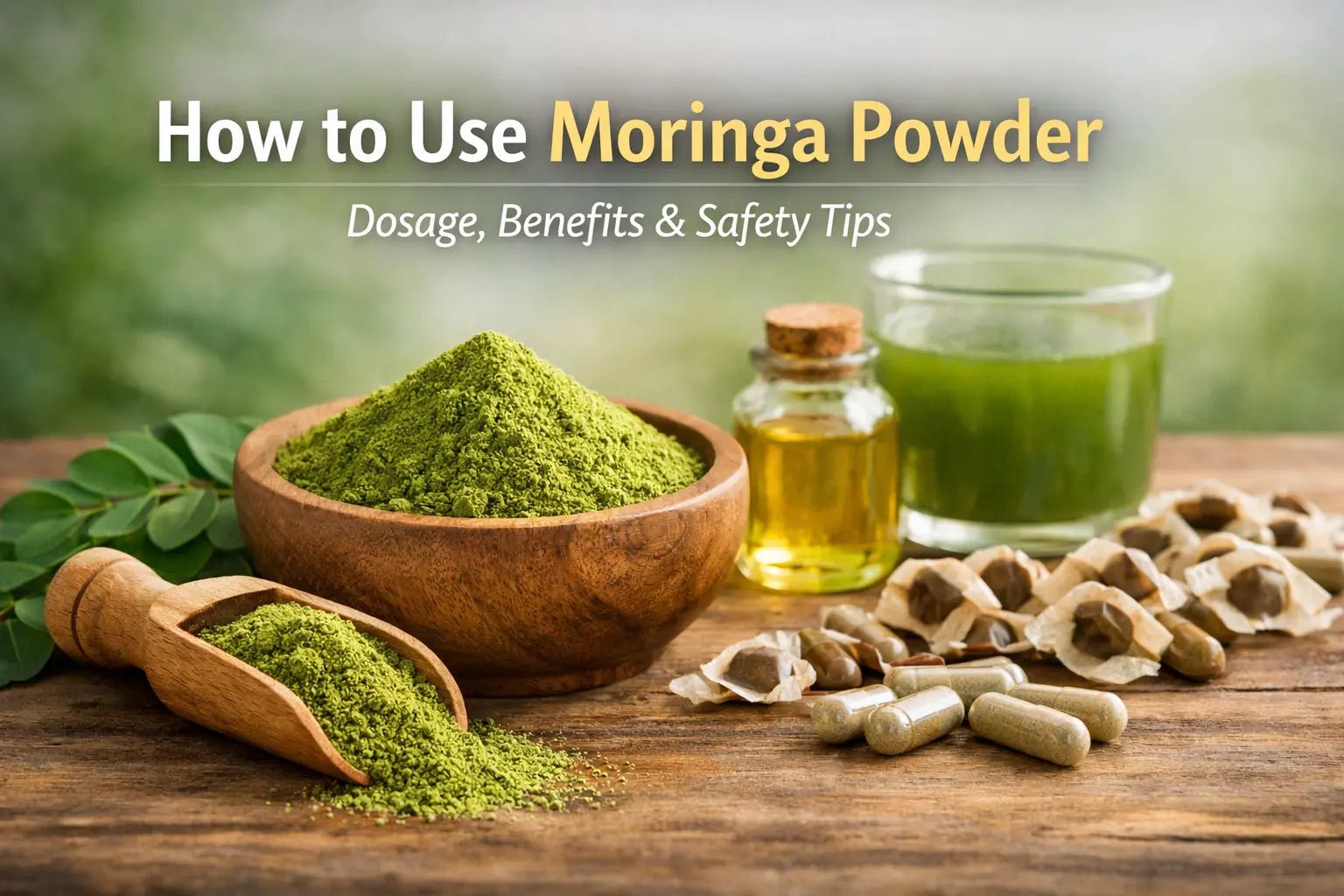
Moringa powder is usually made from dried Moringa oleifera leaves ground into a fine green powder. The simplest and most responsible way to use it is to start with a small amount, mix it into a food or drink you already tolerate well, and increase only if it suits you and the product label supports it. For most beginners, a practical starting point is about 1/2 teaspoon daily, taken with food if needed for taste or stomach comfort. Because moringa is sold as a dietary supplement, product quality varies, there is no single official universal dose for all products, and people who are pregnant, breastfeeding, taking medications, or managing a medical condition should check with a clinician before using it regularly.
Key Takeaways
-
The easiest way to use moringa powder is to add a small amount to foods or drinks you already consume, such as smoothies, yogurt, oatmeal, soups, or warm water.
-
A sensible starting point for most adults is 1/2 teaspoon daily, then increasing gradually only if tolerated and within the product’s labeled serving size.
-
There is no single medically established daily dose that fits every person, product, or goal.
-
Moringa is nutrient-dense and contains plant compounds with antioxidant activity, but many popular health claims still need stronger human evidence.
-
People taking medication for blood sugar, blood pressure, or other chronic conditions should be cautious because supplements can interact with drugs.
-
Product quality matters. Choose moringa powder with a clear label, serving size, lot information, and quality controls.
Quick Facts Table
| Question | Quick Answer |
|---|---|
| What is moringa powder? | A green powder typically made from dried moringa leaves. |
| How do you use it? | Mix a small amount into smoothies, yogurt, oatmeal, soups, or warm water and start gradually. |
| How much should beginners take? | Start small, often around 1/2 teaspoon daily, and follow the product label because there is no single universal standard dose. |
| What does it taste like? | Earthy, grassy, slightly bitter. |
| Best time to take it? | Any consistent time that fits your routine; many people prefer it with food. |
| Can you take it daily? | Many people do, but daily use should still be sensible, label-based, and reviewed if you take medicines or have a health condition. |
| What are the main benefits? | It is nutrient-dense as a food ingredient, and early research suggests possible antioxidant and metabolic effects, but human evidence is still limited. |
| Is it safe? | It may be well tolerated for many adults, but product quality varies and interactions with medicines are possible. |
How to Use Moringa Powder
The best practical method is simple: start low, mix well, and stay consistent. Because moringa powder has a strong taste and supplement products vary, most people do better when they add a small amount to a familiar food first instead of taking a large serving right away. That approach also makes it easier to notice whether the product actually suits them.
A good beginner routine looks like this:
-
Start with a small serving, usually around 1/2 teaspoon or whatever the label recommends as a beginner-friendly amount.
-
Add it to a food or drink that masks earthy flavors.
-
Use it consistently for several days before increasing.
-
Take it with food if it bothers your stomach.
-
Stop or scale back if it causes digestive discomfort or seems to conflict with medication.
-
Store it according to the package directions and keep the container sealed.
That is a better long-term strategy than treating moringa like a quick-fix “superfood.” The research is promising in places, but the most responsible summary is still that the human evidence is encouraging but limited, and product standardization remains an issue.
Best Ways to Take Moringa Powder
1. In Smoothies
Smoothies are one of the easiest ways to take moringa powder because fruit, yogurt, milk, or nut butter soften its grassy flavor. Thick drinks also help the powder blend more evenly than plain water.
Best pairings include:
-
banana
-
mango
-
pineapple
-
yogurt
-
ginger
-
nut butter
2. In Yogurt
Yogurt is beginner-friendly because it is creamy, slightly tangy, and easy to stir. If you dislike green drinks, this is often one of the easiest formats to keep using.
3. In Oatmeal
Warm oatmeal carries moringa powder well, especially with cinnamon, dates, banana, or nut butter. Add the powder after cooking rather than boiling it for a long time.
4. In Soups, Dals, Curries, and Sauces
Savory use often feels more natural for people who dislike grassy flavors in sweet drinks. Stir moringa powder in near the end of cooking or after removing the dish from heat.
5. In Warm Water or Tea-Style Drinks
Some people mix moringa powder into warm water with lemon or ginger. This is simple and quick, but it is usually the least pleasant option for taste unless you balance it with stronger flavors.
6. In Capsules Instead of Loose Powder
Capsules can be more convenient if you strongly dislike the taste. Powder is more flexible because it can be added to food and drinks. Neither form is automatically better; product quality matters more than format.
Dosage: How Much Moringa Powder Should You Take?
There is no single universally accepted official dosage of moringa powder that fits every product, every person, and every goal. That is why the safest guidance is to tell readers to start with a small amount and follow the product label, rather than pretending there is one precise dose backed by a universal public-health recommendation.
For a general wellness article, the most responsible approach is:
-
Week 1: about 1/2 teaspoon daily
-
After that: increase only if tolerated and only within the product’s labeled serving size
-
Take it with food if you notice stomach sensitivity
-
Do not assume “more is better”
-
Check with a clinician if you are pregnant, breastfeeding, taking medication, or managing a health condition
For most readers, the goal is not to “megadose” moringa. It is to use a modest amount consistently and safely.
Best Time to Take Moringa Powder
There is no strong evidence that one universal time of day is best for everyone. The most useful answer is that the best time to take moringa powder is the time you can use it consistently without stomach discomfort.
Morning
Morning is popular because moringa fits easily into smoothies, yogurt bowls, or oatmeal. If you are trying it for the first time, taking it earlier in the day also makes it easier to notice how your body responds.
With Meals
Taking moringa with food is often the easiest option for people who dislike the taste or have a sensitive stomach.
At Night
Some people take moringa at night without issues, but there is no strong evidence that nighttime is uniquely better. If you are new to it, daytime use is usually the more practical starting point.
On an Empty Stomach
There is no clear evidence-based advantage to taking moringa on an empty stomach. For many people, using it with food is simply more comfortable.
What Moringa Powder Tastes Like and How to Make It Better
Moringa powder usually tastes earthy, grassy, green, and slightly bitter. That taste is one reason some people stop using it too quickly.
The easiest way to make moringa powder more pleasant is to mix it into foods with one or more of these qualities:
-
creaminess
-
sweetness
-
acidity
-
spice
-
strong savory flavor
Good flavor-masking combinations include:
-
banana smoothies
-
mango or pineapple smoothies
-
yogurt with honey
-
oatmeal with cinnamon
-
warm water or tea with lemon and ginger
-
soups and savory sauces
A few practical mixing tips:
-
whisk it into a small amount of liquid first, then add more
-
blend it into smoothies instead of stirring by hand
-
add it after cooking if using hot foods
-
pair it with stronger flavors instead of plain water
-
start with less than you think you need
The smartest advice is not “force yourself to drink it,” but choose a format you can actually keep using.
Benefits of Moringa Powder
Moringa is often promoted as a nutrient-dense plant food, and research interest has focused on its leaves, powders, and extracts. The most defensible benefits to discuss are the ones that are practical, evidence-aware, and not overstated.
1. It Can Add Nutrients and Plant Compounds to the Diet
Moringa leaf powder contains vitamins, minerals, fiber, protein, and plant compounds. Used as a food-like add-on, it can be a convenient way to enrich meals.
2. It Contains Bioactive Plant Compounds
The literature commonly discusses compounds such as polyphenols, phenolic acids, flavonoids, and related antioxidants as possible contributors to moringa’s biological activity.
3. Early Research Suggests Possible Metabolic Benefits
Some human studies and reviews have reported possible effects on blood sugar and blood lipids, but the evidence base is still relatively small and stronger standardized human trials are still needed.
4. It Is a Convenient Way to Add Greens to Everyday Meals
For people who struggle to include enough plant foods in their diet, moringa powder can be an easy add-on to smoothies, yogurt, soups, or grain-based meals.
What a trustworthy article should not say is that moringa powder “cures,” “treats,” or “prevents” disease. That goes beyond what the current evidence supports.
Science and Evidence: What Research Actually Says
The science on moringa is promising but not settled. That is the clearest evidence-based summary.
Reviews of the literature describe moringa as a nutrient-rich plant with interesting antioxidant, anti-inflammatory, and metabolic potential. However, many stronger claims still rely on:
-
preclinical studies
-
small human studies
-
inconsistent study designs
-
nonstandardized products
That means the evidence is best understood in layers:
-
Most solid: moringa is used as a food and is widely studied as a botanical
-
Moderately supported: early signs suggest possible effects on blood sugar and some cardiometabolic markers
-
Less certain: stronger therapeutic claims are not yet backed by enough consistent, high-quality human evidence
This balance matters. It builds trust because it tells readers both what is encouraging and what is still uncertain.
Safety, Side Effects, and Interactions
Moringa powder may be well tolerated for many adults, but “natural” does not automatically mean “risk-free.” Supplements can carry concerns related to side effects, contamination, inaccurate labeling, and drug interactions.
Possible Side Effects
Not everyone will have side effects, but some people may notice:
-
stomach upset
-
nausea
-
digestive discomfort
-
unpleasant taste
-
reduced appetite in some cases
Starting with a small amount and taking it with food can reduce the chance of a rough first experience.
Possible Interactions
People taking medication should be especially careful with moringa, particularly if they use medicines related to:
-
blood sugar
-
blood pressure
-
other chronic conditions where even modest supplement effects could matter
This caution does not mean every interaction is proven for every moringa product. It means supplements as a category can interact with medicines and should be reviewed case by case.
Pregnancy and Breastfeeding
Pregnancy and breastfeeding deserve extra caution. The literature is not strong enough to support casual, unsupervised use for everyone. That makes medical guidance the safest route rather than self-prescribing.
Product Safety and Contamination
Safety is not only about dose. It is also about where the product comes from. As with many supplements, quality can vary, and contamination risk is a real issue. That is why transparent sourcing, lot information, and quality controls matter.
How to Choose a Good Moringa Powder
Choosing a good moringa powder matters almost as much as how you use it. A better product usually looks like a serious food or supplement product, not a vague online listing.
1. Check the Label
Look for:
-
clear serving size
-
ingredient list
-
manufacturer or distributor name
-
lot or batch information
-
expiration or best-by date
-
contact information where appropriate
2. Prefer Straightforward Ingredients
For basic moringa powder, the ingredient list should ideally be simple. A long list of unnecessary extras is not automatically bad, but it adds more variables.
3. Look for Quality Signals
Third-party testing, transparent sourcing, and clear manufacturing information are helpful signs. They do not guarantee perfection, but they are better than anonymous products with little traceability.
4. Be Cautious With Medical Claims
Avoid products that claim to cure, treat, or prevent disease. Overblown promises are a credibility red flag.
5. Pay Attention to Packaging and Appearance
A good moringa powder is usually well sealed and protected from light, heat, and moisture. Poor packaging and stale-looking powder can be warning signs.
If you want a moringa powder that matches the quality points discussed above, choose one with a clear ingredient list, labeled serving size, lot information, and transparent quality controls. MNT moringa powder is made for simple daily use and mixes easily into smoothies, yogurt, oatmeal, and warm drinks.
Frequently Asked Questions
Can you mix moringa powder with water?
Yes. You can mix moringa powder with water or warm water, but many people find the taste strong. Smoothies, yogurt, and oatmeal are usually easier for beginners.
How much moringa powder should I take per day?
A cautious beginner amount is often 1/2 teaspoon daily, then only increasing if tolerated and if the label supports it. There is no universal medically established dose for all uses.
What is the best time to take moringa powder?
Usually morning or with a meal, mainly for convenience and comfort. There is no strong evidence that one time of day works best for everyone.
Can I take moringa powder every day?
Many people do use it daily, but daily use should still be sensible and label-based. Anyone who is pregnant, breastfeeding, managing a medical condition, or taking medication should get medical advice first.
Can I cook with moringa powder?
Yes. It can be added to soups, lentils, curries, sauces, and other foods. For flavor and convenience, many people prefer stirring it in near the end instead of cooking it aggressively for a long time.
What does moringa powder taste like?
It usually tastes earthy, grassy, and slightly bitter. Mixing it with fruit, yogurt, spices, citrus, or savory dishes often improves the experience.
Can moringa powder help with blood sugar or cholesterol?
Possibly, but the strongest accurate wording is that early studies and reviews suggest potential effects, while also noting that better standardized human studies are still needed.
Is moringa powder safe with medication?
Not automatically. Supplements can increase, decrease, or otherwise interfere with medicines, so readers taking prescription or over-the-counter drugs should discuss supplement use with a healthcare professional.
Is moringa powder safe during pregnancy?
Do not assume it is automatically safe. Pregnancy use should be discussed with a clinician because the evidence is mixed and supplement quality varies.
Is powder better than capsules?
Powder is more flexible because you can mix it into food and drinks. Capsules are more convenient if you hate the taste. Neither form is automatically better; quality matters more.
Bottom Line
The best way to use moringa powder is to keep it simple: start with a small amount, mix it into a food or drink you already enjoy, follow the label, and do not expect miracle results. Moringa is an interesting nutrient-dense botanical with promising early research, especially around antioxidant and metabolic health, but the human evidence is still limited and supplement quality varies across products.
We rely on peer-reviewed studies and reputable medical journals.