

Why Am I Gaining Weight in a Calorie Deficit? (7 Real Reasons)
If you are gaining weight in a calorie deficit, you are not gaining fat.
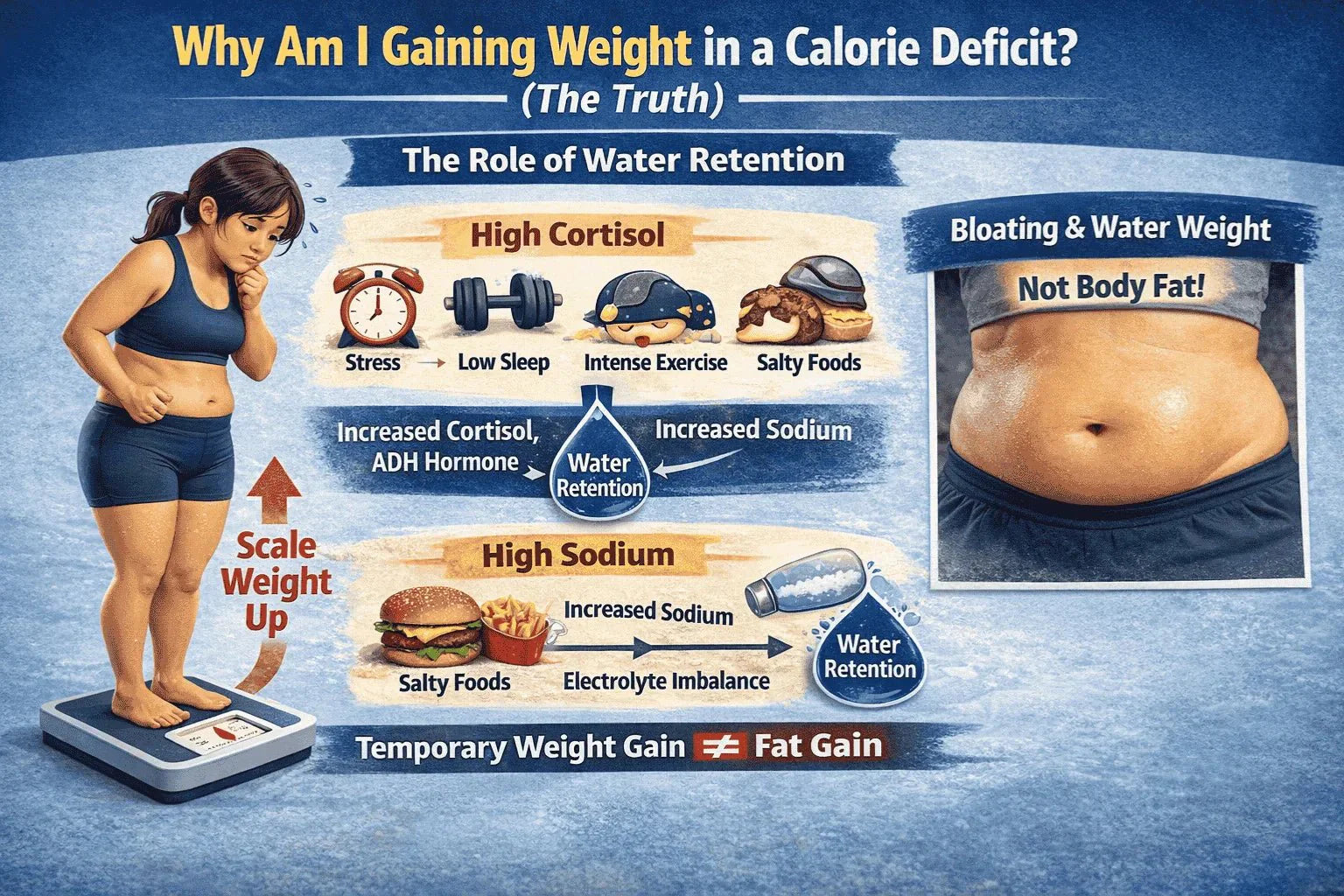
Weight gain during a deficit is almost always caused by water retention (due to cortisol, sodium, or glycogen), digestive food mass, or muscle growth. However, if the weight increase persists for more than 3–4 weeks, you are likely not in a true calorie deficit due to tracking errors, metabolic adaptation, or overestimating exercise burn.
Key Takeaway: Fat loss requires a sustained deficit over time, but scale weight fluctuates daily due to biology.
1. The Core Concept: Weight vs. Fat
To understand why the scale is going up, you must distinguish between Body Weight and Body Fat.
The Calorie Deficit Formula:
-
Calorie Deficit = Fat Loss (This is a physiological law).
-
Calorie Deficit ≠ Weight Loss (This is where confusion happens).
Your scale weight is a combination of five distinct things:
-
Fat (The tissue you want to lose)
-
Muscle (Dense tissue you want to keep)
-
Water (Highly variable)
-
Glycogen (Stored carbohydrates in muscles)
-
Digestive Mass (Food and waste currently in your gut)
You can be losing #1 (Fat) while gaining #3 (Water) or #5 (Waste), causing the scale to go up even though you are getting leaner.
2. The 7 Real Reasons You Are "Gaining Weight"
If your math is right, one of these physiological factors is the culprit.
Reason 1: Water Retention (The Most Common Culprit)
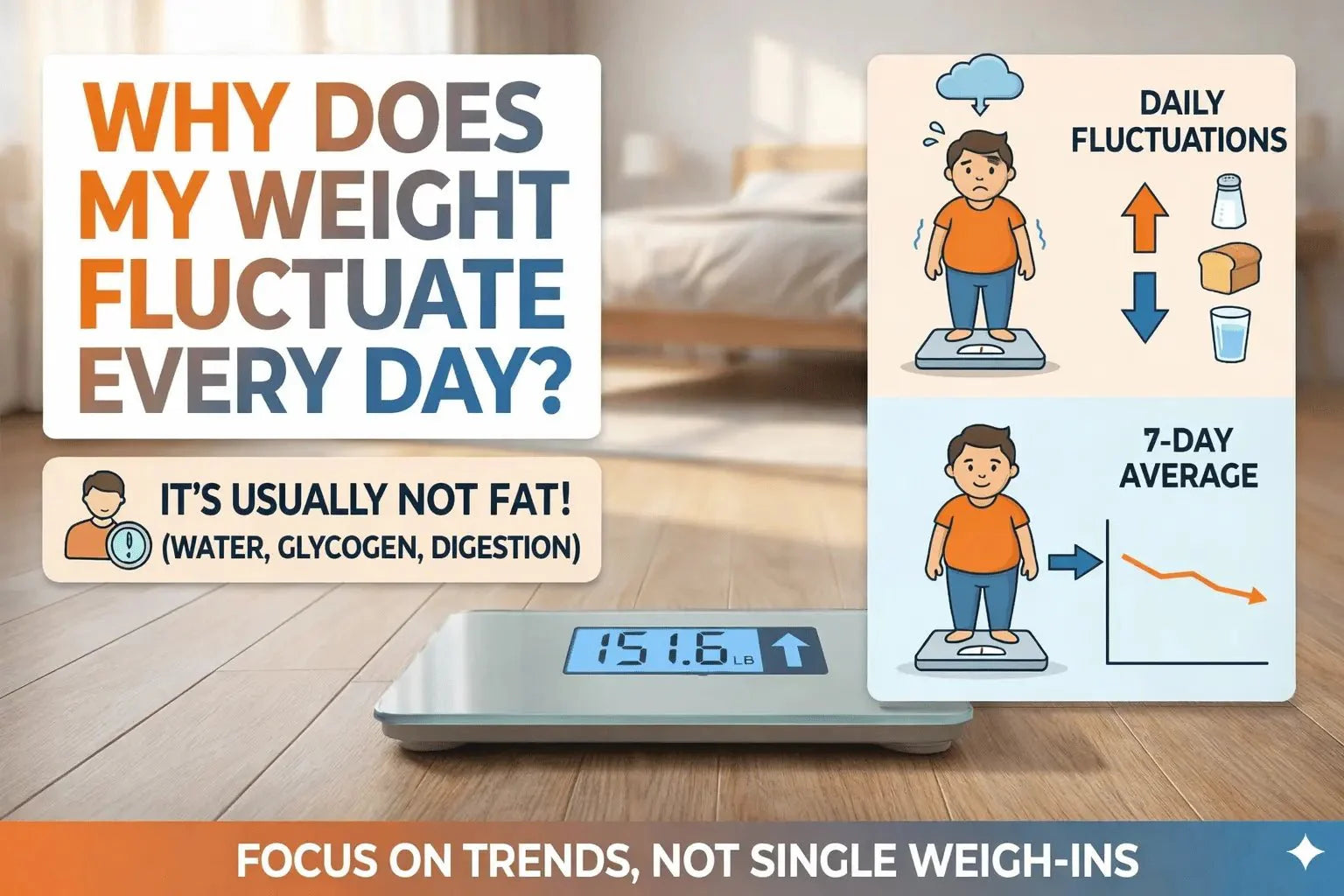
Water weight can cause fluctuations of 2–10 lbs (1–5 kg) within a single week.
-
Cortisol (Stress Weight): Dieting is a stressor. If you combine low calories with high-intensity exercise or lack of sleep, your body releases cortisol. Cortisol increases antidiuretic hormone (ADH), causing your body to hoard water.
-
Carbohydrates & Glycogen: For every 1 gram of carbohydrate stored in your muscle as glycogen, your body stores approximately 3 to 4 grams of water. A high-carb meal can cause an immediate, temporary spike.
-
Sodium Spikes: A salty meal causes the kidneys to retain water to maintain electrolyte balance.
Reason 2: Muscle Gain (Body Recomposition)
If you are new to lifting weights or returning after a break, you are likely building muscle while losing fat.
-
Density Difference: Muscle is denser than fat. You may look smaller and fit into tighter clothes while the scale number stays the same or rises.
-
Exercise Inflammation: Resistance training creates micro-tears in muscle fibers. The repair process involves inflammation, which draws fluid into the muscle cells. This is "good" weight.
Reason 3: Digestive Content (Gut Mass)
Weight is also the physical mass of the food inside you.
-
Food Volume: Many dieters switch to high-volume, low-calorie foods (like huge salads or broccoli). These weigh more physically than processed, calorie-dense foods, sitting in your gut longer.
-
Constipation: Changes in fiber intake can slow digestion. If you haven't had a bowel movement, that waste mass is still part of your total body weight.
Reason 4: The "Hidden" Surplus (Tracking Errors)
If you have been gaining weight for 3+ weeks, the hard truth is that you may not be in a deficit. Studies show people underestimate calorie intake by 30–50%.
-
The "Lick, Bite, Taste" Factor: Cooking oils, salad dressings, and finishing the kids' leftovers often go un-tracked.
-
Overestimating Exercise: Wearables (Apple Watch, Fitbit) often overestimate calories burned by up to 90%. If you "eat back" the calories your watch says you burned, you are likely in a surplus.
Reason 5: Stress and Poor Sleep
Sleep deprivation is a metabolic disaster.
-
Hormonal Shift: Sleeping less than 6 hours increases Ghrelin (hunger hormone) and cortisol.
-
Insulin Sensitivity: Poor sleep makes your body less efficient at processing glucose, leading to more water retention and a harder time oxidizing fat.
Reason 6: Metabolic Adaptation
As you lose weight, your body fights to save energy. This is not "starvation mode" (which is a myth), but adaptive thermogenesis.
-
Lower BMR: A smaller body requires fewer calories to exist.
-
Reduced NEAT: Non-Exercise Activity Thermogenesis (fidgeting, pacing, standing) unconsciously drops when calories are low. Your "maintenance" calories today might be lower than they were three months ago.
Reason 7: Medical & Hormonal Factors
In specific cases, underlying conditions lower your TDEE (Total Daily Energy Expenditure), making standard calculators inaccurate.
-
Hypothyroidism: An underactive thyroid slows metabolic rate.
-
PCOS: Insulin resistance can make fat loss slower (though not impossible).
-
Menstrual Cycle: It is normal for women to gain 3–5 lbs of water weight during the luteal phase (the week before a period).
3. How to Know If You Are Actually Losing Fat
Stop looking at the scale in isolation. Use these metrics instead:
| Metric | What to Look For |
| Weekly Averages | Compare the average weight of Week 1 vs. Week 4. Ignore daily spikes. |
| Measurements | Are your waist, hips, and thighs shrinking? If yes, you are losing fat. |
| Clothing Fit | Do pants feel looser around the waist? |
| Photos | Take photos in the same lighting every 2 weeks. Visual changes often appear before scale changes. |
4. The Checklist: What To Do Next
If the scale has gone up, follow this step-by-step protocol before panic-cutting your calories.
-
Wait it out: Has it been less than 2 weeks? Ignore it. It is likely water or digestion.
-
Check your Sodium/Carbs: Did you have a salty meal or a "cheat meal" yesterday? Drink water and wait 2 days.
-
Audit your Tracking: Start weighing food in grams rather than using cups/spoons. Stop eating back exercise calories.
-
Prioritize Sleep: Aim for 7+ hours to flush out cortisol-induced water retention.
-
Consult a Nutritionist: If you have been in a strict, verified deficit for 4+ weeks with zero change in weight or measurements, get bloodwork done to check thyroid and hormone levels.
Final Thought
"Fat loss is not linear. It is a jagged line trending downwards."
Do not let a 2-pound spike ruin your consistency. If you are in a deficit, the fat is burning, even if the water is hiding it.
Frequently Asked Questions (FAQ)
Can starvation mode cause weight gain?
No. "Starvation mode" refers to metabolic adaptation, which can slow weight loss, but it cannot create fat out of nothing. You cannot gain fat mass without a calorie surplus.
Why did I gain weight overnight in a deficit?
It is physically impossible to gain pounds of fat overnight. Overnight weight gain is 100% water retention, food mass, or bladder content.
Why do I look leaner but weigh more?
This is the "Whoosh Effect" or Body Recomposition. You are losing low-density fat and gaining high-density muscle or temporarily holding water. This is a sign of success, not failure.
Does Creatine cause weight gain?
Yes. Creatine pulls water into the muscle cells. This increases scale weight, but it improves performance and makes muscles look fuller. It is not fat gain.
We rely on peer-reviewed studies and reputable medical journals.