



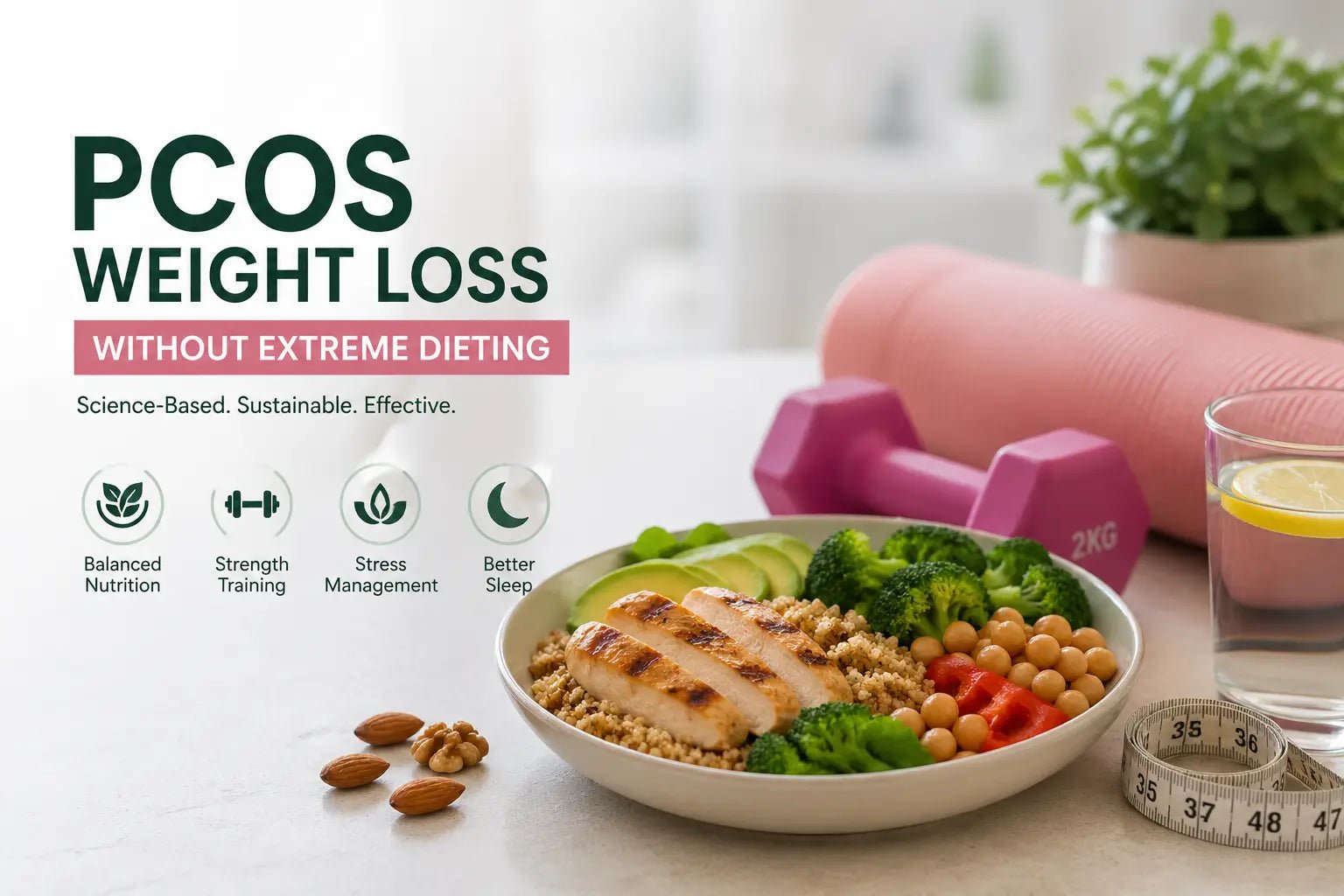
How to Lose Weight with PCOS Without Extreme Dieting (Science-Based Guide)
Sustainable PCOS weight loss is possible without extreme dieting by focusing on insulin balance, high-protein nutrition, strength training, and stress control. Even modest, consistent lifestyle changes can significantly improve hormones, metabolism, and overall symptoms.
Yes, you can lose weight with PCOS without extreme dieting.
The most effective approach is:
- A moderate calorie deficit (not starvation)
- High-protein, high-fiber meals to stabilize blood sugar
- Strength training + daily movement
- Sleep and stress management to control cortisol
- Addressing insulin resistance, the root driver
👉 Even 5–10% weight loss can significantly improve hormones, ovulation, and symptoms.
Bottom line: Sustainable habits work better than restrictive diets.
What Is PCOS and Why Weight Loss Feels Harder
Polycystic Ovary Syndrome (PCOS) is a hormonal and metabolic disorder that affects ovulation, insulin function, and fat storage.
Weight loss is more difficult, not because of lack of effort, but due to underlying physiological mechanisms:
1. Insulin Resistance (Primary Driver)
- Up to 70% of women with PCOS have insulin resistance
- Cells don’t respond properly to insulin
- The body produces more insulin (hyperinsulinemia)
Result:
- Fat storage increases (especially belly fat)
- Hunger and cravings rise
- Fat burning is suppressed
2. Hormonal Imbalance (Androgens)
Elevated insulin increases androgen levels (testosterone):
- Promotes abdominal fat storage
- Reduces metabolic efficiency
- Affects muscle development
3. Cortisol (The Hidden Blocker)
Extreme dieting and intense exercise increase cortisol:
- Raises blood sugar
- Worsens insulin resistance
- Signals the body to store fat
4. Appetite & Energy Dysregulation
PCOS affects hunger hormones:
- Increased ghrelin (hunger hormone)
- Reduced satiety signals
👉 Leads to cravings, overeating, and fatigue
Why Extreme Dieting Backfires in PCOS
Crash diets may cause short-term weight loss, but worsen PCOS long-term.
What Happens Physiologically:
- 🔻 Metabolism slows (adaptive thermogenesis)
- 🔺 Hunger hormones increase
- 💪 Muscle loss reduces fat-burning capacity
- 🔁 Rebound weight gain is likely
👉 In PCOS, extreme dieting amplifies insulin resistance + cortisol imbalance
The Science-Based Framework That Actually Works
1. Moderate Calorie Deficit (Not Starvation)
- Target: 300–500 kcal/day deficit
- Avoid going below ~1200–1400 kcal (for most women)
- Focus on consistency over perfection
2. Protein: The Foundation of PCOS Fat Loss
Target: ~1.2–1.6 g/kg body weight
Why it works:
- Stabilizes blood sugar
- Reduces cravings
- Preserves muscle mass
- Increases calorie burn (thermic effect)
Best sources:
- Eggs, chicken, fish
- Greek yogurt
- Lentils, chickpeas
3. Smart Carbs (No Need to Cut Carbs)
You do not need a low-carb or keto diet.
Instead:
- Choose low-glycemic, high-fiber carbs
- Always pair carbs with protein or fat
Examples:
- Oats, brown rice, quinoa
- Fruits, vegetables
- Legumes
👉 Avoid “naked carbs” (carbs alone → insulin spike)
4. Fiber: The PCOS Super Nutrient
Target: 25–35g/day
Benefits:
- Slows glucose absorption
- Improves insulin sensitivity
- Supports hormone balance
5. Healthy Fats (Hormone Support)
- Avocado
- Nuts & seeds
- Olive oil
- Fatty fish (omega-3s)
👉 Help reduce inflammation and support endocrine function
6. The PCOS Plate Method (Simple & Effective)
Structure every meal like this:
- ½ plate → vegetables
- ¼ plate → protein
- ¼ plate → carbohydrates
- Add → healthy fats
👉 This automatically balances blood sugar and appetite
Best Exercise Plan for PCOS Weight Loss
1. Strength Training (Most Important)
- 2–4 sessions per week
- Builds muscle → improves insulin sensitivity
👉 Muscle acts as a glucose sink, reducing blood sugar
2. Walking (Highly Effective)
- Target: 7,000–10,000 steps/day
- Lowers blood sugar and cortisol
3. Cardio (Moderate, Not Extreme)
- 2–3 sessions/week
- Cycling, jogging, swimming
⚠️ Avoid excessive HIIT if it increases stress or fatigue
Sleep & Stress: The Missing Links
Sleep
- Aim for 7–9 hours/night
- Even one poor night reduces insulin sensitivity
Stress
Chronic stress:
- Raises cortisol
- Increases cravings
- Promotes fat storage
Simple strategies:
- Daily walking
- Deep breathing
- Reducing screen time
Supplements (Evidence-Based, Optional)
⚠️ Always consult a healthcare professional.
Most supported:
- Myo-inositol + D-chiro-inositol (40:1 ratio)
- Omega-3 fatty acids
- Vitamin D
- Magnesium
Avoid:
- Fat burners
- Detox teas
- “Hormone reset” products
How Much Weight Loss Is Enough?
You don’t need dramatic results.
👉 5–10% body weight loss can:
- Improve ovulation
- Regulate cycles
- Reduce insulin resistance
- Improve fertility
Focus on:
- Waist measurement
- Energy levels
- Cycle regularity
—not just the scale
Common Mistakes That Slow PCOS Weight Loss
- Eating too little
- Overdoing cardio, skipping strength training
- Low protein intake
- Ignoring sleep and stress
- Expecting fast results
👉 PCOS weight loss is slower—but more sustainable.
When to See a Doctor
Once the signs of PCOS appears then you need to see doctor. These are the common signs that you must see a doctor.
- Irregular or absent periods
- Rapid unexplained weight gain
- Fertility concerns
- Signs of thyroid or metabolic disorders
Book an appointment with our consultant.
You may benefit from:
- Medical evaluation
- Insulin-sensitizing treatments (e.g., metformin)
- Professional nutrition guidance
FAQs
Can I lose weight with PCOS without dieting?
Yes. Focus on structured, balanced eating—not extreme restriction.
Do I need to cut carbs?
No. Choose high-fiber carbs and combine them with protein and fats.
Why is belly fat stubborn in PCOS?
Due to insulin resistance and elevated cortisol levels.
Is intermittent fasting good for PCOS?
It may help some, but blood sugar stability and consistency matter more.
How long does weight loss take with PCOS?
Expect noticeable changes in 8–16 weeks with consistency.
Can PCOS improve without weight loss?
Yes. Lifestyle changes can improve symptoms even without major weight loss.
Final Takeaway
You can lose weight with PCOS without extreme dieting.
The real strategy is:
- Stabilize blood sugar
- Support hormones
- Build muscle
- Reduce stress
👉 Sustainable habits outperform extreme diets—every time.
We rely on peer-reviewed studies and reputable medical journals.