


Best Foods for Diabetes: What to Eat and What to Avoid
Learn which foods to eat more often and which foods to limit with diabetes. Includes practical Pakistani guidance for rice, roti, fruit, breakfast, snacks, and drinks.
If you have diabetes or prediabetes, the best foods are usually non-starchy vegetables, protein foods, beans and lentils, higher-fibre carbohydrates, whole fruit, nuts, seeds, and unsweetened drinks. You do not need to ban rice, roti, fruit, milk, or daal. What matters most is the portion, the balance of the meal, how often you eat it, and how your own blood glucose responds.
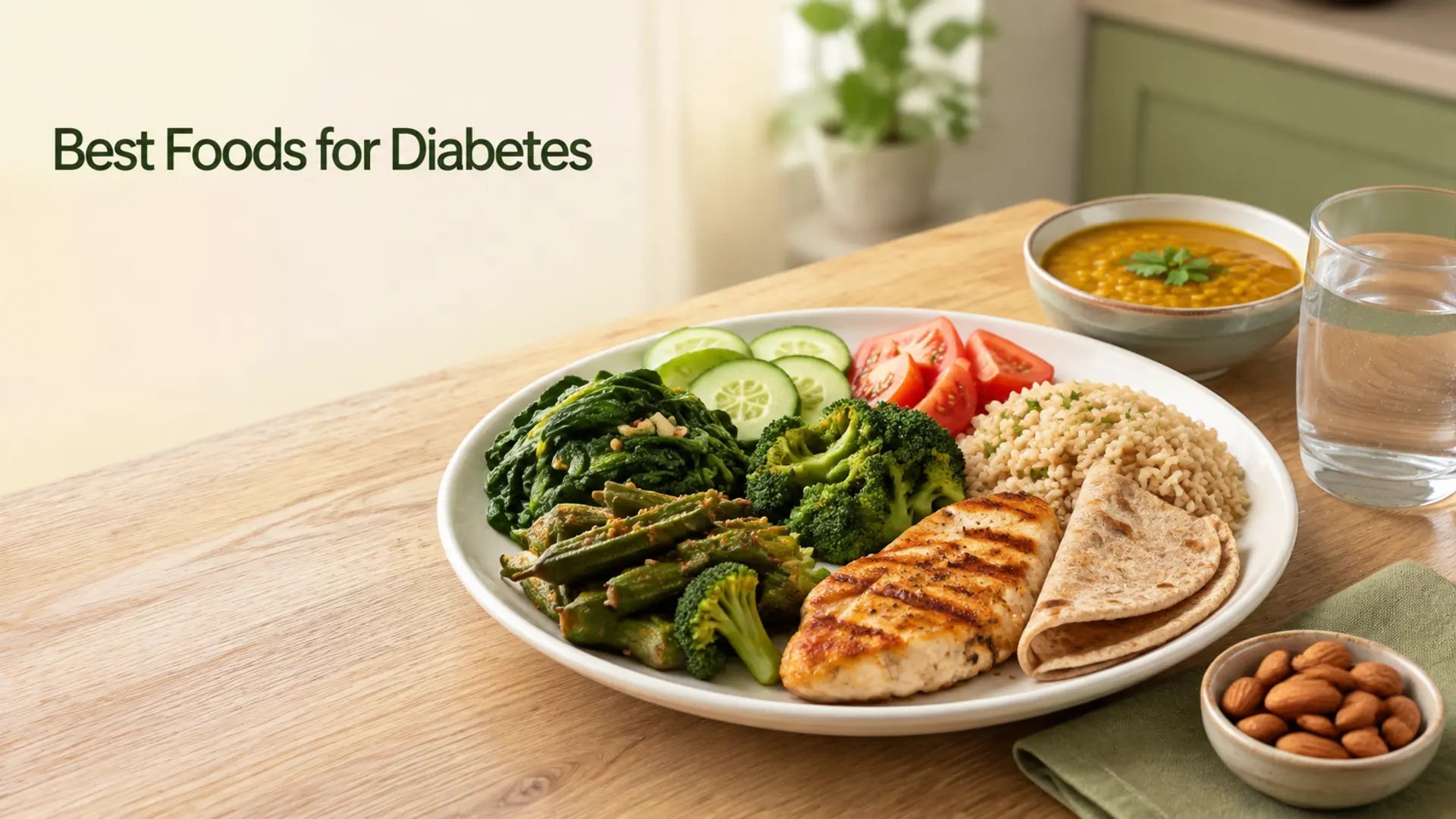
A simple starting point is the Diabetes Plate: fill half your plate with non-starchy vegetables, one-quarter with protein, and one-quarter with carbohydrate foods. Limit sugary drinks, large portions of refined carbohydrates, sweets, deep-fried foods, and heavily processed snacks. There is no single perfect diabetes diet; the best pattern is one you can afford, enjoy, repeat, and fit safely with your medicines and health needs.
This guide is for medically stable adults with type 2 diabetes or prediabetes. It provides general nutrition education, not a personal diet prescription. Do not stop or change insulin or diabetes medicines because of food advice alone.
Quick food guide for diabetes
| Eat more often | Choose in sensible portions | Limit more often |
|---|---|---|
| Non-starchy vegetables: palak, bhindi, tori, tinda, gobhi, cabbage, cucumber and salad | Whole fruit: guava, apple, orange, pear, papaya, mango, banana and dates | Soft drinks, sharbat, energy drinks, sweet lassi and packaged juice |
| Protein: eggs, fish, chicken, plain yoghurt, tofu and lean meat | Whole-wheat roti, oats, barley, rice, potatoes, milk and yoghurt | Mithai, cakes, biscuits, sweet bakery foods and chocolate eaten often |
| Daal, chana, lobia, rajma, beans and lentils | Nuts, seeds, avocado and oils used in modest amounts | Large portions of white rice, naan, paratha, white bread, fries and chips |
| Water, unsweetened tea and unsweetened coffee | Foods you genuinely enjoy and can repeat | Deep-fried snacks, packaged namkeen, processed meat and salty fast food |
“Limit” does not mean “never.” A food can fit sometimes. The important questions are: How much? How often? What else is on the plate?
How food affects blood sugar
Carbohydrates break down into glucose. This includes sugar, but it also includes rice, roti, bread, potatoes, fruit, milk, daal, beans, and lentils. That does not make these foods bad. It means they need a planned place in your meals.
The type and amount of carbohydrate matter. Fibre-rich foods, sensible portions, and meals that include vegetables and protein are often more filling and may produce a steadier glucose response than a large carbohydrate-heavy meal eaten on its own. Eating carbohydrates with protein, fat, or fibre can slow how quickly blood glucose rises, but it does not cancel out the carbohydrate in the meal.
No food, spice, tea, powder, or supplement replaces diabetes medicine. If you use insulin or medicines that can cause low blood sugar, meal timing and carbohydrate intake need extra care.
Use the Diabetes Plate to build a balanced meal
The Diabetes Plate is a practical way to plan meals without counting every calorie. Start with a normal plate, ideally about nine inches wide.
- Fill half the plate with non-starchy vegetables. Examples: palak, bhindi, karela, cabbage, cauliflower, cucumber, tomato, capsicum, salad, mushrooms, and mixed vegetables.
- Fill one-quarter with protein. Examples: fish, chicken without skin, eggs, lean meat, tofu, plain yoghurt, paneer in a modest amount, or a pulse-based dish.
- Fill one-quarter with carbohydrate food. Examples: whole-wheat roti, a measured serving of rice, oats, potato, corn, fruit, milk, yoghurt, beans, or lentils.
- Choose water or an unsweetened drink.
This is a starting point, not a prescription. A person using mealtime insulin, living with kidney disease, trying to gain weight, or managing pregnancy may need a different plan.
Best foods for diabetes
1. Non-starchy vegetables
Non-starchy vegetables are a strong base for most meals. They provide fibre, vitamins, minerals, and volume with relatively few carbohydrates. Aim to make them the largest part of lunch and dinner.
Good choices include:
- Palak, methi, saag, lettuce, cabbage, and other leafy greens
- Bhindi, tori, tinda, karela, baingan, zucchini, and mushrooms
- Cauliflower, broccoli, capsicum, green beans, and mixed vegetables
- Cucumber, tomato, radish, carrots, and salad vegetables
How you cook them matters. A lightly cooked sabzi, salad, soup, or stir-fry is different from a vegetable dish made with a large amount of oil, cream, butter, sugar, or salt.
2. Protein foods
Protein helps make meals satisfying and can help balance meals that contain carbohydrates. Try to include a protein food at breakfast, lunch, and dinner where practical.
Useful options include eggs, fish, chicken without skin, lean meat, plain yoghurt, milk, tofu, soy, lentils, beans, chickpeas, and peas. Grilling, baking, steaming, air-frying, and using less oil are generally better everyday methods than deep-frying.
If you have kidney disease, do not start a high-protein diet on your own. Your protein target may be different.
3. Daal, chana, beans, and lentils
Daal, chana, rajma, lobia, and beans are affordable, familiar foods that provide both protein and fibre. They also contain carbohydrate. A large bowl of daal plus a large serving of rice and several rotis can still be a high-carbohydrate meal.
Use pulses as part of a balanced plate. For example, pair daal with salad or sabzi and a sensible serving of rice or roti. If you use canned beans, rinse them to reduce extra salt.
4. Higher-fibre carbohydrate foods
Carbohydrates are not the enemy. The goal is to choose less processed sources more often and control the portion.
Better everyday options include:
- Whole-wheat atta roti or chapati
- Oats or porridge without added sugar
- Barley (jau)
- Brown rice or parboiled rice, if you enjoy it
- Whole-grain bread with a short, clear ingredient list
- Beans, chickpeas, lentils, and peas
- Sweet potato in a controlled portion
“Brown” or “multigrain” on a packet does not automatically make a food high in fibre. Check the ingredient list, nutrition label, and serving size.
5. Whole fruit
Yes, people with diabetes can eat fruit. Whole fruit contains carbohydrate, but it also provides fibre, water, vitamins, and minerals. It is usually a better everyday choice than juice because juice is easy to drink in a large amount and contains much less fibre.
Good everyday choices include guava, apple, orange, pear, papaya, berries, peach, plum, and melon. Mango, banana, grapes, chikoo, dates, and watermelon can also fit; portions matter because they are easy to overeat.
Choose whole fruit rather than juice. A piece of fruit with plain yoghurt, nuts, or a balanced meal may be more satisfying than fruit alone. Dried fruit is concentrated: a small amount can contain as much carbohydrate as a much larger serving of fresh fruit.
6. Healthy fats
People with diabetes also need to protect heart health. Choose mostly unsaturated fats and keep saturated and trans fats lower.
Useful choices include nuts, seeds, peanuts, fish, avocado, olive oil, canola oil, and mustard oil used in modest amounts. Nuts are nutritious but energy-dense, so a small handful is enough for most people.
7. Milk, yoghurt, and dairy alternatives
Milk and yoghurt contain carbohydrate, so count them as part of your meal or snack. Plain yoghurt is usually a better everyday choice than sweetened flavoured yoghurt, sweet lassi, milkshakes, or dessert drinks.
Choose a dairy option that fits your calorie needs, heart health, and food preferences. Do not assume every product labelled “sugar-free” is healthy; it may still be high in saturated fat, carbohydrate, sodium, or calories.
8. Drinks that are better for diabetes
Water is the best everyday drink. Other suitable options include unsweetened tea, black coffee without sugar, soda water, and plain milk in an appropriate portion.
Soft drinks, sweet tea, sweet lassi, milkshakes, packaged juices, energy drinks, sharbat, and sweetened coffees can raise blood glucose quickly. Juice is not a replacement for whole fruit.
Foods to limit with diabetes
Sugary drinks
Sugary drinks are one of the easiest ways to consume a large amount of carbohydrate without feeling full. Make water your default drink and keep regular soft drinks, fruit drinks, energy drinks, sweetened iced tea, and packaged juice for rare occasions.
For flavour, try mint, lemon, cucumber, or a small amount of fruit in water without adding sugar.
Sweets, mithai, cakes, and biscuits
You do not need to pretend a person with diabetes can never eat mithai. That rule is unrealistic for most people and can create guilt. But sweets should be occasional, portion-controlled foods, not a daily snack.
If you have dessert, keep the portion small and avoid stacking several carbohydrate-rich foods at the same meal. A small dessert after a balanced meal is different from a large biryani meal plus a sweet drink plus dessert.
Refined carbohydrates in large portions
White rice, white bread, naan, paratha, bakery buns, noodles, and fries are not automatically forbidden. The problem is often oversized portions and meals that contain too little protein and vegetables.
Instead of banning them, reduce the portion and add vegetables and protein. This is more practical than a rule you cannot follow.
Deep-fried, processed, and high-salt foods
Pakoras, samosas, fries, chips, commercial bakery snacks, instant noodles, processed meat, packaged soups, and salty snacks are often high in refined carbohydrate, salt, unhealthy fat, or all three. High blood pressure is common in people with diabetes, so salt also matters.
Keep these foods occasional rather than routine meals.
Common food questions: rice, roti, fruit, and potatoes
Can people with diabetes eat rice?
Yes. Rice can fit into a diabetes diet. The question is not whether rice is “allowed”; it is how much you eat, what you eat with it, and how it affects your blood glucose.
A large plate of white rice with little protein or vegetables may raise blood glucose more than a measured serving of rice with chicken, fish, daal, salad, or sabzi. Brown rice and parboiled rice can be useful options for some people, but they are not magic foods. They still contain carbohydrate and still need a reasonable portion.
Practical starting point: reduce the rice portion, increase vegetables, and add protein. If you check blood glucose, discuss your readings and targets with your care team instead of guessing.
Can people with diabetes eat roti, chapati, naan, or paratha?
Yes. Whole-wheat atta roti or chapati can fit well into many diabetes meal plans. It is usually a better everyday choice than refined-flour naan or a very oily paratha, but the number and size of rotis still matter.
Pair roti with vegetables and protein. Avoid making a meal mostly roti with potato curry or sweet tea. Naan and paratha can be occasional choices, especially when the portion is smaller and the rest of the meal is balanced.
Can people with diabetes eat potatoes?
Yes, but potatoes are carbohydrate foods and should not take up most of the plate. Boiled, baked, roasted, or lightly cooked potato is usually a better everyday choice than fries or chips.
Use potato as one part of a mixed vegetable dish rather than making a large potato-only meal. Pair it with protein and non-starchy vegetables.
Can people with diabetes eat fruit?
Yes. Whole fruit is safe for most people with diabetes when eaten in a suitable portion. Do not avoid fruit just because it contains natural sugar. Whole fruit is different from juice, sweets, and soft drinks because it contains fibre and water.
Is banana safe for diabetes? Yes. A small banana is usually easier to fit into a meal plan than a very large one. Pair it with plain yoghurt, nuts, or a balanced meal if that suits you.
Can people with diabetes eat mango? Yes, but portion matters. Have a small serving of fresh mango rather than mango shake, mango juice, or a large bowl of mango pieces.
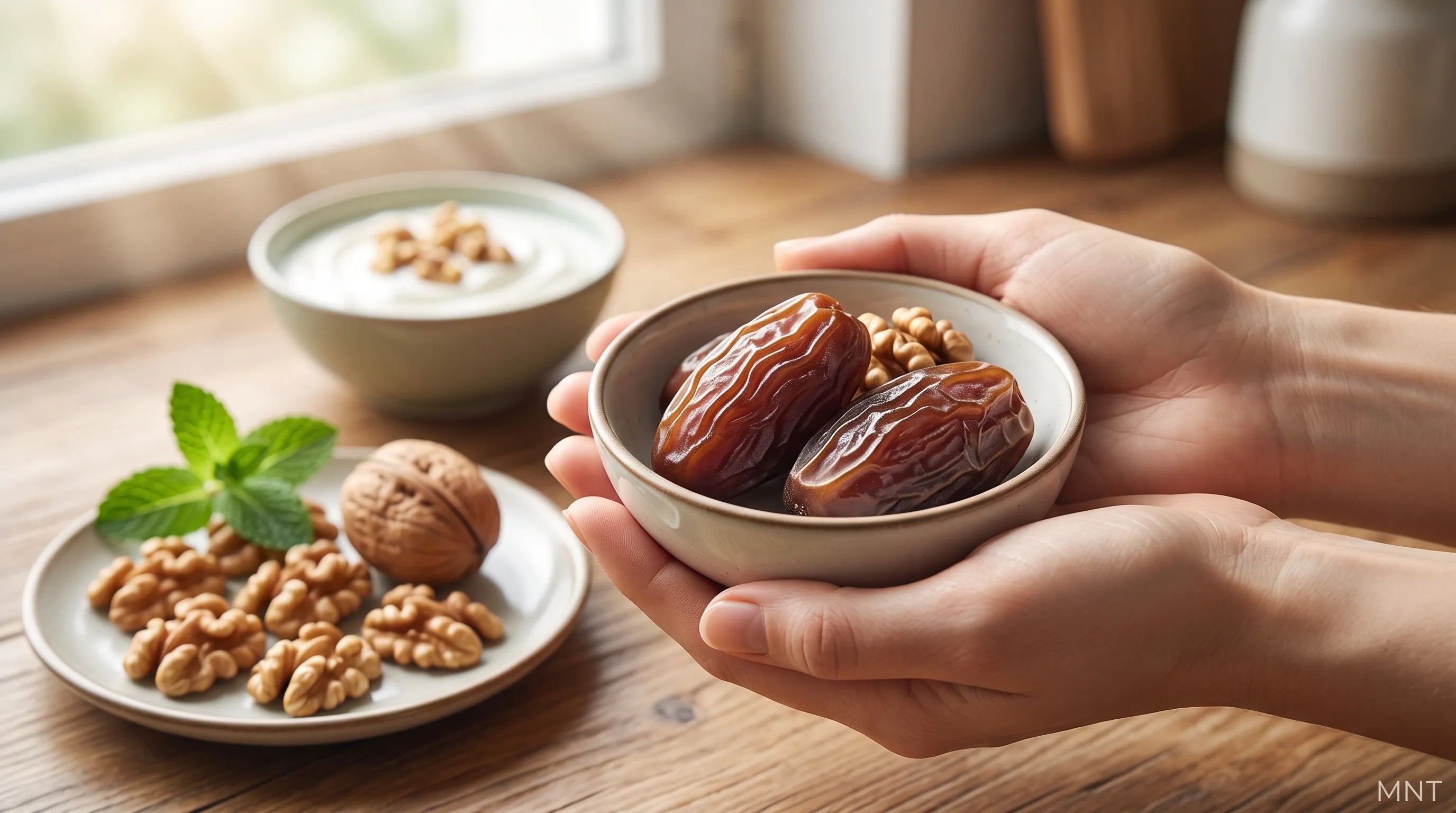
Are dates safe for diabetes? Dates are concentrated in sugar and carbohydrate. A small amount may fit, but dates are not “free” because they are natural and should not be treated as a blood-sugar remedy.
What should a person with diabetes eat for breakfast?
A useful diabetes breakfast includes protein, fibre, and a controlled amount of carbohydrate. Many common breakfasts are high in refined carbohydrate and low in protein, such as white bread with jam, several biscuits with sweet tea, or a large paratha.
Better breakfast ideas include:
- Vegetable omelette with one small whole-wheat roti and unsweetened tea
- Plain oats with milk or yoghurt, nuts, seeds, and whole fruit
- Chana chaat with vegetables and a modest serving of roti
- Plain yoghurt with fruit and nuts
- Leftover daal or chicken with vegetables and one small roti
- Whole-grain toast with egg, tomato, and cucumber
Commercial breakfast cereals are not automatically healthy. Many are high in added sugar and low in fibre.
Diabetes-friendly snack ideas
You may not need snacks if your meals keep you full and your medication plan does not require them. If you do need a snack, choose something with protein, fibre, or both.
- A small handful of unsalted nuts or peanuts
- Plain yoghurt
- Roasted chana
- One whole fruit with nuts
- Cucumber, carrots, or salad with hummus
- A boiled egg
- A small serving of leftover chicken, fish, or daal
Biscuits are common with tea, but they are usually refined carbohydrates with added sugar or fat. They are not the best default snack.
Pakistani meal swaps that work in real life
You do not need expensive “diabetic foods.” Better diabetes eating usually means changing the balance of familiar foods.
| Common meal or habit | More balanced approach |
|---|---|
| Large plate of biryani | Take a smaller rice portion, add raita or salad and a vegetable side, and skip the sweet drink |
| Paratha and sweet chai | Choose egg or vegetable filling with a smaller roti, plus unsweetened or less-sweet tea |
| Daal chawal with little else | Use a measured rice portion, a larger daal portion, and add salad or sabzi |
| Karahi with naan | Choose less-oily chicken, add salad, and use a smaller naan or roti portion |
| Tea with biscuits | Have unsweetened tea with nuts, roasted chana, yoghurt, or fruit |
| Fruit juice | Choose whole fruit and water |
The goal is not to make traditional food boring. It is to make everyday meals more balanced and repeatable.
How to read food labels for diabetes
Food labels help, but they do not replace portion awareness.
Serving size
All the numbers on the label apply to the listed serving size. If you eat two servings, you consume twice the carbohydrate, sugar, calories, and sodium.
Total carbohydrate
For blood glucose, total carbohydrate is usually more useful than looking only at “sugar.” Bread, cereal, milk, pulses, and rice crackers may have little added sugar but still contain carbohydrate.
Fibre
Higher-fibre foods are often more filling and can be useful choices. Compare similar products instead of assuming that one fibre target suits everyone.
Added sugar and sodium
Look for sugar, syrup, glucose, fructose, maltose, honey, jaggery, and other sweeteners in the ingredient list. Honey, brown sugar, and jaggery are still forms of sugar; they are not safe replacements to use freely.
Also compare sodium, especially if you have high blood pressure or kidney disease.
Glycaemic index: useful, but not a magic score
The glycaemic index, or GI, estimates how quickly a carbohydrate food may raise blood glucose when eaten by itself. It can be useful, but it is not enough to judge a whole meal.
Portion size, cooking method, fibre, protein, fat, ripeness, and what you eat with the food also matter. A low-GI biscuit can still be high in calories, unhealthy fat, or added sugar. Do not buy a product only because it says “low GI.”
How much carbohydrate should a person with diabetes eat?
There is no single amount that suits everyone. Your needs depend on body size, activity, diabetes medicines, weight goals, blood glucose targets, kidney health, and usual foods.
People who use mealtime insulin may need carbohydrate counting and an individual insulin-to-carbohydrate plan. Do not copy carbohydrate targets from social media or use another person’s insulin plan.
For many people, the Diabetes Plate is a safer starting point than an extreme diet. Current diabetes guidance supports several eating patterns, including Mediterranean-style, plant-based, lower-carbohydrate, and DASH-style approaches, when they are personalised and nutritionally sound.
One-day Pakistani meal example
This is an example of meal balance, not a fixed diet chart. Your own portions may need to be different.
- Breakfast: Vegetable omelette, one small whole-wheat roti, and unsweetened tea.
- Mid-morning, if hungry: One guava or apple with a small handful of nuts.
- Lunch: Half plate salad and sabzi, grilled chicken or daal, and one or two small rotis or a measured serving of rice.
- Afternoon snack, if needed: Plain yoghurt or roasted chana.
- Dinner: Fish, chicken, or daal with cooked vegetables and a controlled serving of rice or roti.
- Drinks: Water through the day; avoid soft drinks and sweetened beverages.
Common myths about foods for diabetes
“People with diabetes must never eat sugar.”
False. Added sugar should be limited, especially in drinks and large desserts, but an absolute ban is not the only way to manage diabetes. Portion, frequency, the full meal, medication, and glucose response all matter.
“Rice and roti are completely forbidden.”
False. Both are carbohydrate foods and can fit in suitable portions. The problem is often oversized portions and meals with too little protein and vegetables.
“Fruit is bad because it contains sugar.”
False. Whole fruit can be part of a balanced diabetes diet. Fruit juice and dried fruit need more caution because they are easy to consume in a large amount.
“Honey, brown sugar, and jaggery are safe for diabetes.”
False. They may sound more natural, but they still raise blood glucose and should not be used freely.
“A food, tea, spice, or supplement can cure diabetes.”
False. No food or supplement has been proven to cure diabetes. Be cautious of products that promise to reverse diabetes, replace medicine, or lower glucose quickly without medical care.
When general food advice is not enough
Speak with a qualified healthcare professional or diabetes dietitian if you have frequent low blood sugar, persistent high readings, kidney disease, pregnancy or gestational diabetes, type 1 diabetes, major unplanned weight loss, an eating disorder, or several medical conditions.
Get urgent medical care for severe low blood sugar, signs of diabetic ketoacidosis, chest pain, stroke symptoms, severe vomiting, confusion, or sudden deterioration. Do not try to manage these problems with food advice or online messages.
Frequently asked questions
What are the best foods for diabetes?
The best foods for diabetes are usually non-starchy vegetables, protein foods, higher-fibre carbohydrates, pulses, whole fruit, healthy fats, and unsweetened drinks. There is no single “superfood.” The goal is a balanced eating pattern you can follow consistently.
What foods should people with diabetes avoid?
Avoid making sugary drinks, sweets, large refined-carbohydrate portions, deep-fried foods, and highly processed snacks part of your daily routine. You do not need to ban every food forever, but these foods should be less frequent and smaller in portion.
Is daal good for diabetes?
Daal can be a useful food because it provides fibre and protein. It also contains carbohydrate, so include it as part of a balanced meal rather than treating it as unlimited food.
Is milk good for diabetes?
Milk can fit into a diabetes meal plan, but it contains carbohydrate. Plain milk and plain yoghurt are usually better choices than sweetened dairy drinks or flavoured yoghurt. The suitable amount depends on your whole diet and health needs.
Is fasting safe for people with diabetes?
Fasting can raise the risk of low or high blood glucose for some people, especially those using insulin or medicines that can cause low blood sugar. Get individual medical and dietitian advice before fasting. Do not change medicines by yourself.
Can diabetes be controlled with food alone?
Some people with type 2 diabetes may improve blood glucose through food, activity, weight management, and medical care. Others need medicine, insulin, or both. Food does not replace prescribed treatment, and no diet can guarantee diabetes reversal.
We rely on peer-reviewed studies and reputable medical journals.