



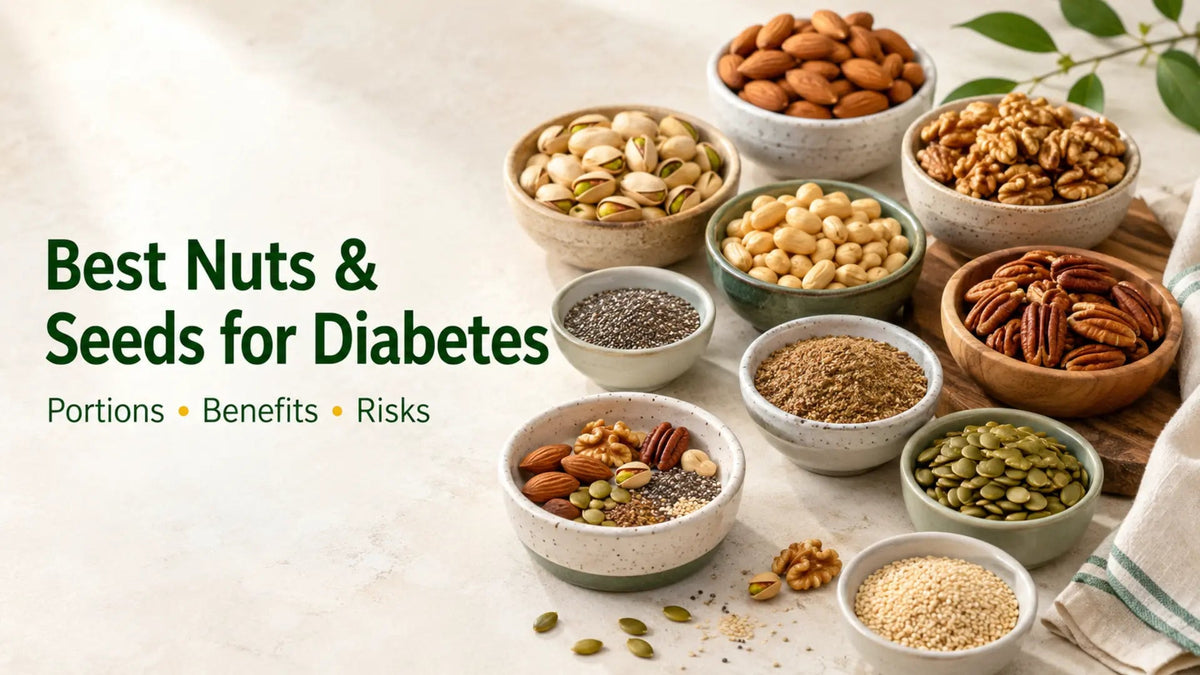
Best Nuts and Seeds for Diabetes: Portions, Benefits & Risks
Plain, unsalted nuts and seeds can fit a diabetes-friendly diet. Learn the best choices, safe portions, blood-sugar effects, benefits, and key risks.
Quick answer
Yes. Most people with diabetes can eat nuts and seeds. The best choices are usually plain, unsalted almonds, walnuts, pistachios, peanuts, pecans, chia seeds, ground flaxseed, pumpkin seeds, and sesame seeds.
Start with one measured portion:
- Whole nuts: about 1 ounce (28–30 g), or one small handful. Depending on the nut, this is about 23 almonds, 12–14 walnut halves, 49 pistachios, 28–35 peanuts, 15 pecan halves, or 18 cashews.
- Seeds: start with 1 tablespoon. You may use up to 1–2 tablespoons if it fits your eating plan and your digestion tolerates the extra fiber.
- Nut butter: measure the serving instead of eating from the jar. One tablespoon is a useful starting point; many labels list 2 tablespoons as a serving.
Choose nuts and seeds instead of biscuits, chips, sweets, or other refined snacks. Adding a large handful on top of your usual meals may raise total calories and make weight or glucose goals harder. Nuts and seeds contain fiber, protein, and mostly unsaturated fats, but they still contain calories and some carbohydrate.
There is no single best nut for everyone, and no nut or seed can reliably lower blood sugar on its own. The food you replace, the portion you eat, and your overall diabetes plan matter more than choosing a “magic” variety.
Best nuts and seeds for diabetes at a glance
The whole-nut counts below are approximate 1-ounce portions from the American Diabetes Association’s portion guide. Counts vary slightly with nut size.
| Food | Practical starting portion | Why it can fit | Main thing to watch |
|---|---|---|---|
| Almonds (badam) | About 23 whole almonds | Fiber, protein, and unsaturated fat | Flavored, sugar-coated, or salted versions |
| Walnuts (akhrot) | About 12–14 halves | Unsaturated fat and plant omega-3 ALA | Measuring the portion because halves are easy to keep eating |
| Pistachios (pista) | About 49 kernels | A measured, satisfying snack; in-shell nuts may slow eating | Salt and large portions |
| Peanuts (moongphali) | About 28–35 peanuts | Affordable protein, fiber, and unsaturated fat | Salted peanuts, peanut brittle, and sugar-coated products |
| Pecans | About 15 halves | Very low in digestible carbohydrate compared with many snack foods | High calorie density |
| Cashews (kaju) | About 18 cashews | Can be part of a balanced snack or meal | They are not “free”; measure them and check the label |
| Chia seeds | Start with 1 tablespoon | Fiber and a gel-forming texture when mixed with liquid | Swallowing dry seeds and sudden large fiber increases |
| Ground flaxseed (alsi) | Start with 1 tablespoon | Fiber and plant omega-3 ALA | Use ground flax for easier access to its nutrients; drink enough fluid |
| Pumpkin seeds (kaddu ke beej) | About 1–2 tablespoons | Protein, fat, and minerals | Salted or heavily seasoned products |
| Sesame seeds or tahini | About 1 tablespoon | Adds flavor and unsaturated fat to meals | Sweetened sauces, large portions, and added salt |
Are nuts good for people with diabetes?
Usually, yes. Plain nuts can be a useful part of a diabetes eating pattern because they provide fat, fiber, and protein with relatively little carbohydrate compared with many packaged snacks. These nutrients may help a snack feel more filling and may slow how quickly a mixed meal is digested.
That does not mean nuts are carbohydrate-free or that they prevent a blood-sugar rise. The amount and type of carbohydrate in a nut or seed product varies. A sweet nut bar, nut brittle, or flavored trail mix can have a very different effect from a small portion of plain almonds.
The most useful question is often:
What food are the nuts replacing?
Replacing biscuits, fried chips, candy, or a sugary snack with a measured portion of plain nuts may improve the overall meal pattern. Adding nuts to the same snack and then eating the original food too can increase calories without reducing the original carbohydrate.
Which nuts are best for diabetes?
No variety wins for every person. The best nut is one you enjoy, can portion, can afford, and can eat safely within your medical plan.
Are almonds good for diabetes?
Yes. Almonds are a practical choice because they are widely available and provide fiber, protein, and unsaturated fat. A useful portion is about 23 whole almonds, or one ounce.
Use plain almonds as a snack instead of biscuits, or add a measured amount to yogurt or a salad. Soaking almonds may change texture, but it has not been shown to give them a special diabetes benefit. Choose the form you can portion consistently.
Are walnuts good for diabetes?
Yes. Walnuts contain unsaturated fats, including the plant omega-3 fat ALA. About 12–14 walnut halves is a common one-ounce reference portion.
Walnuts can fit into breakfast, yogurt, or a salad. Their heart-health profile makes them a useful option in an overall balanced eating pattern, but they should not be presented as a treatment for high blood sugar.
Are pistachios good for diabetes?
Yes. Pistachios can be a convenient snack when the portion is measured. About 49 kernels is a common one-ounce guide. Buying unsalted pistachios in the shell may make slow, mindful eating easier for some people.
Check labels on roasted, masala, and salted pistachios. “Roasted” does not automatically mean unhealthy, but added salt, oil, sugar, or flavor coatings can change the product.
Are peanuts good for diabetes?
Yes. Peanuts are legumes rather than tree nuts, but they can still fit the same practical role. About 28–35 peanuts is a common one-ounce portion. They are often a lower-cost choice for adding protein, fiber, and unsaturated fat.
Avoid confusing plain peanuts with peanut chikki, sugar-coated peanuts, sweetened peanut bars, or large servings of salted masala peanuts. These products may contain added sugar, syrup, refined starch, or excess sodium.
Are pecans good for diabetes?
Yes. Pecans are low in carbohydrate compared with many refined snack foods and can add flavor and crunch to meals. About 15 pecan halves is a common one-ounce portion.
Their low carbohydrate content does not make them calorie-free. Measure pecans when using them in oatmeal, salads, or snacks.
Can people with diabetes eat cashews?
Yes. Cashews are not forbidden for diabetes. They contain somewhat more carbohydrate per ounce than some other nuts, but a measured portion can still fit many meal plans.
About 18 cashews is a common one-ounce guide. If you use cashews in a curry, dessert, or snack mix, count the whole recipe and check for added sugar, cream, fried coating, or a large total portion.
What about hazelnuts, macadamias, and other nuts?
Hazelnuts, macadamias, Brazil nuts, and mixed nuts can also fit. Variety is reasonable, but there is no need to buy an expensive nut for a special blood-sugar effect. Keep the mix plain or lightly roasted, check the label, and measure the portion.
Brazil nuts deserve extra portion awareness because their selenium content can vary widely. They are not necessary for diabetes management, so avoid treating them as a supplement or eating large amounts every day.
Which seeds are best for diabetes?
Seeds can add fiber, texture, and unsaturated fat to meals. The research on specific seeds is still developing, and no seed should be described as a replacement for diabetes treatment.
Are chia seeds good for diabetes?
Chia seeds can fit into a diabetes-friendly diet. They absorb liquid and form a gel-like texture, which can add fiber to yogurt, porridge, or a smoothie. Start with 1 tablespoon and increase only if your digestion tolerates it.
Always mix chia seeds into a moist food or liquid. Do not swallow a dry spoonful if you have swallowing difficulty, a narrowed digestive tract, or another condition that makes thick or expanding foods unsafe.
A recent systematic review and meta-analysis of chia seed does not justify making chia a stand-alone treatment for diabetes. The practical benefit is using a measured amount in place of a less nutritious ingredient.
Are flaxseeds good for diabetes?
Flaxseed, also called alsi, provides fiber and plant omega-3 ALA. Ground flaxseed is usually easier to mix into yogurt, oats, or a meal than whole flaxseed.
Start with 1 tablespoon, drink enough fluid, and increase gradually if needed. A systematic review and meta-analysis of flaxseed in type 2 diabetes reported a reduction in HbA1c, but this evidence does not replace a medical plan or justify large supplement doses.
Are pumpkin seeds good for diabetes?
Pumpkin seeds, or kaddu ke beej, can be a useful topping for salads, yogurt, soups, or a measured snack. They provide protein, fat, and minerals.
Choose unsalted or lightly salted pumpkin seeds. A “healthy” seed mix can still be high in sodium if it contains heavy seasoning, and a large handful can add substantial calories.
What about sesame, sunflower, hemp, basil, and black seeds?
Sesame seeds, tahini, sunflower seeds, and hemp seeds can fit in measured portions. Use them to add taste and texture to a meal, not as a reason to add extra calories to every meal.
Basil seeds, sometimes called tukhm-e-malanga, and black seed, or kalonji, are used traditionally in South Asian foods. Food-level amounts may fit an eating pattern, but evidence is not strong enough to call them diabetes cures or reliable substitutes for medicine. Concentrated oils and supplements may have different risks or interactions, so discuss them with a clinician before using them for a health purpose.
How much should you eat?
For most people, a practical reference is one ounce of whole nuts, about 28–30 grams, or one small handful. The Mayo Clinic also describes a small handful or 1 ounce as a typical nut portion.
Hand sizes vary, so measure the amount at home once or twice. Then use a small container or pre-portioned packet when possible. Do not eat directly from a large bag.
For seeds, 1 tablespoon is a useful starting point. Some people can tolerate 1–2 tablespoons, but more is not automatically better. Add fiber slowly and consider your total calories, digestive symptoms, and kidney-related restrictions.
A simple portion rule
Choose one of these for a snack:
- One measured portion of nuts.
- One measured portion of seeds.
- A smaller combination of nuts and seeds that stays within your planned snack amount.
- One tablespoon of unsweetened nut butter, or the measured serving that fits your plan.
If you combine a full handful of nuts with two tablespoons of seeds, you are eating two separate portions. That may be appropriate for some people, but it should be a planned choice rather than an automatic “healthy extra.”
Do nuts and seeds count toward carbohydrates?
Yes. Nuts and seeds usually contain less carbohydrate than biscuits, sweets, chips, or many granola bars, but they are not carbohydrate-free. Values vary by food, brand, preparation, and serving size.
If you count carbohydrates for insulin or medication planning, use the nutrition label or a reliable food database for the actual product. Do not rely on a generic “net carb” number copied from an online chart when accuracy matters.
Should you choose nuts and seeds by glycemic index?
Not usually. The glycemic index is designed for foods that contain carbohydrate, and results can change with serving size, processing, and the rest of a meal. Nuts and seeds are better judged by the actual portion, total carbohydrate, fiber, added sugar, sodium, and what they replace.
This is why a table that ranks every nut or seed by one fixed GI number can create false precision. Use the product label and your own care plan when glucose accuracy matters.
Do nuts and seeds lower blood sugar?
They may support better glucose management when they replace refined or sugary foods, but they do not reliably lower blood sugar as a medicine would.
Research is encouraging in some areas but mixed overall. A 2021 systematic review reported modest average improvements in fasting glucose and HbA1c with tree-nut intake. A 2019 meta-analysis found improvements in some insulin-resistance markers but did not find a significant improvement in HbA1c or fasting glucose. A PLOS One review also emphasized that benefits may depend on replacing higher-glycemic foods and that more robust trials are needed.
These differences matter. A study average is not a promise for one person. Blood sugar can also change because of medication, insulin, activity, sleep, illness, stress, meal composition, and portion size.
Why might they help?
Four ideas explain why nuts and seeds can be useful:
-
They slow a snack down. Fat, protein, and fiber can make a snack more filling than a refined carbohydrate by itself.
-
They can change the meal balance. Replacing a sugary or refined snack with nuts may reduce the total carbohydrate in that eating occasion.
-
They add unsaturated fat and fiber. These nutrients can support a heart-healthy eating pattern, which is important because diabetes raises cardiovascular risk.
-
They are easy to overeat. Their benefits do not cancel out the effect of a very large portion.
Do not use nuts or seeds to “cancel out” a sweet drink, dessert, or large serving of rice. Pairing foods does not erase carbohydrate.
Benefits beyond blood sugar
Nuts and seeds can contribute to:
- Heart-friendly eating: They provide mostly unsaturated fats and can replace foods higher in saturated fat or refined carbohydrate.
- Fullness: Their combination of fat, protein, and fiber may make a snack more satisfying.
- Fiber intake: Chia, flax, almonds, peanuts, and other choices can help increase fiber.
- Food variety: They add crunch and flavor to meals without relying on sugar.
They are still energy-dense foods. A 2022 review of randomized trials did not find significant average changes in body weight, BMI, waist circumference, or body fat from nut intake, but this does not make unlimited portions appropriate. Use nuts as part of a balanced pattern, not as an unlimited “health food.”
Best ways to eat nuts and seeds for diabetes
Use them as a replacement or measured ingredient:
- Swap a biscuit or chips at tea time for a measured portion of unsalted peanuts, almonds, or pistachios.
- Add 1 tablespoon of chia or ground flaxseed to plain yogurt, oats, or another moist food.
- Sprinkle pumpkin or sesame seeds on a salad, vegetable dish, soup, or daal.
- Use a measured spoon of unsweetened peanut or almond butter with a meal or snack. Check the label for added sugar, palm oil, and sodium.
- Add walnuts or almonds to a meal that already contains protein and vegetables, while keeping the total portion planned.
- Include local foods such as moongphali, badam, akhrot, and kaddu ke beej in their plain forms rather than relying on sweets made with them.
There is no universally best time to eat nuts. Breakfast, a snack, or a meal can all work. Choose the time that helps you follow your portion and meal plan.
Raw, roasted, salted, or soaked: which is best?
Raw or dry-roasted: Both can fit. Dry-roasted products may be easier to enjoy, but check the ingredient list and portion.
Oil-roasted: Not automatically unsafe, but added oil can increase calories. Compare labels and avoid assuming that a large serving is still one portion.
Salted or masala: Occasional use may fit for some people, but unsalted or lightly salted is easier for sodium control. This matters more if you have high blood pressure, heart disease, or kidney disease.
Sugar-coated: Limit products coated with sugar, honey, syrup, chocolate, caramel, or sweet spice mixes. They are closer to a sweet snack than to plain nuts.
Soaked almonds: Soaking changes texture and may remove some skin. It is not necessary for diabetes and has not been proven to provide a special blood-sugar benefit.
Nut butter: Select unsweetened products when possible. Stirred or natural products may separate, so measure the amount after mixing. Do not assume “no added sugar” means low calorie.
Products to limit
| Product | Why extra caution is useful |
|---|---|
| Sugar-coated nuts, chikki, brittle, praline, and candy | Added sugar or syrup can raise carbohydrate quickly |
| Sweetened peanut or almond butter | May contain sugar, syrup, or other added carbohydrate |
| Trail mix with dried fruit, chocolate, or cereal | A small bag can contain several concentrated carbohydrate sources |
| Salted or heavily seasoned nuts and seeds | Can add a large amount of sodium |
| Fried or oil-heavy nut snacks | May add calories and refined coatings |
| Large handfuls eaten while watching TV or working | Makes portion awareness difficult |
Important safety advice
Type 1 diabetes, type 2 diabetes, and prediabetes
Nuts and seeds can fit all three situations, but the plan is different for each person. People using insulin may need to count the carbohydrate in the actual product and include it in their meal plan. People with prediabetes may use nuts as a replacement for refined snacks, but portion and total eating pattern still matter.
Do not change insulin or diabetes medicine because you started eating nuts or seeds. Discuss recurring glucose patterns with your diabetes care team.
Gestational diabetes and pregnancy
Plain nuts and seeds may fit a pregnancy or gestational-diabetes eating plan, but the right portion depends on the meal plan, nausea or reflux, allergies, weight goals, and glucose targets. Follow the plan from your obstetric and diabetes team.
Kidney disease
Do not automatically remove all nuts and seeds if you have kidney disease. The right advice depends on your stage of kidney disease, blood potassium and phosphorus, protein needs, sodium intake, dialysis status, and the rest of your diet. The National Kidney Foundation explains that nuts and seeds contain potassium and phosphorus, but limits are individual. The CDC also notes that kidney-friendly eating changes by stage and may require changes to potassium, phosphorus, protein, or sodium.
Ask your doctor or renal dietitian before making a major change. Do not follow a generic internet list that bans every nut or seed.
Food allergies
Avoid any nut, seed, or product that causes an allergy, and read labels for cross-contact warnings. Peanut and tree-nut allergies can cause serious reactions. For trouble breathing, throat or tongue swelling, collapse, or other severe symptoms, use the emergency plan prescribed by your clinician and seek emergency care. The FDA provides current food-allergy labeling and safety information.
Low blood sugar
Nuts and seeds are not a fast treatment for hypoglycemia because their fat and fiber slow digestion. If your blood sugar is low, follow the fast-acting glucose plan provided by your diabetes team. Investigate frequent lows with your clinician rather than trying to prevent them with large portions of nuts.
Digestive problems or swallowing difficulty
A sudden increase in chia, flax, or other high-fiber foods may cause bloating, constipation, or diarrhea. Increase gradually and drink enough fluid unless a clinician has given you a fluid restriction.
Whole nuts and spoonfuls of thick nut butter can be choking hazards for young children and people with swallowing problems. Use an age-appropriate or clinician-approved texture.
A practical daily routine
- Choose one plain or lightly roasted nut or seed.
- Measure the portion before eating.
- Use it in place of a refined or sugary snack.
- Check the label for added sugar, sodium, and serving size.
- Review the choice with your dietitian if you use insulin, have kidney disease, or notice unexpected glucose changes.
If you want a plan matched to your medicines, kidney status, glucose targets, and Pakistani meals, you can learn about MNT’s online diabetes nutrition consultation.
Frequently asked questions
What is the best nut for diabetes?
There is no single best nut. Almonds, walnuts, pistachios, peanuts, pecans, and measured portions of cashews can all fit. Choose plain, unsalted nuts that you enjoy and can portion.
Which nut lowers blood sugar the fastest?
No nut reliably lowers blood sugar quickly. Nuts may support a better eating pattern when they replace refined or sugary foods, but they do not work like insulin or glucose-lowering medicine.
How many nuts can I eat per day with diabetes?
Use about 1 ounce, or one small measured handful, as a common reference. That is roughly 23 almonds, 12–14 walnut halves, 49 pistachios, 28–35 peanuts, 15 pecan halves, or 18 cashews. Your personal amount may be smaller or larger depending on your meal plan, calories, kidney function, and medicines.
Can I eat cashews if I have diabetes?
Yes, in a measured portion. About 18 cashews is a common one-ounce guide. Cashews are not forbidden, but they contain some carbohydrate and are easy to overeat.
Is peanut butter good for diabetes?
Unsweetened peanut butter can fit in a measured portion. Start with about 1 tablespoon or follow your plan, and check the label for added sugar, sodium, and serving size. Peanut butter does not cancel the carbohydrate in bread, fruit, crackers, or other foods eaten with it.
Can I eat nuts at night?
Timing is less important than portion, total calories, and what the nuts replace. A measured portion at night may fit, but a large handful added after dinner can make calorie and glucose goals harder.
Are roasted nuts safe for diabetes?
Plain dry-roasted nuts can fit. Check for added sugar, honey, syrup, refined coatings, excess salt, and added oil. “Roasted” describes preparation, not the entire nutritional quality of the product.
Are soaked almonds better than regular almonds?
Soaking may change texture and preference, but it is not required and has not been proven to make almonds better for blood-sugar control. The portion and the rest of the meal matter more.
Are chia, flax, and pumpkin seeds good for diabetes?
They can be useful in measured portions. Chia and flax add fiber, while pumpkin seeds add protein, fat, and minerals. Start with a small amount, increase fiber slowly, and do not use seeds as a substitute for treatment.
Should I avoid nuts if I have kidney disease?
Not automatically. Kidney-related limits depend on kidney stage, laboratory results, dialysis, protein needs, and the rest of the diet. Get individualized advice from your doctor or renal dietitian.
Can nuts and seeds cure diabetes or reduce my HbA1c without medicine?
No. They may support a healthier eating pattern, and some studies show modest or mixed improvements in glucose-related measures. They cannot replace insulin, diabetes medicines, monitoring, or medical follow-up.
Need help building a diabetes-friendly eating plan?
MNT’s online diabetes nutrition consultation can help you match portions and food choices to your medicines, glucose targets, kidney status, and Pakistani meals.
Book an online diabetes nutrition consultationBottom line
For most people with diabetes, plain and unsalted nuts and seeds can be part of a healthy eating pattern. Start with a measured portion, use them instead of refined snacks, and choose products without added sugar.
The strongest choices are the ones you can eat consistently and safely. If you have kidney disease, allergies, pregnancy or gestational diabetes, swallowing problems, frequent low blood sugar, or a complex medication plan, personalize the choice with your healthcare team.
We rely on peer-reviewed studies and reputable medical journals.