

Healthy Alternatives to Sugar, Oil, and Fried Foods
Use less added sugar, measure cooking oil, and choose baking, roasting, grilling, steaming, or air-frying more often. These practical swaps work in chai, Pakistani meals, snacks, and baking without removing all sugar or fat.
The most useful healthy alternatives are simple: gradually use less added sugar, measure cooking oil instead of pouring freely, and replace deep-frying with methods such as baking, roasting, grilling, steaming, or air-frying. Use whole fruit to add sweetness to meals, and choose mostly unsaturated plant oils when a recipe needs oil.
You do not need to remove all sugar or fat. The best swap depends on what you are cooking, your health needs, your budget, and the taste your household enjoys.
Healthy swaps at a glance
| Instead of… | Try… | A practical note |
|---|---|---|
| Sugar in chai or coffee | Reduce the amount gradually; add cardamom or cinnamon for aroma | Honey and jaggery still contain sugar |
| Sugary drinks | Water, sparkling water, or unsweetened tea | Whole fruit is a better choice than juice when reducing free sugars |
| A large pour of oil in a salan or vegetable dish | Measure the oil with a spoon; use a non-stick pan | A little water or low-sodium broth can help prevent sticking |
| Some oil in muffins or quick breads | Use a tested recipe with applesauce or mashed banana | These swaps do not work the same way in every recipe |
| Deep-fried snacks | Bake or air-fry a recipe designed for that method | The coating, salt, portion, and ingredients still matter |
What are healthy alternatives to sugar?
The easiest place to start is by using less added sugar. You can also use whole fruit for sweetness in some meals and choose unsweetened drinks more often.
In chai, coffee, and drinks
If you usually add sugar to chai or coffee, reduce it a little at a time. A small change may be easier to keep than stopping all at once. Cardamom, cinnamon, ginger, citrus peel, or mint can add aroma and flavor, but they do not replace sugar’s sweetness.
For everyday drinks, choose water, sparkling water, or unsweetened tea more often. Sweetened tea, soft drinks, energy drinks, and packaged fruit drinks can add free sugars.
In breakfast, snacks, and desserts
Add sliced banana, apple, dates, or another whole fruit to plain yogurt, porridge, or cereal. Whole fresh fruit contains natural sugar along with fiber and other nutrients. Fruit juice is different: WHO counts sugars in fruit juice and juice concentrates as free sugars. [1, 2]
In some moist baked goods, mashed banana or unsweetened applesauce can add sweetness and moisture. Use a recipe tested for that ingredient, because the texture and sweetness can change.
Is honey or jaggery healthier than white sugar?
Honey, jaggery, brown sugar, and syrups may taste different from white sugar, but they are not sugar-free alternatives. WHO includes sugars in honey, syrups, and fruit juice in its definition of free sugars. Jaggery and brown sugar also add sugar when used in place of table sugar. If your goal is to reduce sugar, use less of whichever sweetener you choose. [2]
How much free sugar is a reasonable limit?
WHO recommends keeping free sugars below 10% of daily energy intake and says reducing them to below 5% may provide further benefits. For someone eating about 2,000 calories per day, those amounts are roughly 50 grams and 25 grams of free sugar. This is general guidance, not an individual prescription. It includes sugars added to food and drinks, as well as sugars in honey, syrups, and juice. [2]
Are non-sugar sweeteners a better choice?
Non-sugar sweeteners can replace sugar in some products, but they are not necessary for a healthy diet. WHO advises against using them as a long-term strategy for weight control or preventing diet-related disease. This is a conditional recommendation about long-term health outcomes; it is not a safety assessment of each sweetener. It also does not apply to people with pre-existing diabetes. If you have diabetes or another medical condition, ask your healthcare professional which choices fit your care plan. [3]
What can I use instead of cooking oil?
There is no one substitute for every recipe. Oil adds flavor and texture, and some dishes need a small amount to cook well. A useful goal is to measure it and choose a suitable type.
Use a measured amount of oil
Instead of pouring oil straight from the bottle, measure it with a teaspoon or tablespoon. This works for everyday dishes such as daal, sabzi, or chicken salan. You can also build flavor with onion, garlic, ginger, tomato, chilies, herbs, lemon, or spices rather than adding more oil.
For paratha, brush or measure a small amount of oil on the tawa. If you want a lower-oil meal, serve roti with the same curry or vegetables.
Choose mostly unsaturated plant oils
When you use oil, liquid plant oils such as canola, olive, sunflower, soybean, corn, and peanut oil are options that contain mostly unsaturated fats. The American Heart Association recommends these types of oils in place of solid fats such as butter, lard, or shortening. WHO also recommends replacing some saturated fats, including ghee, with unsaturated fats. The right choice depends on what is available, what suits the recipe, and your budget. [1, 4]
This does not mean you need to avoid every cooking oil. The amount and the overall eating pattern matter too.
Can you cook without oil?
Some stovetop recipes can be cooked with little or no added oil. Use a non-stick or heavy pan and add a small splash of water or low-sodium broth if onions or vegetables begin to stick. Add more liquid as needed and stir often.
This method softens food and can build flavor, but it may not brown food in the same way as oil. For many meals, using a small measured amount of oil is a practical choice. [5]
What can replace oil in baking?
In some muffins, quick breads, and moist cakes, a tested recipe may use unsweetened applesauce or mashed banana to replace part of the oil. The result can be denser, softer, or sweeter than the original. Do not assume a one-to-one swap will work in every recipe, especially in crisp cookies, flaky pastry, or recipes where fat gives structure.
What about heating or reusing oil?
Do not heat oil until it smokes. If it smokes, turn off the heat and do not use that oil for cooking. Avoid reusing or reheating cooking oil, and discard it if it smells rancid. Store oil in a cool, dark place and follow the label instructions. [4]
What are healthier alternatives to fried foods?
Try a cooking method that fits the food. Baking, roasting, grilling, steaming, poaching, and air-frying can replace deep-frying in some meals. These methods may use less added oil, but the result still depends on the ingredients, coating, salt, and portion size. [5, 6]
Air-frying instead of deep-frying
An air fryer cooks food by circulating hot air. It often needs little or no added oil, so it can reduce the amount of oil used compared with deep-frying. It does not automatically make every food healthy: a heavily coated or salty snack still contains its coating and salt after air-frying. [6]
Pakistani foods you can prepare with less oil
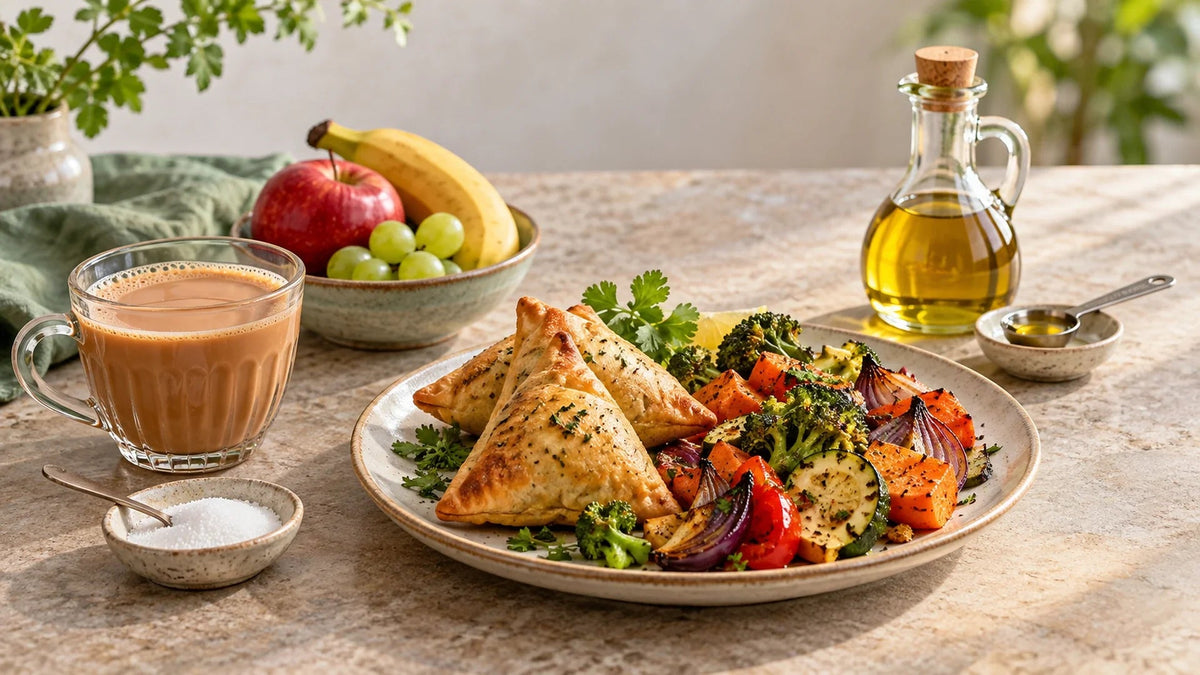
- Samosas: Bake or air-fry a recipe designed for that cooking method. Brush the outside lightly with measured oil if needed.
- Pakoras: Try a baked or air-fried version, or serve a smaller portion with a meal that includes vegetables and protein.
- Potato wedges: Roast or air-fry them with a small measured amount of oil and seasonings.
- Chicken or fish: Bake, grill, roast, or air-fry instead of deep-frying.
- Vegetables: Steam, roast, grill, or stir-fry with a small amount of oil.
- Paratha: Measure the oil or ghee used on the tawa, or choose roti when you want to reduce added fat.
The texture may differ from deep-fried food. A recipe designed for baking or air-frying usually gives a better result than simply changing the cooking method in a deep-frying recipe.
How to make baked or air-fried food crisp
- Pat vegetables or potatoes dry before cooking.
- Cut pieces to a similar size so they cook evenly.
- Arrange food in a single layer with space between pieces.
- Use a small measured amount of oil if the recipe needs it.
- Turn the food during cooking if one side browns faster.
When eating out, choose grilled, roasted, baked, or tandoori dishes more often when available. You can ask for sauces or dressings on the side.
Common mistakes to avoid
Switching white sugar for honey or jaggery and using the same amount
These sweeteners still add sugar. If you are trying to reduce free sugars, reduce the quantity rather than relying on a different name.
Avoiding all fat
Fat is part of a balanced diet. Focus on the type and amount instead of trying to make every meal completely fat-free.
Using unlimited amounts of “healthy” oil
Plant oils can be a better choice than fats higher in saturated fat, but they still add energy. Measure the amount that goes into the pan or recipe.
Assuming air-fried means healthy
Air-frying may reduce the oil used in cooking, but it does not remove salt, breading, or large portions. Look at the whole meal.
How to make these swaps last
Start with one change that feels manageable. You might reduce the sugar in chai, measure the oil for one meal, or roast potatoes instead of deep-frying them. Keep the spices and flavors you already enjoy. Once the change feels normal, try another.
A practical eating pattern does not need to be perfect. Small changes that fit your routine are easier to repeat.
Frequently asked questions
What is the healthiest alternative to sugar?
For many people, a helpful first step is to use less added sugar. Whole fresh fruit can add sweetness to breakfast and snacks, while unsweetened drinks can replace sugary drinks.
Is jaggery better than sugar?
Jaggery has a different taste, but it is still a source of sugar. It is not a sugar-free replacement for table sugar.
Is honey better than sugar?
Honey is still a source of free sugar under WHO guidance. It should not be treated as a sugar-free alternative. [2]
Which cooking oil is best for daily use?
There is no single best oil for every person and recipe. Liquid plant oils that are mostly unsaturated fats, such as canola, sunflower, soybean, corn, peanut, and olive oil, are common options. Use a measured amount and choose what fits your cooking and budget. [4]
How can I cook without oil?
For some vegetables and stovetop dishes, use a non-stick pan and add a little water or low-sodium broth as food cooks. Some recipes still need a small amount of oil for flavor or texture.
Is air-frying healthier than deep-frying?
Air-frying often uses less added oil than deep-frying. Whether the meal is healthier also depends on the food, coating, salt, and portion size. [6]
What is a good alternative to deep-fried food?
Try baking, roasting, grilling, steaming, poaching, or air-frying, depending on the food and the texture you want. A tested recipe helps baked or air-fried food turn out well.
Is fruit juice a healthy alternative to sugary drinks?
Fruit juice can contain free sugars even when no sugar is added. If you are trying to reduce free sugars, choose water, sparkling water, or unsweetened tea more often. Whole fruit is another option. [2]
Want support with a weight-management goal?
If you want help adapting food changes to your health history, routine, food preferences, and goals, explore MNT’s online dietitian consultation for weight management.
Explore MNT’s online weight-management consultationWe rely on peer-reviewed studies and reputable medical journals.