


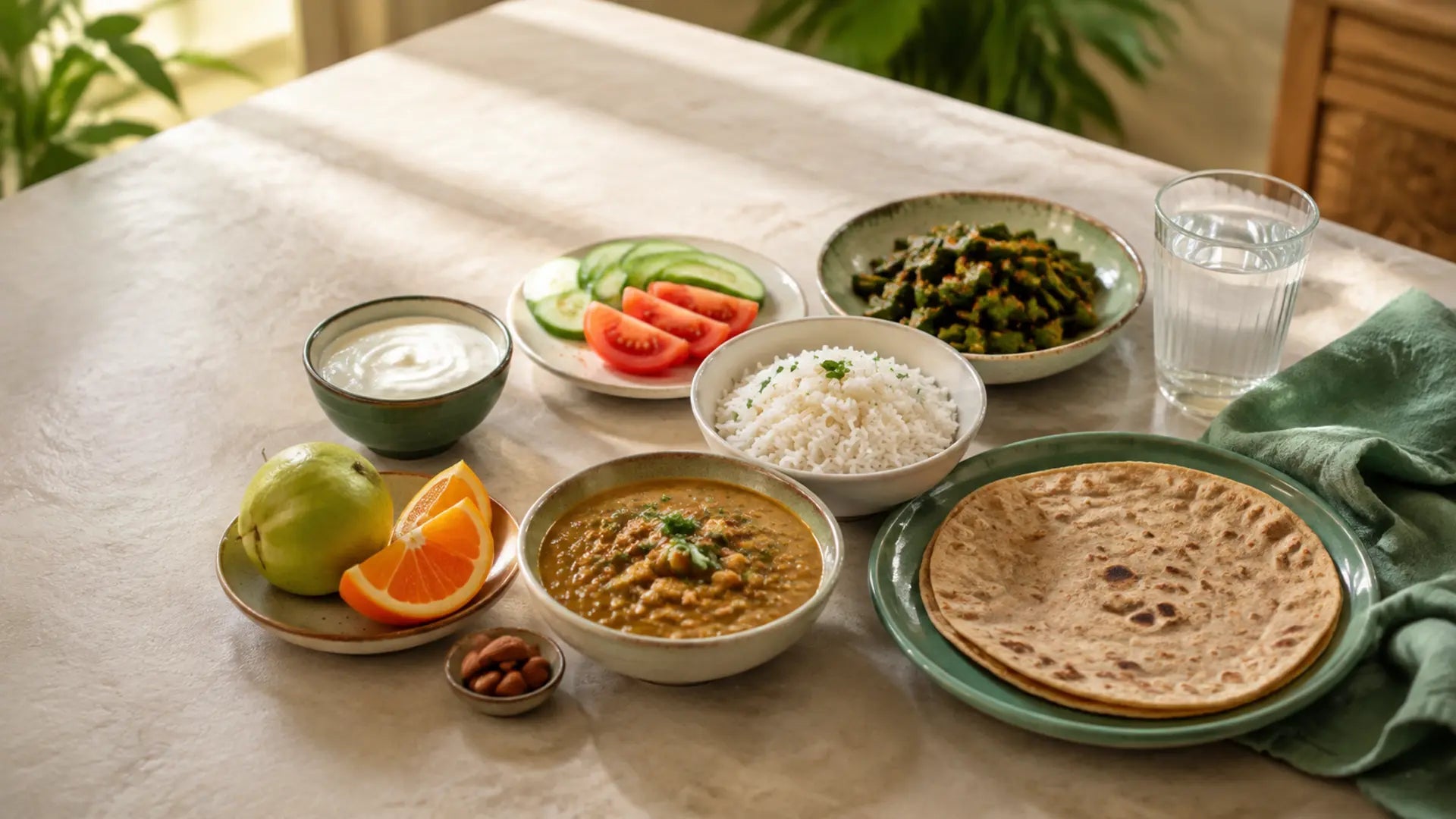
Foods for PCOS: What to Eat to Manage Symptoms
No single food cures PCOS. Learn how vegetables, pulses, fruit, protein, and higher-fibre carbs fit balanced Pakistani meals without unnecessary food bans.
Quick answer: What foods are good for PCOS?
There is no magic food or single “PCOS diet.” Food cannot cure polycystic ovary syndrome (PCOS), but a balanced eating pattern can support your overall health and help you make meals that are more filling and less dependent on added sugar or heavily processed foods.
Start with vegetables, daal and beans, whole fruit, protein foods, higher-fibre carbohydrates, and small amounts of unsaturated fats. Cut down on sugary drinks, frequent sweets, and highly processed snacks. You do not need to automatically remove rice, roti, fruit, dairy, or gluten.
The best way of eating for PCOS is one that fits your budget, culture, routine, health needs, and food preferences. The 2023 international PCOS guideline found no proof that one diet style is best for everyone with PCOS. [1]
Important: This is a food guide, not a weight-loss plan or a cure. PCOS can affect periods, fertility, acne, hair growth, mood, and blood-sugar risk. Food is one part of care and does not replace medical treatment when it is needed.
Why food matters with PCOS
PCOS is a hormone and metabolic condition. Some people with PCOS have insulin resistance, which means the body does not respond to insulin as well as it should. This can make blood-sugar management harder.
That does not mean carbohydrates are “bad,” or that everyone needs a low-carb diet. It means the whole meal matters. A meal with vegetables, protein, fibre-rich foods, and a suitable amount of carbohydrate will usually be more satisfying than a meal made mostly of refined starch and a sweet drink.
Healthy eating can help even if weight does not change. The goal is better long-term health, not chasing a perfect diet or blaming yourself for a medical condition. [1]
PCOS food list: foods to eat more often
Think in food groups, not expensive “superfoods.” Familiar Pakistani foods can work very well.
| Food group | Everyday examples | Why it is a useful choice |
|---|---|---|
| Vegetables | Palak, bhindi, lauki, tori, cabbage, cauliflower, cucumber, tomatoes, carrots, capsicum | They add fibre, vitamins, and volume to meals. |
| Daal, chana, and beans | Masoor, moong, chana daal, rajma, lobia, chickpeas | They provide fibre and plant protein. |
| Whole fruit | Guava, apple, orange, kinnow, pear, banana, papaya | Whole fruit has fibre and water, unlike juice. |
| Protein foods | Eggs, fish, chicken, lean meat, plain yogurt, milk, tofu, paneer, beans | Protein can make meals more filling. |
| Higher-fibre carbohydrates | Whole-wheat roti, oats, barley, brown rice, basmati rice, potatoes, whole-grain bread | Carbohydrates give energy. Choose less refined options more often and eat them as part of a balanced meal. |
| Unsaturated fats | Peanuts, almonds, walnuts, seeds, fish, olive oil, canola oil, mustard oil | Small amounts add taste and help meals feel satisfying. |
| Unsweetened drinks | Water, plain lassi without added sugar, unsweetened tea | They can replace drinks with a lot of added sugar. |
Vegetables: make room for them at lunch and dinner
Vegetables do not need to be raw, imported, or expensive. Sabzi, soup, salad, and mixed vegetables all count.
Try to include a vegetable at both lunch and dinner. You might add palak to eggs, eat bhindi with daal, or serve a salad beside curry and roti. Start with vegetables you actually enjoy and can cook regularly.
Daal, chana, and beans: everyday PCOS-friendly staples
Daal, chana, rajma, and lobia are not “extra” foods. They can be a main part of a meal. They offer both carbohydrate and protein, so they are often more satisfying than a meal based mainly on rice, roti, or fried snacks.
Use them with vegetables and a suitable serving of rice or roti. This is simple, affordable, and consistent with healthy-eating guidance. [2]
Whole fruit: do not fear it
Fruit contains natural sugar, but whole fruit also gives you fibre, water, vitamins, and minerals. It is not the same as a soft drink, packaged juice, or dessert.
Choose whole fruit more often than juice. If fruit alone does not keep you full, have it with plain yogurt, roasted chana, nuts, or an egg.
Protein: include some in main meals
Protein can help a meal feel more satisfying. You do not need costly protein powders to get it.
At breakfast, lunch, and dinner, ask a simple question: “What is my protein source?” It may be eggs, yogurt, milk, chicken, fish, daal, chana, beans, tofu, or paneer.
Carbohydrates: choose, pair, and enjoy
Carbohydrates are a normal source of energy. With PCOS, it is more useful to look at the full meal than to label every carbohydrate as good or bad.
For example, rice with chicken, daal, raita, and vegetables is very different from a large plate of plain rice with a sweet drink. The first meal has more protein, fibre, and variety.
Choose higher-fibre options more often where they fit your routine. Whole-wheat roti, oats, barley, pulses, potatoes, and rice can all fit into a balanced eating pattern. Fibre, protein, and fat can slow digestion when eaten with carbohydrate. [3]
Fats: use them, but measure them
Nuts, seeds, fish, and unsaturated oils can be part of a healthy diet. The issue is not that all fat is bad. The issue is that oil, ghee, butter, creamy sauces, fried toppings, and large portions of nuts can add up quickly without making a meal much more filling.
Use enough fat for taste and cooking, but avoid pouring it freely. A measured amount is usually more practical than trying to remove it completely.
How to build a balanced PCOS meal
Use this simple guide when planning lunch or dinner:
- Add vegetables or salad to about half the plate.
- Add a protein food such as daal, chana, eggs, chicken, fish, yogurt, tofu, or beans.
- Add a suitable portion of rice, roti, potatoes, oats, or another carbohydrate food.
- Include a small amount of fat for flavour and satisfaction.
- Choose water or an unsweetened drink more often than a sweet drink.
This is not a strict prescription. Your needs can change with your hunger, activity, medicines, medical history, pregnancy status, and goals.
Foods to limit more often with PCOS
No food needs to be called “bad,” and you do not need to eat perfectly. But some foods are easy to overeat and usually add little fibre, protein, or nutrition.
Have these less often:
- soft drinks, energy drinks, packaged juices, and heavily sweetened tea or coffee;
- frequent cakes, biscuits, pastries, mithai, candy, and desserts;
- highly processed snack foods;
- meals made mostly from refined flour or refined grains with little protein or vegetables;
- frequent deep-fried foods such as fries, samosas, pakoras, and fried fast food; and
- large amounts of added oil, ghee, butter, creamy sauces, or fried toppings.
“Limit” does not mean “never.” A plan that bans every favourite food is hard to follow and often leads to guilt. A better approach is to make the next meal more balanced.
Rice, roti, fruit, dairy, and gluten with PCOS
Can you eat rice with PCOS?
Yes. Rice can be part of a balanced meal. Pair it with vegetables, daal, beans, chicken, fish, or yogurt. Brown rice is optional, not compulsory. A suitable portion of basmati rice can also fit.
Is roti better than rice for PCOS?
Not always. Whole-wheat roti can offer more fibre than some rice choices, but both can fit. Choose the one you enjoy, can afford, and can balance with protein and vegetables.
Do you need to avoid fruit with PCOS?
No. Most people with PCOS do not need to stop eating whole fruit. Fruit juice and sugary drinks are different because they are easy to consume in a large amount and contain much less fibre.
Do you need a dairy-free diet for PCOS?
No. Dairy is not automatically a problem in PCOS. Plain yogurt, milk, and other dairy foods can fit if you tolerate them. Avoid dairy only if you have an allergy, lactose intolerance, another medical reason, or individual advice from a qualified professional.
Do you need to avoid gluten?
No. PCOS alone is not a reason to avoid gluten. A gluten-free diet is needed for celiac disease and may be needed for some other medical reasons. It is not a standard treatment for PCOS.
Are keto, fasting, or seed cycling required?
No. No strict diet, food schedule, or “hormone reset” has been proven to fix PCOS for everyone. Some people prefer a lower-carbohydrate or time-restricted eating pattern, but neither is required.
Very restrictive plans can be difficult to keep up with and may not be appropriate during pregnancy, breastfeeding, when using certain medicines, or for people with a history of disordered eating. Get personal advice before making a major change. [1]
What food changes can and cannot do
Food choices can support general health, energy, fullness, and metabolic health. They can also help you build a routine that relies less on sugar-sweetened drinks and heavily processed snacks.
But no food can promise regular periods, pregnancy, clear skin, less facial hair, or hair regrowth. Acne, unwanted hair growth, hair thinning, missed periods, fertility concerns, and high blood sugar may need medical treatment.
Do not delay medical care because an online food list promised to “balance your hormones.”
Three realistic changes to start this week
Do not change your whole diet in one day. Pick one or two actions that you can repeat.
- Add one vegetable or salad to lunch and dinner.
- Add a protein source to breakfast, such as eggs, yogurt, milk, chana, or daal.
- Replace one sugary drink a day with water, plain lassi without added sugar, or unsweetened tea.
Keep the changes that work. Then add another. Consistency matters more than a perfect start.
When general food advice is not enough
Get personalised advice from a dietitian or clinician before making major changes if you:
- are pregnant, breastfeeding, or trying to conceive;
- have diabetes or take insulin or medicines that can lower blood sugar;
- have kidney, liver, digestive, or another long-term health condition;
- are under 18, underweight, or have had bariatric surgery;
- have binge eating, severe food anxiety, or a history of an eating disorder; or
- have severe, new, or worsening symptoms.
Speak with a clinician if you have very long gaps between periods, excessive thirst, unexplained weight loss, severe tiredness, or symptoms that concern you. PCOS has no cure, but treatment and lifestyle support can help manage symptoms. [4]
Bottom line
The best foods for PCOS are not a short list of miracle foods. Build meals around vegetables, daal and beans, whole fruit, protein foods, higher-fibre carbohydrates, and small amounts of healthy fats. Limit sugary drinks and heavily processed foods more often, but do not ban rice, roti, fruit, dairy, or gluten without a clear reason.
Choose a pattern that is balanced, practical, and sustainable. If weight loss is appropriate for you, read MNT’s PCOS Diet Plan for Weight Loss for a separate guide focused on portions and weight-management planning.
Need a plan built around your health and routine?
Book an MNT nutrition consultation for personalised guidance that considers your symptoms, food preferences, routine, and health goals.
We rely on peer-reviewed studies and reputable medical journals.