


PCOS Diet Plan for Weight Loss: Foods, Portions, and a 7-Day Meal Plan
If you have polycystic ovary syndrome (PCOS) and want to lose weight, you do not need a zero-carb, crash, detox, or “hormone reset” diet.
If weight loss is appropriate for you, the most useful PCOS diet plan is a sustainable eating pattern that provides enough nutrition while creating a personalised energy deficit over time. Build meals around vegetables, fruit, pulses, protein, high-fibre carbohydrates, healthy fats, and portions that fit your needs. Limit sugary drinks, frequent sweets, heavily processed snacks, deep-fried foods, and oversized portions.
You do not need to completely remove roti, rice, fruit, potatoes, or dairy. The current international PCOS guideline does not find one diet composition to be better than all others. It recommends healthy eating that is flexible, sustainable, and adapted to your preferences, culture, health needs, and goals. [1]
Quick answer: What is the best diet for PCOS weight loss?
The best diet for PCOS weight loss is not automatically keto, low-carb, low-GI, Mediterranean, or intermittent fasting. The best plan is the healthy eating pattern you can follow consistently and safely.
Use this structure as a starting point:
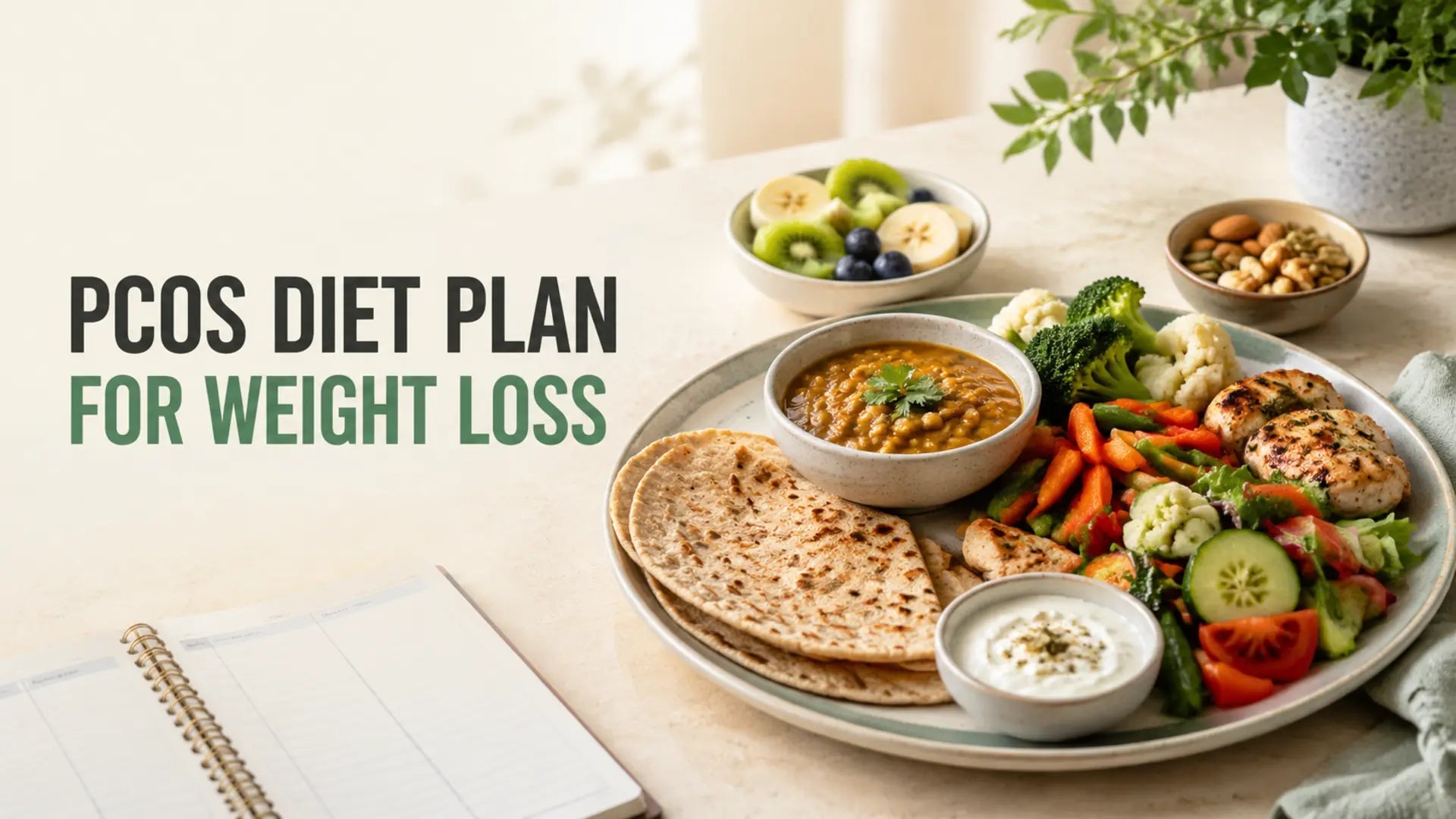
- Fill about half your plate with non-starchy vegetables or salad.
- Add a source of protein, such as eggs, chicken, fish, yogurt, tofu, daal, chana, or beans.
- Add a suitable portion of a high-fibre carbohydrate, such as whole-wheat roti, oats, pulses, barley, rice, potatoes, or fruit.
- Include a small amount of healthy fat, such as nuts, seeds, avocado, or measured cooking oil.
- Choose water or unsweetened drinks more often than sugary drinks.
- Adjust portions to your body, activity, hunger, medication, medical history, and goal.
A healthy lifestyle can improve health even when the scale does not change. If you are not overweight, weight loss should not be treated as an automatic PCOS goal. [1]
Can you lose weight with PCOS?
Yes, many people with PCOS can lose weight. However, weight management may feel harder because PCOS can affect insulin sensitivity, appetite, menstrual cycles, sleep, mood, body composition, and metabolic health. Medications, work schedules, stress, food access, and previous restrictive diets can also affect progress.
PCOS is not the same for everyone. Some people with PCOS have a higher weight, some do not, and some have metabolic problems without obvious weight gain. A safe plan should not assume that everyone needs the same foods, calorie target, or weight goal.
For weight loss, the body generally needs to use more energy than it receives over time. The size of that energy deficit should be individualised. A 1,200- or 1,500-calorie plan copied from the internet may be too low, too high, or unsuitable for you.
Health progress can include:
- a more stable body-weight trend;
- a smaller waist measurement;
- better energy and fitness;
- improved hunger and fullness control;
- more regular menstrual cycles;
- improved blood glucose, blood pressure, or cholesterol results; and
- better eating habits that you can maintain.
Do not assume every new symptom is caused by PCOS. Rapid unexplained weight change, severe fatigue, excessive thirst, very long gaps between periods, or symptoms that are getting worse need medical assessment.
What does the science say about PCOS diets?
The 2023 international evidence-based PCOS guideline states that there is no evidence that one diet composition is better than another for weight, metabolic, hormonal, reproductive, or psychological outcomes. It supports sustainable healthy eating tailored to personal preferences and goals. [1]
This does not mean that all foods have the same nutritional value. It means that a person does not need one branded diet to manage PCOS. A healthy plan can use different combinations of carbohydrates, protein, and fat.
The World Health Organization recommends a varied diet that includes vegetables, fruit, pulses, whole grains, nuts, seeds, and suitable protein sources. Foods high in free sugars, unhealthy fats, and sodium should be limited. [2]
The most practical approach is to improve the overall pattern rather than fear one food. For example, a moderate serving of rice with daal, chicken, vegetables, and yogurt is different from a large serving of plain rice with a sugary drink and little protein.
How to build a PCOS-friendly meal
The plate method is a practical starting point. It is not a rigid medical rule, and portions may need to change according to your needs.
| Part of the meal | What to choose | Pakistani and South Asian examples |
|---|---|---|
| About half the plate | Non-starchy vegetables or salad | Palak, bhindi, lauki, tori, cabbage, cauliflower, cucumber, tomatoes, carrots, capsicum, green beans |
| About one-quarter | Protein-rich food | Eggs, chicken, fish, lean meat, plain yogurt, tofu, paneer, daal, chana, rajma, or other beans |
| About one-quarter | High-fibre carbohydrate | Whole-wheat roti, oats, barley, whole-grain bread, pulses, potatoes, or a suitable portion of rice |
| Small addition | Unsaturated fat | Nuts, seeds, avocado, mustard oil, canola oil, or olive oil in a measured amount |
A practical portion starting point
As a starting example, some adults may use one small roti or one cupped-hand portion of cooked rice with a palm-sized protein serving and plenty of vegetables. This is not a universal prescription. Your portion may need to change with your body size, activity, hunger, medication, diabetes risk, and overall meal plan.
-
1. Include protein in main meals
Protein can help meals feel more filling and can support muscle while you lose weight. Choose foods you can afford and tolerate, such as:
- eggs;
- chicken, fish, or lean meat;
- plain yogurt;
- daal, chana, rajma, and other beans;
- tofu or paneer; and
- milk or an unsweetened dairy-free alternative when suitable.
Daal and beans provide both protein and carbohydrate. You can still eat them with vegetables and adjust the roti or rice portion according to your overall meal.
-
2. Choose high-fibre carbohydrates
Carbohydrates are not automatically harmful for PCOS. Choose mostly whole or minimally processed options and use portions that fit your needs.
Good options include:
- whole-wheat roti;
- oats;
- barley;
- daal, chana, and beans;
- brown rice or a moderate portion of basmati rice;
- whole-grain bread;
- potatoes or sweet potatoes; and
- whole fruit.
The full meal matters. A carbohydrate eaten with protein, vegetables, pulses, or healthy fat may be more satisfying than the same carbohydrate eaten alone.
-
3. Measure cooking fats and calorie-dense foods
Oil, ghee, butter, nuts, seeds, sauces, and fried toppings can add a lot of energy in small amounts. You do not need to remove them, but avoid pouring them freely. Measure cooking oil and watch portions of nuts, seeds, and spreads.
-
4. Choose drinks carefully
Water, plain sparkling water, and unsweetened tea are simple choices. Limit soft drinks, sweetened tea, energy drinks, packaged juices, and frequent milkshakes. Liquid sugar is easy to consume without feeling full.
-
5. Use meal timing that you can maintain
There is no required number of meals for PCOS. Three meals with an optional snack may work for one person. Another person may prefer three meals without snacks. Choose a routine that fits your work, sleep, family, hunger, and medication schedule.
7-day PCOS diet plan for weight loss
This is a flexible sample meal plan for medically stable adults. It is not a fixed-calorie prescription. Adjust portions using the plate method and change foods according to allergies, preferences, budget, culture, activity, and medical needs.
If you searched for a PCOS diet chart for weight loss, use this table as a starting framework, not as a plan that every person must follow exactly.
| Day | Breakfast | Lunch | Optional snack | Dinner |
|---|---|---|---|---|
| 1 | Two eggs with vegetables, one suitable portion of whole-wheat roti, and cucumber | Chicken or daal with mixed salad, plain yogurt, and a suitable portion of roti or rice | Guava, apple, or orange with a small handful of peanuts | Grilled fish or chicken with cooked vegetables and roti |
| 2 | Oats with plain milk or yogurt, chia or flaxseed, and sliced apple | Chana chaat with cucumber, tomatoes, onions, lemon, and plain yogurt | Boiled egg or roasted chana | Lean qeema with bhindi or another vegetable and roti |
| 3 | Besan chilla with vegetables and plain yogurt | Daal, bhindi, salad, and roti | Whole fruit with a few nuts | Chicken tikka, raita, salad, and a moderate portion of rice |
| 4 | Plain yogurt with oats, fruit, and seeds | Fish or chicken with mixed vegetables and roti | Hummus or chana with cucumber and carrots | Vegetable soup with eggs, chicken, tofu, or beans |
| 5 | Vegetable omelet with one suitable portion of roti and unsweetened tea | Rajma or chana with salad and a moderate portion of rice | Plain yogurt or fruit | Lean beef, chicken, or tofu with sautéed vegetables and roti |
| 6 | Eggs with vegetables and roti | Homemade chicken and vegetable curry with rice and raita | A measured portion of nuts with unsweetened tea | Beans, paneer, or tofu with vegetables and roti |
| 7 | Vegetable omelet or chana with roti | A family meal using the plate method: vegetables, protein, and a moderate serving of rice or roti | Fruit or unsweetened yogurt | Grilled chicken, fish, beans, or tofu with vegetables and a suitable carbohydrate |
Simple substitutions
| If the plan includes | You can substitute it with |
|---|---|
| Chicken | Fish, eggs, lean meat, tofu, daal, or beans |
| Fish | Chicken, eggs, tofu, or beans |
| Roti | Oats, rice, barley, or whole-grain bread |
| Rice | Roti, barley, oats, or potatoes |
| Yogurt | Unsweetened dairy-free yogurt if medically suitable |
| Nuts | Seeds or roasted chana |
| Salad | Cooked vegetables or vegetable soup |
| Qeema | Chicken, beans, daal, tofu, or eggs |
How to make the plan easier to follow
- Cook daal, beans, chicken, or vegetables in larger batches.
- Keep boiled eggs, fruit, plain yogurt, and roasted chana available.
- Measure cooking oil instead of adding it by guesswork.
- Use lemon, garlic, ginger, herbs, and spices for flavour.
- Plan one flexible meal instead of trying to be perfect every day.
- Return to your normal routine after a difficult meal rather than restricting the next day.
Foods to eat and foods to limit with PCOS
People often search for “foods to avoid with PCOS.” A more useful approach is to identify foods to eat more often and foods to limit.
| Eat more often | Limit or eat less often |
|---|---|
| Non-starchy vegetables and salad | Sugary drinks and packaged juices |
| Daal, chana, rajma, lentils, and beans | Frequent sweets, cakes, biscuits, and bakery foods |
| Eggs, fish, chicken, tofu, and plain yogurt | Frequent deep-fried foods such as fries, samosas, and pakoras |
| Whole fruit in suitable portions | Large portions of refined carbohydrates |
| Oats, barley, whole-wheat roti, and other high-fibre carbohydrates | Highly processed snack foods and fast food |
| Nuts and seeds in measured portions | Processed meats and heavily oily meals |
| Water and unsweetened drinks | Energy drinks and frequent sweetened tea |
“Limit” does not mean “never eat.” A plan with no flexibility is difficult to maintain and may encourage guilt or overeating.
Can you eat rice and roti with PCOS?
Yes. Most people with PCOS do not need to eliminate rice or roti completely.
Rice
Rice can fit into a PCOS diet plan. Use a portion that suits your needs and combine it with protein, vegetables, pulses, or yogurt. Brown rice is one option, but a suitable portion of basmati rice can also fit a balanced meal.
Roti
Whole-wheat roti can be part of a healthy plan. Pair it with eggs, chicken, fish, daal, yogurt, and vegetables instead of eating several rotis with very little protein or fibre.
Fruit
Whole fruit provides fibre, water, and nutrients. You do not usually need to avoid fruit because it contains natural sugar. Choose whole fruit more often than juice, and use a portion that fits your meal pattern.
Dairy
PCOS does not automatically require a dairy-free diet. Plain yogurt, milk, and other dairy foods can fit if you tolerate them. Avoid or replace dairy only if you have an allergy, intolerance, confirmed medical reason, or professional advice.
Potatoes
Potatoes can fit into a balanced meal. Portion size and preparation matter. Boiled, baked, or lightly cooked potatoes are different from a large serving of fries.
Paratha, biryani, and restaurant meals
You do not need to label every traditional food as forbidden. Use a smaller portion, add vegetables and protein, measure oil where possible, and avoid turning one flexible meal into an entire flexible weekend.
Is a low-carb, low-GI, keto, or Mediterranean diet best for PCOS?
Low-carbohydrate diets
A lower-carbohydrate plan may help some people reduce overall intake or manage hunger. It is not automatically better for everyone. If it removes foods you enjoy or reduces fibre too much, it may be difficult to maintain.
Low-GI diets
A low-glycemic-index approach can encourage vegetables, pulses, fruit, and high-fibre carbohydrates. It can be a useful tool, but you do not need to classify every food as “good” or “bad.” Portion size and the full meal also matter.
Mediterranean-style diets
A Mediterranean-style pattern includes vegetables, pulses, fruit, whole grains, fish, nuts, seeds, and unsaturated fats. It can be a useful model, but adapt it to Pakistani foods, budget, preferences, and access.
Keto diets
Keto is highly restrictive and is not a cure for PCOS. It may be unsuitable during pregnancy or breastfeeding, with some medications or medical conditions, or for people at risk of disordered eating. Do not start it without professional advice.
Intermittent fasting
Intermittent fasting is a meal-timing pattern, not a special PCOS treatment. It may suit some adults, but it can cause intense hunger, overeating, poor nutrition, or medication problems in others. It is not required for PCOS weight loss.
Gluten-free diets
PCOS does not automatically require a gluten-free diet. Consider removing gluten only when there is confirmed celiac disease, allergy, intolerance, another medical reason, or professional advice.
What if you are not losing weight with PCOS?
Do not immediately cut your food intake again. Review the whole pattern first.
Common reasons progress may appear stalled include:
- portions of rice, roti, oil, nuts, sauces, or snacks are larger than expected;
- sweetened tea, juices, soft drinks, or milkshakes are adding energy;
- the plan is too strict and leads to overeating later;
- meals are low in protein or fibre, so hunger returns quickly;
- weekday and weekend eating patterns are very different;
- menstrual-cycle changes are causing temporary fluid shifts;
- poor sleep, stress, pain, low mood, or medication is affecting appetite or activity; or
- progress is being judged from one daily scale reading instead of a longer trend.
For a short review period, record meals, drinks, hunger, activity, sleep, and body-weight trends. Also consider waist measurement, energy, menstrual patterns, and blood-sugar results when your clinician recommends them.
If you follow a reasonable plan consistently and see no progress, speak with a qualified dietitian or doctor. You may need a different strategy or assessment for another condition, such as thyroid disease, sleep apnea, medication-related weight change, or diabetes.
Exercise, sleep, and stress matter too
Diet is important, but PCOS weight management should not depend on food alone.
The international guideline recommends physical activity based on personal preferences and goals. For general adult health, this can include 150–300 minutes of moderate activity or 75–150 minutes of vigorous activity each week, plus muscle-strengthening activity on two non-consecutive days. You do not need to start at the highest level. Walking, cycling, swimming, dancing, household activity, and strength training can all be useful. [1]
Choose an amount you can repeat. If exercise causes pain, severe fatigue, fear, or worsening symptoms, reduce the intensity and seek professional advice.
Sleep and mental health also deserve attention. A regular sleep routine may make hunger, mood, and daily activity easier to manage. PCOS care should also consider sleep disorders, anxiety, depression, body image, and disordered eating. [3] If you snore loudly, wake unrefreshed, feel persistently low, or have intense food-related anxiety, seek professional support.
Useful behaviour strategies include:
- setting one or two clear weekly goals;
- preparing food before busy days;
- tracking meals or hunger when it helps rather than when it creates anxiety;
- solving barriers instead of blaming yourself;
- returning to the plan after a difficult meal; and
- reviewing progress regularly.
Supplements and medication: what diet cannot replace
No supplement can replace a balanced diet, medical assessment, or treatment for diabetes and other conditions.
Inositol is often promoted online for PCOS. The current guideline says it may be considered according to individual preferences and values, but clinical benefits are limited, including for weight and ovulation. Specific types, doses, and combinations cannot currently be recommended because the evidence is not strong enough. Product quality and dose may also vary. [1]
Metformin, weight-management medicines, and other treatments may be appropriate for some people and not for others. They require a clinician’s assessment. Do not start, stop, or change medication because of an online diet plan.
When a general PCOS diet plan is not enough
Ask for personalised care before following a generic plan if you:
- are pregnant, breastfeeding, or trying to conceive;
- are under 18 or underweight;
- take insulin or medicine that can cause low blood sugar;
- have diabetes or prediabetes;
- have kidney, liver, gallbladder, heart, thyroid, or serious digestive disease;
- use prescription weight-management medicine;
- have had bariatric surgery;
- have repeated binge eating or a history of an eating disorder;
- have unexplained weight loss, severe weakness, or dizziness; or
- have very long gaps between periods, heavy abnormal bleeding, or fertility concerns.
Nutrition can support PCOS management, but it does not diagnose PCOS or replace medical treatment.
How to track progress with a PCOS diet plan
Choose a few measures instead of tracking everything. Depending on your goals, you may monitor:
- body-weight trend rather than one daily number;
- waist circumference;
- hunger and fullness;
- energy and sleep;
- menstrual-cycle pattern;
- physical activity; and
- blood glucose, blood pressure, or cholesterol when advised by a clinician.
Make one change at a time. If you reduce portions, do not also remove all carbohydrates, double your exercise, and begin several supplements at once. You will not know what helped, and the plan may become impossible to maintain.
Frequently asked questions
What is the best breakfast for PCOS weight loss?
A useful breakfast usually includes protein, fibre, and a food you enjoy. Examples include eggs with roti and vegetables, oats with plain yogurt and fruit, or besan chilla with yogurt. There is no single breakfast that works for everyone.
Is rice bad for PCOS?
No. Rice can fit into a PCOS diet plan. Use a suitable portion and pair it with protein, vegetables, pulses, or yogurt instead of making a large serving of rice the whole meal.
Should I stop eating roti if I have PCOS?
Usually, no. Whole-wheat roti can be part of a balanced meal. The right amount depends on your overall diet, activity, health conditions, and personal goals.
Can I eat fruit with PCOS?
Yes. Whole fruit provides fibre and nutrients. Choose whole fruit more often than juice and use portions that fit your meal pattern.
Is keto the best diet for PCOS?
No diet has been proven best for every person with PCOS. Keto may help some people reduce their total intake, but it is restrictive and may not be safe or sustainable for everyone.
Is intermittent fasting necessary for PCOS weight loss?
No. Intermittent fasting is optional. It is not a required PCOS treatment and may not suit people with certain medical conditions, medication needs, pregnancy, or a history of disordered eating.
Do I need to avoid dairy or gluten?
Not automatically. Avoid them only when there is a confirmed allergy, intolerance, celiac disease, another medical reason, or professional advice.
Can I lose weight with PCOS without medication?
Nutrition and physical activity may support weight management, but medication decisions should be made with a qualified healthcare professional. Do not stop or change prescribed medicine because of a diet plan.
Can a diet cure PCOS?
No. PCOS is a long-term health condition. A healthy eating pattern can support weight management, metabolic health, energy, and other outcomes, but it cannot promise a cure.
What if I have PCOS but I am not overweight?
You may still benefit from balanced eating, regular movement, good sleep, and appropriate medical care. Weight loss should not be the automatic goal for every person with PCOS.
How fast can I lose weight with PCOS?
The rate varies with your body, energy needs, activity, medication, sleep, medical conditions, and consistency. Avoid plans that promise a fixed number of kilograms in a few days. A slower plan that you can maintain is usually more useful than extreme restriction.
Should I get an insulin-resistance test?
Ask your doctor which tests are appropriate. The international guideline notes that commonly available insulin assays have limited clinical relevance and should not be used routinely to diagnose insulin resistance in PCOS. [1]
Final takeaway
The best PCOS diet plan for weight loss is balanced, portion-aware, culturally practical, and sustainable.
Build meals around vegetables, protein, pulses, fruit, high-fibre carbohydrates, and measured healthy fats. Limit sugary drinks, frequent sweets, deep-fried foods, and highly processed snacks. Keep suitable portions of familiar foods such as roti, rice, potatoes, fruit, and yogurt. Add regular movement, protect sleep, and seek professional support when your medical history makes a generic plan unsafe.
There is no universal keto, low-carb, low-GI, or 1,200-calorie solution. If you need a plan based on your symptoms, health history, medication, routine, food preferences, budget, and Pakistani meals, an individual consultation with a qualified MNT nutrition professional is more appropriate than copying a generic internet diet.
Personalised support for your PCOS weight-management plan
Choose support based on your symptoms, health history, medication, routine, food preferences, budget, and Pakistani meals. MNT’s online weight-loss consultation service can help you decide whether a consultation, written diet plan, or ongoing support is appropriate.
Book an MNT consultationWe rely on peer-reviewed studies and reputable medical journals.