
Weight Loss After Pregnancy: A Safe, Realistic Postpartum Plan
A recovery-first guide to healthy weight loss after pregnancy, with practical Pakistani meal ideas, breastfeeding guidance, safe exercise, and clear signs to get medical help.
Weight loss after pregnancy should start with recovery, not pressure. Your body has been through pregnancy, birth, major hormone changes, blood loss, broken sleep, and possibly breastfeeding or surgery. A crash diet may promise quick results, but it can leave you tired, hungry, and less able to recover.
The safer route is less dramatic: eat regular balanced meals, move gradually when your body is ready, and build habits that still work on hard days. This guide explains how to do that without starving yourself, cutting out normal foods, or copying unsafe social-media routines.
Weight loss after pregnancy: quick answers
| Question | Direct answer |
|---|---|
| When can I start losing weight after pregnancy? | Focus on healing first. Gentle movement may be possible soon after an uncomplicated birth if you feel ready, but the timing of structured exercise and active weight loss is personal—especially after a C-section or complication. |
| Can I lose weight while breastfeeding? | Yes, but keep it gradual. Breastfeeding does not make weight loss automatic, and severe food restriction is a poor default. |
| What is the best postpartum diet? | A regular, balanced pattern of familiar foods. You do not need to ban roti, rice, fruit, potatoes, or daal. |
| How do I lose belly fat after pregnancy? | You cannot choose where fat comes off first. Build overall habits and support your core and pelvic floor instead of chasing “flat tummy” workouts. |
| What if I had a C-section? | Treat it as recovery from major surgery. Progress based on your symptoms and your obstetric clinician’s advice, not someone else’s timeline. |
| When should I get medical help? | Get urgent help for danger signs such as very heavy bleeding, chest pain, shortness of breath, fainting, severe headache, fever, severe abdominal pain, or thoughts of harming yourself or your baby. |
What is normal after pregnancy?
Your weight can change quickly in the first days after birth. Some of that is related to delivery, fluid changes, and the uterus getting smaller. It is not the same as losing body fat.
After that, progress may be slow, uneven, or paused for a while. Breastfeeding hunger, poor sleep, recovery from birth, pain, stress, and a new routine can all affect eating and activity. There is no single “bounce-back” deadline that is healthy for everyone.
Think in months, not in a 30-day challenge. The right goal is a pattern that helps you feel stronger and more stable while you care for your baby.
When can you start trying to lose weight after pregnancy?
The early postpartum period is mainly for healing, feeding your baby, and settling into a routine. Do not treat your six-week check-up as a finish line. Some people are ready to do more by then; others need longer. Both can be normal.
If you had an uncomplicated vaginal birth and feel well, gentle movement such as walking may be possible when you feel ready. If you had a C-section, severe tearing, heavy bleeding, high blood pressure, infection, pain, a difficult birth, or another complication, your plan needs personal medical advice. The American College of Obstetricians and Gynecologists (ACOG) advises a gradual return to activity after birth.
Use this recovery-first timeline
Early days and weeks: heal and fuel.
Eat regular meals, drink when thirsty, rest when you can, and do only the movement that feels comfortable and has been approved for you. This is not the time for fasting, a strict meal plan, or high-impact workouts.
When you are ready for more activity: build habits.
Start with walking, gentle mobility, and basic core or pelvic-floor work if it is suitable for you. Make meals more balanced instead of trying to eat as little as possible.
When recovery is stable: work on gradual fat loss.
Add strength work and make small portion or snack changes you can repeat. If a plan makes you weak, miserable, or obsessed with food, it is too aggressive.
The five foundations of healthy postpartum weight loss
1. Eat enough at regular times
Skipping meals often backfires. You may feel fine early in the day, then become extremely hungry at night and eat whatever is quickest. Three basic meals and a planned snack when needed are usually more useful than trying to “save” food for later.
At most meals, aim to include:
- A protein food
- Vegetables or fruit
- A fibre-rich carbohydrate
- A small amount of fat for flavour and fullness
You do not need special diet products. Normal home food works.
2. Put protein and fibre on your plate
Protein and fibre-rich foods can help you stay full and support a steady eating pattern. Good options include:
- Eggs, chicken, fish, lean meat, milk, dahi, paneer, or tofu
- Daal, chana, rajma, lobia, and other beans
- Vegetables, fruit, oats, whole-wheat roti, and rice in a sensible portion
- Nuts and seeds in small portions
Do not make every meal perfect. Choose one useful change, such as adding eggs to breakfast, daal at lunch, or dahi and fruit as an afternoon snack.
3. Keep carbohydrates, but improve the balance
Roti, rice, potatoes, fruit, and daal are not the reason postpartum weight loss fails. The issue is usually the overall meal pattern: large portions with little protein or vegetables, frequent sugary drinks, or random snacking when you are exhausted.
Try this simple plate method for one main meal:
- Half the plate: vegetables or salad
- One quarter: protein, such as chicken, fish, eggs, daal, beans, or paneer
- One quarter: roti, rice, potato, or another carbohydrate
Adjust the amount to your hunger, recovery, breastfeeding, activity, and health needs. A plate guide is not a prescription.
4. Make high-calorie extras visible
You do not need to ban ghee, oil, chai, desserts, bakery items, or paratha. You do need to notice how often they appear and whether they are filling you up.
Start with the change that feels easiest:
- Replace one sugary drink with water, milk, or unsweetened tea.
- Put a snack on a plate instead of eating from the packet.
- Add salad, sabzi, or daal before taking a second serving of rice or roti.
- Reduce the amount of oil used in one regular dish.
- Keep fruit, dahi, boiled eggs, or roasted chana ready for busy feeding times.
5. Make the plan fit real life
New mothers rarely have predictable sleep or free time. A plan that requires an hour at the gym, imported foods, or separate meals for the whole family will fail for most people.
Make the easy choice easier:
- Cook extra daal, chicken, or sabzi for the next meal.
- Keep water near where you feed the baby.
- Freeze simple cooked food for hard days.
- Ask a partner or family member for a short break so you can walk, shower, or eat without rushing.
- Repeat two or three breakfasts you genuinely enjoy.
Consistency is more valuable than perfection.
What to eat for weight loss after pregnancy
The best postpartum diet is not a strict diet. It is a flexible pattern that gives you enough energy, protein, fibre, vitamins, and minerals to recover and manage hunger. The World Health Organization recommends a varied diet after childbirth that includes vegetables, fruit, grains, beans, nuts, dairy or alternatives, and appropriate protein foods.
A Pakistani-style balanced meal guide
| Meal | Practical options |
|---|---|
| Breakfast | Vegetable omelette with one roti; oats with milk, dahi, and fruit; dahi with fruit and nuts; leftover daal with roti and salad. |
| Lunch | Daal with one or two rotis, salad, and dahi; chicken or fish with sabzi and rice; chana curry with salad and roti. |
| Snack | Fruit with dahi; roasted chana; boiled eggs; milk and fruit; a small handful of nuts. |
| Dinner | Chicken, fish, paneer, eggs, or daal with vegetables and a sensible rice or roti portion. |
These are examples, not rules. Use foods you enjoy, can afford, and can prepare consistently.
Foods to choose more often
Build your usual meals around:
- Homemade meals
- Vegetables and fruit
- Daal, beans, chana, eggs, chicken, fish, yogurt, and milk
- Whole grains when practical
- Water and unsweetened drinks
- Nuts and seeds in modest portions
Foods to limit, not fear
It helps to reduce foods that are easy to overeat and do not keep you full for long:
- Sugary drinks, packaged juices, and frequent sweetened shakes
- Deep-fried snacks and bakery items
- Chips, biscuits, and packaged snacks eaten while tired or distracted
- Large portions of naan, paratha, or white rice without protein or vegetables
- “Detox” drinks, flat-tummy teas, and slimming products
No food needs to be labelled morally “good” or “bad.” The goal is to make nourishing food your default, not to punish yourself for eating a dessert.
Can you lose weight while breastfeeding?
Yes. Many mothers can lose weight while breastfeeding, but it is not automatic. Some feel hungrier, lose weight slowly, keep the same weight for a while, or gain weight. None of these outcomes mean you are failing.
Breastfeeding mothers generally need additional energy compared with what they ate before pregnancy. The CDC notes that well-nourished breastfeeding mothers often need an extra 330 to 400 calories a day, but the right amount varies with body size, activity, recovery, and how much breastfeeding you do. That is why a universal calorie target is not responsible advice.
A safer breastfeeding approach
- Do not skip meals to force the scale down.
- Include protein, carbohydrates, healthy fats, and fluids through the day.
- Make small portion changes instead of cutting out complete food groups.
- Pay attention to your energy, hunger, mood, recovery, and feeding concerns.
- Ask a registered dietitian for an individual plan if you want a calorie target.
Keep a water bottle close and drink regularly to thirst. Drinking extra water does not cause fat loss, but being dehydrated can make you feel worse.
Do not start slimming teas, fat burners, appetite suppressants, laxatives, injections, or weight-loss pills while breastfeeding unless a clinician who knows your medical and feeding history advises you. “Natural” does not mean safe.
Exercise after pregnancy: walking, strength, core, and pelvic floor
Movement can support mood, energy, fitness, and long-term weight management. But the type and timing matter more than intensity.
Start with walking
Walking is often the best first step because it is simple and can be split into short sessions. A ten-minute walk after a meal, a walk around the house, or a stroller walk can all count.
Start with an amount that feels manageable. Add a little time only when you feel well. Stop and seek advice if activity causes pain, dizziness, increased bleeding, pelvic pressure, or worsening symptoms.
Add strength training when you are ready
After you are cleared and comfortable, two or three short strength sessions a week can help you rebuild strength for daily life. Start with simple, controlled movements such as:
- Chair squats
- Wall push-ups
- Light rows with a resistance band
- Step-ups
- Light dumbbell exercises
Good form matters more than heavy weights. If you can access one, a trainer or physiotherapist who understands postpartum recovery is more useful than a generic “fat-loss” programme.
Protect your core and pelvic floor
Do not rush into running, jumping, heavy lifting, planks, or intense abdominal workouts just because your stitches or scar look healed. Get advice before pushing harder if you have:
- Urine leakage during activity
- Pelvic heaviness or pressure
- Pain with movement or sex
- A bulge that feels as if it is coming downward
- Strong doming or bulging along the middle of your abdomen during exercise
These symptoms do not mean you should simply do more Kegels. They may need a proper pelvic-floor assessment.
Exercise after a C-section
A C-section is major surgery. Your pace should be guided by wound healing, pain, bleeding, strength, and your obstetric clinician’s advice. Do not compare your recovery with someone online.
Contact your care team if your incision becomes more painful, red, swollen, warm, or starts to discharge.
How to lose postpartum belly fat safely
You cannot burn fat from only your belly. Overall fat loss happens across the body over time, and the order is largely outside your control.
Core exercises can improve strength and control, but they do not specifically melt belly fat. A smaller waist is also not proof that your core and pelvic floor are healthy.
Focus on regular meals, gentle activity, strength when appropriate, and recovery. If you have a visible abdominal gap, pain, strong doming, or pelvic-floor symptoms, ask a clinician or pelvic-floor physiotherapist about an assessment before following intense “postpartum abs” routines.
Why you may not be losing weight after having a baby
If the scale is not moving, do not assume you need a detox or a harder workout. Check the basics first.
You may be eating too little early in the day
Many parents eat very little until evening, then feel ravenous. This often leads to large portions, biscuits, sweets, or takeaway food late at night. Regular meals are usually easier to manage than trying to “be good” all day.
Cooking fats, drinks, and snacks may be adding up
Oil, ghee, sugar in tea, sweet drinks, bakery items, and snacks while feeding can be easy to miss. You do not need to remove them forever. You need to see the pattern and decide which one small change is realistic.
Sleep and stress can make the plan harder
Poor sleep does not make weight loss impossible. It can make hunger, planning, and exercise harder. Do not chase perfect sleep with a newborn. Make meals easier to access and keep the goal small.
A health issue may need attention
Speak with a clinician if you have persistent extreme tiredness, dizziness, constipation, major hair changes, feeling unusually cold or hot, palpitations, heavy bleeding, low mood, anxiety, or unexplained weight changes. Thyroid problems, anaemia, medication effects, depression, anxiety, and other conditions can affect how you feel and what support you need.
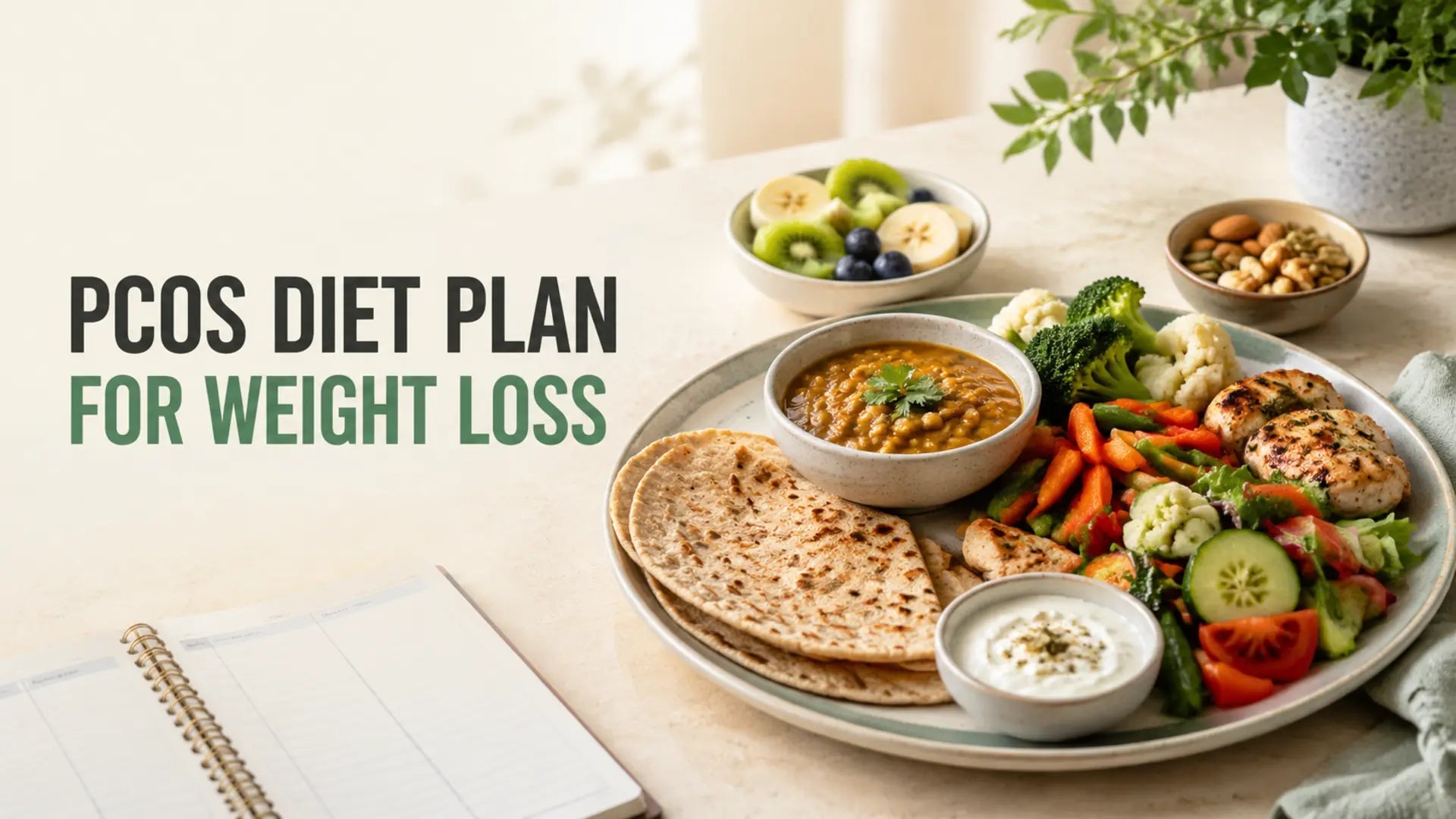
If you have PCOS, diabetes, thyroid disease, high blood pressure, a history of eating disorders, or had gestational diabetes, do not force yourself into a generic social-media diet. Get a tailored plan and keep relevant medical follow-up appointments. You can also explore MNT’s PCOS weight-loss guidance or request a weight-loss nutrition consultation.
A realistic seven-day starter plan
This is not a detox. It is a low-pressure reset for a parent whose meals have become random since having a baby. Adapt or skip the movement steps if they are not yet comfortable or approved for you.
| Day | Focus |
|---|---|
| Day 1 | Eat three basic meals. Add protein to breakfast. Keep water near you. |
| Day 2 | Prepare two easy snacks, such as fruit, dahi, boiled eggs, or roasted chana. |
| Day 3 | Use the plate method for one lunch or dinner. |
| Day 4 | Replace one sugary drink with water, milk, or unsweetened tea. |
| Day 5 | Take a short comfortable walk if it is safe for you. Stop if you have pain, dizziness, increased bleeding, or pelvic pressure. |
| Day 6 | Notice your hungriest time of day and plan a protein-rich snack before it. |
| Day 7 | Keep the two habits that worked. Do not add ten new rules next week. |
What to avoid for postpartum weight loss
Avoid shortcuts that ignore recovery:
- Detox teas and “flat tummy” drinks
- Fat burners and appetite-suppressant supplements
- Extreme fasting, one-meal-a-day plans, and unsupervised very-low-calorie diets
- Waist trainers as a fat-loss strategy
- Social-media workouts that ignore C-section, core, or pelvic-floor recovery
- Unprescribed weight-loss medicines or injections
These methods may look fast, but they do not build habits that work after the challenge ends. Some can be unsafe during recovery or breastfeeding.
When to get medical help
Weight loss should never distract you from postpartum safety. The World Health Organization stresses the importance of postnatal check-ups and knowing danger signs after birth.
Get urgent medical help if you have very heavy bleeding, chest pain, shortness of breath, fainting, severe headache, fever, severe abdominal pain, seizures, or thoughts of harming yourself or your baby.
Book a routine appointment with your obstetric clinician, doctor, dietitian, or pelvic-floor physiotherapist if:
- You want an individual weight-loss plan while breastfeeding
- You had a C-section, difficult birth, or postpartum complication
- You have persistent pelvic-floor symptoms or pain
- You have PCOS, diabetes, thyroid disease, anaemia, high blood pressure, or another health condition
- Your eating feels out of control or dieting is worsening your body image
- You have persistent low mood or anxiety
Perinatal mood and anxiety conditions are common in pregnancy and the first year after delivery. Asking for help is part of health care, not a personal failure. ACOG’s perinatal mental-health resources explain when and how to seek support.
MNT Consultation
Personalised postpartum nutrition support
Get practical nutrition guidance built around your recovery, breastfeeding status, health needs, routine, and Pakistani food preferences.
Frequently asked questions
How soon can I lose weight after pregnancy?
Start with recovery and simple health habits. The right time for active weight loss depends on your delivery, complications, feeding method, symptoms, and medical advice. There is no safe universal deadline.
Can I lose weight while breastfeeding?
Yes, many people can, but it should be gradual and well nourished. Breastfeeding does not guarantee weight loss, and severe restriction is not a good default.
How many calories should I eat while breastfeeding?
There is no one number that suits every mother. Needs depend on body size, activity, recovery, and how much you breastfeed. If you need a structured calorie plan, ask a registered dietitian who can assess your full situation.
Can I eat rice or roti and still lose weight after pregnancy?
Yes. Keep them in balanced meals with protein, vegetables, and sensible portions. Banning normal family foods usually makes a plan harder to sustain.
Is it harder to lose weight after a C-section?
Recovery can limit movement at first because a C-section is surgery. That does not make long-term weight loss impossible. It means the plan should progress more carefully.
Why am I gaining weight while breastfeeding?
Breastfeeding can increase hunger and change your routine. It does not automatically cause weight loss. Look at meal timing, snacks, drinks, sleep, stress, and any concerning medical symptoms before blaming yourself.
Can I use weight-loss supplements after pregnancy?
Do not use them without medical advice. Many products are poorly regulated, and some may be unsafe while breastfeeding or during recovery.
The bottom line
Healthy weight loss after pregnancy is not about getting your old body back on a deadline. It is about building a routine that supports your recovery, energy, strength, and long-term health.
Eat regular meals. Include protein and fibre. Keep normal foods such as roti, rice, fruit, and daal in sensible portions. Move when it is safe for you. Add strength gradually. Get help when something feels wrong.
Your body does not need punishment after pregnancy. It needs recovery, nourishment, and a plan you can actually live with.
We rely on peer-reviewed studies and reputable medical journals.