

Alsi Seeds Benefits: Nutrition, Uses and Side Effects
Alsi seeds provide fiber and plant omega-3 fat, with possible benefits for constipation, cholesterol, and blood pressure. Learn what research shows, how to eat them, and which precautions matter.
Alsi seeds, also called flaxseeds or linseeds, provide fiber, plant-based omega-3 fat, and lignans. They can help relieve constipation and may modestly lower LDL cholesterol and blood pressure. Benefits for blood sugar and weight are less consistent. Ground seeds are easier to digest than whole seeds, while flaxseed oil lacks fiber. [1, 5–9]
For many adults, one to two level tablespoons of ground alsi daily, roughly 7–14 grams, is a practical food portion. Start with a teaspoon, increase slowly, and drink enough fluids. This is food guidance, rather than a proven treatment dose. Always follow the product's preparation instructions. [1, 16, 18, 19, 23]
Alsi Seeds Benefits at a Glance
| Benefit | What human research suggests | What to keep in mind |
|---|---|---|
| Constipation relief | Can improve stool consistency and bowel movements | Start slowly and take enough fluid |
| Cholesterol | May modestly lower LDL and total cholesterol | Seed preparations and oil have different effects |
| Blood pressure | Some trials show lower readings | The size of the benefit varies widely |
| Blood sugar | May improve fasting glucose or insulin-related measures | Reviews disagree about longer-term blood sugar benefits |
| Weight management | Average weight changes are small | Alsi does not directly burn belly fat |
| Inflammation | Some blood markers may decrease | A change in a marker does not prove treatment of a disease |
Studies have tested different seed products, extracts, doses, and time periods. A result from one trial is not a promise for a spoonful added to breakfast. [4–9, 14]
What Are Alsi Seeds?
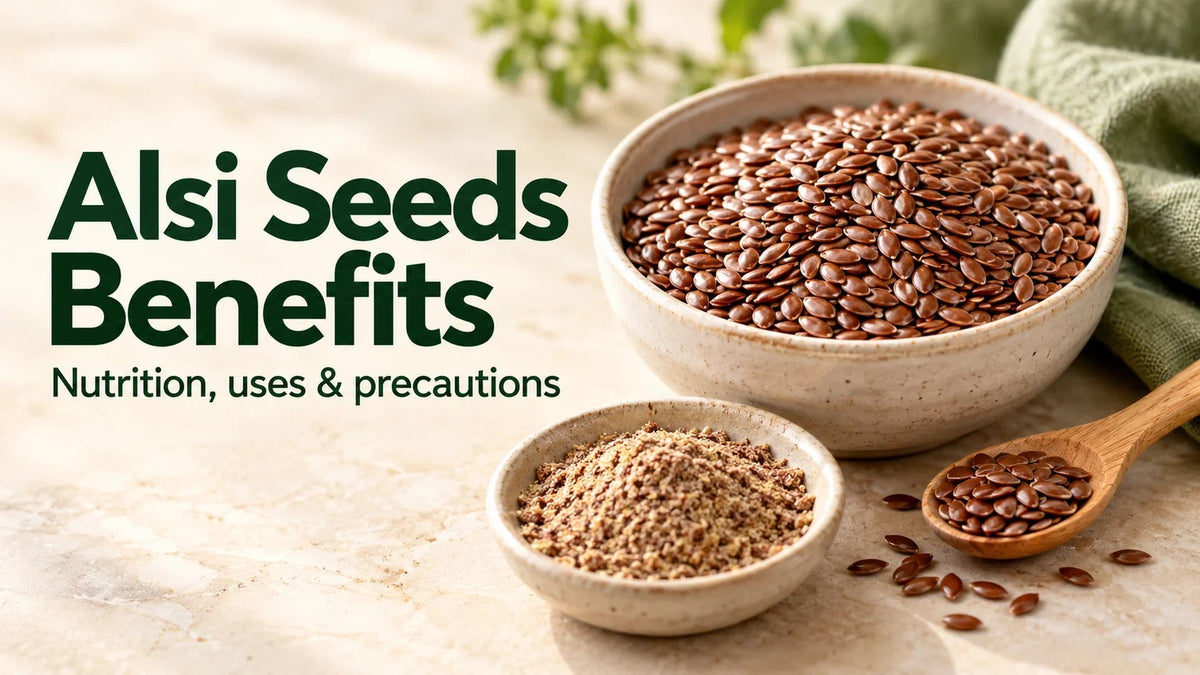
Alsi is the common Urdu and Hindi name for flaxseed, also known as linseed. In Urdu, flax seeds are called السی کے بیج, often written as alsi ke beej.
These small, flat seeds come from the flax plant, Linum usitatissimum. They have a mild, nutty taste and are sold as brown or golden seeds, ground powder, and oil.
Alsi seeds are different from chia seeds and basil seeds, commonly called tukh malanga. Check the label if local names cause confusion.
For a whole-seed option, explore MNT’s flax seeds (alsi).
Alsi Seeds Nutrition
A small serving of ground flaxseed adds fiber and healthy fats to a meal. The table uses 7 grams for one tablespoon of ground seeds. Spoon weights vary, so use the packet's serving weight or a kitchen scale when accuracy matters.
| Nutrient | Ground alsi, 7 g | Ground alsi, 14 g |
|---|---|---|
| Calories | About 37 kcal | About 75 kcal |
| Fiber | 1.9 g | 3.8 g |
| Protein | 1.3 g | 2.6 g |
| Total fat | 3.0 g | 5.9 g |
| Carbohydrate, including fiber | 2.0 g | 4.0 g |
| ALA omega-3 fat | About 1.6 g | About 3.2 g |
Values are rounded from USDA standard-reference data. The 14-gram values are calculated from the same data. A tablespoon of whole seeds weighs more than a tablespoon of ground seeds. [2]
Why fiber, omega-3 fats, and lignans matter
Fiber: Flaxseed contains soluble and insoluble fiber. Soluble fiber forms a gel when mixed with water. Other fiber adds bulk to stool. Together, they help explain its digestive benefits. [24]
ALA omega-3: Alpha-linolenic acid, or ALA, is an essential fat that your body must get from food. Only a small amount becomes EPA and DHA, the omega-3 fats found in fish and algae. Alsi therefore does not provide the same mix of fats as fish oil. [3]
Lignans: These plant compounds have antioxidant and weak estrogen-like properties. That does not mean flaxseed works like hormone medicine or reliably changes hormone levels. [10, 15]
Six Alsi Seeds Benefits and the Science Behind Them
1. Can help relieve constipation
Alsi seeds can help make stools softer and easier to pass. Their fiber adds bulk and holds water, which can support bowel movements. [22]
What the research shows: A 12-week trial in adults with constipation and type 2 diabetes found that baked flaxseed improved constipation symptoms and stool consistency. The study tested a specific population and preparation, so its results do not apply equally to everyone. [4]
How to use this information: Introduce a small portion alongside other fiber sources, such as oats, daal, fruit, and vegetables. Increase fiber gradually and drink enough fluids. Two tablespoons of ground flaxseed provide about 3.8 grams of fiber, so they supply only part of your daily needs. [2, 20]
Extra fiber can worsen discomfort in some people. Constipation with blood in the stool, ongoing abdominal pain, vomiting, or inability to pass gas needs prompt medical assessment. [21]
2. May modestly lower LDL cholesterol
Flaxseed may lower total cholesterol and LDL cholesterol, often called "bad" cholesterol. The benefit is generally better supported for seed preparations than for oil. [5, 15]
How it may work: Soluble fiber can interfere with the recycling of bile acids in the gut. The body uses cholesterol to make replacement bile acids. Lignans and other seed compounds may also contribute. [15]
What the research shows: A review of 62 trials found an average LDL reduction of about 4.2 mg/dL. Some groups had larger changes, while others had little benefit. [5]
How to use this information: Include alsi within an eating plan that also addresses saturated fat and overall food choices. A spoonful is a useful addition, but it cannot compensate for the rest of a poor diet. Continue prescribed cholesterol treatment.
3. May help lower blood pressure
Some trials show that flaxseed lowers blood pressure, but the size of the effect varies.
What the research shows: A 2025 review examined 18 trials in people with cardiovascular risk factors. Average reductions were about 4.8 mmHg in systolic pressure and 3.1 mmHg in diastolic pressure. These are the top and bottom numbers on a blood pressure reading. Results differed greatly between studies. [6]
How to use this information: Treat flaxseed as one food choice within a wider plan that includes suitable salt intake, physical activity, and prescribed care. The research does not establish that one or two tablespoons will produce those reductions for you. Keep taking blood pressure medicine as directed.
4. May support blood sugar management
Alsi may improve some blood sugar measures, but it is not a proven way to reverse diabetes.
How it may work: The gel formed by soluble fiber can slow digestion and glucose absorption. However, this mechanism alone cannot predict how much someone's blood sugar will change. [24]
What the research shows: A 2023 review reported improvements in fasting blood sugar and insulin-related measures across 47 randomized trials. These included insulin resistance, where cells respond less well to insulin. It did not find a statistically clear overall improvement in HbA1c, a measure of longer-term blood sugar control. [7]
A separate review of 13 studies in people with type 2 diabetes reported an HbA1c benefit. The different findings show why the population and form of flaxseed matter. [8]
How to use this information: Add flaxseed to a meal that fits your diabetes plan. Adding it to a sugary drink does not remove the sugar. If you take insulin or diabetes medicine, discuss regular use and any monitoring needs with your clinician. [17]
5. May offer a small weight-management benefit
Alsi seeds may help some people feel fuller, but they do not directly burn fat or target belly fat. Fiber is one possible reason for changes in appetite. [24]
What the research shows: A 2024 review of 64 trials found an average weight difference of about 0.63 kg in favor of flaxseed products. Results varied, and the studies tested different forms and doses. [9]
NCCIH also describes a trial of a specially prepared flaxseed mucilage powder. Its findings should not be presented as proof that ordinary seed portions produce the same weight loss. [16]
How to use this information: Add a measured portion to food that fits your calorie needs. Plain dahi with fruit or unsweetened oats are simple options. Two tablespoons of ground flaxseed add about 75 calories; adding more does not automatically help you lose more weight. [2]
6. May reduce some inflammation markers
Research suggests possible reductions in certain blood markers of inflammation. This is different from proving that flaxseed treats an inflammatory disease.
What the research shows: A 2024 review of 54 trials found reductions in C-reactive protein, or CRP, and interleukin-6, or IL-6. It did not find a significant overall change in TNF-alpha, another inflammation marker. Results varied substantially between studies. [14]
How to use this information: Consider this supporting research, rather than a reason to use high doses. A change in a laboratory marker does not establish relief of symptoms or prevention of disease.
Alsi Seeds Benefits for Women
Women can get the same fiber and healthy-fat benefits as other adults. Claims about PCOS, fertility, estrogen, and menopause need separate examination.
Do alsi seeds balance hormones?
Broad claims that alsi "balances hormones" are not established. A 2023 review of ten trials found no significant overall effect on the sex-hormone measures studied. [10]
Having estrogen-like plant compounds is not enough to prove that a food corrects a hormone disorder.
Can alsi help with PCOS?
Early research suggests possible benefits for some metabolic and hormone measures, but flaxseed is not a proven PCOS or fertility treatment.
A small 2020 trial reported improvements in several insulin-related and blood-fat measures when flaxseed was added to lifestyle advice. These findings are promising, but need confirmation in larger studies. [25]
In a 2025 trial, 70 women with PCOS received lifestyle advice with or without milled flaxseed for 12 weeks. Some hormone measures changed, while several others did not. Participants knew which group they were in, and the study did not establish improved pregnancy outcomes. [11]
If you have PCOS, choose foods within a plan that considers your symptoms, medicines, blood sugar, and nutrition needs.
Does alsi help with menopause?
Flaxseed is not a reliable treatment for hot flashes. A trial involving 188 women found that a flaxseed bar did not reduce hot flashes significantly more than a placebo bar. [12]
Alsi can still add nutrients to meals during menopause. Persistent symptoms may need treatment suited to your health history.
Alsi Seeds for Skin and Hair
Evidence for skin benefits is limited, and flaxseed is not an established hair-growth treatment.
A small 12-week study in women with sensitive skin found better hydration and some improvements in skin condition with flaxseed oil. It studied an oil supplement, rather than ordinary servings of seeds or homemade gel. [13]
That result does not establish that eating alsi clears acne, lightens skin, or regrows hair. Flaxseed gel may be used as a styling product, but styling hair and treating hair loss are different outcomes.
Include alsi for its nutritional value. Persistent hair shedding or skin problems deserve assessment of their cause.
Whole, Ground, Soaked Seeds, or Flaxseed Oil?
Ground flaxseed generally gives easier access to the seed's nutrients. Whole seeds may pass through the gut without being fully digested. Soaking changes their texture, while oil provides a different nutrient mix. [1, 15]
| Form | What it offers | Main limitation |
|---|---|---|
| Whole alsi seeds | Fiber, fats, and lignans within the seed | Some seeds may pass through unbroken |
| Ground alsi powder or meal | Easier access to the contents, including fiber | Check preparation and storage instructions |
| Soaked whole seeds | A softer texture and gel-like coating | Soaking does not turn them into ground seeds |
| Flaxseed oil | A concentrated source of ALA fat | No fiber; it does not reproduce all seed benefits |
Choose ground or milled seeds for most everyday uses. If you buy whole seeds, use a clean coffee or spice grinder. Grinding is not a substitute for any cooking required on the packet. [1, 18]
An oil, fiber-extract, or lignan-extract study should not be treated as proof of the same effect from a spoonful of seeds.
How to Eat Alsi Seeds
Use a small, measured portion in foods you already enjoy. Choose food-grade seeds and follow the preparation instructions before adding them to a meal.
| Food | Simple way to include alsi |
|---|---|
| Oats or dalia | Add ground flaxseed during preparation and cook as directed |
| Roti or chapati | Mix a measured amount into the dough, then cook |
| Dahi or raita | Mix in a product suitable for eating without further cooking |
| Smoothie | Use an appropriately prepared, ready-to-eat product |
| Soup | Add during cooking, following the packet instructions |
For example, you could stir one teaspoon of suitable ground flaxseed into plain dahi. If you tolerate it, gradually increase the amount over time. You do not need to add alsi to every meal. [19]
Do alsi seeds need cooking?
Preparation depends on the product. Flaxseed naturally contains compounds that can release cyanide. Baking and cooking reduce exposure. Products labeled for cooking or baking must be prepared that way. Avoid unripe seeds. [16, 18]
Do not assume that soaking or a brief dry roast makes a cooking-only product ready to eat. Follow its instructions rather than a fixed roasting time from an online recipe. [18]
How should you store alsi seeds?
Keep whole seeds sealed in a cool, dry place. Store ground flaxseed in an airtight container in the refrigerator, following the product's storage and use-by guidance. Grinding small batches can make freshness easier to manage. [23]
How Much Alsi Should You Eat Each Day?
For many adults, one to two level tablespoons of ground flaxseed daily is a reasonable food portion. Using the reference weight above, that is about 7–14 grams. It is not a universal dose for every person or health condition. [1, 23]
A practical approach is to:
- Start with one teaspoon daily.
- Increase slowly if your gut tolerates it.
- Measure the portion rather than using heaped spoonfuls.
- Take it with adequate fluid and prepare it as directed.
NHS guidance also advises starting with a teaspoon and gradually increasing. [19]
Higher study doses are not general eating instructions. In June 2026, Germany's Federal Institute for Risk Assessment, or BfR, advised a maximum adult daily intake of 20 grams, including consideration of cadmium exposure. This is guidance from that authority, rather than a universal treatment target. Do not increase to 30 grams simply because a trial tested that amount. [18]
How much water should you drink?
Frimley Health NHS guidance advises at least 150 mL of fluid per tablespoon of linseeds. Your total daily fluid needs also depend on your health, activity, and climate. [19, 20]
Mix flaxseed into food rather than swallowing dry spoonfuls. If you have been told to restrict fluids, seek individual advice before adding more fiber.
How long does it take to see benefits?
There is no fixed timeline. Bowel habits may respond sooner than cholesterol or other blood tests, but neither the timing nor the size of a benefit is guaranteed.
Many studies assess outcomes over weeks or months. Their results cannot promise a change in three days or a specific amount of weight loss. If you are managing a condition, use the measurements and follow-up schedule recommended by your clinician. [4–9]
Alsi Seeds Side Effects and Precautions
Possible side effects include gas, bloating, fullness, and diarrhea. Larger amounts or a sudden increase in fiber may cause more discomfort. Reduce the portion if symptoms develop. [16, 17]
Medicines and existing health conditions
Discuss regular use, larger portions, or supplements with your clinician if you take:
- Blood-thinning or antiplatelet medicines.
- Medicines for blood pressure or diabetes.
- Estrogen treatment or hormonal contraception.
Possible interactions depend on the product, dose, and medicine. Some are based on theoretical concerns rather than strong clinical evidence. [16, 17]
Flaxseed fiber can also affect oral medicine absorption. Do not take it at the same time as oral medicines; ask a pharmacist about a suitable interval for your medicine. [1]
Avoid flaxseed if you have swallowing difficulties or a narrowed or blocked bowel. Get medical advice about suitable alternatives. Tell your surgical team about flaxseed supplements or oil before an operation. [17, 22]
Pregnancy, breastfeeding, and children
Safety evidence during pregnancy and breastfeeding is limited. Ask your maternity clinician before starting regular flaxseed use, larger amounts, or supplements. [16]
Adult portions are not dosing advice for young children. BfR advises against raw, ground flaxseed for young children. Ask a pediatric clinician or dietitian about age-appropriate portions and preparation. [18]
Allergy
Flaxseed can cause an allergic reaction in some people. Seek urgent medical help for trouble breathing or swelling of the mouth or throat after eating it. [17]
Frequently Asked Questions
Can you eat alsi seeds every day?
Many adults can include a modest, properly prepared portion daily. Start small, drink enough fluids, and check suitability if you take medicines or have a medical condition. More is not always better. [16, 19]
Is morning or night the best time to eat alsi?
There is no established best time for its overall health benefits. Choose a meal that fits your routine and keep medicine timing in mind. An empty stomach is not required to get the seed's nutrients.
Is flaxseed water as useful as eating the seeds?
Straining out the seeds removes the seed solids. Water alone should not be expected to provide the same fiber, fats, and other nutrients as eating the prepared seeds. A study of a manufactured fiber extract does not prove the same effect from homemade flaxseed water. [16]
Can you take alsi seeds with milk?
Yes. Use appropriately prepared ground seeds in milk-based foods, such as porridge. If the product requires cooking, mixing it into cold milk does not meet that instruction. [18]
Are brown or golden flaxseeds better?
Both can be used as foods. Nutrient composition can vary by variety and growing conditions. Choose based on freshness, taste, price, and preparation instructions rather than expecting one color to provide guaranteed extra benefits. [15]
Can you eat alsi seeds in summer?
They can fit into meals throughout the year. Check storage carefully in hot weather and drink fluids appropriate to your health and climate. The need for suitable preparation applies in every season. [18–20]
Do alsi seeds have special benefits for men?
Men can get the same fiber and healthy-fat benefits. Flaxseed should not be promoted as a proven testosterone booster or a treatment for male infertility. [10]
Can alsi seeds prevent cancer?
Research on flaxseed and cancer is mixed. It is not established as a way to prevent or treat cancer. Discuss supplements with your treatment team if you are receiving cancer care. [17]
Making Alsi Part of Your Diet
Alsi seeds are a useful source of fiber and plant omega-3 fat. Their most practical role is as a measured addition to meals, with possible digestive and modest heart-related benefits.
Ready to choose a pack? View MNT flax seeds and current pack options.
Choose a suitable product, prepare it as directed, start small, and consider the rest of your diet. For help fitting alsi into a plan for constipation, diabetes, PCOS, or weight management, explore MNT's nutrition consultation.
We rely on peer-reviewed studies and reputable medical journals.