

Cumin Seeds in Urdu (زیرہ): Meaning, Uses, Benefits and Safety
Cumin seeds are called زیرہ (zeera or jeera) in Urdu. Learn their English name, how to tell them apart from kalonji, and what cumin can—and cannot—do for health.
Quick Answer
Cumin seeds are called زیرہ in Urdu. They are commonly written as zeera, jeera, or zira in Roman Urdu. The English name is cumin or cumin seeds, and the usual culinary spice comes from the plant Cuminum cyminum.
Regular zeera is not the same as kalonji (black seed), fennel (saunf), or every product sold as “black cumin.” Cumin is mainly a flavourful cooking spice. It contains useful plant compounds and small amounts of nutrients, but it does not cure diabetes, burn belly fat, detox the body, or replace medical treatment.
Cumin Seeds in Urdu: At a Glance
| Question | Direct answer |
|---|---|
| Cumin seeds in Urdu | زیرہ |
| Roman Urdu | Zeera, jeera, or zira |
| English name of zeera | Cumin or cumin seeds |
| Scientific name | Cuminum cyminum |
| Whole cumin | ثابت زیرہ (sabut zeera) |
| Cumin powder | زیرہ پاؤڈر or پسا ہوا زیرہ |
| Is zeera the same as cumin? | Yes |
| Is zeera the same as kalonji? | No |
What Are Cumin Seeds Called in Urdu?
Cumin seeds are called زیرہ in Urdu. In everyday Pakistani cooking, “zeera” usually means the familiar light-brown, narrow spice used in daal, curries, rice, raita, chaat, and masala blends.
The accepted botanical name of ordinary cumin is Cuminum cyminum. It belongs to the Apiaceae family, which also includes coriander, fennel, parsley, and caraway (Kew Science).
If a recipe says “add zeera,” it normally means regular cumin. Check the appearance and label if the recipe instead says kala zeera, shahi zeera, or kalonji.
Zeera, Jeera, Sabut Zeera and Zeera Powder
The different words below usually describe the same spice in different forms or spellings.
| Term | Urdu | Meaning in English | What it usually means in the kitchen |
|---|---|---|---|
| Zeera / jeera / zira | زیرہ | Cumin | The everyday whole spice or the general name |
| Sabut zeera | ثابت زیرہ | Whole cumin seeds | Whole seeds, often added to hot oil first |
| Zeera powder | زیرہ پاؤڈر | Cumin powder | Ground cumin seeds |
| Pisa hua zeera | پسا ہوا زیرہ | Ground cumin | Another name for cumin powder |
| Safed zeera | سفید زیرہ | White cumin | Often a market name for regular cumin; labels can vary |
Is Zeera the Same as Cumin?
Yes. Zeera is the Urdu name for cumin. “Jeera” is a common Roman spelling used in India and Pakistan. The spelling changes, but the usual ingredient is the same: Cuminum cyminum.
What Does Safed Zeera Mean?
In many Pakistani markets, safed zeera means regular culinary cumin. It is usually tan, yellow-brown, or light brown—not bright white. Sellers may use the word to separate ordinary cumin from darker spices called kala zeera or black cumin.
Because local market names are not always consistent, use the product label and seed appearance as well as the Urdu name.
Cumin vs Kalonji, Kala Zeera, Caraway and Saunf
This is the most important section after the translation itself. Similar names do not always mean the same seed.
| Spice | Usual Urdu name | Scientific name | How it looks | Main point |
|---|---|---|---|---|
| Regular cumin | زیرہ (zeera) | Cuminum cyminum | Light-brown, narrow, ridged seeds | The usual cumin in daal, curries, pulao, and raita |
| Kalonji / black seed | کلونجی | Nigella sativa | Small, black, angular seeds | A different plant and flavour from cumin |
| Kala or shahi zeera | کالا زیرہ / شاہی زیرہ | Often Elwendia persica (formerly Bunium persicum); labels vary | Darker, thin, often curved seeds | A specialty spice; do not assume it is regular cumin |
| Caraway | Regional names vary; sometimes called shah zeera | Carum carvi | Darker, curved seeds | A separate spice with a more anise-like flavour |
| Fennel | سونف (saunf) | Foeniculum vulgare | Larger, greener, plumper seeds | Sweet and liquorice-like, not cumin |
Is Cumin the Same as Kalonji or Black Seed?
No. Cumin is not kalonji. Regular cumin is Cuminum cyminum. Kalonji is Nigella sativa, a member of a different plant family. Kalonji is black, angular, and more peppery or onion-like in taste, while cumin is light brown, ridged, warm, and earthy.
The English phrase “black cumin” causes confusion because some sources use it for kalonji, while regional food markets may use related names for other dark seeds. A scholarly review distinguishes ordinary cumin, kalonji, and shahi jeera as separate spices (Srinivasan, 2018). If you need a specific spice for a recipe or a supplement, do not rely on the English phrase alone.
Is Kala Zeera the Same as Regular Zeera?
Not necessarily. In South Asian food markets, kala zeera or shahi zeera may refer to a darker specialty spice, often Elwendia persica—a plant previously listed as Bunium persicum in many sources (Kew Science). It has a different aroma and is not a direct substitute for ordinary cumin.
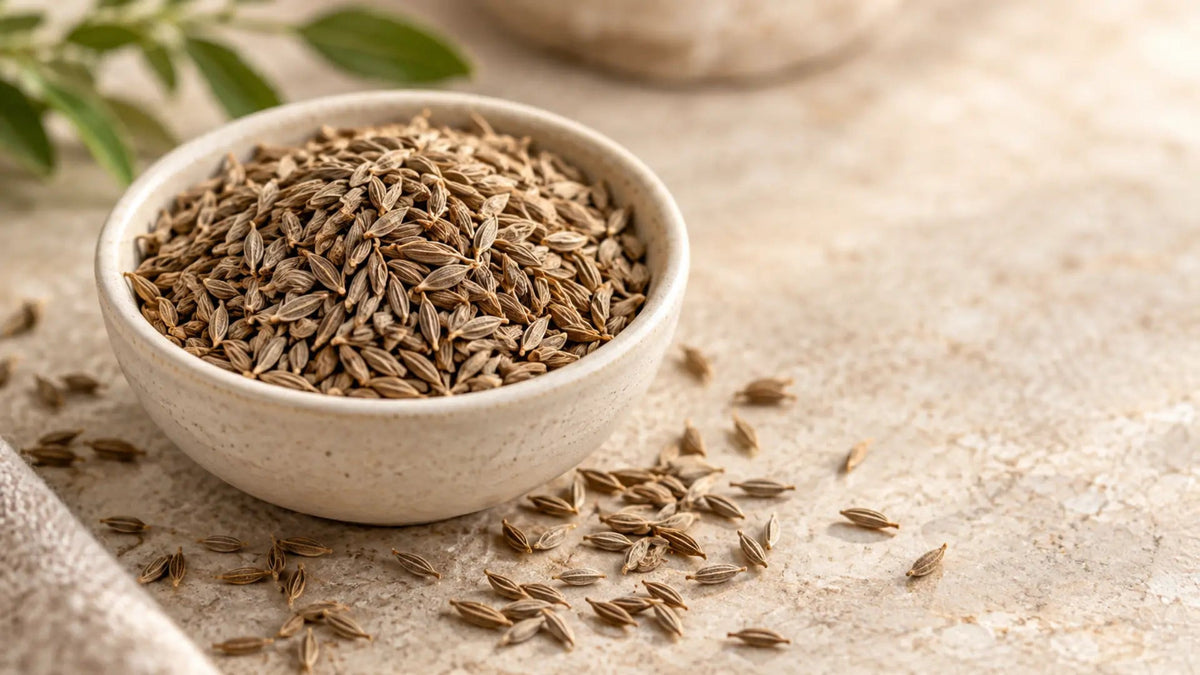
How Cumin Looks, Tastes and Is Used
Whole cumin seeds are usually:
- Long and narrow
- Light brown to yellow-brown
- Marked with fine lengthwise ridges
- Strongly aromatic
- Warm, earthy, and slightly bitter in taste
Cumin is used whole, roasted, or ground. Each form has a different role.
| Form | Best use | Helpful tip |
|---|---|---|
| Whole cumin seeds | Tarka for daal, curries, vegetables, zeera rice, and pulao | Add to warm oil or ghee briefly until fragrant; do not burn it |
| Roasted cumin | Raita, fruit chaat, chickpea chaat, salads, and lassi | Dry-roast gently, cool, then grind if needed |
| Cumin powder | Masala blends, marinades, soups, curries, and yogurt | Buy small amounts or grind at home because aroma fades faster |
| Zeera water | A plain, unsweetened flavoured drink | Enjoy it for taste; do not treat it as a medicine |
Common Uses of Cumin in Pakistani Cooking
Cumin is commonly used in:
- Daal and chana tarka
- Vegetable curries and chicken curry
- Zeera rice, pulao, and biryani
- Raita and dahi bhalay
- Chaat, fruit chaat, and chickpea salad
- Pickles and spice blends
- Marinades for meat, fish, or vegetables
Cumin Nutrition and Possible Benefits
Cumin is first a food spice, not a treatment. Its strong flavour means a small amount can add taste without adding much energy. USDA FoodData Central lists cumin seed as a source of fibre and several minerals, including iron, calcium, magnesium, and potassium (USDA FoodData Central).
However, a teaspoon of cumin is a small serving. It can contribute nutrients, but it cannot replace vegetables, pulses, protein foods, medicine, or treatment for a nutrient deficiency.
1. Cumin Adds Flavour to Nutritious Meals
This is cumin’s most reliable benefit. It can make simple foods such as daal, vegetables, beans, yogurt, and grilled foods more enjoyable without needing large amounts of oil, cream, or sugar.
2. Cumin Contains Small Amounts of Useful Nutrients
Cumin contains iron and other minerals. That does not mean cumin alone treats iron-deficiency anaemia. Anaemia has different causes and needs proper assessment, especially in children, pregnant people, and anyone with fatigue, breathlessness, or heavy periods.
3. Cumin Has Traditional Digestive Use, but It Is Not a Cure
Zeera is widely used in South Asian cooking and home remedies for gas, bloating, and heavy meals. Research has examined cumin’s aromatic compounds and possible digestive actions, but much of the evidence is laboratory or animal research rather than studies of ordinary household amounts (Srinivasan, 2018).
Some people enjoy cumin in meals or a mild drink after eating. But cumin should not be used to ignore ongoing pain, repeated vomiting, blood in the stool, severe reflux, diarrhoea, constipation, or unexplained weight loss.
4. What About Blood Sugar, Cholesterol and Weight Loss?
Some controlled studies have tested cumin supplements or concentrated preparations, not just the small amount of zeera used in a curry. A 2021 systematic review and meta-analysis reported changes in some blood-glucose measures, but not all measures changed, and this does not prove that everyday culinary cumin can treat diabetes (Tavakoli-Rouzbehani et al., 2021).
The practical message is simple:
- Use cumin as a food spice if you enjoy it.
- Do not reduce or stop diabetes medicine because of cumin.
- Do not expect zeera water to melt fat or fix high cholesterol.
- For weight management, focus on the full eating pattern, portions, protein, fibre, movement, sleep, stress, and medical care where needed.
5. Cumin Contains Aromatic Plant Compounds
Cumin contains aromatic compounds such as cuminaldehyde. These compounds are interesting in food-science research, but “contains antioxidants” is not the same as “prevents disease.” Be cautious of social-media claims that cumin prevents cancer, reverses PCOS, detoxes the liver, or cures acidity.
What Is Zeera Water?
Zeera water is water infused with cumin seeds. It may be made by soaking, steeping, or briefly simmering the seeds.
Simple Zeera Water Method
- 1.Add ½ to 1 teaspoon of whole cumin seeds to 1 cup (about 250 ml) of clean water.
- 2.Either steep it for 5 to 10 minutes or simmer gently for 2 to 3 minutes.
- 3.Let it cool to a comfortable temperature, then strain if you prefer.
- 4.Drink it plain. Avoid adding sugar if you want a low-calorie drink.
There is no standard medical dose for zeera water. It can be a pleasant unsweetened drink, but it is not a detox, a guaranteed digestion cure, or a proven fat-burning drink. Stop using it if it gives you heartburn, nausea, stomach pain, or another unwanted symptom.
Safety, Side Effects and Precautions
For most people, using cumin in normal cooking amounts is very different from taking a concentrated supplement, extract, essential oil, or large medicinal dose.
Possible Side Effects
Some people may notice:
- Heartburn or reflux
- Stomach discomfort
- Nausea or loose stools
- Allergy or irritation
Stop using cumin and seek urgent care if you develop signs of a serious allergic reaction, such as swelling of the lips or throat, breathing difficulty, or widespread hives.
Who Should Be More Careful?
Ask a qualified clinician or pharmacist before using concentrated cumin supplements, extracts, or essential oil if you:
- Are pregnant or breastfeeding
- Take regular medicines, especially medicine for blood glucose or blood clotting
- Have a bleeding disorder, planned surgery, or a long-term health condition
- Are considering cumin for a child or infant
Normal food use is not the same as a concentrated product. Do not swallow cumin essential oil unless a qualified clinician specifically advises it. Never replace prescribed treatment with a spice, tea, or supplement.
How to Buy and Store Cumin Seeds in Pakistan
Choose cumin that is clean, dry, and aromatic. Look for:
- A sealed packet or a clean, trusted shop
- A clear product name and, where possible, the botanical name
- Manufacturing and expiry dates
- Dry seeds with no visible insects, mould, or moisture
- A fresh earthy aroma
Whole cumin usually keeps its aroma longer than ground cumin. Store it in an airtight container away from heat, sunlight, and moisture. Buy smaller amounts of cumin powder because it loses aroma faster.
If a label says “black cumin,” check the Urdu name, seed appearance, and botanical name. It may not be ordinary zeera.
Frequently Asked Questions
What is cumin seeds in Urdu?
Cumin seeds are called زیرہ (zeera or jeera) in Urdu.
What is the English name of zeera?
The English name of zeera is cumin or cumin seeds.
Is zeera and jeera the same thing?
Yes. Zeera and jeera are common Roman Urdu/Hindi spellings for زیرہ, meaning cumin.
What is sabut zeera in English?
Sabut zeera means whole cumin seeds. “Sabut” means whole or unground.
What is cumin powder called in Urdu?
Cumin powder is called زیرہ پاؤڈر or پسا ہوا زیرہ in Urdu.
Is safed zeera the same as cumin?
In many Pakistani markets, safed zeera refers to ordinary cumin. Because local labels vary, check the appearance and product label if you need a specific spice.
Is cumin the same as kalonji?
No. Cumin is Cuminum cyminum. Kalonji is Nigella sativa. They look, taste, and belong to different plant groups.
Is cumin the same as saunf?
No. Saunf is fennel. It is greener, sweeter, and more liquorice-like than cumin.
Can cumin water reduce weight?
Zeera water alone has not been proven to cause meaningful fat loss. It may fit into a healthy routine as an unsweetened drink, but weight loss depends on the full diet, activity, sleep, stress, and health context.
Can people with diabetes eat cumin?
Many people can use cumin as a normal cooking spice. It should not replace diabetes medicine, glucose monitoring, or a diabetes meal plan. Speak with your clinician before using concentrated cumin products.
Is cumin safe during pregnancy?
Cumin used as a normal food spice is different from high-dose supplements, extracts, and essential oils. Discuss concentrated products with a qualified clinician during pregnancy or breastfeeding.
Bottom Line
Cumin seeds in Urdu are called زیرہ (zeera or jeera). Regular zeera is Cuminum cyminum, the light-brown culinary spice used in Pakistani cooking. It is different from kalonji, saunf, caraway, and many products labelled black cumin.
Use cumin for its flavour and as part of balanced meals. It can contribute small amounts of nutrients and has interesting research behind it, but it is not a cure, detox, or guaranteed weight-loss tool. When you see a health claim about zeera or zeera water, ask whether it is based on normal food use, a concentrated supplement, or only laboratory research.
We rely on peer-reviewed studies and reputable medical journals.