

Basil Seeds in Urdu: Tukhm-e-Malanga, Names, Uses & Benefits
Basil seeds in Urdu are commonly called تخمِ ملنگا (Tukhm-e-Malanga) and may also be sold as Sabja or Tukmaria. Learn how to identify, soak, use, and eat them safely—and how they differ from chia seeds....
Quick Answer
Basil seeds in Urdu are commonly called تخمِ ملنگا (Tukhm-e-Malanga). They may also be sold as Sabja seeds, Tukmaria, or تخمِ ریحان (Tukhm-e-Rehan) in some regions and markets.
True sweet basil seeds come from the plant Ocimum basilicum L. In English, they are called basil seeds or sweet basil seeds. They are not the same as chia seeds. Chia comes from a different plant, Salvia hispanica.
Local names are not always used consistently. In particular, تخمِ بالنگو (Tukhm-e-Balangu) may refer to Balangu seeds from Lallemantia royleana rather than true basil seeds. When accurate identification matters, check the botanical name on the package instead of relying only on a local name.
Basil Seeds in Urdu: Names at a Glance
| Search term or name | Correct meaning or use |
|---|---|
| Basil seeds in Urdu | تخمِ ملنگا (Tukhm-e-Malanga) |
| Basil seeds in English | Basil seeds or sweet basil seeds |
| Scientific name | Ocimum basilicum L. |
| Common South Asian names | Sabja seeds and Tukmaria |
| Another name used in some markets | تخمِ ریحان (Tukhm-e-Rehan) |
| Similar market term | تخمِ شربتی; usage varies by region and seller |
| Name that may refer to another plant | تخمِ بالنگو or Balangu seeds; may be Lallemantia royleana |
| Chia scientific name | Salvia hispanica; it is a different seed |
The spellings Tukh Malanga, Tukhm Malanga, and Tukhm-e-Malanga are all seen in Roman Urdu and online searches. They usually point to the same commonly used market name, but the package label is a more reliable guide than spelling.
What Is Tukhm-e-Malanga?
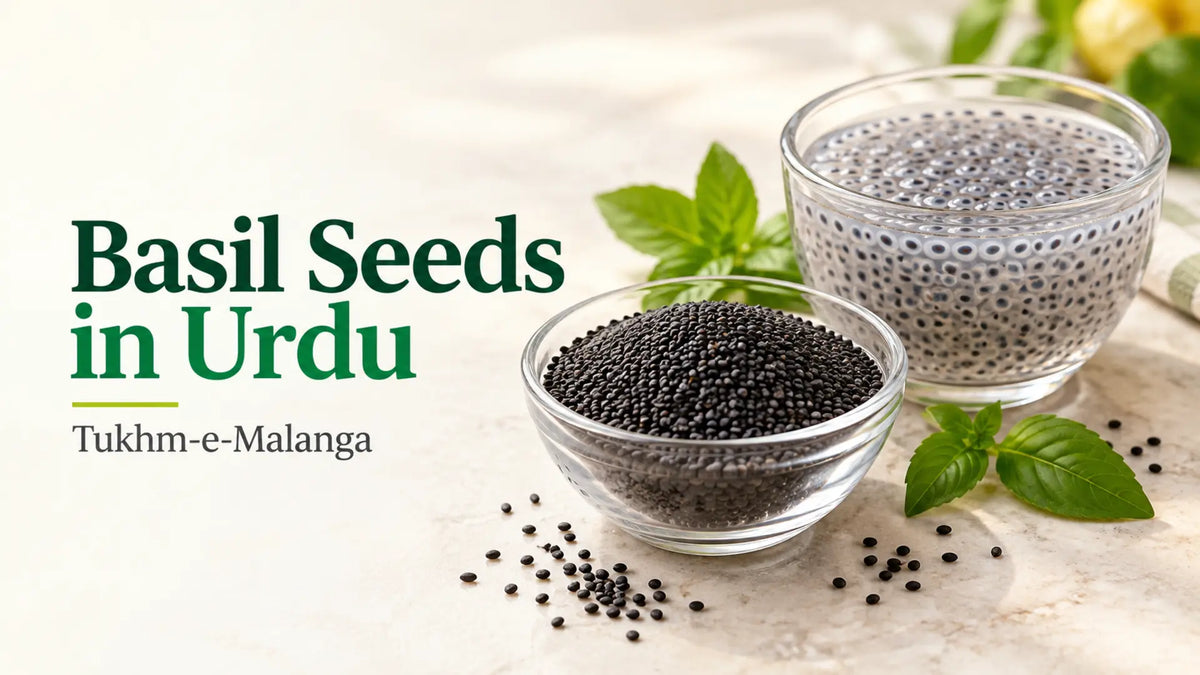
Tukhm-e-Malanga refers to the small edible seeds of sweet basil. The word tukhm means “seed.” The seeds are usually black, small, and slightly oval or teardrop-shaped.
When placed in water, the outer layer absorbs liquid and forms a clear, soft, gel-like coating. This coating is made from seed mucilage. It gives soaked basil seeds their familiar texture in drinks and desserts.
In Pakistan and South Asia, people commonly add soaked basil seeds to sharbat, falooda, lemonade, lassi, milk drinks, yogurt, and desserts. They are a food ingredient, not a medicine.
What Is Tukhm-e-Malanga Called in English?
Tukhm-e-Malanga is commonly called basil seeds or sweet basil seeds in English. You may also see the names Sabja seeds, Tukmaria seeds, or falooda seeds on food packages and recipes.
The most useful English and scientific identification is:
- Common English name: Basil seeds or sweet basil seeds
- Plant: Sweet basil
- Scientific name: Ocimum basilicum L.
- Appearance: Small, dark seeds that form a gel coating after soaking
The term basil seed can also be written in the singular, but packages and recipes usually use basil seeds.
Are Basil Seeds and Chia Seeds the Same?
No. Basil seeds and chia seeds are different seeds from different plants. They look somewhat similar after soaking because both form a gel-like coating, but they should not be treated as the same ingredient when accurate identification matters.
| Feature | Basil seeds | Chia seeds |
|---|---|---|
| Scientific name | Ocimum basilicum L. | Salvia hispanica |
| Common local name | Tukhm-e-Malanga, Sabja, Tukmaria | Usually sold as chia seeds |
| Dry appearance | Usually small and dark or black | Often mottled black, grey, white, or brown |
| Soaked appearance | A clear gel coat forms around a dark center | A soft gel forms around the seed |
| Common uses | Sharbat, falooda, lassi, and summer drinks | Oats, yogurt, smoothies, and baking |
| Preparation | Usually soaked before eating | Used dry or soaked, depending on the recipe |
For a separate comparison, see Chia Seeds vs. Tukhm-e-Sharbati: Same or Different?.
Why Are the Names of Basil Seeds Confusing?
The confusion comes from regional names, trade names, different Roman Urdu spellings, and similar-looking seeds sold in herbal markets. A seller may use Sabja, Tukmaria, Tukhm-e-Sharbati, or another local term without clearly stating the plant species.
This matters because Tukhm-e-Balangu is not always the same as Tukhm-e-Malanga. A PubMed-indexed authentication study found that Lallemantia royleana and Ocimum basilicum can be confused or substituted in herbal markets because their seeds look similar. Authentication of Tukhm-e-Balangu and related herbal seeds
Therefore:
- Do not assume every black seed sold as “tukhm” is basil seed.
- Do not use the name Tukhm-e-Balangu as a guaranteed synonym for basil seed.
- Treat تخمِ شربتی as a market term that may vary by location.
- Look for Ocimum basilicum L. on the ingredient label.
- Buy sealed, food-grade seeds from a seller that provides product information.
Basil Seeds Nutrition and Gel-Forming Fiber
Basil seeds contain dietary fiber, protein, fats, minerals, and plant compounds. Their outer coating contains mucilage, which is responsible for the gel that forms in water.
The nutritional composition can vary by plant variety, growing region, processing method, and storage conditions. A scientific review reports wide differences between samples, so one fixed nutrition number should not be treated as accurate for every brand or serving. Basil Seeds as a Novel Food: Nutrients and Functional Properties
For this reason, check the nutrition label when one is available. Basil seeds should be viewed as a small food ingredient, not as a replacement for a balanced diet.
What Are the Possible Benefits of Basil Seeds?
The strongest evidence relates to their nutritional composition and gel-forming fiber. Research on disease-specific benefits is still limited, so the following claims should be understood as possible or preliminary—not guaranteed medical effects.
1. They provide dietary fiber
Fiber can support normal digestion and bowel regularity. Soaked basil seeds may help some people increase their fiber intake, especially when consumed with enough fluid. Increase fiber gradually because a sudden increase may cause gas, bloating, or loose stools. NHS guidance on increasing fiber
2. They may help with fullness
The gel and fiber can make a drink or meal feel more filling for some people. This may help reduce unnecessary snacking, but basil seeds do not burn fat and do not directly remove belly fat. Weight change depends on the overall diet, activity, sleep, and energy intake.
3. They add texture and plant nutrients
Basil seeds add a soft, gel-like texture to drinks and desserts. They also contain plant nutrients and compounds that are being studied in food and laboratory research. This does not mean they can prevent or cure cancer, infection, diabetes, PCOS, or another disease.
4. They are traditionally used in summer drinks
In Pakistan and South Asia, soaked basil seeds are traditionally added to cold drinks and described as “cooling.” The refreshing effect mainly comes from the cold, fluid-based drink. Basil seeds do not treat heatstroke, severe dehydration, or a high body temperature.
What the evidence does not prove
Basil seeds are not proven to:
- Melt belly fat
- Cure diabetes or insulin resistance
- Treat PCOS
- Cure acidity, gastritis, or IBS
- Replace medicines
- Detoxify the body
- Treat infections or cancer
Research on whole basil seeds and human health outcomes remains early. Use them as a food, not as a disease treatment.
How to Soak Basil Seeds Correctly
Always hydrate basil seeds before eating them.
- Start with 1 teaspoon of food-grade basil seeds.
- Add them to about 1 cup of clean water.
- Stir and leave them until every seed has developed a clear gel coating. Many household instructions use about 10–15 minutes, but soaking times vary by product. Follow the package directions and do not rely on time alone.
- Add the soaked seeds to a drink or food. You may drain excess water if needed.
- Start with a small amount and increase only if your body tolerates it.
Do not swallow dry basil seeds and then drink water to soak them inside your throat. The safest approach is to soak them fully before they reach your mouth.
How Can You Eat Basil Seeds?
Soaked basil seeds can be added to:
- Sharbat or lemonade
- Falooda
- Lassi
- Plain yogurt
- Milk or plant-based milk
- Smoothies
- Oats or porridge
- Pudding and other desserts
- Fruit bowls
If you are limiting added sugar, use plain water, unsweetened yogurt, or a lightly sweetened drink instead of adding basil seeds to a large amount of syrup.
What Are the Side Effects and Safety Precautions?
Basil seeds are tolerated by many healthy adults in small food amounts, but they are not suitable for everyone in the same way.
Avoid eating them dry
Dry seeds can absorb liquid and become difficult to swallow. This creates a particular concern for young children and people with swallowing difficulties. Fully soak the seeds before eating. Medical News Today: Basil seeds, nutrition, benefits, and risks
Start slowly
Eating a large amount suddenly may cause gas, bloating, abdominal discomfort, diarrhea, or changes in bowel movements. Start with a small amount and drink enough fluid.
Take extra care with medical conditions
Ask a doctor or registered dietitian before using basil seeds regularly or in large amounts if you have:
- A swallowing problem
- A bowel narrowing or severe digestive symptoms
- IBS or IBD that worsens with added fiber
- Diabetes or blood-pressure concerns
- A food allergy
- Pregnancy or breastfeeding
- Regular prescription medicines
Do not stop, replace, or change prescribed medicines because of basil seeds. Food amounts are not the same as concentrated extracts or supplements.
Seek medical help for severe abdominal pain, persistent vomiting, difficulty breathing, facial swelling, or trouble swallowing.
Is There a Best Time to Eat Basil Seeds?
There is no scientifically proven best time to eat basil seeds. You can use fully soaked seeds with a meal, after a meal, or in a drink. Eating them on an empty stomach does not provide a proven special benefit.
If they cause gas or discomfort when taken alone, use a smaller amount with food instead.
How to Buy and Store Basil Seeds in Pakistan
When buying basil seeds from a pansari shop, grocery store, or online seller:
- Look for basil seeds or sweet basil seeds on the package.
- Prefer products that list Ocimum basilicum L..
- Check that the package is sealed and food-grade.
- Look for the manufacturer, batch information, and expiry or best-before date.
- Avoid seeds with moisture, mold, insects, or an unusual smell.
- Do not rely only on the words “sabja,” “tukhm,” or “sharbati.”
Store dry seeds in an airtight container away from moisture, direct sunlight, and heat. Prepare soaked seeds in a clean container and avoid leaving them at room temperature for a long time.
Frequently Asked Questions
What is basil seeds in Urdu?
Basil seeds in Urdu are commonly called تخمِ ملنگا (Tukhm-e-Malanga). They may also be called Sabja seeds or Tukmaria in South Asian markets.
What is Tukhm-e-Malanga in English?
Tukhm-e-Malanga is commonly called basil seeds or sweet basil seeds in English.
What is the scientific name of basil seeds?
True sweet basil seeds come from Ocimum basilicum L.
Is Tukhm-e-Malanga the same as chia seeds?
No. Tukhm-e-Malanga usually refers to basil seeds from Ocimum basilicum, while chia seeds come from Salvia hispanica.
What is Sabja in English?
Sabja is commonly used in English for basil seeds or sweet basil seeds.
What is Tukmaria?
Tukmaria is a regional name commonly used for edible basil seeds, especially in drinks and desserts.
Is Tukhm-e-Balangu the same as basil seeds?
Not always. Tukhm-e-Balangu may refer to Balangu seeds from Lallemantia royleana, a different plant from sweet basil. Check the botanical name before buying or using the product.
What is Tukhm-e-Rehan?
Tukhm-e-Rehan means basil seeds in some markets and traditional references. Because local names vary, use Ocimum basilicum L. on the package as the more reliable identification.
Is Tukhm-e-Sharbati the same as basil seeds?
The term is used differently in different markets. It may refer to basil seeds, but it should not be treated as a universal botanical name. Check the ingredient label.
Can basil seeds be eaten dry?
It is safest not to eat basil seeds dry. Soak them fully until a gel coating forms, especially before serving them to children or anyone with swallowing difficulty.
How long should basil seeds be soaked?
Many instructions use about 10–15 minutes, but the time can vary. Use the package directions and wait until the seeds are completely surrounded by a clear gel coating.
Can basil seeds be eaten every day?
Some healthy adults may tolerate a small amount of fully soaked basil seeds as part of their diet. There is no universal medical dose, so start with a small amount, drink enough fluid, and ask a healthcare professional if you have a medical condition or take regular medicines.
Do basil seeds reduce belly fat?
No food directly removes belly fat. Basil seeds may help some people feel fuller because of their fiber and gel, but lasting weight change depends on the overall eating pattern and lifestyle.
Can people with diabetes eat basil seeds?
Basil seeds may be used as a food ingredient, but they are not a treatment for diabetes. People with diabetes should avoid sugary drinks, monitor their individual response, and never replace prescribed medicine with basil seeds.
Bottom Line
Basil seeds in Urdu are commonly called تخمِ ملنگا (Tukhm-e-Malanga). In English, they are called basil seeds or sweet basil seeds, and true sweet basil seeds come from Ocimum basilicum L.
They are different from chia seeds, which come from Salvia hispanica. Names such as Sabja, Tukmaria, Tukhm-e-Rehan, and Tukhm-e-Sharbati may be used in different markets, while Tukhm-e-Balangu may refer to a different plant. Check the botanical name whenever accurate identification matters.
Basil seeds can add fiber, texture, and plant nutrients to drinks and foods. Soak them fully before eating, start with a small amount, drink enough fluid, and remember that they are a food ingredient—not a cure or replacement for medical treatment.
MNT Care
Need help with your nutrition?
Book a one-to-one consultation with an MNT nutrition professional for guidance suited to your health needs, eating pattern, and goals.
We rely on peer-reviewed studies and reputable medical journals.