

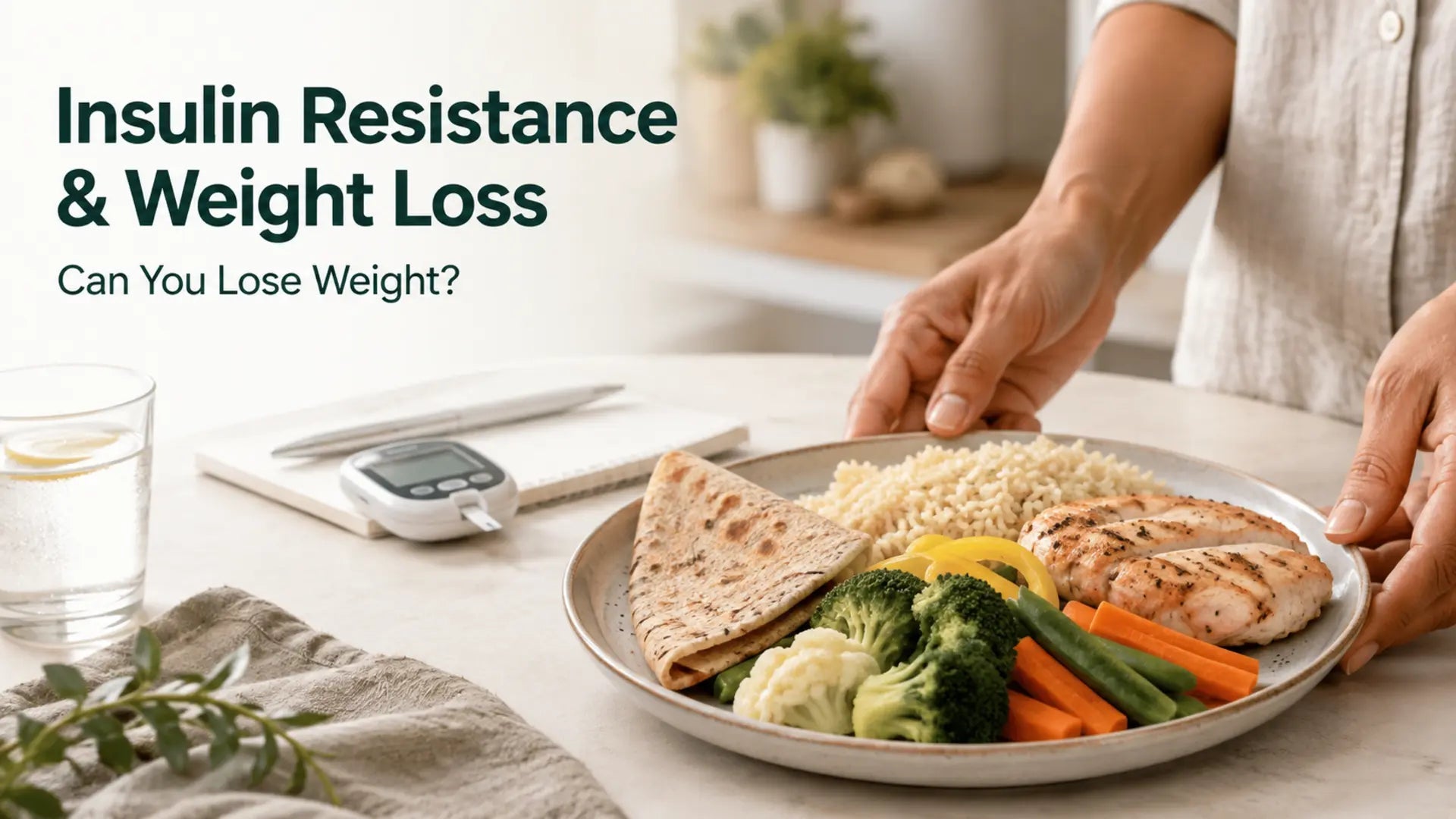
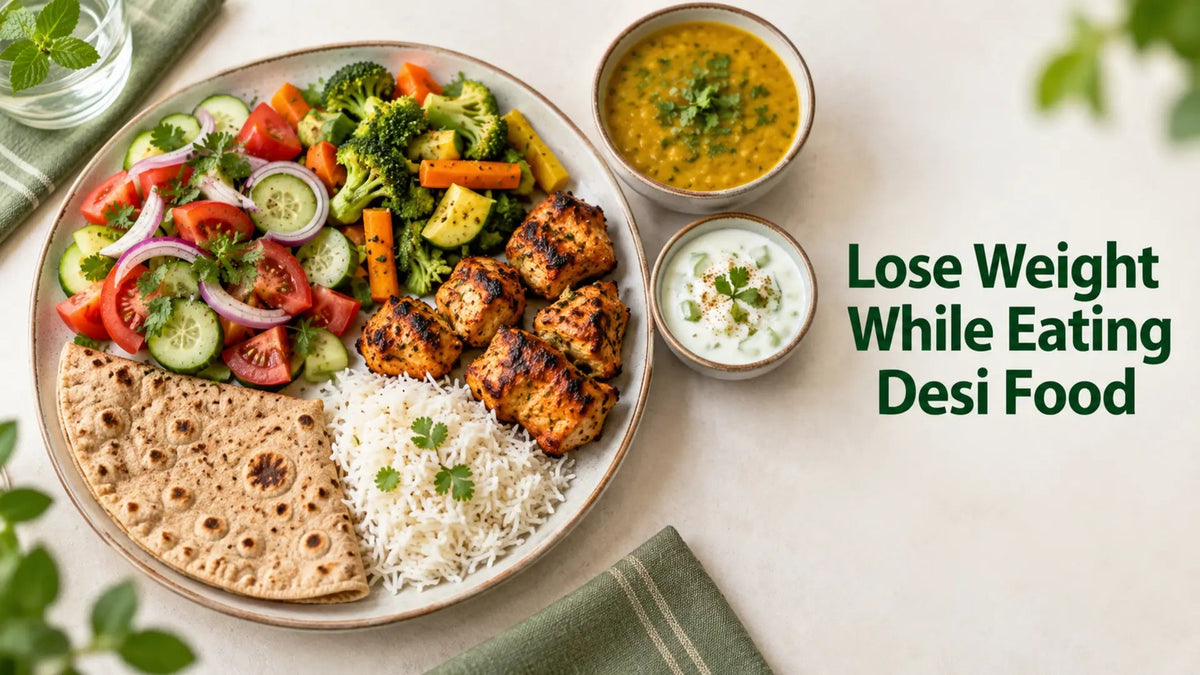
Can You Lose Weight While Eating Desi Food?
You can lose weight without giving up desi food. Learn how to manage portions, cooking methods, oil, roti, rice, biryani, paratha, chai, and social meals for sustainable weight loss.
Yes, you can lose weight while eating desi food.
You do not need to give up roti, rice, dal, curry, biryani, paratha, or chai. Weight loss depends mainly on your average food and drink intake over time, portion sizes, cooking oil or ghee, meal balance, physical activity, sleep, and consistency.
A weight-loss-friendly desi diet is not a separate cuisine. It is your usual food prepared with sensible portions, less added fat, enough protein and vegetables, and fewer sugary drinks and fried snacks.
The goal is not to remove your culture from your diet. The goal is to make familiar meals work better for your health and weight-loss goal.
Quick Answer
You can lose weight while eating Pakistani, Indian, Bangladeshi, or other South Asian food if your overall eating pattern supports a suitable calorie deficit.
Focus on these habits:
- Keep roti and rice, but manage the portion.
- Measure cooking oil, ghee, butter, and cream.
- Fill more of your plate with vegetables and salad.
- Include a clear protein source in your meals.
- Choose one main starch more often instead of large portions of roti, rice, naan, potatoes, and dessert together.
- Reduce sugary chai, soft drinks, juices, sweet lassi, and frequent fried snacks.
- Enjoy biryani, paratha, sweets, and restaurant food in planned portions.
- Follow a routine that fits your culture, budget, schedule, and health needs.
The World Health Organization explains that the exact form of a healthy diet can vary according to culture, local foods, and dietary customs. The basic principles remain adequacy, balance, moderation, and variety.
What Does “Desi Food” Mean?
“Desi food” is a broad term. It may include Pakistani, Indian, Bangladeshi, Sri Lankan, Nepali, and other South Asian meals.
It is not one fixed diet. The same dish can be very different depending on the recipe, cooking oil, serving size, and ingredients.
For example:
- A bowl of dal with vegetables and a small serving of rice is different from a large plate of oily biryani.
- A dry whole-wheat roti is different from a paratha covered with ghee.
- Homemade chicken curry with measured oil is different from a restaurant curry with a visible layer of oil.
- Plain yogurt is different from sweet lassi or a sugary milkshake.
This is why it is not accurate to label all desi food as healthy or unhealthy. The preparation, portion, frequency, and overall meal pattern matter.
Why Can Desi Food Support Weight Loss?
Your body does not decide whether food is Pakistani, Indian, Western, or foreign. It responds to the total energy and nutrients you consume.
When your average energy intake is lower than the energy your body uses, your body generally begins to use stored energy, and weight may decrease over time. This is often called an energy deficit.
You can create a suitable deficit while eating foods such as:
- Dal, chana, rajma, and lobia
- Vegetables and salad
- Eggs, chicken, fish, and lean meat
- Plain yogurt and raita
- Roti, chapati, rice, and other grains
- Fresh fruit
- Nuts and seeds in measured portions
A healthy weight-loss plan should also be realistic and sustainable. NIDDK weight-management guidance recommends looking for a plan that includes healthy eating, suitable physical activity, ongoing support, and a way to maintain progress. It also notes that a successful plan should fit your health, preferences, and cultural needs.
What Usually Makes Desi Meals High in Calories?
The main problem is usually not the cuisine itself. It is the combination of large portions, added fats, sugary drinks, and frequent high-calorie snacks.
| Common pattern | Why it can make weight loss harder | A practical change |
|---|---|---|
| Unmeasured oil or ghee | Added fats are energy-dense and easy to overlook in curries and tarka | Measure the fat used in the whole recipe and divide it between servings |
| Large roti or rice portions | Healthy foods can still provide more energy than you need when portions are large | Start with a quarter-plate portion and adjust according to your needs |
| Several starches together | Roti, rice, naan, potatoes, and dessert can add up quickly | Choose one main starch more often |
| Fried foods | Frying increases energy density and may make foods easy to overeat | Choose grilled, baked, roasted, air-fried, or lightly cooked options more often |
| Sugary chai and drinks | Sugar in repeated drinks can add up without making you feel full | Reduce sugar gradually and choose water or unsweetened drinks more often |
| Snacks between meals | Biscuits, rusks, chips, nimco, and fried bites can become daily habits | Plan a portion instead of eating directly from a large packet |
| Second servings | Taking more food before checking your hunger can increase total intake | Serve once, eat slowly, and wait before taking more |
The Desi Plate Method for Weight Loss
A simple plate method can help you balance desi meals without counting every calorie.
Fill about half the plate with vegetables or salad
Choose foods such as:
- Cucumber and tomato salad
- Kachumber
- Bhindi
- Lauki
- Tori
- Baingan
- Gobi
- Palak
- Saag
- Carrots
- Mixed vegetables
Vegetables add volume, fiber, vitamins, and minerals. They can help make meals more filling without relying on large amounts of oil, rice, fried foods, or sweets.
Fill about one-quarter with protein
Choose a protein source such as:
- Eggs
- Chicken
- Fish
- Lean meat
- Dal
- Chana
- Rajma
- Lobia
- Plain yogurt
- Paneer or tofu in a suitable portion
Dal and beans provide both protein and carbohydrates, along with fiber. They are nutritious, but they should not be treated as either a completely carbohydrate-free food or a pure protein food.
Fill about one-quarter with a starch
Choose one main carbohydrate source, such as:
- Roti or chapati
- Rice
- Brown rice
- Barley
- Potatoes
- Whole-grain bread
You do not need to remove carbohydrates completely. Whole grains, pulses, vegetables, and fruit can all be part of a balanced eating pattern.
The plate method is a visual guide, not a fixed prescription. Your needs depend on your age, body size, activity level, hunger, medical history, and goals. Harvard’s Healthy Eating Plate also explains that its proportions are approximate and are not a specific calorie prescription.
Can You Eat Roti, Rice, Biryani, and Paratha While Losing Weight?
Yes. These foods can fit into a weight-loss diet when their portions and preparation are appropriate.
| Food | Can it fit into weight loss? | Better approach |
|---|---|---|
| Roti or chapati | Yes, even regularly | Choose a suitable size, avoid adding ghee automatically, and eat it with protein and vegetables |
| Rice | Yes | Serve a measured portion and pair it with dal, beans, chicken, fish, vegetables, salad, or yogurt |
| Biryani | Yes, occasionally or in a planned portion | Take one serving, add raita and salad, choose water, and avoid repeated servings |
| Paratha | Sometimes | Choose a smaller paratha, use less oil or ghee, and pair it with eggs, yogurt, or vegetables |
| Naan | Occasionally | Keep the portion moderate and avoid combining it with large portions of rice and roti |
| Puri | Occasionally | Treat it as a fried food and balance the meal with vegetables and protein |
| Potatoes | Yes | Count potatoes as a starch; choose boiled, roasted, or lightly cooked potatoes more often |
| Dal and chana | Yes | Control the oil in the tarka and add vegetables or salad |
| Chai | Yes | Reduce sugar and pay attention to biscuits, rusks, and bakery foods eaten with it |
| Fruit | Yes | Choose whole fruit more often than juice or sugar-added shakes |
| Sweets | Yes, in planned portions | Share a dessert or choose a small serving instead of eating it automatically every day |
Roti
Roti can be part of a daily weight-loss diet. The size of the roti matters, especially when it is large or covered with butter or ghee.
Try to:
- Choose a moderate roti size.
- Pair it with dal, eggs, chicken, fish, yogurt, or beans.
- Add vegetables or salad.
- Avoid eating several rotis simply because they are available.
- Remember that whole wheat is helpful for fiber, but it does not make unlimited portions suitable for weight loss.
Rice
Rice does not automatically cause weight gain.
To manage rice portions:
- Serve it in a bowl or onto your plate instead of eating directly from a large cooking pot.
- Add dal, beans, chicken, fish, vegetables, or yogurt.
- Include salad or raita.
- Avoid taking repeated servings automatically.
- Remember that plain rice, pulao, and oily biryani are different in their preparation and energy content.
Biryani
You can eat biryani while trying to lose weight.
A practical approach is to:
- Take one planned serving.
- Add raita and salad.
- Choose water instead of a sugary drink.
- Avoid adding naan or several rotis to the same meal.
- Eat slowly and stop when comfortably satisfied.
One meal does not decide your progress. Your average pattern over days and weeks matters more.
Paratha
Paratha usually contains more oil or ghee than plain roti. It can still fit occasionally.
Choose a smaller portion, use less added fat at home, and pair it with eggs, yogurt, or vegetables instead of several high-calorie side dishes.
How to Cook Desi Food in a Weight-Loss-Friendly Way
1. Measure cooking oil and ghee
Do not pour oil directly from the bottle into the pan. Measure it first.
For family meals, consider:
- Measuring the total amount used in the recipe
- Dividing the dish into the number of servings
- Removing visible oil from the top of gravies when serving
- Avoiding the assumption that replacing ghee with a large amount of oil makes a dish low-calorie
The amount that is suitable depends on the recipe, serving size, health needs, and the rest of your diet.
2. Use lower-fat cooking methods more often
Try:
- Grilling
- Baking
- Roasting
- Steaming
- Tawa cooking
- Air-frying
- Shallow cooking with measured oil
Examples include:
- Tandoori chicken instead of fried chicken
- Tawa fish instead of battered fish
- Roasted potatoes instead of fries
- Baked samosas instead of deep-fried samosas
- Grilled seekh kebabs instead of fried snacks
3. Keep the flavor
Use:
- Tomatoes
- Onions
- Garlic
- Ginger
- Lemon
- Green chilies
- Coriander
- Mint
- Cumin
- Turmeric
- Black pepper
- Homemade chutney
- Plain raita
Spices add flavor without requiring large amounts of oil, sugar, or cream.
4. Add vegetables to familiar foods
You can add vegetables to:
- Omelets
- Keema
- Curries
- Dal
- Rice dishes
- Sandwiches
- Chana chaat
- Soups
- Wraps
This can increase volume and fiber while helping you reduce the proportion of rice, roti, or fried foods.
How Much Roti or Rice Should You Eat?
There is no single number of rotis or cups of rice that is correct for everyone.
Your needs depend on:
- Age
- Height and body size
- Activity level
- Hunger and fullness
- Weight goal
- Medical conditions
- Medications
- The rest of your meals
NIDDK explains that the amount a person needs can vary according to age, weight, height, metabolism, sex, and physical activity. It also explains that a portion is the amount you choose to eat, while a serving is a listed reference amount.
A useful starting point is to place your main starch in about one-quarter of the plate. If you are still hungry, first consider adding vegetables, salad, protein, or plain yogurt. If you are very active, your carbohydrate needs may be higher.
Fixed rules such as “never eat rice” or “everyone should eat exactly two rotis” are not suitable for every person.
Chai, Drinks, and Snacks During Weight Loss
Tea itself does not stop weight loss. The added sugar and foods eaten with tea may be the bigger issue.
Try to:
- Reduce sugar gradually.
- Use less sugar in each cup.
- Reduce the number of sweetened cups.
- Avoid biscuits or rusks with every cup.
- Choose unsweetened tea sometimes.
- Be aware of full-sugar lassi, milkshakes, sharbat, packaged juices, soft drinks, and energy drinks.
Better snack options may include:
- Plain yogurt with fruit
- Roasted chana
- A boiled egg
- Chana chaat
- Fresh fruit
- Homemade popcorn
- A measured portion of nuts
- Cucumber, tomato, or carrot salad
Nuts and seeds can be nutritious, but they are concentrated foods. A small measured portion is usually easier to manage than eating directly from a large packet.
Can You Lose Belly Fat While Eating Desi Food?
Yes, overall weight loss can help reduce waist size while you continue eating desi food.
However, you cannot choose exactly where your body loses fat first. No single food, tea, spice, or exercise can remove fat from only the belly.
For better long-term results:
- Create a suitable overall calorie deficit.
- Include protein and vegetables in meals.
- Reduce sugary drinks and frequent fried foods.
- Walk or exercise regularly if medically appropriate.
- Add resistance exercise when suitable.
- Sleep adequately.
- Manage stress and emotional eating.
- Track your progress over several weeks instead of judging one day.
A Flexible Seven-Day Desi Weight-Loss Meal Framework
This is a general framework, not a personalized prescription. Adjust portions according to your needs, hunger, activity, health, and goals.
| Day | Breakfast | Lunch | Dinner | Snack |
|---|---|---|---|---|
| 1 | Eggs, vegetables, and roti | Dal, sabzi, salad, and rice | Low-oil chicken curry with vegetables | Fruit and plain yogurt |
| 2 | Chana with plain yogurt | Rajma, rice, and salad | Fish, vegetables, and roti | Roasted chana |
| 3 | Vegetable omelet and roti | Chicken curry, raita, and salad | Dal with mixed vegetables | Fruit with measured nuts |
| 4 | Besan chilla with yogurt | Aloo gobi with chana and roti | Grilled chicken or seekh kebab with salad | Boiled egg |
| 5 | Yogurt, fruit, and measured seeds | Biryani with raita and salad | Dal, sabzi, and roti | Plain yogurt |
| 6 | Chana or eggs with roti | Keema with vegetables and salad | Fish or chicken with a controlled rice portion | Fruit |
| 7 | Eggs or yogurt with fruit | A family meal using the plate method | Dal, vegetables, and a protein source | Roasted chana or fruit |
The purpose of this framework is to show how familiar foods can fit into a balanced pattern. It is not designed to provide the same calorie level for every person.
How to Eat Desi Food at Weddings, Dawats, and Restaurants
Social meals are part of life. You do not need to avoid every invitation to lose weight.
Before the event
Do not starve yourself all day. Arriving extremely hungry can make portion control harder.
Eat your normal meals and, if needed, choose a simple snack such as yogurt, fruit, or an egg before leaving.
At the meal
Try to:
- Look at all the options before filling your plate.
- Choose grilled, roasted, or lightly cooked foods when available.
- Add salad or raita.
- Choose one main starch: rice, naan, or roti.
- Take a planned portion of biryani instead of returning repeatedly.
- Eat slowly.
- Choose water instead of a sugary drink.
- Share dessert or take a small portion.
One large meal does not ruin your progress. Return to your usual routine at the next meal instead of giving up.
During Ramadan
Weight management can become difficult when iftar includes several fried foods, sugary drinks, and very large portions.
Helpful principles include:
- Drink enough water between iftar and suhoor.
- Include protein and fiber at suhoor.
- Begin iftar with water and a planned meal.
- Avoid making every iftar a large fried-food meal.
- Eat slowly and pause before taking more.
- If you have diabetes or use insulin or other medication, seek individualized advice before changing meal timing or carbohydrate portions.
Why Am I Not Losing Weight Even Though I Eat Homemade Food?
Homemade food can be nutritious and still provide more energy than your body needs.
Review your full pattern, including small foods and drinks.
Ask yourself:
- How much oil is used in the family pot?
- How large are your rotis?
- Do you add ghee or butter after cooking?
- Are you taking second servings?
- How much sugar is in your chai?
- Do you eat biscuits, chips, nimco, or fried snacks between meals?
- Are weekends very different from weekdays?
- Do you drink juices, soft drinks, or sweet lassi?
- Are restaurant meals frequent?
- Are nuts, sweets, or creamy foods being eaten without measured portions?
- Are you sleeping poorly or experiencing high stress?
- Could a medication or medical condition be affecting your weight?
Try a seven-day food audit
For one week:
- Record everything you eat and drink.
- Include small bites and tastes while cooking.
- Measure cooking oil.
- Note your hunger and fullness.
- Record restaurant and social meals.
- Weigh yourself once weekly under similar conditions.
- Change one or two habits instead of changing everything at once.
Look at the trend over two to four weeks. If your weight does not change despite consistent effort, speak with a registered dietitian or healthcare professional.
Does Eating Desi Food at Night Cause Weight Gain?
No. Eating roti or rice at night does not automatically cause weight gain.
Your total intake and overall pattern matter more than a fixed clock time. Night eating can become a problem when it regularly adds extra snacks, large portions, sugary drinks, or food eaten from boredom or screen time.
A balanced dinner with vegetables, protein, and a suitable portion of roti or rice can fit into a weight-loss plan.
What Does the Science Say?
The science does not support the idea that every traditional food must be removed for weight loss.
The WHO states that healthy diets can take different forms depending on culture, locally available foods, and dietary customs. It emphasizes a pattern based on balance, variety, moderation, vegetables, fruit, pulses, whole grains, suitable protein, and limited free sugars and unhealthy fats.
A 2025 randomized controlled trial in Dhaka included 120 young adults with overweight or obesity. Participants assigned to an eight-week calorie-restricted diet based on local South Asian foods lost an average of about 2.47 kg. The study was short, used a selected population, and does not prove that every desi diet will produce weight loss. It does show that calorie-controlled eating can be built around familiar South Asian foods. Read the study
A 2023 MASALA cohort study reported associations between a South Asian Mediterranean-style eating pattern and more favorable body-fat and diabetes-risk measures. Because it was an observational study, it should not be interpreted as proof that one specific diet directly causes weight loss. View the study
The most useful conclusion is simple: a healthy diet does not need to look Western. It needs to provide suitable energy, nutrients, balance, and consistency.
When Should You Get Personalized Nutrition Advice?
General advice may not be suitable if you have:
Diabetes or prediabetes
Rice, roti, fruit, sweets, and drinks may need individual adjustment. If you use insulin or blood-glucose-lowering medicine, do not make major changes without medical guidance.
PCOS
There is no single PCOS diet that works for everyone. A balanced eating pattern, regular movement, sleep, and individualized support may help.
Pregnancy or breastfeeding
Pregnancy is not the time for an aggressive weight-loss diet. Nutritional needs are different, so speak with a qualified healthcare professional.
Kidney, liver, or heart disease
Protein, sodium, potassium, fluid, and other nutrients may need specific adjustments.
Teenagers or a history of an eating disorder
Strict calorie restriction may be unsafe or unhelpful. Seek specialized guidance.
Unexplained weight loss or weight gain
Unexplained changes may have medical causes and should be discussed with a healthcare professional.
Frequently Asked Questions
Can I eat roti every day and still lose weight?
Yes. Roti can be part of a weight-loss diet when the portion fits your needs and the meal also includes protein and vegetables. Avoid automatically eating several large rotis at every meal.
Can I eat rice and still lose weight?
Yes. Rice does not need to be removed. Use a suitable portion and pair it with dal, beans, chicken, fish, vegetables, salad, or yogurt.
Is dal chawal good for weight loss?
Dal chawal can fit into a weight-loss diet. Control the rice portion, include enough dal, limit oil in the tarka, and add salad or vegetables.
Can I eat biryani while trying to lose weight?
Yes. Take one planned serving, add salad or raita, choose water, and avoid repeated servings or several extra starches in the same meal.
Is paratha allowed during weight loss?
Paratha can be eaten occasionally. A smaller paratha prepared with less oil or ghee is easier to fit into a weight-loss pattern than a large, heavily greased paratha.
Can I drink chai while trying to lose weight?
Yes. Reduce added sugar and pay attention to biscuits, rusks, bakery foods, and other snacks eaten with tea.
Are mangoes and bananas allowed during weight loss?
Yes. Mangoes and bananas can be part of a balanced diet. Choose a sensible portion and prefer whole fruit over sugary shakes or juice.
Is desi ghee healthy for weight loss?
Ghee can fit in a balanced diet, but it is still a concentrated source of fat. Measure it instead of adding it freely to roti, rice, or curry.
How many rotis can I eat in a day while losing weight?
There is no universal number. Your needs depend on your body size, activity, hunger, health, and the rest of your diet. Use the plate method rather than following a fixed rule.
Can I eat desi food at night and still lose weight?
Yes. Eating at night does not automatically cause weight gain. The concern is usually large portions, repeated snacking, sugary drinks, or eating beyond hunger.
What is the best desi food for weight loss?
There is no single best food. A balanced meal with vegetables, protein, pulses, yogurt, fruit, and a controlled portion of roti, rice, or another starch is more useful than relying on one “fat-burning” food.
Is homemade desi food better than restaurant food for weight loss?
Homemade food is often easier to manage because you can control the oil, ingredients, and portions. However, homemade food can still be high in energy if it contains too much oil or is served in large amounts.
Can I lose weight without eating Western food?
Yes. You can lose weight while eating familiar Pakistani, Indian, Bangladeshi, or other South Asian foods. A sustainable eating pattern should fit your culture, budget, routine, and preferences.
Final Takeaway
You can lose weight while eating desi food.
You do not need to give up roti, rice, dal, curry, chai, or occasional biryani. Focus on the habits that make the biggest difference:
- Control portions.
- Measure oil and ghee.
- Add vegetables and protein.
- Choose one main starch more often.
- Reduce sugary drinks and frequent fried snacks.
- Plan social meals instead of fearing them.
- Stay active in a way that suits your health.
- Follow a routine you can maintain.
Your food culture is not a barrier to weight loss. A balanced desi diet can be practical, affordable, satisfying, and healthy when the portions, preparation, and overall pattern are appropriate.
For more Pakistani meal ideas, read Best Pakistani Foods for Fat Loss. For a plan based on your medical history, routine, preferences, and goals, consult a qualified registered dietitian through MNT.
Get a Desi Weight-Loss Plan That Fits Your Life
Work with an MNT dietitian to build practical nutrition guidance around your usual foods, routine, preferences, and health needs.
Book a Weight-Loss ConsultationWe rely on peer-reviewed studies and reputable medical journals.