

How to Eat Chia Seeds: Soaking, Portions and Daily Use
Learn how to soak and eat chia seeds with clear water ratios, practical daily portions, and easy meal ideas. Includes preparation, troubleshooting, and storage tips.
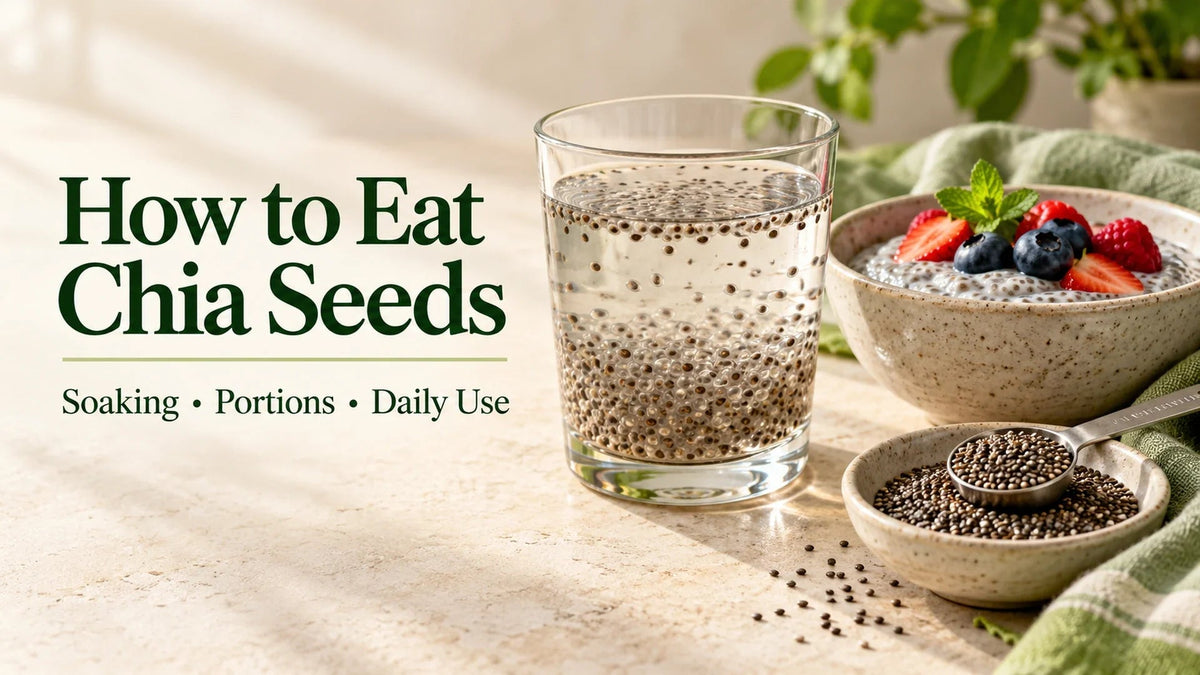
You can eat chia seeds soaked in water or milk, or mixed into moist foods such as yogurt, oats and smoothies. One to two tablespoons is a common adult portion. If you are new to high-fiber foods, try a teaspoon first and increase only if comfortable. For a basic gel, mix one tablespoon of chia with ¼ cup of liquid and allow about 15–30 minutes, stirring twice.
Avoid swallowing a spoonful of dry chia seeds and then drinking water. The seeds can swell and become lodged in the food pipe, especially in people with swallowing problems.
Chia seeds at a glance: portions, ratios and soaking times
| What you want to make | Dry chia seeds | Liquid | Preparation |
|---|---|---|---|
| A light chia drink | 1 tablespoon | 1 cup / 240 mL water | Stir twice; allow about 15–30 minutes for a gel coating to form |
| Basic chia gel | 1 tablespoon | ¼ cup / 60 mL water | Stir twice; allow about 15–30 minutes |
| One small chia pudding | 2 tablespoons | ½ cup / 120 mL milk or plant drink | Stir twice, cover and refrigerate for at least 4 hours |
| A small beginner portion | 1 teaspoon | 4 teaspoons water to make gel, then dilute or add to food | Allow the seeds to hydrate before using |
These are starting recipes. Add more liquid if the result is too thick. The gel recipe uses a 1:4 chia-to-liquid ratio by volume; the drink uses 1:16. Timings guide texture, rather than marking an exact moment when every mixture is ready.
All seed amounts above are measured before soaking. Use level measuring spoons: one tablespoon is 15 mL and one teaspoon is 5 mL. A household eating spoon may hold a different amount.
How to soak chia seeds
For a simple gel, mix one tablespoon of chia seeds with ¼ cup / 60 mL of water. Stir well, stir again after a few minutes, and allow about 15–30 minutes for the coating to form. Harvard gives roughly 15–20 minutes for its gel recipe; Iowa State Extension gives 20–30 minutes.
Step-by-step method to prevent clumps
- Measure the liquid first. Pour it into a clean bowl, glass or jar.
- Add the seeds while stirring. Mix through the whole container, including the bottom.
- Stir again after a few minutes. Separate clusters before they become firm clumps.
- Allow the mixture to thicken. Look for an even gel coating around the seeds.
- Check before serving. Break up dry pockets and add more liquid if needed. Refrigerate any mixture you are keeping for later.
The seeds can keep a slight crunch inside their slippery coating. They do not need to become completely smooth.
Do chia seeds need to soak overnight?
No. A simple water gel can form much sooner. Overnight soaking is useful for meal prep and a thicker pudding.
For milk-based pudding, use the four-hour refrigerated method in the chart. Put milk, yogurt and overnight-oat mixtures in the fridge while they hydrate.
Should you use warm or cold water?
Cold or room-temperature drinking water works for a basic recipe. You do not need boiling water to prepare chia.
You can also use chia in warm porridge and cooked dishes. Allow time for the mixture to thicken, and adjust the liquid to suit the food. There is no need to follow a precise hot-water temperature to use chia in everyday meals.
Why are my chia seeds clumpy, watery or too thick?
| Problem | Likely reason | What to try |
|---|---|---|
| Dry clumps | Seeds stuck together before the liquid reached them | Break them up, stir thoroughly and allow more time |
| Seeds gathered at the bottom | They settled before the mixture thickened | Stir from the bottom, then check again after a few minutes |
| Watery pudding | Too much liquid for your preferred texture, or too little chilling time | Chill longer first; check your measurements next time |
| Very thick gel or pudding | Too little liquid for the texture you want | Add a small splash of liquid and mix again |
| A drink becomes thicker while standing | The seeds are still binding liquid | Dilute with drinking water and stir before drinking |
If you add extra seeds to fix a watery mixture, let them hydrate fully. Count those extra seeds when working out the portion.
Can you eat chia seeds raw or without soaking?
Yes, chia seeds can be eaten raw, and a separate soaking step is not always needed. They can take up moisture within foods such as yogurt, overnight oats and smoothies.
“Raw” and “dry” mean different things. Chia soaked in cold water is still raw because it has not been cooked.
You can mix a small amount of dry seeds through a moist meal. Avoid leaving a thick pile of dry seeds on top. For thick yogurt or a less moist dish, prepared gel is an easy option.
A dry spoonful swallowed on its own is different from seeds mixed through food. A case reported by the American College of Gastroenterology involved an esophageal blockage after dry chia was followed by water. People with swallowing difficulties need particular care.
How much chia should you eat per day?
One to two tablespoons can be a practical adult portion, but there is no required daily amount. Choose an amount that fits your meals, usual fiber intake and digestive comfort. A common serving is two tablespoons; eating less is also fine.
| Dry seed portion | A practical way to use it |
|---|---|
| 1 teaspoon | A small amount to try in a moist breakfast or snack |
| 1 tablespoon | A measured addition to a drink, oats or yogurt |
| 2 tablespoons | One pudding serving, or an amount split between meals |
If you are new to chia, try a teaspoon first. Keep that amount until you know how it feels. Increase on later days only if you want more and tolerate it well.
There is no fixed schedule that everyone must follow. Adding fiber slowly gives your body time to adjust.
Measure the dry seeds, even when you eat them soaked
Water changes the weight and volume of chia, so a tablespoon of gel contains less seed than a tablespoon of dry chia.
For example:
- Make a batch with two tablespoons of dry seeds.
- Divide the finished batch into two equal portions.
- Each portion contains one tablespoon of chia seeds, regardless of how much water you added.
Count chia across the whole day. Seeds in breakfast, a drink and an evening pudding all contribute to your total.
How many calories and how much fiber are in chia?
A roughly 28 g serving, often described as about two tablespoons, provides around 140 calories and 10 g of fiber. Spoon weights vary, so use the pack label and a kitchen scale if you track portions closely.
These portion examples are for adults. Children’s portions should suit their age, appetite and feeding skills.
Is two tablespoons the maximum daily amount?
Two tablespoons is a common serving, rather than a universal safety limit.
A 2019 EFSA assessment did not establish a maximum intake for the uses it assessed. That finding does not make unlimited intake suitable for everyone. Follow your pack instructions and any individual dietary advice.
Easy ways to eat chia seeds every day
Choose one method that fits a meal you already enjoy. Chia has a mild flavor, so it works in sweet and savory foods.
1. Chia seeds in water or lemon water
For one drink, mix one tablespoon of chia seeds with one cup / 240 mL of water. Stir again after a few minutes and allow about 15–30 minutes for the seeds to develop a gel coating.
Add lemon juice or mint if you like. Stir before drinking and add more water if it feels too thick. If starting small, use one teaspoon of seeds in the same glass of water.
Lemon is optional; it is there for flavor.
2. Chia pudding with milk
For one small pudding, use:
- 2 tablespoons chia seeds
- ½ cup / 120 mL dairy milk or an unsweetened plant drink
- Fruit or cinnamon, if desired
Mix the seeds and milk, then stir again after a few minutes. Cover and refrigerate for at least four hours or overnight. Stir before eating and loosen with a little milk if needed.
The whole recipe contains two tablespoons of chia. For a smaller portion, halve both ingredients or divide the finished pudding into two servings.
3. Chia seeds in yogurt or dahi
Mix prepared chia gel into plain yogurt or dahi. For easy portion tracking, make the gel from the amount of dry seeds you want to eat.
If adding seeds directly, mix them through the yogurt and refrigerate while they soften. A splash of water or milk can help loosen very thick yogurt.
4. Chia seeds in oats or porridge
Mix a small measured portion into overnight oats before chilling. Chia thickens the mixture, so leave enough liquid for both the oats and seeds.
For cooked porridge, stir in prepared gel and adjust with milk or water.
5. Chia seeds in smoothies or lassi
Blend prepared gel into a fruit smoothie or stir it into lassi. Start with a small portion and check the consistency.
The drink may thicken as it stands. Add liquid as needed, and count the seeds used to make the gel as part of your portion. Chia’s use in yogurt, cooked cereal and smoothies is also described by university extension guidance.
6. Chia in soups, sauces and baking
Prepared gel can thicken a soup, dressing or sauce. Stir in a little at a time so you can control the texture.
Whole or ground chia can also be used in suitable bread, muffin and pancake recipes. Follow a recipe designed for chia, since adding absorbent seeds changes how much liquid a mixture needs.
For a chia egg, mix one tablespoon of whole chia seeds with three tablespoons / 45 mL of water. Leave for at least five minutes, until thick. This can replace one egg’s binding role in some baking recipes; results depend on the recipe.
What is the best time to eat chia seeds?
Choose a time that fits your meals and feels comfortable. Breakfast works well for oats or pudding; yogurt with chia can be a snack later in the day.
You do not need to eat chia on an empty stomach. A study of chia in a mid-morning yogurt snack does not establish that morning is better than every other time of day.
If a larger portion causes discomfort, try a smaller amount or split it between meals.
Can you eat chia seeds every day?
Yes, if they suit your digestion and fit your diet. You can also eat them a few times a week.
Keep variety in your fiber sources, including vegetables, fruit, beans and whole grains. Drink fluids regularly; needs vary with health, activity and climate. Follow any prescribed fluid limit.
Whole or ground: do chia seeds need grinding?
Whole chia seeds are suitable for everyday recipes. Grinding is optional and may improve access to some of the fats inside the seeds.
| Choose whole chia for | Choose ground chia for |
|---|---|
| Pudding with a seed-like texture | A finer texture in blended recipes |
| Chia water and overnight oats | Mixing into a suitable baking recipe |
| Simple preparation without a grinder | Making some seed nutrients easier to access |
In a small 10-week trial in postmenopausal women, milled chia increased blood levels of ALA and EPA, two omega-3 fats. Whole chia did not show the same significant changes. The study did not find clear improvements in the measured disease risk factors.
This supports grinding as an option. Whole chia remains a useful source of fiber and a practical food ingredient.
If you grind seeds at home, prepare small amounts, keep them sealed and follow storage advice. Ground chia still absorbs liquid, so mix it into suitable moist foods.
The science behind soaking, fiber and fullness
Why chia forms a gel
Chia’s outer coating contains mucilage, a fiber-rich material that binds water. This produces the slippery layer around hydrated seeds and explains why chia can thicken pudding, drinks and sauces.
Soaking mainly changes moisture and texture. A thicker gel does not prove that a recipe provides greater health benefits.
How fiber affects digestion
Chia contributes to your total fiber intake. Fiber and adequate fluids can help make stools easier to pass, while a sudden large increase in fiber may cause gas or cramps.
Even soaked chia still contains fiber. Soaking does not remove the need to introduce larger portions gradually.
What studies say about fullness
A small trial in 24 participants compared yogurt containing no chia, 7 g of chia or 14 g of chia. The chia snacks increased short-term fullness and reduced food intake at the following lunch.
That is useful early evidence. It does not establish lasting weight loss, an ideal daily dose or the best time of day to eat chia.
Side effects and who needs individual advice
Gas, bloating and cramps can occur when you add too much fiber too quickly. Reduce the amount or pause chia if symptoms begin after introducing it. Try a smaller portion when you feel comfortable again.
Avoid increasing several high-fiber foods at once. That makes it easier to work out what suits you.
Ask a health professional for advice if you have:
- Swallowing difficulties or a history of food getting stuck. Soaking alone does not establish that the texture is suitable for you.
- A prescribed low-fiber diet or a bowel condition requiring specific food textures. Follow your existing care plan.
- A known chia allergy. Avoid chia; allergic reactions have been reported.
If you take a medicine affected by food or fiber, ask your pharmacist about any major change in fiber intake. For example, dietary fiber can affect levothyroxine. Follow the instructions for your medicine rather than applying a general chia-and-medication interval.
Seek urgent medical care if food feels stuck and you cannot swallow liquids or saliva. Breathing difficulty or throat swelling after eating also needs emergency care.
Persistent or severe digestive symptoms need medical advice.
How to store dry and soaked chia seeds
Dry and ground seeds
Keep dry chia sealed in a cool, dry place, away from heat and moisture. Use a dry spoon and follow the package’s storage instructions.
Whole seeds generally keep longer than ground seeds. Discard seeds with mold or an unusual rancid smell.
Chia gel, pudding and yogurt mixtures
| Preparation | Practical storage approach |
|---|---|
| Plain chia gel | Cover and refrigerate; the Academy of Nutrition and Dietetics gives about 5–7 days for soaked chia |
| Milk-based pudding | Make small batches; a 2–3-day supply is a cautious home meal-prep target |
| Mixtures with yogurt or fruit | Refrigerate promptly and follow the shortest relevant ingredient-storage advice |
These times assume clean preparation, fresh ingredients and reliable refrigeration. They do not guarantee the safety of a mixture that has been left warm.
Keep your fridge at 4°C or below. Milk- and yogurt-based mixtures should hydrate in the fridge.
For foods that need refrigeration, the FDA advises no more than two hours at room temperature, or one hour above about 32°C. Food can be unsafe even when its smell and appearance seem normal.
Frequently asked questions
Do chia seeds need washing before soaking?
Food-grade chia is commonly added directly to recipes. Follow the pack instructions if rinsing is required. Use clean drinking water and utensils. Soaking is a preparation step, not a way to disinfect contaminated food.
Should you drain chia seeds after soaking?
No. The liquid and gel are part of the prepared food. Stir the mixture before eating, or dilute it for a drink. You can consume the hydrated seeds along with the liquid.
Do black and white chia seeds need different soaking methods?
No. Use the same methods and starting ratios for either color. Choose the color you prefer for the appearance of your food.
Can you put chia seeds in hot food or cook with them?
Yes. Chia can be used in cooked dishes and baking mixtures. You can also stir prepared gel into porridge or soup after cooking. Follow the recipe and adjust the liquid for the texture you want.
What if you dislike the gel texture?
Try blending hydrated chia into a smoothie or using ground chia in a suitable recipe. Start with a small amount to judge the texture. You can also meet your fiber needs through other foods you enjoy.
We rely on peer-reviewed studies and reputable medical journals.