



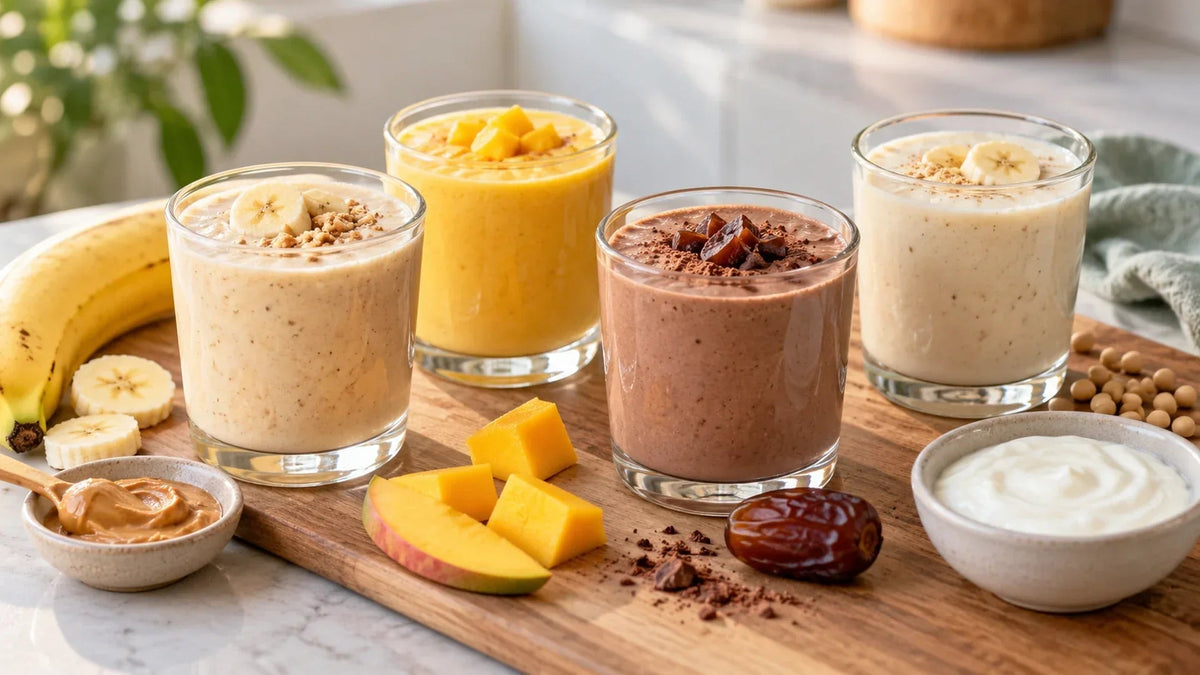
Best Weight Gain Smoothies for a Small Appetite
Four compact weight gain smoothie recipes with estimated calories and protein, plus portion, timing, ingredient, and safety tips for people who feel full quickly.
If you feel full quickly or struggle to eat enough, a small nourishing smoothie can add calories and protein without asking you to eat another full meal. Start with half a serving if a full glass feels too much. Have it between meals or after eating, so it is less likely to reduce your appetite for your next meal.
A smoothie can support gradual weight gain when it adds to your usual intake. It cannot diagnose or treat the reason you have a poor appetite or feel full after only a few bites.
Quick picks: weight gain smoothies for a small appetite
| Smoothie | Estimated calories | Estimated protein | Approx. finished volume | Good fit for |
|---|---|---|---|---|
| Banana, peanut butter, and yogurt | About 340 kcal | About 18 g | About 300–330 ml | A compact, familiar option |
| Mango, yogurt, and milk powder | About 250 kcal | About 16 g | About 300 ml | A lighter, fruit-based option |
| Chocolate, date, and peanut butter | About 360 kcal | About 19 g | About 290–310 ml | A richer, naturally sweet option |
| Soy, banana, and tofu | About 350 kcal | About 18 g | About 330–350 ml | A dairy-free option |
Nutrition figures and finished volumes are estimates, not exact values. They assume typical ingredient values and a plain strained yogurt with about 9 g of protein per 100 g. Regular dahi, soy drinks, milk powder, dates, and nut butters can differ by brand and type. Check the package labels and adjust the totals for the ingredients you use. The estimates use standard food-composition data from USDA FoodData Central and typical product labels.
Why smoothies may help with a small appetite
A smoothie lets you drink foods such as milk, yogurt, fruit, tofu, or nut butter in a smooth form. For some people, that feels easier than eating another full plate. Ingredients such as strained yogurt, milk powder, peanut butter, and soy can add energy or protein in a modest portion.
The best smoothie is one you can finish comfortably and tolerate well. A very large or thick drink may make you feel too full. NHS guidance for adults trying to gain weight recommends gradual changes, nourishing drinks between meals, and avoiding drinks that fill you up before a meal. It gives around 300 to 500 extra calories a day as a general example; your needs may be different.
How to make a smoothie easier to finish
Use a few nourishing ingredients instead of adding many large or bulky ingredients.
- Choose a base you tolerate. Whole milk, lactose-free milk, plain strained yogurt, or a higher-protein soy drink can work. Check the label because plant drinks vary in protein and calories.
- Add a protein source. Yogurt, milk powder, soy drink, or silken tofu can add protein. Protein powder is optional.
- Add energy in a small amount. One tablespoon of peanut butter adds energy without much extra volume. Milk powder can add energy and protein to a milk-based smoothie.
- Keep the drink thin enough to sip. Add milk, soy drink, or water a little at a time. A thick smoothie can be harder to finish.
- Notice how ingredients affect you. If a high-fat or high-fiber smoothie makes you feel more full, use less of the ingredient that seems to cause the problem. People with gastroparesis may need a specific diet from their healthcare team.
- Check for allergens. Use only ingredients that are safe for you, and check package labels.
If you use regular dahi instead of strained Greek-style yogurt, the smoothie may have less protein. You can check the label or ask a dietitian how to adjust the recipe.
Four weight gain smoothie recipes
Each recipe makes one serving. If the full serving feels too large, drink half and save the rest in a covered container in the refrigerator.
1. Banana, peanut butter, and yogurt smoothie
About 340 calories and 18 g protein
Ingredients
- 150 ml whole milk
- 100 g plain strained Greek-style yogurt
- ½ medium banana, about 60 g
- 1 tablespoon smooth peanut butter, about 16 g
Method
Blend until smooth. Add a little more milk if needed to make it easier to sip.
Why it works: Milk and yogurt provide protein, while peanut butter adds energy in a small amount. If you use regular dahi, check its label because the protein may be lower.
2. Mango, yogurt, and milk powder smoothie
About 250 calories and 16 g protein
Ingredients
- 100 ml whole milk
- 100 g plain strained Greek-style yogurt
- 100 g ripe mango
- 1 tablespoon skimmed milk powder, about 8 g
Method
Blend until smooth. Add a small amount of milk or water if the texture is too thick.
Optional change: Add another tablespoon of milk powder if you tolerate it and want a more nourishing drink. Recheck the nutrition total using the label.
3. Chocolate, date, and peanut butter smoothie
About 360 calories and 19 g protein
Ingredients
- 150 ml whole milk
- 100 g plain strained Greek-style yogurt
- 1 pitted Medjool date, about 24 g
- 1 tablespoon smooth peanut butter, about 16 g
- 1 teaspoon unsweetened cocoa powder
Method
Blend until the date is fully mixed in. Add a little milk if the drink is too thick.
Dates vary in size. Weigh the date or check its label if you need a closer calorie estimate. Use less date if you prefer a less sweet smoothie.
4. Soy, banana, and tofu smoothie
About 350 calories and 18 g protein
Ingredients
- 150 ml unsweetened soy drink
- 100 g silken tofu
- ½ medium banana, about 60 g
- 2 tablespoons smooth peanut butter, about 32 g
Method
Blend until creamy. Add a little soy drink or water if you want a thinner texture.
Choose a soy drink with protein and calories that suit your needs; products vary. If you need to avoid peanuts, use a substitute only if you know it is safe for you. This recipe is dairy-free, but it is not suitable for someone with a soy or peanut allergy.
When to drink a weight gain smoothie
Try a smoothie between meals or after eating. If drinks before meals make you feel full, avoid having a large smoothie just before a meal. You can also divide one serving into smaller portions and have them at different times.
There is no set number of smoothies everyone should drink each day. Start with an amount you can manage. If you cannot finish a full glass, do not force it. A dietitian can help you choose a portion and schedule that fit your appetite and health needs.
Will a smoothie make you gain weight?
A smoothie does not cause weight gain by itself. It may help if it adds energy to your usual food and drinks over time. If it replaces food you would otherwise eat, it may not increase your total intake.
There is no single calorie target for every person. The NHS suggests adults who want to gain weight may try adding around 300 to 500 calories a day as a general guide. A doctor or dietitian can help you choose a safe plan, especially if you have a medical condition or have lost weight without trying.
For another recipe idea, see MNT’s banana shake for weight gain. If appetite is the main challenge, read how to increase appetite naturally for weight gain.
When to get medical advice
Feeling full after only a few bites is called early satiety. It can have different causes, including some health conditions or medicines. A smoothie may be easier to drink, but it cannot tell you why this is happening. Do not stop or change a medicine without speaking with the prescriber. MedlinePlus explains early satiety and when to contact a health professional.
Contact a healthcare professional if early fullness lasts for days or weeks, you are losing weight without trying, or you have nausea, vomiting, abdominal pain, bloating, dark stools, fever, or chills. These symptoms need assessment rather than a recipe alone.
Ask for individual advice before regularly using high-calorie smoothies if you have diabetes, kidney disease, a food allergy, a prescribed diet, or a digestive condition. For example, NIDDK guidance for gastroparesis says people with this condition may need to avoid foods and drinks high in fat or fiber. If you cough, choke, or have trouble swallowing drinks, ask a healthcare professional before trying smoothies; you may need guidance on a safe drink texture.
These recipes are for adults. For a child or teenager who is not eating enough or is losing weight, speak with a pediatric healthcare professional. If you have eaten very little for several days or have had major recent weight loss, ask a clinician before making a sudden, large increase in food or drink. Some people need nutrition increased gradually with clinical monitoring, as described in NICE guidance on nutrition support for adults.
Frequently asked questions
What is the best smoothie for weight gain if I get full quickly?
A small banana, peanut butter, and yogurt smoothie is one practical option. It provides about 340 calories and 18 g of protein in one modest serving, based on the ingredients listed above. If it feels too large, start with half.
Can smoothies help me gain weight if I cannot eat more?
They may help you add energy and protein without preparing another full meal. They work best when they add to your usual intake. Ongoing difficulty eating or unexplained weight loss needs medical advice.
How many weight gain smoothies should I drink a day?
There is no fixed number for everyone. Start with a portion you can finish comfortably. A dietitian can help you decide whether a full serving, half serving, or another snack fits your needs.
Should I drink a smoothie before or after a meal?
Between meals or after eating is often more comfortable for people who feel full quickly. A large drink before a meal may reduce your appetite.
Can I make a weight gain smoothie without milk?
Yes. Unsweetened soy drink and silken tofu can make a dairy-free smoothie with protein. Other plant drinks may contain less protein, so check the label.
Do I need protein powder?
No. Yogurt, milk, milk powder, soy drink, tofu, and nut butter can add protein. Protein powder is optional and may not suit everyone.
Can I use these smoothies instead of meals?
Do not assume a smoothie replaces a meal. These recipes are nourishing drinks or snacks, but they may not provide everything you need in a meal. Ask a dietitian if you often cannot manage meals.
What if I still feel full after a few sips?
Try a thinner or smaller serving, and avoid ingredients that seem to worsen your symptoms. Do not force yourself to finish it. If early fullness continues or comes with other symptoms, contact a healthcare professional.
MNT Nutrition Consultations
Explore MNT nutrition consultations.
Explore MNT nutrition consultationsWe rely on peer-reviewed studies and reputable medical journals.