


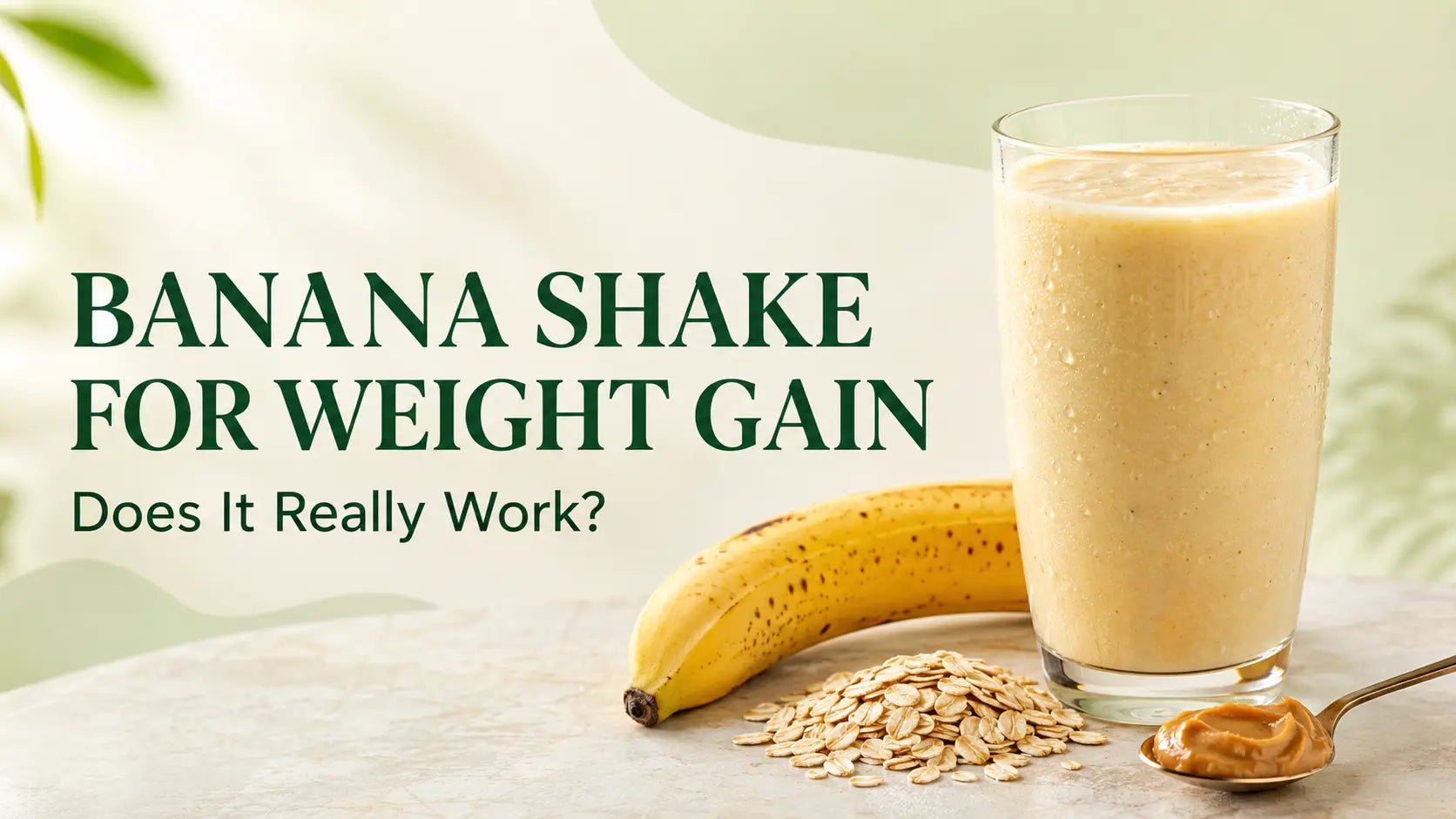
Banana Shake for Weight Gain: Does It Really Work?
Banana shake may help you gain weight when it creates a calorie surplus. Discover its calories, a balanced 500-calorie recipe, the best time to drink it, realistic results and safety advice.
Short answer: Yes, a banana shake can help with weight gain when it adds enough calories to create a steady calorie surplus. Banana itself does not have a special power to increase weight. The complete recipe and your total daily diet decide whether it works.
A basic shake made with one medium banana and 250 ml of whole milk provides about 250–270 calories. Adding oats and peanut butter can raise it to around 430–600 calories. This can make weight gain easier for people who struggle to eat another full meal.
However, a banana shake may not increase your weight if it replaces a meal, makes you eat less later or does not take your total calorie intake above what your body uses.
Practical starting point: For many healthy adults, one measured 430–500-calorie banana shake between meals is a sensible starting point. Keep your normal meals unchanged and review your average weight, appetite and digestion over the next 2–4 weeks.
Banana Shake for Weight Gain: Quick Answers
| Common question | Direct answer |
|---|---|
| Does banana shake increase weight? | It can, but only when it creates a steady calorie surplus. |
| How many calories are in a banana shake? | A basic serving may provide 250–270 calories. High-calorie versions can provide 500–700 calories or more. |
| How many banana shakes should I drink per day? | One measured serving is a sensible starting point for many adults. |
| What is the best time to drink it? | Between meals is often best because the shake adds calories without replacing food. |
| How many days does it take to gain weight? | There is no fixed timeline. Compare your average weight over 2–4 weeks. |
| Does banana shake build muscle? | Not by itself. Muscle gain also requires enough protein and resistance training. |
| Can banana shake increase belly fat? | It may add body fat if your calorie surplus is larger than your body needs. |
| Do you need to add sugar? | No. A ripe banana is naturally sweet, and more nutritious ingredients can provide extra calories. |
Does Banana Shake Really Help With Weight Gain?
Banana shake may support weight gain because it can add a useful amount of energy in an easy-to-drink form. The main requirement is a calorie surplus.
A calorie surplus means that you keep eating and drinking more calories than your body uses. When this continues over time, your weight may increase.[1]
The NHS suggests that adults who want to gain weight gradually may try adding around 300–500 calories per day. This is general guidance, not a personal prescription. Your needs can change with your age, body size, activity, health and goals.[2]
Adding a shake is different from replacing a meal
Suppose your normal food intake keeps your weight stable:
- If you add a 500-calorie shake and keep eating the same meals, you may create a calorie surplus.
- If the shake replaces a breakfast containing similar calories, your total intake may stay almost the same.
- If the shake makes you too full to eat lunch or dinner, it may add fewer calories than expected.
A simple way to understand this is:
Calories truly added = calories in the shake − calories you eat less of later
For example, a 500-calorie shake adds only 200 calories to your day if it makes you eat 300 fewer calories at your next meal.
This is one reason the same banana shake can help one person gain weight but do very little for another.
Does banana itself cause weight gain?
No single food causes weight gain on its own.
One medium banana weighing about 118 g provides:
- 105 calories
- 27 g carbohydrate, also called carbs
- 3 g fibre
- 1 g protein
- Less than 1 g fat
It also provides potassium and vitamin B6.[3]
A banana is nutritious, but it is not very high in calories or protein by itself. Most of the weight-gain value comes from combining it with milk, oats, peanut butter, yoghurt or another energy-rich ingredient.
What does the science show?
There is no strong human evidence that banana shake has a unique or automatic weight-gain effect. Its possible benefit comes from two well-known facts:
- A steady calorie surplus can increase body weight.
- A drink may make it easier for some people to consume more calories.
Research has not identified one perfect calorie surplus for everyone who wants to gain muscle while limiting fat gain.[4] Banana shake should therefore be treated as a practical food option, not a treatment or guaranteed weight-gain method.
Banana Shake Calories and Protein
The calories in banana shake depend on the ingredients, their amounts and the brands used. “One glass” is not an accurate serving because glasses differ in size.
The estimates below use one medium banana and 250 ml of whole milk as the base.
| Banana shake version | Ingredients | Estimated calories | Estimated protein |
|---|---|---|---|
| Basic banana milkshake | 1 banana + 250 ml whole milk | 250–270 kcal | About 9 g |
| Moderate weight-gain shake | Basic shake + 20 g oats + 1 tbsp peanut butter | 430–450 kcal | 15–17 g |
| Balanced weight-gain shake | Basic shake + 40 g oats + 1 tbsp peanut butter | About 500 kcal | About 18 g |
| High-calorie banana shake | Basic shake + 40 g oats + 2 tbsp peanut butter | 590–610 kcal | 21–22 g |
| Two-banana high-calorie shake | High-calorie shake + 1 extra banana | 690–715 kcal | 22–24 g |
These are estimates based on standard food-composition data.[3] Check the labels on your milk, oats, peanut butter, yoghurt or protein powder when you need a closer calculation.
Is using two bananas better for weight gain?
A second medium banana adds about 105 calories, mainly from carbs. It adds very little protein.
Two bananas may help when you need more calories, but more is not always better. One banana may suit you better if:
- A large shake makes you too full.
- You need more protein rather than more carbs.
- You have diabetes or need to control carb portions.
- You already eat enough fruit during the day.
For muscle gain, yoghurt, milk powder or a suitable protein powder may add more useful protein than a second banana.
Best Banana Shake Recipe for Weight Gain
This balanced banana shake provides about 500 calories and 18 g protein. It adds useful energy without relying on ice cream or large amounts of added sugar.
Ingredients
- 1 medium ripe banana
- 250 ml whole milk
- 40 g rolled oats
- 1 level tablespoon unsweetened peanut butter, about 16 g
- A small pinch of cinnamon or cardamom, optional
- A little water or ice, only if needed
Method
- Add the milk and oats to a blender.
- Blend for a few seconds to break down the oats.
- Add the banana and peanut butter.
- Blend until smooth.
- Add a small amount of water if the shake is too thick.
- Drink it fresh.
Estimated nutrition per serving
| Nutrient | Estimated amount |
|---|---|
| Energy | About 500 kcal |
| Protein | About 18 g |
| Carbohydrate | About 69 g |
| Fat | About 19 g |
| Fibre | About 7–8 g |
The values use standard USDA food data for a medium banana, whole milk, rolled oats and peanut butter.[3] The final nutrition will change with banana size, milk type and product brand.
Why these ingredients are included
Banana: Adds carbs, natural sweetness, potassium and a creamy texture.
Whole milk: Adds calories, protein, calcium and fluid. It usually contains more calories than reduced-fat milk.
Oats: Add calories, carbs, fibre and a small amount of protein. They also make the shake thicker.
Peanut butter: Adds a large amount of energy in a small serving. It also provides fat and some protein.
Cinnamon or cardamom: Adds flavour without requiring extra sugar. It is optional and does not cause weight gain by itself.
Do you need honey, sugar or ice cream?
No. A ripe banana usually makes the shake sweet enough.
Honey, sugar and ice cream can raise the calorie content, but they are not required for healthy weight gain. Milk, yoghurt, oats, nuts, seeds and nut butter add energy along with other nutrients.
If you choose to add a sweetener, measure it. A large unmeasured amount can make the shake much higher in added sugar than expected.
How to Adjust Your Banana Shake
There is no single best banana shake for everyone. Adjust it according to what your complete diet is missing.
| If you need… | Consider adding or changing… | Important point |
|---|---|---|
| More calories in less volume | Nut butter, seed butter or milk powder | Measure portions because calories rise quickly. |
| More protein | Greek yoghurt, milk powder or a measured protein powder | Count protein from your whole day, not only the shake. |
| More carbs | Oats, another banana or dates | Large portions may need adjustment in diabetes. |
| A lactose-free shake | Lactose-free dairy milk | It can provide similar protein to regular milk. |
| A dairy-free shake | Fortified soy drink | Protein and calories vary widely between plant drinks. |
| A peanut-free shake | A safe seed butter or nut butter that works for you | Never use an ingredient linked to your allergy. |
| A thinner shake | Water or extra milk | Water adds no calories; milk usually adds calories and protein. |
| A less filling shake | Reduce the oats or nut butter and use a smaller serving | A thick, high-fibre shake may reduce your next meal. |
Banana protein shake for weight gain
A basic banana-and-milk shake provides only about 9 g protein. That may be too little when your main goal is muscle gain.
To increase the protein content, consider:
- Plain Greek yoghurt
- Milk powder
- A measured serving of protein powder
- A higher-protein fortified soy drink
Protein powders differ in serving size, calories, added sugar and allergens. Read the label rather than assuming every scoop is the same.
Peanut butter banana shake for weight gain
Two level tablespoons of peanut butter may add close to 190 calories without making the shake much larger.
Peanut butter must not be used by anyone with a peanut allergy. Measuring it is also important. Several heaped spoonfuls can create a much larger calorie surplus than planned.
Banana-oats shake for weight gain
Forty grams of oats may add about 150 calories and around 5 g protein. Oats also add fibre and thickness.
If you have a small appetite, begin with 20 g. A thick shake may make you too full for your next meal.
If low appetite is the main reason you struggle to eat enough, read MNT’s guide on how to increase appetite naturally for weight gain.
Banana shake for weight gain without milk
You can make banana shake without cow’s milk. A fortified soy drink is often useful because it normally contains more protein than almond, rice or coconut drinks. However, brands differ.
Check the label for:
- Calories per serving
- Protein
- Calcium and vitamin D fortification
- Added sugar
- Ingredients you cannot tolerate
A banana-and-water shake contains far fewer calories and much less protein than one made with milk. If you use water, you may need oats, seed butter, nut butter or another protein source.
Milk or water: which is better for weight gain?
Milk is usually more useful for weight gain because it contributes calories and protein. Water changes the volume and texture but adds no calories.
Water may still be suitable if milk does not fit your diet. In that case, the other ingredients must provide enough energy and protein.
Is eating banana with milk different from blending it?
If the ingredients and amounts are the same, the calories are almost identical whether you eat them separately or blend them.
Blending changes the texture and may make the food quicker to consume. Unlike juicing, blending keeps the edible ingredients in the drink, including most of their fibre.
Best Time to Drink Banana Shake for Weight Gain
The best time is when the shake adds calories without reducing your normal meals. There is no special hour when banana shake becomes more fattening.
Between meals
For many people, mid-morning or mid-afternoon is the best time. The shake then acts as an extra snack rather than replacing breakfast, lunch or dinner.
The NHS also advises people trying to gain weight not to fill up on drinks before meals.[2]
After a workout
A banana shake can be useful after strength training. Banana and oats provide carbs, while milk, yoghurt or protein powder can add protein.
You do not have to finish the shake within a tiny post-workout “anabolic window.” Research suggests that total protein intake and regular training matter more than chasing one exact minute after exercise.[5]
Before a workout
A small, simple shake may be useful before training if you tolerate it well. A large serving containing oats and peanut butter can feel heavy or cause discomfort during exercise.
After a meal
You can drink a smaller shake after a meal if it does not make you feel too full. This may suit someone who forgets to have snacks between meals.
At night
You can drink banana shake at night for weight gain. Night-time itself does not turn the shake into belly fat.
Avoid a large serving close to bed if it causes reflux, bloating, stomach discomfort or poor sleep.
On an empty stomach
Most healthy adults can drink banana shake on an empty stomach if they tolerate it. Doing so has no special weight-gain benefit.
If it causes nausea, gas or discomfort, use a smaller serving or take it with or after food.
How Many Banana Shakes Should You Drink Per Day?
There is no fixed number that is right for everyone.
For many adults, one measured banana shake per day is a sensible starting point. A 430–500-calorie shake may already fall within or near the general extra-calorie range suggested for gradual weight gain.[2]
Two shakes per day are not automatically better. They may:
- Create a much larger calorie surplus than needed
- Reduce hunger for balanced meals
- Cause bloating or discomfort
- Provide more carbs than are suitable for some people
- Increase body-fat gain
- Reduce variety in the rest of the diet
Start with one serving and adjust it according to your appetite, complete diet, health and weight trend.
How Long Does Banana Shake Take to Show Weight Gain?
There is no guaranteed number of days or kilograms.
Results depend on:
- How many calories the shake truly adds
- How often you drink it
- Whether it makes you eat less later
- Your activity and training
- Your starting weight and body size
- Your health
- Changes in water, glycogen, muscle and body fat
Claims such as “gain 5 kg in one month” are not reliable. People have different energy needs, body sizes and medical conditions.
A simple 14-day banana-shake check
This check can help a healthy adult see whether the shake is practical. It is not a medical treatment or a promise of weight gain.
Days 1–3: Record your baseline
- Eat normally.
- Record your meals and drinks.
- Weigh yourself in the morning under similar conditions on two or three days.
- Note your appetite, digestion and training.
Days 4–14: Add one measured shake
- Add one 430–500-calorie shake between meals.
- Keep your normal meals as consistent as possible.
- Record whether the shake makes another meal or snack smaller.
- Weigh yourself about three times per week under similar conditions.
- Note any bloating, reflux, diarrhoea or feeling of being too full.
Review the result
- Calculate your average weight for each week.
- Compare weekly averages rather than single readings.
- Check whether you drank the planned serving consistently.
- Review appetite, digestion, training strength and waist changes.
Two weeks can show whether the plan is practical, but it may be too short to judge meaningful muscle or fat gain. Continue monitoring for 2–4 weeks before making a large change.
If your average weight is not rising, first check whether the shake is replacing other food. MNT’s guide to why you may not be gaining weight even though you eat a lot explains other common reasons.
You can also use MNT’s BMI calculator as a screening tool. BMI does not explain why someone is underweight or replace a personal assessment.
Adjust your intake in small steps or speak with a qualified dietitian.
Will Banana Shake Build Muscle or Add Fat?
Banana shake can increase calorie intake, but it cannot decide where all the added weight goes.
Weight gain may include:
- Water
- Stored carbs called glycogen
- Muscle
- Body fat
For more muscle gain
Three factors matter most:
- A suitable calorie surplus
- Enough total daily protein
- Progressive resistance training
A large meta-analysis found that protein supplementation can support gains from resistance training in healthy adults. In the studies reviewed, average benefits did not continue to rise above a total intake of about 1.6 g protein per kilogram of body weight per day.[6] A later meta-analysis also supported the role of adequate protein alongside resistance exercise.[7]
This does not mean everyone should use 1.6 g/kg as a personal target. Needs may differ with age, health, training, total energy intake and medical conditions.
A basic banana-and-milk shake provides about 9 g protein. The 500-calorie recipe in this guide provides about 18 g. Your other meals and snacks must provide the rest.
Does banana shake increase weight without exercise?
It can increase body weight without exercise if it creates a steady calorie surplus. However, resistance training provides the stimulus that supports muscle growth.
Without strength training, a greater share of the added weight may be body fat. The exact change differs from person to person.
Can banana shake increase belly fat?
It may contribute to body-fat gain when the calorie surplus is larger than your body needs.
One food does not control exactly where fat is stored. Genetics, sex, age, hormones and total energy balance all affect fat distribution.
To limit unnecessary fat gain:
- Use a moderate calorie surplus.
- Measure calorie-dense ingredients.
- Eat enough protein across the day.
- Include progressive resistance training.
- Monitor both weight and waist changes.
Benefits and Limitations
| Possible benefits | Important downsides |
|---|---|
| Adds calories without another large solid meal | Does not guarantee weight gain |
| May help people with a small appetite | May reduce appetite for later meals |
| Provides carbs for energy | A basic recipe is not high in protein |
| Can provide protein when made with milk, yoghurt or soy | Can become high in added sugar |
| Can be adjusted for different calorie goals | May cause gas, bloating or diarrhoea |
| Is often cheaper than a commercial mass gainer | A large surplus may increase fat gain |
| Uses widely available ingredients | Cannot diagnose or treat the cause of low weight |
Side Effects and Who Should Modify the Recipe
Most healthy adults can include a measured banana shake in a balanced diet. Some people need to change the ingredients or seek personal advice.
Diabetes or prediabetes
Banana, milk and oats all provide carbs. Dates, honey and sugar add more. A large shake can therefore contain a high carb load.
If you have diabetes, do not copy a high-calorie recipe without considering your medicines, glucose levels and meal plan. A doctor or dietitian can help you choose suitable ingredients and portions.
Kidney disease
Bananas and milk contain potassium. Some protein products may also contain potassium or phosphorus.
People with kidney disease do not all need the same restrictions.[8] If you have been advised to control potassium, phosphorus, protein or fluid, ask your renal team to plan a suitable recipe.
Lactose intolerance
Lactose intolerance may cause gas, bloating, abdominal pain, nausea or diarrhoea after milk or other lactose-containing foods.[9]
Lactose-free milk or a suitable fortified plant drink may be easier to tolerate. Lactose intolerance is not the same as a milk allergy.
Food allergy
Do not use milk, peanuts, tree nuts, bananas or any other ingredient that causes an allergic reaction. Milk and nut allergies can be serious. Use only alternatives that are known to be safe for you.
Reflux or digestive discomfort
A large, thick shake may cause reflux, nausea, bloating or make you feel too full. Try a smaller serving, reduce the oats or nut butter, and avoid drinking it close to bed.
Ongoing digestive symptoms should be assessed rather than repeatedly covered up by changing the recipe.
Children and teenagers
Children and teenagers have different energy and nutrient needs. Poor growth or low weight should be assessed by a paediatrician or qualified dietitian.
An adult high-calorie shake should not be used as a treatment for a child without expert guidance.
Pregnancy or breastfeeding
Energy and nutrient needs change during pregnancy and breastfeeding. A banana shake may fit some meal plans. It should not replace personal advice when weight gain, blood glucose, nausea or another health concern is involved.
Unplanned weight loss
Speak with a healthcare expert if you keep losing weight without trying. This is even more important if you also have poor appetite, weakness, ongoing diarrhoea, pain, fever, excessive thirst or another symptom.[10]
Unintentional weight loss can have several causes. A high-calorie shake should not delay medical assessment.
Common Banana Shake Mistakes
| Mistake | Why it can be a problem | Better approach |
|---|---|---|
| Replacing breakfast with the shake | It may add few or no extra calories | Use it between meals or as part of a complete meal plan |
| Adding every high-calorie ingredient | The surplus may become much larger than needed | Choose a calorie range and measure ingredients |
| Using large amounts of sugar or honey | Adds calories with few other nutrients | Prioritise milk, oats, yoghurt, nuts or seeds |
| Ignoring protein | Weight may rise without enough support for muscle gain | Include protein across meals and snacks |
| Avoiding resistance training | The body lacks a strong muscle-building stimulus | Follow a suitable strength-training plan |
| Expecting results in a few days | Daily weight changes often reflect fluid and digestion | Compare weekly trends over 2–4 weeks |
| Drinking it just before meals | It may reduce appetite | Move it between meals |
| Making it too thick | A very filling shake may reduce later food intake | Reduce oats or nut butter, or use a smaller serving |
| Starting with two large shakes | May cause discomfort or excess fat gain | Start with one measured serving |
Common Banana Shake Myths
Myth 1: Banana and milk become toxic when mixed
There is no good evidence that mixing banana and milk creates a toxic substance. If both foods are safe for you on their own, you can usually have them together.
Symptoms may still occur because of lactose intolerance, a milk allergy, a banana allergy or the large size of the drink. That is different from the combination being toxic.
Myth 2: Banana shake at night always causes belly fat
The clock does not decide whether one shake becomes belly fat. A repeated calorie surplus can increase body fat whether the extra calories are consumed in the morning or at night.
Myth 3: Blending removes all the fibre
Blending is not the same as juicing. When the whole banana and oats stay in the blender, most of their fibre remains in the drink. The texture changes, and the shake may become quicker to consume.
Myth 4: Honey and brown sugar are always healthy additions
Honey and brown sugar still add sugar and calories. They are not required for weight gain. Use a measured amount if you choose to include them.
Myth 5: Banana shake can only cause weight gain
A banana shake can also fit into a weight-loss diet when its calories remain within a calorie deficit.
A 500–700-calorie version is designed to add energy, so it may make a calorie deficit harder to maintain.
Frequently Asked Questions
Is banana shake good for weight gain?
Yes, it can be. It works when it adds enough calories to create a steady calorie surplus. It may not work if it replaces similar calories from another meal or snack.
Can I drink banana shake every day?
Most healthy adults can drink one measured shake daily if the ingredients suit them and it fits their full diet. Keep eating a range of foods instead of depending on the same shake for most of your nutrition.
How many bananas should I put in one shake?
One medium banana is a practical starting amount. A second banana adds about 105 calories but little protein. Add it only if you need more carbs and calories and the larger serving does not reduce your appetite.
Is banana shake better with milk or water for weight gain?
Milk is usually better for weight gain because it adds calories and protein. Water adds no calories or protein. If you avoid dairy, choose a fortified alternative and compare nutrition labels.
Is banana shake at night good for weight gain?
You can drink it at night if it fits your calorie needs and does not cause reflux, bloating or poor sleep. Night-time use has no special weight-gain advantage.
Does banana shake increase weight without exercise?
It can increase body weight without exercise if it creates a calorie surplus. Strength training is still important when your goal is to gain more muscle rather than mainly body fat.
Is banana shake good for men and women?
The main rule is the same: weight can rise when calorie intake stays above energy use. The right portion differs because body size, activity, health and goals vary between people.
Should I add protein powder?
Protein powder is optional. It may help when your diet does not provide enough protein, but it is not required for everyone.
Check the serving size, calories, ingredients, added sugar and allergens. Seek expert advice if you have kidney disease, another health condition or questions about supplements.
Is banana shake the same as a banana smoothie?
The names are often used in the same way. “Shake” commonly means a drink made with milk, while “smoothie” may use yoghurt, milk, a plant drink or water. The ingredients and portion decide the calories—not the name.
Is banana shake the same as a mass gainer?
No. A homemade banana shake is made from selected foods. Commercial mass gainers may contain dense sources of carbs and protein, plus flavourings and other ingredients.
Compare calories, protein, added sugar, allergens, serving size and cost before choosing either option.
Can banana shake cause 5 kg weight gain in one month?
No recipe can guarantee a fixed amount of weight gain. The result depends on your true calorie surplus, consistency, activity, health and how much of the gain comes from water, muscle or body fat.
What should I do if banana shake does not increase my weight?
Check whether the shake is replacing food or reducing your appetite later. Measure the ingredients and compare your weekly average weight over 2–4 weeks.
If you remain underweight or cannot gain weight despite eating more, speak with a doctor or qualified dietitian.
The Bottom Line
Banana shake can help with weight gain when it is used as an extra, measured source of calories. It does not work because banana is a magical weight-gain food.
A basic banana-and-milk shake provides about 250–270 calories. Adding oats and peanut butter can increase it to around 430–600 calories. For many adults, one shake between meals is a practical starting point.
For more muscle gain, combine a suitable calorie surplus with enough total protein and a strength-training plan that becomes harder over time. Track your average weight for 2–4 weeks and adjust the plan based on the result.
If you are losing weight without trying or have diabetes, kidney disease, food allergies or ongoing gut symptoms, get personal advice before using a high-calorie recipe often.
MNT also provides a personalised weight-gain diet plan and online dietitian consultation for people who need support based on their body, appetite, routine, food preferences and health.
Book an MNT Weight-Gain Consultation
Get a personalised weight-gain diet plan built around your body, appetite, routine, food preferences, budget and health needs.
Book Your Weight-Gain ConsultationWe rely on peer-reviewed studies and reputable medical journals.