



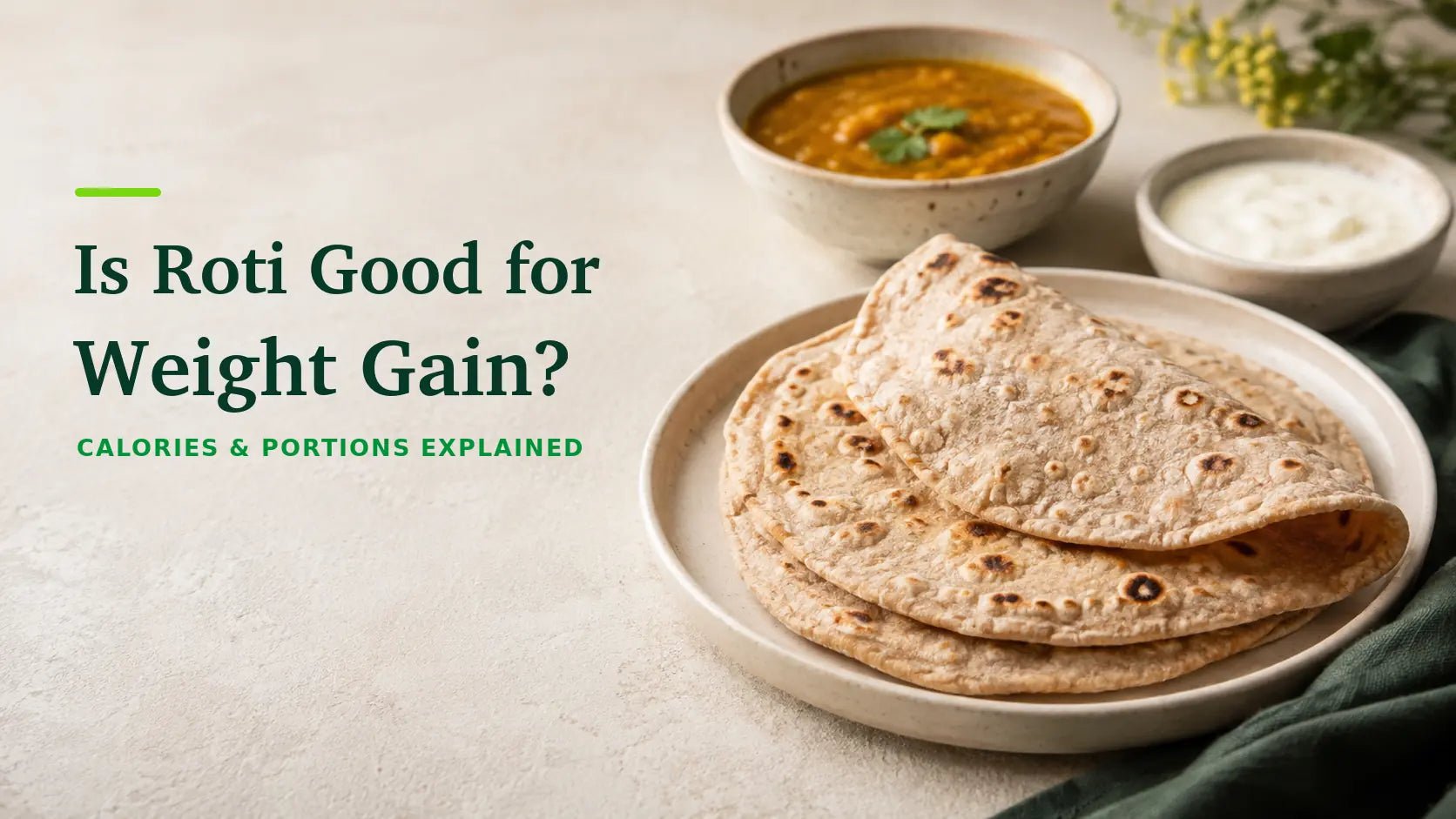
Is Roti Good for Weight Gain? Portion and Calories Explained
Roti can support healthy weight gain when it helps create a calorie surplus. This guide explains roti calories, practical portions, ghee and oil effects, protein pairings, and how many rotis may fit your diet.
Direct Answer
Yes. Roti can support weight gain when it adds calories to your usual diet. A plain homemade roti made with 30 grams of dry whole-wheat atta provides about 96 calories before oil or ghee. Two provide about 192 calories, while three provide about 288 calories.[1]
One level teaspoon of ghee weighing 5 grams adds about 45 calories. This makes one 30-gram atta roti with 5 grams of ghee about 141 calories.
Roti will not increase your weight if it only replaces rice, bread, potatoes or another food with similar calories. For gradual weight gain, add a measured portion to a balanced meal, keep a proper protein source on the plate and follow your average weight over time.
Bottom line: Roti can help you gain weight, but the calorie surplus from your complete diet—not roti alone—is what increases body weight.
Quick Answers
The estimates below use one plain roti made with 30 grams of dry atta and no added fat.
| Question | Direct answer |
|---|---|
| Is roti good for weight gain? | Yes, when it helps you maintain a calorie surplus. |
| How many calories are in one roti? | About 96 kcal. |
| How many calories are in two rotis? | About 192 kcal. |
| How many calories are in three rotis? | About 288 kcal. |
| How many calories are in one roti with ghee? | About 141 kcal when 5 g ghee is added. |
| How many rotis should I eat for weight gain? | There is no fixed number. A generally healthy adult may start by adding one measured roti to an existing balanced meal. |
Does Roti Help You Gain Weight?
Roti can help with weight gain when it raises your total calorie intake. It has no special ingredient that directly causes weight gain.
Your body uses energy every day for basic functions, movement, exercise and digestion. A calorie surplus happens when you regularly consume more energy than your body uses. Over time, this can increase body weight.
The key word is add.
If you add one 30-gram atta roti while keeping the rest of your food the same, you add about 96 calories. If that roti replaces half a cup of rice, two bread slices or another similar carbohydrate portion, your daily calories may change very little.
The NHS suggests that adults trying to gain weight gradually may consider adding around 300 to 500 healthy calories per day.[2] This is a general guide, not a personal prescription. You do not need to get all those calories from roti.
A balanced weight-gain diet should also provide:
- Protein from eggs, dairy, chicken, fish, meat, daal, beans, chana, paneer or tofu
- Fruit and vegetables for vitamins, minerals and fibre
- Suitable fats from nuts, seeds, nut butter, dairy or measured plant oils
- Enough fluids
- Regular meals and snacks when appetite is low
For a deeper explanation of calorie needs, read How Many Calories Should I Eat to Gain Weight?
How Many Calories Are in One Roti?
There is no single calorie value for every roti. Calories depend mainly on:
- The amount of dry flour
- The type of flour
- Oil or ghee added to the dough
- Fat used during cooking
- Butter or ghee applied after cooking
- Fillings such as potato, cheese or minced meat
For this article, one reference roti means:
- 30 g dry whole-wheat atta
- Water and salt
- No oil or ghee in the dough
- No oil or ghee on the tawa
- No fat added after cooking
The Indian Food Composition Tables report approximately 320 calories per 100 grams of wheat atta.[1] Based on that value, 30 grams of atta provides about 96 calories.
Roti Calories by Dry Atta Weight
| Dry atta used for one roti | Plain roti | With 5 g ghee or oil |
|---|---|---|
| 20 g | 64 kcal | 109 kcal |
| 25 g | 80 kcal | 125 kcal |
| 30 g | 96 kcal | 141 kcal |
| 35 g | 112 kcal | 157 kcal |
| 40 g | 128 kcal | 173 kcal |
The table treats 5 grams of fat as about 45 calories. Household teaspoons are not always equal, so weighing the ghee or checking its label is more accurate.
Calories in One, Two and Three Rotis
This table uses the 30-gram dry atta reference portion:
| Portion | Plain rotis | If each roti has 5 g ghee or oil |
|---|---|---|
| 1 roti | 96 kcal | 141 kcal |
| 2 rotis | 192 kcal | 282 kcal |
| 3 rotis | 288 kcal | 423 kcal |
If one teaspoon of ghee is shared between two rotis, add about 45 calories to the complete two-roti serving—not to each roti.
Nutrition in One 30-Gram Atta Roti
A plain roti made with 30 grams of dry whole-wheat atta provides approximately:[1]
- Energy: 96 kcal
- Available carbohydrate: 19.3 g
- Protein: 3.2 g
- Fat: 0.5 g
- Dietary fibre: 3.4 g
Roti provides some protein, but it should not be the main protein source in a weight-gain or muscle-gain meal.
Why Roti Diameter Does Not Tell You the Calories
Two rotis with the same diameter can have different calories. One may be thin and use 25 grams of flour. Another may be thick and use 40 grams.
This is why terms such as small, medium and large are unreliable unless the flour weight is also stated. Dry flour weight gives a more useful estimate than diameter alone.
Does Cooking Change Roti Calories?
Water changes the dough and cooked weight, but it does not add calories. Some water also leaves during cooking. This makes cooked weight less reliable than dry flour weight for homemade calorie calculations.
Cooking can increase calories when oil or ghee is added. Restaurant, frozen, tandoori and packaged rotis may use different recipes, so check the label or ask how they were prepared.
How to Calculate Calories in Homemade Roti
The most practical method is to calculate the complete dough batch and divide it by the number of rotis made.
Simple Formula
Calories per roti = total calories from dry flour and added fat ÷ number of rotis made
When the flour provides about 320 kcal per 100 grams:
Total batch calories = dry atta in grams × 3.2 + added fat in grams × 9
Use the flour packet value when it differs from 320 kcal per 100 grams.
Example Calculation
Suppose you use:
- 300 g whole-wheat atta
- 10 g oil or ghee in the dough
- Enough water to make the dough
The flour provides:
300 × 3.2 = 960 kcal
The added fat provides:
10 × 9 = 90 kcal
The full batch provides:
960 + 90 = 1,050 kcal
If the batch makes 10 similar rotis:
1,050 ÷ 10 = about 105 kcal per roti
Any ghee or butter applied after cooking must be added separately. This calculation assumes the measured fat remains in the food.
How Many Rotis Should You Eat for Weight Gain?
There is no fixed number of rotis that suits everyone. Your portion depends on:
- Your current food intake
- Body size and weight goal
- Daily activity
- Appetite and digestion
- The size of your rotis
- The rest of the meal
- Medical conditions and medicines
A Practical Starting Portion
An otherwise healthy adult who already eats roti may begin by adding one measured 25- to 30-gram atta roti to one usual balanced meal. Keep the normal protein portion unchanged.
For example:
- Usual lunch: 2 rotis, chicken, sabzi and yogurt
- Trial lunch: 3 rotis, the same chicken portion, sabzi and yogurt
The extra plain roti adds about 80 to 96 calories.
Adding one 30-gram roti at lunch and another at dinner adds about 192 calories per day. Other extra calories may come from milk, yogurt, eggs, daal, chicken, fish, nuts, seeds or a measured amount of plant oil.
Do not force several extra rotis at once. A very large portion may make you uncomfortable or so full that you eat less protein or skip a later snack.
How to Adjust Your Portion
Use the same basic portion for a few weeks and check:
- Your average morning weight, rather than one isolated reading
- Whether you ate the planned portion consistently
- Whether another meal or snack became smaller
- Appetite and digestive comfort
- Training energy and strength, when relevant
- Changes in waist size
If your weight is not moving upward, first check whether the roti truly added calories. If it replaced another food, more roti may not be the answer. Review the complete day instead.
Two weeks can show whether the new portion is practical and comfortable, but it may be too short to prove meaningful fat or muscle gain. A longer trend is more useful than one or two scale readings.
How to Build a Balanced Roti Meal for Healthy Weight Gain
A useful weight-gain meal should contain more than rotis and a small amount of gravy. Build the meal from four parts:
- Measured roti portion: Choose an amount that fits your appetite and calorie needs.
- Protein: Add chicken, fish, meat, eggs, daal, beans, chana, paneer, tofu, milk or yogurt.
- Fruit or vegetables: Include them for fibre, vitamins, minerals and variety.
- Measured energy source: When more calories are needed, use nuts, seeds, nut butter, dairy, avocado or a suitable plant oil.
Balanced Pakistani Roti Meal Ideas
| Meal | Example combination | Why it is more balanced |
|---|---|---|
| Chicken roti plate | 2 measured rotis, a proper chicken portion, cooked vegetables and yogurt | Adds carbohydrate, protein and dietary variety |
| Daal and egg plate | 2 measured rotis, a full bowl of daal, 1–2 eggs, salad and yogurt | Combines plant protein with eggs and dairy |
| Chana roti plate | 2 measured rotis, a full bowl of chana, salad and yogurt | Provides carbohydrate, plant protein and fibre |
| Paneer or tofu plate | 2 measured rotis, paneer or tofu curry, vegetables and fruit or yogurt | Useful when a meat-free meal is preferred |
Actual calories depend on the recipe, oil, cooking method and portion weights. A tablespoon of oil in a curry can change its energy more than a small difference in roti diameter.
If You Have a Small Appetite
If large roti meals are hard to finish:
- Use a moderate roti portion with a clear protein source.
- Eat smaller meals more often instead of one very large meal.
- Add compact snacks such as yogurt, milk, nuts or seeds.
- Keep drinks between meals if drinking before food reduces your appetite.
- Use measured calorie-dense additions instead of a large pile of plain rotis.
- Choose foods you digest comfortably.
Persistent poor appetite should not be ignored, especially when it occurs with pain, vomiting, diarrhoea, swallowing difficulty, fever or marked tiredness.
Which Roti Is Best for Weight Gain?
The best roti for weight gain is one you can digest, measure and eat consistently as part of a balanced diet. No flour has a unique power to increase body weight.
| Type of roti | Weight-gain considerations |
|---|---|
| Whole-wheat atta roti | A practical everyday choice with carbohydrate, fibre and some protein. Its fibre may feel filling for a person with a small appetite. |
| Multigrain roti | Not automatically higher in calories or protein. Check the actual flour blend and label. |
| Wheat-besan roti | Gram flour can change protein, fibre and texture, but the meal still needs a proper protein source. |
| Bajra, jowar, makki or ragi roti | These can support weight gain when they add calories. Compare equal flour weights because the usual roti size can differ. |
| Phulka | Similar to plain roti when the same flour amount is used and no fat is added. Puffing does not create extra calories. |
| Paratha | Usually higher in calories because of added oil or ghee. The exact amount depends on the flour and fat used. |
A higher-calorie roti is not automatically the best everyday choice. The complete meal, portion and nutrient balance matter more.
Is Roti With Ghee Good for Weight Gain?
Roti with ghee can help add calories, but the ghee should be measured.
- Half a teaspoon, about 2.5 g, adds roughly 22 calories.
- One level teaspoon, about 5 g, adds roughly 45 calories.
- One 30-gram atta roti with 5 g ghee provides about 141 calories.
Ghee is high in saturated fat. The ICMR-NIN dietary guidelines advise limiting saturated fats such as ghee and butter.[3] The World Health Organization recommends keeping saturated fat below 10% of total energy and replacing it with unsaturated fat more often.[4]
You do not need to ban ghee, and you do not need ghee to gain weight. Use an amount that fits the complete diet rather than treating it as unlimited because it is traditional or homemade.
Other foods that can add useful calories include:
- Nuts and seeds
- Peanut or nut butter
- Milk and yogurt
- Eggs
- Daal, chana and beans
- A measured amount of canola, sunflower, olive or another suitable plant oil
Dietary variety is better than depending on ghee for most extra calories.
Is Roti Good for Muscle Gain?
Roti can support muscle gain by providing carbohydrate and training energy. It does not build muscle by itself.
One 30-gram atta roti provides only about 3.2 grams of protein. Two provide about 6.3 grams. This contributes to the day, but it is much less than a proper serving of chicken, fish, eggs, dairy, tofu or legumes.
For muscle-focused weight gain, combine:
- A manageable calorie surplus
- Progressive resistance training
- Enough total protein
- Protein-rich meals across the day
- Adequate sleep and recovery
A large meta-analysis in healthy adults doing resistance training found that the added muscle-gain benefit of higher total protein intake tended to level off around 1.6 grams per kilogram of body weight per day on average.[5] This is research context—not a personal target for every reader. Age, training, total calories and medical conditions can change protein needs.
Should You Eat Roti Before or After a Workout?
Either can work.
- Before training: Eat a portion you digest comfortably. A plain roti meal may feel easier than a rich, oily paratha.
- After training: Pair roti with a proper protein source and fluids.
- Across the day: Consistent calories and protein matter more than finding one perfect time.
Roti vs Rice for Weight Gain
Neither roti nor rice is always better for weight gain. The real portion matters.
| Food portion | Approximate energy |
|---|---|
| 1 plain roti made with 30 g atta | 96 kcal |
| 1/2 cup cooked long-grain white rice | 102 kcal |
| 2 plain rotis made with 30 g atta each | 192 kcal |
| 1 cup cooked long-grain white rice | 205 kcal |
The roti estimates use IFCT atta values, while the rice estimate uses a cooked long-grain white-rice serving from USDA nutrient data.[1,8]
These common portions provide similar calories. The practical difference is often appetite and texture:
- Rice may be easier to eat in a larger amount when appetite is low.
- Whole-wheat roti provides more fibre and may feel more filling.
- Oil, ghee, fried ingredients and gravy can change either meal greatly.
Choose the option that fits your appetite, digestion, budget and complete meal. For a detailed comparison, read Is Rice Good for Weight Gain?
Can You Eat Roti Every Day or at Night?
Can You Eat Roti Every Day for Weight Gain?
Yes. Roti can be eaten daily when the complete diet provides enough protein, fruit, vegetables, suitable fats and variety.
Eating roti every day does not guarantee weight gain. Your total calorie intake still needs to be higher than the amount your body uses.
Does Eating Roti at Night Increase Weight?
The same roti does not gain extra calories after sunset. Eating roti at night does not automatically cause more fat gain than eating it earlier.
Total intake and the long-term eating pattern matter more. However, a large late meal may cause reflux, bloating or poor sleep in some people. Move the meal earlier or reduce its size if it causes discomfort.
Does Roti Cause Belly Fat?
Roti does not send fat directly to the abdomen. Genetics, hormones, age, sex, sleep, activity and overall weight change can affect where body fat is stored.
A very large calorie surplus can increase unwanted body fat, whether the extra energy comes from roti, rice, drinks, sweets or other foods.
Why Roti May Not Help You Gain Weight
Roti may not change your weight when:
- It replaces rice, bread or another carbohydrate instead of adding calories.
- Your rotis are smaller than the serving used in online estimates.
- A larger lunch makes you skip a later snack.
- You add the portion only on some days.
- You eat several rotis but very little protein or dietary variety.
- High activity keeps your energy needs above your intake.
- Poor appetite, digestive symptoms or a health condition reduces your overall intake.
Follow your average weight trend rather than one reading. Water, salt, stored carbohydrate and food in the digestive system can change scale weight from day to day.
If you believe you eat a lot but your weight remains unchanged, read Why Am I Not Gaining Weight Even Though I Eat a Lot?
When Should You Get Individual Advice?
You may use MNT's BMI Calculator as a screening tool, but BMI cannot diagnose the cause of low weight or tell you the ideal roti portion by itself.
Speak with a doctor or registered dietitian before deliberately increasing food intake when:
- You are losing weight without trying.
- Your appetite falls suddenly or stays low.
- You have persistent diarrhoea, vomiting, pain, fever, swallowing difficulty or marked tiredness.
- You have diabetes, kidney disease, liver disease or a significant digestive condition.
- You are pregnant, under 18, an older adult with frailty or recovering from an eating disorder.
- You have coeliac disease or a wheat allergy.
Wheat roti contains gluten and is unsuitable for coeliac disease. Roti made with certified gluten-free flour may be suitable when cross-contact is prevented.[6]
Trying to correct unexplained weight loss only by eating more roti may delay the diagnosis of an underlying problem. The NHS advises seeking medical advice when weight keeps falling without a change in food intake or activity.[7]
Frequently Asked Questions
Is Chapati Good for Weight Gain?
Yes. Chapati and roti often refer to similar South Asian flatbreads. Chapati can support weight gain when its measured portion adds calories to a balanced diet.
Are Two Rotis Enough for Weight Gain?
Two plain rotis made with 30 grams of atta each provide about 192 calories. Whether this is enough depends on the complete meal and your total daily calorie needs. Pair them with a proper protein source instead of eating only roti and gravy.
How Many Calories Are in Three Rotis?
Three plain rotis made with 30 grams of dry atta each provide about 288 calories. If each has 5 grams of ghee or oil, the total increases to about 423 calories.
How Many Rotis Are Needed to Gain One Kilogram?
There is no reliable number. A kilogram on the scale can include changes in water, stored carbohydrate, digestive contents, fat and muscle. Energy needs also differ between people. Use a repeatable portion and follow your longer-term trend instead of targeting a fixed number of rotis.
Final Verdict: Is Roti Good for Weight Gain?
Yes. Roti can support weight gain when it adds useful calories to a balanced diet. A plain homemade roti made with 30 grams of dry whole-wheat atta provides about 96 calories. Two provide about 192 calories, while one roti with 5 grams of ghee provides about 141 calories.
Do not copy a fixed roti number from the internet. Start with a measured addition that fits your appetite and complete diet. Keep a proper protein source on the plate, include fruit or vegetables and use measured energy-rich foods when more calories are needed.
For muscle-focused gain, combine roti with resistance training, adequate protein and recovery. For general weight gain, follow your average weight, appetite, digestion and full-day intake over time.
Final takeaway: Use roti to support the calorie surplus—not to replace the protein and nutrient-rich foods your body also needs.
We rely on peer-reviewed studies and reputable medical journals.