


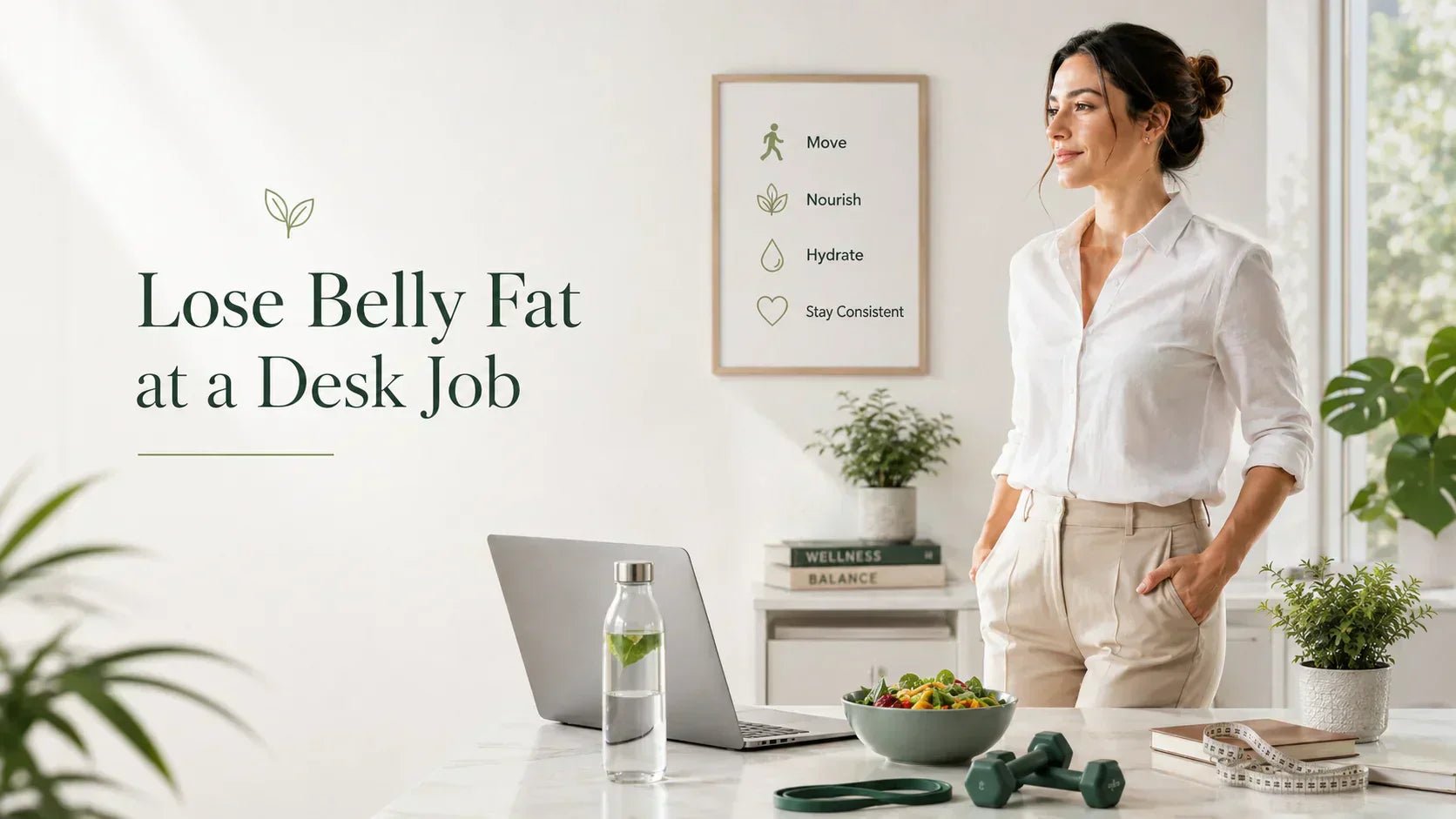
How to Lose Belly Fat When You Have a Desk Job
Learn how to lose belly fat with a desk job using a realistic office-friendly routine: protein-rich meals, fewer sugary snacks, walking breaks, strength training, better sleep, and consistent waist tracking.
Quick Answer: Can You Lose Belly Fat When You Have a Desk Job?
Yes, you can lose belly fat even if you have a desk job. The key is to reduce overall body fat through a calorie-controlled diet, more daily movement, regular walking, strength training, enough protein, better sleep, and stress control.
You cannot spot-reduce belly fat with crunches, planks, detox drinks, waist trainers, or “belly fat burner” remedies. Ab exercises can strengthen your core, but belly fat reduces when your total body fat gradually decreases.
For office workers, the biggest reason belly fat becomes difficult to lose is not just sitting. It is the full routine around sitting: low step count, sugary tea or coffee, biscuits, fried snacks, restaurant lunches, stress eating, late dinners, poor sleep, and inconsistent weekends.
The best desk-job belly fat plan is simple:
- Eat protein in every main meal.
- Add vegetables, salad, fruit, lentils, or other fiber-rich foods daily.
- Reduce sugary drinks, biscuits, fried snacks, and oversized portions.
- Walk after meals when possible.
- Take short movement breaks every 30–60 minutes.
- Strength train 2–3 days per week.
- Sleep 7 or more hours most nights.
- Track waist size weekly, not only body weight.
If you follow this consistently, you may feel less bloated, more energetic, and more in control of cravings within 1–2 weeks. Visible belly fat reduction usually takes longer, often 8–12 weeks or more, depending on your starting weight, waist size, food intake, activity level, sleep, hormones, medical history, and consistency.
Need a personalized desk-job belly fat plan? Book an online dietitian consultation with MNT.
The 5-Part Desk-Job Belly Fat Plan
| Desk-Job Problem | What Usually Happens | What To Do |
|---|---|---|
| Sitting for 8–10 hours | Lower daily calorie burn and fewer steps | Move for 2–5 minutes every 30–60 minutes |
| Office snacking | Biscuits, chips, sweets, sugary tea, coffee, or bakery foods add hidden calories | Plan protein- and fiber-rich snacks |
| No time for gym | Exercise becomes inconsistent | Use 20–30 minute home or gym workouts |
| Belly fat not reducing | Calories, sleep, steps, or weekends are not controlled | Track waist, steps, meals, sleep, and weekends |
| Stress and poor sleep | More cravings and late-night eating | Build a realistic sleep and stress routine |
The full formula is:
Belly fat loss = calorie deficit + protein + fiber + daily movement + strength training + sleep + consistency
You do not need a perfect routine. You need a repeatable routine.
Need Help Losing Belly Fat with a Desk Job?
Get a personalized weight-loss diet plan designed around your office timing, Pakistani food preferences, waist size, lifestyle, and health goals.
Why Desk Jobs Make Belly Fat Harder to Lose
A desk job does not automatically cause belly fat, but it creates a lifestyle where gaining fat becomes easier and losing fat becomes harder.
When you sit most of the day, you naturally burn fewer calories than someone who walks, stands, climbs stairs, commutes actively, or does physical work. Even if you exercise for 30 minutes, your total daily movement may still be low if the rest of your day is spent sitting.
For many office workers, the issue is not one bad meal. It is the daily pattern:
- Long sitting hours
- Very low step count
- Sweet tea or coffee multiple times a day
- Biscuits with tea
- Samosa, pakora, chips, nimko, or bakery items
- Sugary drinks or juices
- Large rice or roti portions
- Frequent restaurant meals
- Stress eating
- Late dinners
- Poor sleep
- Weekend overeating
This is why the solution must be bigger than “do more crunches.” A desk-job fat-loss plan must improve the whole workday.
What Is Belly Fat? Visceral Fat vs Subcutaneous Fat
Belly fat is not only one type of fat. It mainly includes two types: subcutaneous fat and visceral fat.
Subcutaneous Belly Fat
Subcutaneous fat is the fat under the skin. You can usually pinch it around your waist. It affects body shape and waist size, but it is generally less harmful than deep abdominal fat.
Visceral Belly Fat
Visceral fat is deeper fat stored around internal organs. It is more strongly linked with insulin resistance, type 2 diabetes, fatty liver, high blood pressure, abnormal cholesterol, and heart disease risk.
You cannot see exactly how much visceral fat you have without medical testing, but waist size is a practical marker. If your waist is gradually reducing, your abdominal fat risk is likely improving.
Why South Asian Office Workers Should Be Careful
South Asians can develop abdominal obesity and metabolic risk at lower body weights compared with some other populations. This means a person may not look very overweight but may still have a high waist size, fatty liver risk, insulin resistance, or increased cardiometabolic risk.
A commonly used waist-risk cutoff for Asian adults is around:
- Men: 90 cm or more
- Women: 80 cm or more
These numbers are not a diagnosis, but they are useful warning signs. If your waist is high, it is better to act early.
How to Measure Your Waist Correctly
Use a flexible measuring tape.
- Stand straight.
- Relax your abdomen.
- Do not suck in your stomach.
- Place the tape around your waist, usually midway between the lower rib and the top of the hip bone.
- Keep the tape level.
- Do not pull it too tight.
- Measure after normal breathing.
- Track once weekly, preferably in the morning.
Do not rely only on body weight. Weight can change due to water, salt, constipation, digestion, menstrual cycle changes, carbohydrate intake, and sleep. Waist measurement gives a better picture of belly fat progress.
Can Crunches, Planks, or Sit-Ups Reduce Belly Fat?
Crunches, planks, and sit-ups can strengthen your abdominal muscles, but they do not directly burn belly fat from only your stomach.
This is called the spot-reduction myth. Your body does not let you choose exactly where fat comes off first. Fat loss depends on total calorie balance, genetics, sex, hormones, age, sleep, stress, and overall body fat level.
What Core Exercises Can Do
Core exercises can help you:
- Improve posture after long sitting
- Strengthen abdominal muscles
- Support the lower back
- Improve balance and stability
- Reduce the “slouched belly” appearance
- Make your stomach look firmer as fat decreases
What Core Exercises Cannot Do
Core exercises alone cannot:
- Melt belly fat
- Replace a calorie deficit
- Cancel overeating
- Replace walking
- Replace strength training
- Burn lower belly fat directly
Use core exercises as support work. Use diet, walking, movement breaks, strength training, and sleep to reduce belly fat.
The Real Fat-Loss Formula for Desk Workers
The real formula is:
Calorie deficit + daily movement + strength training + cardio + recovery = lower body fat and smaller waist over time
There is no single belly fat hack. The best results come from stacking small habits and repeating them long enough.
Step 1: Create a Small Calorie Deficit
A calorie deficit means you eat slightly fewer calories than your body uses. When this happens consistently, your body uses stored energy, including body fat, over time.
You do not need crash dieting. In fact, very strict diets often fail because they cause hunger, fatigue, cravings, and binge eating.
For desk workers, the easiest way to create a calorie deficit is usually to reduce:
- Sugar in tea and coffee
- Biscuits with tea
- Samosa, pakora, rolls, fries, chips, and nimko
- Bakery items and desserts
- Soft drinks and packaged juices
- Large rice portions
- Extra roti portions
- Creamy coffee drinks
- Late-night snacks
- Frequent restaurant meals
- Weekend overeating
A small daily deficit is better than a short extreme diet because it is easier to follow with a busy office routine.
Step 2: Eat Protein in Every Main Meal
Protein is important for belly fat loss because it helps with fullness, muscle maintenance, and appetite control. It is especially useful if you are also doing strength training.
Good protein options include:
- Eggs
- Chicken
- Fish
- Lean meat
- Daal
- Chana
- Beans
- Lentils
- Plain yogurt or Greek yogurt
- Paneer in controlled portions
- Tofu
- Milk
- Whey protein if needed and suitable
A simple rule: include one palm-sized protein portion in lunch and dinner. If possible, include protein in breakfast too.
Pakistani Protein Examples
- 2 eggs with 1 whole wheat roti
- Chicken curry with salad and controlled roti
- Daal with yogurt and salad
- Chana chaat without extra sauces
- Grilled chicken wrap
- Fish with vegetables
- Boiled eggs as a snack
- Plain yogurt with fruit
Step 3: Add Fiber Daily
Fiber helps you feel full, supports digestion, and can reduce random snacking. It is very important for office workers who sit for long hours and often experience constipation or bloating.
High-fiber foods include:
- Vegetables
- Salad
- Fruits
- Daal
- Chana
- Beans
- Oats
- Whole wheat roti
- Brown rice in controlled portions
- Seeds
- Lentil soups
A practical rule is to fill half your lunch and dinner plate with vegetables, salad, or another fiber-rich food.
Step 4: Control Carbs, Do Not Remove Them Completely
You do not need to remove roti, rice, oats, potatoes, or fruit to lose belly fat. The real issue is usually portion size and food combination.
Carbs become a problem when they are eaten in large portions with low protein, low fiber, fried foods, sugary drinks, and little movement.
Better carb choices include:
- Whole wheat roti
- Oats
- Boiled or baked potatoes
- Rice in controlled portions
- Fruits
- Daal
- Beans
- Chana
- Whole-grain bread
Simple Carb Portion Guide
If you sit all day and move very little, use a smaller carb portion.
If you walk regularly and strength train, you can include a moderate carb portion.
If your weight and waist are not changing after several weeks, reduce portions slightly instead of removing entire food groups.
Step 5: Reduce Liquid Calories
Liquid calories are one of the easiest ways office workers gain belly fat.
Limit:
- Soft drinks
- Packaged juices
- Sugar-loaded tea
- Sweetened coffee
- Energy drinks
- Milkshakes
- Fancy café drinks
- Creamy coffees
Better options include:
- Water
- Unsweetened tea
- Black coffee
- Green tea without sugar
- Lemon water without sugar
- Plain milk in controlled amounts
If you drink tea 3–4 times daily with sugar and biscuits, reducing just this habit can make a major difference over weeks.
Best Diet Plan to Lose Belly Fat for Office Workers
There is no single best diet for everyone. The best diet is the one that helps you stay in a calorie deficit while keeping you full, energetic, and consistent.
Use this office-friendly plate method:
- ½ plate: vegetables, salad, or fruit
- ¼ plate: protein
- ¼ plate: roti, rice, potatoes, oats, or other carbs
- Small amount: healthy fats such as nuts, seeds, olive oil, or controlled oil in cooking
Breakfast Before Office
Avoid starting your day with only tea and biscuits. This can make you hungry later and increase cravings.
Choose one of these options:
Option 1: Eggs + Roti
- 2 eggs
- 1 whole wheat roti
- Cucumber, tomato, or vegetables
- Tea without sugar or with reduced sugar
Option 2: Oats Bowl
- Oats
- Milk or yogurt
- One fruit
- Small amount of seeds or nuts
Option 3: Yogurt + Fruit + Nuts
- Plain yogurt or Greek yogurt
- One fruit
- Small handful of nuts
Option 4: Chana Breakfast
- Boiled chana
- Salad
- One small roti if needed
Option 5: Quick Office Breakfast
- Boiled eggs
- Fruit
- Plain tea or black coffee
Office Lunch for Belly Fat Loss
Your lunch should prevent overeating later. Do not make lunch so light that you become extremely hungry in the evening.
A good lunch includes:
- Protein
- Vegetables or salad
- Controlled carbs
- Water or unsweetened drink
Pakistani Office Lunch Examples
- Chicken curry + 1 roti + salad
- Daal + 1 roti + cucumber salad
- Grilled chicken + small rice portion + vegetables
- Chana salad + plain yogurt
- Egg sandwich with whole wheat bread + salad
- Chicken wrap with vegetables and yogurt sauce
- Rice bowl with chicken, daal, and salad
- Fish + vegetables + controlled rice portion
Avoid making lunch only rice, only roti, or only fried food. Add protein and fiber to make it more filling.
Smart Office Snacks That Support Fat Loss
Snacks are not bad. Random snacking is the problem.
Choose one planned snack:
- Fruit
- Plain yogurt
- Roasted chana
- Boiled eggs
- Small handful of nuts
- Carrot or cucumber sticks
- Protein shake if suitable
- Milk without added sugar
- Homemade sandwich with protein
Limit daily use of:
- Biscuits
- Cakes
- Pastries
- Samosa
- Pakora
- Chips
- Chocolate bars
- Sugary drinks
- Creamy coffee
- Bakery items
A good office rule is:
Before eating at your desk, ask: “Am I hungry, or am I bored, stressed, or tired?”
Dinner After Office
Dinner should be satisfying but not too heavy.
A good dinner structure:
- Protein source
- Cooked vegetables or salad
- Controlled roti or rice portion
- Minimal fried foods
- No heavy late-night snacking
Examples:
- Grilled chicken + vegetables + 1 roti
- Daal + salad + 1 roti
- Fish + vegetables + small rice portion
- Egg omelet + salad + roti
- Chicken soup + salad
- Chana or bean salad + yogurt
If you feel very hungry every night, your breakfast, lunch, protein intake, or sleep routine may need improvement.
Sample One-Day Diet Plan for Desk Job Belly Fat
Morning
- 2 eggs with 1 whole wheat roti
- Cucumber or tomato
- Tea with no sugar or reduced sugar
Mid-Morning
- 1 fruit
- Water
Lunch
- Chicken, daal, chana, fish, or eggs
- 1 roti or small rice portion
- Large salad
- Plain yogurt
Evening Snack
- Roasted chana or plain yogurt
- Tea without biscuits
Dinner
- Protein source
- Cooked vegetables or salad
- 1 roti or controlled rice portion
Before Bed
- Avoid heavy snacks
- Reduce screen time
- Sleep on time
This is a general example. A personalized diet plan should consider your weight, height, waist size, medical conditions, medications, food preferences, daily routine, and activity level.
How to Move More During a Desk Job Without Going to the Gym
For office workers, movement during the day is just as important as formal exercise.
You do not need to sweat in the office. You just need to break long sitting time.
The 5-Minute Movement Rule
After every 60 minutes of sitting, move for 3–5 minutes.
You can:
- Walk in the office
- Stand and stretch
- Take stairs
- Do 10 bodyweight squats
- Walk to refill water
- Do calf raises
- Walk during calls
- Use washroom breaks as movement breaks
Small movement repeated daily can become more powerful than one intense workout followed by 10 hours of sitting.
Easy Ways to Increase NEAT at Work
NEAT means non-exercise activity thermogenesis. It includes the calories you burn outside formal exercise.
Examples include:
- Walking
- Standing
- Taking stairs
- Cleaning
- Carrying groceries
- Pacing during calls
- Walking after meals
- Stretching
- Moving during breaks
For desk workers, increasing NEAT is one of the most practical ways to support belly fat loss.
Try these:
- Walk for 5–10 minutes before starting work.
- Stand during phone calls.
- Walk after lunch.
- Refill your water bottle yourself.
- Use the stairs for 1–3 floors.
- Park slightly farther away.
- Get off public transport one stop earlier.
- Walk during casual meetings.
- Use a standing desk if available, but do not rely on standing alone.
A standing desk may reduce sitting time, but standing still is not the same as walking. Use it as a tool, not a fat-loss solution.
Best Exercises to Lose Belly Fat with a Desk Job
The best exercise plan for belly fat is not an ab-only workout. It is a full-body plan that helps you burn calories, preserve muscle, improve posture, and stay consistent.
A good weekly formula:
- 2–3 full-body strength workouts
- 3–5 walking or cardio sessions
- Short core work 2–4 times weekly
- Daily sitting breaks
Walking for Belly Fat Loss
Walking is one of the best exercises for office workers because it is simple, low-cost, joint-friendly, and easy to fit into the day.
Try:
- 10 minutes after breakfast
- 10 minutes after lunch
- 10–20 minutes after dinner
- Phone-call walks
- Weekend longer walks
You do not need to start with 10,000 steps. Start from your current level and gradually increase.
A practical method:
- Track your current average steps for 3–7 days.
- Add 1,000–2,000 steps per day.
- Keep that level for 1–2 weeks.
- Increase again when it feels easy.
Strength Training for Desk Workers
Strength training helps preserve muscle during fat loss. This is important because weight loss without strength training can lead to muscle loss, weakness, and a softer body shape.
Strength training also helps desk workers improve posture, glute strength, back strength, and core stability.
Beginner Full-Body Workout
Do this 2–3 times per week.
Warm-Up: 5 Minutes
- March in place
- Arm circles
- Hip circles
- Bodyweight squats
- Glute bridges
Workout
| Exercise | Sets | Reps |
| Squat or chair sit-to-stand | 2–3 | 8–12 |
| Glute bridge | 2–3 | 10–15 |
| Push-up or wall push-up | 2–3 | 6–12 |
| Dumbbell row or resistance band row | 2–3 | 8–12 |
| Reverse lunge or step-up | 2–3 | 8–10 each side |
| Dead bug | 2–3 | 8–10 each side |
| Plank | 2–3 | 20–45 seconds |
Rest 60–90 seconds between sets.
Gym Version
If you go to the gym, use:
- Leg press or squat
- Romanian deadlift
- Chest press
- Lat pulldown
- Cable row
- Dumbbell lunge
- Shoulder press
- Pallof press
- Plank
Start light, focus on form, and increase gradually.
15-Minute After-Office Belly Fat Workout
Do this 3–4 times per week when you are short on time.
Warm-Up: 2 Minutes
- March in place
- Arm circles
- Bodyweight squats
- Shoulder rolls
Circuit: 10 Minutes
Repeat as many quality rounds as possible:
- 10 squats
- 8 push-ups or wall push-ups
- 12 glute bridges
- 10 lunges each side
- 20-second plank
Cool Down: 3 Minutes
- Slow walk
- Hamstring stretch
- Chest stretch
- Deep breathing
This workout will not magically burn fat only from the stomach, but it supports calorie burn, strength, posture, and consistency.
Desk-Friendly Exercises You Can Do During Breaks
You do not need to sweat through your office clothes. These movements are useful for breaking sitting time.
Seated Leg Extensions
Sit upright. Extend one leg straight. Hold for 2–3 seconds. Lower slowly. Repeat 10–15 times per leg.
Chair Squats
Stand up from your chair and sit back down slowly. Repeat 8–10 times.
Wall Push-Ups
Place your hands on a wall or sturdy desk. Step back and perform controlled push-ups. Repeat 8–12 times.
Calf Raises
Stand behind your chair. Raise your heels, pause, and lower. Repeat 15–20 times.
Shoulder Rolls
Roll shoulders backward and forward 10 times each.
Hip Flexor Stretch
Stand and gently stretch the front of your hips, especially after long sitting.
These small movements are not a replacement for workouts, but they help reduce uninterrupted sitting and stiffness.
Desk Job Belly Fat Routine: Morning to Night
Morning Routine
- Wake up on time.
- Drink water.
- Eat a protein-rich breakfast.
- Walk 5–10 minutes if possible.
- Pack or plan your lunch.
- Avoid starting the day with only tea and biscuits.
During Office Hours
- Stand or walk every 30–60 minutes.
- Drink water.
- Avoid random snacking.
- Keep one planned healthy snack.
- Take stairs when possible.
- Walk during phone calls.
Lunch Break
- Eat protein first.
- Add salad or vegetables.
- Control roti or rice portion.
- Avoid sugary drinks.
- Walk 5–10 minutes after lunch.
Evening After Office
- Do a short workout or walk.
- Avoid arriving home extremely hungry.
- Eat a planned dinner.
- Reduce screen time before sleep.
Night Routine
- Avoid heavy late-night snacks.
- Keep caffeine earlier in the day.
- Sleep on time.
- Aim for 7 or more hours of sleep.
A 7-Day Desk-Job Belly Fat Routine
Monday
- Protein-rich breakfast
- Movement break every hour
- Balanced lunch with protein and vegetables
- Full-body strength workout after work
Tuesday
- 10-minute morning walk
- Walk during one phone call
- Daal, chicken, chana, or egg-based lunch
- 30-minute brisk walk after work
Wednesday
- Yogurt, oats, eggs, or chana breakfast
- Walk after lunch
- Core and mobility session
- Sleep early
Thursday
- Protein breakfast
- Stairs or extra walking during office hours
- Full-body strength workout
- Light balanced dinner
Friday
- Avoid the “Friday snack spiral”
- Plan lunch before cravings hit
- 20–30 minutes cardio or walking
- Enjoy a controlled flexible meal if desired
Saturday
- Longer walk, gym, cycling, sports, or home workout
- High-protein meal
- Flexible but portion-aware dinner
Sunday
- Light walk
- Grocery shopping
- Meal prep
- Plan lunches, snacks, and workouts for the week
This routine works because it removes guesswork. Desk workers often fail when every meal, snack, and workout is decided at the last moment.
Common Mistakes Office Workers Make
Mistake 1: Doing Only Crunches
Crunches strengthen abs but do not directly remove belly fat. You need total fat loss.
Mistake 2: Eating Too Little During the Day
Skipping breakfast or lunch can lead to overeating at night.
Mistake 3: Drinking Calories
Sweet tea, soft drinks, juices, and creamy coffees can add many calories without making you full.
Mistake 4: Ignoring Weekends
Many people create a calorie deficit Monday to Thursday and erase it from Friday night to Sunday.
Mistake 5: No Strength Training
Dieting alone may reduce weight, but strength training helps improve body composition.
Mistake 6: Sitting All Day and Exercising Once
A 30-minute workout is good, but it does not fully cancel 9–10 hours of sitting. Add movement throughout the day.
Mistake 7: Expecting Results in One Week
Belly fat takes time. Focus on waist size, energy, consistency, and routine.
Mistake 8: Eating “Healthy” Foods in Very High Calories
Some healthy foods are calorie-dense:
- Nuts
- Nut butter
- Olive oil
- Avocado
- Granola
- Cheese
- Smoothies
- Protein bars
You can eat these foods, but portions matter.
Why Your Belly Fat Is Not Reducing Yet
| Problem | Likely Cause | Fix |
| Eating healthy but not losing | Portions are still high | Track meals for 1–2 weeks |
| Exercising but waist unchanged | Daily steps are too low | Add walking and sitting breaks |
| Hungry all day | Low protein or fiber | Add protein and vegetables |
| Weekdays good, weekends bad | Weekend surplus cancels deficit | Plan flexible meals |
| Tired after work | Poor sleep or too much intensity | Walk more, train realistically |
| Belly looks bigger at night | Bloating, gas, constipation, sodium, food volume | Track waist weekly, not hourly |
| No consistency | Plan is too strict | Use simpler meals and shorter workouts |
Bloating vs Belly Fat: How to Tell the Difference
Sometimes the belly looks bigger because of bloating, not fat.
Bloating May Be Caused By
- Constipation
- Gas
- Eating too fast
- Carbonated drinks
- High salt intake
- Food intolerance
- Irregular meals
- Low fiber
- Suddenly eating too much fiber
- Stress
- Poor digestion
Bloating can change throughout the day. Belly fat is more consistent and does not disappear overnight.
If your belly is flat in the morning and very large at night, bloating may be part of the problem. If your waist size is consistently high, body fat may also be involved.
How Long Does It Take to Lose Belly Fat with a Desk Job?
It depends on your starting point, calorie intake, activity level, sleep, hormones, stress, medical history, and consistency.
In 1–2 Weeks
You may notice:
- Less bloating
- Better digestion
- Better energy
- Fewer cravings
- More control over snacking
In 4 Weeks
You may notice:
- Clothes fitting better
- Improved stamina
- Better workout consistency
- Slight waist reduction
In 8–12 Weeks
Visible belly fat reduction becomes more realistic if you maintain a calorie deficit, walk regularly, strength train, and sleep well.
Do not judge your plan after 7 days. Judge it after 4–8 weeks of consistent execution.
How to Track Belly Fat Progress Correctly
Track these once weekly:
- Waist circumference
- Body weight trend
- Progress photos
- Step count
- Workout consistency
- Sleep hours
- Hunger and cravings
- Energy levels
Best Tracking Method
- Same day every week
- Morning
- After using the washroom
- Before breakfast
- Same measuring tape
- Same body position
If your weight is the same but your waist is reducing, you are still making progress.
Can You Lose Belly Fat Without Gym?
Yes. You can lose belly fat without a gym if you control your diet and increase daily movement.
A no-gym plan can include:
- Walking daily
- Home strength workouts
- Resistance bands
- Bodyweight exercises
- Stairs
- Better meal planning
- Reduced snacks and sugary drinks
Gym is helpful, but it is not compulsory. Consistency matters more than location.
No-Gym Weekly Plan
- 3 days home strength training
- 4–5 days walking
- Daily movement breaks
- Protein at each meal
- Waist tracking weekly
How to Lose Belly Fat with a 10-Hour Desk Shift
Long shifts require a minimum-effective plan.
Do this:
- 5-minute walk before work
- Protein-rich breakfast
- Packed lunch
- Two planned snacks
- 2-minute movement break every hour
- 10-minute walk after lunch
- 20-minute workout after work or before shower
- Sleep routine
You do not need a perfect plan. You need a repeatable one.
How to Lose Belly Fat After 40 with a Desk Job
After 40, strength training becomes more important because muscle mass tends to decline with age. Desk work can also increase stiffness and weakness.
Prioritize:
- Protein at each meal
- Strength training 2–3 times weekly
- Walking after meals
- Sleep consistency
- Joint-friendly cardio
- Reduced alcohol
- Waist tracking instead of scale obsession
Belly Fat Tips for Women with Desk Jobs
Women may notice belly changes due to menstrual cycle, water retention, PCOS, thyroid issues, perimenopause, menopause, stress, sleep, and digestion.
Helpful priorities include:
- Strength training
- Protein and fiber
- Walking
- Sleep
- Stress management
- Consistent meals
- Medical review for thyroid symptoms, PCOS symptoms, irregular periods, or unexplained weight changes
Avoid extreme diets that promise to “fix hormones” quickly.
Belly Fat Tips for Men with Desk Jobs
Men commonly gain abdominal fat due to low steps, large portions, alcohol, late meals, stress, and inconsistent training.
Helpful priorities include:
- Reduce liquid calories
- Reduce alcohol frequency if applicable
- Increase steps
- Strength train 2–3 times weekly
- Add protein to breakfast and lunch
- Track waist
- Avoid oversized restaurant portions
- Sleep 7 or more hours
What Should Office Workers Avoid for Belly Fat Loss?
You do not need to ban all foods, but reduce foods that make calorie control difficult.
Limit:
- Sugary tea and coffee
- Biscuits
- Bakery items
- Fried snacks
- Samosa and pakora
- Sugary drinks
- Fast food
- Large rice portions
- Late-night desserts
- Mindless snacking while working
Replace with:
- Fruit
- Yogurt
- Roasted chana
- Boiled eggs
- Nuts in small portions
- Daal
- Lean protein
- Vegetables
- Water
- Unsweetened drinks
Common Belly Fat Myths for Office Workers
Myth 1: Crunches Burn Belly Fat
Crunches train abdominal muscles. They do not directly burn belly fat.
Myth 2: A Standing Desk Will Make You Lose Belly Fat
A standing desk may reduce sitting time, but it does not replace walking, strength training, or a calorie deficit.
Myth 3: Carbs Cause Belly Fat
Excess calories cause fat gain. Carbs can be part of a fat-loss diet when portions are controlled.
Myth 4: You Need HIIT to Lose Belly Fat
HIIT can be useful, but it is not required. Many people lose belly fat with walking, strength training, and nutrition consistency.
Myth 5: Sweating Means Fat Loss
Sweating mostly reflects heat and fluid loss. Fat loss happens over time through energy balance.
Myth 6: Detox Drinks Burn Belly Fat
Detox drinks do not melt belly fat. Your body already has organs that process and eliminate waste.
Myth 7: You Can Out-Exercise Office Snacking
Exercise helps, but frequent high-calorie snacks can easily erase the calories burned during workouts.
When to See a Dietitian or Doctor
Get professional guidance if:
- Your waist size is high.
- You have diabetes, PCOS, thyroid disease, fatty liver, high cholesterol, or high blood pressure.
- You are gaining belly fat despite eating less.
- You feel tired, dizzy, weak, or unwell while dieting.
- You have irregular periods or signs of hormonal imbalance.
- You have severe bloating, constipation, or digestive discomfort.
- You have chest pain, shortness of breath, fainting, or severe joint pain.
- You are pregnant, postpartum, or breastfeeding.
- You take prescription medication.
- You have a history of an eating disorder.
- You want a diet plan that fits your office routine and Pakistani food preferences.
A dietitian can help you create a realistic plan based on your schedule, food preferences, weight, waist size, health condition, medications, and activity level.
Quick Checklist: How to Lose Belly Fat with a Desk Job
Use this checklist daily:
- Eat protein in every main meal.
- Add vegetables or salad to lunch and dinner.
- Reduce sugar in tea and coffee.
- Avoid daily biscuits and fried snacks.
- Walk after meals when possible.
- Take movement breaks every 30–60 minutes.
- Strength train at least 2 days per week.
- Sleep 7 or more hours.
- Drink enough water.
- Track waist size weekly.
- Stay consistent for 8–12 weeks.
Office-Friendly Belly Fat Loss Plan
Daily Minimum Plan
If you are very busy, follow this minimum plan:
- 2 protein-rich meals
- 1 large salad or vegetable serving
- No sugary drinks
- 20–30 minutes walking
- 5 movement breaks at work
- 7 hours sleep
Better Plan
If you can do more:
- Protein in every meal
- 25–35 minutes walking
- 2–4 strength sessions per week
- Planned snacks only
- Reduced eating out
- Weekly waist tracking
Best Plan
For faster and more structured results:
- Personalized calorie-controlled diet plan
- Strength training 3–4 times per week
- 7,000–10,000 steps daily, built gradually
- Sleep and stress management
- Weekly progress review
- Dietitian-guided adjustments
FAQs About Losing Belly Fat with a Desk Job
Can sitting all day cause belly fat?
Sitting all day can contribute to belly fat because it lowers daily calorie burn and often increases snacking. Sitting itself is not the only cause. Belly fat usually increases because of low movement, excess calories, poor food choices, stress, and poor sleep.
How do I lose belly fat if I work 9 to 5?
Eat a protein-rich breakfast, plan a balanced lunch, avoid sugary drinks and biscuits, walk after meals, take movement breaks during office hours, and strength train 2–3 times per week.
Can I lose belly fat without going to the gym?
Yes. You can lose belly fat without a gym by creating a calorie deficit, walking daily, doing home workouts, increasing movement during work hours, and improving sleep.
Do crunches reduce belly fat?
No. Crunches strengthen abdominal muscles but do not directly burn belly fat. Belly fat reduces through overall fat loss.
What is the best office lunch for belly fat loss?
A good office lunch includes protein, vegetables or salad, and controlled carbs. For example: chicken or daal with 1 roti, salad, and yogurt.
Is rice bad for belly fat?
Rice is not automatically bad. Large portions of rice, especially with fried foods and sugary drinks, can make fat loss harder. Use portion control and pair rice with protein and vegetables.
Is roti bad for belly fat?
Roti is not bad by itself. The issue is portion size and what you eat with it. One controlled roti with protein and vegetables can fit into a fat-loss diet.
How many steps should office workers take daily?
There is no perfect number for everyone. Start from your current average and gradually increase. Many office workers benefit from aiming for 7,000–10,000 steps, but beginners can start with 4,000–6,000 and build up.
What should I drink at work for belly fat loss?
Water is best. You can also drink unsweetened tea, black coffee, green tea, or lemon water without sugar. Avoid soft drinks, packaged juices, and sugar-loaded coffee.
Why is my belly fat not reducing even after exercise?
Common reasons include overeating, hidden calories, low daily steps, poor sleep, stress eating, weekend overeating, and relying only on ab workouts.
How fast can I lose belly fat?
Some people notice better energy and less bloating within 1–2 weeks, but visible belly fat reduction often takes 8–12 weeks or longer.
What is better for belly fat: cardio or weights?
Both are useful. Cardio helps increase calorie burn and supports heart health. Strength training helps preserve muscle and improve body composition. The best plan combines walking, cardio, and strength training.
Can walking reduce belly fat?
Walking can help reduce belly fat when it contributes to a consistent calorie deficit. It is especially useful for desk workers because it increases daily movement without needing intense exercise.
Do standing desks help lose belly fat?
Standing desks can reduce sitting time, but they are not enough by themselves. Walking, strength training, nutrition, and calorie control matter more.
Why is lower belly fat so hard to lose?
Lower belly fat can be slower to change because fat loss is influenced by genetics, age, hormones, sleep, stress, and total body fat level. You cannot choose where fat comes off first.
Final Takeaway
You can lose belly fat with a desk job, but your plan must match your lifestyle. The solution is not a detox drink, waist trainer, or hundreds of crunches. The solution is a consistent calorie deficit, protein-rich meals, fiber, walking, movement breaks, strength training, sleep, and stress control.
For office workers, the biggest wins usually come from small daily changes: fewer sugary drinks, fewer biscuits, more steps, better lunch planning, short movement breaks, and regular strength training.
If you want a personalized belly fat diet plan that fits your office timing, Pakistani food preferences, health condition, and weight goal, book a consultation with an MNT dietitian and get a plan designed around your real routine.
We rely on peer-reviewed studies and reputable medical journals.