




Moringa Powder vs Capsules: Which Is Better?
Quick Answer: Is Moringa Powder or Capsules Better?
Moringa powder is better if you want more nutrition per serving, flexible dosage, better value for money, and the option to mix moringa into smoothies, yogurt, juices, soups, or food.
Moringa capsules are better if you want convenience, no earthy taste, easy travel use, fixed serving size, and a simple supplement routine.
For most people, the best choice depends on your goal.
Choose moringa powder if your priority is:
-
Nutrition
-
Better value
-
Smoothies and recipes
-
Flexible dosing
-
A whole-food style supplement
Choose moringa capsules if your priority is:
-
Convenience
-
Travel
-
No taste
-
Fixed serving size
-
Daily consistency
Neither form is automatically stronger, healthier, or more effective. If both products contain the same pure moringa leaf powder and provide the same dose, the main difference is the delivery form. The bigger factors are product quality, serving size, testing, freshness, safety, and whether you can take it consistently.
Bottom line: Moringa powder is usually the better nutritional choice. Moringa capsules are usually the better practical choice. The best overall option is the one that is pure, tested, safe for your health situation, and easy enough for you to use regularly.
Key Takeaways
-
Moringa powder usually gives more moringa per serving than capsules.
-
Capsules are easier to take because they have little to no taste.
-
Powder is usually cheaper per gram.
-
Capsules are better for travel, busy routines, and people who dislike green powders.
-
Powder is better for smoothies, recipes, yogurt, green drinks, and flexible serving sizes.
-
Capsules may contain whole-leaf moringa powder, moringa extract, fillers, or blends, so the label matters.
-
Powder is not automatically better absorbed than capsules if both contain the same ingredient.
-
Moringa is not a medicine and should not be used to treat diabetes, cholesterol, weight loss, skin disease, hair fall, or any medical condition.
-
Product testing matters more than the form. Look for microbial testing, heavy metal testing, lot number, expiry date, clear serving size, and transparent labeling.
-
People who are pregnant, breastfeeding, taking medication, managing diabetes or blood pressure, using blood thinners, or preparing for surgery should speak with a healthcare professional before regular use.
Moringa Powder vs Capsules: Quick Comparison

| Factor | Moringa Powder | Moringa Capsules | Better Option |
|---|---|---|---|
| Nutrition per serving | Usually higher | Usually lower unless many capsules are taken | Powder |
| Convenience | Needs mixing or measuring | Easy to swallow with water | Capsules |
| Taste | Earthy, green, slightly bitter | Almost no taste | Capsules |
| Dosage flexibility | Easy to adjust | Fixed dose per capsule | Powder |
| Cost per gram | Usually lower | Usually higher | Powder |
| Travel friendly | Less convenient | Very convenient | Capsules |
| Smoothies and recipes | Excellent | Poor unless capsules are opened | Powder |
| Serving consistency | Depends on measuring | Easier to count | Capsules |
| Beginner friendly | Good if taste is acceptable | Easier for taste-sensitive users | Capsules |
| Ingredient transparency | Easy to see, smell, and measure | Depends on label clarity | Powder |
| Long-term use | Great if you enjoy green powders | Great if you want routine simplicity | Depends on user |
Looking for Moringa Powder in Pakistan?
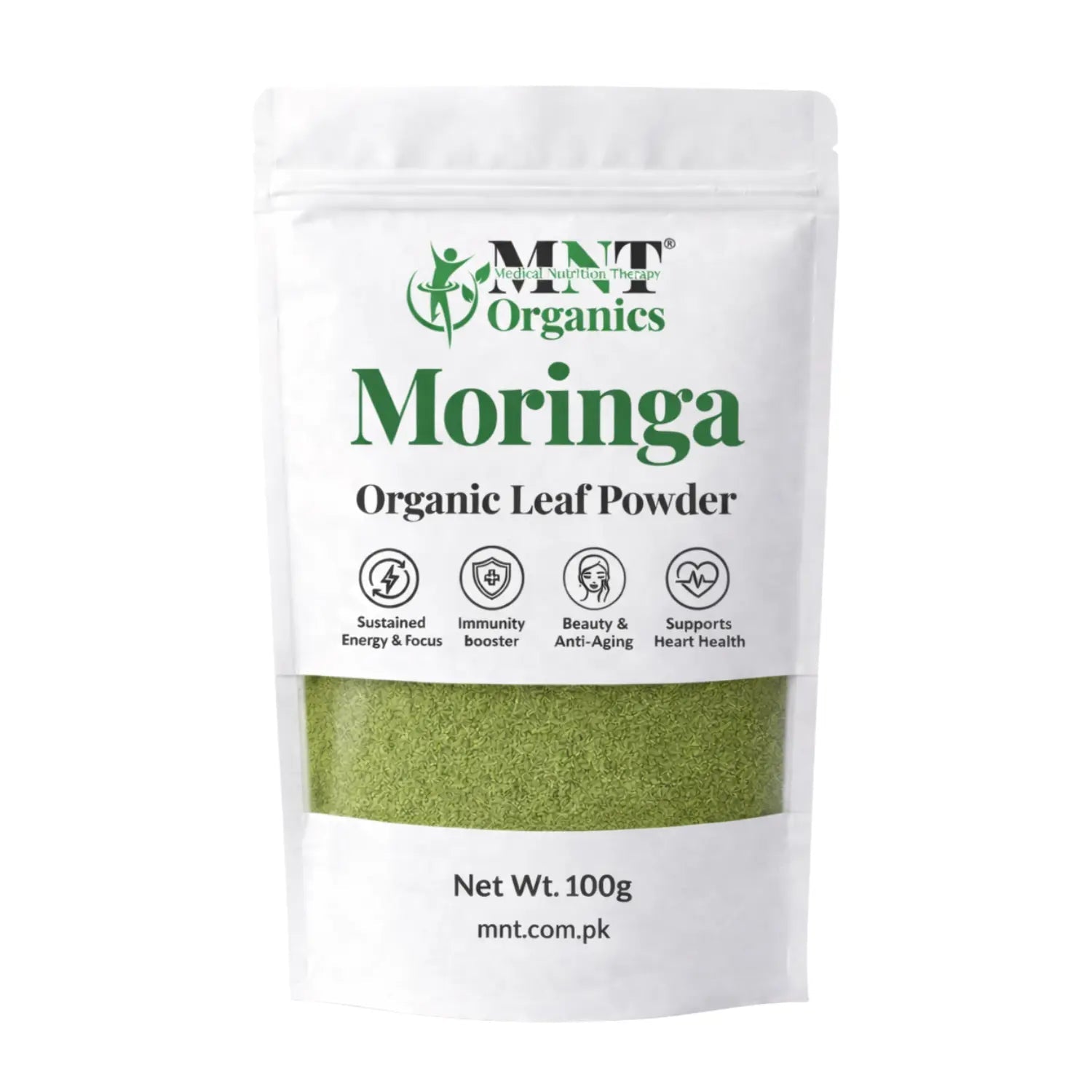
If you prefer moringa powder for smoothies, flexible dosing, and better value per serving, you can check MNT Moringa Powder, made from 100% organic moringa leaf powder.
- 100% Moringa Leaf Powder
- Good for Smoothies
- Flexible Serving Size
- Better Value per Gram
Use as a food-style supplement. Do not use moringa as a replacement for medical treatment.
```
What Is Moringa?
Moringa usually refers to Moringa oleifera, a plant whose leaves, pods, seeds, and other parts are used as food in many regions. In supplements, the most common form is moringa leaf, usually dried and ground into powder.
Moringa leaf naturally contains plant-based nutrients and bioactive compounds, including:
-
Protein
-
Fiber
-
Minerals
-
Vitamins
-
Polyphenols
-
Flavonoids
-
Carotenoids
-
Glucosinolates
This is why moringa is often marketed as a green superfood.
However, not all moringa products are equal. A teaspoon of moringa powder, a capsule serving, a tea bag, and a concentrated extract may not provide the same amount or type of moringa.
That difference matters. When comparing moringa powder vs capsules, you are not always comparing two identical products. Some capsules contain the same whole-leaf powder found in loose powder. Others contain extracts, blends, fillers, or formulas mixed with other greens.
What Is Moringa Powder?
Moringa powder is made by drying moringa leaves and grinding them into a fine green powder. It can be mixed into:
-
Smoothies
-
Juices
-
Yogurt
-
Oatmeal
-
Soups
-
Sauces
-
Salad dressings
-
Other foods
Moringa powder is best for people who want a food-style supplement and more control over how much they take.
Benefits of Moringa Powder
Moringa powder may be the better choice if you want:
-
More moringa per serving
-
Better value for money
-
Flexible dosage
-
Easy use in smoothies and recipes
-
A whole-food style supplement
-
Fewer capsule ingredients
-
More control over serving size
-
The ability to see the color, smell, and freshness of the powder
One teaspoon of moringa powder may provide around 2 to 3 grams of moringa, depending on the powder density. In comparison, one capsule may contain only 400 to 500 mg. This is one reason powder often provides more moringa per serving.
Drawbacks of Moringa Powder
The biggest drawback is taste. Moringa powder has an earthy, grassy, slightly bitter flavor. Some people enjoy it, while others find it difficult to take daily.
Possible drawbacks include:
-
Strong green taste
-
Requires measuring
-
Needs mixing
-
Can clump in water
-
Less convenient for travel
-
Can be messy
-
Needs careful storage away from heat, moisture, and sunlight
If the taste stops you from using it regularly, capsules may be the better choice.
What Are Moringa Capsules?
Moringa capsules are capsules filled with moringa powder, moringa extract, or a blend containing moringa. They are designed to be swallowed with water.
Capsules are popular because they are simple, clean, portable, and taste-free.
Benefits of Moringa Capsules
Moringa capsules may be the better choice if you want:
-
No earthy taste
-
No mixing or measuring
-
Easy travel use
-
Fixed dose per capsule
-
A simple daily routine
-
Less mess
-
Easy use at work, university, or while traveling
-
Better consistency if you dislike green powders
Capsules are especially useful for people who buy moringa powder but stop taking it because of the taste.
Drawbacks of Moringa Capsules
The main drawback is serving size. Many capsules contain only 400 mg to 500 mg of moringa powder per capsule. To match the amount in one teaspoon of powder, you may need several capsules.
Possible drawbacks include:
-
Lower moringa amount per serving
-
Higher cost per gram
-
Less dosage flexibility
-
Capsule shell may not suit everyone
-
Some products may contain fillers or flow agents
-
The actual moringa amount can be unclear if the label is poorly written
-
Some capsules may contain extracts or blends instead of whole-leaf powder
Always check the Supplement Facts or nutrition label. Do not judge the product only by the front label.
The Main Difference Between Moringa Powder and Capsules
The main difference is form, not always effectiveness.
Moringa powder is loose and can be added to foods and drinks. Moringa capsules package the ingredient into pre-measured units.
If a capsule contains the same pure whole-leaf moringa powder, it may be very similar to loose powder once the capsule dissolves in the stomach. The body still receives moringa leaf powder.
The real differences are:
-
How much moringa you get per serving
-
Whether the ingredient is whole-leaf powder, extract, or blend
-
How easy it is to take
-
How much it costs per gram
-
Whether you can tolerate the taste
-
Whether the product is tested for safety
-
Whether it contains fillers or extra ingredients
-
Whether you can use it consistently
A high-quality moringa capsule can be better than a poor-quality moringa powder. A clean, tested moringa powder can be better than a cheap capsule with unclear ingredients.
Is Moringa Powder More Nutritious Than Capsules?
Moringa powder is usually more nutritious per serving because people commonly take a larger amount of powder than capsules.
For example:
| Form | Approximate Amount |
|---|---|
| 1 teaspoon moringa powder | Around 2 to 3 grams |
| 1 capsule | Around 400 to 500 mg |
| Capsules needed to match 2 grams | Around 4 capsules if each capsule contains 500 mg |
| Capsules needed to match 3 grams | Around 6 capsules if each capsule contains 500 mg |
This does not mean capsules are useless. Capsules can still be effective if they provide an adequate dose and contain a high-quality ingredient. But if your goal is to get more moringa leaf nutrition into your diet, powder usually gives you more control.
The correct way to compare powder and capsules is to check:
-
Grams or milligrams per serving
-
Number of capsules per serving
-
Whether the ingredient is moringa leaf powder or extract
-
Added ingredients
-
Testing information
-
Expiry date
-
Storage instructions
Do not assume one capsule equals one teaspoon of powder. It usually does not.
Is Moringa Powder Better Absorbed Than Capsules?
Moringa powder is not automatically better absorbed than capsules.
If capsules contain the same whole-leaf moringa powder, the capsule shell breaks down during digestion and releases the powder. For most healthy adults, the difference in absorption is unlikely to be the most important factor.
The bigger factors are:
-
Product quality
-
Dose
-
Freshness
-
Particle size
-
Whether it is whole-leaf powder or extract
-
Whether you take it with food
-
Your digestion
-
Consistency of use
Powder may mix faster into food or liquid, but that does not automatically mean it produces better health results. Capsules may take slightly longer to release the powder, but they can still deliver moringa if the product is well made.
The practical issue is usually not absorption. It is whether you are taking enough moringa, whether the product is safe, and whether you can use it consistently.
Whole-Leaf Moringa Powder vs Moringa Extract
This difference is more important than powder vs capsules.
Whole-Leaf Moringa Powder
Whole-leaf moringa powder is dried moringa leaf ground into powder. It contains the broader leaf matrix, including fiber, plant compounds, and naturally occurring nutrients.
This is the form most people mean when they talk about moringa powder.
Moringa Extract
Moringa extract is processed to concentrate certain compounds. Extracts may be made using water, alcohol, or other extraction methods.
An extract is not automatically better. It may be more concentrated in some compounds, but it may not contain the same full leaf profile as whole-leaf powder.
Moringa Blends
Some capsules and greens powders include moringa as one ingredient among many. These products may be useful, but they make it harder to know how much moringa you are actually taking.
Best practice: choose products that clearly state whether the ingredient is:
-
Moringa leaf powder
-
Moringa extract
-
Moringa blend
-
Moringa equivalent dose
Avoid products that hide moringa inside a vague proprietary blend.
Is Moringa Powder Stronger Than Capsules?
Not always.
Moringa powder may feel stronger because one spoon can provide more moringa than one or two capsules. But strength depends on the actual dose and ingredient type.
For example:
-
One teaspoon of powder may provide more whole-leaf moringa than one capsule.
-
Several capsules may equal the same amount as one powder serving.
-
An extract capsule may be more concentrated in selected compounds, but it is not the same as whole-leaf powder.
-
A blend capsule may contain less moringa than expected.
This is why you should compare products by grams or milligrams per serving, not by form.
Also be careful with claims such as “10,000 mg equivalent.” Sometimes this refers to extract ratios or marketing calculations rather than the actual amount inside the capsule. Always check the Supplement Facts panel.
Are Moringa Capsules as Effective as Powder?
Moringa capsules can be as effective as powder if they provide the same ingredient, same dose, and same quality standard.
Capsules are not automatically weaker. Powder is not automatically superior. The real comparison depends on:
-
Ingredient type
-
Actual serving size
-
Testing
-
Freshness
-
Storage
-
Safety
-
User consistency
For many users, capsules may be more effective in real life if they help them stay consistent. A powder that stays unused in the kitchen provides no benefit.
Moringa Powder vs Capsules for Different Goals
| Goal | Better Choice | Why |
|---|---|---|
| Daily nutrition | Powder | Easier to use like a food ingredient |
| Smoothies | Powder | Blends directly into drinks |
| Travel | Capsules | Compact, pre-measured, and less messy |
| Taste-sensitive users | Capsules | Avoids earthy, bitter taste |
| Cost per serving | Usually powder | Often cheaper per gram |
| Exact serving control | Capsules for simplicity, powder for flexibility | Depends on whether you want fixed or adjustable dosing |
| Avoiding capsule ingredients | Powder | No capsule shell or added excipients |
| Swallowing difficulty | Powder | Easier to mix into food or drink |
For Daily Nutrition
Better choice: powder
Moringa powder is easier to use like a food ingredient. It can be added to smoothies, yogurt, oatmeal, soups, and healthy drinks.
However, moringa should not replace a balanced diet. It can support a healthy eating pattern, but it cannot make up for low protein intake, poor fiber intake, inadequate calories, or lack of food variety.
For Smoothies
Better choice: powder
Moringa powder is clearly better for smoothies. It blends well with banana, mango, pineapple, citrus, ginger, lemon, yogurt, milk, or plant-based milk.
To reduce bitterness, start with a small amount and pair it with sweet or acidic ingredients.
For Travel
Better choice: capsules
Capsules are easier to pack, measure, and take while traveling. They are less messy than carrying a pouch of powder.
For Taste-Sensitive Users
Better choice: capsules
If the taste of moringa powder stops you from taking it, capsules are the better option. The best supplement is the one you can actually take consistently.
For Cost Per Serving
Better choice: usually powder
Moringa powder is usually cheaper per gram because it requires less processing and packaging. Capsules often cost more due to encapsulation, bottling, and manufacturing costs.
Still, compare the actual price per gram. Some premium powders may cost more than basic capsules.
For Exact Serving Control
Better choice: capsules for simplicity, powder for flexibility
Capsules make it easy to count a serving. Powder allows more flexible adjustment if you use a measuring spoon or kitchen scale.
For People Avoiding Capsule Ingredients
Better choice: powder
Some capsules may contain gelatin, cellulose, rice flour, magnesium stearate, silicon dioxide, or other excipients. These are not automatically harmful, but people who prefer minimal ingredient lists may prefer powder.
For People With Swallowing Difficulty
Better choice: powder
People who cannot swallow capsules may prefer powder mixed into food or drink.
What Does Science Say About Moringa?
Moringa has been studied for nutrient density, antioxidant activity, blood sugar, blood lipids, inflammation, and other possible health effects. However, the strength of evidence varies.
Moringa leaf contains nutrients and plant compounds, but the actual amount depends on the serving size, plant source, drying method, storage, and product quality.
| Area | Evidence Level | Practical Meaning |
|---|---|---|
| Nutrient density | Moderate for leaf composition | Moringa leaves contain nutrients and bioactive compounds, but product amounts vary |
| Antioxidant compounds | Moderate in lab and composition studies | Moringa contains antioxidant-related compounds, but lab effects do not always equal human benefits |
| Blood sugar | Limited human evidence | Promising, but not enough to replace medical care |
| Cholesterol and lipids | Limited and inconsistent human evidence | Possible modest effects, but more high-quality trials are needed |
| Weight loss | Weak evidence | Moringa should not be treated as a fat-loss supplement |
| Skin and hair | Mostly indirect evidence | May support nutrient intake, but cosmetic results are not guaranteed |
| Inflammation | Early and mostly preclinical evidence | Interesting, but disease-treatment claims should be avoided |
The most accurate conclusion is this: moringa is a nutrient-rich botanical with promising early research, but many marketing claims are stronger than the current human evidence.
Moringa Powder vs Capsules for Weight Loss
Moringa does not directly burn fat. It should not be marketed as a magic weight-loss supplement.
Moringa may support a healthier routine if it helps you improve diet quality, add plant nutrients, or replace less healthy drinks or snacks. But fat loss still depends mainly on:
-
Calorie control
-
Protein intake
-
Fiber intake
-
Physical activity
-
Sleep
-
Stress management
-
Hormones
-
Medications
-
Long-term consistency
Which Is Better for Weight Loss?
Moringa powder may be better if you use it in smoothies, yogurt, or healthy drinks as part of a structured meal plan.
Moringa capsules may be better if you want a simple supplement and do not want to change the taste of your food.
For weight loss, the form matters less than your overall diet.
Moringa Powder vs Capsules for Energy
Moringa is often used by people who want natural daily energy. It does not work like caffeine. It is not a stimulant.
If your low energy is linked to poor diet quality, low nutrient intake, irregular meals, or poor sleep, moringa may help indirectly as part of a better routine.
Which Is Better for Energy?
Moringa powder may be better if you want to add it to breakfast, smoothies, or morning drinks.
Moringa capsules may be better if you want a quick supplement before starting your day.
If fatigue is persistent, do not rely on moringa alone. Fatigue can be related to anemia, thyroid problems, poor sleep, diabetes, depression, infections, medication effects, or other medical issues.
Moringa Powder vs Capsules for Skin and Hair
Moringa contains nutrients and antioxidant-related plant compounds that may support overall nutrition. Better nutrition can indirectly support skin and hair health.
However, moringa should not be presented as a cure for acne, pigmentation, hair fall, hair growth, or skin disease.
Skin and hair problems can be caused by:
-
Hormonal imbalance
-
Nutrient deficiencies
-
Stress
-
Poor sleep
-
Thyroid issues
-
Scalp conditions
-
Low protein intake
-
Iron deficiency
-
Medical conditions
-
Medication effects
Which Is Better for Skin and Hair?
Moringa powder may be better if you want to add it to a nutrient-rich diet through smoothies or meals.
Moringa capsules may be better if you dislike the taste but still want to use moringa consistently.
For skin and hair, consistency and overall diet quality matter more than the form.
Moringa Powder vs Capsules for Blood Sugar
Moringa is often discussed for blood sugar support, but it should not replace diabetes medication, a prescribed diet plan, or medical treatment.
Some early research suggests possible effects on glucose metabolism, but human evidence is still limited and inconsistent.
People with diabetes, prediabetes, or those using blood sugar-lowering medication should be careful. Any supplement that may affect blood sugar could increase the risk of unexpected changes when combined with medication.
Which Is Better for Blood Sugar?
Moringa powder gives more control over the amount used, but that can also increase the risk of taking too much.
Moringa capsules provide fixed dosing, which may be easier to track.
If you have diabetes or take medication, speak with your doctor, pharmacist, or dietitian before using moringa regularly.
Moringa Powder vs Capsules for Cholesterol and Heart Health
Moringa is also discussed for cholesterol and metabolic health, but the evidence is not strong enough to claim that moringa treats high cholesterol or heart disease.
A heart-healthy routine should focus first on:
-
High-fiber foods
-
Balanced fats
-
Adequate protein
-
Weight management if needed
-
Physical activity
-
Blood pressure control
-
Blood sugar control
-
Less ultra-processed food
-
Medication when prescribed
Which Is Better for Heart Health?
Moringa powder may be better if you want to use it as part of a fiber-rich meal pattern, such as smoothies, yogurt bowls, or healthy drinks.
Moringa capsules may be better if you want a simple, fixed supplement routine.
For cholesterol and heart health, moringa should be viewed as supportive only, not as a treatment.
How Much Moringa Should You Take?
There is no single universal moringa dose that is right for everyone. Product serving sizes vary, and research studies use different forms and amounts.
The safest general approach is:
-
Follow the product label.
-
Start with a low serving if you are new to moringa.
-
Do not combine multiple moringa or greens products without checking total intake.
-
Stop using it if you notice side effects.
-
Ask a healthcare professional if you take medication or have a medical condition.
For powder, the serving may be listed in teaspoons, tablespoons, grams, or scoops. For capsules, it may be listed as one, two, four, or more capsules.
To compare powder and capsules fairly, convert the serving to grams:
| Milligrams | Grams |
|---|---|
| 500 mg | 0.5 gram |
| 1,000 mg | 1 gram |
| 2,000 mg | 2 grams |
A capsule serving that provides 1,000 mg of moringa is not the same amount as a powder serving that provides 5 grams.
How Many Moringa Capsules Equal One Teaspoon of Powder?
This depends on the capsule size and powder density.
A practical estimate:
-
1 teaspoon of moringa powder may contain around 2 to 3 grams.
-
1 capsule may contain around 400 to 500 mg.
-
If one capsule contains 500 mg, 4 capsules may equal around 2 grams.
-
If one capsule contains 500 mg, 6 capsules may equal around 3 grams.
This is only an estimate. Powder density varies by brand, grinding method, and moisture level.
The best method is to check the label:
-
Look at milligrams per capsule.
-
Look at grams per teaspoon or scoop.
-
Compare the actual moringa amount, not the number of capsules.
-
Do not assume one capsule equals one teaspoon. It usually does not.
Best Time to Take Moringa Powder or Capsules
There is no proven best time to take moringa. The best time is the time you can take it consistently.
Common options include:
-
Morning with breakfast
-
Midday with lunch
-
In a smoothie
-
With yogurt
-
With water after meals
If moringa causes stomach discomfort, take it with food instead of on an empty stomach.
Avoid taking moringa late at night if it makes you feel more alert or disturbs your routine.
How to Use Moringa Powder
Moringa powder works best when paired with flavors that balance its earthy taste.
Easy ways to use moringa powder include:
-
Add it to a smoothie.
-
Stir it into yogurt.
-
Mix it into oatmeal.
-
Add it to soup after cooking.
-
Blend it into green juice.
-
Mix it with lemon water.
-
Add it to hummus or dips.
-
Use it in energy balls.
-
Stir it into salad dressing.
-
Add it to pancake or muffin batter in small amounts.
Best Flavor Pairings for Moringa Powder
Moringa powder pairs well with:
-
Banana
-
Mango
-
Pineapple
-
Lemon
-
Lime
-
Ginger
-
Mint
-
Honey
-
Coconut milk
-
Yogurt
-
Apple
-
Orange juice
Simple Moringa Smoothie Recipe
Blend:
-
1 banana
-
1 cup milk or plant-based milk
-
½ to 1 teaspoon moringa powder
-
½ cup pineapple or mango
-
1 tablespoon yogurt or nut butter
-
Optional: ginger or lemon
Start with a small amount of moringa. You can increase gradually if you like the taste and tolerate it well.
How to Take Moringa Capsules
Moringa capsules are simple:
-
Read the label.
-
Check how many capsules equal one serving.
-
Take with water.
-
Consider taking with food if it upsets your stomach.
-
Do not exceed the label serving unless advised by a healthcare professional.
Do not assume more is better. Higher supplement intake can increase the chance of side effects and interactions.
If you dislike swallowing capsules, some capsules can be opened and mixed into food, but this may expose the earthy taste. Check the label first, especially if the product uses a special capsule type.
Can You Open Moringa Capsules and Use the Powder?
In many cases, yes. If the capsule contains standard moringa leaf powder, you may be able to open it and mix the powder into water, smoothies, yogurt, or food.
However, check the product label first.
Before opening capsules, check:
-
Whether the capsule contains plain moringa powder
-
Whether it contains extract or a blend
-
Whether there are added ingredients
-
Whether the brand gives specific instructions
-
Whether the capsule is designed to be swallowed whole
Opening capsules may expose you to the same earthy, bitter taste as moringa powder.
Safety: Is Moringa Safe?
Moringa leaf products are commonly used, but natural does not always mean risk-free.
The main safety issues are:
-
Medication interactions
-
Blood sugar or blood pressure concerns
-
Pregnancy and breastfeeding uncertainty
-
Use in children
-
High-dose supplement use
-
Product contamination
-
Misleading disease-treatment claims
Possible side effects may include:
-
Nausea
-
Loose stools
-
Stomach cramps
-
Gas or bloating
-
Headache
-
Unpleasant aftertaste
-
Allergic reaction, rarely
Side effects may be more likely when taking too much too soon, using multiple greens products together, or taking moringa on an empty stomach.
Who Should Avoid Moringa or Use It Carefully?
Ask a qualified healthcare professional before using moringa if you:
-
Are pregnant
-
Are breastfeeding
-
Take diabetes medication
-
Take blood pressure medication
-
Take blood thinners
-
Take medications affected by liver enzymes
-
Have kidney disease
-
Have liver disease
-
Are preparing for surgery
-
Are immunocompromised
-
Are giving moringa to a child
-
Have a history of allergy to herbal products
Moringa should not be used as a replacement for prescribed medicine.
Contamination, Recalls, and Why Testing Matters
Product quality is one of the most important issues with moringa supplements.
Moringa leaf powder is a plant-based ingredient. Like other botanical powders, it can be affected by poor handling, moisture, microbial contamination, heavy metals, poor storage, or low-quality processing.
This does not mean all moringa is unsafe. It means buyers should treat moringa like a real food and supplement ingredient that requires quality control.
When choosing moringa powder or capsules, look for:
-
Third-party testing
-
Microbial testing, including Salmonella and E. coli
-
Heavy metal testing
-
Identity testing
-
Clear lot number
-
Expiration date
-
Country of origin
-
Certificate of analysis
-
GMP manufacturing
-
Transparent Supplement Facts panel
-
No disease-cure claims
Avoid products that cannot answer basic quality questions.
How to Choose the Best Moringa Powder
A high-quality moringa powder should be:
-
Made from moringa leaf, not unclear plant parts
-
Bright green to deep green, not dull brown
-
Clearly labeled with serving size
-
Packaged in a sealed, light-resistant bag or container
-
Tested for microbes and heavy metals
-
Free from exaggerated medical claims
-
Stored away from heat, humidity, and sunlight
-
Traceable by lot number
What to Avoid in Moringa Powder
Avoid moringa powder that:
-
Has no Supplement Facts or nutrition information
-
Has no company contact details
-
Uses vague sourcing language
-
Smells musty, sour, or rancid
-
Looks damp, clumpy, or discolored
-
Makes claims such as cures diabetes, treats cancer, melts fat, or reverses disease
-
Has no testing information available
How to Store Moringa Powder
Keep moringa powder:
-
Tightly sealed
-
In a cool, dry place
-
Away from sunlight
-
Away from moisture
-
Away from strong odors
-
Used before the expiration date
Do not use moringa powder if it smells moldy, sour, or unusual.
How to Choose the Best Moringa Capsules
A high-quality moringa capsule should clearly show:
-
Amount of moringa per serving
-
Number of capsules per serving
-
Whether it is whole-leaf powder or extract
-
Other ingredients in the capsule
-
Capsule type, such as gelatin or vegetarian cellulose
-
Third-party testing information
-
Lot number and expiration date
-
Manufacturer or distributor contact details
Watch Out for Front-Label Marketing
Some capsule bottles use large numbers that can be confusing.
For example, a label may promote a 10,000 mg equivalent, but the actual capsule content may be lower. Always read the Supplement Facts panel.
Capsule Quality Checklist
Before buying moringa capsules, ask:
-
How many capsules equal one serving?
-
How many milligrams of moringa are in one serving?
-
Is the moringa whole-leaf powder or extract?
-
Is it third-party tested?
-
Are microbial and heavy metal tests available?
-
Does the brand provide a certificate of analysis?
-
Are there unnecessary blends or fillers?
-
Has the product or brand been involved in a recall?
Organic Moringa vs Tested Moringa: Which Matters More?
Organic moringa may reduce exposure to some agricultural chemicals, but organic certification does not automatically prove the product is free from microbes, heavy metals, or contamination.
Testing still matters.
The best moringa product is not just organic. It should be:
-
Clearly labeled
-
Properly stored
-
Batch tested
-
Traceable
-
Free from exaggerated medical claims
-
Safe for your health situation
If you must choose between a product that is only organic and a product that provides clear third-party testing, testing is usually the stronger trust signal.
Powder vs Capsules: Which One Should You Buy?
Choose based on your main problem.
Choose Moringa Powder If You Want:
-
Better value
-
Flexible serving size
-
Smoothie and recipe use
-
A whole-food style supplement
-
Fewer capsule ingredients
-
More control over how you take it
-
A larger moringa serving without taking many capsules
Choose Moringa Capsules If You Want:
-
Convenience
-
No taste
-
No mess
-
Easy travel
-
Consistent serving
-
A supplement you can take quickly
-
A routine that is easier to maintain daily
Choose Neither If:
-
You are pregnant or breastfeeding and have not asked a healthcare professional.
-
You are taking medications that may interact.
-
The product has no testing information.
-
The brand makes disease-cure claims.
-
The product is recalled.
-
You are buying it to replace prescribed treatment.
-
You have a medical condition and have not discussed supplement use with a qualified professional.
Final Verdict: Moringa Powder vs Capsules
Moringa powder is the better choice for nutrition per serving, flexible dosage, smoothie use, recipe use, and cost per gram.
Moringa capsules are the better choice for convenience, no taste, travel, fixed serving size, and daily consistency.
For actual benefits, the form matters less than the product’s dose, quality, testing, ingredient type, safety, and how consistently you use it.
A high-quality, third-party-tested moringa powder is better than a poorly sourced capsule.
A high-quality capsule is better than a powder you dislike and never use.
The smartest choice is not simply powder or capsules. It is:
-
The right form for your routine
-
The right dose for your needs
-
The right ingredient type
-
A tested product from a transparent brand
-
A supplement that is safe for your health situation
If you want the most practical answer: use powder if you like adding greens to food and drinks. Use capsules if convenience is what will keep you consistent.
FAQs About Moringa Powder vs Capsules
1. Is moringa powder better than capsules?
Moringa powder is better for flexible dosing, smoothies, recipes, and cost per gram. Capsules are better for convenience, travel, and avoiding moringa’s earthy taste. Neither is automatically better for health benefits.
2. Are moringa capsules as good as powder?
Moringa capsules can be as good as powder if they contain the same ingredient, provide an equivalent serving size, and come from a high-quality tested product. Always compare milligrams or grams per serving.
3. Is moringa powder stronger than capsules?
Not always. Powder may provide more moringa per serving, but capsules can be taken in multiple units. Extract capsules may be more concentrated, but they are not the same as whole-leaf powder.
4. Do moringa capsules contain real moringa powder?
Many moringa capsules contain whole-leaf moringa powder, but some contain extracts or blends. Check the Supplement Facts panel to confirm the ingredient type.
5. Which form of moringa is best?
The best form depends on your goal. Powder is best for nutrition, value, smoothies, and flexible dosing. Capsules are best for convenience, no taste, travel, and routine consistency.
6. Which form is better for beginners?
Capsules may be easier for beginners who dislike strong flavors. Powder may be better for beginners who already drink smoothies or use greens powders.
7. Which is better for smoothies?
Moringa powder is better for smoothies because it blends directly into drinks. Capsules are not designed for mixing unless opened.
8. Which is better for travel?
Moringa capsules are better for travel because they are compact, pre-measured, and less messy.
9. Which is cheaper, moringa powder or capsules?
Moringa powder is usually cheaper per gram. Capsules often cost more because of encapsulation, bottling, and convenience.
10. Does moringa help with weight loss?
Moringa is not a proven weight-loss supplement. It may fit into a healthy diet, but fat loss depends on calorie intake, protein, fiber, activity, sleep, stress, and medical factors.
11. Does moringa help blood sugar?
Moringa has been studied for possible blood sugar effects, but human evidence is still limited. People using diabetes medication should ask a healthcare professional before taking moringa.
12. Can I take moringa every day?
Some people use moringa daily, but daily use should depend on the product, dose, personal tolerance, and medical situation. Follow the product label and ask a healthcare professional if you take medication or have a health condition.
13. Who should not take moringa?
People who are pregnant, breastfeeding, taking diabetes medication, taking blood pressure medication, using blood thinners, preparing for surgery, or managing serious health conditions should ask a healthcare professional first.
14. Can moringa interact with medications?
Yes, moringa may have interaction concerns. People taking regular medication should ask a pharmacist, doctor, or dietitian before using moringa regularly.
15. Is organic moringa better?
Organic moringa may reduce exposure to some agricultural chemicals, but organic certification does not automatically prove the product is free from microbes, heavy metals, or contamination. Third-party testing is still important.
16. What should I look for in a moringa product?
Look for clear serving size, ingredient type, third-party testing, microbial testing, heavy metal testing, lot number, expiration date, country of origin, and a transparent manufacturer.
17. Is moringa tea the same as moringa powder?
No. Moringa tea is an infusion made by steeping moringa leaves or powder in water. Moringa powder provides the whole powdered leaf, including components that may not fully dissolve into tea.
18. Can I open moringa capsules and mix them with food?
Usually yes if the capsules contain standard powder, but the taste will be earthy and bitter. Check the label first, especially if the product uses a special capsule type.
19. When is the best time to take moringa?
There is no proven best time. Many people take it with breakfast, lunch, or a smoothie. If it upsets your stomach, try taking it with food.
20. Can moringa powder expire?
Yes. Moringa powder can lose freshness and may spoil if exposed to moisture, heat, or contamination. Follow the expiration date and storage instructions.
21. What matters more than powder vs capsules?
Product quality matters more. Choose a tested product with clear labeling, safe sourcing, microbial testing, heavy metal testing, and no exaggerated disease-treatment claims.
We rely on peer-reviewed studies and reputable medical journals.