




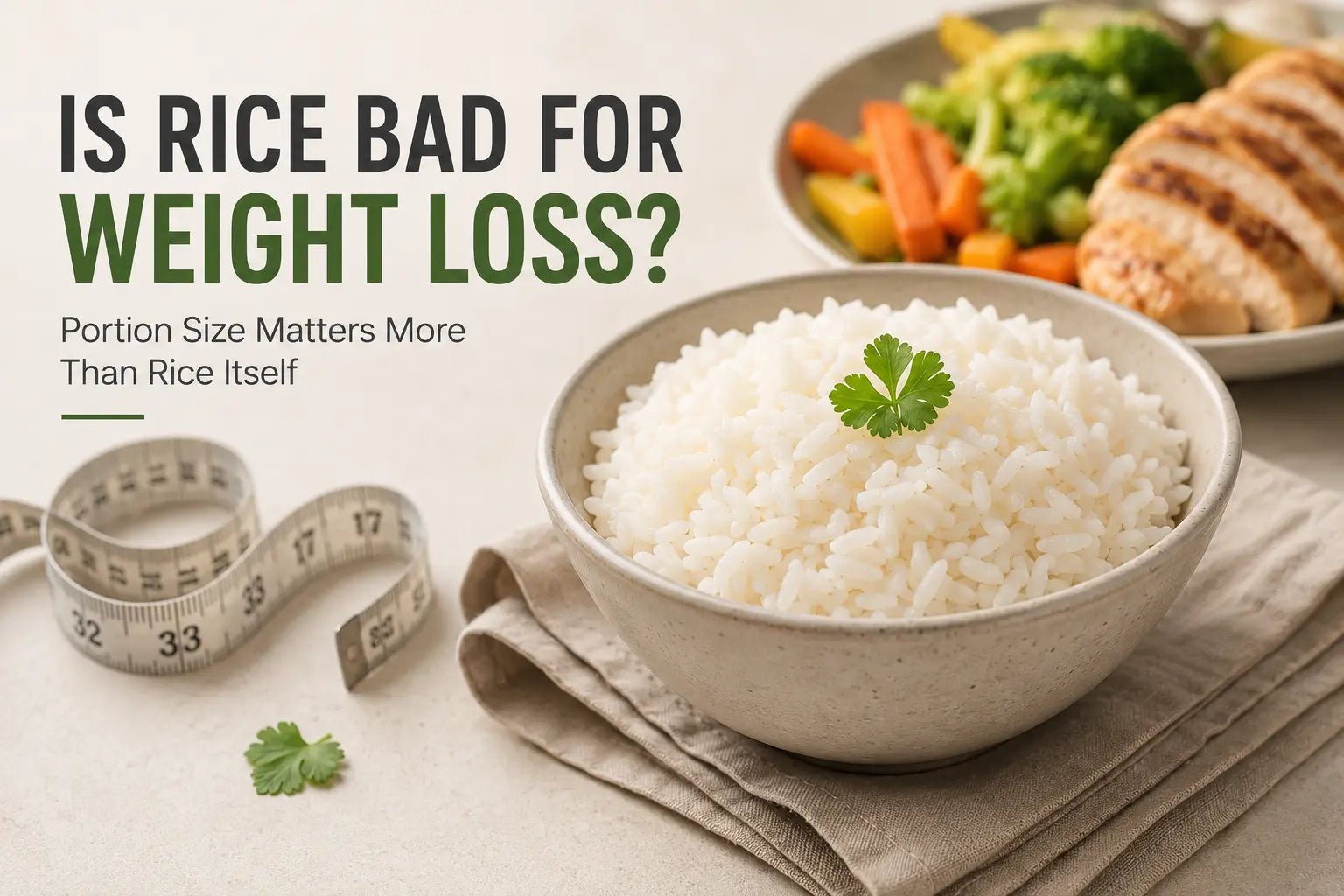
Is Rice Bad for Weight Loss? Portion Size Matters More Than Rice Itself
Rice is not bad for weight loss. The real issue is portion size, total calories, cooking method, and how rice is paired with protein, vegetables, and healthy fats.
Rice is one of the most common staple foods in the world, but it is also one of the most misunderstood foods in weight-loss diets. Many people believe rice causes belly fat, stops fat loss, increases weight, or should be completely removed from a diet plan.
The truth is more balanced.
Rice is not automatically bad for weight loss. The real issue is usually how much rice you eat, how often you eat it, how it is cooked, and what you eat with it.
A small or moderate serving of rice can fit into a healthy fat-loss diet. Rice becomes a problem when the portion is too large, when it replaces protein and vegetables, or when it is eaten with high-calorie oils, fried foods, creamy curries, sugary drinks, or frequent restaurant meals.
Direct Answer: Is Rice Bad for Weight Loss?
No, rice is not bad for weight loss by itself. Portion size matters more than rice itself.
You can eat rice and still lose weight if your total daily calorie intake supports fat loss. Weight loss mainly happens when your body uses more calories than you consume over time. The CDC explains that reducing calorie intake and increasing physical activity creates the calorie deficit needed for weight loss. (cdc.gov)
For most people trying to lose weight, ½ to 1 cup of cooked rice per meal can fit into a balanced diet, especially when rice takes only one-quarter of the plate and the rest includes lean protein, vegetables, salad, and controlled fat.
The better question is not:
“Is rice allowed for weight loss?”
The better question is:
“How much rice fits my calorie needs, activity level, and meal balance?”
Quick Summary
| Question | Direct Answer |
|---|---|
| Is rice bad for weight loss? | No. Rice can fit into a calorie-controlled diet. |
| Does rice cause belly fat? | No single food directly causes belly fat. Excess calories over time increase body fat. |
| Can I eat rice every day and lose weight? | Yes, if the portion fits your calorie needs. |
| Is white rice bad for weight loss? | Not automatically. It is lower in fiber than brown rice but can still fit in a balanced diet. |
| Is brown rice better? | Often better for fullness because it has more fiber, but portion still matters. |
| Best rice portion for weight loss? | Usually ½ to 1 cup cooked rice per meal for many people. |
| Is rice at night bad? | No. Total daily calories matter more than timing. |
| Biggest rice mistake? | Eating 2–3 cups without measuring, especially with oily or fried sides. |
Why Do People Think Rice Causes Weight Gain?
Rice gets blamed for weight gain because it is a carbohydrate-rich food and is easy to overeat. In many cultures, especially South Asian diets, rice is often served in large portions with oily curry, fried meat, potatoes, creamy sauces, or sugary drinks.
In that situation, the problem is usually not rice alone. The problem is the full meal pattern.
For example, this meal can become very calorie-dense:
- Large plate of rice
- Oily curry or gravy
- Fried chicken, fried fish, or fried kebab
- Little protein control
- Few vegetables
- Sweet drink or sugary tea on the side
Rice is part of the meal, but it is rarely the only reason weight loss stops.
A more accurate statement is:
Rice does not automatically stop weight loss. Large rice portions and calorie-dense rice meals can make weight loss harder.
This distinction matters because many people remove rice completely, feel restricted, and then overeat later. A better long-term strategy is usually to measure the portion and improve the meal structure.
What Actually Decides Weight Loss?
Weight loss is mostly controlled by long-term calorie balance.
If you consistently eat fewer calories than your body uses, you lose weight. If you consistently eat more calories than your body uses, you gain weight.
The main factors that affect fat loss include:
- Total daily calorie intake
- Portion size
- Protein intake
- Fiber intake
- Physical activity
- Sleep quality
- Stress level
- Consistency
The CDC also notes that healthy weight management includes good nutrition, regular physical activity, enough sleep, and stress management. (cdc.gov)
This means rice can be part of a weight-loss diet, but it must fit into your total daily intake.
Rice is not magic. Rice is not poison. Rice is food. The result depends on the portion and the full diet.
How Many Calories Are in Rice?
Rice calories depend on the type of rice, cooking method, and whether you measure it cooked or uncooked.
A useful estimate is:
| Cooked Rice Portion | Approximate Calories |
|---|---|
| ⅓ cup cooked rice | ~65–70 calories |
| ½ cup cooked rice | ~100 calories |
| 1 cup cooked rice | ~200–205 calories |
| 1.5 cups cooked rice | ~300 calories |
| 2 cups cooked rice | ~400 calories |
| 3 cups cooked rice | ~600 calories |
This is why portion size matters.
One cup of cooked rice may fit easily into a weight-loss meal. Three cups of rice may use up a large part of someone’s calorie target before adding curry, oil, meat, sauces, snacks, or drinks.
USDA MyPlate lists ½ cup cooked rice as a 1-ounce equivalent from the grains group. MyPlate also recommends making at least half of total grain intake whole grains. (myplate.gov)
Cooked vs Uncooked Rice: A Common Weight-Loss Mistake
One of the biggest rice-tracking mistakes is confusing cooked rice with uncooked rice.
Uncooked rice is much more calorie-dense by weight because it has not absorbed water yet. When rice cooks, it absorbs water, becomes heavier, and increases in volume. The water adds weight and volume but does not add calories.
So if you track calories:
- Track rice as raw/uncooked if you weigh it before cooking.
- Track rice as cooked if you weigh it after cooking.
- Do not mix cooked and uncooked entries in your calorie app.
For weight loss, consistency matters more than perfection. But if rice is a daily staple, measuring it correctly can make a major difference.
How Much Rice Should You Eat for Weight Loss?
There is no single rice portion that works for everyone. A small sedentary person and a highly active athlete do not need the same amount of rice.
A practical starting point for many people is:
| Person or Goal | Suggested Cooked Rice Portion |
|---|---|
| Sedentary person trying to lose weight | ⅓ to ½ cup cooked rice |
| Average activity with fat-loss goal | ½ to 1 cup cooked rice |
| Active person or strength training | 1 to 1.5 cups cooked rice |
| Athlete or physically demanding job | 1.5 to 2 cups cooked rice |
| Diabetes, prediabetes, or insulin resistance | Smaller measured portion; personalize with a clinician or dietitian |
| Restaurant meal | Eat half the rice portion or share it |
For most people trying to lose weight, ½ to 1 cup cooked rice per meal is a realistic starting range.
After choosing a portion, track your progress for 2–3 weeks. If weight is not moving and rice portions are large, reduce the rice slightly instead of removing rice completely.
White Rice vs Brown Rice: Which Is Better for Weight Loss?
Both white rice and brown rice can fit into a weight-loss diet. The difference is mainly in fiber, nutrients, digestion, fullness, and blood sugar response.
| Feature | White Rice | Brown Rice |
|---|---|---|
| Fiber | Lower | Higher |
| Processing | More processed | Whole grain |
| Digestion | Often easier | Slower for many people |
| Fullness | Less filling for many people | More filling for many people |
| Blood sugar response | Usually higher | Often lower |
| Best use | Controlled portions, sensitive digestion, cultural meals | Higher-fiber meals, better fullness |
Brown rice is a whole grain because it retains the bran and germ. White rice has these parts removed, which lowers fiber and some nutrients. Harvard Health notes that brown rice is generally more nutrient-dense and higher in fiber than white rice. (health.harvard.edu)
However, this does not mean white rice is “bad.” White rice can still fit into a fat-loss diet when eaten in the right portion and paired with protein and vegetables.
The practical answer:
Brown rice may be better for fullness, but white rice can still work for weight loss if the portion is controlled.
Is White Rice Bad for Weight Loss?
White rice is not automatically bad for weight loss. It is simply easier to overeat because it is soft, low in fiber, and often served in large portions.
White rice becomes a problem when:
- The portion is too large
- The meal has little protein
- The meal has few vegetables
- It is eaten with fried foods
- It is cooked with too much oil, butter, or ghee
- It is paired with sugary drinks
- Total daily calories are not controlled
White rice can work for weight loss when the portion is measured and the meal is balanced.
A better plate looks like this:
¼ plate rice + ¼ plate protein + ½ plate vegetables or salad
This gives you the taste and satisfaction of rice while keeping the meal more filling and calorie-controlled.
Does Rice Cause Belly Fat?
Rice does not directly cause belly fat.
Belly fat increases when the body stores extra calories over time. These extra calories can come from rice, bread, fried foods, sweets, sugary drinks, snacks, or any other food.
Rice may indirectly contribute to belly fat if you regularly eat very large portions, especially with high-fat curries, fried foods, fried potatoes, creamy sauces, or sweet beverages.
The better question is not:
“Does rice cause belly fat?”
The better question is:
“How much rice am I eating, and what is on the rest of my plate?”
If rice is pushing your daily calories above your needs, reducing the portion can help. But rice itself is not a belly-fat-making food.
Does Rice Spike Blood Sugar and Insulin?
Rice can raise blood sugar, especially when eaten in large portions or eaten alone. This is more relevant for people with diabetes, prediabetes, insulin resistance, or PCOS.
But the blood sugar effect of rice depends on several factors:
- Rice type
- Portion size
- Cooking method
- Whether it is eaten alone or with protein, fat, and fiber
- Individual glucose tolerance
- Activity level
- Total meal composition
A large bowl of plain white rice eaten alone will usually affect blood sugar differently from a smaller portion of rice eaten with chicken, lentils, yogurt, vegetables, or salad.
The CDC’s carbohydrate guidance for diabetes lists ⅓ cup cooked rice as one carbohydrate choice, equal to about 15 grams of carbohydrate. (cdc.gov)
For people without blood sugar issues, this does not mean rice must be avoided. For people with diabetes, prediabetes, or insulin resistance, rice portions should be individualized with a registered dietitian or healthcare professional.
Glycemic Index, Glycemic Load, and Rice
The glycemic index, or GI, measures how quickly a carbohydrate-containing food raises blood sugar. White rice usually has a higher glycemic response than many whole grains, while brown rice and some rice varieties may have a lower response.
But for real meals, glycemic load and meal composition matter more than GI alone.
For example:
- Plain white rice alone may raise blood sugar faster.
- Rice with chicken, lentils, vegetables, yogurt, or salad may have a lower overall glycemic impact.
- Smaller portions reduce the total carbohydrate load.
- Higher-fiber meals slow digestion and improve fullness.
Harvard’s Nutrition Source notes that rice GI varies by type and processing, and that white rice intake has been associated with higher type 2 diabetes risk in some studies, while whole grains such as brown rice are generally recommended in place of refined grains. (nutritionsource.hsph.harvard.edu)
The key point is:
Do not judge rice only by GI. Judge the portion, the full plate, and your personal health needs.
Is Basmati Rice Better Than Jasmine Rice for Weight Loss?
Basmati rice may be a better option for some people because many basmati varieties have a lower glycemic response than some sticky or jasmine-type rice varieties. This is partly related to starch structure, including amylose content.
In simple words:
- Sticky rice and some softer rice types may digest faster.
- Basmati rice may digest more slowly for some people.
- Brown rice may improve fullness because it contains more fiber.
- Portion size still matters more than the rice variety.
So yes, basmati rice can be a smart choice, especially in South Asian diets. But even basmati rice can slow weight loss if the portion is too large or if the meal is high in oil and calories.
Does Cooling Rice Help With Weight Loss?
Cooling cooked rice can increase resistant starch, a type of starch that resists digestion to some degree. Some research suggests cooked rice that is cooled and reheated may reduce the post-meal blood sugar response compared with freshly cooked rice. (pmc.ncbi.nlm.nih.gov)
However, this does not make rice “calorie-free” or turn a large portion into a weight-loss food.
The practical takeaway:
Cooling rice may slightly improve resistant starch and glycemic response, but portion size and total calories still matter far more.
Also, rice must be stored safely. Cooked rice should not be left at room temperature for long periods because bacteria can grow in improperly stored leftovers. USDA food safety guidance recommends refrigerating leftovers promptly. (fsis.usda.gov)
Is Rice at Night Bad for Weight Loss?
Eating rice at night does not automatically cause weight gain.
Your body does not store rice as fat simply because you ate it after sunset. Weight gain happens when total calorie intake consistently exceeds what your body uses.
Rice at night may be a problem if:
- Dinner portion is very large
- You already ate enough calories earlier in the day
- Rice is eaten with oily curry or fried foods
- You snack heavily after dinner
- You sleep soon after a very heavy meal
- Late-night eating leads to overeating
Rice at night may be fine if:
- The portion is controlled
- The meal includes protein and vegetables
- Total daily calories are appropriate
- You feel satisfied and sleep well
A small rice dinner is very different from a large plate of rice with oily curry, fried sides, dessert, and sugary drinks.
Can You Eat Rice Every Day and Still Lose Weight?
Yes, you can eat rice every day and still lose weight.
Many people in South Asian, East Asian, Middle Eastern, and Latin American food cultures eat rice regularly. The problem is not cultural food itself. The problem is when portions, oils, snacks, drinks, and total calories exceed what the body needs.
A daily rice strategy for fat loss can look like this:
| Meal Situation | Rice Strategy |
|---|---|
| Lunch | ½ to 1 cup cooked rice with protein and vegetables |
| Dinner | Smaller rice portion if lunch was high in carbs |
| Training day | Slightly larger portion may fit better |
| Rest day | Slightly smaller portion may work better |
| Eating out | Share rice or eat half the serving |
Rice can stay in your diet if the overall pattern supports weight loss.
Is Fried Rice Bad for Weight Loss?
Fried rice is not forbidden, but it is usually harder to fit into weight loss than plain boiled or steamed rice.
The issue is not just the rice. Fried rice often includes:
- Extra oil
- Sauces
- Eggs
- Meat
- Large portions
- Low vegetable volume
- Sometimes sugar or high-calorie toppings
A better version of fried rice would use:
- Measured cooked rice
- Less oil
- More vegetables
- Lean protein
- Smaller serving size
- Less sauce
A useful rule:
Treat fried rice as a full meal, not a side dish.
If you eat fried rice, measure the portion and avoid adding extra fried sides.
The Best Way to Eat Rice for Weight Loss
The best way to eat rice during weight loss is to treat rice as one part of the meal, not the main part of the plate.
Use this simple plate method:
| Plate Section | What to Add |
|---|---|
| ½ plate | Vegetables, salad, cucumber, spinach, cabbage, carrots, cauliflower, okra, mixed vegetables |
| ¼ plate | Protein such as chicken, fish, eggs, lentils, beans, tofu, yogurt, or lean meat |
| ¼ plate | Rice, usually ½ to 1 cup cooked |
| Small amount | Controlled fat such as olive oil, nuts, seeds, or limited cooking oil |
This structure improves fullness while keeping calories controlled.
Weight-Loss Rice Meal Examples
Example 1:
½ cup rice + grilled chicken + salad + yogurt
Example 2:
¾ cup rice + lentils + mixed vegetables
Example 3:
½ cup rice + fish curry cooked with less oil + cucumber salad
Example 4:
½ cup rice + boiled eggs + sautéed vegetables
Example 5:
½ cup rice + dal + raita + large salad
South Asian and Pakistani Rice Plate for Weight Loss
For Pakistani and South Asian diets, rice is often eaten with curry, dal, meat, raita, achar, salad, or fried sides. You do not need to remove traditional foods. You need to adjust the plate.
Better Rice Plate
- ½ to 1 cup cooked rice
- Chicken, fish, eggs, dal, beans, or yogurt
- Large salad or cooked vegetables
- Curry cooked with controlled oil
- Water instead of sugary drinks
Less Ideal Rice Plate
- 2–3 cups rice
- Oily curry
- Fried potatoes
- Fried meat
- Sweet drink
- Dessert after meal
The difference is not only rice. The difference is the full meal.
Common Rice Mistakes That Can Stop Weight Loss
1. Eating rice without measuring it
Many people think they are eating one cup, but the actual portion may be two or three cups.
2. Filling most of the plate with rice
When rice covers most of the plate, the meal becomes high in carbohydrates and lower in protein and fiber.
3. Eating rice with oily foods
Rice with fried chicken, oily curry, fried potatoes, creamy sauces, or mayonnaise-based dressings can become very calorie-dense.
4. Not adding enough protein
Rice alone is not very filling for many people. Protein improves fullness and supports muscle during weight loss.
5. Drinking sugary beverages with rice
Soft drinks, juices, and sweetened drinks can add calories without making you full.
6. Eating restaurant rice portions
Restaurant rice portions are often much larger than home portions.
7. Thinking brown rice has no calories
Brown rice may have more fiber, but it still contains calories. Portion control still matters.
8. Removing rice completely
Some people cut rice completely, feel deprived, and then overeat later. A controlled portion is often more sustainable.
Rice vs Roti, Bread, Potatoes, Quinoa, and Pasta
No carbohydrate is automatically best for weight loss. The best choice is the one that helps you control calories, stay full, manage blood sugar, and stay consistent.
| Food | Weight-Loss Consideration |
|---|---|
| Rice | Easy to portion, but also easy to overeat |
| Roti | Can be filling, but calories rise with ghee, oil, or large portions |
| Bread | Convenient, but quality and toppings matter |
| Potatoes | Filling when boiled or baked; less ideal when fried |
| Quinoa | Higher in protein and fiber than rice, but still contains calories |
| Pasta | Can fit if portioned and paired with protein and vegetables |
For South Asian diets, the issue is often not rice vs roti. The bigger issues are usually:
- Total portion size
- Cooking oil
- Fried snacks
- Sweets
- Sugary tea
- Sugary drinks
- Low activity
- Low protein intake
The best food is not always the “cleanest” food. It is the food you can eat in the right amount consistently.
Who Should Be More Careful With Rice Portions?
Some people may need to be more intentional with rice portions, especially if they have blood sugar or metabolic concerns.
This includes people with:
- Type 2 diabetes
- Prediabetes
- Insulin resistance
- PCOS
- Sedentary lifestyle
- High triglycerides
- Strong cravings after high-carb meals
- Difficulty controlling portions
For these individuals, rice may still be included, but the portion should usually be smaller and paired with protein, vegetables, and fiber.
People with diabetes or medical conditions should follow personalized advice from a qualified healthcare professional or registered dietitian.
Practical Rice Portion Guide for Weight Loss
Use this simple guide:
| Rice Portion | Best For |
|---|---|
| ⅓ cup cooked rice | Lower-carb meal, diabetes-conscious meals, very low activity |
| ½ cup cooked rice | Fat loss, low activity, smaller appetite |
| ¾ cup cooked rice | Moderate fat loss, average activity |
| 1 cup cooked rice | Active people, balanced meal plans |
| 1.5–2 cups cooked rice | Athletes, high energy needs, physically active jobs |
| More than 2 cups | Usually too much for weight loss unless energy needs are high |
For most weight-loss meals, ½ to 1 cup cooked rice is enough when combined with protein and vegetables.
Best Tips to Eat Rice and Still Lose Weight
- Measure rice after cooking.
- Keep rice to one-quarter of your plate.
- Add protein to every rice meal.
- Fill half your plate with vegetables or salad.
- Avoid too much oil, butter, or ghee.
- Avoid fried rice as a daily meal.
- Eat slowly and stop when comfortably full.
- Choose brown rice sometimes for more fiber.
- Use smaller plates to control portions.
- Track your weight, waist, hunger, energy, and consistency.
- Reduce rice slightly if progress stops for 2–3 weeks.
Example Weight-Loss Rice Plate
A balanced rice meal for weight loss could include:
- ½ to 1 cup cooked rice
- 1 palm-sized portion of chicken, fish, eggs, lentils, beans, tofu, or lean meat
- 2 cups salad or cooked vegetables
- 1 small bowl yogurt or raita
- Minimal added oil
This meal gives carbohydrates for energy, protein for fullness, and fiber for appetite control.
Key Takeaways
Rice is not bad for weight loss. The main issue is portion size, meal balance, and total calorie intake.
White rice can fit into a weight-loss diet if eaten in controlled portions.
Brown rice may be more filling because it contains more fiber, but portion control still matters.
For most people, ½ to 1 cup of cooked rice per meal is a good starting point during weight loss.
Rice works best when paired with lean protein, vegetables, salad, yogurt, lentils, beans, or other high-fiber foods.
You do not need to remove rice completely to lose weight. You need to eat it in the right amount.
FAQs
Is rice bad for weight loss?
No. Rice is not bad for weight loss by itself. Weight loss depends mostly on total calorie intake, portion size, activity level, and consistency. Rice can fit into a fat-loss diet if the serving is controlled and the meal includes protein and vegetables.
Is rice fattening?
Rice is not automatically fattening. Eating more calories than your body uses over time leads to weight gain. Rice can contribute to weight gain if portions are large or if it is eaten frequently with calorie-dense foods.
Can I eat rice every day and lose weight?
Yes. You can eat rice daily and still lose weight if your total calories are appropriate. Daily rice works best when portions are measured and meals include protein, vegetables, and controlled fats.
How much rice should I eat for weight loss?
Many people can start with ½ to 1 cup of cooked rice per meal. Smaller or less active people may do better with ⅓ to ½ cup. Active people may be able to eat more.
Is white rice bad for weight loss?
White rice is not automatically bad for weight loss. It is lower in fiber than brown rice, so it may be less filling for some people. But it can still fit into a weight-loss diet when portioned properly.
Is brown rice better than white rice for weight loss?
Brown rice may be better for fullness because it contains more fiber and is a whole grain. However, portion size still matters. Eating too much brown rice can also make weight loss harder.
Should I stop eating rice to lose belly fat?
You do not need to stop eating rice specifically to lose belly fat. Belly fat decreases through overall fat loss, which requires a consistent calorie deficit. Reducing rice portions may help if rice is a major calorie source in your diet.
Is rice at night bad for weight loss?
No. Rice at night does not automatically cause weight gain. The more important factors are total daily calories, portion size, meal balance, and whether late-night eating leads to overeating.
Is fried rice bad for weight loss?
Fried rice is usually higher in calories than plain rice because it contains oil, sauces, eggs, meat, and larger portions. It can fit occasionally, but plain boiled or steamed rice is usually easier to manage during weight loss.
Is rice better than roti for weight loss?
Neither rice nor roti is automatically better. The better choice depends on portion size, calories, fiber, toppings, cooking method, and which food helps you stay fuller and more consistent.
Does rice cause diabetes?
Rice alone does not directly “cause” diabetes. However, higher white rice intake has been associated with higher type 2 diabetes risk in some studies. People with diabetes or prediabetes should manage rice portions carefully and follow individualized guidance. (bmj.com)
What should I eat with rice for weight loss?
Eat rice with lean protein and vegetables. Good options include chicken, fish, eggs, lentils, beans, tofu, yogurt, salad, and cooked vegetables.
Final Verdict
Rice is not the problem. Uncontrolled portions are usually the problem.
You can eat rice and still lose weight if you control your serving, keep your total calories in check, and build balanced meals with protein, vegetables, and fiber.
The best approach is not to fear rice. The best approach is to measure it, pair it well, and adjust the portion based on your progress.
Simple rule:
For weight loss, start with ½ to 1 cup cooked rice per meal, add a strong protein source, fill half your plate with vegetables or salad, and keep oils and sauces controlled.
We rely on peer-reviewed studies and reputable medical journals.