


How to Boost Metabolism Naturally: What Actually Works
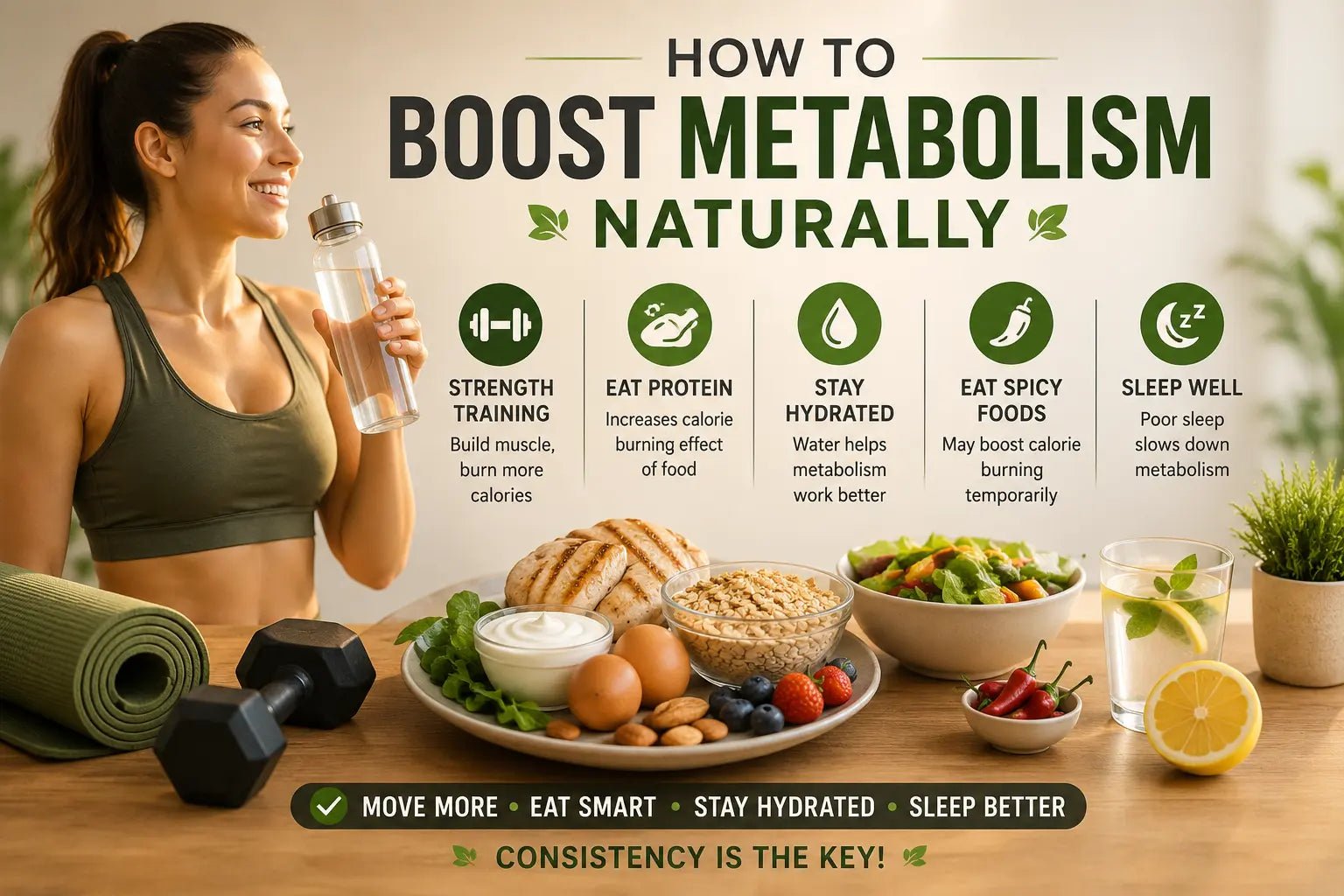
You can boost metabolism naturally by building muscle, eating enough protein, moving more, sleeping well, staying hydrated, and avoiding crash diets. No drink, detox, or supplement can replace these core habits.
Direct Answer: How Can You Boost Metabolism Naturally?
You can boost metabolism naturally by building or preserving muscle, increasing daily movement, eating enough protein, doing regular aerobic activity, sleeping well, staying hydrated, managing stress, and avoiding crash diets. No detox drink, lemon water, fat burner, spice, or single food can dramatically speed up metabolism by itself.
The most effective natural way to support metabolism is to improve your total daily energy expenditure, protect lean muscle, support appetite control, and build habits you can repeat for months, not just a few days.
In simple words, your metabolism does not need a shortcut. It needs muscle, movement, protein, sleep, hydration, food quality, and consistency.
Key Takeaways
| What Helps Most | Why It Helps |
|---|---|
| Strength training | Builds or preserves lean muscle, which supports daily energy use |
| Daily movement | Increases non-exercise calorie burn through walking, standing, chores, and routine activity |
| Aerobic exercise | Supports heart health, insulin sensitivity, stamina, and total energy expenditure |
| Protein-rich meals | Support muscle maintenance, fullness, and the thermic effect of food |
| Sleep | Supports appetite control, recovery, energy, and consistency |
| Avoiding crash diets | Reduces the risk of muscle loss, low energy, and metabolic adaptation |
| Hydration | Supports normal body function and may reduce liquid calories when it replaces sugary drinks |
What Does Metabolism Really Mean?
Metabolism is the process your body uses to convert food and stored energy into the energy needed for breathing, blood circulation, digestion, body temperature control, cell repair, hormone production, brain function, and movement.
Many people think metabolism only means “how fast I burn fat.” That is not accurate. Metabolism includes several parts, and each part affects how much energy your body uses in a full day.
When people ask how to boost metabolism, they usually mean one of three things:
- How to burn more calories at rest
- How to burn more calories during the day
- How to lose weight or avoid weight gain more easily
These are related, but they are not exactly the same.
Basal Metabolic Rate vs Total Daily Energy Expenditure
Your basal metabolic rate, or BMR, is the energy your body uses at rest to keep you alive. This includes breathing, circulation, body temperature control, organ function, and cell production.
Your total daily energy expenditure, or TDEE, is the total energy your body uses in a full day. It includes your resting metabolism, food digestion, exercise, and daily movement.
| Part of Metabolism | What It Means | Can You Influence It? |
|---|---|---|
| BMR or RMR | Energy used at rest for basic body functions | Somewhat, mainly through body composition |
| Thermic effect of food | Energy used to digest and process food | Slightly, especially through protein intake |
| Exercise activity | Energy used during planned workouts | Yes |
| NEAT | Energy used during non-exercise movement | Yes, often significantly |
Mayo Clinic explains that basal metabolic rate is influenced by body size, muscle mass, sex, and age, while physical activity is one of the most changeable parts of daily calorie use. It also describes NEAT as the energy used for daily activities that are not formal exercise, such as chores, walking around, gardening, and even fidgeting.
This is important because most people do not need to “hack” their metabolism. They need to improve the parts of daily energy use that are actually controllable.
Can You Actually Speed Up Your Metabolism?
Yes, but not in a magical or extreme way.
You can naturally support metabolism by improving muscle mass, movement, exercise habits, protein intake, sleep quality, hydration, and food choices. But most online metabolism booster claims are exaggerated.
MedlinePlus notes that there are more myths than proven tactics when it comes to boosting metabolism, and foods such as green tea, caffeine, and hot peppers are not enough to cause meaningful weight loss by themselves.
A better way to understand metabolism is this:
You may not fully control your age, genetics, height, sex, or hormonal background. But you can influence your muscle mass, activity level, protein intake, sleep quality, hydration, and diet pattern.
These factors do not create overnight fat loss, but they can improve long-term energy expenditure, body composition, appetite control, and weight management.
Evidence-Based Ways to Boost Metabolism Naturally
1. Build Muscle With Strength Training
Strength training is one of the strongest natural metabolism levers.
Muscle tissue is metabolically active, meaning it uses energy even when your body is at rest. This does not mean muscle burns hundreds of extra calories per day by itself, but having more lean mass can support a healthier resting energy demand and better body composition over time.
Strength training also protects metabolism during weight loss. When people lose weight through aggressive dieting without resistance training, they may lose both fat and muscle. Losing muscle can make the body weaker, reduce daily energy use, and make long-term weight maintenance harder.
CDC guidance recommends that adults do muscle-strengthening activity at least 2 days per week, along with at least 150 minutes of moderate-intensity physical activity per week.
Why Strength Training Helps Metabolism
Strength training helps because it:
- Builds or preserves lean muscle
- Supports resting energy expenditure
- Improves strength and body composition
- Helps protect muscle during fat loss
- Supports blood sugar control
- Improves long-term weight maintenance
- Reduces the risk of age-related muscle loss
Best Strength Exercises to Support Metabolism
You do not need a luxury gym to start. Effective options include:
- Squats
- Lunges
- Push-ups
- Rows
- Deadlifts
- Glute bridges
- Planks
- Resistance band exercises
- Dumbbell workouts
- Bodyweight training
The goal is not only to burn calories during exercise. The deeper goal is to build or preserve muscle so your body stays strong, active, and metabolically healthier over time.
2. Move More Throughout the Day
Daily movement may be one of the most underrated ways to support metabolism naturally.
Many people exercise for 30 minutes but sit for the rest of the day. This is one reason metabolism can feel slow, even when someone is doing workouts.
NEAT means non-exercise activity thermogenesis. It includes the calories burned through normal daily movement that is not formal exercise.
Examples include:
- Walking
- Standing
- Household chores
- Climbing stairs
- Cooking
- Cleaning
- Shopping
- Gardening
- Moving around at work
- Playing with children or pets
WHO states that any amount of physical activity is better than none, all physical activity counts, and all age groups should limit sedentary time.
How to Increase NEAT Without Going to the Gym
You can increase daily energy use by making movement part of normal life:
- Walk 10 minutes after lunch and dinner
- Take stairs when possible
- Stand during phone calls
- Walk while listening to lectures or podcasts
- Do 5 minutes of movement after every hour of sitting
- Do household chores actively
- Park slightly farther away
- Increase daily steps gradually
This works because small movements repeated daily can create a meaningful difference over time.
3. Do Regular Aerobic Exercise
Aerobic exercise helps increase total calorie use and supports heart health, insulin sensitivity, endurance, and weight maintenance.
Good options include:
- Brisk walking
- Jogging
- Cycling
- Swimming
- Rowing
- Dancing
- Hiking
- Elliptical training
- Sports
CDC guidance recommends at least 150 minutes of moderate-intensity physical activity per week for adults, plus 2 days of muscle-strengthening activity.
You can divide this into smaller sessions:
| Option | Weekly Structure |
|---|---|
| 30 minutes | 5 days per week |
| 20 to 25 minutes | Most days of the week |
| 10-minute walks | After meals |
| 3 longer sessions | Around 50 minutes each |
The best cardio for metabolism is the type you can repeat consistently.
4. Eat Enough Protein
Protein is one of the most important nutrients for metabolism support.
It helps in three main ways:
- It supports muscle repair and muscle preservation
- It increases fullness and reduces unnecessary snacking
- It has a higher thermic effect than carbohydrates and fats
The thermic effect of food means the energy your body uses to digest, absorb, and process nutrients. A systematic review and meta-analysis found that higher-protein diets increased total daily energy expenditure and resting energy expenditure compared with lower-protein diets in chronic studies.
This does not mean you should eat unlimited protein. It means protein should be included properly in meals, especially if your goal is fat loss, muscle preservation, and better appetite control.
Best Protein Foods for Metabolism Support
| Animal-Based Protein | Plant-Based Protein |
|---|---|
| Eggs | Lentils |
| Chicken | Beans |
| Fish | Chickpeas |
| Lean meat | Tofu |
| Yogurt | Soy foods |
| Cottage cheese | Peas |
For a Pakistani-style diet, practical examples include:
- Eggs with roti and salad
- Chicken with rice and vegetables
- Lentil curry with yogurt
- Fish with chapati and salad
- Chickpeas with vegetables
- Yogurt with fruit
- Beans with whole-grain roti
How Much Protein Should You Eat?
The exact amount depends on body weight, activity level, health status, and goals. A simple practical target is to include a clear protein source in each main meal.
MedlinePlus states that healthy adults commonly get 10% to 35% of daily calories from protein, and 1 gram of protein provides 4 calories.
People with kidney disease, liver disease, pregnancy-related complications, or complex medical conditions should not start a high-protein diet without professional guidance.
5. Avoid Crash Dieting
One of the biggest mistakes people make is trying to boost metabolism while eating too little.
Extreme calorie restriction may cause quick weight loss at first, but it often leads to low energy, hunger, poor mood, cravings, poor workout performance, and muscle loss.
When the body receives too little food for too long, people often move less without realizing it. Their workouts become weaker, their steps decrease, and their daily energy use drops.
This does not mean the metabolism is permanently damaged. It means the body is adapting to low energy availability.
Why Very Low-Calorie Diets Backfire
Crash dieting can cause:
- Muscle loss
- Low strength
- Poor exercise performance
- More hunger
- More cravings
- Lower daily movement
- Weight regain risk
- Poor long-term consistency
A better approach is a moderate calorie deficit, enough protein, strength training, good sleep, and regular movement.
Instead of asking, “How little can I eat?” ask:
What is the smallest change I can repeat for months?
That mindset is better for metabolism, adherence, and long-term results.
6. Sleep 7 to 9 Hours When Possible
Sleep does not magically boost metabolism, but poor sleep can make weight management harder.
Poor sleep can increase cravings, reduce motivation to exercise, increase late-night snacking, worsen food choices, and reduce daily movement. It can also affect recovery from workouts, which matters if you are trying to build or preserve muscle.
NIDDK notes that not getting enough sleep is linked with weight gain and may make people feel hungrier, consume more calories, and choose less healthy foods.
How Sleep Supports Metabolism Naturally
Good sleep helps by supporting:
- Appetite control
- Better food choices
- Muscle recovery
- Exercise performance
- Daily energy
- Stress control
- Consistency
Practical Sleep Habits
Try to:
- Sleep 7 to 9 hours if possible
- Keep a consistent sleep schedule
- Avoid caffeine late in the day
- Keep your room dark and cool
- Avoid heavy meals very late at night if they disturb sleep
- Reduce screen exposure before sleep
- Treat snoring or suspected sleep apnea seriously
If you do everything right with diet and exercise but sleep only 4 to 5 hours per night, your metabolism plan is missing a major foundation.
7. Stay Hydrated, But Do Not Oversell Water
Hydration supports normal body function, digestion, circulation, exercise performance, and appetite awareness. But drinking water alone does not create dramatic fat loss.
Water becomes useful when it:
- Replaces sugary drinks
- Supports workout performance
- Helps prevent thirst from being confused with hunger
- Supports digestion and circulation
However, cold water does not melt fat, and lemon water does not detox your metabolism.
| Instead Of | Try |
|---|---|
| Sugary soda | Water or sparkling water |
| Sweetened coffee drinks | Black coffee or lightly sweetened coffee |
| Juice as a daily drink | Whole fruit plus water |
| Energy drinks | Unsweetened tea or coffee |
| Sugary milk tea | Lightly sweetened tea or plain tea |
Hydration supports metabolism best when it helps you move better, train better, and reduce unnecessary liquid calories.
8. Use Tea, Coffee, and Caffeine Carefully
Tea and coffee may help alertness and exercise performance for some people, mainly because of caffeine. But they are not major fat-loss tools.
MedlinePlus explains that caffeine affects metabolism and stimulates the central nervous system, but too much caffeine may cause sleep problems, nervousness, stomach upset, or increased heart rate.
Coffee or tea can be part of a healthy routine, but they should not replace:
- Strength training
- Daily movement
- Protein intake
- Sleep
- Balanced meals
- Medical evaluation when symptoms suggest a health issue
Avoid relying on stimulant-heavy fat burners, especially if you have anxiety, high blood pressure, heart problems, sleep issues, pregnancy, or medication use.
9. Manage Stress
Stress does not simply shut down your metabolism, but it can influence the behaviors that affect metabolism and weight.
High stress may lead to:
- Poor sleep
- Emotional eating
- Less movement
- More cravings
- Lower training consistency
- More alcohol or sugary drink intake
- Less meal planning
Stress management helps because it makes healthy behaviors easier to repeat.
Helpful options include:
- Walking
- Journaling
- Breathing exercises
- Therapy
- Strength training
- Social connection
- Reducing overcommitment
- Spending time outdoors
- Keeping consistent sleep and wake times
The goal is not to eliminate stress completely. The goal is to prevent stress from controlling eating, sleep, and movement.
Best Foods That Support a Healthy Metabolism
No food directly melts fat. The best metabolism-supporting foods work because they support muscle, fullness, stable energy, gut health, and better diet quality.
1. Protein-Rich Foods
Protein-rich foods support muscle repair, satiety, and the thermic effect of food.
Examples include:
- Eggs
- Chicken
- Fish
- Lean meat
- Yogurt
- Cottage cheese
- Lentils
- Beans
- Chickpeas
- Tofu
- Soy foods
2. High-Fiber Foods
Fiber supports fullness, digestion, gut health, and better blood sugar control.
Good sources include:
- Vegetables
- Fruits
- Oats
- Beans
- Lentils
- Whole grains
- Chia seeds
- Flaxseeds
- Psyllium husk
3. Whole-Food Carbohydrates
Carbohydrates are not the enemy. Whole-food carbohydrates provide training energy and prevent diet fatigue.
Good options include:
- Oats
- Rice in controlled portions
- Whole wheat roti
- Potatoes
- Fruit
- Beans
- Lentils
4. Healthy Fats
Healthy fats support meal satisfaction, hormone function, and nutrient absorption.
Examples include:
- Nuts
- Seeds
- Olive oil
- Avocado
- Fatty fish
- Controlled amounts of traditional fats
Portion size matters because fats contain more calories per gram than protein or carbohydrates.
5. Water and Unsweetened Drinks
Water, unsweetened tea, black coffee, and lemon water without sugar can support hydration. But they should not be promoted as fat-burning drinks.
Best Exercises to Boost Metabolism Naturally
Strength Training
Strength training is the top exercise priority for long-term metabolic support because it helps preserve or build muscle.
Best exercises include:
- Squats
- Deadlifts
- Lunges
- Push-ups
- Rows
- Pull-downs
- Shoulder presses
- Hip thrusts
- Planks
- Loaded carries
Beginners can start with two full-body sessions per week. Intermediate exercisers may train three to four days per week depending on recovery.
Walking
Walking is one of the most sustainable forms of movement. It is joint-friendly, easy to scale, and useful for increasing NEAT.
Ways to add walking:
- Walk 10 minutes after meals
- Take calls while walking
- Walk during breaks
- Park farther away
- Use stairs when possible
- Schedule a daily evening walk
Zone 2 Cardio
Zone 2 cardio means moderate-intensity exercise where you can still speak in short sentences.
Examples include:
- Brisk walking
- Easy cycling
- Swimming
- Light jogging
- Incline treadmill walking
It can improve endurance and increase weekly activity without exhausting you.
HIIT
High-intensity interval training can burn calories and improve fitness, but it is not required. Many people overuse HIIT and then feel exhausted, hungry, or injured.
Use HIIT carefully:
- 1 to 2 times per week is enough for most people
- Warm up properly
- Avoid doing it every day
- Do not use HIIT to punish overeating
- Prioritize recovery
Sample Weekly Metabolism-Support Routine
| Day | Activity |
|---|---|
| Monday | Strength training + 20-minute walk |
| Tuesday | 30 to 45 minutes brisk walking |
| Wednesday | Strength training |
| Thursday | 20 to 30 minutes cycling, swimming, or walking |
| Friday | Strength training or bodyweight workout |
| Saturday | Longer walk, hike, sport, or recreational activity |
| Sunday | Rest, mobility, or light walk |
This routine works because it combines muscle support, aerobic activity, recovery, and daily movement.
Morning Habits That Support Metabolism
Morning routines do not need to be complicated. The goal is to start the day in a way that supports movement, appetite control, and energy.
1. Get Light Exposure
Morning light helps regulate your circadian rhythm, which may support better sleep at night. Better sleep can indirectly support appetite, activity, and metabolic health.
2. Eat Protein at Breakfast
A protein-rich breakfast may help reduce hunger later in the day.
Good options include:
- Eggs
- Greek yogurt
- Cottage cheese
- Tofu scramble
- Protein oats
- Smoothie with protein
3. Walk After Breakfast
A short walk after breakfast can increase daily movement and support blood sugar control.
4. Drink Water
Hydration in the morning can help you feel more alert, especially if you wake up dehydrated.
5. Avoid Sugary Coffee Drinks
Coffee is not the problem. A large sugary coffee drink can add hundreds of calories before the day has started. Choose simpler coffee or tea most of the time.
What Does Not Boost Metabolism Naturally?
This section is important because many people searching this topic are confused by exaggerated online claims.
Myth 1: Detox Teas Boost Metabolism
Most detox teas do not increase fat loss. Many only cause water loss, frequent urination, or laxative effects. This can reduce scale weight temporarily, but it does not mean fat loss has occurred.
Myth 2: Lemon Water Burns Fat
Lemon water can support hydration if it helps you drink more water. But it does not directly burn belly fat or dramatically speed metabolism.
Myth 3: Eating Every 2 Hours Speeds Up Metabolism
Meal frequency is less important than total food intake, protein intake, calorie balance, and food quality.
Some people do well with three meals. Others prefer smaller meals. The best pattern is the one that helps you stay consistent.
MedlinePlus notes there is little scientific evidence that eating small meals throughout the day boosts metabolism.
Myth 4: Sweating Means Faster Metabolism
Sweating mostly reflects body temperature regulation. It does not prove fat burning. A sauna, sweat belt, or heavy clothing may reduce water weight temporarily, but it does not directly remove body fat.
Myth 5: Fat Burners Are Necessary
Fat burners are not necessary for metabolism. Some contain high caffeine or stimulants that may disturb sleep, increase heart rate, or cause nervousness. If sleep becomes worse, fat loss may become harder.
Myth 6: Aging Automatically Ruins Metabolism
Metabolism can change with age, but lifestyle matters. Reduced activity, muscle loss, poor sleep, and eating habits often explain part of midlife weight gain.
A major Science paper on daily energy expenditure across the human life course reported that adjusted energy expenditure remains relatively stable from about age 20 to 60, then declines in older adulthood.
This means many people after 40 do not need to blame age alone. Strength training, daily movement, protein intake, and sleep become even more important.
How to Boost Metabolism Naturally for Weight Loss
If your goal is weight loss, the best strategy is not to chase a fast metabolism. The best strategy is to improve body composition and total daily energy expenditure while maintaining a sustainable calorie deficit.
That means:
- Build or preserve muscle through strength training
- Eat enough protein
- Walk and move more daily
- Avoid crash dieting
- Sleep properly
- Reduce sugary drinks and ultra-processed snacks
- Keep meals balanced and repeatable
A Metabolism-Friendly Plate
| Plate Section | Food Type |
|---|---|
| ¼ plate | Protein |
| ¼ plate | Rice, roti, oats, potatoes, or other whole-food carbs |
| ½ plate | Vegetables or salad |
| Small portion | Healthy fats |
| Optional | Yogurt, fruit, or lentils depending on the meal |
This method is easier to follow than extreme diet plans and supports long-term consistency.
How to Boost Metabolism After 40
After 40, metabolism support should focus heavily on preserving muscle, improving sleep, and increasing daily movement.
Useful habits include:
- Strength train 2 to 4 times per week
- Eat protein at each meal
- Walk daily
- Reduce long sitting periods
- Prioritize sleep
- Avoid aggressive dieting
- Limit alcohol if it affects sleep or appetite
- Track waist, strength, energy, and habits, not only weight
The goal is not to eat less and less every year. The goal is to keep muscle, stay active, and build a sustainable routine.
How Women Can Support Metabolism Naturally
Women may experience changes in weight, appetite, energy, and body composition due to menstrual cycles, pregnancy, postpartum changes, perimenopause, menopause, stress, and sleep disruption.
The most effective natural strategies are still the basics:
- Strength training
- Enough protein
- Daily movement
- Sleep consistency
- Iron-rich foods if needed
- Managing stress
- Avoiding extreme diets
- Medical evaluation for symptoms like irregular periods, hair loss, fatigue, or unexplained weight change
Women should be especially cautious with very low-calorie diets because they can affect energy, mood, training performance, and menstrual health.
How to Boost Metabolism During Menopause
During perimenopause and menopause, many women notice changes in body composition, especially more fat around the midsection. This does not mean metabolism is broken.
Helpful strategies include:
- Strength training to protect muscle
- Protein-rich meals
- Walking and regular cardio
- Sleep support
- Alcohol reduction if it worsens sleep
- Avoiding crash diets
- Managing hot flashes or sleep disruption with medical guidance
If symptoms are severe, speak with a healthcare professional. Menopause-related sleep disruption can affect hunger, energy, and exercise consistency.
How to Increase Metabolism After Weight Loss
Metabolism often slows after weight loss because a smaller body requires less energy. This is normal biology, not personal failure.
To support metabolism after weight loss:
- Keep strength training
- Maintain protein intake
- Keep daily steps consistent
- Avoid repeated crash diet cycles
- Sleep enough
- Track habits, not just scale weight
- Increase calories gradually if you have been dieting aggressively
- Consider diet breaks when appropriate under professional guidance
The goal after weight loss is not to force the body to burn as many calories as before. The goal is to preserve as much muscle and activity as possible while finding a sustainable intake.
Why Your Metabolism May Feel Slow
A slow metabolism is often not just one thing. It may be a combination of lower activity, reduced muscle, poor sleep, dieting history, medications, or medical conditions.
| Possible Reason | How It May Affect You |
|---|---|
| Low daily movement | Fewer calories burned outside exercise |
| Muscle loss | Lower resting energy demand |
| Crash dieting | Reduced energy expenditure and more hunger |
| Poor sleep | More cravings and lower activity |
| High stress | Less consistency with food and exercise |
| Medications | Some may affect appetite or weight |
| Medical conditions | Thyroid disease, Cushing syndrome, PCOS, diabetes, and others may contribute |
| Menopause | Hormonal changes may affect fat distribution, appetite, sleep, and muscle |
Do not self-diagnose slow metabolism based only on body weight. Weight gain can happen due to food intake, low activity, sleep issues, stress, medications, hormones, or medical conditions.
When Slow Metabolism May Be a Medical Issue
Not every weight-loss struggle is due to slow metabolism. But sometimes, symptoms may suggest a medical issue.
Hypothyroidism is one example. NIDDK explains that hypothyroidism occurs when the thyroid gland does not produce enough thyroid hormone, and symptoms may include fatigue, weight gain, trouble tolerating cold, dry skin, and dry or thinning hair.
Speak with a qualified healthcare professional if you have:
- Unexplained weight gain
- Persistent fatigue
- Cold intolerance
- Constipation
- Dry skin
- Hair thinning
- Irregular periods
- Low mood
- Sudden weight changes
- History of thyroid disease
- Diabetes, PCOS, kidney disease, or medication use
Medical evaluation is especially important if symptoms are new, severe, or persistent.
A Simple 7-Day Natural Metabolism Support Plan
This plan is not a detox or crash diet. It is a simple habit reset.
| Day | Focus | Action |
|---|---|---|
| Day 1 | Protein | Add a clear protein source to breakfast |
| Day 2 | Walking | Walk 10 minutes after lunch and dinner |
| Day 3 | Strength | Do a beginner strength workout |
| Day 4 | Sleep | Fix bedtime and avoid late caffeine |
| Day 5 | Hydration | Replace sugary drinks with water |
| Day 6 | Fiber | Add vegetables, lentils, beans, or fruit |
| Day 7 | Review | Check energy, hunger, sleep, steps, and consistency |
The goal is not perfection. The goal is to build repeatable habits that support metabolism naturally.
What Works vs What Is Overhyped
| Strategy | Does It Help? | Importance |
|---|---|---|
| Strength training | Yes | High |
| Daily walking and NEAT | Yes | High |
| Aerobic exercise | Yes | High |
| Protein-rich meals | Yes | Moderate to high |
| Sleep | Yes | Moderate to high |
| Hydration | Yes, indirectly | Moderate |
| Caffeine | Slightly | Low |
| Green tea | Slightly | Low |
| Spicy food | Slightly | Low |
| Small frequent meals | Not reliably | Low |
| Detox drinks | No good evidence | Very low |
| Fat-burning supplements | Usually overstated | Low and may carry risk |
Final Answer: What Is the Best Natural Way to Boost Metabolism?
The best natural way to boost metabolism is to build and maintain muscle, move more throughout the day, exercise consistently, eat enough protein, sleep well, stay hydrated, manage stress, and avoid crash dieting.
These habits do not hack your metabolism overnight, but they support the parts of energy expenditure you can actually influence.
Metabolism is not controlled by one food, drink, supplement, or morning routine. It is shaped by your body size, muscle mass, activity level, sleep, diet quality, hormones, age, medical background, and consistency.
For most people, the winning formula is simple:
Lift weights, walk more, eat protein-rich meals, sleep enough, avoid extreme diets, and repeat those habits long enough for your body to adapt.
FAQs About Boosting Metabolism Naturally
How can I boost my metabolism naturally?
You can boost metabolism naturally by doing strength training, increasing daily movement, eating enough protein, sleeping well, staying hydrated, and avoiding crash diets. These habits support muscle mass, energy expenditure, and better weight regulation.
What is the fastest natural way to boost metabolism?
The fastest meaningful way is to increase daily movement while starting strength training. A short walk after meals, more steps, and two weekly resistance-training sessions can quickly increase daily energy use and support muscle.
What foods increase metabolism naturally?
No food dramatically increases metabolism, but protein-rich foods, high-fiber foods, whole grains, vegetables, fruits, legumes, yogurt, eggs, fish, chicken, lentils, beans, and nuts can support a healthy metabolism by improving fullness, muscle maintenance, and diet quality.
Does protein increase metabolism?
Protein has a higher thermic effect than fat or carbohydrates and helps support muscle, especially with strength training. However, protein is not magic. It works best as part of a balanced diet and active lifestyle.
Does drinking water boost metabolism?
Water supports hydration, digestion, circulation, exercise performance, and appetite control. It does not dramatically boost metabolism by itself, but replacing sugary drinks with water can support weight management.
Does green tea boost metabolism?
Green tea may have a small effect because it contains caffeine and plant compounds, but it does not cause meaningful weight loss by itself. It is best used as a low-calorie drink, not a fat-burning treatment.
Does coffee increase metabolism?
Coffee contains caffeine, which can affect metabolism and alertness. However, the effect is small and can be outweighed by poor sleep or high-calorie coffee drinks.
Can strength training increase metabolism?
Strength training supports metabolism by helping build or preserve lean muscle. Muscle tissue uses energy at rest, and preserving muscle is especially important during weight loss.
How can I boost metabolism after 40?
After 40, focus on strength training, protein intake, daily steps, sleep quality, and avoiding long-term crash dieting. Muscle preservation becomes especially important with age.
How can women boost metabolism naturally?
Women can support metabolism naturally through resistance training, enough protein, regular walking, sleep, hydration, and balanced meals. Women with irregular periods, PCOS symptoms, thyroid symptoms, or unexplained weight changes should seek professional evaluation.
How can I boost metabolism during menopause?
Strength training, protein-rich meals, walking, cardio, sleep support, and reducing alcohol can help. Menopause-related sleep disruption and muscle loss can affect weight, so the strategy should focus on muscle preservation and consistency.
Does skipping meals slow metabolism?
Skipping one meal does not permanently slow metabolism. But repeated extreme restriction can reduce energy, increase hunger, lower daily movement, and increase muscle loss risk if protein and resistance training are poor.
Does fasting slow metabolism?
Short fasting periods do not necessarily damage metabolism, but long-term aggressive calorie restriction can reduce energy expenditure and increase hunger. The total diet pattern, protein intake, muscle preservation, and sustainability matter most.
What are signs of a slow metabolism?
Common signs people associate with slow metabolism include fatigue, weight gain, cold intolerance, constipation, dry skin, hair thinning, and low energy. These symptoms can have many causes, so medical evaluation may be needed.
Can hypothyroidism slow metabolism?
Yes. Hypothyroidism can slow body functions because thyroid hormones help regulate energy use. Symptoms may include fatigue, weight gain, cold intolerance, constipation, dry skin, and thinning hair.
Do metabolism supplements work?
Most metabolism supplements are overhyped. Some contain stimulants that may slightly increase energy expenditure but can also cause side effects such as anxiety, poor sleep, or increased heart rate. Be cautious if you have medical conditions or take medicines.
How long does it take to improve metabolism naturally?
Energy may improve within days or weeks after better sleep, hydration, protein intake, and movement. Muscle-related changes usually take several weeks to months of consistent strength training and nutrition.
We rely on peer-reviewed studies and reputable medical journals.