
Nutrition for Office Workers: How to Eat When You Sit All Day
INTRODUCTION
You know the feeling: It’s 3:00 PM, your inbox is full, but your brain has officially shut down. You are staring at the screen, struggling to focus, and craving sugar. This isn't a lack of willpower; it is a physiological reaction to the modern corporate environment.
Sitting for 8+ hours a day places your body in a unique metabolic state. Your muscles are dormant, your digestion slows, and your ability to process sugar drops. Standard dietary advice doesn't work here because your body isn't burning energy like an athlete's; it's in "power-saving mode."
This guide cuts through the noise. We won’t tell you to stand up every 10 minutes (we know you have meetings). Instead, we will show you how to fuel your body specifically for sedentary work to eliminate brain fog, stabilize your mood, and manage your weight without starving.
Why Your "Desk Body" Processes Food Differently
When you sit for prolonged periods, the electrical activity in your leg muscles essentially turns off. This causes a 90% drop in lipoprotein lipase, an enzyme responsible for vacuuming fat out of your bloodstream.
What this means for you: If you eat a heavy, carb-rich meal (like a burger or pasta) while sedentary, that fuel stays in your bloodstream longer as glucose and triglycerides. This leads to inflammation and weight gain around the midsection. You don't need less food; you need different food that matches your lower metabolic output.
According to the World Health Organization (WHO), adjusting your intake to prioritize nutrient density over calorie volume is the single most effective change for sedentary adults.
The "Afternoon Slump" is a Choice (Usually Lunch)
If you feel exhausted after lunch, your meal is likely the culprit. The standard office lunch, sandwiches, wraps, or rice bowls, is often a "glucose bomb." It spikes your blood sugar rapidly. Your body releases a surge of insulin to manage it, causing your blood sugar to crash 90 minutes later. That crash is the fatigue you feel at 3 PM.
Your New Lunch Formula
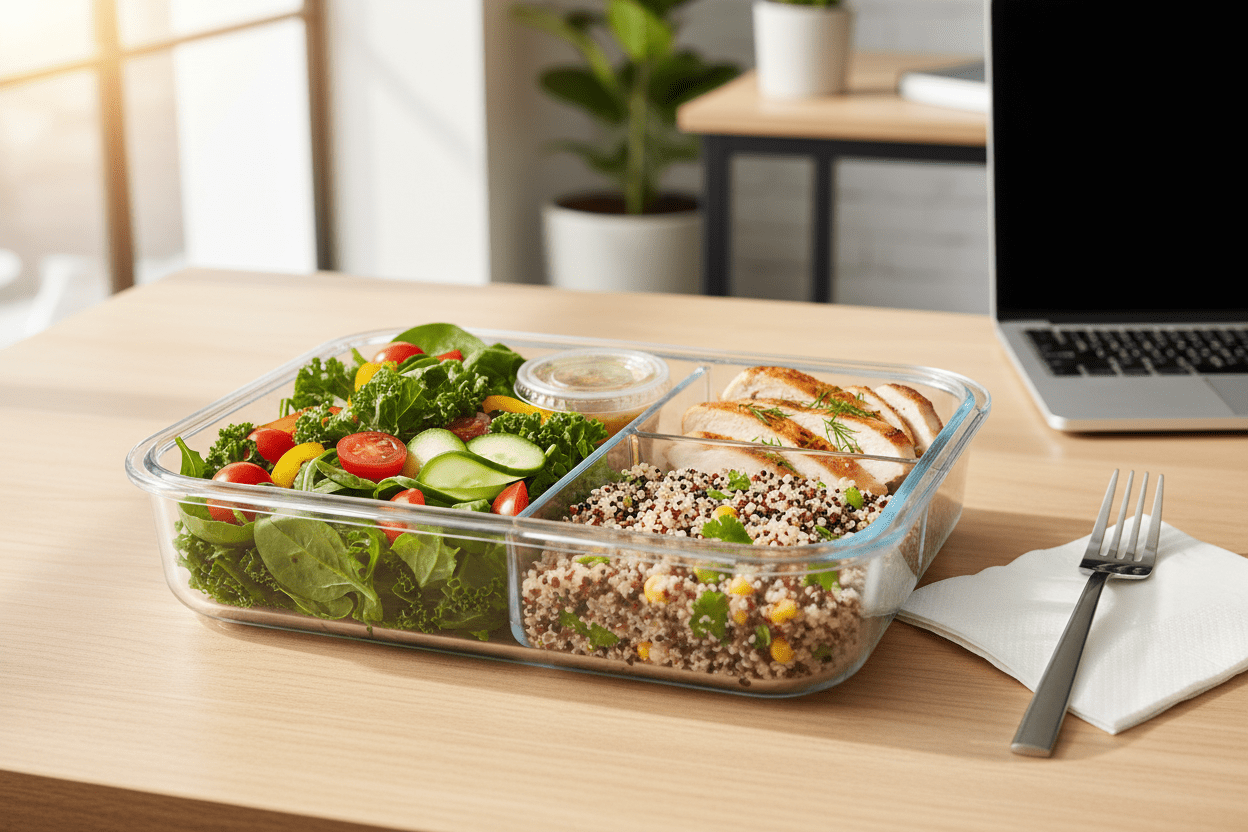
To stay sharp until 5 PM, use this simple formula for your lunch container:
-
50% Fiber (The Base): Fill half your container with greens, roasted peppers, or broccoli. Fiber slows down digestion, giving you a steady stream of energy instead of a spike.
-
25% Protein (The Anchor): Chicken, hard-boiled eggs, tofu, or lentils. You need 25–30g of protein to trigger satiety signals so you aren't looking for snacks an hour later.
-
25% Smart Carbs (The Fuel): Quinoa, sweet potato, or chickpeas. Avoid white bread and white rice.
Need help building a plan that fits your specific taste buds? A 15-minute telemedicine session via MNT Clinical Nutrition Consultations can provide you with a custom meal map tailored to your office cafeteria or local delivery options.
Hydration: The Hidden Focus Killer
Office air conditioning acts as a dehumidifier, pulling moisture out of the air—and out of you. Because you aren't sweating, you likely don't feel thirsty. However, studies show that losing just 2% of your body water can destroy your concentration and short-term memory.
Practical Hacks for Desk Hydration
-
The "Arm's Reach" Rule: If you have to stand up to get water, you won't drink enough. Keep a 1-liter bottle next to your mousepad.
-
The Color Check: Your urine should look like pale lemonade. If it looks like apple juice, your brain is already compromised.
-
Caffeine Strategy: Stop coffee by 2:00 PM. Caffeine has a half-life of 5-6 hours. Drinking it late creates a cycle: you sleep poorly, wake up tired, and crave more sugar and caffeine the next day.
Fighting Inflammation from the Chair
Sitting creates low-grade inflammation in the body. You can fight this directly with your fork.
-
Omega-3s are Non-Negotiable: Your brain is 60% fat. To keep it firing, you need Omega-3 fatty acids. If you aren't eating fatty fish (salmon/mackerel) twice a week, you are likely deficient.
-
Vitamin D: You spend your prime daylight hours indoors. Low Vitamin D is heavily linked to workplace depression and fatigue.
Snacking: Defense Against the Vending Machine
The office environment is hostile to your health. Birthday cakes, donut boxes, and candy bowls rely on "proximity bias"—if you see it, you eat it. You need a defense strategy.
Swap This → For This:
-
Chips → Walnuts: Walnuts are rich in neuroprotective compounds that actually help with reasoning skills.
-
Candy Bar → Greek Yogurt: The protein (casein) in yogurt digests slowly, keeping you full through long meetings.
-
Cookie → Dark Chocolate (>70%): You get the treat without the massive sugar spike.
Want to master the science of metabolism? Our MNT Nutrition Course breaks down exactly how different foods affect brain chemistry, perfect for HR leaders or health-conscious professionals.
Quick Fixes for Digestion (Bloating & GERD)
Sitting compresses your stomach and slows down your gut motility (the movement of food). This is why you feel bloated by the end of the day.
-
Loosen the Belt: Tight waistbands restrict digestion.
-
The "Post-Lunch Lap": You must move after eating. Just a 10-minute walk around the building or even pacing while on a call helps clear glucose from your blood and gets your digestion moving.
-
Posture Check: Slouching puts pressure on your stomach, forcing acid up. Sit with your hips neutral.

CONCLUSION
You spend more time at your desk than you do in your bed. How you fuel your body during those hours dictates not just your job performance, but your long-term health. You don't have to be perfect, but you do need to be strategic. Start by changing your lunch tomorrow—swap the sandwich for a salad bowl—and watch your 3 PM energy return.
Ready to stop guessing? Book a consultation with MNT specialists today. We build realistic nutrition plans that fit into your busy work calendar.
FAQ
Why am I so tired at 3 PM every day?
It’s likely a "sugar crash." If you eat simple carbs (bread, pasta, sweets) at lunch, your blood sugar spikes and then plummets a few hours later. This drop triggers fatigue and brain fog.
I don't have time to prep food. What’s the best takeout?
Look for "bowl" concepts. Choose a salad or grain bowl base. Ask for double vegetables, sauce on the side (this saves huge calories/sugar), and a lean protein. Avoid anything described as "crispy" or "glazed."
Does coffee count as water?
Technically, yes, it contributes to fluid intake. However, it is a diuretic. A good rule of thumb for office workers is to drink one glass of water for every cup of coffee to offset the effects and prevent jitters.
Is fasting safe for work?
Yes, intermittent fasting can be great for office workers because it stabilizes insulin levels and stops mindless morning snacking. Just be sure to break your fast with protein, not sugar, or you will crash.
My back hurts when I sit. Can diet help?
Surprisingly, yes. An anti-inflammatory diet (rich in berries, olive oil, nuts, and fish) can reduce systemic inflammation, which often exacerbates joint and back pain caused by poor ergonomics.
We rely on peer-reviewed studies and reputable medical journals.