

How Much Protein Do You Need for Weight Loss?
How much protein should you eat to lose weight? Learn how to estimate your daily needs, preserve lean mass, and reach your target with everyday foods.
For many adults trying to lose weight, 1.2–1.6 grams of protein per kilogram of body weight per day is a practical starting range. That is about 0.54–0.73 grams per pound.
For example, a person weighing 70 kg (154 lb) could estimate a daily protein range of 84–112 grams.
This is a guide, not a strict requirement. The right amount depends on your health, age, activity level, and the weight used in the calculation. People with obesity may need a different weight reference, while people with kidney disease should speak with a healthcare professional before increasing protein. [1] [2] [3]
Getting enough protein may help you feel full and preserve more lean mass as you lose weight. But protein alone does not guarantee weight loss. Your overall eating pattern, activity, health, and ability to follow your plan also matter.
How to Calculate Your Protein Needs for Weight Loss
To estimate your daily protein intake:
- Find your weight in kilograms. If you know your weight in pounds, divide it by 2.2.
- Multiply your weight by 1.2 for the lower end of the range.
- Multiply your weight by 1.6 for the upper end.
For a person who weighs 70 kg:
- 70 × 1.2 = 84 g of protein per day
- 70 × 1.6 = 112 g of protein per day
The estimated range is 84–112 g per day.
You do not need to aim for the highest number or hit the exact same amount every day. Choose a practical target that suits your health and eating habits.
Remember: Grams of protein are different from grams of food. A 100 g piece of chicken does not contain 100 g of protein. The food also contains water and other components.
Protein intake for weight loss by body weight
The table below shows estimates using 1.2–1.6 g of protein per kilogram of current body weight.
| Body weight | Estimated protein per day |
|---|---|
| 50 kg (110 lb) | 60–80 g |
| 60 kg (132 lb) | 72–96 g |
| 70 kg (154 lb) | 84–112 g |
| 80 kg (176 lb) | 96–128 g |
| 90 kg (198 lb) | 108–144 g |
| 100 kg (220 lb) | 120–160 g |
These numbers show the calculation; they are not personalized prescriptions. Current body weight may not be the best calculation weight for everyone, especially people with obesity.
Should You Use Your Current Weight or Goal Weight?
For many adults, current body weight is a useful place to start. But it does not work equally well for everyone.
If you have obesity, multiplying your current weight by 1.2–1.6 may produce a target that is higher than you need. A dietitian may consider another weight reference, such as an adjusted body weight, along with your health, diet, and activity level.
Your goal weight is not automatically the right number to use either. There is no single calculation method that fits every person. If you are unsure which weight to use, ask a registered dietitian to help you choose an appropriate target. [2]
Is 0.8 Grams of Protein per Kilogram Enough for Weight Loss?
The long-standing recommended dietary allowance for healthy adults is 0.8 g of protein per kilogram of body weight per day. It is designed to meet the basic protein needs of most healthy adults; it is not a specific target for preserving lean mass during weight loss.
For a person weighing 70 kg:
| Protein intake | Calculation | Amount per day |
|---|---|---|
| 0.8 g/kg | 70 × 0.8 | 56 g |
| 1.2 g/kg | 70 × 1.2 | 84 g |
| 1.6 g/kg | 70 × 1.6 | 112 g |
A person can lose weight while eating around 0.8 g/kg. However, a higher intake may help preserve more fat-free mass during a period of weight loss.
You do not need to double your protein overnight. If your current intake is low, adding a protein-rich food to one meal at a time may be easier to maintain.
How Does Protein Help With Weight Loss?
Protein can support a weight-loss plan by helping you maintain lean mass and, for some people, feel fuller. Its effects vary, and eating more protein does not guarantee a particular result.
Protein may help preserve lean mass
When you lose weight, the weight you lose is not all body fat. Some may come from fat-free mass, which includes muscle as well as water, bones, organs, and other tissues.
Eating enough protein may help reduce the loss of fat-free mass during weight loss. Strength training can also help support your muscles.
A review of 33 studies involving 2,135 adults with overweight or obesity found that people eating more protein preserved, on average, about 0.26 kg more fat-free mass than those eating less protein during calorie-restricted weight loss.
That is a modest average difference. It does not mean everyone will preserve that amount, and fat-free mass is not the same as muscle alone. [4]
Protein may help you feel full
Protein-rich foods may help some people feel satisfied after a meal. This can make it easier to manage hunger and follow an eating pattern over time.
For example, adding eggs, yogurt, or daal to a meal may make it more filling. But fullness varies from person to person, and adding protein does not always mean you will eat less later.
Your body uses energy to process protein
Your body uses some energy to digest and process the food you eat. This is called the thermic effect of food.
Protein generally requires more energy to process than carbohydrates or fat. However, this is only one part of the picture. It does not mean that eating unlimited protein will lead to weight loss.
Protein does not replace an overall weight-loss plan
Weight loss generally happens when your body uses more energy than it receives from food and drinks over time. This is called an energy deficit or calorie deficit.
Protein can be part of a satisfying eating plan, but adding large amounts of protein on top of your usual meals also adds calories. A practical approach is to include protein-rich foods as part of balanced meals.
How Much Protein Do Women and Men Need to Lose Weight?
Many women and men can use the same general starting range of 1.2–1.6 g/kg per day. You do not need a separate formula based only on sex.
For example:
- A person weighing 60 kg would calculate about 72–96 g per day.
- A person weighing 80 kg would calculate about 96–128 g per day.
The right target still depends on the individual. Body size, muscle mass, age, health, activity, and the weight used in the calculation all matter.
Pregnant and breastfeeding people have different nutrition needs and should seek individual advice rather than follow a general weight-loss target.
Does Exercise Change How Much Protein You Need?
Yes. Your activity level can affect how much protein is useful, especially if you are trying to preserve muscle while losing weight.
If you do little exercise
You still need protein every day. Your body uses it to maintain and repair tissues, whether or not you work out.
The general range may be a starting point for discussion, but you do not need to force yourself to eat at the top of it. Focus on a suitable amount that fits your health and meals.
If you walk or exercise regularly
Regular movement supports health during weight loss. Include protein-rich foods in your meals and eat enough overall to support your activity.
Your needs may change with the length, intensity, and frequency of your exercise.
If you lift weights
Strength training gives your muscles a reason to stay strong. Getting enough protein alongside it can help you maintain lean mass as you lose weight.
If you lift weights regularly, a target toward the higher end of the general range may be useful. The right amount also depends on your health, training, and the rest of your diet.
If you are an athlete or already lean
Athletes and lean people who train hard while eating fewer calories may need a more personalized approach. Their protein needs can differ from those of the general population.
Training demands, body composition, the size of the calorie deficit, and the length of the diet all matter. A sports dietitian can help develop a plan that supports both performance and health. [1]
How Much Protein Should You Eat per Meal?
There is no exact amount of protein that everyone must eat at each meal. For most people, getting enough protein over the whole day is the main priority.
Spreading protein across meals can make your daily goal easier to reach. For example, someone aiming for around 90 g per day might plan:
| Meal | Example protein amount |
|---|---|
| Breakfast | 25 g |
| Lunch | 30 g |
| Dinner | 25 g |
| Snack | 10 g |
| Daily total | 90 g |
The amounts do not need to be equal. You might eat more protein at lunch and less at breakfast. Choose a pattern that fits your appetite and routine. [1]
Do you need protein immediately after a workout?
No. Most people do not need to drink a protein shake the moment they finish exercising.
A meal or snack containing protein after exercise can help you reach your daily target. But you do not need to eat it at an exact minute for your workout to count.
How to Reach Your Protein Target Through Food
You can get protein from both animal and plant foods. You do not need to eat chicken at every meal or rely on supplements.
Protein in common foods
| Food | Portion | Approximate protein |
|---|---|---|
| Egg | 1 large egg | 6 g |
| Milk | 1 cup, about 240 ml | 8 g |
| Plain yogurt | 1 cup | About 8–13 g |
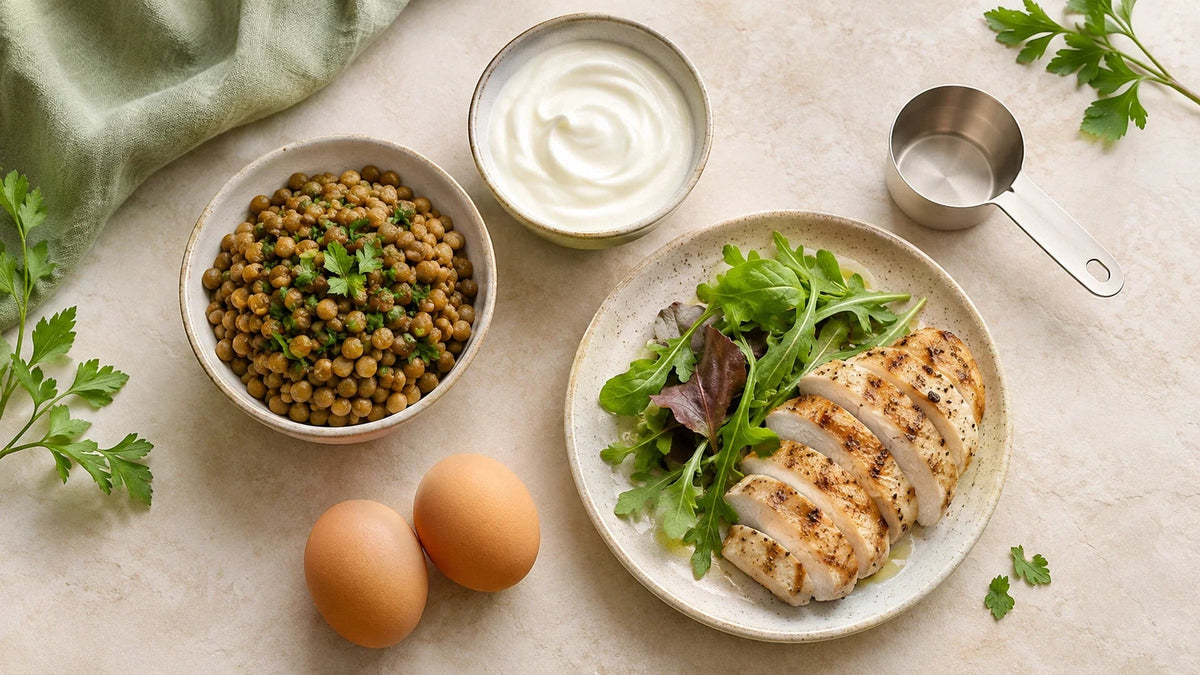
| Cooked lentils | 1 cup, about 198 g | 18 g |
| Cooked chicken breast | 85 g, or about 3 oz | About 26 g |
These are estimates. Protein content varies by brand, cut, recipe, and preparation. Check the label or a reliable food database when you need a closer estimate.
A cup of cooked lentils refers to the lentils themselves. A cup of thin daal containing added water may have less protein. Yogurt also varies widely: strained yogurt can contain more protein than some regular yogurts. [5] [6] [7] [8] [9] [10]
Animal sources of protein
Options include:
- Eggs
- Chicken and other poultry
- Fish and seafood
- Milk and yogurt
- Cheese
- Lean meat
Choose foods that fit your preferences, budget, and health needs.
Plant sources of protein
Plant-based options include:
- Daal and other lentils
- Chickpeas, including chana
- Kidney beans and other beans
- Soy foods, such as tofu
- Nuts and seeds
- Whole grains
Nuts and seeds provide protein, but a small serving may provide less protein than a full serving of lentils, chicken, or fish. They also contain fat and calories, so think of them as one contribution to your daily total.
Protein from rice, roti, and vegetables also counts. Each serving may provide a smaller amount, but it can add up across the day.
MNT product feature
MNT Pumpkin Seeds
MNT Pumpkin Seeds are raw, unsalted, shelled kernels. You can view the product details if you would like to include seeds among the foods you use in meals and snacks.
View MNT Pumpkin SeedsHow to Get More Protein in Pakistani Meals
You do not need to give up familiar foods to increase your protein intake. Try adding a protein source to meals you already enjoy.
- Breakfast: Have eggs or plain yogurt alongside roti.
- Lunch: Include chicken, fish, daal, or chana with roti or rice.
- Snack: Choose milk, yogurt, or roasted chana if they suit your needs.
- Dinner: Pair a protein-rich dish with vegetables and a portion of roti or rice.
If you eat a mostly plant-based diet, including lentils, beans, chickpeas, and soy foods regularly can help you work toward your target.
Example: About 90 grams of protein in a day
This example shows how protein can add up. It is not a complete meal plan. Add foods such as roti, rice, fruit, vegetables, and healthy fats according to your needs.
| Meal | Example protein foods | Approximate protein |
|---|---|---|
| Breakfast | 2 large eggs and 1 cup of milk | 20 g |
| Lunch | 85 g cooked chicken breast and 1 cup plain yogurt containing about 8 g protein | 34 g |
| Snack | 1 cup of milk | 8 g |
| Dinner | 1 cup cooked lentils and 1 cup plain yogurt containing about 8 g protein | 26 g |
| Total from foods listed | About 88 g |
Protein from other foods eaten with these meals can increase the total. The actual amount will depend on your portions, yogurt, and recipes.
Can vegetarians get enough protein for weight loss?
Yes. A vegetarian eating pattern can provide enough protein when it includes suitable protein-rich foods and enough food overall.
Depending on what you eat, options include lentils, chickpeas, beans, soy foods, milk, yogurt, eggs, nuts, and seeds.
If you follow a vegan diet or find it difficult to meet your needs, a registered dietitian can help you plan meals that provide enough protein and other nutrients.
Do You Need Protein Powder to Lose Weight?
No. Protein powder is optional. You can lose weight and meet your protein needs through regular foods.
A powder may be convenient if you struggle to eat enough protein, have a busy schedule, or prefer an easy snack. But it does not cause fat loss on its own.
If you use one:
- Check the protein per serving.
- Look at the serving size and calories.
- Count the protein toward your daily total.
- Choose a product that fits your allergies and dietary needs.
Who May Need a Different Protein Target?
The general range is not suitable for every person. Your healthcare professional or dietitian can help if your needs differ from the examples above.
People with kidney disease
If you have chronic kidney disease, speak with your healthcare professional or kidney dietitian before increasing your protein intake.
The right amount depends on your kidney function and treatment. Some people may need to limit protein, while people receiving dialysis may have different—and sometimes higher—needs. [3] [11]
People with obesity
Using current body weight may produce a protein target that is higher than necessary. A dietitian can help choose an appropriate weight reference and an achievable target.
Older adults
Maintaining muscle and strength becomes especially important with age. Enough protein and suitable strength exercises can support physical function.
However, weight loss is not appropriate for every older adult, particularly someone who is frail or has lost weight without trying. Seek individual advice before starting a weight-loss plan.
People taking weight-loss medication
Some weight-loss medicines reduce appetite. When meals become smaller, it can be harder to get enough protein and other nutrients.
Try to include protein-rich foods in the meals and snacks you can comfortably eat. If you struggle to eat enough, speak with your healthcare professional or dietitian. They can help you assess your intake and decide whether a supplement would be useful. [12]
People who have had weight-loss surgery
Protein needs after bariatric surgery depend on the type of procedure, stage of recovery, and amount of food you can tolerate. Follow the target provided by your bariatric team.
Children, teenagers, and people who are pregnant or breastfeeding
These groups have different nutrition needs. They should seek individual guidance rather than use a general adult weight-loss protein target.
Can You Eat Too Much Protein?
Yes. Eating more protein than you need does not necessarily improve your results. Very high targets can be difficult to maintain and may leave less room for fruits, vegetables, whole grains, and healthy fats.
Can too much protein cause weight gain?
Protein provides calories. If adding protein leads you to consume more energy than your body uses over time, it can contribute to weight gain.
That does not make protein bad for weight loss. It means that your portions and overall eating pattern still matter.
Is a high-protein diet bad for your kidneys?
People with known kidney disease may need to limit or adjust protein, depending on their condition and treatment. They should get personal advice before increasing it.
For adults without known kidney disease, advice should still reflect overall health and the amount being eaten. Research on moderate increases in protein should not be treated as proof that every very high-protein diet is suitable for everyone.
Common Protein Mistakes During Weight Loss
1. Confusing food weight with protein content
A food weighing 100 g does not contain 100 g of protein. Check the nutrition label or a food database for the amount of protein in your actual portion.
2. Assuming more is always better
The highest target is not automatically the best one. Choose an amount that fits your health, activity, and eating pattern.
3. Forgetting protein from mixed meals
Protein comes from more than meat and eggs. Daal, chana, yogurt, milk, roti, rice, nuts, and other foods can all contribute to your daily total.
4. Focusing on protein and ignoring the rest of your diet
Protein is one part of a balanced diet. You also need fiber, vitamins, minerals, and enough variety to make your eating pattern enjoyable and sustainable.
5. Expecting protein alone to prevent muscle loss
Protein can help preserve lean mass, but it is not the only factor. Suitable strength training and an overall eating plan that meets your needs also matter.
6. Treating every gram as a test
A protein range is a guide. You do not need to reach the exact same number every day. Look for a pattern you can follow consistently.
Frequently Asked Questions
How much protein should I eat to lose weight without losing muscle?
Many adults can use 1.2–1.6 g/kg per day as a starting range to discuss with a dietitian. Eating enough protein and doing suitable strength training may help preserve lean mass, but neither can guarantee that no muscle will be lost.
Is 100 grams of protein a day enough for weight loss?
It can be enough for some people. For a person weighing 70 kg, 100 g is about 1.43 g/kg, which falls within the general range in this article.
For someone else, 100 g may be more or less than appropriate. Body size, health, activity, and the weight used in the calculation all matter.
Is 120 grams of protein a day too much?
Not necessarily. For an 80 kg person, 120 g is 1.5 g/kg. For a 60 kg person, it is 2 g/kg.
Whether that amount is suitable depends on the person. Higher is not automatically better, and people with kidney disease need individual advice.
Can you lose weight without a high-protein diet?
Yes. A higher-protein diet is one approach, but it is not the only way to lose weight. The goal is to eat enough protein while following a balanced eating pattern that works for you.
Does protein help you lose belly fat?
Protein cannot target fat loss from one particular area. You cannot choose where your body loses fat by eating a specific food or nutrient.
Protein can support an overall weight-loss plan, but changes in belly fat depend on overall fat loss and individual factors.
Should you eat more protein on workout days?
Most people do not need to change their protein target every time they exercise. Consistently getting enough protein is a practical place to start.
People with demanding training schedules or specific sports goals may benefit from more detailed advice.
Should you count protein from rice, roti, nuts, and seeds?
Yes. Protein from all foods contributes to your daily total. Some foods provide smaller amounts per serving than others, but those amounts can add up throughout the day.
Key Takeaways
- Many adults can use 1.2–1.6 g of protein per kg of body weight per day as a starting range during weight loss.
- A person weighing 70 kg would calculate about 84–112 g per day.
- The range is a guide, not a requirement. The weight used in the calculation and your health both matter.
- Protein may help preserve fat-free mass and help some people feel fuller, but it does not guarantee weight loss.
- You can meet your protein needs with foods such as eggs, milk, yogurt, daal, chana, chicken, fish, and soy foods. Protein powder is optional.
- People with kidney disease and others with different nutrition needs should seek personalized advice.
Related MNT reading
We rely on peer-reviewed studies and reputable medical journals.