


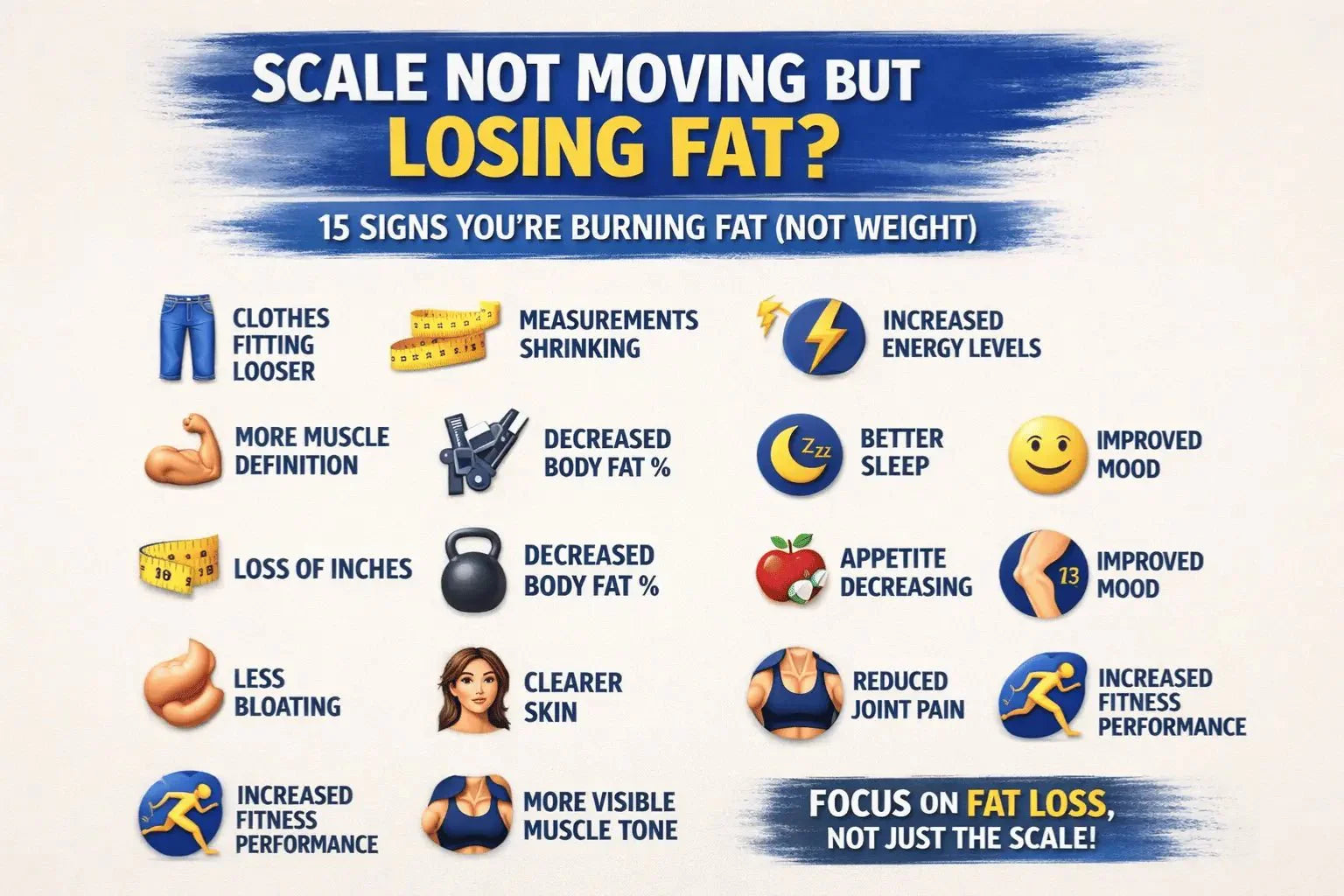
Scale Not Moving but Losing Fat? 15 Signs You’re Burning Fat (Not Weight)
Quick Answer
Yes, you can lose fat even if the scale isn’t moving. This usually happens because of body recomposition (losing fat while gaining muscle), water retention, hormonal fluctuations, glycogen storage, or inflammation from workouts.
If your clothes fit looser, your waist measurement is shrinking, your strength is improving, or you look leaner in photos, you are likely losing body fat — even if your weight stays the same.
The scale measures total body weight, not body fat percentage or body composition.
Why the Scale Doesn’t Always Reflect Fat Loss
The scale includes:
-
Body fat
-
Muscle
-
Water
-
Glycogen (stored carbs)
-
Organs and bone
-
Food in your digestive system
It cannot tell the difference between losing 2 pounds of fat and holding 2 pounds of water.
That’s why weight loss ≠ fat loss.
Is It Possible to Lose Fat Without Losing Weight?
Yes. This is called body recomposition.
What Is Body Recomposition?
Body recomposition means:
-
You are losing body fat
-
While gaining lean muscle
-
At the same time
-
With little or no change in scale weight
Muscle is denser than fat.
-
1 lb of fat = fluffy and takes up more space
-
1 lb of muscle = compact and dense
If you lose 5 pounds of fat and gain 5 pounds of muscle, your weight stays the same — but your body looks leaner and tighter.
Who Experiences This Most?
-
Beginners starting strength training
-
People returning after a long break
-
Those eating high-protein diets
-
Anyone lifting progressively heavier weights
If this is you, the scale is the worst progress tracker you could use.
Book a consultation for weight loss
15 Clear Signs You’re Losing Fat (Even If the Scale Is Stuck)
If several of these are happening, fat loss is occurring.
1. Your Waist Measurement Is Shrinking
Use a tape measure at your belly button.
If your waist is decreasing, that is direct evidence of fat loss.
Inches lost matter more than pounds lost.
2. Your Clothes Fit Looser
Jeans require a belt.
Shirts feel less tight.
Old clothes fit again.
Clothing reflects body volume — and fat takes up more space than muscle.
3. Progress Photos Look Different
Photos reveal subtle shape changes the scale can’t show.
Take photos:
-
Same lighting
-
Same time of day
-
Every 2–4 weeks
Compare side-by-side.
4. Your Body Feels Firmer
Fat feels soft.
Muscle feels firm.
If your stomach, arms, or legs feel tighter and less “jiggly,” body composition is improving.
5. Your Strength Is Increasing
You’re lifting heavier weights.
You’re doing more reps.
Workouts feel stronger.
Strength gain + stable weight = classic recomposition.
6. Muscle Definition Is Becoming Visible
You may notice:
-
Shoulder lines
-
Slight ab outline
-
More defined arms
-
Tighter legs
Definition increases when the fat layer decreases.
7. You Look Leaner in the Mirror
Sometimes visual change happens before measurable change.
If you look tighter and more athletic, trust your eyes.
8. Less Bloating and Puffiness
Reduced inflammation improves appearance quickly.
Signs include:
-
Flatter stomach
-
Less facial puffiness
-
Rings fitting looser
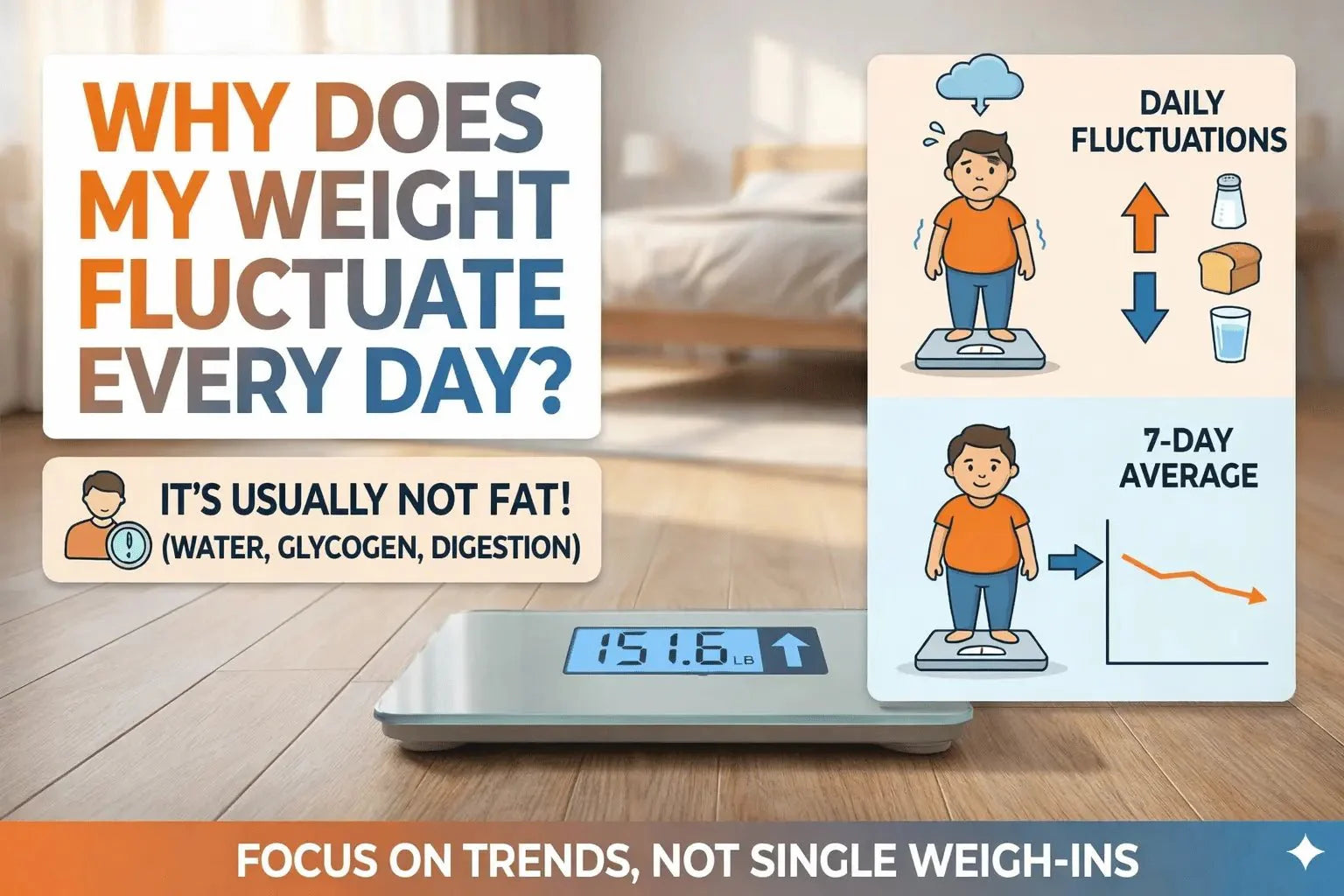
9. Your Weekly Weight Average Is Trending Down
Daily weight fluctuates 1–5 lbs.
Track 7-day averages instead of single weigh-ins.
If weekly averages are slowly decreasing, fat loss is happening — even if some days spike.
10. Your Endurance Is Improving
Cardio feels easier.
You recover faster.
You get less winded.
Carrying less fat improves performance efficiency.
11. Your Energy Levels Are More Stable
Balanced blood sugar and improved metabolism lead to:
-
Fewer crashes
-
Better mood
-
More consistent energy
12. You’re Sleeping Better
Fat loss habits improve hormone regulation.
Better sleep = lower cortisol = less water retention.
13. Hunger and Cravings Are More Controlled
Adequate protein stabilizes appetite.
Reduced cravings often indicate improved metabolic balance.
14. People Notice Changes
Others often see progress before you do.
External feedback can confirm visual change.
15. Body Fat Percentage Is Decreasing
If measured with:
-
DEXA scan
-
Calipers
-
InBody
-
Navy body fat formula
A drop in body fat % confirms fat loss regardless of scale weight.
Why the Scale Is Stuck (But Fat Loss Is Happening)
Here are the most common biological reasons:
1. Water Retention
Caused by:
-
High sodium meals
-
Stress
-
Hormonal changes
-
Intense workouts
Water weight can mask fat loss for days or weeks.
2. Glycogen Storage
For every gram of carbohydrate stored, your body stores 3–4 grams of water.
More carbs = more temporary water weight.
3. Inflammation From Strength Training
Muscle repair requires fluid.
This temporary water retention is a good sign — it means growth.
4. Hormonal Fluctuations
Especially during the menstrual cycle:
-
3–6 lbs of water retention is normal
This has nothing to do with fat gain.
5. Digestive Weight
Food volume and constipation can add scale weight.
That’s physical mass — not body fat.
How to Track Fat Loss Correctly (Without Obsessing)
Stop relying on the scale alone.
Use this tracking system:
✅ Weigh 3–4x per week
Track weekly averages.
✅ Measure waist, hips, thighs weekly
✅ Take photos every 4 weeks
✅ Track gym performance
✅ Monitor clothing fit
If 3–4 of these improve, you are progressing.
When to Adjust Calories (The 2–4 Week Rule)
Do NOT change your plan unless:
-
Weekly averages are flat
-
Measurements haven’t changed
-
Photos look identical
-
Strength is not improving
For at least 2–4 consistent weeks.
Most people sabotage progress by adjusting too soon.
Before cutting calories, check:
-
Are you tracking accurately?
-
Are weekends consistent?
-
Are you eating enough protein?
-
Are you sleeping 7–9 hours?
-
Is stress high?
Fix consistency before reducing food.
FAQ
Why am I losing inches but not weight?
You are likely losing fat while gaining muscle. Fat takes up more space than muscle, so your body shrinks even if weight stays the same.
Scale not moving but clothes looser — what does it mean?
It usually means your body composition is improving. Clothing fit reflects fat loss better than scale weight.
Can water weight hide fat loss?
Yes. Sodium, stress, workouts, hormones, and carbohydrates can cause temporary water retention that masks fat loss.
How long before the scale shows fat loss?
It often takes 2–4 weeks of consistent effort before trends appear. Fat loss is rarely linear.
Does strength training slow scale weight loss?
It can slow the number on the scale because you’re gaining muscle while losing fat. However, it improves body composition and long-term fat loss.
Key Takeaways
-
You can lose fat without losing weight.
-
The scale measures total mass, not body fat.
-
Body recomposition is common with strength training.
-
Inches, photos, and clothing fit are better progress indicators.
-
Water retention can temporarily hide fat loss.
-
Track weekly trends, not daily numbers.
-
Wait 2–4 weeks before adjusting calories.
Final Thoughts
If the scale isn’t moving but:
-
Your waist is smaller
-
Clothes fit better
-
You’re stronger
-
You look leaner
You are making progress.
Fat loss is about body composition — not just gravity.
Trust the data that actually reflects change.
Stay consistent.
Track the right metrics.
Let the scale catch up later.
We rely on peer-reviewed studies and reputable medical journals.