



Why Am I Gaining Weight While Eating Less? 8 Real Reasons + Fixes
If you’re gaining weight while eating less, it’s usually water retention, reduced daily movement (NEAT), hidden calorie intake, metabolic adaptation from dieting, digestion changes, or a medical/medication factor—not sudden fat gain.
If the scale is rising even though you’re eating less, the most common reasons are:
-
Water retention (salt, carbs, menstrual cycle, stress, new/harder workouts)
-
Lower daily movement (NEAT) without realizing it (less walking/standing/fidgeting)
-
Hidden calories (oils, drinks, sauces, “small bites,” weekend variance)
-
Metabolic adaptation (your body burns fewer calories after prolonged dieting/weight loss)
-
Poor sleep + stress (can shift appetite and fluid balance)
-
Exercise inflammation/glycogen changes masking fat loss for a few weeks
-
Constipation/bloating, increasing scale weight temporarily
-
Medications or medical/hormonal conditions (hypothyroidism, PCOS/insulin resistance, steroid-related fluid retention, etc.)
Bottom line: Fat gain requires a sustained calorie surplus over time. If your weight is rising while you “eat less,” either your true deficit isn’t a deficit (intake higher or burn lower than you think), the scale is reflecting water/digestion, or there’s a medical/medication factor.
Medical note: This is educational, not a diagnosis. If weight gain is sudden or persistent—especially with fatigue, swelling, shortness of breath, hair thinning, irregular periods, or cold intolerance—see a clinician.
Key Takeaways
-
The scale measures total body mass, not body fat alone.
-
A 1–5 lb (0.5–2.5 kg) change in a few days is usually water/glycogen/digestion, not fat.
-
During dieting, your body often reduces calorie burn via adaptive thermogenesis and reduced activity.
-
NEAT (non-exercise movement) can drop quietly and erase your deficit.
-
When symptoms suggest it, thyroid/PCOS/medication causes are worth checking with a professional.
Can You Gain Fat While Eating Less? (Reality check)
If your calorie intake is truly below your calorie expenditure on average, you won’t gain body fat over time. When people say “I’m eating less but gaining weight,” typically one (or more) is happening:
-
Intake is higher than you think (tracking blind spots, weekends, liquid calories)
-
Burn is lower than you think (less NEAT, adaptive thermogenesis, fatigue)
-
The “gain” is water + digestion, not fat
-
A medical/medication factor is contributing
Weight Gain vs Fat Gain: What the Scale Measures
Your scale can move because of:
-
Water (salt, stress, cycle changes)
-
Glycogen (stored carbs bind water; increases can happen fast)
-
Food still digesting + stool volume
-
Inflammation (especially after new training)
-
Muscle and fat (slower changes)
Fast clue: If your weight changes noticeably in 24–72 hours, it’s almost always fluid/glycogen/digestion—not fat tissue change.
Top Reasons You’re Gaining Weight While Eating Less (with fixes)
1) Water retention (salt/carbs/cycle/stress/exercise)
Water retention is the most common cause of “mystery” scale increases.
Common triggers
-
Salty meals (restaurant/processed foods)
-
Higher carbs than usual (glycogen refill)
-
Menstrual-cycle water retention
-
Stress and poor sleep
-
New or harder workouts
Clues
-
Weight jumps quickly and feels “puffy”
-
Rings/tight socks marks
-
It resolves after a few consistent days
Fix
-
Don’t react to single weigh-ins
-
Use a 7–14 day trend (method below)
-
Keep sodium/carbs consistent for a week before judging progress
2) NEAT drop (you move less without realizing)
NEAT = non-exercise activity thermogenesis: walking, standing, chores, fidgeting.
During dieting, NEAT often drops subconsciously—sometimes enough to erase a deficit.
Clues
-
You still “work out,” but daily steps fall
-
You sit more, feel more tired, fidget less
Fix
-
Track steps for 2 weeks
-
Set a daily step floor (e.g., baseline + 2,000 or 7,000–10,000/day)
-
Add “movement anchors”: 10-minute walk after 1–2 meals/day
3) Hidden calories + tracking errors
Even when meals look smaller, they often keep calories higher than you think:
-
Oils/butter/ghee
-
Sauces/dressings
-
Coffee drinks/creamers
-
Nuts/nut butters, “healthy snacks”
-
Bites/tastes while cooking
-
Restaurant portions
-
Weekend variance (“good weekdays, loose weekends”)
Fix (most effective)
-
Do a 7-day weighed-food audit (at least once)
-
Track liquids + oils explicitly
-
Compare weekly averages, not “best days”
4) Metabolic adaptation (adaptive thermogenesis)
With prolonged calorie restriction and weight loss, energy expenditure often falls more than predicted—commonly discussed as adaptive thermogenesis.
What it can feel like
-
You’re colder, more tired
-
You plateau on calories that used to work
-
Your maintenance seems lower than expected
Fix
-
Don’t cut calories again immediately
-
Prioritize protein + strength training
-
Consider a maintenance “diet break” (2–4 weeks) if you’ve been dieting for months
5) Sleep + stress
Poor sleep is linked with appetite regulation changes (often higher hunger signals and lower satiety signals).
Stress can also increase scale volatility through fluid balance, sleep disruption, and “autopilot” snacking.
Fix
-
Aim for 7–9 hours
-
Keep a consistent wake time
-
Use simple stress habits you’ll repeat: 10-minute walk, breathing, journaling
6) Exercise inflammation/glycogen changes
New strength training or a big intensity increase can cause temporary water retention due to muscle repair and glycogen changes.
Clues
-
Scale up, but strength improves
-
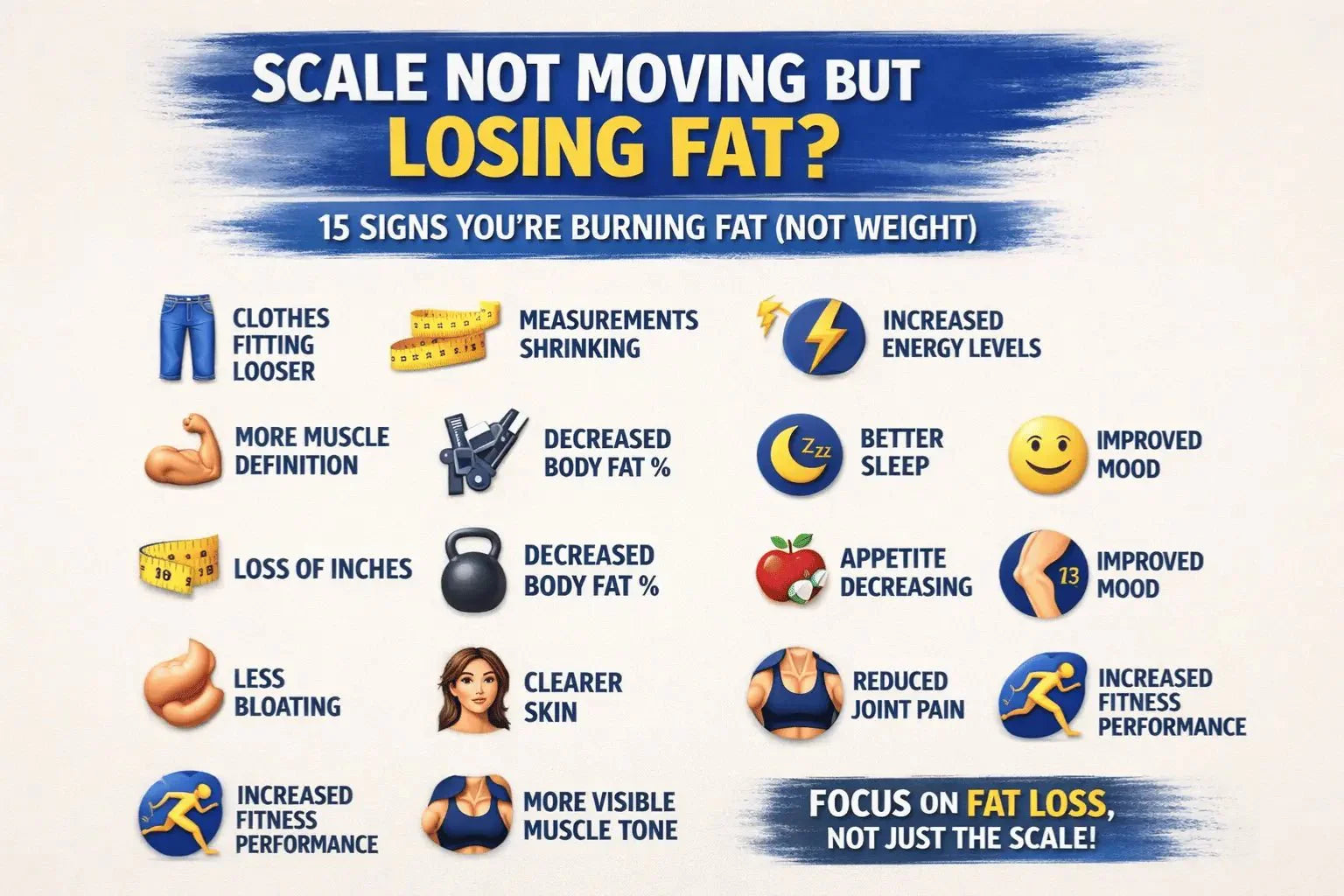
Measurements/clothes may improve even while the scale doesn’t
Fix
-
Track 2–4 weeks before changing your plan
-
Use waist/hip measurements + trend weight
7) Constipation/bloating
Constipation is common and can be influenced by low fiber, low fluids, low activity, and some medications.
It can also cause temporary weight increases until bowel movements normalize.
Fix
-
Hydration + fiber + daily walking
-
Keep meal timing consistent
-
If persistent or painful, discuss with a clinician
8) Medications
Some medications can affect appetite, fatigue, and fluid retention. Examples include:
-
Steroids like prednisone (fluid retention is a known side effect)
-
Some antidepressants (weight change varies by drug and person)
Fix
-
Don’t stop meds on your own
-
Ask your clinician: “Is weight change or water retention a known effect of this medication, and are there alternatives?”
Quick Reference Table: Cause → Clues → What to Do
| Cause | Common clues | What to do |
|---|---|---|
| Water retention | Fast jumps, puffiness, cycle changes | Use 7–14 day trend; keep sodium/carbs consistent |
| NEAT drop | Steps down, more sitting, fatigue | Track steps; set a step floor |
| Hidden calories | “Eating less” but not weighing oils/liquids | 7-day weighed audit |
| Metabolic adaptation | Plateau after long dieting, low energy | Maintenance phase + protein + strength |
| Sleep + stress | Cravings, low recovery, scale volatility | 7–9 hours + simple stress routine |
| New exercise | Started lifting; scale up but stronger | Wait 2–4 weeks; use measurements |
| Constipation/bloating | “Backed up,” bloated, irregular BM | Hydration/fiber/walks |
| Medications | New meds, swelling, appetite shift | Review with clinician |
Common Scenarios
“Why am I gaining weight even though I’m eating less and exercising?”
Most often: exercise-related water retention + NEAT drop + small tracking errors.
Do this
-
Track steps for 2 weeks
-
Weigh daily but judge weekly average
-
Measure waist/hips weekly
“Why am I gaining weight on 1,200 calories?”
Usually one of these:
-
It’s not truly 1,200 once oils/liquids/weekends are included
-
Water/digestion is masking fat loss
-
Too-low intake → fatigue → NEAT drop → binge/restrict loop
Do this
-
7-day weighed audit
-
Check weekends
-
Consider a more sustainable intake rather than cutting further
“Why am I gaining belly fat even though I eat healthy?”
Common explanations:
-
Healthy foods can still be calorie-dense
-
Alcohol + poor sleep + stress patterns
-
Menopause/perimenopause changes
-
Bloating mimicking fat
Do this
-
Track the waist trend weekly
-
Strength train 2–4x/week + daily steps
-
Reduce alcohol and improve sleep consistency
“Why am I gaining weight but barely eating?”
Often:
-
Intake is inconsistent (very low some days, higher other days)
-
NEAT drops
-
Constipation or stress water retention
-
A medical factor (thyroid, PCOS) may be relevant
Do this
-
Track weekly averages (intake + weight)
-
Address digestion basics
-
If symptoms fit, discuss thyroid/PCOS screening
“Why did I gain weight suddenly?”
Sudden jumps are usually fluid (salt/carbs/travel/new workouts/cycle/med changes).
If rapid gain comes with swelling or shortness of breath, seek medical care.
“Why am I gaining weight during menopause/perimenopause even though I eat less?”
Changes can include:
-
Sleep disruption
-
Appetite shifts
-
Lean mass loss unless you strength train
-
Fat redistribution toward the abdomen
Do this
-
Prioritize resistance training + protein
-
Keep steps consistent
-
Treat sleep like a “fat loss skill.”
“Why am I gaining weight after dieting?”
After weight loss, energy needs can stay lower for a while, and appetite can rebound—making regain easier.
Do this
-
Transition to maintenance slowly
-
Keep strength training + steps consistent
-
Build a sustainable calorie target
Water Weight vs Fat: How to Tell (7–14 day trend method)
Use trends, not one weigh-in.
-
Weigh daily (same time, same conditions)
-
Calculate a 7-day average
-
Compare this week’s average vs last week’s average
-
Add a weekly waist measurement + “how clothes fit.”
Water weight tends to
-
Jump 1–5 lb in days
-
Swing with sodium/carbs/stress/cycle
-
Improve after a consistent routine
Fat gain tends to
-
Rise gradually over weeks
-
Come with a steady waist increase
-
Reflect sustained surplus
Hormonal & Medical Causes
These don’t “break physics,” but they can change appetite, fatigue, fluid balance, and energy expenditure—making weight management harder.
Hypothyroidism (underactive thyroid)
Commonly associated with tiredness and weight gain (often alongside other symptoms).
PCOS / insulin resistance
PCOS can impact fertility and is linked with metabolic risk; the CDC notes a higher risk of type 2 diabetes in people with PCOS.
Medication-related weight change
Steroids can cause fluid retention; other meds can influence appetite or energy.
When to See a Doctor + Labs to Ask About
Consider a medical evaluation if you have:
-
Rapid unexplained gain (especially swelling)
-
Severe fatigue/weakness
-
Hair thinning/dry skin
-
Irregular periods or fertility changes
-
Cold intolerance
-
Shortness of breath
Labs clinicians commonly consider (based on symptoms)
-
Thyroid: TSH + free T4 (often the starting point)
-
Glucose metabolism: HbA1c, fasting glucose
-
PCOS evaluation (clinician-guided)
Step-by-Step Plan (7-day audit → adjustments)
Step 1: Run a 7-Day Baseline (stop guessing)
For 7 days:
-
Track food, including oils, drinks, and snacks
-
Track steps
-
Weigh daily → use weekly average
-
Note sleep + stress
Step 2: Set a NEAT “floor”
Pick one:
-
Baseline steps + 2,000
-
Or 7,000–10,000 steps/day
-
Or 10-minute walk after 1–2 meals/day
Step 3: Protect muscle (strength + protein)
-
Strength train 2–4x/week
-
Protein at each meal
Step 4: Fix sleep (highest ROI for many plateaus)
-
Aim for 7–9 hours
-
Consistent wake time
-
Morning light, less late-night screens
Step 5: Don’t cut calories again until you confirm the issue
Cutting more can worsen fatigue, cravings, NEAT decline, and stress-related water retention.
Step 6: Consider a controlled maintenance phase
If you’ve been dieting for months:
Step 7: Hold a stable maintenance intake for 2–4 weeks
Keep steps + lifting consistent
FAQs
Can eating too little cause weight gain?
Eating too little can make weight loss harder by reducing energy expenditure and daily movement, and increasing cravings/water retention. Fat gain still requires a surplus, but the scale can rise from fluid and digestive changes.
Why am I gaining weight in a calorie deficit?
Most often, the deficit isn’t truly a deficit (hidden calories or reduced movement), or the gain is water weight from sodium, carbs, stress, menstrual cycle, or exercise inflammation.
Is “starvation mode” real?
The phrase is exaggerated, but adaptive thermogenesis is real: energy expenditure can drop during prolonged restriction/weight loss.
Why is the scale going up, but my clothes fit the same?
That pattern usually suggests water retention or inflammation, not fat gain.
Why did I gain weight after starting exercise?
New training can increase water retention from muscle repair and glycogen changes. Use a 2–4 week trend + measurements before changing your plan.
Should I cut calories even more?
Usually no—first verify intake accuracy, steps, sleep, stress, and medical factors.
We rely on peer-reviewed studies and reputable medical journals.