


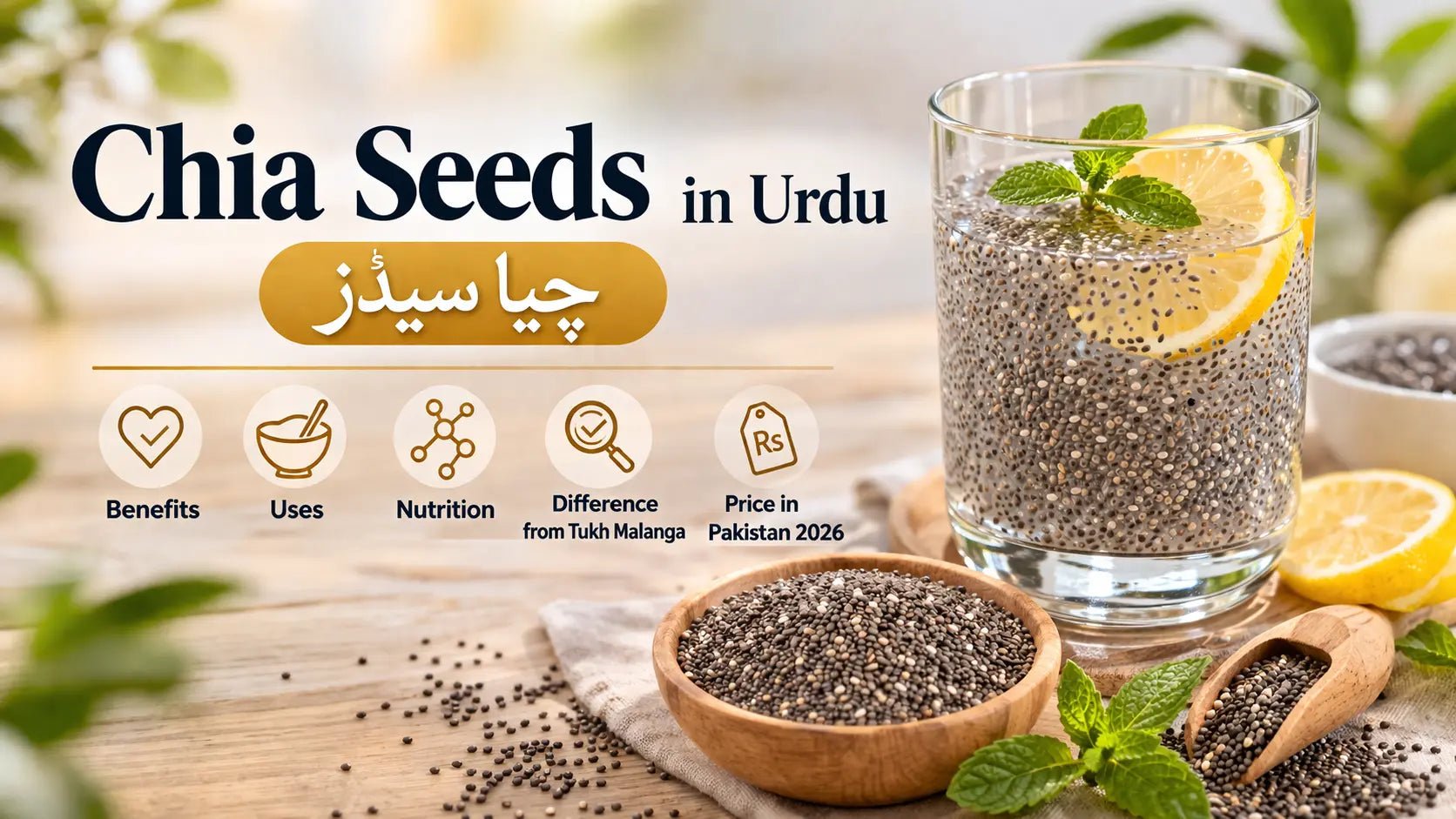
Chia Seeds in Urdu: Benefits, Uses, Nutrition, Difference from Tukh Malanga & Price in Pakistan 2026
Chia seeds (چیا سیڈز) are a nutrient-dense superfood rich in fiber, omega-3, and protein, offering benefits for weight loss, digestion, blood sugar control, and heart health while being clearly different from Tukh Malanga.
Quick Answer
Chia seeds (چیا سیڈز) are edible seeds from the plant Salvia hispanica, native to Central America. They are a nutrient-dense superfood rich in fiber, protein, omega-3 fatty acids, calcium, and antioxidants.
In Urdu-speaking markets, chia seeds are often confused with:
- Tukh Malanga (تخم ملنگا / basil seeds) ❌
- Tukhm-e-Sharbati (تخم شربتی) ❌ (commonly misused label)
👉 Correct classification:
- Chia seeds = Salvia hispanica (NOT Tukh Malanga)
- Tukh Malanga / Sabja = Ocimum basilicum (basil seeds)
Although both seeds swell into a gel-like texture in water, they are botanically different, nutritionally different, and functionally different.
👉 Key Benefits (Quick View):
Chia seeds support:
- Weight loss (increases fullness and reduces appetite)
- Digestive health (high soluble fiber supports gut function)
- Blood sugar control (slows glucose absorption)
- Heart health (rich in omega-3 fatty acids)
- Sustained energy release (slow-digesting nutrients)
What Are Chia Seeds?
Chia seeds are tiny black and white edible seeds derived from the plant Salvia hispanica, a member of the mint family (Lamiaceae).
Originally used by Aztec and Mayan civilizations, these seeds were valued for endurance and energy.
Key Properties:
- Absorb 10–12× their weight in water
- Form a gel-like texture (mucilage)
- Neutral taste → easy to mix in any food
Chia Seeds Meaning in Urdu (Clear Explanation)
In Urdu, chia seeds are written as:
👉 چیا سیڈز
⚠️ Common Confusion in Pakistan
People often call chia seeds:
- Tukh Malanga (تخم ملنگا)
- Tukhm-e-Sharbati (تخم شربتی)
👉 But scientifically, this is incorrect.
| Name | Actual Identity |
|---|---|
| Chia Seeds | Salvia hispanica |
| Tukh Malanga / Sabja | Ocimum basilicum (Basil seeds) |
✔ They look similar
❌ But they are different seeds with different nutrition
👉 This clarification is critical for both user trust + SEO accuracy
Nutritional Value of Chia Seeds (Per 100g)
Chia seeds are one of the most nutrient-dense plant foods.
| Nutrient | Amount (per 100g) | Function |
|---|---|---|
| Fiber | 34g | Digestion support |
| Protein | 16g | Muscle repair |
| Fat | 30g | Omega-3 source |
| Calcium | 631 mg | Bone health |
| Iron | 7.7 mg | Blood health |
| Magnesium | 335 mg | Nerve function |
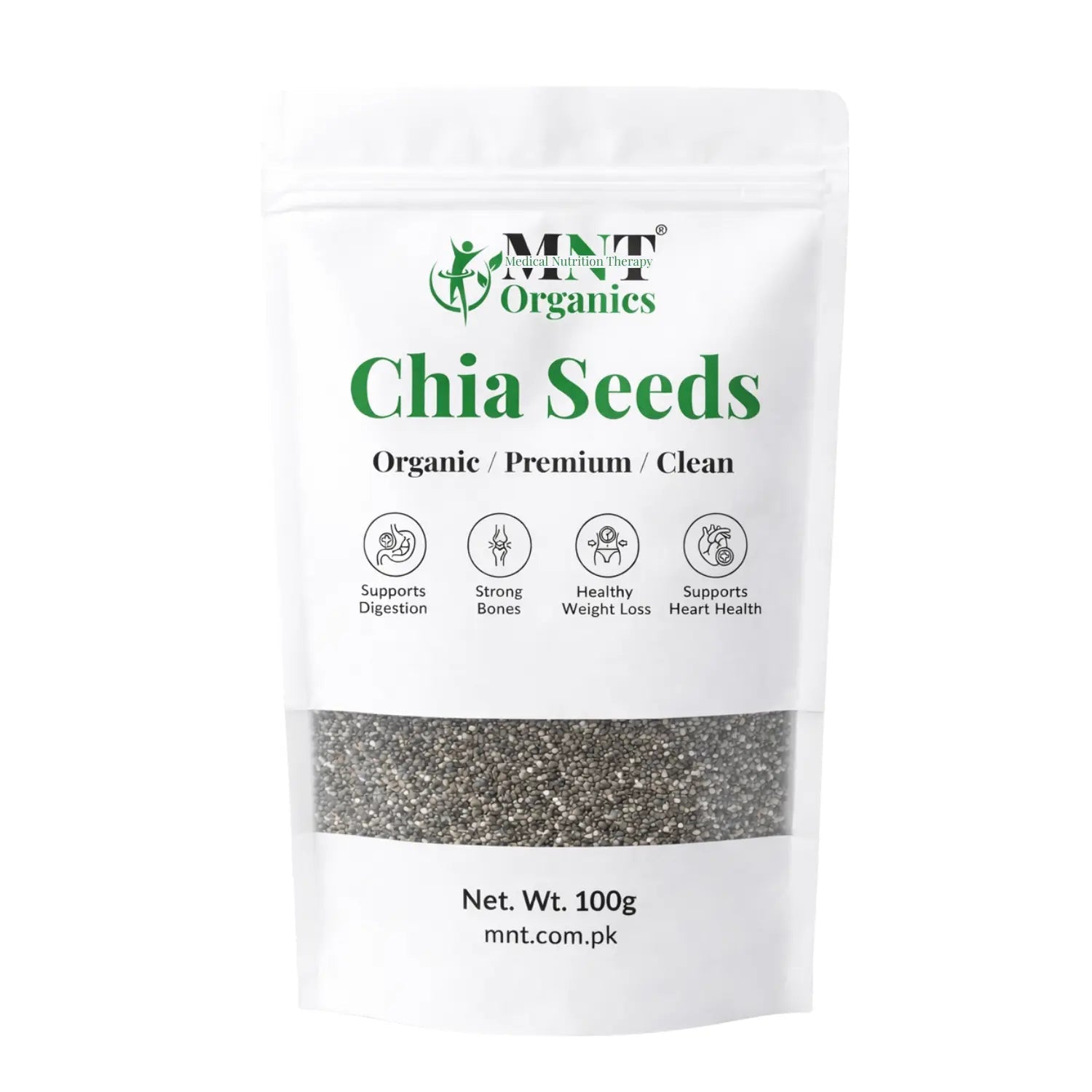
Premium Organic Chia Seeds
Medical-grade superfood designed for digestion, heart health, weight management and sustained energy. Rich in fiber, omega-3 (ALA), protein and essential minerals.
Nutrition (Per 100g)
Fiber 34g • Protein 16g • Omega-3 Rich Fats 30g • Calcium 631mg • Iron 7.7mg • Magnesium 335mg
- Supports digestive health & gut balance
- Helps in natural weight management
- Improves heart & metabolic health
- Provides long-lasting energy release
*This product is a nutritional superfood, not a medicine. Consult a dietitian for personalized guidance.
Why They Are Called a “Superfood”
- High fiber → supports gut health
- Omega-3 → anti-inflammatory effects
- Protein → muscle support
- Antioxidants → reduce oxidative stress
Evidence-Based Health Benefits
✔️ 1. Weight Loss Support
Chia seeds absorb water and expand in the stomach → increasing satiety.
👉 Leads to reduced calorie intake naturally
✔️ 2. Digestive Health
Rich in soluble fiber, which acts as a prebiotic.
👉 Supports gut microbiome and prevents constipation
✔️ 3. Blood Sugar Control
Chia slows carbohydrate digestion → stabilizes glucose levels.
👉 Helpful for people with insulin resistance and diabetes
✔️ 4. Heart Health
- Omega-3 reduces inflammation
- Fiber helps lower LDL cholesterol
👉 Supports cardiovascular health
✔️ 5. Energy & Performance
Provides sustained energy due to:
- Balanced macronutrients
- Slow digestion rate
✔️ 6. Skin & Hair Benefits
- Antioxidants → anti-aging
- Omega-3 → skin hydration
- Protein → hair strength
Chia Seeds vs Tukh Malanga
| Feature | Chia Seeds | Tukh Malanga |
|---|---|---|
| Botanical Name | Salvia hispanica | Ocimum basilicum |
| Origin | Mexico | South Asia |
| Omega-3 | High | Low |
| Protein | High | Lower |
| Soaking | 20–30 min | Instant |
| Use | Superfood | Traditional drinks |
👉 Conclusion:
Both are healthy, but chia seeds are nutritionally superior
How to Eat Chia Seeds
Popular Methods:
- Soaked in water
- Mixed in milk
- Added to yogurt
- Smoothies
- Oatmeal / cereal
How to Soak Chia Seeds Properly
Step-by-Step:
- Take 1 tablespoon chia seeds
- Add 1 glass of water
- Stir well
- Leave for 20–30 minutes
👉 Forms a gel due to hydrophilic fiber
Recommended Intake & Timing
- Daily intake: 1–2 tablespoons (15–30g)
-
Best time:
- Morning → energy boost
- Before meals → appetite control
Side Effects & Precautions
Chia seeds are safe, but misuse can cause issues.
Possible Side Effects:
- Bloating
- Gas
- Digestive discomfort
- Choking risk (if eaten dry)
Important Safety Tips:
- Always soak before eating
- Drink enough water
- Avoid excessive intake
👉 People with swallowing disorders (dysphagia) should avoid dry seeds
Who Can Use Chia Seeds?
👶 Children
Safe in small amounts
🤰 Pregnant Women
Rich in calcium, iron, omega-3 (use moderately)
🏋️ Gym Users
Supports:
- Muscle recovery
- Energy levels
🩺 Diabetic Patients
Helps regulate blood sugar
Chia Seeds Price in Pakistan (2026)
Average market price:
👉 PKR 1500 – 3000 per kg
Price Depends On:
- Imported vs local
- Organic certification
- Brand quality
Where to Buy Chia Seeds in Pakistan
Online:
- Daraz
- Brand websites (e.g., MNT)
Offline:
- Supermarkets
- Organic stores
Buying Tips:
- Choose airtight packaging
- Avoid dusty or mixed seeds
- Look for natural color variation
FAQs
What are chia seeds in Urdu?
Chia seeds are called “چیا سیڈز” (chia seeds) in Urdu. They do not have an original traditional Urdu name because they are not native to South Asia. In Pakistan, they are commonly referred to as chia seeds or sometimes “chia ke beej.”
Are chia seeds and Tukh Malanga the same?
Chia seeds and Tukh Malanga are NOT the same.
They come from different plants and have different nutritional properties.
Chia seeds come from Salvia hispanica and are high in omega-3 fatty acids, protein, and fiber.
Tukh Malanga comes from basil seeds (Ocimum basilicum) and is mainly used for cooling effects and hydration.
They may look similar after soaking but are biologically and nutritionally different.
Are chia seeds and Tukhm-e-Sharbati the same?
Chia seeds are often incorrectly called Tukhm-e-Sharbati in South Asia, but they are not the same.
Chia seeds are imported from Central America and belong to Salvia hispanica. Tukhm-e-Sharbati is a different seed used traditionally in herbal drinks.
The confusion exists because both form a gel when soaked in water.
What are the benefits of chia seeds?
Chia seeds provide multiple health benefits due to their high fiber, omega-3 fatty acids, protein, and micronutrients.
They support:
- digestion and gut health
- weight management through increased satiety
- heart health by reducing inflammation
- blood sugar control by slowing carbohydrate absorption
- sustained energy release
Do chia seeds help in weight loss?
Chia seeds may support weight loss by increasing fullness and reducing appetite. When soaked, they expand and form a gel, which slows digestion and helps reduce calorie intake.
Chia seeds do not directly burn fat but help control hunger and overall calorie consumption.
Do chia seeds control blood sugar?
Chia seeds can help stabilize blood sugar levels. Their high soluble fiber slows down digestion and reduces glucose spikes after meals. This makes them useful for people managing insulin resistance or type 2 diabetes.
How should chia seeds be eaten?
Chia seeds should always be soaked before consumption. Eating them dry is not recommended.
The standard method is:
- soak 1 tablespoon in water for 20–30 minutes
- consume after they form a gel
They can also be added to milk, yogurt, smoothies, or juice.
Can chia seeds be eaten daily?
Chia seeds can be eaten daily in moderation. A safe intake is 1 to 2 tablespoons per day for most adults.
Excess consumption may cause bloating or digestive discomfort due to high fiber content.
What are the side effects of chia seeds?
Chia seeds are generally safe, but possible side effects include:
- bloating
- gas
- constipation (if not properly hydrated)
- choking risk if eaten dry
People on blood-thinning medication should consult a doctor before regular use due to omega-3 content.
What is the nutritional value of chia seeds?
Chia seeds are nutrient-dense and contain:
- high fiber
- plant protein
- omega-3 fatty acids (ALA)
- calcium, magnesium, and iron
They are considered a functional food due to their dense micronutrient profile.
How long should chia seeds be soaked?
Chia seeds should be soaked for 20 to 30 minutes before eating. This allows them to absorb water and form a gel-like texture, improving digestion and safety.
Can chia seeds be eaten dry?
Chia seeds should NOT be eaten dry. Dry chia seeds can absorb water inside the throat and expand, which may cause discomfort or choking risk. They should always be soaked before consumption.
What is the price of chia seeds in Pakistan?
Chia seeds in Pakistan typically cost between PKR 1500 and PKR 3000 per kilogram, depending on quality, brand, and import source.
Organic and premium imported chia seeds are usually more expensive.
Where can chia seeds be bought in Pakistan?
Chia seeds are available in:
- supermarkets (Imtiaz, Metro, Carrefour)
- online stores (Daraz)
- organic food shops
- herbal stores (pansari shops)
Always choose sealed and properly labeled packaging.
Are chia seeds better than Tukh Malanga?
Chia seeds are nutritionally richer than Tukh Malanga because they contain higher levels of omega-3 fatty acids, protein, and overall micronutrients. However, both are healthy and serve different dietary purposes.
We rely on peer-reviewed studies and reputable medical journals.