
Pumpkin Seeds Nutrition: Calories, Protein and Minerals
Discover the calories, protein, fibre and minerals in pumpkin seeds per ounce and per 100 grams. Learn how shells, roasting and portion size can affect their nutrition.
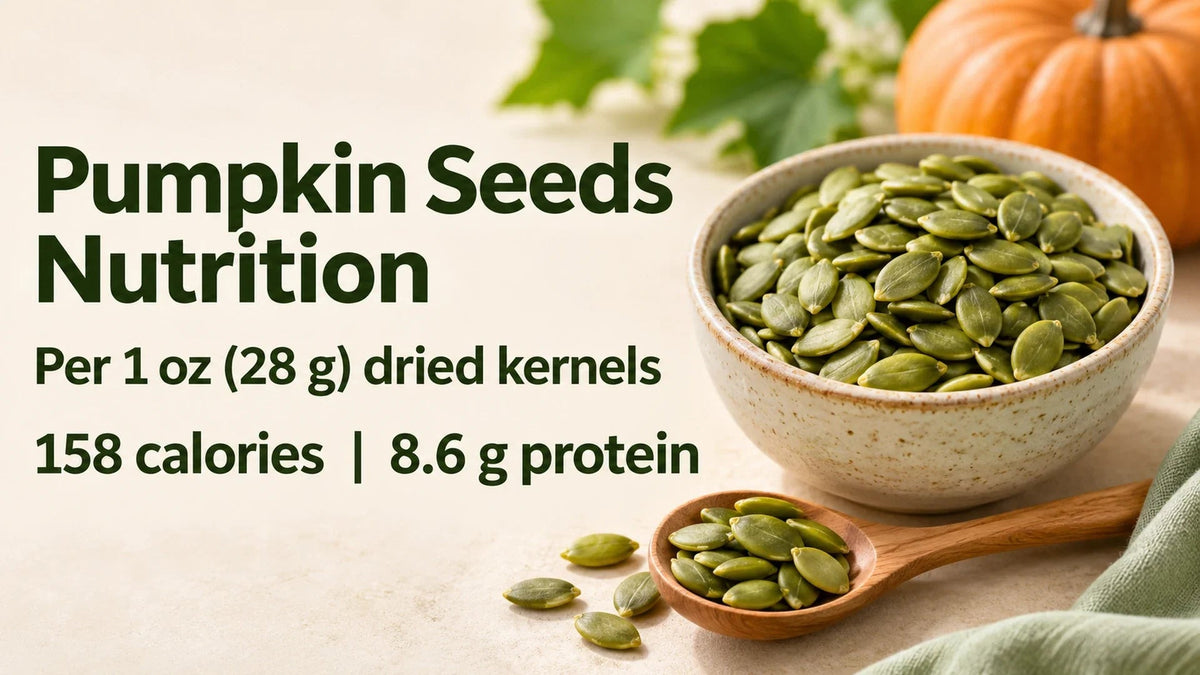
One ounce (28 grams) of dried pumpkin seed kernels contains about 158 calories, 8.6 grams of protein, 168 mg of magnesium, 2.5 mg of iron and 2.2 mg of zinc. It also provides unsaturated fats and about 1.7 grams of fibre.
These figures are for dried kernels without shells. Pumpkin seed nutrition can vary depending on the variety, portion size, preparation method and added ingredients.
Pumpkin Seeds Nutrition Facts
The table below shows the nutrition in dried pumpkin and squash seed kernels, according to the U.S. Department of Agriculture (USDA).
| Nutrient | Per 1 ounce (28.35 g) | Per 100 g |
|---|---|---|
| Calories | 158 kcal | 559 kcal |
| Protein | 8.6 g | 30.2 g |
| Total fat | 13.9 g | 49.1 g |
| Total carbohydrates | 3.0 g | 10.7 g |
| Fibre | 1.7 g | 6.0 g |
| Magnesium | 168 mg | 592 mg |
| Iron | 2.5 mg | 8.8 mg |
| Zinc | 2.2 mg | 7.8 mg |
| Phosphorus | 350 mg | 1,233 mg |
| Potassium | 229 mg | 809 mg |
| Copper | 0.38 mg | 1.34 mg |
| Manganese | 1.29 mg | 4.54 mg |
Source: USDA National Nutrient Database, dried pumpkin and squash seed kernels, entry 12014. Per-ounce values are calculated from the per-100-gram values and rounded. Values for individual products may differ.
A 100-gram portion is useful for comparing foods, but it is much larger than a 1-ounce serving. When tracking your intake, use the weight you actually eat.
How Many Calories and How Much Protein Are in Pumpkin Seeds?
A 1-ounce serving of dried pumpkin seed kernels contains about 158 calories and 8.6 grams of protein. A 30-gram portion contains approximately 168 calories and 9.1 grams of protein.
| Portion of dried pumpkin seed kernels | Calories | Protein |
|---|---|---|
| 10 grams | 56 | 3.0 g |
| 20 grams | 112 | 6.0 g |
| 1 ounce (28.35 grams) | 158 | 8.6 g |
| 30 grams | 168 | 9.1 g |
| 100 grams | 559 | 30.2 g |
These are estimates based on the USDA entry for dried kernels. Check the label for a specific packaged product, especially if it contains added oil, sugar or other ingredients.
How many calories are in a tablespoon of pumpkin seeds?
A tablespoon of dried pumpkin seed kernels weighing 8 grams contains about 45 calories and 2.4 grams of protein.
Two tablespoons weighing 16 grams contain about 90 calories and 4.8 grams of protein.
The weight of a spoonful varies with the size of the seeds and how full the spoon is. If you need a closer estimate, weigh the seeds or use the serving information on the package.
Why are pumpkin seeds high in calories?
Pumpkin seeds are calorie-dense because they contain a substantial amount of fat. Fat provides more calories per gram than protein or carbohydrates.
This does not mean pumpkin seeds are unhealthy. Their calories come with protein, fibre and minerals. The portion that suits you depends on your overall diet and energy needs.
Protein in Pumpkin Seeds
Dried pumpkin seed kernels are a source of plant protein. They provide about 8.6 grams per ounce or 30.2 grams per 100 grams.
Protein helps your body build and maintain tissues. Pumpkin seeds can add protein to meals and snacks, although it helps to compare foods using the portion you actually eat.
For example, you can sprinkle pumpkin seeds over yoghurt, mix them into oatmeal or add them to a salad.
Are pumpkin seeds a complete protein?
Pumpkin seeds contain the essential amino acids your body needs. However, the amount of protein and the balance of amino acids matter when judging how well a food meets your needs.
Rather than relying on pumpkin seeds as your only protein source, eat a variety of protein foods throughout the day. Beans, lentils, nuts, seeds, dairy, eggs, meat and fish are examples, depending on your dietary preferences.
You do not need to combine specific plant proteins at every meal. A varied diet can provide a range of amino acids over the day.
Minerals in Pumpkin Seeds
Pumpkin seeds provide several minerals, especially magnesium, phosphorus, zinc, iron, copper and manganese.
The amounts below refer to 1 ounce of dried kernels without shells. The Daily Value percentages use U.S. nutrition-label reference amounts; individual nutrient needs vary.
Magnesium in pumpkin seeds
One ounce of dried pumpkin seed kernels provides about 168 mg of magnesium, or approximately 40% of the U.S. Daily Value.
Magnesium supports normal muscle and nerve function and helps the body produce energy.
The amount can differ in roasted seeds. For example, the U.S. National Institutes of Health (NIH) lists 156 mg of magnesium per ounce of roasted pumpkin seeds. That figure comes from a different food entry, so it should not be mixed with the dried-kernel values in the main table.
Zinc in pumpkin seeds
One ounce of dried kernels contains about 2.2 mg of zinc, or approximately 20% of the U.S. Daily Value.
Zinc supports normal immune function, wound healing and cell growth. Pumpkin seeds can contribute zinc alongside other foods such as beans, dairy, meat and seafood.
Iron in pumpkin seeds
One ounce of dried pumpkin seed kernels provides about 2.5 mg of iron.
Iron helps your body make haemoglobin, the protein in red blood cells that carries oxygen.
The iron in pumpkin seeds is non-heme iron, the type found in plant foods. Eating a source of vitamin C with a plant source of iron can help your body absorb it. For example, try pumpkin seeds in a salad with tomatoes or bell peppers.
Phosphorus, potassium, copper and manganese
A 1-ounce serving of dried pumpkin seed kernels also contains approximately:
- Phosphorus: 350 mg. Phosphorus helps build and maintain bones and teeth.
- Potassium: 229 mg. Potassium supports normal muscle and nerve function.
- Copper: 0.38 mg. Copper helps the body carry out several functions, including making energy.
- Manganese: 1.29 mg. Manganese helps the body process nutrients and supports normal bone formation.
How well are minerals from pumpkin seeds absorbed?
The amount of a mineral in a food is not always the same as the amount your body absorbs.
Pumpkin seeds contain phytates, naturally occurring compounds found in many plant foods. Phytates can bind minerals such as zinc and reduce how much the body absorbs. This does not mean you need to avoid pumpkin seeds: they can still contribute minerals as part of a varied diet.
Fat, Carbohydrates and Fibre in Pumpkin Seeds
What types of fat are in pumpkin seeds?
One ounce of dried pumpkin seed kernels contains about 13.9 grams of total fat. Much of this is unsaturated fat, although pumpkin seeds also contain some saturated fat.
Unsaturated fats are found in a range of foods, including nuts, seeds, olive oil and fish.
How many carbs are in pumpkin seeds?
One ounce of dried pumpkin seed kernels contains about 3 grams of total carbohydrates, including 1.7 grams of fibre.
Fibre is already included in the total carbohydrate figure, so do not add the two numbers together.
Flavoured pumpkin seeds may have more carbohydrates if they contain ingredients such as sugar or honey. Check the label for the specific product.
Are pumpkin seeds high in fibre?
Dried pumpkin seed kernels provide some fibre, with about 1.7 grams per ounce.
Fibre supports digestive health. You can also get fibre from foods such as beans, vegetables, fruit, whole grains and other seeds.
Whole pumpkin seeds with their shells have a different fibre content from kernels without shells. Check which form a nutrition label describes before comparing the numbers.
Are pumpkin seeds high in omega-3?
Pumpkin seeds are not a major source of omega-3 fats. Most of their fat comes from other fatty acids.
If you are looking for plant sources of the omega-3 fat called ALA, flax seeds, chia seeds and walnuts provide more.
What Vitamins Are in Pumpkin Seeds?
Pumpkin seed kernels contain amounts of several vitamins, including some B vitamins and vitamin E.
Their main nutritional strengths are their protein, unsaturated fats and minerals, especially magnesium. Enjoying pumpkin seeds with a variety of other foods can help you get a wider range of nutrients.
Plain pumpkin seed kernels are not a source of vitamin B12. Some packaged foods containing pumpkin seeds may have added vitamins, so check the label if the product is fortified.
Do Shells, Roasting and Salt Change Pumpkin Seed Nutrition?
Yes. The nutrition figures you see can differ depending on whether you are looking at whole seeds, kernels, roasted seeds or a seasoned product.
Shelled pumpkin seeds vs whole pumpkin seeds
Shelled pumpkin seeds are the kernels eaten without the outer shell. Whole pumpkin seeds include the shell.
The shell is edible and changes the nutrient amounts per equal weight, including fibre. For a useful comparison, check whether the figures are for seeds with or without shells.
If you crack whole seeds and discard the shells, weigh the kernels you eat to estimate their nutrition more accurately.
Dried vs roasted pumpkin seeds
Both dried and roasted pumpkin seed kernels provide protein, fat and minerals. However, their reported values can differ.
One reason is moisture. When seeds lose water, nutrients can become more concentrated by weight. A difference per 100 grams does not, by itself, show how much of a nutrient was gained or lost during roasting.
Oil, sugar and other added ingredients can also change the nutrition of the final product.
Salted vs unsalted pumpkin seeds
Salted pumpkin seeds can contain more sodium than unsalted seeds. The amount depends on the product.
When comparing labels, check the sodium per serving and make sure the serving sizes are the same. Unsalted seeds are an option if you prefer to control how much salt you add.
Are pepitas the same as pumpkin seeds?
Pepitas commonly refers to green pumpkin seed kernels. Some come from pumpkin varieties that grow seeds without the thick outer shell found on many other pumpkin seeds. Kernels can also be sold with their shells removed.
The term may be used differently on packages. Check whether the product contains kernels or whole seeds when comparing nutrition facts.
How to Calculate Pumpkin Seed Nutrition for Your Portion
You can use the per-100-gram values to estimate the nutrition in any weighed portion.
For example, dried pumpkin seed kernels contain 559 calories per 100 grams. For a 20-gram portion:
559 × 20 ÷ 100 = approximately 112 calories
You can use the same method for protein or minerals. For protein:
30.2 × 20 ÷ 100 = approximately 6 grams of protein
If you have a packaged product, its label is the better starting point for estimating that product’s nutrition. Make sure you compare the label’s serving size with the amount you eat.
Why Do Pumpkin Seed Nutrition Facts Vary?
Different websites and packages may show different numbers for pumpkin seed calories, protein or minerals. Common reasons include:
- Seed form: Whole seeds with shells differ from kernels.
- Preparation: Dried and roasted seeds may contain different amounts of moisture.
- Added ingredients: Oil, salt, sugar and seasonings change the final product.
- Portion size: A tablespoon or handful can weigh different amounts.
- Natural variation: Nutrient levels can vary between seed samples and varieties.
- Food database entry: Different entries may describe different foods or be based on different samples.
For the best comparison, use the same weight and check that both products have a similar form and preparation.
Frequently Asked Questions
How many calories are in 30 grams of pumpkin seeds?
Thirty grams of dried pumpkin seed kernels contain approximately 168 calories. Roasted or flavoured products may have different values.
How much protein is in 100 grams of pumpkin seeds?
A 100-gram portion of dried pumpkin seed kernels provides about 30.2 grams of protein. A 1-ounce portion provides about 8.6 grams.
How much magnesium is in pumpkin seeds?
One ounce of dried pumpkin seed kernels contains approximately 168 mg of magnesium. The NIH lists about 156 mg per ounce for roasted pumpkin seeds.
How much zinc is in pumpkin seeds?
One ounce of dried pumpkin seed kernels contains about 2.2 mg of zinc. The amount in a particular product can vary.
Can you eat pumpkin seeds every day?
Pumpkin seeds can be eaten regularly as part of a varied diet. There is no requirement to eat them every day or to choose one exact portion size.
If you have a pumpkin seed allergy or have been advised to follow a specific diet, follow your healthcare professional’s advice.
We rely on peer-reviewed studies and reputable medical journals.