

What to Eat Before and After a Workout for Weight Gain
Learn what to eat before and after a workout for healthy weight gain and muscle growth. Discover the best meals, snacks, timing, protein targets, and practical weight-gain shakes.
If you want to gain weight and build muscle, eat carbohydrates and protein before your workout and another meal with protein and carbohydrates after training.
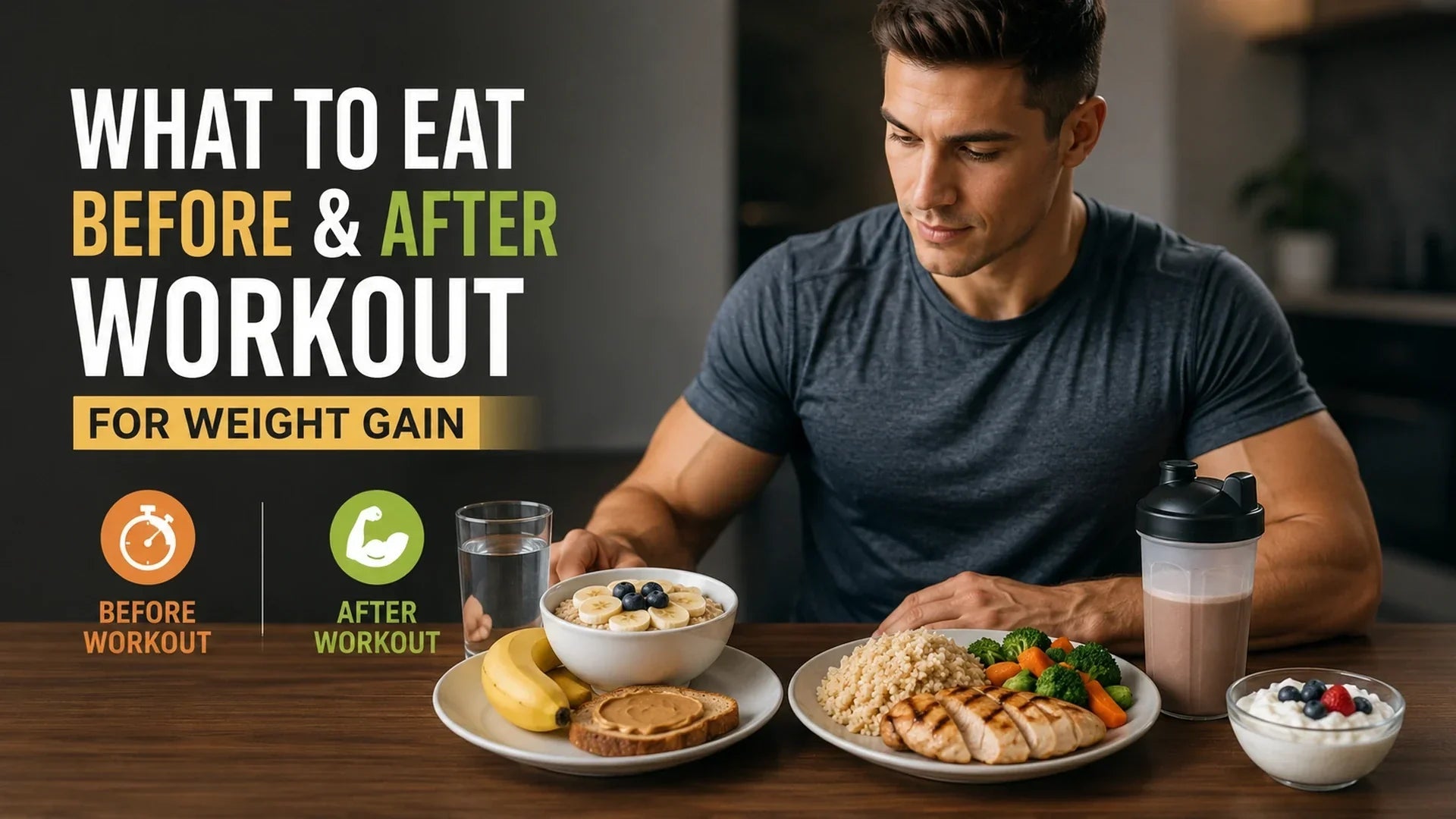
A full meal about 2–3 hours before exercise may include chicken with rice, eggs with roti and fruit, or oats with milk, banana, and peanut butter. If you have only 30–60 minutes, choose something smaller and easy to digest, such as banana with yogurt, dates with milk, or a small smoothie.
After training, choose a meal such as chicken with rice and yogurt, eggs with potatoes and milk, daal with rice, or a milk-banana-oats smoothie.
But the most important point is this:
No single pre-workout or post-workout food makes you gain weight.
Weight gain happens when you consistently eat more energy than your body uses. If your goal is to gain more muscle rather than mainly body fat, combine enough calories with resistance training and adequate daily protein.
Quick Answer: What Should You Eat Before and After a Workout?
| When | Main Goal | What to Eat | Simple Examples |
|---|---|---|---|
| 2–3 hours before | Fuel training | Carbs + protein + some fat | Chicken + rice; oats + milk + banana |
| 60–90 minutes before | Fuel without feeling too full | Smaller carb + protein meal | Yogurt + banana + oats; egg sandwich |
| 30–60 minutes before | Quick, easy-to-digest fuel | Mainly carbs + a little protein | Banana + yogurt; dates + milk |
| After workout | Recovery and muscle growth | Protein + carbs + fluids | Chicken + rice; eggs + potatoes |
| Low appetite after workout | Make calories easier to consume | Liquid protein + carbs + calories | Milk + banana + oats smoothie |
| Rest of the day | Support weight gain | Enough total calories + protein | Regular balanced meals and snacks |
The big picture matters more than perfect timing. Your total daily calories, protein intake, resistance training, and consistency have a greater effect on long-term muscle gain than trying to eat at one exact minute around your workout. Research on protein timing supports this broader view. (pmc.ncbi.nlm.nih.gov)
What Actually Makes You Gain Weight and Muscle?
To gain body weight, you generally need a sustained calorie surplus, which means eating more energy than your body uses over time.
If your main goal is muscle gain, four things matter most:
- Eat enough total calories.
- Get enough protein each day.
- Do regular resistance training.
- Allow enough recovery between training sessions.
Sports-nutrition guidance supports a sustained calorie surplus when the goal is to increase lean mass, but there is no single perfect surplus that works for everyone. The amount needed can vary with body size, activity, training experience, appetite, and current body composition. (frontiersin.org)
Weight gain is not the same as muscle gain
Eating more food can increase your body weight, but extra calories alone do not guarantee that the additional weight will be muscle.
Resistance training gives your muscles a reason to adapt. Protein provides amino acids needed for muscle protein synthesis. Enough energy helps support training, recovery, and tissue growth.
A simple way to remember it is:
Resistance training provides the signal.
Protein provides the building material.
Calories provide the energy.
A larger calorie surplus is also not automatically better. A 2023 study in resistance-trained adults found that larger energy surpluses increased skinfold thickness more quickly without showing the same clear advantage for muscle size or strength. The study was relatively small, so it should not be treated as the final answer, but it supports using a controlled rather than excessive surplus. (link.springer.com)
What to Eat Before a Workout for Weight Gain
A good pre-workout meal for weight gain should help you train well while also contributing calories and nutrients toward your daily weight-gain target.
The simplest formula is:
Carbohydrates + protein + enough calories for your needs
If your meal is several hours before training, you can also include a moderate amount of fat.
1. Eat carbohydrates before your workout
Carbohydrates are an important fuel source for moderate- and high-intensity exercise, including resistance training. Carbohydrate availability becomes more important as workout volume and intensity increase. (doi.org)
Good pre-workout carbohydrate foods include:
- Rice
- Roti
- Bread
- Oats
- Potatoes
- Bananas
- Dates
- Other fruit
- Pasta
- Cereal
You do not need a special "pre-workout carbohydrate."
Normal foods work well.
For example:
Chicken + rice
and:
Oats + milk + banana
can both be useful pre-workout meals.
The better option depends on your appetite, meal timing, food preferences, and digestive comfort.
2. Include protein before training
Protein eaten around resistance training provides amino acids that support the muscle-building response to exercise.
Good protein sources include:
- Eggs
- Milk
- Yogurt or dahi
- Chicken
- Fish
- Meat
- Paneer
- Tofu
- Soy foods
- Lentils
- Beans
- Chickpeas
- Whey or another protein powder when convenient
For many healthy exercising adults, around 20–40 grams of high-quality protein in a meal is a useful general range, although needs vary with body size, age, total daily intake, and the type of protein eaten. (link.springer.com)
3. Add healthy fats when you need more calories
Fat-rich foods can make weight gain easier because they provide more calories in a smaller amount of food.
Useful choices include:
- Peanut butter
- Other nut butters
- Nuts
- Seeds
- Olive oil
- Avocado
For example, adding peanut butter to oats or a smoothie can increase calories without greatly increasing the volume of the meal.
But timing matters.
A very large meal high in fat immediately before training can feel heavy because fat slows stomach emptying.
This does not mean you need to avoid fat before exercise.
A practical rule is:
More time before training = more room for a normal mixed meal.
Less time before training = keep the meal smaller and easier to digest.
When Should You Eat Before a Workout?
There is no perfect pre-workout meal time for everyone.
Use the amount of time you have before training to decide how large and complex the meal should be.
2–3 Hours Before Your Workout: Eat a Full Meal
This is a good time for a normal meal containing carbohydrates, protein, and some fat.
Good options include:
- Chicken + rice + vegetables + yogurt
- Eggs + roti + yogurt + fruit
- Oats + milk + banana + peanut butter
- Daal + rice + yogurt
- Chicken sandwich + fruit + milk
- Fish + potatoes + vegetables
- Paneer + roti + yogurt
A larger meal generally works better here because you have more time to digest it.
60–90 Minutes Before Your Workout: Eat a Smaller Meal
Reduce the portion size and choose foods you digest easily.
Examples include:
- Yogurt + banana + oats
- Egg sandwich
- Cereal + milk
- Banana + milk smoothie
- Toast + eggs
- Dates + yogurt
- Cottage cheese or paneer + toast
30–60 Minutes Before Your Workout: Keep It Simple
You do not need to squeeze a large "bulking meal" into the last 30 minutes before exercise.
Good options include:
- Banana
- Banana + yogurt
- Dates + milk
- Toast + jam
- Yogurt + honey
- Small fruit smoothie
- Milk + banana
If you often experience nausea, reflux, bloating, or stomach discomfort while training, try a smaller portion and reduce high-fat or very high-fiber foods close to your workout.
Best Pre-Workout Meals for Weight Gain
Here are practical choices based on how much time you have.
| Time Before Training | Pre-Workout Meal | Why It Works |
|---|---|---|
| 2–3 hours | Chicken + rice + yogurt | Protein + carbs + substantial calories |
| 2–3 hours | Oats + milk + banana + peanut butter | Carbs + protein + calorie-dense fat |
| 2–3 hours | Eggs + roti + yogurt + fruit | Protein + carbs + easy local meal |
| 2–3 hours | Daal + rice + yogurt | Vegetarian protein + carbs |
| 60–90 min | Yogurt + banana + oats | Smaller carb + protein meal |
| 60–90 min | Egg sandwich | Protein + easy carbohydrates |
| 60–90 min | Milk + banana + oats smoothie | Useful when appetite is low |
| 30–60 min | Banana + yogurt | Light carbs + protein |
| 30–60 min | Dates + milk | Compact calories + carbs + protein |
| 30–60 min | Toast + jam | Easy-to-digest carbohydrates |
What is the single best pre-workout food for weight gain?
There isn't one.
A complete meal is usually more useful than relying on one "muscle-building food."
For example, a banana provides carbohydrates, but:
banana + yogurt
adds protein.
And:
banana + milk + oats + peanut butter
provides even more protein, carbohydrates, and calories when you need a more substantial meal.
What to Eat After a Workout for Weight Gain
A good post-workout meal for weight gain should help you:
- Get enough protein.
- Replace energy used during training.
- Continue meeting your daily calorie needs.
- Rehydrate after exercise.
The simplest formula is:
Protein + carbohydrates + fluids
Healthy fats can also be added when you need more calories.
Protein after a workout
Resistance exercise and protein intake work together to stimulate muscle protein synthesis. For most healthy people who train regularly, an overall daily protein intake of around 1.4–2.0 grams per kilogram of body weight per day is sufficient to build and maintain muscle. (link.springer.com)
| Body Weight | General Daily Protein Range |
|---|---|
| 50 kg | 70–100 g |
| 60 kg | 84–120 g |
| 70 kg | 98–140 g |
| 80 kg | 112–160 g |
| 90 kg | 126–180 g |
These are general sports-nutrition ranges, not a requirement to eat the highest number.
You also do not need to consume all your protein after training.
Spread protein-containing foods across several meals during the day.
A large meta-analysis found that protein supplementation can modestly improve resistance-training gains when it helps increase adequate total protein intake, but more protein does not produce unlimited additional muscle growth. (pmc.ncbi.nlm.nih.gov)
What Carbohydrates Should You Eat After a Workout?
Carbohydrates help replace muscle glycogen used during exercise.
Good post-workout carbohydrate foods include:
- Rice
- Roti
- Potatoes
- Bread
- Oats
- Pasta
- Fruit
- Bananas
- Dates
- Cereal
Someone doing several demanding training sessions has greater glycogen-recovery needs than someone doing a moderate 45-minute gym session.
For most recreational gym users trying to gain weight, there is no need to obsess over a perfect post-workout carbohydrate-to-protein ratio.
Instead, build a normal meal around:
a good protein source + a useful carbohydrate serving + enough total food for your daily needs.
Best Post-Workout Meals for Weight Gain
| Post-Workout Meal | Main Benefit |
|---|---|
| Chicken + rice + vegetables + yogurt | High-protein balanced meal |
| Eggs + potatoes + bread/roti + milk | Protein + carbs + calories |
| Fish + rice + vegetables | Protein + carbohydrates |
| Meat + potatoes + yogurt | Protein + carbs + calories |
| Daal + rice + yogurt | Vegetarian protein + carbs |
| Paneer + roti + yogurt | Vegetarian protein + calories |
| Tofu + rice + vegetables | Plant protein + carbs |
| Greek yogurt/dahi + oats + banana | Easy meal when appetite is lower |
| Milk + banana + oats + peanut butter | Drinkable calories + protein + carbs |
Easy homemade post-workout shake for weight gain
If solid food is difficult after training, try:
- Milk
- Banana
- Oats
- Peanut butter
Optional additions:
- Yogurt
- Dates
- Protein powder
Protein powder is not required.
It is simply a convenient way to increase protein when regular food does not fit your schedule or appetite.
Do You Need to Eat Immediately After a Workout?
No. You do not need to eat within exactly 30 minutes of finishing your workout.
The idea that you will "lose your gains" if you miss a tiny 30-minute anabolic window is too simplistic.
Research on protein timing suggests that total daily protein intake has a much stronger relationship with muscle growth than hitting one exact post-workout minute. (pmc.ncbi.nlm.nih.gov)
Think of the post-workout period as a recovery window, not a 30-minute emergency.
If you ate a protein-rich meal 1–2 hours before training
There is usually less urgency to eat immediately afterward.
If it has been several hours since you ate
Having your post-workout meal sooner becomes more useful.
If you trained fasted in the morning
Eat a breakfast or another protein-containing meal after training rather than delaying food for several more hours.
A simple practical approach is:
Have protein-containing meals on both sides of your training when practical, while prioritizing your total daily protein and calorie intake.
Should You Eat Before or After a Workout to Gain Weight?
Ideally, both.
Your pre-workout meal helps:
- Supply training fuel
- Support performance
- Add calories to your day
- Provide protein around training
Your post-workout meal helps:
- Supply protein for recovery
- Replace energy
- Restore carbohydrate stores
- Help you reach daily calorie targets
But neither meal works alone.
If you eat excellent workout meals but do not consume enough food during the rest of the day, your body weight may not increase.
So if you are asking:
"Should I eat before or after the gym to gain weight?"
the best answer is:
Eat both when possible, but focus most on your total daily calories, protein, and consistent resistance training.
How Much Protein Do You Need for Weight Gain and Muscle Gain?
For most healthy exercising adults, 1.4–2.0 g of protein per kg of body weight per day is a widely used evidence-based range. (link.springer.com)
Good protein foods include:
- Eggs
- Chicken
- Fish
- Meat
- Milk
- Yogurt
- Paneer
- Cheese
- Lentils
- Daal
- Beans
- Chickpeas
- Soy
- Tofu
- Nuts and seeds
- Protein powder when useful
Spread protein through the day
Instead of eating almost no protein early in the day and trying to make up for it at dinner, include protein in several meals.
For example:
Breakfast → protein
Lunch → protein
Pre- or post-workout meal → protein
Dinner → protein
Sports-nutrition guidance supports meeting total protein needs first and then distributing protein across meals. (link.springer.com)
How Many Extra Calories Do You Need to Gain Weight?
There is no single calorie-surplus number that is ideal for everyone.
Research has not established one exact surplus that maximizes muscle growth while preventing fat gain. (frontiersin.org)
This is why automatically telling everyone to add exactly 500 calories per day is too rigid.
A better practical approach is to:
- Increase your food intake modestly.
- Eat consistently.
- Monitor your body weight over several weeks.
- Monitor your gym performance and strength.
- Increase portions if your weight is not moving.
- Reduce an excessive surplus if weight is rising much faster than intended and body-fat gain is becoming high.
If your goal is muscle gain, the aim is generally controlled progress, not gaining weight as fast as possible.
A larger surplus does not guarantee more muscle. Evidence in resistance-trained adults suggests faster weight gain from a larger surplus can increase fat gain without a clear matching increase in muscle or strength. (link.springer.com)
Example Before-and-After Workout Meal Plans
These examples show how the same principles can work at different training times.
Serving sizes should be adjusted to your body size, appetite, protein needs, and total calorie target.
Morning Workout
60–90 minutes before:
Banana + oats + milk
or:
Toast + eggs + fruit
After workout:
Eggs + potatoes + roti + milk
or:
Oats + milk + banana + peanut butter, with eggs on the side
If you cannot eat much before an early workout, have a smaller snack and make breakfast afterward more substantial.
Afternoon Workout
Lunch 2–3 hours before:
Chicken + rice + vegetables + yogurt
If you are hungry again shortly before training:
Banana
or:
Dates
Post-workout dinner:
- Chicken, fish, or meat
- Rice or roti
- Vegetables
- Yogurt
Evening Workout
2–3 hours before:
Rice + chicken
or:
Roti + eggs + yogurt
After training:
- Chicken + rice
- Meat + potatoes
- Daal + rice + yogurt
- Egg sandwich + milk
If a full meal feels too heavy late at night:
Milk + banana + oats + peanut butter smoothie
You do not need to skip your recovery meal simply because your workout ends late.
What If You Struggle to Eat Enough to Gain Weight?
If you feel full easily, forcing yourself to eat one huge meal is usually not the best solution.
Instead, make your diet more energy-dense.
Use liquid calories
Try:
- Milk
- Smoothies
- Lassi
- Yogurt drinks
- Homemade milk-based shakes
Liquid calories can make it easier to increase energy intake when appetite is low.
Add calorie-dense foods to normal meals
Small additions can make a large difference over the day.
Examples:
- Peanut butter in oats
- Nuts with yogurt
- Milk instead of water in oats
- Olive oil added to meals
- Dates with milk
- Paneer or cheese in sandwiches
- Nut butter in smoothies
Eat more often if large meals are difficult
You could use:
Breakfast → snack → lunch → pre-workout snack → post-workout meal → evening snack
Eating more frequently does not have a special muscle-building effect by itself.
It is simply a practical way to help some people consume enough calories.
Vegetarian Pre- and Post-Workout Foods for Weight Gain
You can gain weight and build muscle on a vegetarian diet if you eat enough total calories and protein.
Useful foods include:
- Milk
- Yogurt
- Paneer
- Cheese
- Lentils
- Daal
- Beans
- Chickpeas
- Soy
- Tofu
- Nuts
- Seeds
- Nut butters
- Oats
- Rice
- Roti
- Potatoes
Vegetarian pre-workout example
Oats + milk + banana + peanut butter
or:
Daal + rice + yogurt
Vegetarian post-workout example
Paneer + roti + yogurt
or:
Daal + rice + yogurt
or:
Tofu + rice + vegetables
Weight Gain vs Muscle Gain: How Should You Track Progress?
If the number on the scale goes up, you have gained body weight.
But that increase can include:
- Muscle
- Fat
- Water
- Glycogen
- Food and fluid in your digestive system
So the scale should not be your only measure of progress.
If your main goal is muscle gain, also monitor:
- Strength in the gym
- Training performance
- Body measurements
- Progress photos
- How your clothes fit
- Your overall weight trend over several weeks
Resistance training is essential if your goal is to direct more of your progress toward muscle rather than simply increasing total body weight.
Common Pre- and Post-Workout Eating Mistakes
1. Eating plenty of protein but not enough total calories
You can drink protein shakes every day and still fail to gain weight if your overall calorie intake remains too low.
Protein does not replace the need for enough total food.
2. Focusing only on protein and forgetting carbohydrates
Protein is important, but carbohydrates are useful fuel for resistance training.
Do not build every workout meal around chicken, eggs, or protein powder while avoiding:
- Rice
- Roti
- Bread
- Oats
- Potatoes
- Fruit
- Pasta
3. Eating a huge meal immediately before training
Needing extra calories does not mean you should eat them all 20 minutes before the gym.
A large meal close to training may cause:
- Heaviness
- Bloating
- Nausea
- Reflux
- Sluggishness
Move larger meals further away from exercise.
4. Believing you must drink protein within 30 minutes
You do not lose your workout because you did not drink a shake immediately after your final set.
Your total protein intake across the day matters more than hitting an exact 30-minute deadline. (pmc.ncbi.nlm.nih.gov)
5. Depending on mass gainers
Commercial mass gainers can be convenient, but they are not required.
A homemade shake with:
milk + banana + oats + peanut butter
can provide carbohydrates, protein, fat, and extra calories.
6. Trying to gain weight as fast as possible
A larger calorie surplus can increase the rate of body-weight gain, but it does not guarantee proportionally greater muscle growth.
Controlled weight gain is usually a more sensible goal when body composition matters. (link.springer.com)
Frequently Asked Questions
What should I eat before a workout for weight gain?
Eat carbohydrates plus protein, with the meal size based on how soon you will train.
Two to three hours before exercise, choose a normal meal such as chicken with rice, eggs with roti, or oats with milk and banana.
If you have only 30–60 minutes, choose a smaller snack such as banana with yogurt, dates with milk, or a small smoothie.
What should I eat after a workout for weight gain?
Eat a meal containing protein, carbohydrates, and enough calories to support your daily intake.
Good choices include chicken with rice, eggs with potatoes, daal with rice and yogurt, fish with potatoes, or a milk-banana-oats smoothie.
Should I eat before or after the gym to gain weight?
Ideally, eat both before and after training.
The pre-workout meal supports energy and performance. The post-workout meal supports recovery and helps you meet your protein and calorie needs.
Your total daily food intake is more important than choosing only one of the two.
Is banana good before a workout for weight gain?
Yes. Banana is an easy source of carbohydrates before exercise.
However, banana alone does not cause weight gain.
For a more complete weight-gain snack, pair it with:
- Milk
- Yogurt
- Oats
- Peanut butter
For example:
Banana + milk + oats
provides more calories and protein than a banana alone.
Is peanut butter good before a workout for weight gain?
Yes. Peanut butter is calorie-dense and provides fat plus some protein.
Try:
- Peanut butter + toast + banana
- Peanut butter + oats + milk
- Peanut butter + banana smoothie
If you are training very soon, keep the portion moderate if high-fat foods make you feel heavy.
Is milk good after a workout for weight gain?
Yes. Milk provides protein, carbohydrates, fluid, and calories.
If you need a more calorie-dense meal, blend milk with:
- Banana
- Oats
- Dates
- Peanut butter
Choose the type of milk that suits your calorie needs, preferences, and health needs.
Are eggs good after a workout for weight gain?
Yes. Eggs provide high-quality protein and can be part of a useful post-workout meal.
Because eggs contain relatively little carbohydrate, pair them with foods such as:
- Roti
- Bread
- Rice
- Potatoes
- Fruit
What should I eat 30 minutes before a workout for weight gain?
Choose a small, easy-to-digest snack rather than a large meal.
Good options include:
- Banana
- Dates
- Yogurt
- Milk + banana
- Toast + jam
- Small smoothie
You can eat the rest of your daily calories at other meals.
Can I drink a weight-gain shake before a workout?
Yes, if you digest it comfortably.
A smaller shake made with milk, banana, and oats can work well around 60–90 minutes before training.
A very large shake containing large amounts of peanut butter, oats, milk, and other ingredients immediately before exercise may feel too heavy.
Is a protein shake enough after a workout?
A protein shake can cover protein, but it may not provide enough calories or carbohydrates for a full weight-gain meal.
A shake made only from protein powder and water can be quite low in calories.
For weight gain, you can add:
- Milk
- Banana
- Oats
- Peanut butter
Or drink the protein shake and eat a normal meal afterward.
Can I work out on an empty stomach if I want to gain weight?
Yes, but fasted training offers no special advantage for weight gain.
If you feel good and perform well while training fasted, you can still gain weight if you eat enough during the rest of the day.
However, skipping your pre-workout meal removes one opportunity to consume calories. This can make weight gain harder if you already struggle with appetite.
If you train fasted, have a balanced protein- and carbohydrate-containing meal afterward.
What should I eat after a late-night workout?
You can eat a normal recovery meal after a late workout.
Good options include:
- Eggs + toast
- Chicken + rice
- Yogurt + oats + banana
- Daal + rice
- Milk + banana + oats smoothie
There is no need to automatically skip food because it is late if you still need that meal to meet your nutrition needs.
What should vegetarians eat before and after a workout for weight gain?
Vegetarian protein and calorie sources include:
- Milk
- Yogurt
- Paneer
- Lentils
- Beans
- Chickpeas
- Soy
- Tofu
- Nuts
- Seeds
- Nut butters
For example:
Before workout: oats + milk + banana + peanut butter
After workout: daal + rice + yogurt
What if I am not hungry after my workout?
Do not force a huge solid meal immediately.
Try something easier to consume, such as:
milk + banana + oats + peanut butter
Then have your normal meal when your appetite returns.
The goal is to meet your nutrition needs across the day rather than forcing all your calories into the first few minutes after training.
What is the best post-workout meal for weight gain?
There is no single best meal.
The best post-workout meal is one that gives you enough protein, carbohydrates, fluids, and calories while fitting your preferences and daily diet.
Chicken with rice, eggs with potatoes, daal with rice and yogurt, paneer with roti, and a milk-banana-oats smoothie can all work.
Bottom Line
The best foods to eat before and after a workout for weight gain are normal foods that help you meet your overall calorie and protein needs.
Before your workout, eat carbohydrates plus protein. A larger balanced meal works well about 2–3 hours before exercise. If you only have 30–60 minutes, choose a smaller, easier-to-digest snack.
After your workout, eat protein plus carbohydrates and replace fluids. You do not need to rush to drink a protein shake within exactly 30 minutes.
If your main goal is muscle gain, remember the bigger picture:
Eat enough total calories.
Get enough protein each day.
Use carbohydrates to fuel training.
Do consistent resistance training.
Recover well.
Repeat the process over time.
Foods such as rice, roti, oats, potatoes, bananas, dates, eggs, chicken, fish, milk, yogurt, daal, paneer, nuts, and peanut butter can all fit into an effective workout nutrition plan for healthy weight gain.
You do not need expensive "bulking" foods or supplements.
Consistency matters much more than finding one perfect pre-workout or post-workout food.
We rely on peer-reviewed studies and reputable medical journals.