
Why Do I Feel Nauseous When I Try to Eat More?
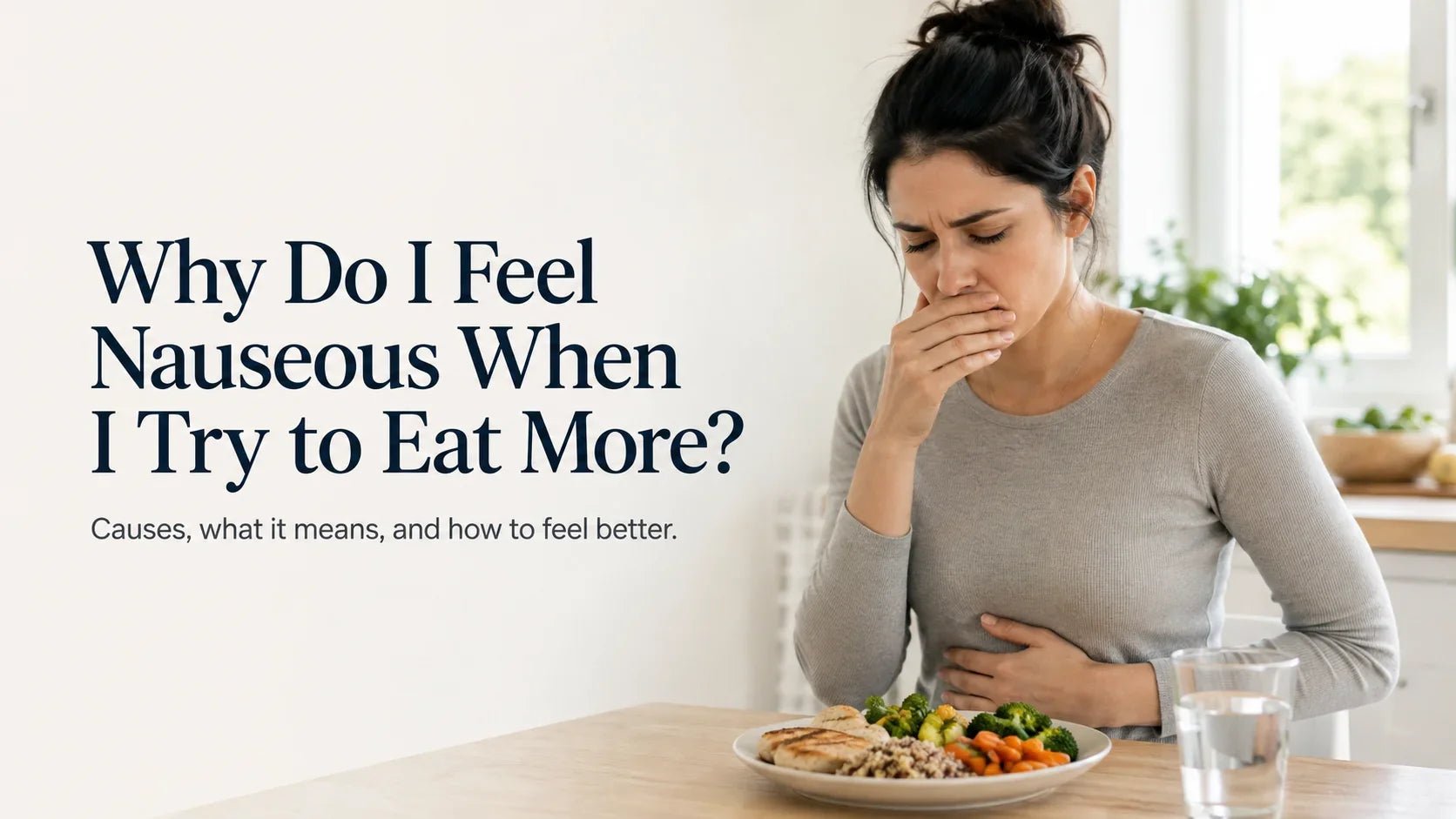
Feeling nauseous when you try to eat more often happens when you increase meal size faster than you can comfortably tolerate. But nausea after only a few bites may mean something different.
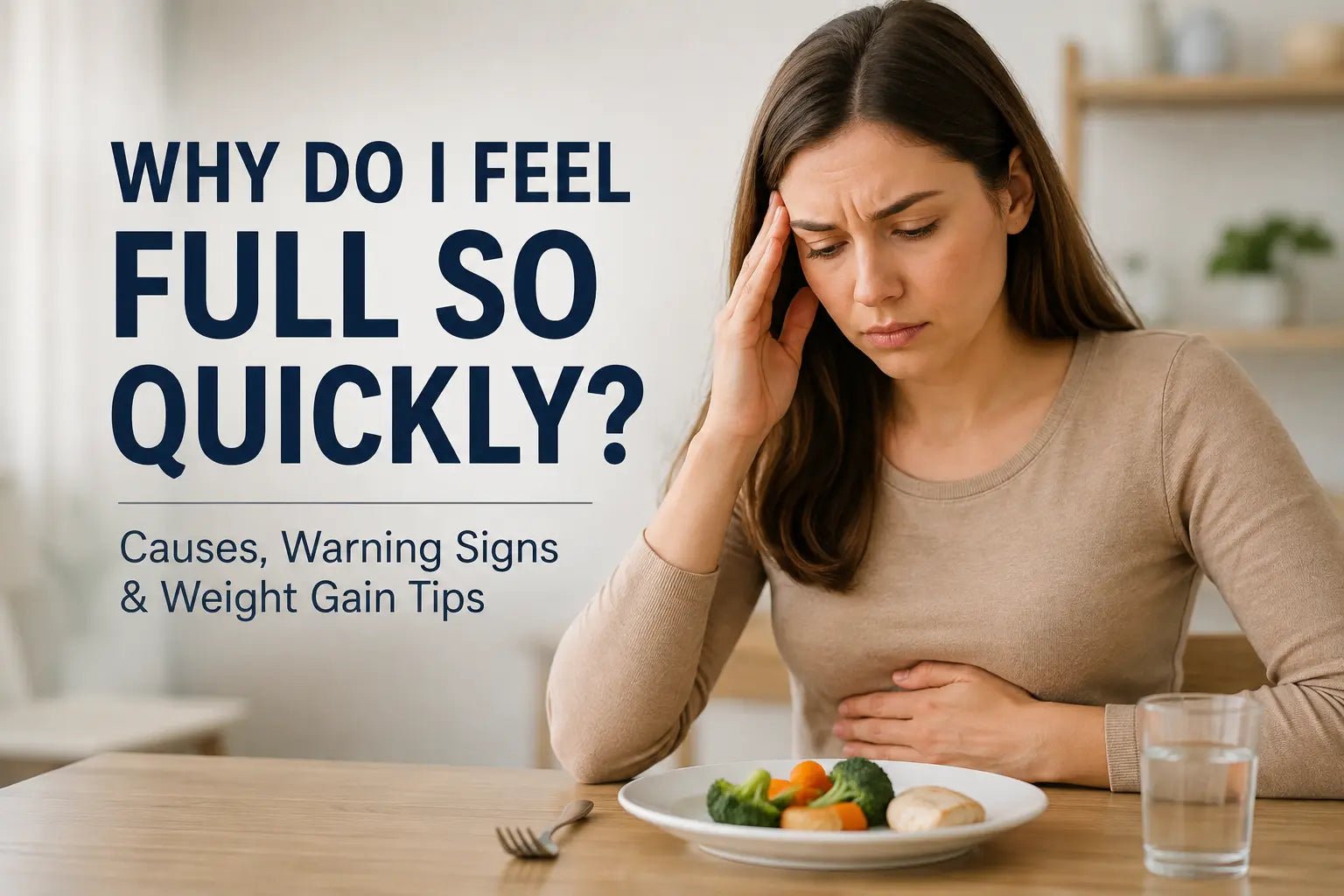
If you feel nauseous when you try to eat more, you may be eating more food at one time than your stomach can comfortably handle. This is especially common when you suddenly increase your portion size, eat quickly, or keep eating after you already feel full.
But there is an important difference: if you feel nauseous after only a few bites or after a normal-sized meal, the problem may not simply be that you ate too much. Frequent early fullness and nausea can occur with indigestion, functional dyspepsia, delayed stomach emptying, or other medical problems.
In short
| What happens | What it may mean |
|---|---|
| You feel nauseous only after eating much more than usual | The meal may be too large for you at one time |
| You feel sick when you keep eating after you are full | Extra fullness may be triggering nausea |
| You feel nauseous after only a few bites | You may be experiencing early satiety |
| You stay very full for hours after eating | A digestive problem such as delayed stomach emptying may need evaluation |
| Normal-sized meals regularly make you nauseous | Do not assume you simply need to “train” yourself to eat more |
| Nausea is stopping you from eating enough or maintaining weight | Medical and nutritional assessment is important |
The main question is therefore not simply “Does eating make me nauseous?”
It is:
“Does nausea happen only when I eat much more than usual, or does it happen even when I eat a normal or small amount?”
That difference matters.
Why Does Eating More Make Me Feel Nauseous?
Your stomach is designed to expand when food enters it.
As you eat, the upper part of the stomach relaxes so it can hold the meal. This is called gastric accommodation. At the same time, nerves and hormones send signals between your digestive system and brain that help control fullness and when you want to stop eating.
As more food enters the stomach, these fullness signals become stronger.
If you continue eating far beyond the amount that feels comfortable, you may develop:
- excessive fullness
- stomach pressure
- bloating
- discomfort
- nausea
Research shows that stomach emptying, accommodation, meal size, and signals of fullness can all affect how a person feels after eating.
This means feeling sick when you try to eat more does not automatically mean something is medically wrong.
If it happens only when you suddenly make your meals much larger, meal size itself may be the main problem.
Eating More Calories Is Not the Same as Eating a Huge Meal
This distinction is important if you are trying to gain weight, build muscle, recover your appetite, or simply increase your food intake.
Suppose you normally eat a small lunch.
You decide that you need more calories, so the next day you almost double your portion.
Your calorie target changed overnight.
Your comfort with that meal size may not.
You may become very full before finishing the food. If you then think, “I have to finish this no matter how I feel,” that fullness can turn into pressure and nausea.
You may need more food during the day without needing a huge amount of food at one sitting.
Eating Too Quickly Can Make It Worse
Eating a large meal quickly may also make it easier to push beyond comfortable fullness.
If you regularly feel nauseous when trying to eat more, slow down enough to notice how you feel as the meal progresses.
You do not have to make every meal extremely slow.
The goal is simply to avoid turning an increased food intake into a race.
The goal is more total nutrition—not making yourself sick at one meal.
What If I Feel Nauseous After Only a Few Bites?
This is where the situation changes.
Feeling nauseous because you ate an unusually large meal is different from feeling full and sick after only a few bites.
Feeling full sooner than normal or after eating less than usual is called early satiety.
For example:
Normal fullness:
“I ate a large meal and now I feel very full.”
Possible early satiety:
“I ate four or five bites and already feel like I cannot eat another bite.”
People with early satiety may say:
- “I get nauseous after a few bites.”
- “I feel full almost immediately.”
- “I am hungry, but I cannot finish my meal.”
- “I want to eat more, but I physically can't.”
- “Normal portions feel too large.”
- “I stay full for hours.”
If this keeps happening, simply forcing yourself to eat more is not the best solution.
The reason you become full so quickly needs to be considered.
Early Satiety and Functional Dyspepsia
One possible cause of repeated early fullness is dyspepsia, commonly called indigestion.
Dyspepsia can involve:
- feeling full too soon while eating
- uncomfortable fullness after eating
- upper abdominal discomfort or burning
- bloating
- nausea
- belching
Some people have ongoing symptoms without a clear structural disease being found. This may be diagnosed as functional dyspepsia.
One problem linked with functional dyspepsia is impaired gastric accommodation.
Normally, the upper stomach relaxes when a meal enters. In some people with functional dyspepsia, this relaxation may not happen as well as expected.
Research has linked impaired gastric accommodation with early satiety.
This helps explain how someone can want to eat but feel unusually full soon after starting.
However, having early fullness and nausea does not mean you definitely have functional dyspepsia. These symptoms can have several causes.
Could Slow Stomach Emptying Cause Nausea and Fullness?
Another possible reason for feeling nauseous and full after eating a small amount is delayed stomach emptying.
One condition that causes delayed stomach emptying is gastroparesis.
Gastroparesis slows or stops the normal movement of food from the stomach into the small intestine even though there is no physical blockage.
Symptoms may include:
- feeling full soon after starting a meal
- staying full long after eating
- nausea
- vomiting
- bloating
- belching
- upper abdominal pain
- heartburn
- poor appetite
These symptoms overlap with several other digestive problems. Nausea or early fullness alone does not prove that you have gastroparesis.
Diagnosis requires medical assessment and, when appropriate, tests that measure how quickly the stomach empties.
So if you think:
“I ate hours ago, but it still feels like the food is sitting in my stomach,”
especially if this happens repeatedly, tell your healthcare professional.
Am I Eating Too Much, or Could Something Else Be Wrong?
Look at the pattern, not just the nausea.
| Your symptom pattern | What to consider |
|---|---|
| Nausea only after unusually large meals | Meal size may be the main trigger |
| Nausea when you keep eating after feeling full | You may be pushing beyond comfortable fullness |
| Nausea mainly when eating very quickly | Slowing down and reducing the amount per sitting may help |
| Full after only a few bites | Possible early satiety |
| Very full for hours after eating | Stomach emptying or another digestive problem may need evaluation |
| Normal meals repeatedly cause nausea | An underlying cause should be considered |
| Nausea with frequent vomiting | Medical assessment is important |
| Nausea is preventing you from eating enough | Nutritional and medical assessment may be needed |
| Nausea with unplanned weight loss | Do not simply keep forcing more food |
Your symptoms cannot diagnose the cause, but the pattern can help show whether this is mainly a meal-size problem or something that needs further assessment.
Did My Stomach Shrink Because I Was Eating Less?
People often say:
“I was eating very little, so my stomach must have shrunk.”
That explanation is usually too simple.
Your stomach is not a fixed-size container. It normally relaxes and expands during a meal.
If you have been eating small amounts for some time, suddenly returning to much larger meals may feel uncomfortable. Your appetite, eating pattern, fullness signals, and tolerance for larger portions may also have changed.
But nausea does not prove that your stomach has permanently become smaller.
A better question is:
“Why am I struggling to comfortably tolerate the amount I am trying to eat?”
If large meals are the only problem, gradual increases may help.
If even small meals make you sick, look beyond the idea of a “small stomach.”
How Can I Eat More Without Feeling Nauseous?
If the nausea is mild, occasional, and mainly appears when you suddenly increase your portions, changing how you eat more may help.
1. Eat More Often Instead of Making Every Meal Much Bigger
You do not have to fit all your extra food into breakfast, lunch, and dinner.
If large meals make you nauseous, you may tolerate:
smaller meals + planned snacks
more comfortably.
Small, frequent meals are also part of nutrition strategies used when nausea and early fullness make larger meals difficult. For example, NIDDK recommends five or six smaller meals rather than two or three large meals for people with gastroparesis.
That does not mean you have gastroparesis.
It simply shows why reducing the amount of food eaten at one time can be useful when large meals are difficult to tolerate.
2. Increase Your Food Gradually
Do not go from your normal intake to dramatically larger meals overnight.
Instead:
- add a small amount to one meal
- add a snack between meals
- see how you tolerate the increase
- increase again gradually if you remain comfortable
You do not need to repeatedly eat until you feel sick in order to increase your intake.
3. Increase Calories Without Only Increasing Food Volume
If your goal is to eat more calories, focus on the total amount you eat during the day rather than simply building a much larger plate.
Depending on your nutritional needs and what you tolerate, energy-dense foods may include:
- nut or seed butter
- nuts and seeds
- yogurt
- cheese
- avocado
- olive oil added to meals
- milk
- nutritious smoothies
A smaller amount of a more energy-dense food may sometimes be easier than adding a large volume of low-calorie food.
However, this advice changes if you have a medical condition that requires a specific diet.
For example, people with diagnosed gastroparesis may be advised to choose foods lower in fat and fiber, eat smaller meals, and sometimes use soft or liquid foods.
4. Do Not Keep Forcing Food Through Significant Nausea
If you are already very full and eating more is making you nauseous, forcing another large amount may make the discomfort worse.
You can move some of that food to another eating time.
But if you constantly have to force yourself to finish even small or normal meals, the issue is no longer simply how to eat more.
The more important question becomes:
Why is eating a normal amount so difficult?
Why Do I Feel Nauseous When I Force Myself to Eat?
You may feel nauseous when you force yourself to eat because you are continuing beyond the amount that currently feels comfortable.
Your calorie goal and your body's fullness signals are not the same thing.
You may decide:
“I still need another 500 calories today.”
But if your stomach already feels extremely full, trying to eat all of those calories in one sitting can make you uncomfortable.
That does not mean you should give up on increasing your food intake.
It means you may need a different strategy.
Instead of asking:
“How can I force myself to eat more?”
ask:
“How can I increase my total intake without making each meal uncomfortably large?”
That usually leads to a more practical approach.
Why Do I Feel Nauseous When Bulking or Trying to Gain Weight?
This is common when a person increases calories by making each meal much larger.
For example, you normally eat 2,000 calories per day and decide to increase your intake.
If most of those extra calories are added to lunch and dinner, those meals may suddenly become much bigger than you are used to eating.
The result can be:
- extreme fullness
- bloating
- reflux
- reduced appetite for the next meal
- nausea
A calorie surplus does not require you to feel sick after every meal.
It may be easier to:
- increase calories gradually
- spread the extra food through the day
- use snacks between meals
- increase energy density when appropriate
- avoid forcing very large portions
However, if you are trying to gain weight but feel nauseous even after normal-sized or small meals, do not automatically blame “bulking.”
Persistent nausea, early satiety, vomiting, or unplanned weight loss should be evaluated.
Is It Normal to Feel Nauseous When Increasing Calories?
Mild nausea can happen if you suddenly make your meals much larger, but frequent nausea should not be treated as a normal part of increasing calories.
If nausea occurs only when you eat far beyond your usual amount, reducing the amount eaten at one time and spreading your food through the day may help.
But if nausea happens when you eat a normal amount—or after only a few bites—the problem deserves more attention.
You should not have to make yourself sick to meet your nutrition needs.
Should I Keep Eating When I Feel Nauseous?
Do not deliberately force yourself through significant nausea just to finish a large meal.
If you have simply eaten more than you comfortably tolerate, stop increasing that meal and allow the discomfort to settle.
If nausea repeatedly appears at a certain meal size, try reducing the amount per sitting and spreading your intake more evenly.
But there is another side to this advice.
If eating less is the only way you can avoid nausea, and this prevents you from getting enough calories, protein, fluids, vitamins, or minerals, simply eating less forever is not a solution.
Persistent nausea that interferes with food intake should be assessed.
When Is Nausea From Eating More Not Normal?
Talk with a healthcare professional if you:
- regularly feel nauseous after eating
- become full after only a few bites
- stay unusually full for hours
- cannot eat enough to meet your nutritional needs
- regularly vomit after meals
- have ongoing abdominal pain
- have a major loss of appetite
- are losing weight without trying
- notice symptoms getting worse over time
Early satiety that lasts for days or weeks, causes unplanned weight loss, or occurs with nausea, vomiting, abdominal pain, or bloating deserves medical attention.
Seek urgent medical care if you have symptoms such as:
- severe or sudden abdominal pain that does not go away
- blood in your vomit or vomit that looks like coffee grounds
- black or bloody stools
- repeated severe vomiting
- inability to keep fluids down
- very little urine or other signs of significant dehydration
- extreme weakness, dizziness, or fainting
- difficulty breathing
- difficulty or pain when swallowing
Severe vomiting can cause dehydration and other complications.
Frequently Asked Questions
Why do I get nauseous when I eat more than usual?
You may be increasing your meal size faster than you can comfortably tolerate. A much larger meal creates more fullness and stomach distension. If nausea happens only when you push far beyond your normal portion, try increasing your food gradually and spreading it across more meals and snacks.
Why do I feel sick when I try to eat more calories?
Extra calories do not have to come from one huge meal. Trying to fit a large calorie increase into a few meals can make you overly full and nauseous. Smaller increases spread through the day may be easier to tolerate.
Why do I feel nauseous when I am full?
As your stomach fills, signals between the digestive system and brain increase feelings of fullness. If you continue eating beyond comfortable fullness, stomach distension and discomfort may contribute to nausea.
If you feel extremely full after only a small amount of food, however, that may be early satiety rather than normal fullness.
Why do I feel nauseous after only a few bites?
Feeling full sooner than normal or after eating less than usual is called early satiety. It can occur with indigestion, functional dyspepsia, delayed stomach emptying, and other health problems.
If it happens repeatedly or makes it difficult to eat enough, speak with a healthcare professional.
Why do I get nauseous when I force myself to eat?
Forcing yourself to continue after you already feel very full can increase discomfort and nausea. Instead of forcing all your extra food into one meal, try spreading your intake through the day.
If you have to force yourself through almost every normal meal, however, find out why eating has become difficult.
Did my stomach shrink because I was eating less?
Not necessarily. Your stomach is able to relax and expand when you eat. Large portions may feel harder to tolerate after a period of eating less, but nausea alone does not prove that your stomach has permanently shrunk.
Why does bulking make me feel sick?
Bulking can make you feel sick if you increase calories by suddenly eating very large meals, drinking large shakes quickly, or repeatedly eating past comfortable fullness. Increasing your intake gradually and spreading calories across the day may be easier.
Can I train my stomach to eat more?
Your comfort with meal size can change, but repeatedly forcing yourself to eat until you feel nauseous is not a good strategy.
If your goal is to consume more food, gradual increases in total daily intake are usually more practical than trying to tolerate huge meals.
Should I drink shakes if solid food makes me nauseous?
A drink or smoothie may sometimes be easier to consume than a large solid meal, but the reason solid food is difficult still matters.
If you repeatedly cannot tolerate normal solid meals, especially if you have early fullness, vomiting, or weight loss, seek medical advice rather than relying only on shakes.
Need Help Increasing Your Food Intake Comfortably?
If nausea, low appetite, early fullness, or difficulty eating enough is affecting your weight-gain goal, an MNT dietitian can review your eating pattern and help you build a personalized plan using smaller meals, practical foods, and gradual calorie increases based on your individual needs.
Book an MNT Weight Gain ConsultationThe Bottom Line
If you feel nauseous only when you try to eat much more than usual, the most likely explanation may be that you are increasing your meal size faster than you comfortably tolerate. Instead of forcing very large portions, try smaller meals, add food gradually, eat more often, and spread your calories through the day.
But nausea after only a few bites is different.
If you get full unusually fast, stay full for hours, regularly feel sick after normal meals, vomit repeatedly, cannot eat enough, or are losing weight without trying, do not assume you simply have a “small stomach” or need to push yourself harder.
Persistent early satiety and nausea can occur with dyspepsia, delayed stomach emptying, and other medical problems.
You should not have to make yourself sick to eat enough. If eating has become difficult, find out why before continuing to force larger meals.
We rely on peer-reviewed studies and reputable medical journals.