

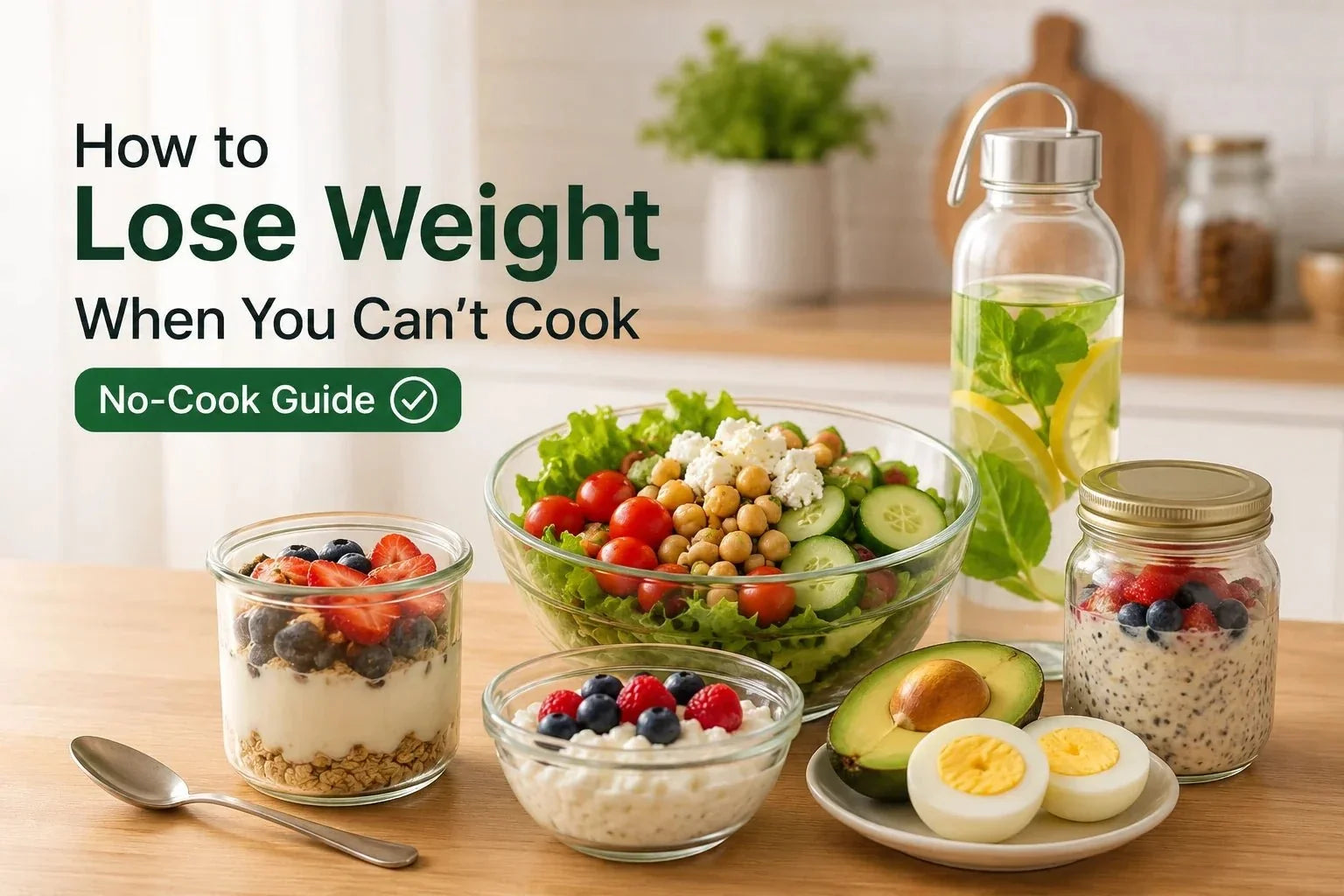
How to Lose Weight When You Can’t Cook: No-Cook Guide
You can lose weight without cooking. Learn how to build balanced no-cook meals, choose ready-to-eat foods, shop smarter, order takeout wisely, and follow a simple 7-day plan.
Yes, you can lose weight even if you cannot cook. Home-cooked food is not required for weight loss. What matters more is your overall eating pattern, portion sizes, food choices, and whether your routine is realistic enough to follow over time.
The easiest approach is to build most meals around:
Protein + fruit or vegetables + a sensible carbohydrate + a small amount of calorie-dense extras
Greek yogurt, dahi, canned tuna, beans, ready-cooked chicken, fruit, bagged salads, whole-grain bread, microwave grains, frozen meals, sandwiches, and even takeout can all fit.
The goal is not to become a great cook.
The goal is to create a food system that works even when you do not cook.
If You Remember Only 5 Things
If you do not have time to read the whole guide, start here:
- You do not need to cook to lose weight.
- Build meals around protein and fruit or vegetables.
- Portion size still matters, even with nutritious foods.
- Keep 3–5 emergency meals available for busy or tired days.
- Choose a routine you can repeat instead of depending on motivation.
A weight-loss plan that only works when you have plenty of time and energy is difficult to maintain. A better plan also works after a long day when you are hungry and do not want to prepare food.
Can You Really Lose Weight Without Cooking?
Yes. Cooking itself does not cause weight loss.
Weight management is influenced by the balance between the energy you take in and the energy your body uses, along with factors such as activity, sleep, medicines, health conditions, age, and genetics. A weight-loss eating pattern generally needs to provide fewer calories than you use while still giving you adequate nutrition. [1]
That means weight loss can be possible while eating foods such as:
- supermarket meals
- yogurt and fruit
- canned foods
- ready-cooked chicken
- sandwiches and wraps
- microwave meals
- frozen meals
- meal-delivery food
- restaurant meals
- takeout
The important question is not:
“Did I cook this myself?”
Ask instead:
“Does this meal fit the eating pattern I am trying to follow?”
A supermarket chicken wrap can fit a weight-loss diet.
A home-cooked meal can also contain far more calories than you need.
Cooking method and weight-loss suitability are not the same thing.
Why Can’t You Cook?
Before changing your diet, identify the real problem.
“Not cooking” can mean very different things.
| Your situation | Best starting strategy |
|---|---|
| No time | Ready-to-eat foods + microwave meals |
| Hate cooking | Simple assembly meals + repeatable staples |
| Do not know how to cook | Use the no-cook meal formula |
| No stove | Refrigerator + microwave foods |
| No kitchen | Shelf-stable foods + prepared meals + smart takeout |
| Tired after work | Keep emergency meals at home |
| Live in a hostel or dorm | Mini grocery system + microwave/refrigerator foods |
| Travel often | Grocery-store meals + restaurant strategy |
| Tight budget | Beans, oats, canned foods, frozen vegetables and basic staples |
Do not build a diet around a lifestyle you do not have.
If you regularly arrive home tired at 8 p.m., a plan that expects you to chop vegetables and cook three pans of food every evening may fail even if it looks perfect on paper.
Instead, make convenience work for you.
The No-Cook Weight Loss Meal Formula
You do not need 50 recipes.
Learn one flexible formula:
Protein + Produce + Carbohydrate + Small Extra
Not every meal has to look exactly like this. It is simply an easy framework for building a more balanced meal.
1. Start With a Protein Food
Easy protein options include:
- plain Greek yogurt
- plain yogurt or dahi
- cottage cheese
- milk
- canned tuna
- canned salmon
- canned sardines
- ready-cooked chicken
- hard-boiled eggs
- canned beans
- chickpeas
- ready-cooked lentils
- tofu sold ready to eat
Protein can help make meals more satisfying. A systematic review and meta-analysis found that higher-protein dietary interventions had a modest beneficial effect on body-weight management, although results varied and more protein is not automatically better for everyone. [7]
You do not need protein powder or an extreme high-protein diet.
For most meals, simply ask:
“Where is my protein?”
2. Add Fruit or Vegetables
Choose produce that requires little or no preparation.
Examples include:
- apples
- bananas
- oranges
- guava
- berries
- grapes
- cucumber
- tomatoes
- carrots
- salad leaves
- bagged salads
- pre-cut vegetables
- frozen microwave vegetables
- suitable canned vegetables
Fruit and vegetables provide vitamins, minerals, fiber, water, and other useful nutrients. Foods with a high water and fiber content can also add volume to meals without adding as many calories as many energy-dense foods. [2][3]
You do not need expensive “superfoods.”
A banana counts. A cucumber counts. Frozen vegetables count too.
3. Add a Sensible Carbohydrate
You do not have to remove carbohydrates to lose weight.
Convenient choices include:
- whole-grain bread
- whole-wheat wraps
- oats
- higher-fiber cereal
- whole-grain crackers
- microwave rice
- ready-cooked potatoes
- corn
- prepared roti or chapati
- beans and lentils
WHO recommends getting much of your carbohydrate intake from foods such as whole grains, vegetables, fruit, and pulses rather than relying mainly on highly refined sources. [2]
The amount you need depends on your overall eating pattern, activity, hunger, and individual needs.
4. Use Calorie-Dense Extras Deliberately
Foods such as these can be nutritious:
- nuts
- seeds
- peanut butter
- cheese
- avocado
- hummus
- mayonnaise
- salad dressing
- oils
But a small amount can provide a significant number of calories.
You do not need to avoid them.
Just do not treat “healthy” as meaning “unlimited.”
Putting peanut butter on toast is different from repeatedly eating it straight from the jar.
Best No-Cook Foods for Weight Loss
There is no single food that causes weight loss.
The most useful foods are those that:
- help meet your nutrition needs
- fit your calorie needs
- require little preparation
- are affordable for you
- are easy to keep available
- are foods you actually enjoy eating
WHO emphasizes adequacy, balance, moderation, and dietary diversity rather than relying on one “perfect” food. [2]
| What you need | Convenient choices |
|---|---|
| Protein | Greek yogurt, dahi, cottage cheese, tuna, salmon, beans, chickpeas, lentils, tofu, ready chicken, eggs |
| Fruit | Apples, bananas, oranges, guava, grapes, berries, seasonal fruit |
| Vegetables | Salad bags, cucumber, tomatoes, carrots, peppers, frozen or canned vegetables |
| Higher-fiber carbs | Oats, whole-grain bread, wraps, cereal, crackers, beans, lentils |
| Calorie-dense extras | Nuts, seeds, peanut butter, hummus, avocado, cheese |
| Complete convenience meals | Prepared salads, sandwiches, wraps, grain bowls and suitable frozen meals |
Keep a few foods from each group available.
You do not need a refrigerator filled with specialty “diet products.”
Normal food is enough.
12 Easy No-Cook Weight Loss Meals
These are meal ideas, not fixed prescriptions. Adjust portions to your individual needs.
Breakfast
1. Yogurt, Oats and Fruit
Combine:
- plain Greek yogurt or dahi
- oats
- banana, apple or berries
- a small amount of nuts or seeds if desired
You get protein, fruit, carbohydrate, and fiber with almost no preparation.
2. High-Fiber Cereal, Milk and Fruit
Choose a cereal with useful fiber, add milk, and have fruit on the side.
Check the serving size instead of filling a very large bowl without looking at the package.
3. Overnight Oats
Mix oats with milk or yogurt and refrigerate them overnight.
Add fruit before eating.
No stove is required.
Lunch
4. Tuna Sandwich and Salad
Use:
- whole-grain bread
- canned tuna
- salad vegetables
- a measured amount of mayonnaise, yogurt-based dressing, or another spread
Add fruit if needed.
5. Ready Chicken Wrap
Use:
- ready-cooked chicken
- whole-wheat wrap
- salad leaves
- cucumber or tomatoes
- a modest amount of sauce
6. Chickpea Salad Bowl
Combine:
- drained chickpeas
- cucumber
- tomato
- salad leaves
- lemon
- herbs or spices
Add yogurt or a small amount of cheese if you want.
Dinner
7. Ready Chicken, Salad and Roti
Buy ready-cooked grilled or roasted chicken.
Add:
- salad or vegetables
- roti, bread, or another carbohydrate
- yogurt or raita
Dinner does not have to be cooked in your own kitchen.
8. Microwave Grain Bowl
Combine:
- microwave rice or another ready grain
- ready protein
- frozen microwave vegetables
- a controlled amount of sauce
This can take only a few minutes.
9. Ready Meal Plus Vegetables
Instead of eating two prepared meals because one looks small, try:
1 prepared meal + vegetables or salad
Then add fruit or yogurt if you are still hungry.
This can make the meal more complete without simply doubling every part of it.
Simple Snacks
10. Fruit and Yogurt
Portable, simple, and easy to repeat.
11. Apple and a Small Portion of Nuts
Nuts can fit well, but portion them instead of eating from a large bag.
12. Vegetables and Hummus
Use cucumber, carrots, peppers, tomatoes, or another raw vegetable you enjoy.
How to Choose Ready-to-Eat and Packaged Foods
Do not judge a food only by the words on the front of the package.
Terms such as:
- “healthy”
- “natural”
- “fitness”
- “high protein”
- “low fat”
- “organic”
do not tell you everything you need to know.
Turn the package around and look at the nutrition label.
The 60-Second Food Label Check
-
1. Check the Serving Size
This comes first.
The nutrition information is usually based on the listed serving size.
A package that looks like one meal may contain more than one serving.
FDA also makes an important distinction: a serving size on a label describes an amount people typically consume. It is not a recommendation for how much you personally should eat. [4]
-
2. Check How Many Calories You Will Actually Eat
If a package contains two servings and you eat both, you are consuming approximately twice the calories and nutrients listed for one serving. [4]
Do not use random rules such as:
“A weight-loss meal must always be under 300 calories.”
There is no single meal-calorie target that fits everyone.
Your needs vary with factors such as age, sex, height, weight, and activity. [6]
-
3. Look for a Useful Protein Source
Check whether the meal contains foods such as:
- chicken
- fish
- eggs
- dairy
- beans
- lentils
- chickpeas
- tofu
If it has little protein, consider adding a simple protein food.
-
4. Look for Fiber and Plant Foods
Look for:
- vegetables
- fruit
- beans
- lentils
- whole grains
If the meal contains very little produce, add a salad, fruit, or microwave vegetables.
-
5. Compare Sodium, Saturated Fat and Added Sugar
FDA recommends using the Nutrition Facts label to compare products. Its general guide is that 5% Daily Value or less is low and 20% or more is high for a nutrient. [4]
You do not need to reject a food because one number is imperfect.
Compare similar products and look at your overall diet.
Can Frozen Meals Help You Lose Weight?
Yes. Frozen meals can fit into a weight-loss plan.
A freezer meal that you actually eat may be far more useful than an ambitious plan to cook fresh food every evening that you never follow.
When choosing a frozen meal, check:
- serving size
- calories for the amount you will eat
- protein source
- vegetables or other plant foods
- fiber
- sodium
- saturated fat
- added sugar where relevant
If the meal contains few vegetables, add frozen vegetables or salad.
If it contains little protein, add something simple such as yogurt, beans, tuna, milk, or another suitable protein food.
And if one frozen meal seems too small, do not automatically eat two.
First try making one meal more complete.
How to Eat Takeout or Restaurant Food and Still Lose Weight
You do not have to stop ordering food to lose weight.
Restaurant and takeaway meals simply require more attention because portions may be larger and calories can be harder to judge.
Use this six-step system.
-
Step 1: Choose Your Main Protein
Examples include:
- grilled chicken
- fish
- lean meat
- beans
- lentils
- chickpeas
- tofu
- yogurt-based dishes
-
Step 2: Add Vegetables When Available
Try:
- salad
- cooked vegetables
- vegetable sides
- salsa
- mixed vegetables
- fresh vegetables
-
Step 3: Choose Your Main Carbohydrate
This might be:
- rice
- roti
- bread
- potatoes
- noodles
You do not need to remove carbohydrates completely.
But you also do not have to finish a restaurant-sized portion.
-
Step 4: Pay Attention to Sauces and Extras
Calories can rise quickly from:
- mayonnaise
- creamy dressings
- butter
- cheese
- oil
- dips
- fried toppings
Ask for sauce or dressing separately when practical.
-
Step 5: Choose Your Drink Deliberately
Water, unsweetened tea, sparkling water, or another low/no-calorie drink can make the total meal easier to manage than automatically adding a large sugary drink.
-
Step 6: Decide What to Do With a Large Portion Early
You do not have to finish everything simply because it came in one container.
If the portion is clearly large, save some for later.
What Can You Order for Weight Loss?
You do not need a special “diet restaurant.”
Learn to modify normal meals.
Burgers
Consider:
- regular burger rather than the largest option
- grilled protein when available
- vegetables on the burger
- water or another low-calorie drink
- smaller fries, shared fries, or no fries depending on the meal
Look at the whole order.
A burger is different from:
burger + large fries + large sugary drink + dessert
Sandwiches and Wraps
Prioritize:
- chicken, tuna, eggs, beans, or another protein
- plenty of vegetables
- moderate cheese
- controlled sauces
A wrap is not automatically lower in calories than bread.
Size and fillings matter more.
Pizza
Pizza does not have to be forbidden.
Instead:
- decide how many slices you want
- add salad or vegetables
- choose toppings deliberately
- avoid eating straight from a large box while distracted
Pakistani and South Asian Food
Useful options may include:
- chicken tikka
- grilled kebabs
- daal
- chana
- raita
- mixed vegetables
- salad
- roti
- rice in a suitable portion
Foods such as:
- biryani
- karahi
- oily salan
- creamy curries
- fried foods
can also fit.
The main challenge is that added oil, ghee, cream, and large portions may increase calories without making the food look dramatically larger.
You do not need to stop eating cultural foods to lose weight.
Adjust the portion and the rest of the meal instead.
Build an Emergency Meal System
For many people who cannot cook, the hardest moment is not breakfast or lunch.
It is this:
“I am exhausted, very hungry, and there is nothing ready to eat.”
At that point, the easiest option usually wins.
So make your better option easy before hunger arrives.
Keep three to five emergency meals available.
Emergency Meal 1
Greek yogurt + oats + fruit
Emergency Meal 2
Tuna + whole-grain bread + cucumber
Emergency Meal 3
Ready chicken + salad bag + roti
Emergency Meal 4
Microwave rice + beans + frozen vegetables
Emergency Meal 5
Higher-fiber cereal + milk + fruit + yogurt
These meals do not need to be exciting.
They need to be available.
A three-minute meal you eat regularly can be more useful than a perfect 45-minute recipe you never make.
How to Lose Weight With No Kitchen
No kitchen makes healthy eating more difficult, but it does not make it impossible.
Your strategy depends on what equipment and storage you have.
Refrigerator but No Stove
Keep foods such as:
- yogurt
- milk
- cottage cheese
- ready chicken
- hard-boiled eggs
- salad
- fruit
- hummus
- canned foods
- bread
- wraps
Microwave Only
You can use:
- frozen vegetables
- microwave rice
- frozen meals
- soups
- pre-cooked grains
- other ready-to-heat foods
Combine foods instead of depending on one item.
For example:
Microwave rice + ready chicken + frozen vegetables
No Refrigerator or Microwave
Focus more on safe shelf-stable foods such as:
- unopened canned tuna
- canned beans
- chickpeas
- shelf-stable milk until opened
- whole fruit
- whole-grain crackers
- oats where they can be prepared safely
- portioned nuts
- bread
- other shelf-stable foods suited to your needs
Always follow the storage instructions on the package.
Foods that require refrigeration should not be kept at room temperature beyond safe limits.
Hostel or Dorm
Create a small food station.
Shelf-stable options might include:
- fruit
- oats
- cereal
- bread
- tuna
- beans
- portioned nuts
If you have refrigerator space, add:
- yogurt
- milk
- vegetables
- ready protein foods
Frequent Travel
Do not wait until you are extremely hungry at an airport or hotel.
A nearby supermarket or convenience store may provide:
- yogurt
- fruit
- milk
- sandwiches
- salads
- cooked chicken
- portioned snacks
A grocery store can sometimes be more useful than trying to find a “healthy restaurant.”
No-Cook Grocery List for Weight Loss
You do not need to buy everything on this list.
Pick foods you like, can afford, and can store safely.
Protein
- Greek yogurt
- plain dahi
- cottage cheese
- milk
- tuna
- salmon
- ready chicken
- boiled eggs
- beans
- lentils
- chickpeas
- hummus
- tofu
Fruit
- apples
- bananas
- oranges
- guava
- berries
- grapes
- seasonal fruit
Vegetables
- cucumber
- tomatoes
- carrots
- salad bags
- peppers
- frozen vegetables
- suitable canned vegetables
Carbohydrates
- oats
- whole-grain bread
- wraps
- higher-fiber cereal
- whole-grain crackers
- microwave rice
- ready potatoes
- roti
Calorie-Dense Extras
- nuts
- seeds
- peanut butter
- cheese
- hummus
- avocado
- salad dressing
Keep them if you enjoy them.
Just portion them.
Emergency Foods
Always keep at least two meals available for the day when your fresh food runs out.
Examples:
- canned tuna + crackers
- beans + microwave rice
- frozen meal + frozen vegetables
- oats + shelf-stable milk
The 10-Minute Weekly Grocery Strategy
If large grocery lists overwhelm you, remember:
3 proteins + 3 produce foods + 2 carbohydrates + 2 snacks + 2 emergency foods
For example:
Proteins: yogurt, tuna, chicken
Produce: apples, cucumber, frozen vegetables
Carbohydrates: bread, microwave rice
Snacks: fruit, portioned nuts
Emergency foods: frozen meal, canned beans
From this short list, you can create many different meals without buying dozens of ingredients.
7-Day No-Cook Weight Loss Meal Plan
This is an example meal plan, not an individual calorie prescription.
Your needs vary according to factors such as age, body size, sex, activity, health conditions, medicines, and goals. Tools such as the NIDDK Body Weight Planner exist because one calorie target does not fit everyone. [6]
Adjust portions to your individual needs.
| Day | Breakfast | Lunch | Dinner | Snack |
|---|---|---|---|---|
| 1 | Yogurt + oats + banana | Tuna sandwich + cucumber | Ready chicken + salad + roti | Apple |
| 2 | Cereal + milk + fruit | Chickpea salad + bread | Frozen meal + extra vegetables | Yogurt |
| 3 | Overnight oats + fruit | Chicken wrap + salad | Microwave rice + beans + vegetables | Fruit + small portion nuts |
| 4 | Yogurt + fruit + oats | Tuna wrap + vegetables | Grilled chicken + raita + salad + roti | Carrots + hummus |
| 5 | Cereal + milk + banana | Chickpea sandwich + salad | Prepared supermarket meal + salad | Yogurt |
| 6 | Overnight oats | Ready chicken sandwich + fruit | Microwave grain bowl | Apple + small portion nuts |
| 7 | Yogurt bowl | Bean and salad wrap | Takeout using the protein + vegetables + portion method | Fruit |
Notice what this plan does not require:
- complicated recipes
- hours of weekly meal prep
- expensive diet products
- cooking every evening
- removing carbohydrates
- eating exactly the same food every day
The foods are mainly opened, assembled, microwaved, or ordered.
How Much Should You Eat?
This is where many no-cook weight-loss plans go wrong.
A food can be nutritious and still provide more calories than you expected when the portion becomes large.
Serving Size vs. Portion Size
These terms do not mean exactly the same thing.
A serving size is the standardized amount listed on a food label.
A portion is the amount you actually decide to eat. [4][5]
A package might contain:
2 servings
If you eat the entire package, you need to consider the calories and nutrients from both servings.
FDA specifically notes that serving sizes are not recommendations for how much an individual should eat. [4]
Foods Worth Portioning
Pay extra attention to:
- nuts
- peanut or nut butter
- cheese
- dressing
- mayonnaise
- chocolate
- chips
- crackers
- desserts
- granola
- oil
- large restaurant meals
You do not need to weigh food forever.
Sometimes simply putting food in a bowl or on a plate instead of eating from a large package makes portions much easier to see.
Can You Lose Weight Without Counting Calories?
Yes. You do not have to count every calorie to lose weight.
But energy intake still matters even if you do not track it.
There are two reasonable approaches.
Option 1: Calorie-Aware Approach
You might temporarily use:
- Nutrition Facts labels
- restaurant nutrition information
- a food-tracking app
- a food diary
This can help you understand where a large share of your calories comes from.
You may eventually stop tracking once you understand your normal portions.
Option 2: Structure-Based Approach
Instead of tracking every calorie:
- include protein in main meals
- add fruit or vegetables
- choose a sensible carbohydrate portion
- measure calorie-dense extras
- reduce high-calorie drinks
- use repeatable meals
- avoid constantly eating from large packages
Counting calories all the time is not necessary for everyone. CDC notes that calorie awareness can be useful while emphasizing adequate nutrition and an overall healthy lifestyle. [8]
The better method is the one you can use consistently without becoming overly restrictive or distressed about food.
Why You May Not Be Losing Weight Even Though You Don’t Cook
If you rely on convenience foods but your weight is not changing, cooking is probably not the main problem.
Check these common issues.
1. The Package Contains More Than One Serving
A package that looks like one meal may contain multiple labeled servings.
Check before assuming the calories shown apply to the whole container.
2. “Healthy” Foods Are Adding Up
Foods such as:
- nuts
- peanut butter
- cheese
- hummus
- granola
- avocado
- dressings
can all fit a nutritious diet.
But portions matter.
3. You Are Drinking Many of Your Calories
Common examples include:
- sugary drinks
- sweet coffee
- milkshakes
- juice
- energy drinks
- some smoothies
You do not have to drink only water, but beverages are easy to overlook when thinking about your daily intake.
4. Sauces and Dressings Are Larger Than You Think
A salad or sandwich can change significantly after adding large portions of:
- dressing
- mayonnaise
- cheese
- creamy sauce
- oil
Use enough to enjoy your food, but pay attention to the amount.
5. Restaurant Portions Are Very Large
The restaurant container does not tell you how much your body requires.
Saving food for later is allowed.
6. Your Meals Are Too Small
Trying to survive on coffee and one piece of fruit until dinner may make your plan difficult to sustain.
Build actual meals.
7. You Eat Mostly Snack Foods
Convenience does not have to mean:
- chips
- biscuits
- cereal bars
- crackers
- sweets
Convenient foods can also include:
- yogurt
- tuna
- fruit
- salads
- beans
- ready chicken
- sandwiches
- frozen vegetables
8. You Eat Straight From Large Packages
It is hard to judge your portion when you repeatedly reach into a large bag or container.
Put the amount you plan to eat on a plate or in a bowl.
9. You Skip Meals and Become Extremely Hungry
If skipping lunch repeatedly leads to a very large evening meal, “saving calories” earlier may be working against you.
An emergency meal or planned snack may work better.
10. You Are Trying to Eat Perfectly
One takeaway meal does not determine your progress.
Neither does one salad.
Your overall pattern matters much more.
What If You Are Always Hungry?
Do not automatically assume hunger means you lack willpower.
Look at your meals.
Are Your Meals Large Enough?
If every meal is tiny, feeling hungry is normal.
Is There a Protein Source?
Consider:
- yogurt
- chicken
- fish
- eggs
- beans
- chickpeas
- lentils
- tofu
Are You Eating Fiber-Rich Foods?
Fruit, vegetables, legumes, and whole grains can add fiber and volume to your meals. [2][3]
Are You Drinking Calories Instead of Eating?
A sweet drink can contain substantial energy without giving you the experience of eating a balanced meal.
Is Your Target Too Aggressive?
More restriction is not always better.
If you repeatedly abandon your diet because you are extremely hungry, the answer may be to make the plan more realistic rather than stricter.
Can You Eat Fast Food and Still Lose Weight?
Potentially, yes.
One fast-food meal does not determine your weight.
Your overall eating pattern matters more.
When ordering:
- Choose your main item first.
- Avoid automatically choosing the biggest meal.
- Decide whether you actually want fries or another side.
- Choose your drink deliberately.
- Pay attention to sauces and extras.
- Consider the portion.
This is usually more practical than promising yourself you will never eat fast food again.
Is Meal Delivery Good for Weight Loss?
It can be useful if your biggest barriers are:
- shopping
- cooking
- time
- low energy
- decision fatigue
Possible benefits include:
- little or no cooking
- predictable meals
- easier portion awareness
- fewer last-minute decisions
- greater routine
Possible drawbacks include:
- cost
- variable nutrition quality
- small or oversized portions
- limited vegetables or fiber
- high sodium in some products
- calorie estimates that may not perfectly reflect the food served
Use the same rule you would use for supermarket meals:
Check the portion + protein + produce + nutrition information.
Meal delivery is a convenience tool.
It is not automatically a weight-loss program.
No Time to Cook vs. No Desire to Cook
These are different problems.
Neither means you have to force yourself to become someone who loves cooking.
If you are busy, reduce the number of food decisions you need to make.
If you dislike cooking, stop building your entire diet around recipes.
You might:
- eat the same breakfast on weekdays
- rotate three lunches
- keep four emergency dinners
- order from two or three familiar restaurants
- use the same grocery list most weeks
That is fine.
A successful weight-loss approach should be realistic and fit your preferences and circumstances so you can continue it over time. [1]
Variety is useful.
But every meal does not have to be new.
When You Need Personalized Weight-Loss Advice
A general no-cook weight-loss guide is not suitable for every situation.
Speak with an appropriately qualified healthcare professional or dietitian before making major dietary or weight-loss changes if you:
- are pregnant
- are breastfeeding
- are under 18
- have a current or previous eating disorder
- have kidney disease
- have significant liver disease
- have diabetes, especially if you use glucose-lowering medicine
- have another medical condition that requires dietary treatment
- take medicine that affects appetite or weight
- use prescription weight-loss medicine
- have recently lost weight without trying
- require a therapeutic diet
Medical conditions and medicines can affect body weight and the safety of weight-loss strategies. NIDDK recommends involving a healthcare professional when choosing an appropriate weight-management approach, particularly when health conditions or medicines may be relevant. [1]
Do not stop or change a prescribed medicine because you think it is affecting your weight without discussing it with the clinician managing your treatment.
Need a Weight-Loss Plan That Fits Your Real Routine?
MNT’s online dietitian consultation provides personalized nutrition guidance based on your health goals, eating routine, food preferences, lifestyle, and practical Pakistani foods.
Book an Online Dietitian ConsultationFrequently Asked Questions
Can I really lose weight if I never cook?
Yes. Home cooking is not required for weight loss.
You can build a nutritious, calorie-aware eating pattern using ready foods, supermarket meals, canned foods, frozen meals, sandwiches, microwave foods, and restaurant meals.
The key is your overall intake, portions, nutrition, and consistency.
What should I eat every day if I don’t cook?
Use this simple formula:
Protein + fruit or vegetables + sensible carbohydrate + small extra
Examples:
yogurt + oats + banana
tuna sandwich + salad
ready chicken + vegetables + roti
What are the best no-cook foods for weight loss?
Useful choices include:
- yogurt
- tuna
- ready chicken
- beans
- lentils
- chickpeas
- fruit
- vegetables
- oats
- whole-grain bread
- microwave grains
- frozen vegetables
There is no single “best” food.
Choose foods that help you meet your nutrition needs and make your plan easy to maintain.
What can I eat for dinner without cooking?
Try:
- ready chicken + salad + bread or roti
- tuna wrap + vegetables
- chickpea salad
- frozen meal + vegetables
- microwave rice + beans + vegetables
- sandwich + yogurt + fruit
How can I eat healthy if I hate cooking?
Stop depending on recipes.
Buy foods that only require:
- opening
- washing
- assembling
- microwaving
Build several meals you can repeat and keep emergency foods available.
Can I lose weight if I eat takeout every day?
It may be possible.
Pay attention to:
- portion size
- protein
- vegetables
- sauces
- fried sides
- sugary drinks
- calorie-dense extras
Restaurant food itself does not make weight loss impossible, but large portions can make managing overall intake harder.
Are frozen meals good for weight loss?
They can be.
Check:
- serving size
- calories
- protein
- fiber
- vegetables
- sodium
- saturated fat
Add vegetables, fruit, yogurt, or another simple food when needed to make the meal more complete.
Can sandwiches help with weight loss?
Yes.
A sandwich can be a balanced meal when it contains:
- suitable bread
- a protein source
- vegetables
- a sensible amount of sauces and extras
Can I lose weight eating ready-made food?
Yes.
“Ready-made” tells you how the food was prepared.
It does not tell you whether it can fit into your eating pattern.
Look at the food itself, the portion, and what you eat during the rest of the day.
What should I eat if I have no kitchen?
Depending on your storage facilities, useful foods may include:
- fruit
- canned tuna
- beans
- chickpeas
- whole-grain bread
- wraps
- oats
- shelf-stable milk
- yogurt
- ready salads
- prepared meals
Always follow safe food-storage instructions.
What are easy high-protein foods that require no cooking?
Options include:
- Greek yogurt
- dahi
- cottage cheese
- milk
- canned tuna or salmon
- ready chicken
- hard-boiled eggs
- beans
- chickpeas
- lentils
- tofu
You do not need protein powder to include protein in a no-cook diet.
What can I eat if I only have a microwave?
Try:
- frozen vegetables
- microwave rice
- pre-cooked grains
- frozen meals
- soups
- beans
- ready chicken
Combine them with foods such as yogurt, fruit, salads, sandwiches, or other ready foods.
Do I need to count calories to lose weight?
No.
Some people find calorie tracking useful. Others do better with structured meals, portion awareness, and repeatable food choices.
Energy intake still matters even when you do not count it.
What should I buy at the grocery store if I cannot cook?
Keep it simple:
3 proteins + 3 produce foods + 2 carbohydrates + 2 snacks + 2 emergency foods
You do not need a cart full of expensive “diet food.”
Is eating prepared food every day unhealthy?
Not automatically.
“Prepared food” can mean very different things.
Plain yogurt, canned beans, bagged salad, frozen vegetables, ready-cooked chicken, and heavily fried takeaway food are all prepared foods, but they do not have the same nutritional profile.
Judge the food and your overall diet, not simply who prepared it.
Bottom Line
You do not need to learn how to cook before you can lose weight.
You need a food system you can actually live with.
Start with a convenient protein source.
Add fruit or vegetables.
Include a sensible amount of carbohydrate.
Be deliberate with calorie-dense extras.
Learn how to read serving sizes and food labels.
Keep emergency meals available.
When ordering food, think about the whole meal rather than searching for one perfect “diet” item.
And most importantly, build your plan around your real life.
If you hate cooking, your weight-loss plan does not have to depend on cooking.
If you are busy, it does not have to depend on suddenly finding more free time.
If you do not have a kitchen, it does not have to depend on getting one.
The best no-cook weight-loss plan is one that provides adequate nutrition, helps you manage portions, fits your circumstances, and is simple enough to repeat.
We rely on peer-reviewed studies and reputable medical journals.